
5 Best Sights in New Orleans, Louisiana

Background Illustration for Sights

We've compiled the best of the best in New Orleans - browse our top choices for the top things to see or do during your stay.

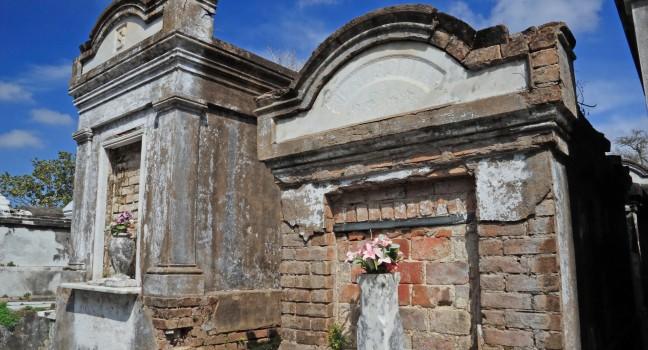
Lafayette Cemetery No. 1
Garden District Fodor's Choice
Two tombs in Lafayette Cemetery #1 in the Garden Disctrict in New Orleans, Louisiana.
(c) Lightphoto | Dreamstime.com

New Orleans found itself amid a large influx of Italian, German, Irish, and American immigrants from the North when this magnolia-shaded cemetery opened in 1833. Many who fought or played a role in the Civil War have plots here, indicated by plaques and headstones that detail the site of their death. Several tombs also reflect the toll taken by the yellow fever epidemic, which affected mostly children and newcomers to New Orleans; 2,000 yellow fever victims were buried here in 1852. Movies such as Interview with the Vampire and Double Jeopardy have used this walled cemetery for its eerie beauty. Unfortunately, following delays caused by Hurricane Ida and the pandemic, the cemetery is closed for repairs as of early 2024 with no set date to reopen; but many visitors still flock here to view graves from outside the gates.

St. Louis Cemetery No. 1

Tremé Fodor's Choice

The oldest and most famous of New Orleans's cities of the dead, founded in the late 1700s, is just one block from the French Quarter. Stately rows of crypts are home to many of the city's most legendary figures, including Homer Plessy of the Plessy v. Ferguson 1896 U.S. Supreme Court decision establishing the "Jim Crow" laws ("separate but equal"), and voodoo queen Marie Laveau, whose grave is still a popular pilgrimage among the spiritual, the superstitious, and the curious. Visitors are required to be part of a tour group in order to enter the cemetery (all tours leave from  501 Basin St.); tours are frequent—every 15 minutes—but since group sizes are limited, advance reservations are recommended.

Cypress Grove Cemetery

Mid-City

This expansive and still-used cemetery was founded by the Fireman's Charitable and Benevolent Association in 1840 to honor the city's volunteer firemen and their families. Over time, as the cemetery expanded, leading architects and craftsmen were called upon to design and build tombs commemorating the lives of many of New Orleans's most prominent citizens. Crafted in marble, granite, and cast iron, tombs at Cypress Grove are among the nation's leading examples of memorial architecture, including entrance pylons and lodges resembling Egyptian ceremonial architecture. Of particular note is the Chinese Soon On Tong Association's tomb, which features a grate in front so that visitors can burn prayers written on paper in it. Admission is free and visitors are encouraged to explore on their own, although outside companies do offer tours.

Recommended Fodor's Video

Lake Lawn Metairie Cemetery

Mid-City

The largest cemetery in the metropolitan area, known to locals simply as Metairie Cemetery, is the final resting place of nine Louisiana governors, seven New Orleans mayors, and musician Louis Prima. Many of New Orleans's prominent families are also interred here in elaborate monuments ranging from Gothic crypts to Romanesque mausoleums to Egyptian pyramids. The arrangement of tombs reflects the cemetery's former life as a horse-racing track, with the tombs arranged around the perimeter and interior. Cemetery staff are happy to offer a map to anyone who asks.

St. Louis Cemetery No. 3

Bayou St. John

One block from the entrance to City Park, at the end of Esplanade Avenue, stands this cemetery, on an area of high ground along Bayou St. John. It opened in 1854 on the site of an old leper colony. Governor Galvez had exiled the lepers here during the yellow fever outbreak of 1853, but they were later removed to make room for the dead. The remains of Storyville photographer E. J. Bellocq are here, and the cemetery is notable for its neat rows of elaborate aboveground crypts, mausoleums, and carved stone angels. Many tour companies, including Save Our Cemeteries, offer tours that include St. Louis No. 3, but it's also perfectly safe to walk through and explore on your own.