20 Best Sights in New Orleans, Louisiana

Background Illustration for Sights

We've compiled the best of the best in New Orleans - browse our top choices for the top things to see or do during your stay.

Audubon Aquarium of the Americas

French Quarter Fodor's Choice
Audubon Aquarium of the Americas
Audubon Aquarium of the Americas by Gary J. Wood

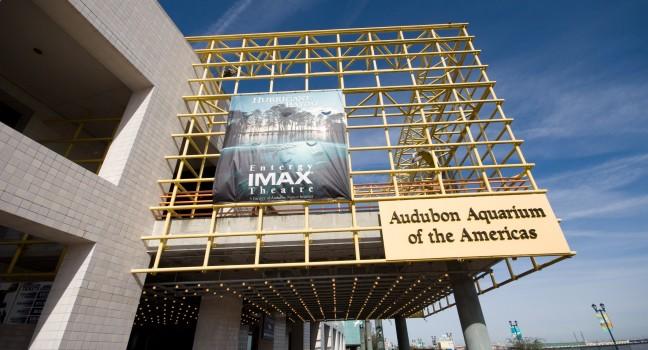
This giant aquatic showplace perched on the Mississippi riverfront has four major exhibit areas: the Amazon Rain Forest, the Mississippi River, the Gulf of Mexico, and the Great Maya Reef gallery, all of which have fish and animals native to their respective environments. The aquarium's spectacular design allows you to feel like you're part of these watery worlds by providing close-up encounters with the inhabitants. The entire facility received a sleek new upgrade in 2023 after a $41 million renovation, and the most stunning addition is the massive "Life in the Gulf" exhibit, where visitors can peer over an open tank to observe the movements of sharks, schools of fish, sting rays, and giant sea turtles. In the Amazon gallery, walk among the lush forest while 25 species of colorful birds fly above, before discovering Amazonian animals like Linnaeus, the two-toed sloth. Woldenberg Riverfront Park, which surrounds the aquarium, is a tranquil spot with a view of the Mississippi. Your aquarium tickets include a visit to the Butterfly Garden and Insectarium within the same building. Advance ticketing is recommended but not required.

Audubon Park

Uptown Fodor's Choice
Villa at Audubon Park in New Orleans.
gibleho / Shutterstock

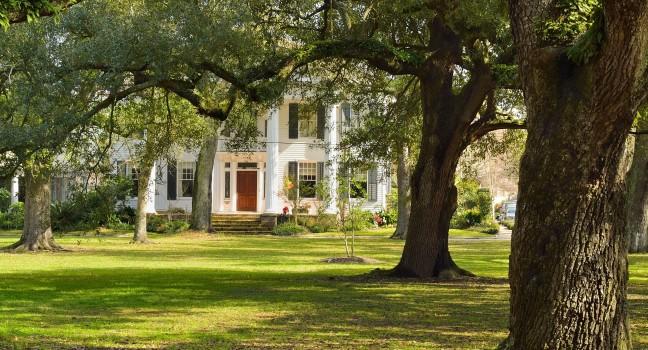
Formerly the plantation of Etienne de Boré, the father of the granulated-sugar industry in Louisiana, this large, lush patch of greenery stretches from St. Charles Avenue across Magazine Street to the river. Designed by John Charles Olmsted, nephew of Frederick Law Olmsted (who laid out New York City's Central Park and Asheville's Biltmore Estate), this park contains the world-class Audubon Zoo; a 1.8-mile track for running, walking, or biking; picnic and play areas; Audubon Park Golf Course; tennis courts; a swimming pool; horse stables; and a river view known by locals as the Fly. Calm lagoons wind through the park, harboring egrets and other indigenous species. The park and zoo were named for the famous ornithologist and painter John James Audubon, who spent many years working in and around New Orleans.

Blaine Kern's Mardi Gras World at Kern Studios

Warehouse District Fodor's Choice
Mardi Gras World - 2011
Mardi Gras World - 2011 by

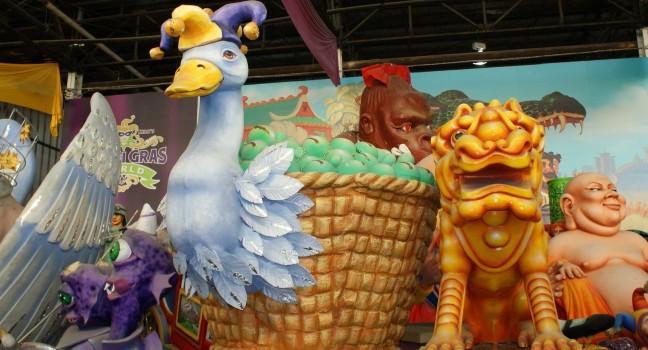
If you're not in town for the real thing, here's a fun (and family-friendly) backstage look at the history and artistry of Carnival. The massive 400,000-square-foot complex, just upriver from the New Orleans Morial Convention Center, features an enhanced guided tour through a maze of video presentations, decorative sculptures, and favorite megafloats from Mardi Gras parades such as Bacchus, Rex, and Endymion. A gift shop sells masks, beads, and Mardi Gras posters, as well as tickets for the tour, during which participants can sample king cake and coffee, pose for pictures in front of parade floats, and see artists at work, sculpting with papier-mâché and fiberglass. For special events, visitors enter through a plantation alley that is part Cajun swamp-shack village, part antebellum Disneyworld (Kern was a friend of, and inspired by, Walt Disney). A free shuttle is provided with ticket purchase and provides pickups from Canal Street.

Recommended Fodor's Video

City Park

Mid-City Fodor's Choice
The Parthenon is the most recognizable peice of architecture in New Orlean's City Park. It sits across a placid lake and is flanked by majestic oaks and ornamental palms.
(c) Mishelmccumber | Dreamstime.com

Founded in 1854, this 1,300-acre expanse of moss-draped oaks and 11 miles of gentle lagoons is only 2 miles from the French Quarter, but feels like it could be a world apart. With the largest collection of live oaks in the world, including old grove trees that are more than 600 years old, City Park offers a certain natural majesty that's difficult to find in most other urban areas. The Art Deco benches, fountains, bridges, and ironwork are remnants of a 1930s Works Progress Administration (WPA) refurbishment and add to the dreamy scenery that visitors enjoy boating and bicycling through. Within the park are the New Orleans Museum of Art, the Louisiana Children's Museum, the Sydney and Walda Besthoff Sculpture Garden, the New Orleans Botanical Garden, the kid-friendly Carousel Gardens Amusement Park, as well as a golf course, equestrian stable, sports facilities, and picnic areas. Check the park's website for seasonal activities and special events, such as music festivals, the annual Easter egg hunt, and the eye-popping wonderland that is Celebration in the Oaks between Thanksgiving and New Year's Day. The Café du Monde coffee stand, behind the Sculpture Garden, serves hot beignets and café au lait 24/7. Most of the park's offerings are free, but several of the venues inside City Park charge separate admission fees.

Open seasonally on the weekends, the 18-ride Carousel Gardens Amusement Park ( 504/483–9402  $25 admission, unlimited rides) has a New Orleans treasure as its centerpiece: a 1906 carousel (one of only 100 antique wooden carousels left in the country) listed on the National Register of Historic Places. In addition to the cherished "flying horses," the park has rides like the Musik Express, Rockin' Tug, Coney Tower, Ferris Wheel, Bumper Cars, Monkey Jump, Red Baron miniplane, Scrambler, and Tilt-a-Whirl. The rides here are mostly geared to children, not hard-core thrill seekers, but adults and kids alike enjoy the miniature train that takes passengers on a gentle sightseeing tour through City Park. There are also two 18-hole miniature golf courses, one with a New Orleans theme and one with a Louisiana theme.

The New Orleans Botanical Garden ( 504/483–9402  $12), opened in 1936 as a Depression-era project of the WPA, is one of the few remaining examples of public garden design from the Art-Deco period. The garden's collections contain more than 2,000 varieties of plants from all over the world, complemented by sites such as the Conservatory, the Pavilion of the Two Sisters, and the Yakumo Nihon Teien Japanese Garden, as well as theme gardens containing aquatics, roses, native plants, ornamental trees, and shrubs and perennials. The garden showcases three notable talents: New Orleans architect Richard Koch, landscape architect William Wiedorn, and artist Enrique Alférez. Adding a touch of fun, the Historic Train Garden, open on weekends and included in Botanical Garden admission, offers visitors the chance to enjoy baguette-size cars rolling through a miniature version of New Orleans.

Featuring figures and settings from classic children's literature, the whimsical Storyland ( 504/483–9402  $6), adjacent to the amusement park, has been a favorite romping ground for generations of New Orleans kids. Youngsters can climb aboard Captain Hook's pirate ship, visit the old lady who lived in a shoe, and journey with Pinocchio into the mouth of a whale. In all, there are 18 larger-than-life storybook exhibits to explore.

Jackson Square

French Quarter Fodor's Choice
Saint Louis Cathedral and statue of Andrew Jackson in the Jackson Square New Orleans.
gary718 / Shutterstock

Surrounded by historic buildings and atmospheric street life, this beautifully landscaped park is the heart of the French Quarter. St. Louis Cathedral sits at the top of the square, while the Cabildo and Presbytère, two Spanish colonial buildings, flank the church. The handsome brick apartments on each side of the square are the Pontalba Buildings. The park is landscaped in a sun pattern, with walkways radiating from the center—a popular garden design in the royal court of King Louis XIV, the Sun King. During the day, dozens of artists hang their paintings on the park fence and set up outdoor studios where they work on canvases or offer to draw portraits of passersby. These artists are easy to engage in conversation and are knowledgeable about many aspects of the Quarter and New Orleans. Musicians, mimes, tarot-card readers, and magicians perform on the flagstone pedestrian mall, many of them day and night.

Originally called the Place d'Armes, the square was founded in 1718 as a military parade ground. It was also the site of public executions carried out in various manners, including burning at the stake, beheading, breaking on the wheel, and hanging. A statue of Andrew Jackson, victorious leader in the Battle of New Orleans in the War of 1812, commands the center of the square; the park was renamed for him in the 1850s. The words carved in the base on the cathedral side of the statue ("The Union must and shall be preserved") are a lasting reminder of the Federal troops who occupied New Orleans during the Civil War and who inscribed them.

New Orleans Museum of Art (NOMA)

Mid-City Fodor's Choice
New Orleans Museum Of Art - NOMA
By Mutante (CC BY-SA 3.0), via Wikimedia Commons

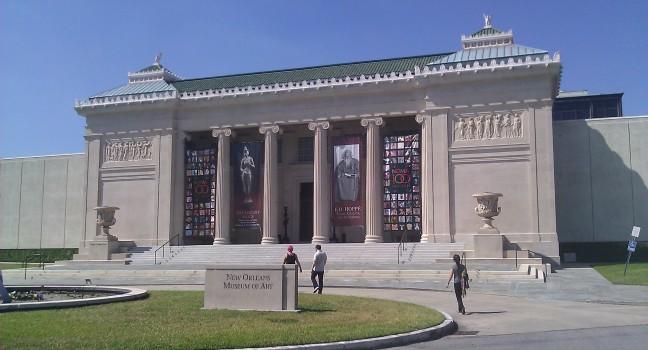
Gracing the main entrance to City Park since 1911, this traditional fine-arts museum draws from classic Greek architecture, with several modern wings that bring additional light and space to the grand old building. NOMA now has 46 galleries housing an outstanding permanent collection. Made up of nearly 40,000 objects, the installations and exhibits represent historical periods from the Italian Renaissance to the best of the contemporary world. A wealth of American and European art—French, in particular—makes up much of the collection, with works by Monet, Renoir, Picasso, Cornell, and Pollock. Louisiana artists are also well represented, and the museum boasts photography, ceramics, and glassworks from cultures around the globe, plus outstanding holdings in African, pre-Columbian, and Asian art.

Henry Moore's handsome Reclining Mother and Child greets visitors at the entrance of the Sydney and Walda Besthoff Sculpture Garden. Most of the garden's 90-some sculptures, representing some of the biggest names in modern art, were donated by avid local collectors Sydney and Walda Besthoff. Meandering trails and bridges carry visitors over bayou lagoons and past a fascinating combination of famed traditional sculpture and contemporary works, including major pieces by Jacques Lipchitz, Barbara Hepworth, and Joel Shapiro. The garden is open daily from 10 am to 5 pm from October through March, and until 6 pm the rest of the year; admission is free.

1 Collins Diboll Circle, New Orleans, LA, 70124, USA
504-658–4100
Sight Details
$20
Closed Mon.

Something incorrect in this review?

Ogden Museum of Southern Art

Warehouse District Fodor's Choice
Ogden Museum of Southern Art, New Orleans, Louisiana - iPhone 4 with HDR Pro
New Orleans 101 by <

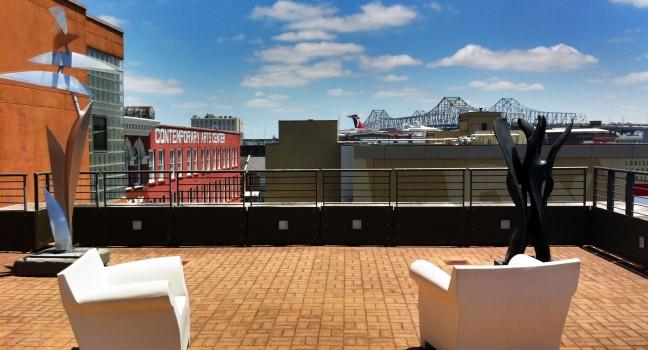
Art by southern artists, made in the south, about the south, and exploring southern themes fills this elegant five-story building. The basis of the museum's permanent collection are 1,200 works collected by local developer Roger Ogden since the 1960s. It has now grown to more than 4,000 pieces, including paintings, ceramics, drawings, sculptures, photographs, and designs. These pieces, along with special exhibitions, showcase artists from Washington, D.C., and 15 southern states spanning the 18th through 21st century. A central stair atrium filters natural light through the series of galleries, and a rooftop patio serves as a sculpture garden with lovely views of the surrounding area. The gift shop sells crafts and jewelry by southern artists and books and movies celebrating the south. Thursday night (6–8 pm) comes alive with Ogden After Hours, featuring live music, artist interviews, refreshments, children's activities, and special gallery exhibitions.

Alcée Fortier Park

Bayou St. John

Situated at Esplanade Avenue and Mystery Street, this tiny sliver of a park was named for the philanthropist and professor Alcée Fortier, who owned much of the surrounding area in the late 19th century and who founded a public school. A neighborhood favorite, the park is almost completely maintained by the efforts of local volunteers who tend the lush landscaping, which includes palms, caladiums, and azaleas, keep up the collection of whimsical sculptures and art, and make sure the concrete chess tables are ready for game time (complete with baskets of chess pieces). A focal point of the Bayou St. John neighborhood, Alcée Fortier Park is surrounded by a concentration of hip restaurants and neighborhood grocers.

1301--1399 Mystery St., New Orleans, LA, 70119, USA

Something incorrect in this review?

Audubon Butterfly Garden and Insectarium

French Quarter

Enter through the second floor of the Audubon Aquarium to find this relocated museum, with newly imagined exhibits on life as a bug and all the big ways these small animals live and work. Explore the world's insect myth and lore, venture into a Louisiana swamp, and marvel at the hundreds of delicate denizens flying free in the Japanese butterfly garden overlooking the Mississippi River. At Bug Appétit, sample (or simply observe) as chefs cook the world's most edible insects into creative culinary inventions.

Audubon Zoo

Uptown

Consistently ranked as one of the top zoos in the nation, the Audubon Zoo presents a wide array of animals in exhibits that mimic their natural habitats, including giraffes, lions, and elephants. The Louisiana Swamp exhibit re-creates the natural habitat of alligators, including a rare white alligator (technically a leucistic gator), nutrias (large swamp rodents), and catfish; feeding time is always well attended. Among other highlights are the Reptile Encounter, the Komodo dragon exhibit, and gorilla and flamingo exhibits. Several attractions are available for additional fees, including a train tour that departs every 30 minutes from the swamp exhibit. Cool Zoo, a splash park featuring a 28-foot white-alligator slide, bubbling fountains, and splash zones, has one area set aside for toddlers and young children. Cool Zoo also includes Gator Run, a lazy river with sand beaches, water cannons, and jumping jets. (Cool Zoo is open weekends in May, then opens daily from Memorial Day until early August, when it returns to weekends-only through Labor Day; separate admission is $13 for nonmembers.)

The Fly

Carrollton-Riverbend

Spend an afternoon picnicking at this lush green park with spectacular views of the Mississippi, just on the other side of Audubon Zoo. Officially called the Riverview, locals call it "the Fly" after a butterfly-shape building that used to be on-site. It is a popular place for picnics and pick-up sports. The park is particularly beautiful in the early evening, when you can watch the sun set just beyond the river. Note that on busy evenings and weekends, the departing, single-file traffic can be heavy.

River Dr., New Orleans, LA, 70118, USA

Something incorrect in this review?

JAM NOLA

Bywater

Standing for joy, art, and music, JAM NOLA is a series of immersive and colorful exhibits showcasing the works of some 30 local artists. The space is chock full of murals and installations, with plenty of fun photo opportunities. Tickets must be purchased in advance online. JAM NOLA is scheduled to move to Frenchmen Street by December 2024; check the website for updated information before you go.

2832 Royal St., New Orleans, LA, 70117, USA
504-233--9152
Sight Details
$30
Closed Tues. and Wed.

Something incorrect in this review?

Louis Armstrong Park

Tremé

With its huge, lighted gateway and its paths meandering through 32 acres of grassy knolls, lagoons, and historic landmarks, Louis Armstrong Park is a fitting tribute to the famed jazz musician's legacy. Elizabeth Catlett's famous statue of Louis Armstrong is joined by other artistic landmarks, such as the bust of Sidney Bechet, and the park now houses the New Orleans Jazz National Historical Park.

Inside the park and to the left is Congo Square, marked by an inlaid-stone space, where enslaved people in the 18th and early 19th centuries gathered on Sunday, the only time they were permitted to play their music openly. The weekly meetings held here have been immortalized in the travelogues of visitors, leaving invaluable insight into the earliest stages of free musical practices by Africans and African Americans. Neighborhood musicians still congregate here at times for percussion jams, and it is difficult not to think of the musical spirit of ancestors hovering over them. Marie Laveau, the greatly feared and respected voodoo queen of antebellum New Orleans, had her home a block away on St. Ann Street and is reported to have held rituals here regularly.

Behind Congo Square is a large gray building, the Morris F.X. Jeff Municipal Auditorium; to the right, behind the auditorium, is the beautifully renovated Mahalia Jackson Center for the Performing Arts, which is home to the New Orleans Opera and hosts an excellent year-round calendar of events—everything from readings to rock concerts. The St. Philip Street side of the park houses the Jazz National Historical Park, anchored by Perseverance Hall, the oldest Masonic temple in the state. However, be aware that the park is often nearly deserted, and bordered by some rough stretches of neighborhood; it's patrolled by a security detail, but be very careful when wandering and don't visit after dark. The park is open from 7 am to 7 pm year-round.

N. Rampart St. between St. Philip and St. Peter Sts., New Orleans, LA, 70117, USA

Something incorrect in this review?

Louisiana Children's Museum

Mid-City

This top-notch children's museum covers 8½ acres of educational fun and exploration within City Park. Favorite indoor exhibits include a hands-on history of New Orleans and its architecture as well as an interactive exploration through food for the young mind, from growing it to shopping and cooking. On the second floor, children can splash through the mighty Mississippi with a 100-foot water table. The best part of the museum's new location in City Park is perhaps its acres of outdoor fun, including tunnels, slides, and educational exhibits on Louisiana flora and fauna.

15 Henry Thomas Dr., New Orleans, LA, 70124, USA
504-523–1357
Sight Details
$18
Closed Mon. and Tues.

Something incorrect in this review?

Museum of the Southern Jewish Experience

Warehouse District

Taking a deep dive into patterns of immigration, commerce, slave ownership, and the bonds of friendship between Jewish settlers and the non-Jewish southerners, this compact museum displays creative tableaus and some 4,000 artifacts that inform the visitor about how Jews influenced and were influenced by the south. Learn about how Jewish and southern cuisines merged, how Jews became involved in the Civil Rights Movement, and more. There’s also a beautiful collection of stained glass windows inspired by synagogues throughout the south.

818 Howard Ave., New Orleans, LA, 70113, USA
504-384--2480
Sight Details
$15
Closed Tues.

Something incorrect in this review?

New Orleans Glassworks & Printmaking Studio

Warehouse District

See free demonstrations of printmaking, glassmaking and design, and metal alchemy in this restored, 1800s-era brick warehouse (with a whopping 25,000-square-foot interior). The studio offers group and individual classes. Call in advance to make reservations for hands-on instruction. A shop and gallery display and sell the finished products.

New Orleans Jazz National Historical Park

French Quarter

In 1987 the U.S. Congress declared jazz a "national American treasure," and shortly thereafter the New Orleans Jazz National Historical Park was created to educate people about the art form and to preserve its history. The park hosts free performances and educational events in two locations around the French Quarter: the Visitor Center and the Old U.S. Mint, which also houses the state's jazz collection. Some of the park's rangers are also working musicians; don't miss the chance to catch their lively and informative demonstrations exploring the full range of Louisiana's musical heritage.

916 N. Peters St., New Orleans, LA, 70116, USA
504-589–4841
Sight Details
Free
No performances Sun. or Mon.

Something incorrect in this review?

Plessy vs. Ferguson Site

Faubourg Marigny

The inciting incident leading to the landmark 1896 “separate but equal” Supreme Court case took place at the train tracks between the Bywater and the Marigny, when a man named Homer Plessy boarded an all-whites train as an act of planned civil disobedience. A historical marker at the spot commemorates Plessy’s bravery in paving the way for later civil rights action. Keith Plessy and Phoebe Ferguson, modern day descendants of Homer Plessy and Judge Ferguson (who voted against Plessy in the case), unveiled the plaque in 2009 and today run the Plessy & Ferguson Foundation, dedicated to civil rights education and history.

Urban South Brewery

Lower Garden District

Easily the fastest growing brewery in the region, Urban South sells its Holy Roller IPA (a juicy New England–style) and the extremely popular Paradise Park lager (a light beer adored for its colorful can design) all over town. Stop by the large warehouse taproom for more playful and interesting specials, with everything from triple and grapefruit IPAs to Juvie Juice, a hard iced tea collaboration with Rapper Juvenile. Keep an eye out for crawfish pop-ups during spring.

VUE Orleans

Central Business District

This informative and visually stunning observatory on the top of the Four Seasons Hotel offers and indoor and outdoor observation decks overlooking the river. An art-filled gallery of touch screens deliver stories of New Orleans music, food, and Mardi Gras history, as well as original films that touch on Civil Rights history, the Mississippi River, and Hurricane Katrina.

2 Canal St., New Orleans, LA, 70130, USA
504-285--3600
Sight Details
$29.95; $39.95 for a guided tour

Something incorrect in this review?