
59 Best Sights in Los Cabos and the Baja Peninsula, Mexico

Background Illustration for Sights

We've compiled the best of the best in Los Cabos and the Baja Peninsula - browse our top choices for the top things to see or do during your stay.

Bahía Chileno

Fodor's choice
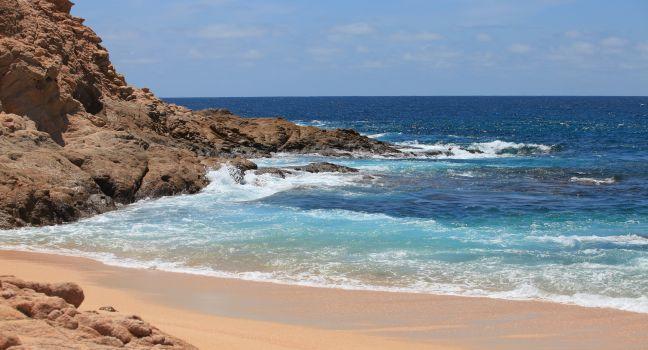
El Chileno beach, a public beach in Los Cabos, Mexico.
(c) Hapinessey | Dreamstime.com

A calm enclave—with golf courses, residences, and Chileno Bay Resort—is roughly midway between San José and Cabo San Lucas. Consistently ranked one of the cleanest beaches in Mexico, Chileno has been awarded “Blue Flag” certification, meaning 32 criteria for safety, services, water quality, and other standards have been met. The beach skirts a small, crescent-shape cove with aquamarine waters and an outside reef that are perfect for snorkeling and swimming (there are even restrooms, showers, and handicap access). To the east are tide pools great for exploring with the kids. Getting here is easy, thanks to the well-marked access ramps on both sides of the road. Along the western edge of Bahía Chileno, some 200 yards away, are some good-size boulders that you can scramble up. In winter this part of the Sea of Cortez gets chilly—refreshing for a dip, but most snorkelers don't spend too much time in the water. On weekends get to the bay early if you want to claim shade under a palapa. Amenities: toilets; showers; parking lot. Best for: swimming; snorkeling; sunset.
Bahía Santa María

Fodor's choice
Beautiful Santa Maria bay to snorkel in.
(c) Dgirard12 | Dreamstime.com

This wide, sloping, horseshoe-shape beach is surrounded by cactus-covered rocky cliffs; the placid waters here are a protected fish sanctuary. The bay is part of an underwater reserve and is a great place to snorkel: brightly colored fish swarm through chunks of white coral and golden sea fans. Unfortunately, this little slice of paradise has limited palapas for shade, so arrive early or bring a beach umbrella. In high season, from November to May, there's usually someone renting snorkeling gear or selling sarongs, straw hats, and soft drinks. It's best to bring your own supplies, though, including lots of drinking water, snacks, and sunscreen. Snorkel and booze-cruise boats from Cabo San Lucas visit the bay in midmorning through about 1 pm. Arrive midafternoon if you want to get that total Robinson Crusoe feel. The parking lot is a quarter mile or so off the highway and is sometimes guarded; be sure to tip the guard. The bay is roughly 19 km (12 miles) west of San José and 13 km (8 miles) east of Cabo San Lucas. Heading east, look for the sign saying "playa santa maría." Amenities: toilets; free parking; showers; lifeguards. Best for: snorkeling; swimming; surfing; walking.

Baron Balché

Fodor's choice

Despite up-and-coming wineries fighting for the spotlight, this premier producer is still considered the Rolls-Royce of Valle de Guadalupe’s wineries. During the pandemic, the grounds were expanded to include a market, café, and restaurant. The wine tours are next level, unveiling an entire underground labyrinth of barrel hallways and tasting rooms where you can sample some of the most intense, bold wines in the valley. The majority of their wines live three years in the barrel, and four years in the bottle before hitting the shelf. Logos on the premium line are based on Mayan numbers, with outstanding selections like the Balché UNO, a Grenache with hints of raspberry and caramel. The Balché CERO 100% Nebbiolo is the king of their wines, having aged four years in the barrel. Even their younger wines are exceptional, which is understandable with old vines and French barrels behind the story, but expect to pay a hefty price to try them. Tastings for top selections will cost you about $60, but considering you are sampling $200 bottles of wine, it just might be worth it. Be sure to end your wine tour here, otherwise the rest of your tastings might pale in comparison.

Ej. El Porvenir, Valle de Guadalupe, Mexico
646-155–2141
Sight Details
Tastings from $18

Something incorrect in this review?

Recommended Fodor's Video

Isla Espíritu Santo

Fodor's choice

Ask anyone living in La Paz for their favorite place or top recommendation and they're bound to reply with a passionate sigh, "La Isla." It's no wonder, as Espíritu Santo, an uninhabited island about an hour's boat ride into the ocean, is unbelievably special. It's a UNESCO World Natural Heritage Site as well as a national park, and a number of tour operators will take you out for the day to snorkel or scuba dive at Los Islotes, a bustling sea lion colony, kayak across the still waters, or relax on a completely vacant beach. With a few, you can even camp overnight.

Land's End

Fodor's choice

Land’s End sightseeing is at the heart of nearly every local boat tour. Everybody knows El Arco (The Arch), the naturally occurring granite arc that's defined the vista for millions of years, but there's more to see here, too. Granite pinnacles Pelican Rock and Neptune’s Finger jut out from the sea and are home to marine life galore. Numerous beautiful beaches—most famously Playa del Amor (Lover’s Beach) and Playa del Divorcio (Divorce Beach)—are dotted along the base. There's also a keyhole-shape opening known as The Window to the Pacific; a rock that purportedly looks like the famous cartoon canine, Scooby Doo; and a spade-shape opening on the Pacific side known as the Pirate’s Cave, reputed to be the site of long-buried treasure. Sightseers will also notice the ruins of the old fish cannery, which was the center of local commerce before the age of tourism. The beaches below it are popular among Mexican tourists, separate from the hubbub of nearby Médano.

You can hike the peak at Land's End called Mt. Solmar (or traditionally Cerro del Vigía, which means "lookout hill"; it was a lookout point for the pirates who would attack Spanish ships) for lovely views of the Cabo San Lucas Bay. A local man named Enrique Morales, who owns the private property leading up to Mt. Solmar, leads free, dog-friendly morning hikes every day except Saturday.

You can't walk here from town so plan to hire a car to take you there, and back.

Parque Nacional Cabo Pulmo

Fodor's choice

At this 27 3/4-square-mile national park, a 20,000-year-old coral reef has been legally protected since 1995 and is home to more than 2,000 different kinds of marine invertebrates—as well as more than 800 species of marine life, from mantas and giant sea turtles to dolphins and sea lions, and most famously, bull sharks, who divers can get face-to-face with year-round. The park comprises both land and sea, and is renowned among diving aficionados for its eight fingers of hard coral reef, plus its immense abundance of colorful tropical fish. The best months to visit are August, September, and October, when visibility is highest. The park isn't difficult to access. Head southwest from La Ribera and it's just 8 km (5 miles) from the end of the paved road; it's bordered by Playa Las Barracas in the north and Bahía Los Frailes to the south. It can also be reached by the dirt road running along the coast from San José del Cabo. It'll take you two hours or more this way, but the coast along this route is unmatched. (Though, if it's raining, stick to the paved route.) Dive centers line Cabo Pulmo's main street, leading to the beach, all of whom offer dive trips and snorkeling tours, full gear rentals, and more.

Camino Cabo Este, Cabo Pulmo, 23574, Mexico
Sight Details
$10

Something incorrect in this review?

Lover's Beach

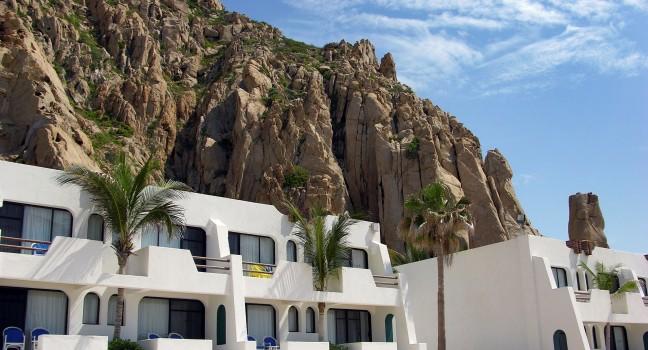
The resort building on Lovers' beach in Cabo San Lucas, Mexico.
Ramunas Bruzas / Shutterstock

Accessible only by boat, this charming beach at the tip of the Land's End peninsula is just as lovely as its name implies. Though the towering cliffs on either side lend an air of romantic seclusion, don't expect much privacy: it's one of the area's most photographed spots. It's an excellent place to swim and snorkel, with a variety of tropical fish easily visible in the clear, shallow water. Walk through a gap in the rocks to reach the cheekily named Divorce Beach (Playa del Divorcio); while the water at Lover's Beach faces the Sea of Cortez and is calm and pleasant, Divorce Beach is on the turbulent and unpredictable Pacific. It's far too dangerous for swimming, but ideal for sunbathing. Picnics are also popular, but be sure to bring your own food and refreshments; there may be a vendor or two selling drinks, but not reliably. To get here, you can hire a water taxi (called a "panga") to bring you there and back from Playa El Médano or the marina. Prices vary and can be negotiable depending on the vendor, but typically the cost can be $10--$20; the final departure back to shore is usually 4 pm. You can also rent a kayak, Jet Ski, or paddleboard and make your way over independently. Amenities: none. Best for: swimming; snorkeling.

Cabo San Lucas, 23410, Mexico

Something incorrect in this review?

Adobe Guadalupe

Adobe Guadalupe makes an array of fascinating old-world-style blends named after angels. Don't miss the Rafael, which is a blockbuster blend; the Serafiel, Gabriel, and Miguel are also excellent. Gaining wide notice is the Jardín Romántico—100% Chardonnay—and, of course, the powerful tequila and mezcal. Tastings are offered daily 10--5 and include four reds, one white, and one rosé for $27 (free to hotel guests). Shipping is available. Be sure to visit the wine store and tapas food truck on your way out.

Off Carretera Tecate–Ensenada, Valle de Guadalupe, 22750, Mexico
646-155–2094
Sight Details
From $27
Reservations essential

Something incorrect in this review?

Aguas Termales Santa Rita

It might not be an obvious bet to seek out natural hot springs in a warm weather destination, but the Aguas Termales Santa Rita are truly special. This divinely sculpted Jacuzzi is an enchanting place to soak and relax, and there's a refreshing, cool-water river bend just a few steps away, ideal for moving back and forth between the two. The smell of sulfur is strong, but you get used to it, and it does wonders for your skin and any body aches. Assuming you bring your own provisions, there are areas to sit and eat (complete with picnic tables and basic grills) and even overnight campsites. It's a long drive down a dirt road to get here, but it adds to the charm and adventure of the experience. You will not have cell reception, so downloading Maps in advance is a must. You'll need cash to pay the entry fee, collected presumably by the family who lives on the land.

Note: there are two hot springs compounds right next to each other, with separate entrances and fees. The first, Los Encinos, is not as nice as Santa Rita, but could be ideal for families with young children as the water is more shallow and space more confined, making it easier to supervise your brood. Everyone else should continue driving just another hundred yards more to reach Santa Rita.

23500, Mexico
Sight Details
$8

Something incorrect in this review?

Avenida López Mateos

Avenida López Mateos, commonly known as Calle Primera, is the center of Ensenada's traditional tourist zone and shopping district. Hotels, shops, restaurants, and bars line the avenue for eight blocks, from its beginning at the foot of the Chapultepec Hills to the dry channel of the Arroyo de Ensenada. The avenue also has sidewalk cafés, art galleries, and most of the town's souvenir stores, where you can find pottery, glassware, silver, and other Mexican crafts.

Av. López Mateos, Ensenada, 22800, Mexico

Something incorrect in this review?

Casa de Piedra

The brainchild of Hugo D'Acosta, Casa de Piedra is part of an impressive portfolio that includes Paralelo, Aborigen, and La Borde Vieille, known for its Mexican and French blends. Try Casa de Piedra's flagship wine Contraste or their sparkling wines. The space is interesting and modern, designed by the winemaker's architect brother. Visits are by reservation only.

Carretera Tecate–Ensenada, Km 93.5, Valle de Guadalupe, 22766, Mexico
646-155–5267
Sight Details
Tastings from $50
Closed Tues. and Wed.

Something incorrect in this review?

Cascada La Ciénega

A (usually) dry riverbed called an arroyo runs through the center of Los Barriles, and it is a wild landscape to rip through on an ATV. About 20 km (12½ miles) in is a waterfall whose size changes by the month; sometimes its pool is only deep enough for a splash, but it's still miraculous to see freshwater rapidly gushing out of rocks in the middle of an otherwise barren desert.

Los Barriles, Mexico

Something incorrect in this review?

Cascada Sol de Mayo

If you've heard whispers of a waterfall, it was likely this: Cascada Sol del Mayo, located at the base of a canyon within the Rancho Ecológico Sol de Mayo, just outside of the town of Santiago. It's a bit of a journey to reach, but it's a fun adventure for active travelers. First, head down a long dirt road from the Mirador Santiago de Yola, a small observation platform overlooking Santiago's lagoons and palm groves; you'll likely lose cell reception, but it's hard to get lost (download the route on Google Maps ahead of time if you'd like the reassurance). Once you reach the ranch, you'll need to pay an entrance fee, and it's a short but steep hike down into the canyon. You'll be rewarded halfway with a view of the twinkling green swimming hole and dainty but powerful cascade. The crystal clear, freshwater pool is incredibly refreshing (especially after that descent on a warm day) and has pockets both deep (nice for jumping) and shallow (nice for standing or floating).

Catedral de Nuestra Señora de la Paz

The downtown church, Catedral de Nuestra Señora de la Paz, is a simple, unassuming building near the site of La Paz's first mission, which no longer exists. Built in 1861, it's one of La Paz's oldest buildings, and so no changes can be made, even for restoration. It was built with volcanic stone, the primary available material at the time; inside you can find a modest gilded altar but beautiful stained-glass windows.

Revolución de 1910, La Paz, 23000, Mexico

Something incorrect in this review?

El Cielo

Considered a giant among the region’s vineyards, this winery produces 30,000 cases of wine, has its own concert venue, private villas, and the popular restaurant Latitude 32. Most stop by to sample the fine blends named after constellations in honor of the owner’s love for astronomy. Behind the barrel is winemaker Jesus Rivera, responsible for much of the success of neighboring wineries where he previously consulted. For an elegant Chardonnay, try Capricornius, or for an Italian grape blend of Nebbiolo and Sangiovese, the Perseus aged 24 months in French oak barrels is also wonderful. The Orion is one of their most popular reds. Over 75 percent of their wines are certified organic, with eco-friendly practices at the root of their production (solar power, water wells, and aqua reserves). For the jewel of El Cielo, go big with their reserved collection, Estrellas (stars) that have been preserved up to 20 years. Be sure to book the "Blend Your Own Wine Experience" that includes a tour, tasting, and wine-lab workshop where a certified sommelier will teach you how to create your own wine. 

Parcela 118, Km 7.5, Valle de Guadalupe, Mexico
646-155–2220
Sight Details
Tastings and tours from $22

Something incorrect in this review?

Jardín Velasco

This small but sweet town square sits between the cathedral and the former government palace, which now houses El Museo de Arte de Baja California Sur (MUABCS). Admission to the museum is free, so stop in to see a collection of work by local and national artists. Concerts are held in the garden's gazebo and locals gather here for art fairs and farmers markets.

La Paz, 23000, Mexico

Something incorrect in this review?

L.A. Cetto

L.A. Cetto is a giant that produces 50% of the wines that come out of Valle de Guadalupe, making it the closest thing to a California wine country experience south of the border. When tasting or buying, avoid the more affordable wines, and go straight for the premiums. Having earned over 950 international awards for their 40 labels, they are well known for their lovely Nebbiolo and Chardonnay, and their nicely balanced Don Luis Concordia. Don't miss the Peninsula Espaldera, a Sangiovese-Aglianico blend with aromas of black fruit and toffee. Tours take place daily 10–5 on the half hour.

Carretera Tecate–Ensenada, Km 73.5, Valle de Guadalupe, Mexico
646-155–2179

Something incorrect in this review?

La Bufadora

Legend has it that La Bufadora, an impressive tidal blowhole (la bufadora means the buffalo snort) in the coastal cliffs at Punta Banda, was created by a whale or sea serpent trapped in an undersea cave. The road to La Bufadora along Punta Banda—an isolated, mountainous point that juts into the sea—is lined with olive, craft, and tamale stands; the drive gives you a sampling of Baja's wilderness. If you're in need of some cooling off, turn off the highway at the sign for La Jolla Beach Camp. The camp charges a small admission fee for day use of the beachside facilities, but it's a great place to do a few "laps" of lazy freestyle or breaststroke at La Jolla Beach. At La Bufadora, expect a small fee to park, and then a half-mile walk past T-shirt hawkers and souvenir stands to the water hole itself. A public bus runs from the downtown Ensenada station to Maneadero, from which you can catch a minibus labeled Punta Banda that goes to La Bufadora. Guided tours from Ensenada to La Bufadora will run you about $40.

Carretera 23, Ensenada, 22794, Mexico

Something incorrect in this review?

La Cava de Marcelo

For many, a visit to Baja Norte must include an afternoon drive to the cheese caves of Marcelo in Ojos Negros, just 45 minutes outside Ensenada. With Swiss-Italian roots, owner Marcelo Castro Chacon is now the fourth generation to carry on the queso tradition since it first began in 1911. A visit to the farm includes a tour of the milking facilities and a tasting of seven cheeses and their signature Ramonetti red wine. Milder selections seasoned with basil, black pepper, and rosemary are more popular with locals than their sharper cheeses, aged up to 2½ years, loved by out-of-towners. As Mexico’s only cheese cave (and the first in Latin America), this beloved factory produces 450 pounds of cheese per day. Milking takes place at 5 pm daily and the small on-site shop sells the remarkable marmalade and wine that accompany your cheese tasting. Those with time and an appetite can dine under the shade of a peppertree for a lunch menu integrating Marcelo’s cheeses and organic fruits and vegetables from his farm (expect flies in summer). The cactus salad and portobello mushrooms with melted cheese make the ideal starters to the regional trout served with roasted garlic. The fig mousse alone is worth a visit. Be aware that cell service is limited and the road here is winding.

Carretera Ensenada–San Felipe, Km 43, Ensenada, Mexico
646-117–0293
Sight Details
$20 tour and tasting
Closed Mon.–Wed.

Something incorrect in this review?

La Lomita

Owned by Fernando Pérez Castro, this new-generation winery creates rich wines made with 100% local grapes. With six labels under their barrel, their blends are sold to top restaurants and hotels in Mexico City, Riviera Maya, and Cabo. The preferred Sacro—a mix of Cabernet Sauvignon and Merlot—has hints of pomegranate, cherry, pepper, berries, and maple syrup, while the Tinto de la Hacienda has characteristics of compote and jam. For something unique, try Pagano, their rebel baby Grenache that comes in a square bottle. The circular tasting room overlooks a pit of shiny wine tanks where vines dangle from above. It's the place where cool people sip, especially San Diego day-trippers who Instagram their pours in front of murals by Mexican artist Jorge Tellaeche. Tastings are by appointment.

Plot 13, Valle de Guadalupe, Mexico
646-156–8466
Sight Details
Tastings $35
Closed Mon. and Tues.

Something incorrect in this review?

Las Bodegas de Santo Tomás

Baja's oldest wine producers gives tours and tastings at its downtown Ensenada winery and bottling plant. Santo Tomás's best wines are the Alisio Chardonnay, the Cabernet, and the Tempranillo; avoid the overpriced Único. The winery also operates the enormous wineshop, a brick building across the avenue. The Santo Tomás Vineyards can be found on the eastern side of Highway 1 about 50 km (31 miles) south of Ensenada in Santo Tomás Valley, fairly near the ruins of the Misión Santo Tomás de Aquino, which was founded by Dominican priests in 1791. They have a third facility, Cava San Antonio de las Minas, at the entrance to Valle de Guadalupe at Km 94.7.

Las Palmas

Todos Santos is an oasis, meaning fresh water naturally runs through the desert into the ocean. Greenery blooms alongside cracking stretches of hardened sand, with palm trees and cacti living as neighbors. Within the heart of the oasis sits Playa Las Palmas, one of the only swimmable beaches in Todos Santos. You need to walk through a corridor of lush plant life (and potentially an ankle-deep stream) to reach the ocean, which feels so surprisingly out of place, you'd think it was planted by a gardener. It's a quiet, beautiful place to spend some time, although beware of horse droppings and sand fleas. There are no amenities, so bring your own umbrellas and snacks. Amenities: none. Best for: swimming.

Todos Santos, Mexico

Something incorrect in this review?

Liceaga

This winery produces a variety of Merlot- and Cabernet-heavy blends. Try Liceaga's "L," a complex and elegant wine with hints of cherry, blackberry, cassis, plum and pepper. The tasting room is open most days 9–4.

Carretera Tecate–Ensenada, Km 93, Valle de Guadalupe, 22766, Mexico
646-188–5742
Sight Details
Four tastings, $20

Something incorrect in this review?

Malecón La Paz

This seaside promenade is La Paz's seawall, tourist zone, and social center all rolled into one. It runs for 5 km (3 miles) along Paseo Álvaro Obregón and has a broad palm-lined walkway, statues of whale sharks, dolphins, sharks, and other local denizens of the deep, as well as several park areas in the directly adjacent sand. You can swim here, but the beaches outside town are of significantly better quality. The center point is Malecón Plaza, which features a white gazebo and small concrete square where musicians sometimes appear on weekend evenings. Paceños are fond of strolling the malecón at sunset when the heat of the day finally begins to subside.

Paseo Álvaro Obregón, La Paz, 23000, Mexico

Something incorrect in this review?

Marina Cabo San Lucas

Marina San Lucas

One of the most active marinas in the entire world (many of its 380 docked boats go in and out every day), Cabo's marina is great to stroll along, people-watch, and take in the glittering views. Lined with dining and shopping spots, you can easily spend hours here, and likely will. Expect a few tourist trapsas well as pesky solicitations from vendorsbut the inflated pricing may be worth the convenience and scenery.

Blvd. Paseo de la Marina, Cabo San Lucas, Mexico

Something incorrect in this review?

Mercado de Mariscos

At the northernmost point of Boulevard Costero, the main street along the waterfront, is an indoor-outdoor fish market where row after row of counters display piles of shrimp, tuna, dorado, and other fish caught off Baja's coasts. Outside, stands sell grilled or smoked fish, seafood cocktails, and fish tacos. You can pick up a few souvenirs, eat well for very little money, and take some great photographs. If your stomach is delicate, try the fish tacos at the cleaner, quieter Plaza de Mariscos in the shadow of the giant beige Plaza de Marina that blocks the view of the traditional fish market from the street.

Boulevard Costero, Ensenada, 22800, Mexico

Something incorrect in this review?

Mogor Badan

One of the area’s few vineyards to offer organic wines, this 1950s ranch has gained renown for whites such as their remarkably fragrant Chasselas del Mogor. Their newer Pirineo blends a contemporary Mexican Grenache with a French Syrah. Wine tastings are available by reservation only on weekends 11–5 in their underground cave. After wine tasting, dine at the neighboring garden restaurant, operated by the talented chef Drew Deckman.

Carretera Tecate–Ensenada, Km 85.5, Valle de Guadalupe, 22755, Mexico
646-156–8156
Sight Details
3 tastings with appetizers, $25
Closed weekdays

Something incorrect in this review?

Monte Xanic

Tastings at Monte Xanic take place at the edge of a lovely pond and include three reds and two whites for $35. Most impressive is their consistency, right down to the cheapest table wines. Tastings and tours are available by appointment only. Be sure to check out the impressively styled cellar.

Careterra Tecate–Ensenada, Km 70, Valle de Guadalupe, 22750, Mexico
646-155–2080

Something incorrect in this review?

Museo de la Ballena y Ciencias del Mar

Commonly referred to by English speakers as The Whale Museum, this popular malecón-adjacent attraction actually celebrates myriad forms of marine life, from dolphins and sharks to sea lions and endangered sea turtles. The enormous whale skeletons, built from bones sourced from specimens that washed up on nearby shores, are undoubtedly the most spectacular items on display, however. Sperm, humpback, and other whale re-creations hang suspended from the high ceilings, with brains and other organs preserved in accompanying exhibits. Guided tours provide a wonderful introduction to the region’s aquatic abundance, and are available in several languages, including English. The gift shop next door, meanwhile, offers souvenir T-shirts and other cetacean-theme memorabilia.

Museo Regional de Antropología y Historia de Baja California Sur

La Paz's culture and heritage are well represented at the Museo de Antropología, which has re-creations of indigenous Comondu and Las Palmas villages, photos of cave paintings found in Baja, and copies of Cortéz's writings on first sighting La Paz. All exhibit descriptions are labeled in both English and Spanish. If you're a true Baja aficionado and want to delve into the region's history, this museum is a must; otherwise, a quick visit is all you need.

Calle Altamirano at Calle 5 de Mayo, La Paz, 23000, Mexico
612-125--6424
Sight Details
$3

Something incorrect in this review?