
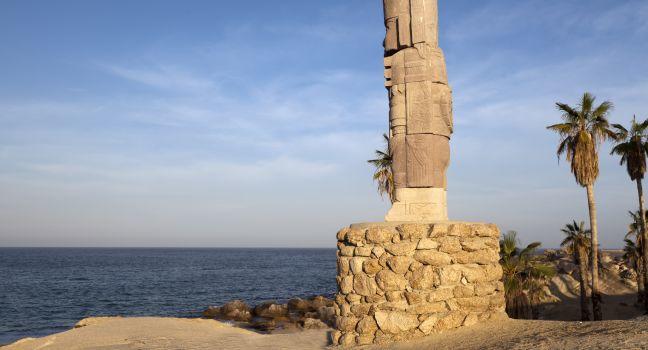
6 Best Sights in Los Cabos and the Baja Peninsula, Mexico

Background Illustration for Sights

We've compiled the best of the best in Los Cabos and the Baja Peninsula - browse our top choices for the top things to see or do during your stay.

Bahía Chileno

Fodor's choice
El Chileno beach, a public beach in Los Cabos, Mexico.
(c) Hapinessey | Dreamstime.com

A calm enclave—with golf courses, residences, and Chileno Bay Resort—is roughly midway between San José and Cabo San Lucas. Consistently ranked one of the cleanest beaches in Mexico, Chileno has been awarded “Blue Flag” certification, meaning 32 criteria for safety, services, water quality, and other standards have been met. The beach skirts a small, crescent-shape cove with aquamarine waters and an outside reef that are perfect for snorkeling and swimming (there are even restrooms, showers, and handicap access). To the east are tide pools great for exploring with the kids. Getting here is easy, thanks to the well-marked access ramps on both sides of the road. Along the western edge of Bahía Chileno, some 200 yards away, are some good-size boulders that you can scramble up. In winter this part of the Sea of Cortez gets chilly—refreshing for a dip, but most snorkelers don't spend too much time in the water. On weekends get to the bay early if you want to claim shade under a palapa. Amenities: toilets; showers; parking lot. Best for: swimming; snorkeling; sunset.
Bahía Santa María

Fodor's choice
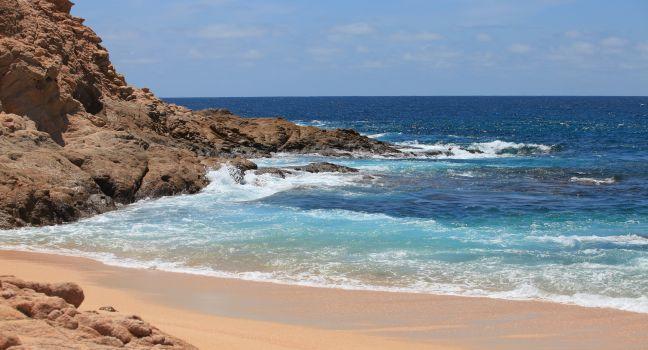
Beautiful Santa Maria bay to snorkel in.
(c) Dgirard12 | Dreamstime.com

This wide, sloping, horseshoe-shape beach is surrounded by cactus-covered rocky cliffs; the placid waters here are a protected fish sanctuary. The bay is part of an underwater reserve and is a great place to snorkel: brightly colored fish swarm through chunks of white coral and golden sea fans. Unfortunately, this little slice of paradise has limited palapas for shade, so arrive early or bring a beach umbrella. In high season, from November to May, there's usually someone renting snorkeling gear or selling sarongs, straw hats, and soft drinks. It's best to bring your own supplies, though, including lots of drinking water, snacks, and sunscreen. Snorkel and booze-cruise boats from Cabo San Lucas visit the bay in midmorning through about 1 pm. Arrive midafternoon if you want to get that total Robinson Crusoe feel. The parking lot is a quarter mile or so off the highway and is sometimes guarded; be sure to tip the guard. The bay is roughly 19 km (12 miles) west of San José and 13 km (8 miles) east of Cabo San Lucas. Heading east, look for the sign saying "playa santa maría." Amenities: toilets; free parking; showers; lifeguards. Best for: snorkeling; swimming; surfing; walking.

Baron Balché

Fodor's choice

Despite up-and-coming wineries fighting for the spotlight, this premier producer is still considered the Rolls-Royce of Valle de Guadalupe’s wineries. During the pandemic, the grounds were expanded to include a market, café, and restaurant. The wine tours are next level, unveiling an entire underground labyrinth of barrel hallways and tasting rooms where you can sample some of the most intense, bold wines in the valley. The majority of their wines live three years in the barrel, and four years in the bottle before hitting the shelf. Logos on the premium line are based on Mayan numbers, with outstanding selections like the Balché UNO, a Grenache with hints of raspberry and caramel. The Balché CERO 100% Nebbiolo is the king of their wines, having aged four years in the barrel. Even their younger wines are exceptional, which is understandable with old vines and French barrels behind the story, but expect to pay a hefty price to try them. Tastings for top selections will cost you about $60, but considering you are sampling $200 bottles of wine, it just might be worth it. Be sure to end your wine tour here, otherwise the rest of your tastings might pale in comparison.

Ej. El Porvenir, Valle de Guadalupe, Mexico
646-155–2141
Sight Details
Tastings from $18

Something incorrect in this review?

Recommended Fodor's Video

Isla Espíritu Santo

Fodor's choice

Ask anyone living in La Paz for their favorite place or top recommendation and they're bound to reply with a passionate sigh, "La Isla." It's no wonder, as Espíritu Santo, an uninhabited island about an hour's boat ride into the ocean, is unbelievably special. It's a UNESCO World Natural Heritage Site as well as a national park, and a number of tour operators will take you out for the day to snorkel or scuba dive at Los Islotes, a bustling sea lion colony, kayak across the still waters, or relax on a completely vacant beach. With a few, you can even camp overnight.

Land's End

Fodor's choice

Land’s End sightseeing is at the heart of nearly every local boat tour. Everybody knows El Arco (The Arch), the naturally occurring granite arc that's defined the vista for millions of years, but there's more to see here, too. Granite pinnacles Pelican Rock and Neptune’s Finger jut out from the sea and are home to marine life galore. Numerous beautiful beaches—most famously Playa del Amor (Lover’s Beach) and Playa del Divorcio (Divorce Beach)—are dotted along the base. There's also a keyhole-shape opening known as The Window to the Pacific; a rock that purportedly looks like the famous cartoon canine, Scooby Doo; and a spade-shape opening on the Pacific side known as the Pirate’s Cave, reputed to be the site of long-buried treasure. Sightseers will also notice the ruins of the old fish cannery, which was the center of local commerce before the age of tourism. The beaches below it are popular among Mexican tourists, separate from the hubbub of nearby Médano.

You can hike the peak at Land's End called Mt. Solmar (or traditionally Cerro del Vigía, which means "lookout hill"; it was a lookout point for the pirates who would attack Spanish ships) for lovely views of the Cabo San Lucas Bay. A local man named Enrique Morales, who owns the private property leading up to Mt. Solmar, leads free, dog-friendly morning hikes every day except Saturday.

You can't walk here from town so plan to hire a car to take you there, and back.

Parque Nacional Cabo Pulmo

Fodor's choice

At this 27 3/4-square-mile national park, a 20,000-year-old coral reef has been legally protected since 1995 and is home to more than 2,000 different kinds of marine invertebrates—as well as more than 800 species of marine life, from mantas and giant sea turtles to dolphins and sea lions, and most famously, bull sharks, who divers can get face-to-face with year-round. The park comprises both land and sea, and is renowned among diving aficionados for its eight fingers of hard coral reef, plus its immense abundance of colorful tropical fish. The best months to visit are August, September, and October, when visibility is highest. The park isn't difficult to access. Head southwest from La Ribera and it's just 8 km (5 miles) from the end of the paved road; it's bordered by Playa Las Barracas in the north and Bahía Los Frailes to the south. It can also be reached by the dirt road running along the coast from San José del Cabo. It'll take you two hours or more this way, but the coast along this route is unmatched. (Though, if it's raining, stick to the paved route.) Dive centers line Cabo Pulmo's main street, leading to the beach, all of whom offer dive trips and snorkeling tours, full gear rentals, and more.

Camino Cabo Este, Cabo Pulmo, 23574, Mexico
Sight Details
$10

Something incorrect in this review?