18 Best Sights in Barcelona, Spain

Background Illustration for Sights

We've compiled the best of the best in Barcelona - browse our top choices for the top things to see or do during your stay.

Museu d'Art Contemporani de Barcelona (MACBA)
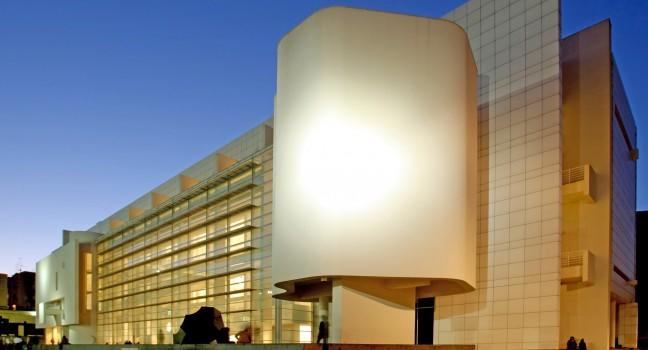
El Raval Fodor's Choice
Museum of Contemporary Art of Barcelona (MACBA)
(c) MaxiSports | Dreamstime.com

Designed by American architect Richard Meier in 1992, this gleaming explosion of light and geometry in El Raval houses a permanent collection of contemporary art, and also regularly mounts special temporary exhibitions. Meier gives a nod to Gaudí (with the Pedrera-like wave on one end of the main facade), but his minimalist building otherwise looks unfinished. That said, the MACBA is unarguably an important addition to the cultural capital of this once-shabby neighborhood. Skateboarders weave in and out around Basque sculptor Jorge Oteiza's massive sculpture, La Ola (The Wave), in the courtyard; the late Eduardo Chillida's Barcelona covers half the wall in the little square off Calle Ferlandina, on the left of the museum, in the sculptor's signature primitive black geometrical patterns.

Don't miss Keith Haring's public mural on the wall that links Carrer de Ferlandina to Plaça Joan Coromines. The MACBA's 20th-century art collection (Calder, Rauschenberg, Oteiza, Chillida, Tàpies) is excellent, as is the free app, which provides a useful introduction to the philosophical foundations of contemporary art as well as the pieces themselves. The museum also offers wonderful workshops and activities for kids. Group tours (for a minimum of 15 people) are available in English and must be booked at least a week in advance.
Pl. dels Àngels 1, Barcelona, 08001, Spain
93-412–0810
Sight Details
€12, from €10.20 online, free Sat. after 4 pm and with Barcelona Card
Closed Tues.

Something incorrect in this review?

Museu Marítim

La Rambla Fodor's Choice
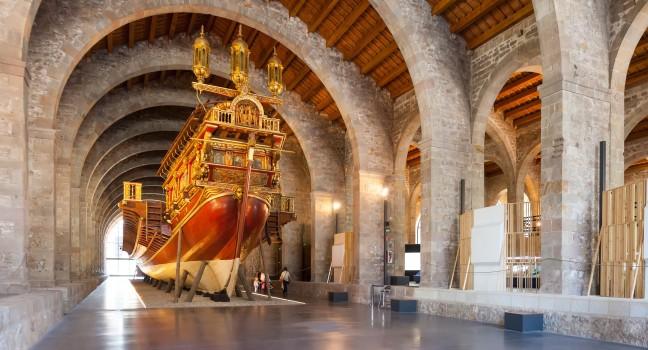
Imitation of war medieval ship in Museu Maritim de Barcelona in June 1, 2013 in Barcelona, Spain.  Museum was opened in 1929 and is located in shipyards, built in 1283.
Iakov Filimonov/Shutterstock

This superb museum is housed in the 13th-century Drassanes Reials (Royal Shipyards), at the foot of La Rambla adjacent to the harborfront. This vast covered complex launched the ships of Catalonia's powerful Mediterranean fleet directly from its yards into the port (the water once reached the level of the eastern facade of the building). Today, these are the world's largest and best-preserved medieval shipyards. Centuries ago, at a time when the region around Athens was a province of the House of Aragón (1311–90), they were of crucial importance to the sea power of Catalonia (then the heavyweight in an alliance with Aragón).

On the Avinguda del Paral·lel side of Drassanes is a completely intact section of the 14th- to 15th-century walls—Barcelona's third and final ramparts—that encircled El Raval along the Paral·lel and the Rondas de Sant Pau, Sant Antoni, and Universitat. (Ronda, the term used for the "rounds," or patrols soldiers made atop the defensive walls, became the name for the avenues that replaced them.)

The Museu Marítim is filled with vessels, including a spectacular collection of ship models. The life-size reconstruction of the galley of Juan de Austria, commander of the Spanish fleet in the Battle of Lepanto, is perhaps the most impressive display in the museum. Figureheads, nautical gear, early navigational charts, and medieval nautical lore enhance the experience, and headphones and infrared pointers provide a first-rate self-guided tour.

Concerts are occasionally held in this acoustic gem. The cafeteria-restaurant Norai, open daily 9 am to 8 pm, offers dining in a setting of medieval elegance, and has a charming terrace. Admission to the museum includes a visit to the schooner Santa Eulàlia, a meticulously restored clipper built in 1918, which is moored nearby at the Port Vell.

Av. de les Drassanes s/n, Barcelona, 08001, Spain
93-342–9920
Sight Details
€10 (includes admission to Santa Eulàlia clipper); free Sun. after 3 pm
Santa Eulàlia closed Mon.

Something incorrect in this review?

Park Güell

Gràcia Fodor's Choice
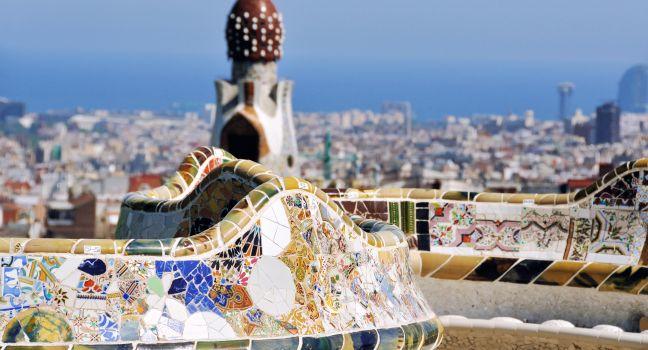
Bench in the Park Guell on July 11, 2011 in Barcelona, Spain. Famous park designed by Antoni Gaudi with a view at the city and sea. UNESCO World Heritage Site.
Madrugada Verde/Shutterstock

Built between 1900 and 1914, this park is one of Gaudí's, and Barcelona's, most visited attractions. Named for and commissioned by Gaudí's steadfast patron, Count Eusebi Güell, it was originally intended as a gated residential community based on the English Garden City model. The centerpiece of the project was a public square, with a pillared marketplace beneath it. Only two of the houses were ever built, one of which was designed by Gaudí's assistant Francesc Berenguer and became Gaudí's home from 1906 to 1925. It now houses the Casa-Museu Gaudí museum of memorabilia (currently closed for renovation).

Ultimately, the Güell family turned the area over to the city as a public park for local residents, and it remains so today. Tickets are required to access all of Park Güell, including the "monumental area," where the main attractions are located. It's advisable to purchase timed tickets online, available up to three months in advance, rather than at the park.

An Art Nouveau extravaganza with gingerbread gatehouses, Park Güell is a perfect place to visit on a sunny morning before the temperature heats up. The gatehouse on the right, topped with a rendition in ceramic tile of the hallucinogenic red-and-white fly amanita mushroom (rumored to have been a Gaudí favorite), is now part of the Barcelona History Museum. The exhibition inside has plans, scale models, photos, and suggested routes analyzing the park in detail. Atop the gatehouse on the left sits the phallus impudicus (no translation necessary).

Other Gaudí highlights include the Room of a Hundred Columns—a covered market supported by tilted Doric-style columns and mosaic medallions—the double set of stairs, and the iconic lizard guarding the fountain between them. There's also the fabulous serpentine, polychrome bench enclosing the square. The bench is one of Gaudí assistant Josep Maria Jujol's most memorable creations, and one of Barcelona's best examples of the trencadís technique (mosaics of broken tile fragments: recycling as high art).

From the Lesseps metro station, take bus No. 24 or 116 to the park entrance. From the Bus Turístic stop on Travessera de Dalt, make the steep 10-minute climb up Carrer de Lallard or Avinguda del Santuari de Sant Josep de la Muntanya.

Recommended Fodor's Video

Ciutadella Park

La Ciutadella Fodor's Choice

Once a fortress designed to consolidate Madrid's military occupation of Barcelona, the Ciutadella is now the city's main downtown park. The clearing dates from shortly after the War of the Spanish Succession in the early 18th century, when Felipe V demolished almost 1,300 houses in what was then the Barri de la Ribera to build a fortress and barracks for his soldiers and a glacis (open space) between rebellious Barcelona and his artillery positions. The fortress walls were pulled down in 1869 and replaced by gardens laid out by Josep Fontserè. In 1888, the park was the site of the Universal Exposition that put Barcelona on the map as a truly European city; today it is home to the Castell dels Tres Dragons, built by architect Lluís Domènech i Montaner as the restaurant for the exposition (the only building to survive that project, now a botanical research center, not open to the public), the Catalan parliament, the city zoo, and two subtropical plant houses.  Be very careful with your belongings, particularly mobile phones, inside the park; keep all bags on your person. 

Casa Batlló

Eixample Dreta

Gaudí at his most spectacular, the Casa Batlló is actually a makeover: it was originally built in 1877 by one of Gaudí's teachers, Emili Sala Cortés, and acquired by the Batlló family in 1900. Batlló wanted to tear down the undistinguished Sala building and start over, but Gaudí persuaded him to remodel the facade and the interior, and the result is astonishing. The facade—with its rainbow of colored glass and trencadís (polychromatic tile fragments) and the toothy masks of the wrought-iron balconies projecting outward toward the street—is an irresistible photo op. Nationalist symbolism is at work here: the scaly roof line represents the Dragon of Evil impaled on St. George's cross, and the skulls and bones on the balconies are the dragon's victims, allusions to medieval Catalonia's code of chivalry and religious piety. Gaudí is said to have directed the composition of the facade from the middle of Passeig de Gràcia, calling instructions to workmen on the scaffolding. Inside, the translucent windows on the landings of the central staircase light up the maritime motif and the details of the building; as everywhere in his oeuvre, Gaudí opted for natural shapes and rejected straight lines. 

A visit to Casa Batlló is more than a traditional tour of a museum or monument. The fully restored house is packed with state-of-the-art technologies, including immersive rooms, surprising audiovisual productions, and an intelligent audio guide available in 15 languages. Children especially will enjoy an Augmented Reality SmartGuide: a fun, interactive way to discover the genius of Gaudí. From May to October, finish your visit with an open-air concert on the roof (starts at 8 pm) and a drink, as part of the "Magic Nights" program.

Budget-conscious visitors take note: The admission fee is rather high but there are discounts for booking in advance online; you can also just take in the view from outside the Casa Batlló and instead visit the Casa Milà, up the Passeig de Gràcia on the opposite side.

Passeig de Gràcia 43, Barcelona, 08007, Spain
93-216–0306
Sight Details
From €31

Something incorrect in this review?

Castell de Montjuïc

Montjuïc

Built in 1640 by rebels against Felipe IV, the castle has had a dark history as a symbol of Barcelona's military domination by foreign powers, usually the Spanish army. The fortress was stormed several times, most famously in 1705 by Lord Peterborough for Archduke Carlos of Austria. In 1808, during the Peninsular War (War of Spanish Independence), it was occupied by Napoléon's troops. During an 1842 civil disturbance, Barcelona was bombed from its heights by a Spanish artillery battery. After the 1936–39 civil war, the castle was used as a dungeon for political prisoners. Lluís Companys, president of the Catalan government during the civil war, was executed by firing squad here on October 15, 1940. In 2007, the fortress was formally ceded back to Barcelona.

An excellent visitor center highlights the history of the castle throughout the ages; other spaces are given over to temporary exhibits. The various terraces offer fantastic panoramic views over the city and out to sea, while the gardens inside the moat host the popular summer Sala Montjuic Open Air Cinema ( www.salamontjuic.org), screening original versions of classic films with live music before the showings.

CosmoCaixa–Museu de la Ciència Fundació La Caixa

Sant Gervasi

Young scientific minds work overtime in this interactive science museum, just below Tibidabo. Among the many displays designed for children seven and up are the Geological Wall, a history of rocks and rock formations; the digital Planetarium; and the Underwater Forest, showcasing a slice of the Amazonian rain forest in a large greenhouse.

Carrer Isaac Newton 26, Barcelona, 08022, Spain
93-212–6050
Sight Details
€6 (plus €4 per interactive activity inside); accompanied children under 16 free
Closed Mon.

Something incorrect in this review?

El Teleférico del Puerto

La Ciutadella

This hair-raising cable-car ride over the Barcelona harbor, from Barceloneta to Montjuïc hill, is a serious adrenaline rush. Swaying 100 feet or so in the air, the windowed gondola, which holds 19 people, travels the mile-long route in about 10 minutes—every one of them packed with fabulous bird's-eye views. Cable-car access is from both ends, though most people leave from the Torre de San Sebastián (San Sebastian tower) in Barceloneta heading to the Torre de Miramar on Montjuïc. The Torre d'Alta Mar restaurant in the tower at the Barceloneta end serves up high-end dining, in every sense. 

Estadi Olímpic Lluís Companys

Montjuïc

The Olympic Stadium was originally built for the International Exhibition of 1929, with the idea that Barcelona would then host the 1936 Olympics (ultimately staged in Hitler's Berlin). After failing twice to win the nomination, the city celebrated the attainment of its long-cherished goal by renovating the semi-derelict stadium—preserving the original facade and shell—in time for 1992, providing seating for 60,000.

Though you can view the stadium for free from the entrance area, the field and indoor areas are not normally open to the public—the exception being with a concert ticket; the stadium occasionally hosts major acts like Coldplay and Bruce Springsteen. Barcelona Football Club ( www.fcbarcelona.com) also played matches here for the 2023--24 season while its home stadium, Camp Nou, was undergoing renovations. Reduced-capacity soccer games are expected to return to Camp Nou from November 2024; however, should you get match tickets, it’s worth double-checking the location.  

The nearby Museu Olímpic i de l'Esport, a museum about the Olympic movement in Barcelona, shows audiovisual replays from the 1992 Olympics, and provides interactive simulations for visitors to experience the training and competition of Olympic athletes. An information center traces the history of the modern Olympics from Athens in 1896 to the present. Next door and just downhill stands the futuristic Palau Sant Jordi sports and concert arena, designed by the noted Japanese architect Arata Isozaki.

Museu de la Xocolata

Born-Ribera

The elaborate, painstakingly detailed chocolate sculptures, which have included everything from La Sagrada Família to Don Quixote's windmills, delight both youthful and adult visitors to this museum, set in an imposing 18th-century former monastery and developed by the Barcelona Provincial Confectionery Guild. Other exhibits here touch on Barcelona's centuries-old love affair with chocolate, the introduction of chocolate to Europe by Spanish explorers from the Maya and Aztec cultures in the New World, and both vintage and current machinery and tools used to create this sweet delicacy.

"Taste: Journey through the 4 continents of chocolate" is an hour-long experience that delves into the geography and history of where cocoa is grown, bringing us closer to the different types of cocoa in the world. You can buy the finished products, including boxes and bars of chocolate, in the museum shop. The beautiful café offers rich hot and cold chocolate drinks and house-made cakes and pastries. Tasting sessions and classes on making chocolate are offered, too.

Comerç 36, Barcelona, 08003, Spain
93-268–7878
Sight Details
€6, free with Barcelona Card
Closed Mon.

Something incorrect in this review?

Museu Egipci de Barcelona

Eixample Dreta

Presumably you came to Barcelona to learn about Catalonia, not ancient Egypt, but you might be making a mistake by skipping this major collection of art and artifacts. This museum takes advantage of state-of-the-art curatorial techniques, with exhibitions showcasing everything from mummies to what the ancient Egyptians had for dinner. The museum offers free guided tours, but only in Catalan or Spanish.

Carrer de Valencia 284, Barcelona, 08007, Spain
93-488–0188
Sight Details
€13
Closed Sun. afternoon.

Something incorrect in this review?

Platja de la Barceloneta

Barceloneta

Reached by walking down Passeig Joan de Borbó and turning left at Plaça del Mar, the adjacent beaches of Barceloneta and Sant Miquel are the easiest to get to and hence the busiest—though they're also the most fun for people-watching. Note that itinerant beach vendors can be a nuisance, and pickpocketing has become increasingly problematic in recent years. The calm waters are easy for swimming, and there are several companies that provide surfing and paddleboard rentals and lessons. Take note of Rebecca Horn's contemporary sculpture of towering, rusting cubes, L'Estel Ferit, a popular meeting spot on Sant Miquel beach. Amenities: food and drink; lifeguards; showers; toilets; water sports. Best for: partiers; surfing (mostly in winter); swimming; walking.

Passeig Marítim de la Barceloneta s/n, Barcelona, 08003, Spain

Something incorrect in this review?

Platja de la Nova Icària

La Ciutadella

One of Barcelona's most popular beaches for sports lovers, aficionados of volleyball (as well as its foot-based equivalent, footvolley) assemble nets, year-round, to play social tournaments that make great from-your-towel viewing. The wide beach sits just east of the newly rebooted Port Olímpic, and directly opposite the neighborhood built as the residential Olympic Village for Barcelona's 1992 Olympic Games. Vendors sometimes prowl about, offering everything from cold drinks to massages, albeit less intensely than at Barceloneta. Pickpocketing has been an issue here, too, so keep an eye on your belongings. Amenities: food and drink; lifeguards; showers; toilets; water sports. Best for: swimming; walking.

Passeig Marítim del Port Olímpic s/n, Barcelona, 08005, Spain

Something incorrect in this review?

Poble Espanyol

Montjuïc

Created for the 1929 International Exhibition, this faux Spanish village is a sort of open-air architectural museum, with 117 faithful replicas to scale of regional building styles, from an Aragonese Gothic-Mudejar bell tower to the tower walls of Ávila. The ground-floor spaces are devoted to boutiques, cafés and restaurants, workshops, and artist studios.

The liveliest time to come is at night, and a reservation at one of the half dozen restaurants gets you in for free, as does the purchase of a ticket for any of the three nightclubs or the Tablao del Carmen flamenco show. Its main square also functions as a concert venue, hosting well-known international artists like Bob Dylan and Janet Jackson.

Av. Francesc Ferrer i Guàrdia 13, Barcelona, 08038, Spain
93-508–6300
Sight Details
€15 (€13.50 online); €7 after 8 pm

Something incorrect in this review?

Port Vell

La Ciutadella

From Pla del Palau, cross to the edge of the port, where the Moll d'Espanya, the Moll de la Fusta, and the Moll de la Barceloneta meet (moll means "docks"). Just beyond the colorful Roy Lichtenstein sculpture, the modern Port Vell complex—home to the aquarium and Maremagnum shopping mall—stretches seaward to the right. The Palau de Mar, with rows of pricey, tourist-oriented quayside terrace restaurants (B-ONE or Merendero de la Mari are okay if you must), stretches down along the Moll de la Barceloneta to the left. The rather soulless Maremagnum complex is noteworthy only for being one of very few shopping options open on Sunday.

Port Vell, Barcelona, 08003, Spain

Something incorrect in this review?

Tibidabo

Eixample

One of Barcelona's two promontories bears a distinctive name, generally translated as "To Thee I Will Give." It refers to the Catalan legend that this was the spot from which Satan tempted Christ with all the riches of the Earth below (namely, Barcelona). On a clear day, the views from this 1,789-foot peak are legendary.

Tibidabo's skyline is marked by a neo-Gothic church, the work of Enric Sagnier in 1902, and—off to one side, near the village of Vallvidrera—the 854-foot communications tower, the Torre de Collserola, designed by Sir Norman Foster. If you're with kids, take the San Francisco–style Tramvía Blau (Blue Trolley) from Plaça Kennedy to the overlook at the top, and transfer to the funicular to the 100-year-old amusement park at the summit.

Pl. Tibidabo 3–4, Barcelona, 08035, Spain
93-211–7942-amusement park
Sight Details
Amusement park €35

Something incorrect in this review?

Zoo

La Ciutadella

Barcelona's zoo occupies the whole eastern end of the Ciutadella Park. There's a superb reptile house and a full assortment of African animals.

Parc de la Ciutadella s/n, Barcelona, 08003, Spain
93-706–5656
Sight Details
€21.40

Something incorrect in this review?

Museu de Ciènces Naturals de Barcelona

La Ciutadella

Barcelona's first public museum, now in its ultramodern new home in the Marisme, displays rocks, minerals, and fossils along with special exhibits on Catalonia and Spain. Kids will go for the hands-on interactive "Living Planet" exhibits and the special collection of venomous beasties. The affiliated Jardi Botànic (botanical garden ), on Montjuic near the Olympic Stadium, boasts a notable collection of species of trees, flowers and shrubs from Australia, South Africa, California, South America, and the Mediterranean.

Pl. Leonardo de Vinci 4–5, Barcelona, 08003, Spain
93-256–6002
Sight Details
€6; combination ticket with Jardi Botanic (Botanical Gardens) €7
Closed Mon.

Something incorrect in this review?