12 Best Sights in Barcelona, Spain

Background Illustration for Sights

We've compiled the best of the best in Barcelona - browse our top choices for the top things to see or do during your stay.

Fundació Joan Miró

Montjuïc Fodor's Choice
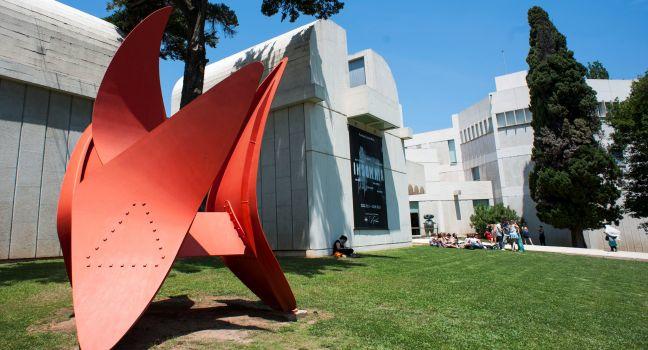
Sculpture, Miro, Fundacio Miro, Barcelona, Spain
© Ross Brinkerhoff / Fodor’s Travel

The masterpieces by native Barcelona artist Joan Miró (1893–1983) at this museum include paintings, sculpture, and textile works from all periods of his life. They coexist with temporary exhibitions of 20th- and 21st-century artists, and, in the newer Espai 13 space, cutting-edge audiovisual art.

The airy white building, with panoramic views north over Barcelona, was designed by the artist's close friend and collaborator Josep Lluís Sert and opened in 1975. Extensions were added by Sert's pupil Jaume Freixa in 1988 and 2000. Miró's playful and colorful style, filled with Mediterranean light and humor, seems a perfect match for the surroundings. Various patios, as well as the roof terrace, are home to notable Miró sculptures, including the bronze model for Moon, Sun and One Star with a dramatic backdrop of the city. The artist rests in the cemetery on Montjuïc's southern slopes. The café-restaurant, with indoor seating and an outdoor terrace, is abuzz with locals at the weekends.
Parc de Montjuïc s/n, Barcelona, 08038, Spain
93-443–9470
Sight Details
€14 online, €15 at the museum, free with Barcelona Card
Closed Mon.

Something incorrect in this review?

Museu d'Art Contemporani de Barcelona (MACBA)

El Raval Fodor's Choice
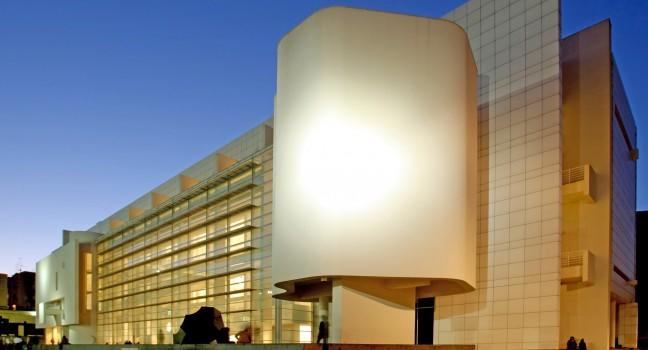
Museum of Contemporary Art of Barcelona (MACBA)
(c) MaxiSports | Dreamstime.com

Designed by American architect Richard Meier in 1992, this gleaming explosion of light and geometry in El Raval houses a permanent collection of contemporary art, and also regularly mounts special temporary exhibitions. Meier gives a nod to Gaudí (with the Pedrera-like wave on one end of the main facade), but his minimalist building otherwise looks unfinished. That said, the MACBA is unarguably an important addition to the cultural capital of this once-shabby neighborhood. Skateboarders weave in and out around Basque sculptor Jorge Oteiza's massive sculpture, La Ola (The Wave), in the courtyard; the late Eduardo Chillida's Barcelona covers half the wall in the little square off Calle Ferlandina, on the left of the museum, in the sculptor's signature primitive black geometrical patterns.

Don't miss Keith Haring's public mural on the wall that links Carrer de Ferlandina to Plaça Joan Coromines. The MACBA's 20th-century art collection (Calder, Rauschenberg, Oteiza, Chillida, Tàpies) is excellent, as is the free app, which provides a useful introduction to the philosophical foundations of contemporary art as well as the pieces themselves. The museum also offers wonderful workshops and activities for kids. Group tours (for a minimum of 15 people) are available in English and must be booked at least a week in advance.

Pl. dels Àngels 1, Barcelona, 08001, Spain
93-412–0810
Sight Details
€12, from €10.20 online, free Sat. after 4 pm and with Barcelona Card
Closed Tues.

Something incorrect in this review?

Museu Nacional d'Art de Catalunya

Montjuïc Fodor's Choice
Museu Nacional dArt de Catalunya, Barcelona, Spain
© Ross Brinkerhoff / Fodor’s Travel

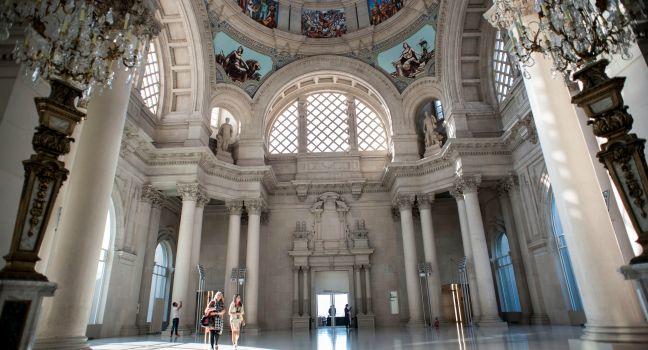
Housed in the imposingly domed, towered, frescoed, and columned Palau Nacional, built in 1929 as the centerpiece of the International Exposition, this superb museum was renovated between 1985 and 1992 by Gae Aulenti, architect of the Musée d'Orsay in Paris. In 2004, the museum's four holdings (Romanesque, Gothic, the photography collection, and the Cambó Bequest—a 50-strong trove of paintings by European Masters, including two by Goya, donated by Francesc Cambó) were joined by the 19th- and 20th-century collection of Catalan Impressionist and Moderniste painters. With this influx of artistic treasure, the Museu Nacional has become Catalonia's grand central museum.

Pride of place goes to the Romanesque exhibition, the world's finest collection of Romanesque frescoes, altarpieces, and wood carvings, most rescued from chapels in the Pyrenees during the 1920s to save them from deterioration, theft, and art dealers. Many, such as the famous Cristo de Taüll fresco (from the church of Sant Climent de Taüll in Taüll), have been painstakingly removed from crumbling walls of abandoned sites and remounted on ingenious frames that exactly reproduce the contours of their original settings. The exhibition leads out into the stunning central Oval Hall, with an enormous pillared cupola and elevator access to the panoramic roof terrace (though, a word to the hungry: skip the hall's disappointing café for the smarter Òleum Restaurant on the first floor).

Palau Nacional, Barcelona, 08038, Spain
93-622–0360
Sight Details
€12 (valid for day of purchase and 1 other day in same month); free Sat. after 3 pm and 1st Sun. of month
Closed Mon.

Something incorrect in this review?

Recommended Fodor's Video

Museu Picasso

Born-Ribera Fodor's Choice
Gallery, Museu Picasso, Barcelona, Spain
© Ross Brinkerhoff / Fodor’s Travel

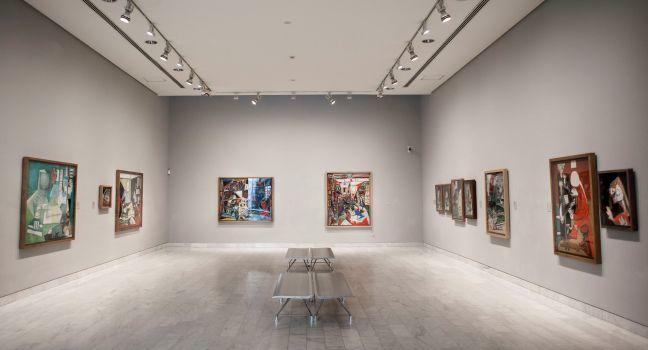
The Picasso Museum is housed in five adjoining 13th- to 15th-century palaces on Carrer Montcada, a street known for its elegant medieval mansions. Picasso spent his formative years in Barcelona (1895–1904), and although this collection doesn't include a significant number of his most famous paintings, it's strong on his early work, especially showcasing the link between Picasso and Barcelona.

The museum opened in 1963 on the suggestion of Picasso's friend Jaume Sabartés, and the initial donation was from the Sabartés collection. Later, Picasso donated his early works, and in 1982 his widow, Jacqueline Roque, added 41 ceramic pieces. Displays include childhood sketches, works from the artist's Rose and Blue periods, and the famous 1950s cubist variations on Velázquez's Las Meninas (in Rooms 12–16).

On the lower-floor, the sketches, oils, and schoolboy caricatures from Picasso's early years in A Coruña are perhaps the most fascinating part of the whole museum, showing the facility he seemed to possess from birth. His La Primera Communión (First Communion), painted at the age of 15, gives an idea of his early accomplishments. On the second floor you see the beginnings of the mature Picasso and his Blue Period in Paris. Stop at the terrace café and restaurant for a light Mediterranean meal to break up the day.

It is always best to book tickets online ahead of time, especially for visits on the first Sunday of the month and every Thursday after 4 pm, when admission is free.

Montcada 15–19, Barcelona, 08003, Spain
93-256–3000
Sight Details
€15; free Thurs. from 4 pm, and 1st Sun. of month, and with Barcelona Card. Tours from €12
Closed Mon.

Something incorrect in this review?

Moco Museum Barcelona

Fodor's Choice

A stone’s throw from the Museu Picasso, this privately owned museum displays works by contemporary and modern masters—along with edgy street art—in a beautiful, centuries-old former palace. Small but mighty, the collection includes pieces by Andy Warhol, Keith Haring, Damien Hirst, and Banksy, plus a towering site-specific statue by graffiti artist KAWS in the entry courtyard.

Montcada, 25, 08003, Spain
93-629–1858
Sight Details
€17.95 (save by booking online or with Barcelona Card)

Something incorrect in this review?

Col·legi Oficial d'Arquitectes de Catalunya (COAC)

Barri Gòtic

The architectural temporary exhibitions (see the website for details of the program) on the ground floor of the School of Architecture focus on urbanism and notable architects. The design and architecture bookshop in the basement is reason alone to visit. The stick figure frieze on the exterior of the building was designed by Picasso during his exile, and executed by the Norwegian artist Carl Nesjar in 1955.

Pl. Nova 5, Barcelona, 08002, Spain
93-301–5000

Something incorrect in this review?

Fundació Antoni Tàpies

Eixample

This foundation created in 1984 by Catalonia’s then-most important living artist, Antoni Tàpies, continues to promote the work of important Catalan artists and writers. Tàpies, who died in 2012, was an abstract painter who was influenced by surrealism, and his passion for art and literature still echoes in the halls of this enchanting Moderniste building by esteemed architect Domènech i Montaner. There are thought-provoking temporary exhibitions, a comprehensive lecture series, and film screenings. The modern split-level gallery also has a bookstore that's strong on Tàpies, Asian art, and Barcelona art and architecture.

Carrer Aragó 255, Barcelona, 08007, Spain
93-487–0315
Sight Details
€8, free with Barcelona Card
Closed Sun. afternoon and Mon.

Something incorrect in this review?

KBr Photography Center

Port Olímpic

Set inside the glassy MAPFRE Tower near the Port Olímpic and named after the chemical symbol for potassium bromide---a salt used in wet-plate photography processing---this smart photography venue showcases comprehensive temporary exhibits of international names such as William Eggleston, Tina Modotti, and Consuelo Kanaga. 

Av. Litoral 30, Barcelona, 08005, Spain
93-272–3180
Sight Details
€5
Closed Mon.

Something incorrect in this review?

Museu Can Framis

Poblenou

Part of the Fundació Vila Casas, a nonprofit dedicated to promoting contemporary Catalan art, this factory-turned-boxy-modern-gallery in Poblenou features over 300 paintings from the 1960s to present day. The only prerequisite is that the artist must be born in or live in Catalonia; otherwise, there are no rules on content or media, leading to a diverse and energetic collection that hops from ocean-scapes to portraits to collage. Take a lap around the quiet gardens outside to spot the sculptures.

Museu Frederic Marès

Barri Gòtic

Founded by sculptor Frederic Marès (1893--1991), the museum featured collections from Marès himself along with thousands of other objects that reflect past customs and traditions: think fans, watches, photographs, pipes, toys, and more.

Museu Frederic Marès

Barri Gòtic

Here, in a building off the left side (north) of the cathedral, you can browse for hours among the miscellany assembled by the early-20th-century sculptor-collector Frederic Marès. Highlights of his charmingly disparate collection of paintings and polychrome wood carvings include Juan de Juni's 1537 masterful Pietà and the Master of Cabestany's late-12th-century Apparition of Christ to His Disciples at Sea. The second and third floors house a sensory overload of historical objets, mainly from 19th-century everyday life: fans, pipes and walking sticks, clocks, toys, daguerreotypes and posters, 13th- to 19th-century wrought iron, and more. The courtyard of this former Royal Palace of the Counts of Barcelona is lovely—the café-terrace in back is a perfect place for a break.

Pl. Sant Iu 5, Barcelona, 08002, Spain
+34-93-256–3500
Sight Details
€4.20; free first Sun. of month
Closed Mon.

Something incorrect in this review?

Reial Cercle Artístic

Barri Gòtic

This former palace, at the bottom of Portal de l'Angel, where it divides and leads off left to the Cathedral, is now a private fine-arts society. There is a gallery that features paintings by Salvador Dalí among others, as well as a restaurant and bar open to the public. It also offers drawing and painting classes and occasional film showings and concerts. Note the elegant Gothic details of the main entrance, with its heavy keystone arch, the stone carvings inside to the right in the Sala Güell, and the stairway sculptures. The El Cercle restaurant upstairs has an intimate feel. Tables on the outdoor terrace overlooking the passing throngs are hard to come by on busy days, but well worth the view.

Arcs 5, Barcelona, 08002, Spain
93-318--7866
Sight Details
Free to visit art gallery

Something incorrect in this review?