


Park Güell
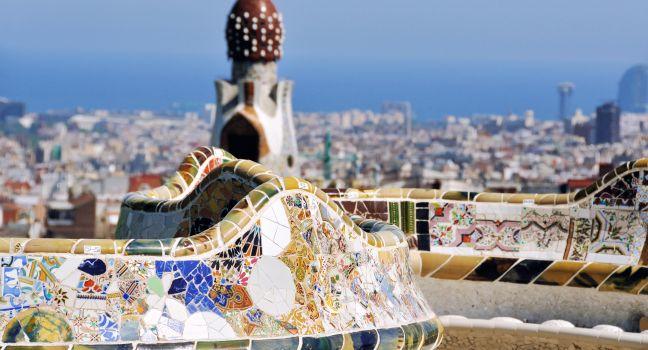
Built between 1900 and 1914, this park is one of Gaudí's, and Barcelona's, most visited attractions. Named for and commissioned by Gaudí's steadfast patron, Count Eusebi Güell, it was originally intended as a gated residential community based on the English Garden City model. The centerpiece of the project was a public square, with a pillared marketplace beneath it. Only two of the houses were ever built, one of which was designed by Gaudí's assistant Francesc Berenguer and became Gaudí's home from 1906 to 1925. It now houses the Casa-Museu Gaudí museum of memorabilia (currently closed for renovation).
Ultimately, the Güell family turned the area over to the city as a public park for local residents, and it remains so today. Tickets are required to access all of Park Güell, including the "monumental area," where the main attractions are located. It's advisable to purchase timed tickets online, available up to three months in advance, rather than at the park.
An Art Nouveau extravaganza with gingerbread gatehouses, Park Güell is a perfect place to visit on a sunny morning before the temperature heats up. The gatehouse on the right, topped with a rendition in ceramic tile of the hallucinogenic red-and-white fly amanita mushroom (rumored to have been a Gaudí favorite), is now part of the Barcelona History Museum. The exhibition inside has plans, scale models, photos, and suggested routes analyzing the park in detail. Atop the gatehouse on the left sits the phallus impudicus (no translation necessary).
Other Gaudí highlights include the Room of a Hundred Columns—a covered market supported by tilted Doric-style columns and mosaic medallions—the double set of stairs, and the iconic lizard guarding the fountain between them. There's also the fabulous serpentine, polychrome bench enclosing the square. The bench is one of Gaudí assistant Josep Maria Jujol's most memorable creations, and one of Barcelona's best examples of the trencadís technique (mosaics of broken tile fragments: recycling as high art).
From the Lesseps metro station, take bus No. 24 or 116 to the park entrance. From the Bus Turístic stop on Travessera de Dalt, make the steep 10-minute climb up Carrer de Lallard or Avinguda del Santuari de Sant Josep de la Muntanya.


