

Fodor's Expert Review Houses of Parliament
The Palace of Westminster, as the complex is called, was first established on this site by Edward the Confessor in the 11th century. William II built a new palace in 1097, and this became the seat of English power. A fire destroyed most of the palace in 1834, and the current complex dates largely from the mid-19th century. The best view is from the opposite (south) bank of the Thames, across Lambeth Bridge. It is most dramatic at night when lighted green and gold.
The Visitors' Galleries of the House of Commons provide a view of democracy in action when the benches are filled by opposing MPs (members of Parliament). Debates are formal but raucous, especially during Prime Minister's Questions (PMQs), when any MP can put a question to the nation's leader. Tickets to PMQs are free but highly sought after, so the only way for non–U.K. citizens to gain access is by lining up on the day and hoping for returns or no-shows—expect to wait for up to two hours, with no guarantee of entry.... READ MORE
The Palace of Westminster, as the complex is called, was first established on this site by Edward the Confessor in the 11th century. William II built a new palace in 1097, and this became the seat of English power. A fire destroyed most of the palace in 1834, and the current complex dates largely from the mid-19th century. The best view is from the opposite (south) bank of the Thames, across Lambeth Bridge. It is most dramatic at night when lighted green and gold.
The Visitors' Galleries of the House of Commons provide a view of democracy in action when the benches are filled by opposing MPs (members of Parliament). Debates are formal but raucous, especially during Prime Minister's Questions (PMQs), when any MP can put a question to the nation's leader. Tickets to PMQs are free but highly sought after, so the only way for non–U.K. citizens to gain access is by lining up on the day and hoping for returns or no-shows—expect to wait for up to two hours, with no guarantee of entry. The action starts at noon every Wednesday when Parliament is sitting, and the whole shebang is broadcast live on television. For non-PMQ debates, embassies and high commissions have a quota of tickets available to their citizens, which can help you avoid long lines. The easiest time to get into the Commons is during an evening session—Parliament is still sitting if the top of the Clock Tower is illuminated. There are also visitors galleries for the House of Lords.
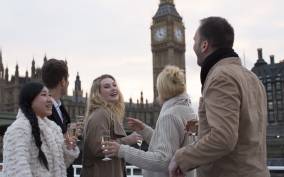
The Clock Tower—renamed Elizabeth Tower in 2012, in honor of Queen Elizabeth II's Diamond Jubilee—was completed in 1858, and contains the 13-ton bell known as Big Ben. At the southwest end of the main Parliament building is the 323-foot-high Victoria Tower. The King uses the Sovereign's Entrance, at its base, when visiting Parliament.
Engaging guided and audio tours of Parliament are available on Saturday and weekdays when Parliament isn't sitting.
READ LESS