

189 Best Sights in USA

Background Illustration for Sights

We've compiled the best of the best in USA - browse our top choices for the top things to see or do during your stay.

TCL Chinese Theatre

Hollywood
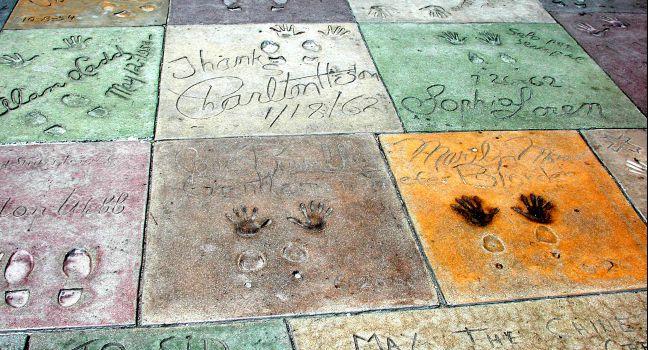
Abstract of Celebrity Hand and Foot Prints Outside of Mann's Chinese Theater in Hollywood, California; Shutterstock ID 320588; Project/Title: City Apps; Downloader: Melanie Marin
Thomas Nord/shutterstock

The stylized Chinese pagodas and temples of the former Grauman's Chinese Theatre have become a shrine both to stardom and the combination of glamour and flamboyance that inspire the phrase "only in Hollywood." Although you have to buy a movie ticket to appreciate the interior trappings, the courtyard is open to the public. The main theater itself is worth visiting, if only to see a film in the same setting as hundreds of celebrities who have attended big premieres here.

And then, of course, outside in front are the oh-so-famous cement hand- and footprints. This tradition is said to have begun at the theater's opening in 1927, with the premiere of Cecil B. DeMille's King of Kings, when actress Norma Talmadge just happened to step in wet cement. Now more than 160 celebrities have contributed imprints for posterity, including some oddball specimens, such as casts of Whoopi Goldberg's dreadlocks.

150 North Michigan Avenue

Chicago Loop

Some wags have pointed out that this building, with its diamond-shaped top, looks like a giant pencil sharpener. Built in 1984 as the Smurfit-Stone Building and later known as the Crain Communications Building, it has a slanted top that carves through the top 10 of its floors. In the plaza is Yaacov Agam's Communication X9, a painted, folded aluminum sculpture that was restored (to some controversy) and reinstalled in 2008. You'll see different patterns in the sculpture depending on your vantage point.

190 South LaSalle Street

Chicago Loop

This 40-story postmodern office building, resembling a supersized château, was designed by John Burgee and Philip Johnson in the mid-1980s. The grand, gold-leaf vaulted lobby is spectacular.

Recommended Fodor's Video

200 Clarendon (The Hancock Tower)

Back Bay

In the early 1970s, the tallest building in New England became notorious as the monolith that rained glass from time to time. Windows were improperly seated in the sills of the blue rhomboid tower, designed by I. M. Pei. Once the building's 13 acres of glass were replaced and the central core stiffened, the problem was corrected. Bostonians originally feared the Hancock's stark modernism would overwhelm nearby Trinity Church, but its shimmering sides reflect the older structure's image, actually enlarging its presence. Renamed from the John Hancock Tower to 200 Clarendon in 2015, the building is mostly offices and remains off-limits to the public.

224 South Michigan Avenue

Chicago Loop

This structure, designed in 1904 by Daniel Burnham, who later moved his office here, was once known as the Railway Exchange Building and the Santa Fe Building, for a "Santa Fe" sign on its roof that has since been removed. The Chicago Architecture Foundation uses the building's atrium for rotating exhibits about the changing landscape of Chicago and other cities. The organization also offers a variety of tours via foot, bus, and boat.

224 S. Michigan Ave., Chicago, IL, 60604, USA

Something incorrect in this review?

23rd Regiment Armory

Crown Heights
At Atlantic and Bedford, the 23rd Regiment Armory is one of Brooklyn’s most imposing and important landmarks: an almost full-block Romanesque Revival building by architects Fowler & Hough that dates back to 1895. The building—much of it restored, from the crenelated towers to the arched windows—now serves as a homeless shelter, which means that the nearby blocks can feel a bit dodgy. During the day it’s safe, though, with people milling about—just be smart.
1322 Bedford Ave., Brooklyn, NY, 11216, USA

Something incorrect in this review?

311 South Wacker Drive

Chicago Loop

The first of three towers intended for the site, this pale-pink edifice is the work of Kohn Pedersen Fox, who also designed 333 West Wacker Drive, a few blocks away. The 1990 building's most distinctive feature is its Gothic crown, brightly lit at night. During migration season so many birds crashed into the illuminated tower that management was forced to tone down the lighting. An inviting atrium has palm trees and a splashy, romantic fountain.

333 West Wacker Drive

Chicago Loop

This green-glazed beauty doesn't follow the rules. Its riverside facade echoes the curve of the Chicago River just in front of it, while the other side is all business, conforming neatly to the straight lines of the street grid. The 1983 Kohn Pedersen Fox design, roughly contemporary to the James R. Thompson Center, enjoyed a much more positive public reception. It also had a small but important role in the 1986 movie Ferris Bueller's Day Off as the location of Ferris's dad's office.

71 S. Wacker

Chicago Loop

At 48 stories, this modern high-rise is no giant, but it more than makes its mark on South Wacker Drive with a bold elliptical shape, a glass-faced street-level lobby rising 36 feet, and a pedestrian-friendly plaza. It displays a noticeable tweaking of the unrelieved curtain wall that makes many city streets forbidding canyons. Designed by Pei Cobb Freed & Partners, the tower was originally known as the Hyatt Center and was completed in 2004.

860–880 N. Lake Shore Drive

Near North Side

These 26-story twin apartment towers overlooking Lake Michigan were an early and eloquent realization of Mies van der Rohe's "less is more" credo, expressed in high-rise form. I-beams running up the facade underscore their verticality; inside, mechanical systems are housed in the center so as to leave the rest of each floor free and open to the spectacular views. Completed in 1951, the buildings, called “flat-chested architecture" by Frank Lloyd Wright, are a prominent example of the International Style, which played a key role in transforming the look of American cities.

860–880 N. Lake Shore Dr., Chicago, IL, 60611, USA

Something incorrect in this review?

Academy of the Sacred Heart

Uptown

This Colonial Revival building, housing a Catholic girls' school, was built in 1900 and features wide, wraparound balconies (or galleries) and colonnades facing a large garden. The academy is exceptionally beautiful during the December holiday season, when the galleries are decked with wreaths and garlands.

4521 St. Charles Ave., New Orleans, LA, 70115, USA

Something incorrect in this review?

Amazon Spheres

The three massive glass orbs at the heart of Amazon’s South Lake Union campus—officially called The Spheres—are among Seattle’s most striking architectural landmarks. Inside, it feels like stepping into a living, breathing greenhouse: more than 40,000 plants from around the world climb, dangle, and sprawl across four verdant floors. The design blends futuristic engineering with rainforest lushness, creating a space meant to inspire creativity among Amazon employees who use it for meetings and breaks.

On the first and third Saturdays of each month, the public can experience it, too. Free tours open limited slots for visitors to wander through the gardens, marvel at the “living wall,” and soak up the filtered light under the glass domes. Reservations—available online up to 15 days ahead—are essential and disappear fast. Be sure to bring government-issued ID, travel light (large bags aren’t allowed), and expect a glimpse of the rare moment where nature and tech coexist beautifully in the middle of the city.

American Red Cross

Foggy Bottom

The national headquarters for the American Red Cross, a National Historic Landmark since 1965, is composed of three buildings. Guided tours show off the oldest, a Beaux Arts structure of blinding-white marble built in 1917 to commemorate women who cared for the wounded on both sides during the Civil War. Three stained glass windows designed by Louis Comfort Tiffany illustrate the values of the Red Cross: faith, hope, love, and charity. Other holdings you'll see on the 60-minute tour include an original N.C. Wyeth painting, sculptures, and artifacts that belonged to Clara Barton, the founder of the American Red Cross. Weather permitting, the tour includes a visit to the memorial garden. The management recommends booking your tour 2–3 weeks in advance. Reservations are required for the free tour, offered at 10 am and 2 pm on Wednesday and Friday; schedule via email at  [email protected].

430 17th St. NW, Washington, DC, 20006, USA
202-303–4233
Sight Details
Free
No tours Thurs. and Sat.–Tues.

Something incorrect in this review?

Anthemion

Uptown

The emergence of Colonial Revival architecture in the late 19th century was expressive of local weariness with the excesses of the Greek Revival craze that had dominated the mid-century. Anthemion---named for the Greek honeysuckle-and-palm motif---is an excellent example of this return to simplicity. Built in 1896 for the druggist Christian Keppler, it served as the headquarters of the Japanese consulate from 1938 to 1941.

4631 St. Charles Ave., New Orleans, LA, 70115, USA

Something incorrect in this review?

Aon Center

Chicago Loop

With the open space of Millennium Park at its doorstep, the Aon Center really stands out. Originally built as the Standard Oil Building, the 83-story skyscraper (first referred to as Big Stan) has changed names and appearances twice. Not long after the building went up in 1972, its marble cladding came crashing down, and the whole thing was resheathed in granite.

200 E. Randolph Dr., Chicago, IL, 60601, USA
312-381–1000

Something incorrect in this review?

Aqua

Chicago Loop

With its undulating concrete balconies suggesting rippling liquid, Aqua’s addition to the skyline in 2009 made Jeanne Gang a household name in architectural circles; the building was not just a critical hit, it was also the world’s tallest building designed by a woman. Aqua recently lost that designation to another Gang design, the nearby St. Regis Chicago, which is currently the third-tallest building in the city.

225 N. Columbus Dr., Chicago, IL, 60601, USA

Something incorrect in this review?

Arctic Brotherhood Hall

The local members of the Arctic Brotherhood, a fraternal organization of Alaska and Yukon pioneers, built their hall's (now renovated) false front out of 8,833 pieces of driftwood and flotsam from local beaches. The result: one of the most unusual buildings in all of Alaska. The AB Hall now houses the Skagway Convention & Visitors Bureau, along with public restrooms.

Bank of America Corporate Center

Uptown

Architecture fans should make time for a trip to see one of the city's most striking buildings. Designed by César Pelli, this structure rises 60 stories to a crownlike top. The main attractions are three monumental lobby frescoes by the world-renowned local painter Ben Long—their themes are making/building, chaos/creativity, and planning/knowledge. Also in the tower are the North Carolina Blumenthal Performing Arts Center and the restaurants, shops, and exhibition space of Founders Hall.

100 N. Tryon St., Charlotte, NC, 28202, USA

Something incorrect in this review?

Basilica of Our Lady of Perpetual Help

This imposing block-long Romanesque church stands tall on a ridge is unusual because it's actually two churches, one stacked on the other. The lower church opened on Easter Sunday in 1909. The larger, upper one was completed in 1928 in time for Christmas. In recognition of Sunset Park's diversity, masses are said in English, Spanish, Chinese, and Vietnamese.

Bear Gulch Nature Center

This small stone building constructed by the CCC (Civilian Conservation Corps) in the 1930s makes for a short but engaging stop while hiking from or picnicking in the Bear Gulch Day Use Area. Inside you can watch a film and view interpretive displays about the park, and the rangers can offer advice about nearby trails and talus caves.
Bear Gulch Day Use Area, Pinnacles National Park, CA, 95043, USA
831-389–4486
Sight Details
May be closed due to staffing shortages. Check website for days and hrs

Something incorrect in this review?

Behunin Cabin

In 1883, Elijah Cutler Behunin used blocks of sandstone to build this rudimentary cabin in which he and his family of 15(!) resided. Floods in the lowlands made life too difficult, and he moved just a year later. The house, 5.9 miles east of the visitor center, is empty, but you can peek through the window to see the interior.

Hwy. 24, Capitol Reef National Park, UT, 84775, USA

Something incorrect in this review?

Binoculars Building

Venice

Frank Gehry is known around the world for his architectural masterpieces. In L.A. alone he’s responsible for multiple houses and buildings like the Gehry Residence, Loyola Law School, and Walt Disney Hall. But one of his most interesting creations, completed in 1991, is the Binoculars Building, a quirky Venice spot that is exactly as advertised: a giant set of binoculars standing on their end. While you can't tour the building, you can take a clever Instagram shot out front.

340 Main St., Los Angeles, CA, 90291, USA
Sight Details
Not open to visitors

Something incorrect in this review?

Bloomingdale's (Medinah Temple)

River North

Built in 1912 for the Shriners, the former Medinah Temple is a Middle Eastern fantasy, with horseshoe-shape arches, stained-glass windows, and intricate geometric patterns around windows and doors (it once also held a 4,200-seat auditorium). Vacant for many years, it was transformed into a Bloomingdale's Home & Furniture Store in 2003.

600 N. Wabash Ave., Chicago, IL, 60611, USA
312-324–7500
Sight Details
Mon.–Thurs. 10–7, Fri. and Sat. 10–8, Sun. noon–6

Something incorrect in this review?

Boardwalk Hall

The 456-foot-long, 310-foot-wide, and 137-foot-tall architectural wonder was once the largest clear span space in the world. Opened in 1929, the main hall hosted the Miss America Pageant from 1940 to 2004 and is now the city's main venue to see championship boxing and stadium-style performances by the likes of Bruce Springsteen, Madonna, and Cirque Du Soleil. After more than 80 years, it still holds at least one record. It houses the world's largest pipe organ.

2301 Boardwalk, Atlantic City, NJ, 08401, USA
609-348--7000
Sight Details
Open only for events, check calendar on web site.

Something incorrect in this review?

Bradbury Building

Downtown

Stunning wrought-iron railings, ornate plaster moldings, pink marble staircases, a birdcage elevator, and a skylighted atrium that rises almost 50 feet—it's easy to see why the Bradbury Building leaves visitors awestruck. Designed in 1893 by a novice architect who drew his inspiration from a science-fiction story and a conversation with his dead brother via an Ouija board, the office building was originally the site of turn-of-the-20th-century sweatshops, but now it houses a variety of businesses. Scenes from Blade Runner, Chinatown, and 500 Days of Summer were filmed here, which means there's often a barrage of tourists snapping photos. Visits are limited to the lobby and the first-floor landing.

Historic Downtown walking tours hosted by the L.A. Conservancy cost $15 and include the Bradbury Building.

Brookfield Place

Financial District

The four towers of this complex (aka the World Financial Center) range from 34 to 51 stories high and are topped with different geometric ornaments designed by Cesar Pelli. Inside are the company headquarters for the likes of American Express and Dow Jones. But the main attraction is the glass-domed Winter Garden atrium with its signature palm trees—a pleasant open space that hosts music, dance performances, a winter ice rink, and links to a variety of stores and restaurants. You can cross West Street at street level, or use the concourse underneath that connects Brookfield Place with the World Trade Center site (and the subway and PATH trains). The massive windows at the top of the Winter Garden's grand staircase on the north side of the atrium provide a view of the 9/11 Memorial Plaza and Westfield World Trade Center (the Oculus) to the east.

The Cabildo

French Quarter

Dating from 1799, this Spanish colonial building is named for the Spanish council—or cabildo—that met here. The transfer of Louisiana to the United States was finalized in 1803 in the front room on the second floor overlooking the square. The Cabildo later served as city hall and then state supreme court. Three floors of multicultural exhibits recount 300 years of Louisiana history—particularly from the colonial period through Reconstruction—with countless artifacts, including the death mask of Napoléon Bonaparte. In 1988 the building suffered terrible damage from a four-alarm fire. Most of the historic pieces inside were saved, but the top floor (which had been added in the 1840s), the roof, and the cupola had to be replaced. The Cabildo is almost a twin to the Presbytère on the other side of the cathedral.

Both sites—as well as the Old U.S. Mint and the 1850 House—are part of the Louisiana State Museum system. Buy tickets to two or more state museums and receive a 20% discount.

Cain's Ballroom

This celebrated, world-famous concert venue is an icon of music history, widely considered the birthplace of Western swing, which Bob Wills and His Texas Playboys called home during the 1930s. Today, it remains a small, vibrant, live-performance venue, hosting internationally known artists while still nurturing local, homegrown talent. Built in 1924, the building's signature architectural element is a spring-loaded dance floor constructed of maple laid in a concentric, "log cabin" style. Most concerts here are not seated events. The venue can accommodate a standing audience of 1,800.

423 N. Main St., Tulsa, OK, 74103, USA
918-584–2306
Sight Details
Box office weekdays 10–noon, 1–5; concerts as scheduled
Closed Weekends

Something incorrect in this review?

Capitol

Williamsburg was important because it was the location of the Capitol. It was here that the prerevolutionary House of Burgesses (dominated by the ascendant gentry) challenged the royally appointed council (an almost medieval body made up of the bigger landowners). In 1765 the House eventually arrived at the resolutions, known as Henry's Resolves (after Patrick Henry), that amounted to rebellion. An informative tour explains the development, stage by stage, of American democracy from its English parliamentary roots. In the courtroom a guide recites the harsh Georgian sentences that were meted out: for instance, theft of more than 12 shillings was a capital crime. Occasional reenactments, including witch trials, dramatize the evolution of American jurisprudence.

What stands on the site today is a reproduction of the 1705 structure that burned down in 1747. Dark-wood wainscoting, pewter chandeliers, and towering ceilings contribute to a handsome impression. That an official building would have so ornate an interior was characteristic of aristocratic 18th-century Virginia. This was in telling contrast to the plain town meeting halls of Puritan New England, where other citizens were governing themselves at the same time. The stirring Fifes and Drums March leaves from the Capitol to the Palace Green. Don't miss the spectacle of dozens of young men dressed in period costume marching through Williamsburg's streets. Check the program guide for dates and times.

East end of Duke of Gloucester St., Colonial Williamsburg, VA, 23185, USA
Sight Details
Colonial Williamsburg entrance required

Something incorrect in this review?

Capitol Records Tower

Hollywood

According to legend, singer Nat King Cole and songwriter Johnny Mercer suggested that the record company's headquarters be shaped like a stack of 45s, influencing the design of this now iconic '50s structure. Architect Welton Becket claimed he just wanted to design a structure that economized space, and in so doing, he created the world's first cylindrical office building.

On its south wall, L.A. artist Richard Wyatt's mural Hollywood Jazz, 1945–1972 immortalizes musical greats Duke Ellington, Billie Holiday, Ella Fitzgerald, and Miles Davis. Pop icons the Beatles are commemorated in stunning photos near the Vine Street entrance, and John Lennon's star on the Hollywood Walk of Fame out front is a popular gathering spot for fans on his birthday. The recording studios are beneath the parking lot; all kinds of major artists, including Frank Sinatra, the Beatles, and Radiohead, have filled these echo chambers with sound. The building is not open to the public.

1750 N. Vine St., Los Angeles, CA, 90028, USA

Something incorrect in this review?