


The sleepy town in Texas went from a battleground for fanatical extremists to an IG-friendly Home Goods haven for American women.
W
aco, Texas, does not do moderation—it simply trades one obsession for another. Whether it’s religious extremism, Baptist football mania, or an obsession with shiplap, this town thrives on devotion—it just keeps swapping out one kind of fervor for another. The State of Texas prides itself on being fanatically independent with a plethora of eccentric subcultures throughout its vast borders but we really can’t talk about the zealous proclivities of Texans without bringing up Waco. Though conspiracy theorists may argue otherwise, Waco is not a cult city, though I’ll admit that it harbors cult-adjacent traits.
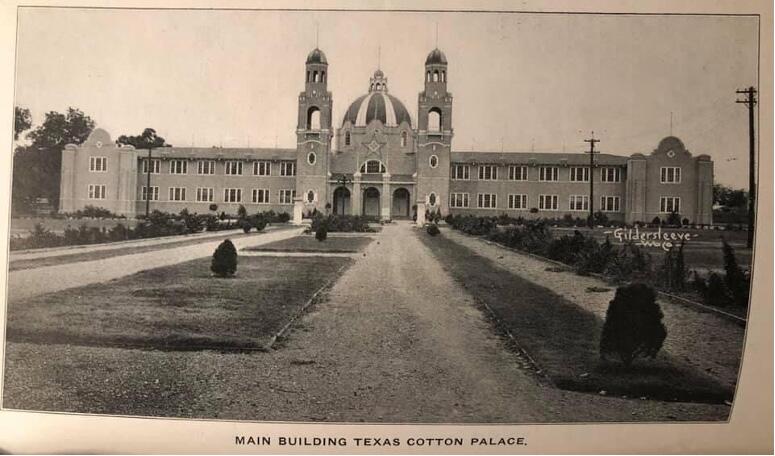
Original inhabitants of the region were from the Wichita Native American tribe known as the “Waco” but were strong-armed into relocating to Oklahoma in 1872. The city then grew into a bustling leader of the cotton industry and hosted a yearly Cotton Palace fair for over two decades, which saw more than 8 million visitors come through Waco. The annual pilgrimage to “The Cotton Capital of the South” came to an end with the decline of cotton production as the United States headed into the Great Depression.
The commercial hub of the cotton industry helped attract many educational institutions to Waco and provided a new rebranding opportunity as it became known informally as the “Athens of Texas.” A top Christian college in Texas, Baylor University, is the most famous higher learning institution in Waco with loyal students, alumni, and supporters that help fuel the city’s culture of devotion. The private university houses a massive football stadium where adherent fans show up religiously to cheer on the Baylor Bears. Did I mention that the entire Baptist college campus is strictly alcohol and drug-free? And it still regularly sells out all 45,140 seats during football season? Wild but not as wild as the fact that Baylor touts the most unusual resident mascot on an American campus in the form of a live black bear (sometimes two). Pro tip: If you do go on a campus tour, skip the bear habitat unless you’re in the mood for a bout of melancholia.

Recommended Fodor’s Video
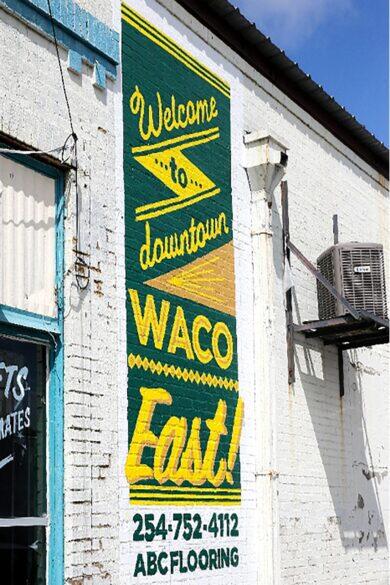
So, while Waco prospered by branding itself as a religious and education-focused city, it (unironically, I imagine) also became the second city in the United States to legalize prostitution in 1889. For almost three decades, Waco’s red-light district, the Reservation, was taxed and regulated by the local government. It’s contradictory juxtapositions like these that help define the city’s unique evolution throughout history.
Though Waco is steeped in a colorful past and an Instagram-friendly present, the nefarious tinge of the infamous Waco Siege of 1993 is what cemented the city’s reputation with an inclination towards the fanatical. Decades before ”shiplap” became a household word, Waco was thrust into the international spotlight for a 51-day showdown between a religious sect called the Branch Davidians and numerous federal agencies from the U.S. government. What initially started as an attempt by the Bureau of Alcohol, Tobacco, and Firearms (ATF) to raid the Branch Davidian compound (on suspicion of stockpiling illegal weapons) quickly escalated to 899 government agents and officers standing around in Waco in an attempt to get the Branch Davidians to stand down. Tragedy eventually unfolded as a tear gas attack by the FBI coincided with a fire that saw 76 Branch Davidians lose their lives including many children. Media portrayal of the siege ranged from criticism of government overreach to sensationalized cult activity and mass suicide. The Waco Siege caused a far-reaching impact as it became a rallying cry for right-wing militia movements and conspiracy theorists. The irony here is that the entire Waco Siege actually took place about 14 miles away from the city of Waco, but the world wasn’t paying attention to the particulars. And thus the name stuck and the city of Waco became synonymous with religious cults and radical fundamentalists.
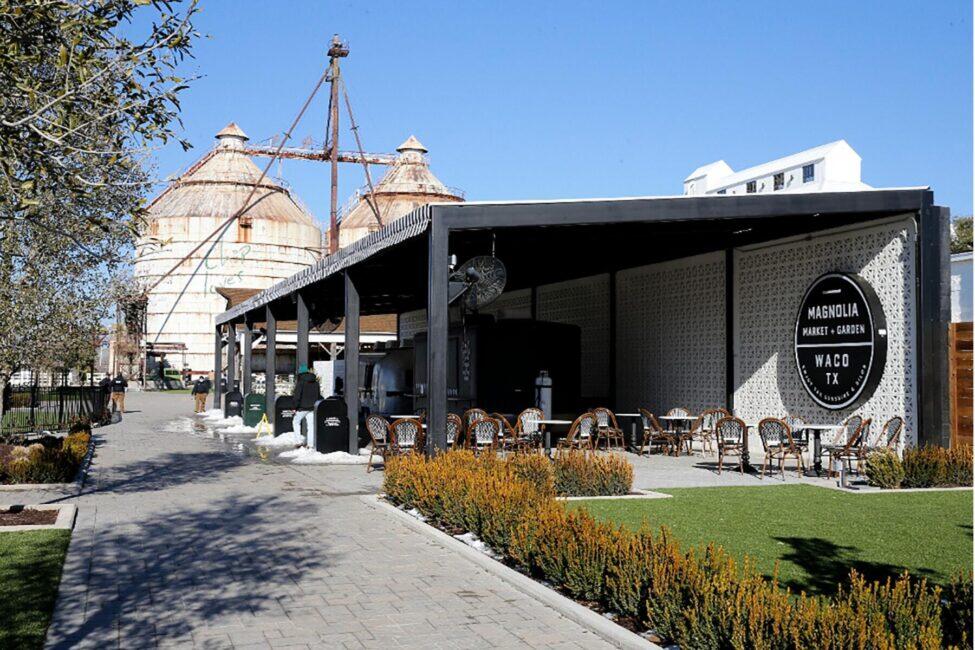
Since that notorious siege in 1993, the city of Waco has revived itself as a trad wife-meets-Evangelical-Disneyland-mecca with the help of HGTV’s Chip and Joanna Gaines. Few towns have rebranded as dramatically—or as profitably—as Waco, Texas has. Like a Disney fairytale story, this unassuming Central Texas city has quietly become a pilgrimage site for home decorators and enthusiasts around the world. Magnolia Market at the Silos is the ambitious revival project for the city of Waco with fairy godparents Chip and Joanna Gaines at the helm. They have single-handedly pivoted Waco’s tourism economy away from true-crime aficionados to home-furnishing followers. Fostered by the huge success and influx of tourists, the expansive grounds now include a garden shop, a food truck park, a kids’ play space, a bakery, a stationary store, and of course, the flagship home goods store – to name just a few of the offerings. A quick Google search for blogger reviews shows the insane popularity that Magnolia Market has amassed with influencers. I mean, it’s not an accident that everything at Magnolia Market seduces you with tailored aesthetics that compel visitors to get a great picture and spend money along the way.

The first time I drove down to Magnolia Market from Houston was also my first time in Waco, and I say this grudgingly, but it was not at all what I expected! Did I run into several groups of women on a girl’s trip that spoke of Chip and Joanna in revered tones that felt a little cult-ish? Sure, I did. Did I side-eye my friend while waiting in line behind the non-Texan disciples who had flown in for an experiential and immersive experience and absolutely had to get their hands on the almost sold-out lemon lavender cupcakes? Yes, yes, I did. As they prattled on about their itinerary, it was hard not to notice that most of the day consisted of hopping from shop to shop to buy stuff. It was American consumer culture at its peak. I thought about this as I munched on my damn good lemon lavender cupcake and quietly slipped into indoctrination. I didn’t even complain as I forked over $8 for an iced tea y’all…the mason jar it came in was too cute to resist.
The beautifully crafted and meticulously curated storefronts are nestled between two enormous 120-foot high Silos, a nod to the cotton production of Waco’s past. And if you look closely, you can sometimes even spot a true-crime enthusiast taking a break in the shade with an overpriced (but so delicious) iced lavender latte. The economic impact of Waco’s latest image rebrand has been huge for the city. With an estimated 30,000 weekly visitors, it’s easy to mute critics who are weary of the emergence of “monoculture,” where Waco’s economy and identity now revolve around a single, homogenized aesthetic. Not everyone is sipping the (figurative) lavender-flavored Kool-Aid, though. A strong criticism is that Waco’s once-diverse small businesses don’t stand a chance against the mammoth-sized Magnolia empire and its’ farmhouse-chic style.
Given the devout fandom of Magnolia Market, it’s easy to compare this era to that of Waco’s other most well-known episode: the Branch Davidian Siege (a.k.a., the Waco Siege). So, behind the Instagram-worthy revival of Waco, are there unresolved fanatical tensions brewing in the city that has a history of attracting fringe ideologies? Honestly, no. If anything, the celebrity-driven consumer monopoly of Magnolia Market is nothing like a fringe cult. It’s a conventional (albeit, wildly successful) by-product of capitalistic consumerism that Americans (like me) have a proclivity for.
It’s funny that a town once infamous for anti-government, religion-heavy fervor has now gone all in with an HGTV couple with a near-evangelical following. The genius of Waco lies in the city’s ability to rebrand zealotry. The same town that once drew armed federal agents to a compound of apocalyptic believers now lures SUVs full of women who buy luxury candles and artisanal throw blankets as if acts of devotion (hey bestie, I see you!). The disciples are still flocking to Waco—they’re just bringing their credit cards now instead of Bibles. Waco’s latest reinvention might be its shiniest one yet, but in a town this proficient at extreme makeovers, I can’t help wondering what’s next. In Waco, the next fervor is always under construction.