38 Best Sights in Charleston, South Carolina

Background Illustration for Sights

Bounded by the Ashley River to the west, the Cooper River to the east, the Battery to the south, and Calhoun Street to the north, the city's historic heart is a fairly compact area of 800 acres that contains nearly 2,000 historic homes and buildings. The peninsula is divided up into several neighborhoods, starting from the south and moving north, including the Battery, South of Broad, the Market area, and Upper King Street, ending near the "Crosstown," where U.S. 17 connects downtown to Mount Pleasant and West Ashley.

You'll see no skyscrapers in the downtown area, because building heights are strictly regulated to maintain the city's historic setting. In the 1970s, most department stores decamped for suburban malls, turning King Street buildings into rows of (architecturally significant) empty shells. Soon, preservation-conscious groups began to save these beauties, and by the mid-1980s the shopping district was revived with the addition of the Omni Hotel (now Belmond Charleston Place). Big-name retailers quickly saw the opportunity in this attractive city and settled in as well. Lower King thrives and Upper King is booming, with many new businesses—hip bars and restaurants in particular—targeting the city's young, socially active population. Look up at the old-timey tile work at the entrances; inevitably it will have the names of the original businesses.

Beyond downtown, the Ashley River hugs the west side of the peninsula; the region on the far shore is called West Ashley. The Cooper River runs along the east side of the peninsula, with Mount Pleasant on the opposite side and Charleston Harbor in between. Lastly, there are outlying sea islands: James Island with its Folly Beach, Johns Island, Wadmalaw Island, Kiawah Island, Seabrook Island, Isle of Palms, and Sullivan's Island. Each has its own appealing attractions, though Johns and Wadmalaw have farms instead of beaches. Everything that entails crossing the bridges is best explored by car or bus.

Angel Oak Tree

Fodor's Choice

Live oak trees do as much to define the Lowcountry landscape as do its salt marshes, and this gorgeous specimen is likely the oldest—and biggest—in the country. One branch reaches 187 feet. The tree is surrounded by a 17-acre fenced park, which is free to visit. Bring a picnic and bask in the magnificent shade.

The Battery

Fodor's Choice

During the Civil War, the Confederate army mounted cannons in the Battery, at the southernmost point of Charleston's peninsula, to fortify the city against Union attack. Cannons and piles of cannonballs still line the oak-shaded park known as White Point Garden—kids can't resist climbing them. Where pirates once hung from the gallows, walkers now take in the serene setting from Charleston benches (small wood-slat benches with cast-iron sides). Stroll the waterside promenades along East Battery and Murray Boulevard to enjoy views of Charleston Harbor, the Ravenel Bridge, and Fort Sumter on one side, with some of the city's most photographed mansions on the other. You'll find locals dangling their fishing lines, waiting for a bite. There are no public bathrooms within a 10-minute walk of the Battery, so plan accordingly. A bicycle is a great way to tour South of Broad, and it allows for a quick exit to the commercial part of town.

Cape Romain National Wildlife Refuge

Fodor's Choice

Maritime forests, barrier islands, salt marshes, beaches, and coastal waterways make up this 66,287-acre refuge established in 1932 as a migratory bird haven. The Sewee Visitor and Environmental Education Center has information and exhibits on the property and its trails, as well as an outdoor enclosure housing endangered red wolves. The refuge is aiding the recovery of the threatened loggerhead sea turtle, and a video details the work. From the mainland refuge, you can take a $40 ferry ride to remote and wild Bulls Island to explore its boneyard beach and freshwater ponds teeming with alligators.

Recommended Fodor's Video

Charles Towne Landing

Fodor's Choice

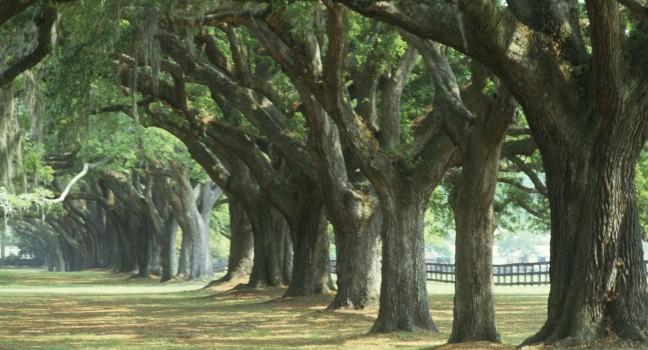
This off-the-radar gem of a park (and zoo) marks the site of the original 1670 settlement of Charles Towne, the first permanent European settlement in South Carolina. Begin with the visitor center's 12-room, interactive museum and exhibit hall that tells the history of the early settlers and their relationship with the Kiawah people, who were here when they arrived. Be sure to visit the exhibits about the enslaved people and indentured servants who also arrived with the English. Kids will make a beeline for the Adventure, a full-size replica of the colonists' 17th-century tall ship that's docked on the creek running alongside the park. The grounds are threaded with 6 miles of paths through forest and marsh, including the Animal Forest zoo, where you can see otters, black bears, bobcats, pumas, deer, and bison. All in all, there are 664 acres of gardens and forest, including an elegant live oak alley. Leashed dogs are allowed (although not in the Animal Forest), and rental bikes are available for $5 an hour.

The Charleston City Market

Fodor's Choice

Most of the buildings that make up this popular attraction were constructed between 1804 and the 1830s to serve as the city's meat, fish, and produce market. These days you'll find the open-air portion packed with stalls selling handmade jewelry, crafts, clothing, jams and jellies, and regional souvenirs. The market's indoor section is a beautiful backdrop for 20 stores and eateries. Local craftspeople are on hand, weaving sweetgrass baskets—a skill passed down through generations from their African ancestors. Each month except January and February, a night market on Friday and Saturday hosts local artists and food vendors.

Cypress Gardens

Fodor's Choice

Explore the inky swamp waters of this natural area in a flat-bottom boat, or walk along paths lined with moss-draped cypress trees, azaleas, camellias, daffodils, wisteria, and dogwoods. You can marvel at the clouds of butterflies in the butterfly house, and see snakes and fish up close in the Swamparium. The swamp garden was created from what was once the freshwater reserve of the vast Dean Hall rice plantation. The site is about 24 miles north of Charleston via U.S. 52, between Goose Creek and Moncks Corner. Bonus: It has an enormous playground for children.

Edisto Beach State Park

Fodor's Choice

This 1,255-acre park includes a 1½-mile-long beachfront with some of the area's best shelling, marshland, and tidal rivers as well as a lush maritime forest with 7 miles of trails running through it. Trails are hard-packed shell sand, suitable for bikes (4 miles are ADA accessible). The park's Environmental Learning Center features animal exhibits and a touch tank, and a small ranger station has fishing poles to lend and firewood for sale. Pets on leashes are allowed. This is an excellent jumping-off point for exploring the natural history of Edisto Island and the surrounding ACE Basin. Amenities: none. Best for: sunrise, walking, sunset.

Folly Beach

Fodor's Choice

Charleston's most laid-back beach community fills up on warm-weather days (especially summer weekends), so start out early to avoid traffic, especially if you're visiting on a Saturday. Head out on the Folly Beach Fishing Pier to see what anglers have hooked or to the northeast end of the island to see Morris Island Lighthouse that awaits just offshore. Surfers flock to the Washout, where small but consistent waves rule. Families tend toward the southwest end of the island, with its lifeguards and county park amenities. Neighborhood streetside parking is free, but to avoid a ticket, all four wheels have to be off the pavement. Stock up on snacks and sandwiches at Bert's Market on East Ashley Avenue or grab a taco with the locals at Chico Feo across the street. Amenities: food and drink; lifeguards; showers and toilets (at the Washout, pier, and county park). Best for: surfing; swimming.

Fort Moultrie

Fodor's Choice

This is the site where in 1776 Colonel William Moultrie's South Carolinians repelled a British assault in one of the first Patriot victories of the Revolutionary War. Located on the edge of Sullivan's Island, 10 miles southeast of Charleston, Moultrie's first fort was made of palmetto logs and sand. The one there today, the third fortress in this location, was completed in 1809. Across the street, the fort's companion museum shows a 22-minute educational film that tells the colorful history of the fort, which was active through World War II. The additional exhibit on Sullivan Island's role in the transatlantic slave trade is a must-see. Plan to spend the day bicycling through Sullivan's Island, where you'll see beach cottages, island mansions, and a smattering of historical homes.

Fort Sumter National Monument

Fodor's Choice

Set on a man-made island in Charleston Harbor, this is the hallowed spot where the Civil War began. On April 12, 1861, the first shot of the war was fired at the fort from Fort Johnson on James Island. After a 34-hour battle, Union forces surrendered and the Confederacy managed to hold it, despite almost continual bombardment, from August 1863 to February 1865. When it was finally evacuated, the fort was a heap of rubble. Today, the National Park Service oversees it, and rangers give interpretive talks. To reach the fort, take a ferry with Fort Sumter Tours from downtown's Fort Sumter Visitor Education Center, which includes exhibitions on the Civil War era, or from Patriots Point in Mount Pleasant. There are as many as seven trips daily to the fort between mid-March and mid-August; fewer the rest of the year.

Kiawah Beachwalker Park

Fodor's Choice

This county park 25 miles southwest of Charleston is often ranked among the country's best. Stunningly beautiful Kiawah (named for the native tribe that first called the area home) is one of the Southeast's largest barrier islands and is ringed with 10 miles of immaculate ocean beaches. You can safely walk for miles here, shelling and beachcombing to your heart's content—especially on the Atlantic-facing side. At its westernmost end, the beach fronts the Kiawah River, where lagoons filled with birds and wildlife and golden marshes make the sunsets even more glorious. Amenities: food and drink; lifeguards; parking (fee); showers; toilets. Best for: solitude; sunset; swimming; walking.

1 Beachwalker Dr., Charleston, SC, 29455, USA
843-762–9964
Sight Details
$5 per car Nov.–Jan.; $10 Mar., Apr., Sept., and Oct.; $15 May–Labor Day (weekdays) and $20 (weekends and holidays)
Rentals: beach chair ($10 per day); beach umbrella ($20); boogie boards ($15)

Something incorrect in this review?

McLeod Plantation Historic Site

Fodor's Choice

Directly across the Ashley River from downtown Charleston, this 37-acre former cotton plantation on James Island focuses on the experiences of those who have lived here: enslaved people, free people, white people, and black people. Guided and self-led tours encourage visitors to compare the row of well-preserved slave quarters with the site's large plantation house. Its Transition to Freedom program imagines what life was like for the enslaved people who labored here, and the ramifications that the injustices they endured have on society today. The site, with its stunning oak allée, has had many lives: it was once home to Confederate troops, then to those of the Union, and was also the location of the island's Freedman's Bureau. Until 1990, when it became a Gullah-Geechee historic site, descendants of the McLeods, Gathers, and other families long associated with the plantation still resided there.

Middleton Place

Fodor's Choice

Established in the 1730s, Middleton Place was at the center of the Middleton family’s empire of rice plantations. Overall, they enslaved 3,500 people on their 63,000 acres of properties throughout South Carolina's Lowcountry. Through the remnants of its three-story brick manor home and acres of sprawling, sculpted gardens, Middleton Place still conveys its long-ago wealth. Through its history exhibits and tours, it also illustrates the bitter injustice and cruelty behind the opulence.

To get the complete picture of life on the plantation, watch Beyond the Fields, a short film that focuses on the lives of the Africans and African Americans who lived and worked at Middleton. Then take the accompanying tour, which begins at Eliza’s House, the restored 1870s former home of a sharecropper.

After Middleton's original manor home was destroyed in the Civil War, one of its wings was salvaged and transformed into the family’s post-war residence. That structure now serves as a house museum that displays English silver, furniture, original paintings, and historic documents, including an early silk copy of the Declaration of Independence. In the nearby stable yards, historic interpreters use authentic tools to demonstrate spinning, weaving, blacksmithing, and other skills from the era. Heritage-breed farm animals, such as water buffalo and cashmere goats, are raised here, as well as free-ranging peacocks and sheep. 

In the 1920s, the breathtakingly beautiful gardens were restored and today include camellias, roses, and blooms of all seasons. Lush allées, terraced lawns, marble sculptures, reflection pools, and even a pair of ornamental lakes shaped like butterfly wings make exploring a constant surprise. Wear comfortable walking shoes and dress for the outdoors.

Mount Pleasant Memorial Waterfront Park

Fodor's Choice

Sprawling beneath the Ravenel Bridge, this beautifully landscaped green space invites lounging on the grass with views of Charleston Harbor. You can also take a path up to the bridge for a stroll. Find helpful info in the visitor center, chat with Gullah artists selling traditional baskets in the Sweetgrass Cultural Arts Pavilion, and spend a quiet moment listening to the waterfall fountain in the Mount Pleasant War Memorial. Kids love the playground modeled after the Ravenel Bridge, and parents appreciate that it's fenced, with benches galore. A 1,250-foot-long pier stretches into the water—grab a milkshake from the River Watch Cafe and a seat on one of the double-sided swings to watch folks fishing for their supper. Better yet, rent a rod and bait from the pier's tackle shop and cast for your own.

The Old Exchange & Provost Dungeon

Fodor's Choice

Built as a customs house in 1771, this building once served as the commercial and social center of Charleston and was the primary site of the city's public auctions of enslaved people. It was also the site of many historic events, including the state's ratification of the Constitution in 1788 and two grand celebrations hosted for George Washington. In addition to its role in the transatlantic slave trade, it was also used by the British to house prisoners during the Revolutionary War, experiences that are both detailed in exhibits. Costumed interpreters bring history to life on guided tours.

Patriots Point Naval and Maritime Museum

Fodor's Choice

Climb aboard the USS Yorktown aircraft carrier—which contains the Congressional Medal of Honor Museum—as well as the destroyer USS Laffey. The carrier's flight deck features stunning views of the harbor and city skyline and up-close views of 25 airplanes and helicopters from throughout the last century of American warfare. A life-size replica of a Vietnam support base camp showcases naval air and watercraft used in that military action.

Sullivan's Island

Fodor's Choice

If you crave pristine dunes, charming beach paths, miles (2½ to be exact) of oceanfront beaches, and an expansive, wild maritime forest, Sullivan's Island is calling. The only downside? There are no beachside amenities like public toilets and showers, formal parking, and rentals. There are, however, a number of good small restaurants on Middle Street, the island's main drag. Approximately 30 public-access paths lead to the beach; three of these are wheelchair accessible; the town also loans out beach wheelchairs. "Sully's" is a delightful island with plenty to see, including the Fort Moultrie National Monument. Regarding parking and directions: note that neighborhood blocks are referred to as "stations" here. Station 28.5 is a primary kitesurfing destination and can be busy on windy days; lessons are available from Sealand Adventure Sports. Amenities: none. Best for: sunrise; sunset; walking; windsurfing.

Boone Hall Plantation and Gardens

Oak tree lined road at Boone Hall Plantation, Charleston, South Carolina.
spirit of america / Shutterstock

Celebrities Ryan Reynolds and Blake Lively have publicly distanced themselves from their 2012 wedding here at Boone Hall Plantation and Gardens, apologizing for mistaking the longtime site of human enslavement for a pastoral setting. Still, Boone Hall remains one of the former Lowcountry plantations that continues to actively market itself as a wedding backdrop, complete with a moss-draped live oak allée and an heirloom rose garden. Nonwedding guests can also visit the plantation; most significant from a historic standpoint is a set of brick cabins, built at the turn of the 19th century, which housed enslaved people. While Boone Hall's interpretative strategy generally doesn't stress African American contributions or culture beyond the cabins, each one is devoted to a topic in black history, such as civil rights and sweetgrass baskets. The venue occasionally hosts Gullah storytelling and song performances.

Charleston Museum

Although housed in a modern-day brick complex, this institution was founded in 1773 and is the country's oldest museum. The collection is especially strong in South Carolina decorative arts, from silver to snuffboxes. There's also a large gallery devoted to natural history (don't miss the giant polar bear). Children love the permanent Civil War exhibition and the interactive "Kidstory" area, where they can try on reproduction clothing in a miniature historic house. The Historic Textiles Gallery features rotating displays that showcase everything from uniforms and flags to couture gowns, antique quilts, and needlework.

360 Meeting St., Charleston, SC, 29403, USA
843-722–2996
Sight Details
$15; combination ticket with Heyward-Washington House or Joseph Manigault House $22, combination ticket for all 3 sites $30

Something incorrect in this review?

Charleston Tea Garden

One of a handful of commercial tea farms in the United States, you can ride a trolley through the vast fields of tea shrubs here on Wadmalaw Island. Free factory tours offer an up-close view of how tea is processed, trolley tours cover the extensive grounds and greenhouse, and the gift shop is an excellent place for souvenir shopping.

Children's Museum of the Lowcountry

Hands-on interactive exhibits at this top-notch museum will keep kids—from infants to 10-year-old children—occupied for hours. They can climb aboard a Lowcountry pirate ship, drive an antique fire truck, race golf balls down a roller coaster, and create masterpieces in the art center.

25 Ann St., Charleston, SC, 29403, USA
843-853–8962
Sight Details
SC residents $13, non-SC residents $15
Closed Mon.

Something incorrect in this review?

Colleton Museum & Farmers Market

This museum chronicles the history of this small Southern town, displaying everything from butter churns to the country's first anesthesia machine. Particularly charming is the small chapel complete with stained glass, pews, and century-old wedding gowns. It's also home to the Colleton Commercial Kitchen, a small business incubator for foodies who sell their fare via foodtruck, pushcart, and retail. On Saturdays, the outdoor farmers' market runs from 9 am to 1 pm and Tuesdays it’s open 4 to 7 pm.

Colonial Dorchester State Historic Site

The town of Dorchester boomed during the 18th century before being abandoned at the onset of the Revolutionary War. All that remains of this once-substantial trading hub are the oyster tabby walls of Fort Dorchester and the brick belltower of St. George's Anglican Church. The Ashley River runs through the woods, and trails offer peaceful places to sit and watch the blackwater river flow by.

Dock Street Theatre

The original Dock Street, built in 1736, was the first theater building in America. The current structure, reopened in 1935, incorporates the remains of the old Planter's Hotel (circa 1809). Green velvet curtains and wonderful woodwork give it a New Orleans French Quarter feel. The Charleston Stage company performs full seasons of family-friendly fare, and Spoleto Festival USA uses the stage for productions in May and June.

Edisto Beach

Edisto's south edge has 4 miles of public beach. At its western end, the beach faces St. Helena Sound and has smaller waves. There is beach access at each intersection along Palmetto Boulevard and free public parking along the road. The beach itself has narrowed due to storm erosion, so you'll have more room to spread out if you time your visit at low tide. These clean coastal waters teem with both fish and shellfish, and it's common to see people throwing cast nets for shrimp. It's a great beach for beachcombing. Alcohol is allowed as long as it is not in glass containers. Amenities: none. Best for: solitude; sunset; swimming.

Edisto Island Serpentarium

This fabled attraction, run by a pair of brothers, features an indoor atrium of snakes from around the world, plus a meandering outdoor garden with sprawling habitats for snakes, turtles, and alligators. Educational programs and alligator feedings enrich the experience, and kids love the gift shop.

1374 Hwy. 174, Charleston, SC, 29438, USA
843-869–1171
Sight Details
$13–$20 (seasonally dependent)
Closed Feb.–Apr.

Something incorrect in this review?

Folly Beach County Park

The Folly River and the Atlantic Ocean hug the peninsula of this palmetto-fringed park, 12 miles southwest of Charleston. There are lifeguards in designated swimming areas, and the water is generally calm here, making it the best bet on Folly Beach for families. Depending on the tides, there are often little tidal pools that toddlers can safely enjoy. The sand is the hard-packed taupe variety, ideal for making sand castles. Seasonal amenities include a snack bar, beach chairs, and umbrella rentals. During winter, it's possible to watch the sun set over the water with scarcely another person in sight. Amenities: food and drink; lifeguards; parking; toilets. Best for: sunset; swimming.

1100 W. Ashley Ave., Charleston, SC, 29439, USA
843-762–9960
Sight Details
$5 per car Jan.–Feb.; $10 March–April; $15 May–Labor Day (Mon.–Fri.) and $20 (Sat.–Sun. and holidays); $10 Sept.–Oct.; $5 Nov.–Dec.
Rentals: beach chair ($10/day); beach umbrella ($20/day); boogie boards ($15/day)

Something incorrect in this review?

The Hunley

In 1864, the Confederacy's H. L. Hunley sank the Union warship USS Housatonic and became the world's first successful combat submarine. But moments after the attack, it disappeared mysteriously into the depths of the sea. Lost for more than a century, it was found in 1995 off the coast of Sullivan's Island and raised in 2000. The Hunley is now preserved in a 75,000-gallon tank, which you can see during an informative guided tour. An exhibit area includes artifacts excavated from the sub and interactive displays, including a model that kids will enjoy crawling inside. In downtown Charleston, there's also a full-size replica of the Hunley outside the Charleston Museum.

1250 Supply St., Charleston, SC, 29405, USA
843-743–4865
Sight Details
$18
Closed weekdays

Something incorrect in this review?

Isle of Palms County Park

Play beach volleyball or soak up the sun in a lounge chair on this wide stretch of sand. This beach is as good as the island's idyllic name. The sands are golden, the waves are gentle, and there's a playground, so it's great for families with small children. Those seeking to avoid the crowds should venture a few blocks northward down the beach. The county park is the only lifeguard-protected area on the Isle of Palms. Amenities: beach rentals; food and drink; lifeguards; parking (fee); showers; toilets. Best for: sunrise; swimming; walking.

1 14th Ave. at Ocean Blvd., Charleston, SC, 29451, USA
843-762–9957
Sight Details
$5 per car Nov.–Jan.; $10 March–April and Sept.–Oct.; $15 May–Labor Day (Mon.–Fri.) and $20 (Sat.–Sun. and holidays)
Rentals: beach chair ($10 per day); beach umbrella ($20); boogie boards ($15)

Something incorrect in this review?

Joe Riley Waterfront Park

Enjoy the fishing pier's "front-porch" swings, stroll along the waterside path, or relax in the gardens overlooking Charleston Harbor. The expansive lawn is perfect for picnics and family playtime. Two fountains can be found here: the oft-photographed Pineapple Fountain and the Vendue Fountain, which children love to run through on hot days.

Vendue Range at Concord St., Charleston, SC, 29401, USA
Sight Details
Free

Something incorrect in this review?