79 Best Sights in Charleston, South Carolina

Background Illustration for Sights

Bounded by the Ashley River to the west, the Cooper River to the east, the Battery to the south, and Calhoun Street to the north, the city's historic heart is a fairly compact area of 800 acres that contains nearly 2,000 historic homes and buildings. The peninsula is divided up into several neighborhoods, starting from the south and moving north, including the Battery, South of Broad, the Market area, and Upper King Street, ending near the "Crosstown," where U.S. 17 connects downtown to Mount Pleasant and West Ashley.

You'll see no skyscrapers in the downtown area, because building heights are strictly regulated to maintain the city's historic setting. In the 1970s, most department stores decamped for suburban malls, turning King Street buildings into rows of (architecturally significant) empty shells. Soon, preservation-conscious groups began to save these beauties, and by the mid-1980s the shopping district was revived with the addition of the Omni Hotel (now Belmond Charleston Place). Big-name retailers quickly saw the opportunity in this attractive city and settled in as well. Lower King thrives and Upper King is booming, with many new businesses—hip bars and restaurants in particular—targeting the city's young, socially active population. Look up at the old-timey tile work at the entrances; inevitably it will have the names of the original businesses.

Beyond downtown, the Ashley River hugs the west side of the peninsula; the region on the far shore is called West Ashley. The Cooper River runs along the east side of the peninsula, with Mount Pleasant on the opposite side and Charleston Harbor in between. Lastly, there are outlying sea islands: James Island with its Folly Beach, Johns Island, Wadmalaw Island, Kiawah Island, Seabrook Island, Isle of Palms, and Sullivan's Island. Each has its own appealing attractions, though Johns and Wadmalaw have farms instead of beaches. Everything that entails crossing the bridges is best explored by car or bus.

Sullivan's Island

Fodor's Choice

If you crave pristine dunes, charming beach paths, miles (2½ to be exact) of oceanfront beaches, and an expansive, wild maritime forest, Sullivan's Island is calling. The only downside? There are no beachside amenities like public toilets and showers, formal parking, and rentals. There are, however, a number of good small restaurants on Middle Street, the island's main drag. Approximately 30 public-access paths lead to the beach; three of these are wheelchair accessible; the town also loans out beach wheelchairs. "Sully's" is a delightful island with plenty to see, including the Fort Moultrie National Monument. Regarding parking and directions: note that neighborhood blocks are referred to as "stations" here. Station 28.5 is a primary kitesurfing destination and can be busy on windy days; lessons are available from Sealand Adventure Sports. Amenities: none. Best for: sunrise; sunset; walking; windsurfing.

Boone Hall Plantation and Gardens

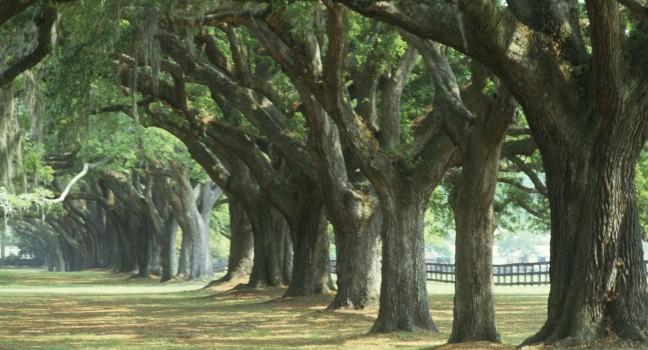
Oak tree lined road at Boone Hall Plantation, Charleston, South Carolina.
spirit of america / Shutterstock

Celebrities Ryan Reynolds and Blake Lively have publicly distanced themselves from their 2012 wedding here at Boone Hall Plantation and Gardens, apologizing for mistaking the longtime site of human enslavement for a pastoral setting. Still, Boone Hall remains one of the former Lowcountry plantations that continues to actively market itself as a wedding backdrop, complete with a moss-draped live oak allée and an heirloom rose garden. Nonwedding guests can also visit the plantation; most significant from a historic standpoint is a set of brick cabins, built at the turn of the 19th century, which housed enslaved people. While Boone Hall's interpretative strategy generally doesn't stress African American contributions or culture beyond the cabins, each one is devoted to a topic in black history, such as civil rights and sweetgrass baskets. The venue occasionally hosts Gullah storytelling and song performances.

Anglin Smith Fine Art

This gallery exhibits contemporary paintings by Betty Anglin Smith and her talented triplets, Jennifer, Shannon, and Tripp. Her son, Tripp, is a nature photographer specializing in black-and-white images. The bronze wildlife sculptures are by nationally recognized Darrell Davis; the acclaimed oil paintings by Kim English are attention-getters.

9 Queen St., Charleston, SC, 29401, USA
843-853–0708

Something incorrect in this review?

Recommended Fodor's Video

Avery Research Center for African American History and Culture

Part of the College of Charleston, this museum and archive was once a school for African Americans, training students for professional careers from approximately 1865 to 1954. The collections here focus on the civil rights movement, but also include artifacts from the era of chattel slavery, such as badges, manacles, and bills of sale, as well as other materials from throughout African American history.

125 Bull St., Charleston, SC, 29401, USA
843-953–7609
Sight Details
Free
Closed Tues., Thurs., and weekends

Something incorrect in this review?

Charles Pinckney National Historic Site

This remnant of Charles Pinckney's 715-acre birthplace was winnowed down by development, but today the National Park Service uses archaeological findings to tell the story of the man who signed the U.S. Constitution and the people his family enslaved. While most structures linked to the site's history as a rice and indigo plantation no longer stand, an 1820s cabin erected after Pinckney's death is open to visitors, along with three buildings where enslaved people lived.

1254 Long Point Rd., Charleston, SC, 29464, USA
843-881–5516
Sight Details
Free
Closed Mon. and Tues.

Something incorrect in this review?

Charleston Museum

Although housed in a modern-day brick complex, this institution was founded in 1773 and is the country's oldest museum. The collection is especially strong in South Carolina decorative arts, from silver to snuffboxes. There's also a large gallery devoted to natural history (don't miss the giant polar bear). Children love the permanent Civil War exhibition and the interactive "Kidstory" area, where they can try on reproduction clothing in a miniature historic house. The Historic Textiles Gallery features rotating displays that showcase everything from uniforms and flags to couture gowns, antique quilts, and needlework.

360 Meeting St., Charleston, SC, 29403, USA
843-722–2996
Sight Details
$15; combination ticket with Heyward-Washington House or Joseph Manigault House $22, combination ticket for all 3 sites $30

Something incorrect in this review?

Charleston Tea Garden

One of a handful of commercial tea farms in the United States, you can ride a trolley through the vast fields of tea shrubs here on Wadmalaw Island. Free factory tours offer an up-close view of how tea is processed, trolley tours cover the extensive grounds and greenhouse, and the gift shop is an excellent place for souvenir shopping.

Charleston Visitor Center

This lovely orientation center includes a kitchen stage for cooking demos along with helpful information about visiting Charleston. Staff at the center strongly encourage visitors to use the restrooms at the complex before hitting the streets (which have a lack of public bathroom options).

Children's Museum of the Lowcountry

Hands-on interactive exhibits at this top-notch museum will keep kids—from infants to 10-year-old children—occupied for hours. They can climb aboard a Lowcountry pirate ship, drive an antique fire truck, race golf balls down a roller coaster, and create masterpieces in the art center.

25 Ann St., Charleston, SC, 29403, USA
843-853–8962
Sight Details
SC residents $13, non-SC residents $15
Closed Mon.

Something incorrect in this review?

Circular Congregational Church

The first church building erected on this site in the 1680s gave bustling Meeting Street its name. The present-day Romanesque structure, dating from 1890, is configured on a Greek-cross plan and has a breathtaking vaulted ceiling. While the sanctuary is not open to visitors except during Sunday morning service, you are welcome to explore the graveyard, which is the oldest English burial ground in the city, with records dating back to 1695.

150 Meeting St., Charleston, SC, 29401, USA
843-577–6400
Sight Details
Graveyard closed Sat.

Something incorrect in this review?

City Hall

The intersection of Meeting and Broad streets is known as the Four Corners of Law, representing the laws of nation, state, city, and church. On the northeast corner is the Adamesque-style City Hall, built in 1801. Highlights of the historic portraits that hang in the second-floor council chamber (the second-oldest continuously used council chamber in the country), include John Trumbull's 1791 portrait of George Washington and Samuel F. B. Morse's likeness of James Monroe.

80 Broad St., Charleston, SC, 29401, USA
843-577–6970
Sight Details
Free

Something incorrect in this review?

College of Charleston

A majestic Greek revival portico, Randolph Hall—designed in 1828 by Philadelphia architect William Strickland and built by the labor of enslaved people—presides over the college's central Cistern Yard. Draping oaks envelop the lush green quad, where graduation ceremonies and concerts, notably during Spoleto Festival USA, take place. Founded in 1770, this liberal arts college's historic campus served as the backdrop for films like Cold Mountain and The Notebook.

Colleton Museum & Farmers Market

This museum chronicles the history of this small Southern town, displaying everything from butter churns to the country's first anesthesia machine. Particularly charming is the small chapel complete with stained glass, pews, and century-old wedding gowns. It's also home to the Colleton Commercial Kitchen, a small business incubator for foodies who sell their fare via foodtruck, pushcart, and retail. On Saturdays, the outdoor farmers' market runs from 9 am to 1 pm and Tuesdays it’s open 4 to 7 pm.

Colonial Dorchester State Historic Site

The town of Dorchester boomed during the 18th century before being abandoned at the onset of the Revolutionary War. All that remains of this once-substantial trading hub are the oyster tabby walls of Fort Dorchester and the brick belltower of St. George's Anglican Church. The Ashley River runs through the woods, and trails offer peaceful places to sit and watch the blackwater river flow by.

Corrigan Gallery

Owner Lese Corrigan displays her own impressionist-influenced paintings of Charleston and the works of some 20 other painters and photographers at this charming French Quarter gallery. Most pieces fit the genre of contemporary Southern art, and many feature recognizable Charleston scenes.

38 Queen St., Charleston, SC, 29401, USA
843-722–9868
Sight Details
Closed Sun.

Something incorrect in this review?

Deep Water Vineyard

Located on Wadmalaw Island in idyllic countryside 40 minutes from downtown Charleston, Deep Water's 48-acre property grows native muscadine grapes. A tasting of their core wines costs $15 per person, and you leave with a stemless wine glass. Beyond its core wines, the owners also bottle seasonal fruit wines, mead, nonalcoholic juices, and mixers. Wine slushies made on-site cut the heat during the summer. Pair your drink of choice with a picnic from home and relax under the site's canopy of live oaks.

6775 Bears Bluff Rd., Charleston, SC, 29487, USA
843-559–6867
Sight Details
Free
Closed Sun. and Mon.

Something incorrect in this review?

Dock Street Theatre

The original Dock Street, built in 1736, was the first theater building in America. The current structure, reopened in 1935, incorporates the remains of the old Planter's Hotel (circa 1809). Green velvet curtains and wonderful woodwork give it a New Orleans French Quarter feel. The Charleston Stage company performs full seasons of family-friendly fare, and Spoleto Festival USA uses the stage for productions in May and June.

Drayton Hall

The only plantation house on the Ashley River to have survived the Civil War intact, Drayton Hall is considered the nation's finest example of Palladian-inspired architecture. A National Trust Historic Site built between 1738 and 1742, it's an invaluable lesson in history as well as in architecture. Visitors can pay their respects at the African American cemetery—one of the oldest in the nation still in use—and experience the 30-minute "Port to Plantation" program that uses maps and historic documents to examine the lives of the enslaved Africans who built Charleston and were behind the city's prosperity. Inside the main home, rooms are unfurnished to highlight the original plaster moldings, opulent hand-carved woodwork, and other ornamental details. Tours, with guides known for their in-depth knowledge, run an hour.

3380 Ashley River Rd., Charleston, SC, 29414, USA
843-769–2600
Sight Details
$32
Closed Tues.
Tours depart hourly until 3:30 pm.

Something incorrect in this review?

Edisto Beach

Edisto's south edge has 4 miles of public beach. At its western end, the beach faces St. Helena Sound and has smaller waves. There is beach access at each intersection along Palmetto Boulevard and free public parking along the road. The beach itself has narrowed due to storm erosion, so you'll have more room to spread out if you time your visit at low tide. These clean coastal waters teem with both fish and shellfish, and it's common to see people throwing cast nets for shrimp. It's a great beach for beachcombing. Alcohol is allowed as long as it is not in glass containers. Amenities: none. Best for: solitude; sunset; swimming.

Edisto Island Serpentarium

This fabled attraction, run by a pair of brothers, features an indoor atrium of snakes from around the world, plus a meandering outdoor garden with sprawling habitats for snakes, turtles, and alligators. Educational programs and alligator feedings enrich the experience, and kids love the gift shop.

1374 Hwy. 174, Charleston, SC, 29438, USA
843-869–1171
Sight Details
$13–$20 (seasonally dependent)
Closed Feb.–Apr.

Something incorrect in this review?

Edmondston-Alston House

In 1825, Charles Edmondston designed this house in the Federal style on Charleston's High Battery; it was built by the labor of enslaved people, who also lived and worked on the property. About 13 years later, second owner Charles Alston began transforming it into the Greek Revival structure seen today, also by using the labor of enslaved people. The home is furnished with family antiques, portraits, silver, and fine china; the stories of the enslaved people who lived here are intertwined with many of the exhibits.

21 E. Battery, Charleston, SC, 29401, USA
843-722–7171
Sight Details
$15
Closed Sun.

Something incorrect in this review?

Folly Beach County Park

The Folly River and the Atlantic Ocean hug the peninsula of this palmetto-fringed park, 12 miles southwest of Charleston. There are lifeguards in designated swimming areas, and the water is generally calm here, making it the best bet on Folly Beach for families. Depending on the tides, there are often little tidal pools that toddlers can safely enjoy. The sand is the hard-packed taupe variety, ideal for making sand castles. Seasonal amenities include a snack bar, beach chairs, and umbrella rentals. During winter, it's possible to watch the sun set over the water with scarcely another person in sight. Amenities: food and drink; lifeguards; parking; toilets. Best for: sunset; swimming.

1100 W. Ashley Ave., Charleston, SC, 29439, USA
843-762–9960
Sight Details
$5 per car Jan.–Feb.; $10 March–April; $15 May–Labor Day (Mon.–Fri.) and $20 (Sat.–Sun. and holidays); $10 Sept.–Oct.; $5 Nov.–Dec.
Rentals: beach chair ($10/day); beach umbrella ($20/day); boogie boards ($15/day)

Something incorrect in this review?

Francis Marion National Forest

Pack a picnic and your fishing poles, or hit the hiking, biking, horseback-riding, and motorbike trails in 250,000 acres of swamps, lakes, oaks, and pines. Bring a canoe to explore the peaceful black water of the Wambaw Creek Wilderness Canoe Trail, hike the Swamp Fox Passage of the Palmetto Trail, or pitch a tent at one of the campgrounds within the forest.

French Protestant (Huguenot) Church

The circa-1845 Gothic-style church is home to the nation's only practicing Huguenot congregation. English-language services are held Sunday at 10:30, with a tour given to any visitors immediately afterward.

Front Beach at Isle of Palms

If you want a party scene and beach bars with live music and dancing, then this stretch of Isle of Palms is for you. Its string of businesses is the only beachfront commercial district in the area. Bicyclists are welcome, as are pets on leashes. Parking regulations are strictly enforced. Amenities: food and drink; parking (fee). Best for: partiers; swimming; windsurfing.

Gallery Chuma

This gallery at the City Market showcases Gullah art, ranging from inexpensive prints to original works by artists like Jonathan Green. The vibrantly colored paintings of this highly successful South Carolina artist have helped popularize Gullah culture.

188 Meeting St., Charleston, SC, 29401, USA
843-722–1702

Something incorrect in this review?

Heyward-Washington House

This Georgian-style double house was the townhome of Thomas Heyward Jr., patriot leader, signer of the Declaration of Independence, and slaveholder. The city rented the residence for George Washington's use during the president's weeklong stay in Charleston in 1791. Inside, visitors find historic Charleston-made furniture, notably the withdrawing room's Holmes Bookcase, considered to be one of the most exceptional examples of American colonial furniture. Don't miss the formal gardens, which contain plants commonly used in the area in the late 18th century. Also significant is the 1740s kitchen building, as it's the only one of its kind open to the public in Charleston, and the laundry building, where new interpretive panels acknowledge the role that enslaved people played at the property.

Horton Hayes Fine Art

This gallery carries sought-after Lowcountry paintings and still lifes by 13 artists, including paintings of coastal life and architecture by Mark Kelvin Horton and the moss-draped live oak trees of Clive R. Tyler.

30 State St., Charleston, SC, 29401, USA
843-958–0014

Something incorrect in this review?

The Hunley

In 1864, the Confederacy's H. L. Hunley sank the Union warship USS Housatonic and became the world's first successful combat submarine. But moments after the attack, it disappeared mysteriously into the depths of the sea. Lost for more than a century, it was found in 1995 off the coast of Sullivan's Island and raised in 2000. The Hunley is now preserved in a 75,000-gallon tank, which you can see during an informative guided tour. An exhibit area includes artifacts excavated from the sub and interactive displays, including a model that kids will enjoy crawling inside. In downtown Charleston, there's also a full-size replica of the Hunley outside the Charleston Museum.

1250 Supply St., Charleston, SC, 29405, USA
843-743–4865
Sight Details
$18
Closed weekdays

Something incorrect in this review?

International African American Museum

Opened in 2023, the International African American Museum deftly balances reflection on the horrific tragedy of enslavement with celebration of the art and culture created by the people brutalized by it. The museum's scope is vast, but exhibits grounded in the Lowcountry are among the most powerful, including the recreation of a Sea Islands praise house.

14 Wharfside St., Charleston, SC, 29401, USA
Sight Details
$19.95
Closed Mon.

Something incorrect in this review?