Get FREE email communications from Fodor's Travel, covering must-see travel destinations, expert
trip planning advice, and travel inspiration to fuel your passion.
We've compiled the best of the best in Bucks County - browse our top choices for the top
things to see or do during your stay.
Sorry! We don't have any recommendations for Bucks County right now.
Sights Filter
Delaware Canal State Park
Fodor's Choice
Share This
Completed in 1832 during America's great era of canal building, the 60-mile-long Delaware Canal runs from Bristol north to Easton, and today its towpath draws bicyclists and walkers who appreciate the scenic path with its canal and Delaware River views. It's easy to access the towpath in New Hope. In addition, the restored Locktender's House and Lock 11 (145 S. Main St.fodc.org Closed weekends Nov.–Apr.) explore how locks work and what daily life was like on the canal.
Parry Mansion
Share This
(c) Mullan101 | Dreamstime.com
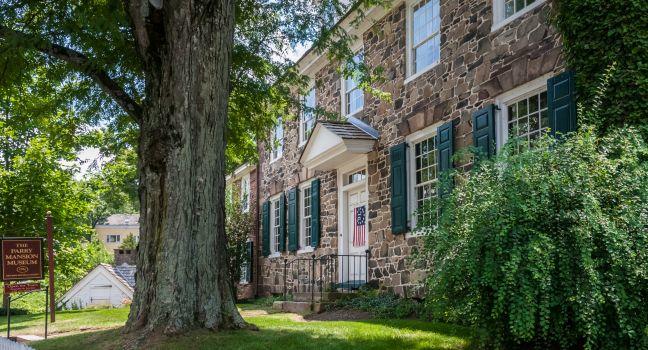
Built in 1784 and now home to the New Hope Historical Society, this stone house is fascinating because the furnishings reflect decorative changes from 1775 (Colonial) to 1900 (Victorian)—including candles, whitewashed walls, oil lamps, and wallpaper. Wealthy Quaker lumber- and flour-mill owner and businessman Benjamin Parry, often called the "father of New Hope," built the house, which was occupied by five generations of his family. Guided house tours, including a brief film, give you a good sense of town history. The historical society also offers a one-hour walking tour of New Hope ($10) from May through October on the first and third Sunday of each month.
Washington Crossing Historic Park
Share This
(c) Reddy | Dreamstime.com
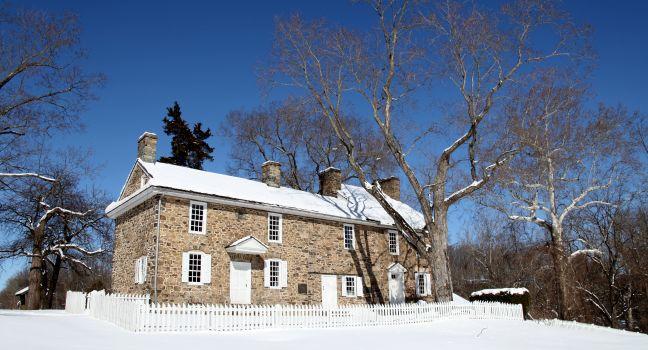
It was from this evocative site, now a 500-acre park, that on Christmas night in 1776 General Washington and 2,400 of his men crossed the ice-studded Delaware River, attacked the Hessian stronghold at Trenton, and secured a desperately needed victory for the Continental Army. This crossing was immortalized in Emanuel Leutze's famous 1851 painting, which hangs in New York's Metropolitan Museum of Art. The park's visitor center, historic houses, and memorials are divided between the Lower Park (McConkey Ferry section) and Upper Park (Thompson-Neely section), about 5 miles apart.
In the Lower Park, the visitor center has park information, a short film, and helpful historic exhibits; it also sells tickets for informative guided tours in both areas. The Crossing the Delaware tour in the Lower Park emphasizes the role that ten crucial days played in the American Revolution. You can see replicas of the Durham boats used in the crossing, and for the country's 250th anniversary in 2026 a newly constructed replica will be placed along the Delaware as part of a new interpretive trail.
In the Upper Park, 125-foot-tall Bowman's Hill Tower offers a commanding view of the area. The Thompson-Neely House tour describes life in Bucks County; it was used as a hospital during the 1776–77 encampment of Washington's army. There's also a gristmill tour. The park's special events include a popular reenactment of the crossing in December.
On the New Jersey side of the Delaware, across the narrow Washington Crossing Bridge, is Washington Crossing State Park ( 355 Washington Crossing–Pennington Rd., Titusville 609/737–0623 nj.gov/dep $10 per car NJ residents, $20 per car others Memorial Day–Labor Day; free rest of year). It has a visitor center with a film and a museum that covers New Jersey's role in the Revolution, and a separate area with the Johnson Ferry House by the site where Washington and his troops landed. The park is also popular for its nature trails. At this writing, a new and expanded visitor center overlooking the Delaware is set to open by mid-2026.
Recommended Fodor's Video
Bowman's Hill Tower
Share This
On top of Bowman's Hill, this 125-foot fieldstone tower provides a spectacular view that extends up to 14 miles, weather permitting, taking in the Delaware River and countryside. It was built in 1929–31 to mark what might have been a lookout point for Washington's army, but historians have found no evidence of this. You can walk up to the observation deck; an elevator (out of service at this writing; call ahead) will take you far enough that you have just 23 steps via a narrow circular staircase.
Bowman's Hill Wildflower Preserve
Share This
The 134-acre preserve near the Thompson-Neely (Upper) section of Washington Crossing Historic Park showcases hundreds of species of wildflowers as well as trees, shrubs, and ferns native to Pennsylvania. Stop at the visitor center and get a map, and then take a guided one-hour wildflower walk ($3 Available Fri.–Sun. Apr.–Oct.; call to check times) or explore any of the short, well-marked trails (4½ miles in all) on your own. In season, the preserve also sells native plants. Wildflower blooms are seasonal, with mid-April through July a good period to visit, but fall brings colorful foliage. The website has bloom information.
Bryn Athyn Cathedral
Share This
Construction began in 1913, but Raymond Pitcairn, who provided the vision and the funds, insisted that the cathedral be built the old way—he wanted a medieval cathedral and he wanted the medieval techniques of stone cutting and stained glass making used as well. The cathedral was built from models, not blue prints, and these models became adaptable over the course of construction. While the cathedral is impressive from the outside, the most interesting architectural discoveries are in the inside, where it becomes more than a copy of medieval motifs, and where many New Church beliefs are melded into the architecture. Throughout the interior is optical refinement, meaning there are no hard angles, and no two things are the same—every archway, door, and window is slightly different; even every lock has its own special key, and no two carving details are alike. The walls are all slightly curved. Known for its stained glass, which was all made on site, the actual cathedral is a wash of red and blue, a stunning glow that changes throughout the day, depending on the sun. The church requests that you call ahead for groups of 10 or more.
Crossing Vineyards and Winery
Share This
On a 200-year-old estate a mile from Washington Crossing Historic Park, this family-run vineyard started with an old barn and expanded to a spacious modern building with rooms overlooking the vineyards and garden. In a 45-minute tasting, the staff lets you know what to expect from 10 different types of wines. Tastings require reservations, but otherwise they aren't needed for the tasting room or wine bar. Look for Chardonnay, Cabernet Franc, Merlot, and other varieties, including sweet wines like a popular port-style Chocolate Cherry Truffle. You can order light bites from cheeses to sandwiches. Concerts and public events take place year-round.
Fonthill Castle
Share This
Archaeologist, collector, and noted Arts and Crafts tile maker Henry Mercer (1856–1930) designed his home, completed in 1912, creating what resembles a turreted 13th-century castle in fireproof, innovative reinforced concrete; it's stuffed with books, drawings, and, above all, tiles. The multilevel house was built without blueprints as a mazelike jumble of rooms (44 in all). Ancient tiles collected by Mercer and handcrafted Arts and Crafts tiles from his company's kilns (depicting scenes from the Bible, Dickens's Pickwick Papers, and more) cover floors, walls, columns, and ceilings. An hour-long tour—not for the claustrophobic—explains the amazing incrustations; reservations are suggested. Occasionally there are special, longer tours. Steps away, the TileWorks ( thetileworks.org) is Mercer's former tile factory; there are tours and a gift shop.
Glencairn Museum
Share This
Built between 1928 and 1939, this neo-Romanesque 90-room former home of Raymond and Mildred Pitcairn, now houses the family's collection of antiques that were gathered by John and his son Raymond. The house has some fantastic details, but the best part is walking into old bedrooms that now serve as galleries for ancient Greek, Roman, Egyptian, African, Native American, and Sumerian artworks as well as a fantastic basement gallery full of 13th-century European stained glass and sculpture. The view from the observation deck, 149 feet up, is worth the tight elevator ride up there.
Historic Fallsington
Share This
Three historic buildings—an 18th-century log cabin and a turn-of-the-19th-century tavern and house—have been restored and opened for guided tours by Historic Fallsington. In the off-season (mid-Oct.--mid-May), it's open by appointment only.
James A. Michener Art Museum
Share This
Named for the late best-selling novelist and Doylestown native, this museum, across the street from the Mercer Museum, has a permanent collection and changing exhibitions that focus on 19th- and 20th-century American art, especially those by Bucks County artists. It's known for its collection of early-20th-century Pennsylvania impressionists, representing such artists as Edward Redfield and Daniel Garber. The museum occupies the buildings and grounds of the former Bucks County jail, which dates from 1884. A 23-foot-high fieldstone wall surrounds seven galleries, an outdoor sculpture garden, and a Gothic-style warden's house. There's also a re-creation of Michener's Doylestown study. A relatively new gallery accommodates larger traveling exhibits, included in the price of admission.
Mercer Museum
Share This
Located downtown, this eccentric museum opened in 1916. It displays a selection of the 50,000 pre-industrial, mostly American tools and objects collected by archaeologist and Arts and Crafts tile maker Henry Chapman Mercer, who worried that industrialization would wipe out evidence of the past. To house them, Mercer built a concrete, castle-like building similar to his nearby home, Fonthill Castle. The result is Instagrammable but tricky to navigate; use the museum's map. Boats, tables, chairs, and more hang from the six-story central court's ceiling; elsewhere, rooms are packed with objects organized by trade or purpose. A modern wing has a helpful introduction to Mercer and galleries for changing exhibits. The engaging The Doan Gang: Outlaws of the Revolution, about a local Loyalist family, will be on display throughout 2026.
Moravian Pottery and Tile Works
Share This
On the grounds of the Fonthill estate, the tile works still produces Arts and Crafts–style tiles from Mercer's designs. These tiles adorn such well-known structures as Grauman's Chinese Theater in Hollywood, as well as many of the homes and sidewalks of Doylestown. The late author and Bucks County resident James Michener described them as follows: "Using scenes from the Bible, mythology, and history, Henry Chapman Mercer produced wonderfully archaic tiles about 12 or 14 inches square in powerful earth colors that glowed with intensity and unforgettable imagery." You can watch a 17-minute video and take a partially guided tour (every half-hour) past artisans at work in the 1912 factory, which resembles a Spanish mission. You can also purchase tiles at the works.
National Shrine of Our Lady of Czestochowa
Share This
Driving up to the shrine, you can't help but realize that you're not in Kansas anymore. This enormous Polish spiritual center has drawn millions of pilgrims, including the late Pope John Paul II, since its opening in 1966. The complex includes a modern church with huge stained-glass panels depicting the history of Christianity in Poland and the United States. The gift shop and bookstore sell religious gifts, many imported from Poland, and the cafeteria serves hot Polish and American food on Sunday from 10 to 3:30.
New Hope Railroad
Share This
Pulled by an authentic steam locomotive or vintage diesel, this heritage passenger train makes a 9-mile, 45-minute (an hour in fall) scenic round-trip between New Hope and Lahaska, and standard trips are narrated. Among many special events are Halloween-theme trips, holiday excursions in December, and a Wine & Tapas train. Trips get pricey for a family and may be best for those who love old trains. Advance reservations are encouraged, and required for special events. Parking in the on-site lot is expensive, so find a spot on the street or in a town lot.
Pearl S. Buck House
Share This
Writer Pearl S. Buck, best known for her novel The Good Earth, lived at Green Hills Farm, a country house not too far from Doylestown. Here she wrote nearly 1,000 novels, children's books, and works of nonfiction while raising seven adopted children and caring for many others. The house, now a National Historic Landmark, still bears the imprint of the girl who grew up in China and became the first American woman to win both the Nobel and Pulitzer prizes. The house also contains the writer's collection of Asian and American antiques and personal belongings.
Pennsbury Manor
Share This
On a gentle rise 150 yards from the Delaware River, Pennsbury Manor is a 1939 reconstruction of the Georgian-style mansion William Penn built in the 1680s. Living-history demonstrations on 43 of the estate's original 8,400 acres provide a glimpse of everyday life in 17th-century America. The property, including formal gardens, an icehouse, a smokehouse, and a bake-and-brew house, helps paint a picture of the life of an English gentleman 300 years ago. The plantation also shows that although history portrays Penn as a dour Quaker, as governor of the colony he enjoyed the good life by importing the finest provisions and keeping a vast retinue of servants. These extravagances led to financial difficulties that resulted in Penn's spending nine months in a debtor's prison. Though you can wander about the grounds on your own, the house can be seen only on a tour. On Sundays from April to October there are special programs, including those devoted to historic trades, living history theater and open-hearth cooking, to name a few. To get here, follow the blue-and-yellow historical markers.
Sesame Place Philadelphia
Share This
Aimed squarely at young kids and their families, this water and theme park based on the popular children's show Sesame Street provides fun places for children to crawl, climb, and jump; float, slide, and splash; and meet, greet, and perhaps hug the ageless Big Bird and his friends. Though there are dry-land activities, the highlights of the park—especially on a hot summer day—are the water rides, including the Rambling River, the interactive Count's Splash Castle, and rides at Big Bird's Beach. (Water attractions are open seasonally.) As befits a park for preteens, the rides in Elmo's World and the roller coasters—Vapor Trail and Oscar’s Wacky Taxi—are modest by theme-park standards, but they've got enough excitement for young riders. Other favorites are the daily, and nightly, parades and shows; Sesame Neighborhood, a replica of the TV street; and pricey meals with characters like Elmo and Grover. Sesame Place Philadelphia is the world's first theme park to be a Certified Autism Center; see website for information. The park's gift shop is large. Buy tickets online in advance for substantial savings. Check ahead in case any rides or attractions are closed, and note that food is expensive and can be uneven in quality (see website FAQs for info on bringing water). No cash is accepted at the park, but you can buy a debit card at no cost.
Not finding what you're looking for?
We've got a few suggestions for nearby spots.
Northern Liberties and Fishtown
Insectarium19.8 miles away
8046 Frankford Ave., Philadelphia, Pennsylvania, 19136, USA
I want emails from Fodor's Travel with travel information and promotions. I can unsubscribe
any time using the unsubscribe link at the end of all emails.
Thank you for your interest!
Look out for our newsletters with travel tips and special offers.
Sign up for Travel Tips & News
By signing up for the
newsletter, I agree to the Privacy Policy. You must check the box to subscribe
Thank you for your interest!
Look out for our newsletters with travel tips and special offers.