


Brooklyn Bridge (Entrance)
Get FREE email communications from Fodor's Travel, covering must-see travel destinations, expert trip planning advice, and travel inspiration to fuel your passion.

We've compiled the best of the best in New York - browse our top choices for the top things to see or do during your stay.
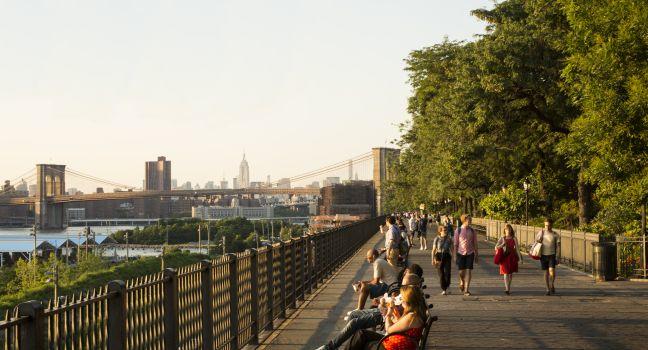
Strolling this esplanade famous for its magnificent Manhattan views, you might find it surprising to learn that its origins were purely functional: the promenade was built as a sound barrier to protect nearby brownstones from highway noise. Find a bench, and take in the skyline, the Statue of Liberty, and the Brooklyn Bridge; in the evening, the lights of Manhattan sparkle across the East River. Below are the Brooklyn–Queens Expressway (BQE) and Brooklyn Bridge Park.
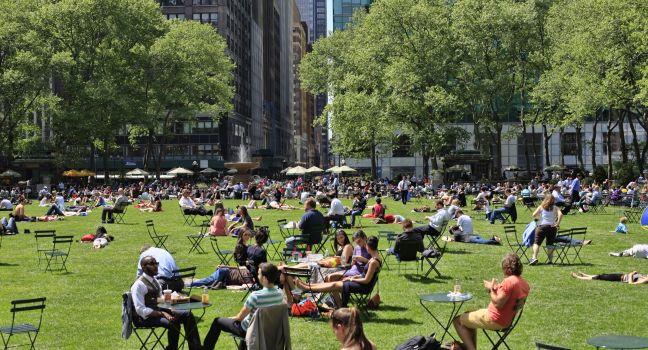
This lovely green space spread out among landmarks and skyscrapers is one of Manhattan's most popular parks. Tall London plane trees line the perimeter of the sunny central lawn, overlooking stone terraces, flower beds, and snack kiosks. The garden tables scattered about fill with lunching office workers and folks enjoying the park's free Wi-Fi. In summer, there are free readings, live jazz, and "Broadway in Bryant Park" musical theater performances. Most popular of all is the summer film festival: locals leave work early to snag a spot on the lawn for the outdoor screenings each Monday at dusk.
At the east side of the park, near a bronze cast of Gertrude Stein, is the stylish Bryant Park Grill, which has a rooftop garden, and the adjacent open-air Bryant Park Café, open seasonally. On the south side of the park is an old-fashioned carousel ($4) where kids can also attend storytellings and magic shows. Come late October, the park rolls out the artificial frozen "pond" (October–March, daily 8 am–10 pm) for free ice-skating (bring your own padlock for the lockers; skate rental starts at $18). Surrounding the ice rink are the Christmas-market stalls of the holiday shops, selling handcrafted goods and local foods.
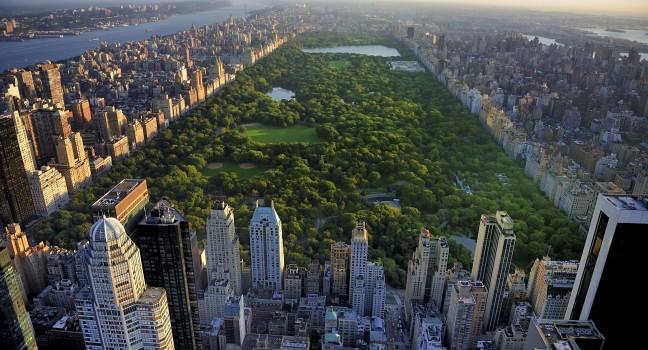
The busy southern section of Central Park, from 59th to 72nd Street, is where most people get their first impression. But no matter how many people congregate around here, you can always find a spot to picnic, ponder, or just take in the foliage, even on a sunny weekend day. In the southern corner is the Hallett Nature Sanctuary, one of the park's lesser-known areas. The nature sanctuary is a 4-acre patch of wilderness—one of the park’s three woodlands—and is home to native flora and fauna and rustic trails that lead to quiet overlooks; it's also a popular birding spot. Playgrounds, lawns, jogging and biking paths, and striking buildings populate the midsection of the park, from 72nd Street to the reservoir. You can soak up the sun, take in the public art, take pictures at Bethesda Fountain, visit the penguins at the Central Park Zoo, or join the runners huffing counterclockwise on the dirt track that surrounds the reservoir. North of the reservoir and up to 110th Street, Central Park is less crowded and feels more rugged. In 2025, the Central Park Conservancy completed a revitalization of the area around the Harlem Meer (a man-made lake) at the north end of the park to add a full-scale ice rink, an additional new skating experience on the meer, a larger-than-Olympic-size pool, and revamp the parkland around it. The new facility is called the Davis Center at the Harlem Meer (formerly the Lasker Rink and Pool site). To find out about park events and year-round walking tours, check the website of the Central Park Conservancy ( www.centralparknyc.org).
If you're taking the subway to the park's southernmost parts, the stops at either Columbus Circle (southwest corner) or 5th Avenue–59th Street (southeast corner) are handy. If headed for points north, the A, B, C, and D subway lines travel along Central Park West (beware of local versus express stops); the 4, 5, and 6 lines travel along Lexington Avenue, three blocks east of 5th Avenue and the park.
There are many paved pedestrian entrances into the park from 5th Avenue, Central Park North (110th Street), Central Park West, and Central Park South (59th Street). Four roads, or transverses, for cars and city buses cut through the park from east to west—66th, 79th, 86th, and 96th Streets. The East and West drives are both along the north–south axis; Center Drive enters the south edge of the park at 6th Avenue and connects with East Drive around 66th Street. Cars are no longer allowed on the drives, which are exclusively for pedestrians, cyclists, and horse-drawn carriages. Along the main loop, lampposts are marked with location codes that include a letter—always "E" (for east) or "W" (for west)—followed by numbers, the first two of which tell you the nearest cross street. For example, E7803 means you're near 78th Street; above 99, the initial "1" is omitted, so W0401 is near West 104th Street. Download the Central Park Conservancy's free app for a GPS-enabled map to help you navigate the park. The app also includes an audio guide, self-guided tours, and current events in the park, as well as a new interactive Cherry Blossom Tracker Map to help visitors and locals track when and where the flowers will peak in the park in spring.
If you haven't packed a picnic and you want a snack, you can usually find one of those rather tired-looking food carts selling hot dogs, pretzels, and ice-cream sandwiches. Specialty food carts are often around, too, mostly in the park's southern half, especially when there are concerts or other major events—your taste buds will thank you. Other reliable options include the café next to the Boathouse Restaurant (midpark at 74th Street), or a branch of Le Pain Quotidien (midpark at 69th Street). Both serve sandwiches, soups, pastries, and other satisfying on-the-go grub (and Le Pain also has free Wi-Fi). For something a little more elegant, you can stop for brunch, lunch, or dinner at the Tavern on the Green.
As part of a park-wide restoration project named Plan for Play, all 21 playgrounds have undergone (or are still scheduled to receive) updates. Most have seen renovations to play structures, plus other improvements that will ensure each one's structural stability and ongoing maintenance for years to come.
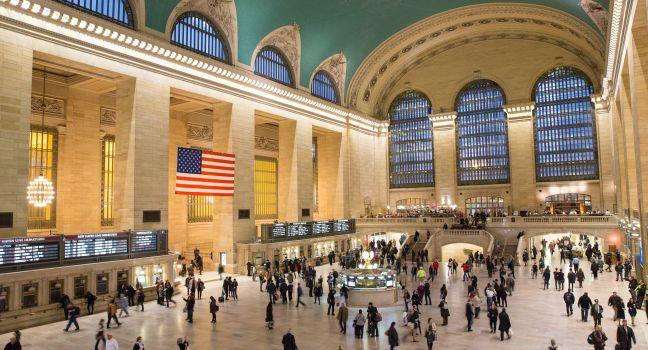
To best admire Grand Central's exquisite Beaux-Arts architecture, avoid rush hour and head up one of the staircases at either end, where an Apple store occupies the top of one of the balcony spaces. From this level, you can survey the concourse and feel the terminal's dynamism. Then head to the southwest corner to reach the tucked-away The Campbell cocktail lounge. The on-site Vanderbilt Tennis Club is a best-kept secret; court time can be reserved there. Around and below the main concourse are fantastic shops and eateries—including the New York Transit Museum gallery annex, Grand Central Market and Grand Central Oyster Bar. If you're with a friend, position yourselves in opposite corners of the tiled passageway just outside the Oyster Bar, facing away from each other, and murmur your secrets to the wall. Or just stand and watch others indulge in the delightful acoustic oddity that is the whispering gallery. Take Walks NYC ( www.takewalks.com/new-york-tours/grand-central-tours) leads two official daily walking tours for $35 at 11 am and 3 pm.

One of the main draws of the High Line is the landscaping, which is both wild and cultivated at the same time, and dotted with public art. Chelsea Market Passage, between 15th and 16th Streets, is accented with Spencer Finch’s stained-glass art and is home to public art displays, video programs, music performances, and sit-down events. A feature that illustrates the High Line’s greatest achievement—the ability to see the city with fresh eyes—is the 10th Avenue Square (between 16th and 17th Streets). This viewing window with stadium seating and large picture windows frames the city below as art, encouraging viewers to linger.
To fully appreciate the High Line, walk a length in one direction (preferably from Gansevoort Street uptown so that you can end with panoramic city and river views) and then make the return journey at street level, taking in the Chelsea neighborhood below. Nearby Chelsea Market and Market 57 are convenient places to pick up fixings for a picnic lunch.
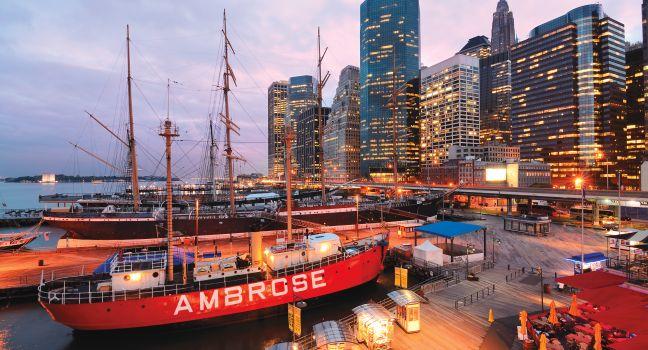
Had this charming cobblestone neighborhood not been declared a historic district in 1977, the city's largest concentration of early-19th-century commercial buildings would have been destroyed. Thankfully, they survived, and in recent years have come to enjoy new life. The landmarked "South Street Seaport Historic District" has undergone a thorough makeover as a diverse shopping and dining destination, with seasonal markets, art installations, IPIC Theater (a luxury cinema with dining), and live entertainment—plus a simplified moniker as The Seaport.
At the intersection of Fulton and Water Streets, the main Seaport gateway, is the Titanic Memorial Lighthouse, a small white lighthouse that commemorates the sinking of the RMS Titanic in 1912. Beyond the lighthouse, Fulton Street turns into a cobblestone pedestrian mall. On the south side of Fulton is The Seaport's architectural centerpiece, Schermerhorn Row, a redbrick terrace of Georgian- and Federal-style warehouses and countinghouses built from 1810 to 1812. Cross South Street to Pier 16, where historic 19th- and 20th-century ships are docked. Pier 16 also is the departure point for various seasonal cruises. (Ship tours are included in the admission to the South Street Seaport Museum).
Across South Street along the East River are Pier 17 and the renovated Tin Building. Previously the longtime site of the Fulton Fish Market, in 2022, the latter reopened as the Tin Building by renowned chef Jean-Georges Vongerichten, a high-end dining destination and specialty food market ( tinbuilding.com). In 2018, the Pier 17 building became a multilevel office complex with several restaurants and bars at street level, and a 60,000-square-foot rooftop that's programmed with concerts and seasonal pop-ups ( rooftopatpier17.com). But the real highlight is the wraparound public wharf that's open year-round, with seating and stunning views of the harbor and Brooklyn Bridge.
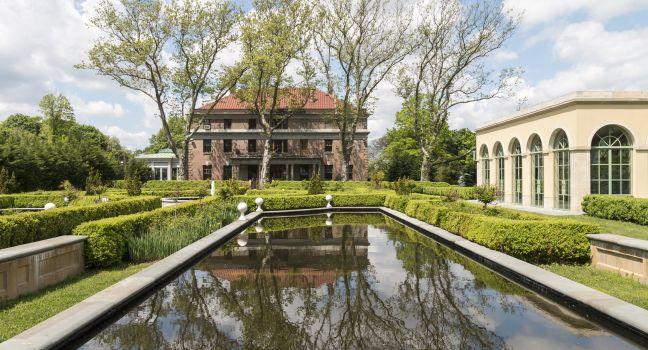
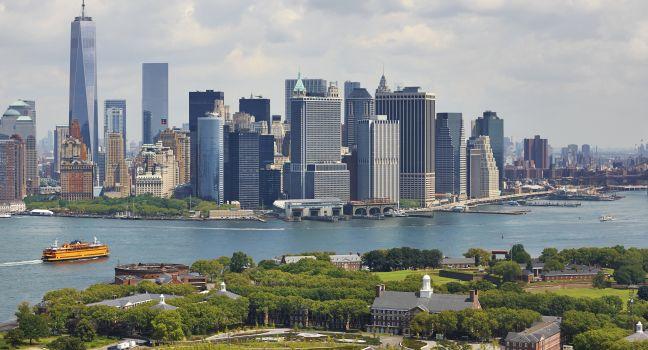
One of the largest ongoing adaptive reuse projects in America, Snug Harbor Cultural Center and Botanical Garden’s 83-acre campus—with 3 museums, 26 buildings, 9 gardens, 10 acres of wetlands, and a 2-acre farm—is an ideal place to enjoy nature, history, and the arts. Its on-site attractions are managed and, if applicable, ticketed independently of each other (although some are a part of an encompassing Discovery Pass). Events, performances, and cultural celebrations occur regularly throughout campus.
\nThe Newhouse Center for Contemporary Art is Staten Island's oldest contemporary art gallery, exhibiting vibrant, dynamic displays of local and international artwork, all housed in Snug Harbor’s landmarked Greek Revival building. Next door, the Noble Maritime Collection maintains historic collections specific to Staten Island's maritime past. Enjoy the Staten Island Children's Museum with kids, or visit the Staten Island Museum, with exhibits on art, history, and science—including a partial life-size replica of a mastodon. Among the unique botanical gardens is the Ming Dynasty--inspired New York Chinese Scholar's Garden, one of the first classical outdoor scholar’s gardens in North America, fabricated in Suzhou and constructed on-site.
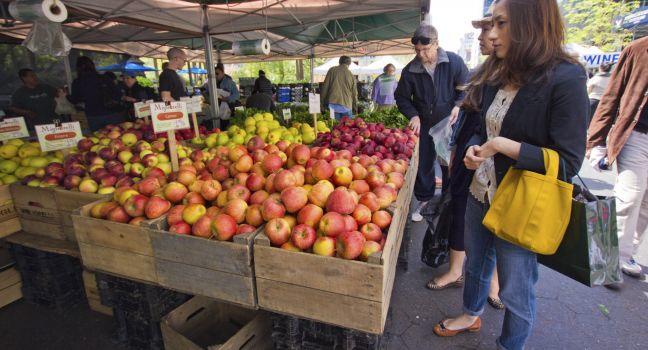
A park, farmers' market, meeting place, and the site of rallies and demonstrations, this pocket of green space and surrounding public square sit in the center of a bustling residential and commercial neighborhood. The name "Union" originally signified that two main roads—Broadway and 4th Avenue—crossed here. It took on a different meaning in the late 19th and early 20th centuries, when the square became a rallying spot for labor protests; many unions, as well as fringe political parties, moved their headquarters nearby.
Union Square is at its best on Monday, Wednesday, Friday, and Saturday (8–6), when the largest of the city's greenmarkets draws farmers and food purveyors from the tristate area selling fruit and vegetables, plants, fresh-baked pies and breads, cheeses, cider, fish, and meat. Between Thanksgiving and Christmas, artisans sell gift items and food at the large Union Square Holiday Market ( www.usqholiday.nyc).
New York University dormitories, theaters, and cavernous commercial spaces occupy the restored 19th-century commercial buildings that surround the park, along with some chain stores and restaurants. Statues in the park include those of George Washington, Abraham Lincoln, Mahatma Gandhi (often wreathed in flowers), and the Marquis de Lafayette (sculpted by Frédéric-Auguste Bartholdi, designer of the Statue of Liberty).
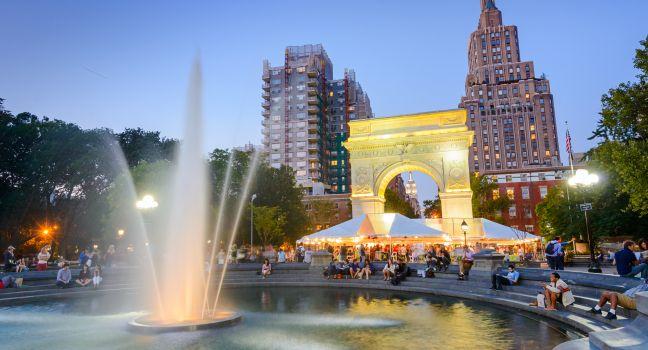
The triumphal European-style Washington Arch at the square's northern flank marks the start of 5th Avenue. The original wood-and-papier-mâché arch, situated a half block north, was erected in 1889 to commemorate the 100th anniversary of George Washington's presidential inauguration. The arch was reproduced in Tuckahoe marble in 1892, and the statues—Washington as General Accompanied by Fame and Valor on one side, and Washington as Statesman Accompanied by Wisdom and Justice on the other—were added in 1916 and 1918, respectively.
Manhattan's Little Italy is overrun with mediocre restaurants aimed at tourists, but Belmont (meaning "beautiful hill"), the Little Italy of the Bronx, is a real, thriving Italian American community. Unless you have family in the area, the main reason to come here is for the food: eating it, buying it, looking at it fondly through windows, and chatting with shopkeepers about it—perhaps getting recipe advice.
Nearly a century after pushcarts on Arthur Avenue catered to Italian American workers constructing the zoo and botanical garden, the area teems with meat markets, bakeries, cheese makers, and shops selling kitchenware (espresso machines, pasta makers, etc.). There are debates about which store or restaurant is the "best," but thanks to generations of Italian grandmothers, most vendors here serve fresh, handmade foods—including the sausages of the famed "sausage chandelier" at the Calabria Pork Store ( 2338 Arthur Ave.). Although the area is no longer solely Italian—many Latinos and Albanians share this neighborhood now—Italian Americans dominate the food scene.
Few New York views are more romantic than the one from the top of the magnificent stone staircase that leads down to the ornate three-tiered Bethesda Fountain. The fountain, dedicated in 1873, was built to celebrate the opening of the Croton Aqueduct, which brought clean drinking water to New York City. The name Bethesda was taken from the biblical pool in Jerusalem that was supposedly given healing powers by an angel, which explains the statue The Angel of the Waters rising from the center. The four figures around the fountain's base symbolize Temperance, Purity, Health, and Peace. Beyond the terrace stretches The Lake, filled with swans, gondolas, and amateur rowboat captains. At its eastern end is the new and improved Boathouse, home of a deck bar, an outdoor café for on-the-go snacks, and a pricier restaurant for more leisurely meals.
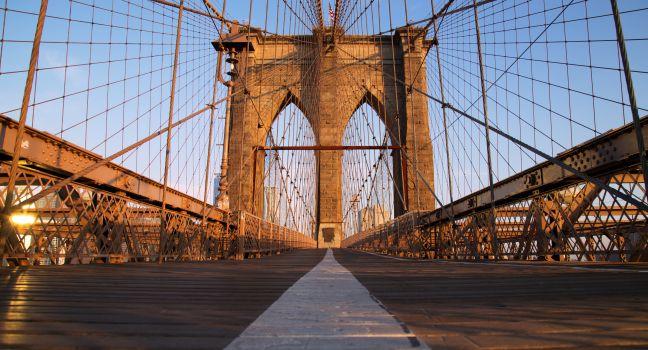
Most visitors cross the Brooklyn Bridge from Manhattan, but you'll get better views traversing the span from the Brooklyn side. It's a surprisingly long walk (more than a mile) that normally takes about 40 minutes, but the exhilarating views are worth the exertion. No need to look out for cyclists; a separated bike lane on the vehicle road has made the pedestrian walkway much more pleasant. The bridge is most magical and quiet in the early morning, but if you don't mind the crowds, it's worth making the trip at sunset in summer, when the lights of Manhattan come to life. There are two pedestrian access points for the bridge on the Brooklyn side: at the intersection of Tillary Street and Adams Street, and another in DUMBO from a staircase at the underpass where Cadman Plaza East intersects Prospect Street.
This sprawling, 85-acre industrial-turned-recreational riverside park stretches from the Manhattan Bridge in DUMBO, under the Brooklyn Bridge, and all the way south to Pier 6 at the end of Atlantic Avenue. It's a gathering spot for tourists and Brooklynites alike, who come to picnic or watch movies on the lawn in the summer, play various sports on its many courts and playing fields, or simply stroll the promenade and gawk at the most postcard perfect view of the downtown Manhattan skyline—especially at sunset. The DUMBO section has a playground and a small pebble beach, plus the wonderfully restored Jane’s Carousel ( janescarousel.com).
The quiet green spaces of New York City are treasured by locals, and one of the best is Hudson River Park, a 5-mile path from Battery Place to 59th Street. This riverside stretch, incorporating the piers that jut out into the Hudson, has been renovated into a landscaped park with walking and cycling paths, a seasonal minigolf course, dog runs, and skate parks. The TriBeCa portion consists of Piers 25 and 26, and has picnic spaces, playgrounds, a sand volleyball court, and an educational river-ecology area. The areas adjacent to the West Village (Piers 45 and 46) and near Chelsea (Piers 63 and 64) are equally attractive, with lots of spots for leisure and recreation. To the north, beginning at 72nd Street, is Riverside Park.
Much like the High Line when it opened, Little Island was an instant hit with locals and visitors when the gates to this man-made isle in the middle of the Hudson River first swung open in May 2021. The 2.4-acre park is elevated on 132 tulip-looking concrete stilts and connected to Manhattan by two footbridges. Funded mostly by Barry Diller and Diane von Fürstenberg, the island park and its rolling stair-clad hills make for a fun wander. It also provides stunning views of the Manhattan skyline. There's a small outdoor food court and an ambient amphitheater for free concerts.
In September 2019, Pace moved into a new eight-story building at 540 West 25th Street, turning the gallery more into an art center than just a gallery. The impressive roster of talent represented here includes a variety of upper-echelon artists, sculptors, and photographers, such as Richard Avedon, Alexander Calder, Tara Donovan, Chuck Close, Sol LeWitt, and Robert Rauschenberg. Pace has two spaces in Chelsea, including 510 West 25th Street.


