


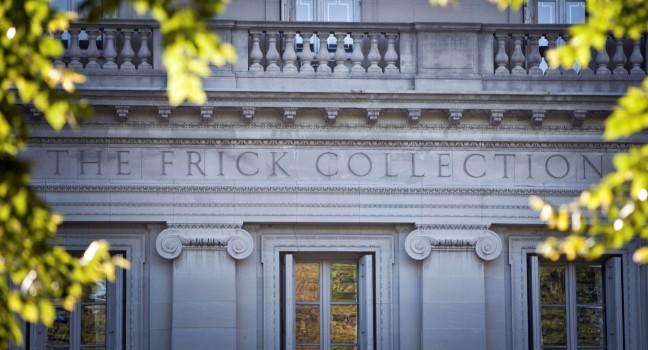
The Frick Collection
Get FREE email communications from Fodor's Travel, covering must-see travel destinations, expert trip planning advice, and travel inspiration to fuel your passion.

We've compiled the best of the best in New York - browse our top choices for the top things to see or do during your stay.
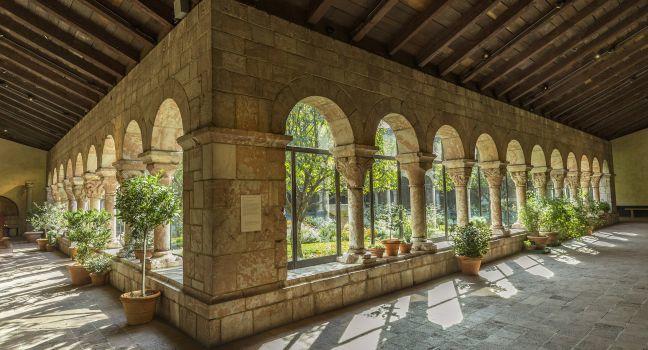
Perched on a wooded hill in Fort Tryon Park, near Manhattan's northwestern tip, the Cloisters museum and gardens houses part of the medieval collection of the Metropolitan Museum of Art and is a scenic destination in its own right. Colonnaded walks connect authentic French and Spanish monastic cloisters, a French Romanesque chapel, a 12th-century chapter house, and a Romanesque apse. One room is devoted to the 15th- and 16th-century Unicorn Tapestries, which date from 1500 and are must-see masterpieces of medieval mythology and craftsmanship. The tomb effigies are another highlight, as is the Reliquary containing silver and gold religious objects. Two of the three enclosed gardens shelter more than 250 species of plants similar to those grown during the Middle Ages, including flowers, herbs, and medicinals; the third is an ornamental garden.
\nConcerts of medieval music are held regularly, and there are holiday concerts in December. Concert tickets include same-day admission to the museum, and tickets to either the main Met on 5th Avenue or to the Met Cloisters include same-day admission to the other. The outdoor Trie Café is open during museum hours, rain or shine, April through October, with a light menu of sandwiches, desserts, and coffee.
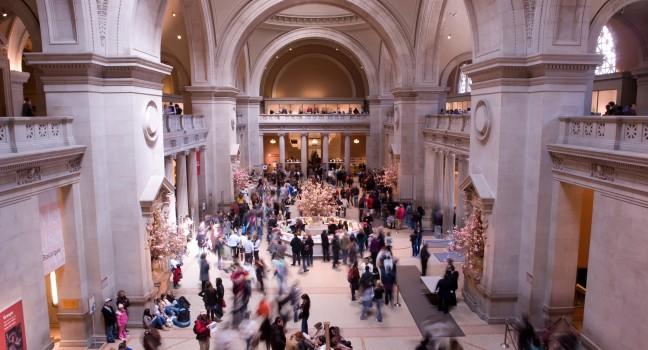
Be aware of ongoing renovations. A rebuild of the Ancient Near Eastern and Cypriot Art galleries will continue into early 2026; check the website and museum map to plan your visit around gallery closures. In between exhibits, take a break at the Cantor Roof Garden, open late April through late October, or at one of five cafés and lounges offering light bites and cocktails. Or book a reservation for The Met Dining Room, an upscale restaurant with Central Park views and a seasonal menu. Admission includes same-day entry to The Met Cloisters, a combination of medieval European art, architecture, and gardens in Fort Tryon Park in Upper Manhattan. Make the most of your visit by downloading a free digital or audio guide from The Met's website or take advantage of guided tours available in 10 different languages.
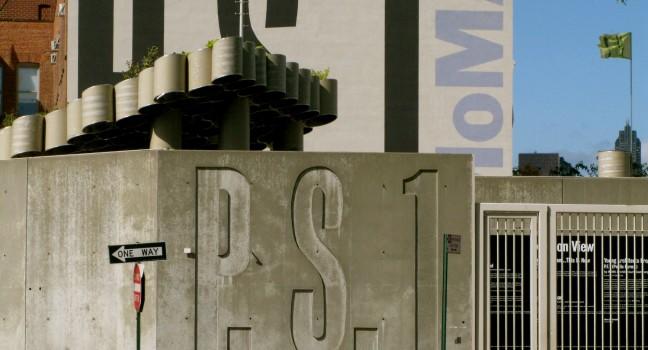
A pioneer in the "alternative-space" movement, MoMA PS1 rose from the ruins of an abandoned school in 1976 as a sort of community arts center for the future, focusing on the work of currently active experimental and innovative artists. Long-term installations include work by Sol LeWitt, James Turrell, and Pipilotti Rist. Every available corner of the enormous building is used; discover art not only in former classrooms–turned–galleries, but also in the boiler room, and even in some bathrooms.
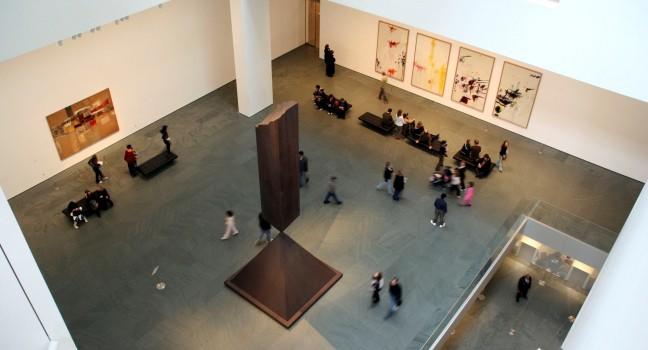
MoMA spans six levels, and it's helpful to explore from top to bottom. See the most famous works on Floors 4 and 5; installations on 6; and galleries of photography, drawings, architecture projects, and special exhibitions on the lower floors. Level 1 remains home to the delightful Abby Aldrich Rockefeller Sculpture Garden. Within the museum, dine at high-end The Modern; snack at cafés on Floor 2; and enjoy outdoor views from the Terrace café on Floor 6. The cellar-level cinema screens international films and theme series (museum entry is a discounted $14 with your film ticket). Browse at the famous MoMA Store and MoMA Design Store (across 53rd Street). Entry is free for NYC residents the first Friday of each month, 4–8 pm. The first-floor galleries are always free and open to the public.

Wright's superior design was criticized by some who believed that the distinctive building detracted from the art, but the spiraling layout allows artwork to be viewed from different angles and distances. On permanent display, the museum's Thannhauser Collection is made up primarily of works by French Impressionists and Postimpressionists Van Gogh, Degas, Picasso, and Manet. Escape the crowded lobby by taking the elevator to the top and working your way down the spiral. The Cafe Rebay offers snacks, salads, and sandwiches, while the gift shop is near the museum's exit.
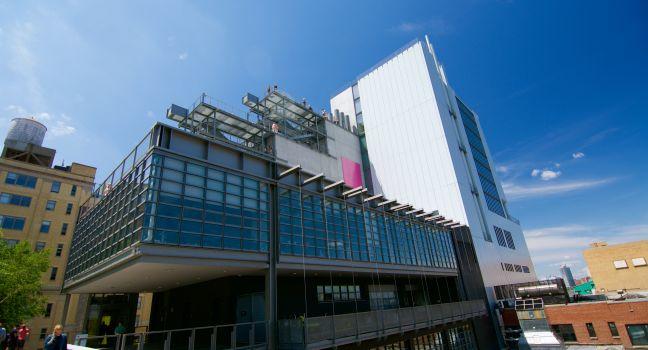
The Whitney experience is as much about the setting as the incredible artwork. The outdoor terraces on floors six, seven, and eight are connected by exterior stairs that provide a welcome reprieve from crowded galleries as well as stunning skyline views. Visitors 25 and under get in free with valid ID; Friday night is free to all 5–10 pm. Skip the line and buy tickets in advance online; same-day tickets are often available.
The Cooper Hewitt has taken an ornate, century-old mansion—once the residence of industrialist Andrew Carnegie—and outfitted it with the latest technologies and amenities to create a slick, highly interactive, 21st-century experience, so you don’t just look at design; you engage with it. Download the free app to guide you through some of the wide-ranging collection's more than 215,000 objects from over 30 centuries, including 3-D printed objects, handcrafted furniture, vintage wallpaper, cultural and period textiles, art and design books, and examples of robotics and animation. Rotating exhibits may focus on a particular designer, design era or theme.
\nThe focus on design and discovery extends to the SHOP, where limited-edition objects are for sale. There is a café, and an outdoor garden is free and open to the public. The museum offers guided tours aligned to exhibition topics at 1:30 daily. Admission tickets can be reserved online.
One of the finest art museums in the northeastern United States, the Hyde Collection encompasses some 2,800 pieces including paintings and works on paper by artists such as Josef Albers, Sandro Botticelli, Georges Braque, Alexander Calder, Paul Cézanne, William Merritt Chase, Leonardo da Vinci, Edgar Degas, Thomas Eakins, El Greco, Childe Hassam, Winslow Homer, Wassily Kandinsky, Pablo Picasso, Rembrandt, and Pierre-Auguste Renoir. Antiques, fine period furniture, and decorative arts are also displayed, as are temporary exhibits. Audio Tours are available.
This seven-story structure—a glimmering, metal-mesh-clad assemblage of off-center squares—caused a small neighborhood uproar when it was built in 2007, with some residents slow to accept the nontraditional building. It also caused a stir when it shut down in 2024 and reopened a year later with a Rem Koolhaas--designed extension that has nearly doubled its exhibition space. Not surprisingly, given the museum's name and the building, shows are all about contemporary art, often provocative and frequently with a video element. Free tours are offered; check the website for times.
The focus of this museum near Lincoln Center is its incredible collection of work by folk and self-taught artists of the 20th and 21st centuries, including the single largest collection of reclusive Chicago artist Henry Darger, known for his painstakingly detailed collage paintings of fantasy worlds. The gift shop has an impressive collection of handcrafted items.
The Asian art collection of Mr. and Mrs. John D. Rockefeller III forms the core of this museum's holdings, with artworks and artifacts dating as far back as the 11th century BCE. A growing contemporary collection features video, animation, photography, and new media art by artists from Asia and the Americas. Founded in 1956, the society has a regular program of panel discussions, film screenings, family events, and performances, in addition to changing on-loan exhibitions of traditional and contemporary art. Trees and flowering vines grow within the glass-enclosed, skylighted Leo Café, whose menu reflects the diversity of Asian cuisine. The AsiaStore carries the best in Asian design and literature. Docent tours are offered regularly; a schedule is posted on the museum's website.
A crowd-pleasing Basquiat show in 2019 marked the inauguration of this East Village art space, and subsequent shows have proved that the privately owned Brant Foundation isn't a one-trick pony. That's not surprising since Peter Brant's own collection includes a vast selection of works by such contemporary artists as Andy Warhol, David Altmejd, Carl Andre, John Chamberlain, Urs Fischer, Dan Flavin, Dash Snow, and the aforementioned Basquiat, just to name a few. The four-level space was once a power station (it later became the studio of conceptual artist Walter De Maria), and it's towering ceilings and giant windows are the perfect setting for large-scale artworks. There’s a quiet garden and a gift shop, too. Check the website to confirm opening times, price of admission, and to make a reservation to visit.
At this nonprofit organization, the focus is on drawings—contemporary and historical. The frequently changing exhibits often push the envelope on what's considered drawing so there's usually some thought-provoking material. Many projects are commissioned by the center.
El barrio, Spanish for "the neighborhood," is the nickname for East Harlem, a largely Spanish-speaking community; the museum, on the edge of this neighborhood, focuses on Latin American, Latino, and Caribbean art. Founded in 1969, the museum's permanent collection of more than 8,500 objects is highlighted through evolving themes, including women, African and Indigenous artists, Latinx representation and more. Art and crafts from Latin America are prominent. One highlight is the over 300 santos, carved wooden folk-art figures from Puerto Rico. El Teatro, formerly the Heckscher Children's Theater, has stunning 30-foot murals and stained-glass roundels. The museum's events include lectures, films, festivals and parties for Latin and Caribbean holidays, including a Three Kings Day parade.
Occupying almost an entire city block between Broadway and Riverside Drive East on 155th Street in upper Manhattan, the Hispanic Society Museum & Library, a repository of an extraordinarily rich collection of more than half a million items relating to the art and cultures of the Spanish- and Portuguese-speaking world, opened to the public for the first time in six years in early 2023. Founded in 1904 as a museum for Spanish and Portuguese art, with Goya’s Dutchess of Alba (1797) as a major draw of the collection, the museum reopened with a mission to connect the Society to the art of the 20th and 21st centuries and to its Latino neighborhood of Washington Heights. The Dutchess of Alba is still here, and still a big draw in the arcaded, Spanish Renaissance--style Main Court, which features luscious terra-cotta details. Other highlights include the Sorolla Vision of Spain Gallery housing 14 monumental paintings from the Valencian master painter Joaquín Sorolla y Bastida, and the Upper Terrace, an open-air space that looks out over the bronze equestrian statue of El Cid and other fine sculptures. Renovations to the museum continue and will include a visitor center and an education center.
Founded in 1974 by photojournalist Cornell Capa (photographer Robert Capa's brother), ICP continues to put on exhibitions that explore the timely social and political aspects of photojournalism. The institution, which has moved its collection of more than 150,000 original prints—spanning the history of photography, from daguerreotypes to large-scale pigment prints—several times, finally has a permanent home with both education and exhibition spaces. The new building's spacious, second- and third-floor galleries really allow the exhibits to shine. There's a gift shop and small café on the ground floor. It's pay-what-you-wish ($5 minimum) on Thursday night 5 pm–8 pm.
Atop Lighthouse Hill sits this replica of a tranquil Tibetan monastery so impressive, it's listed in the National Register of Historic Places. Founded by an American collector of Tibetan art, it's partly a museum comprising a temple and a garden, holding her formidable collection of Tibetan and Himalayan sculpture, paintings, and artifacts. It's also an active community center for visitors to mediate, practice yoga or tai chi, or attend other events posted on their website's calendar. Views from their terrace truly transport you to another place, far from an urban center.
\nHoused in a glass-and-glazed-terra-cotta building on the rim of Columbus Circle, the museum is an epicenter of experimental and innovative craft, art, and design, with a focus on contemporary jewelry, glass, ceramic, fiber, wood, and mixed-media works. Pieces are human scale, with many neatly housed in display cases rather than hanging on walls. Exhibitions offer new ways of thinking, experiencing, and telling stories about art and design. Recent special exhibitions included "Barbie: A Cultural Icon," a hugely popular exploration of the doll's history and impact on fashion and popular culture. The gift shop has an excellent selection of MAD merch, housewares, jewelry, and other artful items. Free docent-led tours are offered Friday to Sunday at 11:30 and 2:30. The top floor houses Robert at MAD, a full-service restaurant with glorious views of Central Park through floor-to-ceiling windows.
Founded in 1901, the Society of Illustrators holds many events and programs at this former town house--turned-museum. There are eclectic exhibitions on comics, science fiction, fashion, animation and 3-D, and historic illustrations from the permanent collection of 2,500 pieces, including the holdings of the Museum of Comic and Cartoon Art (MoCCA). In addition, there are lectures, costumed sketch nights and more. On the third floor, order a drink from the 128 Bar, which sports Norman Rockwell's "The Dover Coach," a large-scale oil painting for the Saturday Evening Post that was donated by the illustrator himself.
An 1898 Upper West Side town house contains this small, eccentric museum dedicated to the work of Russian artist Nicholas Roerich, who immigrated to New York in the 1920s and quickly developed an ardent following. About 200 of his paintings hang here—notably some vast canvases of the Himalayas.
In 1968, the Studio Museum in Harlem opened to celebrate artists of African descent. In 2018, the museum closed for a $300 million renovation and expansion project, and is slated to finally reopen in fall 2025 after a seven-year hiatus. The reopening will feature work from Tom Lloyd, an activist who was a focal point of the institution's opening 56 years ago. There will be works of art dating back to the early 1800s, showcasing more than 200 years of work by Black creatives, such as Houston E. Conwill, David Hammons, and Glenn Ligon.


