31 Best Sights in New York, USA

Background Illustration for Sights

We've compiled the best of the best in New York - browse our top choices for the top things to see or do during your stay.

Empire State Building
Murray Hill Fodor's Choice
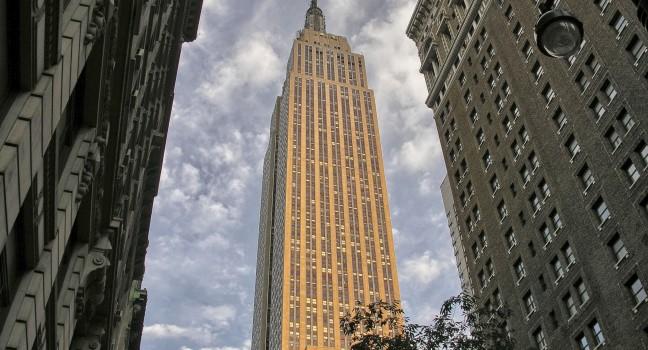
NEW YORK CITY - AUG 16: The Empire State Building on August 16, 2008 in New York, USA. The Empire State Building is a 102-story landmark and American cultural icon in New York City.
CristinaMuraca/Shutterstock

With a legendary silhouette recognizable virtually worldwide, the Empire State Building is an Art Deco monument to progress, a symbol of NYC, and a star in many romantic scenes—on- and off-screen. Built in 1931 at the peak of the skyscraper craze, this 103-floor limestone giant opened after 13 months of construction. The framework rose at a rate of 4½ stories per week, making the Empire State Building the fastest-rising skyscraper ever built, to date.

Enter the visitor experience in the building's designated Observatory lobby—a two-story hall off 34th Street—and exit through the building's illustrious 5th Avenue lobby. Purchase or retrieve prepurchased timed tickets at kiosks, then head to the 10,000-square-foot Second Floor Galleries to learn all about the skyscraper—from its engineering to its role in modern culture (including a fun photo op with King Kong himself). There are interactive experiences, along with marvelous Art Deco details throughout.

Rise from Floor 2 to reach Floor 80's enclosed observatory, with interactive kiosks to create custom NYC itineraries and an impressive NYC skyline drawing by memory artist Steven Wiltshire. Then head to the 86th-floor observatory (1,050 feet high) to find another enclosed area and the spectacular wraparound outdoor deck. The views from the compact 102nd-floor observatory are better still, though it comes with an extra price tag. A new Sunrise@ESB experience ($135) provides preopening access to the 86th floor observation deck on Saturday morning to watch the sunrise with pastries and a custom Starbucks coffee. A Starbucks Reserve Store opened inside the building in 2022.

Expect long lines during peak tourist times/seasons—best avoided with weekday morning or winter visits. Plan for three-plus hours to absorb the full experience and to pass through security. Save time by purchasing tickets online in advance. The building opens the stairs from the 86th floor down to the 80th floor on busy days so visitors can bypass any potential lines.
20 W. 34th St., New York, NY, 10001, USA
212-736–3100
Sight Details
$44 for 86th fl.; $79 to add 102nd fl.; $120 for Express Pass to 86th and 102nd fls.

Something incorrect in this review?

Boldt Castle

Fodor's Choice

George C. Boldt, proprietor of the Waldorf-Astoria Hotel in New York, began building this 120-room Rhineland-style castle on Heart Island for his wife, Louise, in 1900. Four years later, when she died suddenly, he ceased work on the castle. The building remained deserted for 73 years, abused by vandals and weather. Since 1977, millions of dollars have been poured into restoration work. It's worth a trip to the 5-acre island to see the castle. Its fleet of wooden boats is in the Boldt Yacht House, on Wellesley Island. Uncle Sam Boat Tours runs shuttle boats between Alexandria Bay, Heart Island, and Wellesley Island.

Collins Landing, Alexandria Bay, NY, 13607, USA
315-482--9724-in season
Sight Details
Castle $9.50, yacht house $5
Yacht house mid-May–late Sept., daily 10–6:30; call for castle hrs.
Closed Nov.--Apr.

Something incorrect in this review?

Clinton Hill Architecture Walk

Fodor's Choice
Part of the National Register of Historic Places, the buildings along Clinton and Washington avenues were originally lavish summer homes for turn-of-the-20th-century industrialists like Charles Pratt. Federal, French Second Empire, Romanesque Revival, Greek Revival, Gothic Revival, and neo-Grec mansions line the streets, serving as university buildings, community centers, and private residences. There are also quintessentially Brooklyn brownstones and Italianate row houses, with mansard roofs as far as the eye can see.

Recommended Fodor's Video

Manitoga–The Russel Wright Design Center

Fodor's Choice

Nature and art blend seamlessly throughout the home, studio, and 75-acre grounds of mid-20th-century industrial designer Russel Wright. Boulders protrude through the ground floor of Dragon Rock, Wright's experimental home and a National Historic Landmark. It is built on a rock ledge and spans 11 levels; fist-size stones serve as door handles. Four miles of paths weave through a landscape that appears natural but is actually a studied design of native trees, rocks, mosses, and wildflowers. The 90-minute tours take in the buildings and woodlands; wear comfortable walking shoes.

Chrysler Building

Midtown East
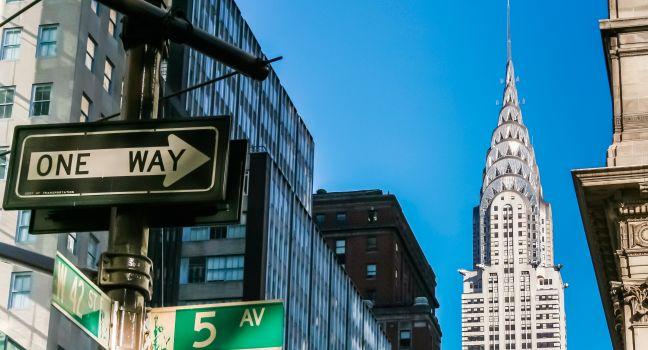
New York City street signs and Chrysler building
Marc Venema/iStockphoto

A monument to modernity and the mighty automotive industry, the former Chrysler headquarters wins many New Yorkers' vote for the city's most marvelous and beloved skyscraper, despite the fact that you can only love it from a distance. Architect William Van Alen, who designed this 1930 Art Deco masterpiece, incorporated car details into its form: American eagle gargoyles, made of chromium nickel and resembling hood ornaments used on 1920s Chryslers, sprout from the 61st floor; winged urns festooning the 31st floor reference the car's radiator caps. Most breathtaking is the pinnacle, with tiered crescents and spiked windows that radiate out like a magnificent steel sunburst. While the current owner has been given permission to reopen an observation deck on the 71st floor that closed in 1945, for now you have to make do with appreciating it from afar or ducking in for a quick look at the amazing time-capsule lobby replete with chrome "grillwork," intricately patterned wood elevator doors, marble walls and floors, and an enormous ceiling mural saluting transportation and human endeavor. You may enter the lobby during business hours (8 am–6 pm). For a great view/photo, walk to the northeast corner of 44th Street and 3rd Avenue.

Flatiron Building

Flatiron District
The Flatiron Building, New York, circa May 2013. The Flatiron building is considered to be one of the first skyscrapers ever built. It was completed in 1902.
Marco Rubino / Shutterstock

When completed in 1902, the wedge-shape Fuller Building, as it was originally known, caused a sensation. Architect Daniel Burnham made ingenious use of the triangular wedge of land at 23rd Street, 5th Avenue, and Broadway, employing a revolutionary steel frame that allowed for the structure's 22-story, 286-foot height. Covered with a facade of limestone and white terra-cotta in the Italian Renaissance style, the building's shape resembled a clothing iron, hence its nickname. When it became apparent that the building generated strong winds, gawkers would loiter at 23rd Street hoping to catch sight of ladies' billowing skirts. Local traffic cops had to shoo away the male peepers—one purported origin of the phrase "23 skidoo."

175 5th Ave., New York, NY, 10010, USA

Something incorrect in this review?

Rockefeller Center

Midtown West
NEW  YORK - SEPTEMBER 5: Rockefeller Center on September 5, 2010 in NYC. Rockefeller Center is a complex of 19 commercial buildings, built by the Rockefeller family, located in Midtown Manhattan.; Shutterstock ID 100153565; Project/Title: MB_NYPhotoMap
ruigsantos/Shutterstock

Comprising more than 100 shops and 50 eateries, the Rockefeller Center complex runs from 47th to 52nd Street between 5th and 6th Avenues; special events dominate the central plazas in spring and summer. In December an enormous, twinkling tree towers above the ice-skating rink, causing crowds of visitors from across the country and the globe to shuffle through with cameras flashing.

\n

The world's most famous ice-skating rink occupies Rockefeller Center's sunken lower plaza from October through mid-April and converts to a roller-skating rink in summer. A gold-leaf statue of the Greek hero Prometheus hovers above. The lower plaza also provides access to the marble-lined concourse underneath Rockefeller Center, which houses restaurants, a post office, and clean public restrooms.

\n

Rising from the lower plaza's west side is the 70-story Art Deco GE building. Here John D. Rockefeller Jr. commissioned and then destroyed a mural by Diego Rivera. He replaced it with the monumental American Progress by José María Sert, still on view in the lobby, flanked by additional murals by Sert and English artist Frank Brangwyn. Up on the 65th floor is the landmark Rainbow Room, a glittering big-band ballroom dating from 1934. Higher up, Top of the Rock has what many consider the finest panoramas of the city. Rockefeller Center guided walking tours are available several times daily (tickets start at $27), with the option to add a visit to the observation deck.

23rd Regiment Armory

Crown Heights
At Atlantic and Bedford, the 23rd Regiment Armory is one of Brooklyn’s most imposing and important landmarks: an almost full-block Romanesque Revival building by architects Fowler & Hough that dates back to 1895. The building—much of it restored, from the crenelated towers to the arched windows—now serves as a homeless shelter, which means that the nearby blocks can feel a bit dodgy. During the day it’s safe, though, with people milling about—just be smart.
1322 Bedford Ave., Brooklyn, NY, 11216, USA

Something incorrect in this review?

Basilica of Our Lady of Perpetual Help

This imposing block-long Romanesque church stands tall on a ridge is unusual because it's actually two churches, one stacked on the other. The lower church opened on Easter Sunday in 1909. The larger, upper one was completed in 1928 in time for Christmas. In recognition of Sunset Park's diversity, masses are said in English, Spanish, Chinese, and Vietnamese.

Brookfield Place

Financial District

The four towers of this complex (aka the World Financial Center) range from 34 to 51 stories high and are topped with different geometric ornaments designed by Cesar Pelli. Inside are the company headquarters for the likes of American Express and Dow Jones. But the main attraction is the glass-domed Winter Garden atrium with its signature palm trees—a pleasant open space that hosts music, dance performances, a winter ice rink, and links to a variety of stores and restaurants. You can cross West Street at street level, or use the concourse underneath that connects Brookfield Place with the World Trade Center site (and the subway and PATH trains). The massive windows at the top of the Winter Garden's grand staircase on the north side of the atrium provide a view of the 9/11 Memorial Plaza and Westfield World Trade Center (the Oculus) to the east.

Cushman Row

Chelsea

Built in 1840 for merchant and developer Don Alonzo Cushman, this string of redbrick beauties between 9th and 10th Avenues represents some of the country's best examples of Greek Revival row houses. Original details include small wreath-encircled attic windows, deeply recessed doorways with brownstone frames, and striking iron balustrades and fences. Note the pineapples, a traditional symbol of welcome, on top of the black iron newels in front of No. 416.

406–418 W. 20th St., New York, NY, 10011, USA

Something incorrect in this review?

The Daily News Building

Midtown East

The landmark lobby of this Art Deco tower contains an illuminated 12-foot vintage globe that revolves beneath a black-glass dome. Around it, spreading across the floor like a giant compass and literally positioning New York at the center of the world, bronze lines indicate mileage to various international destinations. Movie fans might recognize the building as the offices of the fictional newspaper The Daily Planet in the original Superman movie. Photos from the film's shooting are shown, along with a large clock displaying time zones around the world. On the wall behind the globe, you can check out meteorological gauges, which read New York City's weather—especially fun on a windy day when the meters are whipping about. The Daily News hasn't called this building home since 1995; only the lobby is open to the public (but that's enough). The globe was last updated in 1967, so part of the fun here is seeing how our maps have changed; note Manchuria and East and West Germany.

220 E. 42nd St., New York, NY, 10017, USA
212-687–3733

Something incorrect in this review?

Darwin D. Martin House Complex

The Darwin D. Martin House, part of the Darwin D. Martin House Complex in Buffalo's Parkside East Historic District, is considered one of the finest examples of a Wright prairie-style structure. The estate was commissioned in 1902 by Darwin Martin, a wealthy Buffalo businessman who would become one of Wright's most loyal patrons. The first Wright house on the property was the George Barton House (at 118 Summit Avenue), built in 1903 for Martin's sister and brother-in-law. The final touches were applied to Martin's own house in 1907. The estate also includes the Gardener's Cottage (285 Woodward Avenue). At this writing, the complex is undergoing a multiyear restoration. Restored in the first phases of the work were the pergola, conservatory, and carriage house. The final phase is a restoration of the house interiors, which will likely continue through 2010. The site remains open for tours during restoration.

125 Jewett Pkwy., Buffalo, NY, 14214, USA
716-856–3858
Sight Details
Tours $19, free 2nd and 4th Thurs. each month
Tours by appointment

Something incorrect in this review?

Ghostbusters Firehouse

TriBeCa

You may spot famous film and television locations around the city, but no firehouse is quite as eye-catching as the one whose exterior was made famous by the 1984 blockbuster Ghostbusters. (Its interiors were filmed in a studio.) The 1903 building is still the active home of FDNY Hook & Ladder Company 8, which ran with the ghost-busting theme for its logo—you’ll find the movie’s iconic ghost and red-circle strikethrough combined with the FDNY badge painted on the pavement out front. Movie buffs can buy a T-shirt with the logo, too, at  www.fdnyshop.com.

14 N. Moore St., New York, NY, 10013, USA

Something incorrect in this review?

Graycliff

The centerpiece of the 8½-acre Graycliff estate is the two-story main house, built circa 1926. Its cantilevered balconies take advantage of its position atop a 70-foot-cliff overlooking Lake Erie. The estate is undergoing an extensive multiphase, multiyear restoration. The property is about 18 mi south of Buffalo.

6472 Old Lake Shore Rd., Derby, NY, 14047, USA
716-947–9217
Sight Details
Tours $18
Tours Apr.–Nov. and Christmas season by appointment

Something incorrect in this review?

Great Camp Sagamore

Sagamore Lodge and the 26 adjoining buildings that make up Great Camp Sagamore were built in the late 1800s by William West Durant, a prominent Adirondack figure. Designed in a Swiss-chalet style, the lodge was built with native spruce, cedar, and granite, and its rustic style set a precedent among the well-heeled set with retreats in the area. Bought and expanded by the Vanderbilt family in the early 1900s, Sagamore is now owned and run by a nonprofit organization that sponsors meetings, seminars, and classes, and rents rooms by the night or week. Classes and activities include canoeing, rustic furniture making, mosaic twig decoration, and mountain music. Tours (reservations required) take you to a blacksmith shop, furniture shop, icehouse, and livestock buildings, as well as to the main lodge. The camp is about 30 mi southwest of Blue Mountain Lake.

1105 Sagamore Rd., Raquette Lake, NY, 13436, USA
315-354--5311
Sight Details
$18
Tours late May–late June, weekends at 1:30; late June–early Sept., daily at 10 and 1:30; early Sept.–late Oct., daily at 1:30

Something incorrect in this review?

Hyde Hall

Its legacy is as remarkable as its architecture: from the time it was built in 1819 until it was sold to New York State in 1964, Hyde Hall remained in the same family. Money from estates here, in Europe, and in the Caribbean enabled George Clarke (1768–1835), a prominent figure in colonial New York, to finance what is, according to many historians, the largest residence built in this country before the Civil War. Ongoing restoration projects—and the chance to question artisans about their work—add texture to a tour of the 50-room mansion. The property adjoins Glimmerglass State Park on the north end of Otsego Lake.

267 Glimmerglass State Park Rd., Cooperstown, NY, 13326, USA
607-547–5098
Sight Details
$15
Weekdays 9-6
Closed weekends

Something incorrect in this review?

Mark Twain's Study

Twain wrote The Adventures of Huckleberry Finn and The Adventures of Tom Sawyer in this study built for him by his sister-in-law and her husband. The octagonal shape was inspired by a Mississippi riverboat pilothouse. The study was moved to the Elmira College campus in the 1950s and is part of the school's Center for Mark Twain Studies. Cross the street to visit the (free) Mark Twain Exhibit to learn more about Twain's connection to Elmira or to buy books in the gift shop.

1 Park Pl., Elmira, NY, 14901, USA
800-935--6472
Sight Details
Free
May–early Sept., Mon.–Sat. 9–5, Sun. noon–5; early Sept.–mid-Oct., Sat. 9–5, Sun. noon–5; or by appointment

Something incorrect in this review?

Metropolitan Life Insurance Company Tower

Flatiron District

In 1909, with the addition of a 700-foot tower resembling the campanile of St. Mark's in Venice, this 1893 building became the world's tallest—but it was surpassed in height in 1912, when the Woolworth Building was completed. The Met Life Tower was stripped of much of its classical detail during renovations in the early 1960s but remains a prominent feature of the Midtown skyline. The clock's four faces are each three stories high, and their minute hands weigh half a ton each. If the street view doesn't quite cut it, you can reserve a room in the skyline itself: the New York EDITION, a luxury hotel conceived by Ian Schrager and Marriott International, occupies the clock-tower portion of the building.

1 Madison Ave., New York, NY, 10010, USA

Something incorrect in this review?

Palazzo Chupi

West Village

Artist and film director Julian Schnabel lives here. But that's not why it's worth making a point to stand across the street and marvel at this pink structure of wonder. Plopped atop a former horse stable, this 12-floor pink Venetian-style palace rises 170 feet above the low-level skyline of the West Village. The facade is highlighted by Renaissance-style porticos and the name engraved halfway up, Palazzo Chupi—a reference to a popular brand of Spanish lollipop and the pet name for Schnabel's wife. When it was completed in 2008, there were rumors that various celebrities—Bono, Madonna, the Olsen Twins—were going to buy one of the five apartments inside. (The only famous person who actually did buy a place was actor Richard Gere.) The building immediately became a divisive flashpoint for West Villagers: some passionately hated it while others loved it. Over time, the haters have thinned out and now most locals love Palazzo Chupi.

\n

360 W. 11th St., New York, NY, 10014, USA

Something incorrect in this review?

Prospect Park South Historic District

Designed in 1899 as a park within the city, the Victorian blocks of this iconic historic district feature stately gateposts that mark the entrances of handsome streets lined with palatial Colonial Revival, Queen Anne, and Tudor Revival homes, each with striking architectural details. The Ditmas Park Historic District, which also has homes built in the early 1900s, is a few blocks southeast. (To step inside the houses, see Best Brooklyn Events in Chapter 1 for details about the Victorian Flatbush House Tour.)
From Church Ave. to Beverley Rd., Brooklyn, NY, 11218, USA

Something incorrect in this review?

Prospect Park Southwest

A stroll along tree-lined Prospect Park Southwest, across from Prospect Park, is one of the highlights of visiting Windsor Terrace. The gracious limestone town houses, many of which were built in the late 19th century and are notable for their beaux arts facades, are an architectural complement to nearby Park Slope’s brownstones.
Prospect Park SW, Brooklyn, NY, 11215, USA

Something incorrect in this review?

The Row

Greenwich Village

Built from 1833 through 1837, this series of Greek Revival and Federal row houses along Washington Square North, between University Place and MacDougal Street, once belonged to merchants and bankers, then to writers and artists such as John Dos Passos and Edward Hopper. Many are now owned by NYU and used for housing and offices. Although the facades remain beautifully preserved, the interiors have been drastically altered over the years.

1–13 and 19–26 Washington Sq. N, New York, NY, 10011, USA

Something incorrect in this review?

Seagram Building

Midtown East

Ludwig Mies van der Rohe, a pioneer of modernist architecture, built this boxlike bronze-and-glass tower in 1958, and it remains a must-visit for architecture buffs. The austere facade belies its wit: I-beams, used to hold buildings up, here are merely attached to the surface, representing the idea of structural support. The Seagram Building's innovative ground-level plaza, extending out to the sidewalk, has since become a common element in urban skyscraper design, but at the time it was built, it was a radical announcement of a new, modern era of American architecture. With its two giant fountains and welcoming steps, the plaza also is a popular lunch spot for Midtown workers. Visit late in the afternoon to avoid crowds.

Singer Castle

Guides lead 45-minute tours, up and down many stairs, through this lovely turn-of-the-20th-century castle on Dark Island. The castle, originally known as the Towers, was built as a summer home for Frederick G. Bourne, president of the Singer sewing-machine company. Famed American architect Ernest Flagg modeled the four-story, 28-room structure on a Scottish castle, giving it all sorts of interesting nooks and crannies. To get here, take a boat from Alexandria Bay. Empire Boat Lines and Uncle Sam Boat Tours include Singer Castle in their sightseeing cruises.

Box 59, Alexandria Bay, NY, 13646, USA
315-324--3275
Sight Details
$14.50
Mid-May–mid-June and Labor Day–mid-Oct., weekends 10–5; mid-June–Labor Day, daily 10–5; last tour leaves the boathouse at 4.

Something incorrect in this review?

Strong Place and Tompkins Place

Cobble Hill
These pretty redbrick- and brownstone-lined streets are quintessential parts of the neighborhood and well worth a stroll. Single-block streets, often designated as "places," emerged across the borough to fill in extra space when nearly parallel streets swerved too far apart. The Gothic Revival brownstone church at the corner of Strong and Degraw streets dates to 1849, but many homes on Tompkins Place were erected during the first decade of the 20th century. Two Christian churches (first a Dutch Reformed church, then Trinity German Lutheran Church) previously occupied what's now Kane Street Synagogue at the corner of Tompkins and Kane streets; the structure was built in the mid-1850s.
Between Kane and Degraw Sts., Brooklyn, NY, 11201, USA

Something incorrect in this review?

West Point Foundry Preserve

The ruins of a 19th-century iron foundry stand here amid a babbling brook and 87 acres of preserved marshland and woodland. Scenic trails and interpretive features recount how the foundry once buzzed with activity as the original commercial hub of Cold Spring village. Its employees manufactured Civil War cannons, cannon balls, and guns, as well as cast-iron facades for SoHo warehouses and even the nation's first domestically made locomotive. Today there's also a replica of a historic gun platform. To get here from Main Street, turn south onto Kemble Avenue and take it to the end, proceed through the gate, turn left, and follow the path to the site. The preserve is accessible from the Cold Spring Metro-North train station.

Weylin

An icon of the Williamsburg cityscape, the original headquarters of the Williamsburgh Savings Bank has been lavishly restored and renamed Weylin. Completed in 1875, the beaux arts building with its granite exterior and gold-tipped dome is a landmarked site. It's also a private event space, so don't be surprised to see a bride and groom posing on the steps. If you're lucky, you can peek inside. Be sure to look up: the ornately painted great dome is incredible.
175 Broadway, Brooklyn, NY, 11211, USA
718-963–3639
Sight Details
Only open for events

Something incorrect in this review?

White Pine Camp

President Calvin Coolidge used this great camp on Lake Osgood as his "summer White House" in 1926. Although built in 1907 and expanded in 1911 by William Massarene and Addison Mizner, the camp is noted for blending rustic architecture with a rather modern sensibility. If you're not staying at one of the guest cabins here, you may see the camp only as part of a guided tour. The tours (1½ to 2 hours) take in the bowling alley, tennis house, dining and great rooms, boathouse, and guest cabins. A Japanese teahouse on a small island is accessed by an arched stone bridge. The camp is 12 mi northwest of Saranac Lake.

Paul Smiths, NY, 12970, USA
518-327--3030
Sight Details
$9
Tours July–Labor Day, Sat. at 10 and 1:30

Something incorrect in this review?

Wing's Castle

The artist owners of this European-inspired castle have spent 45 years building their multi-towered stone pile using 85% recycled materials, including carved doors from a French chalet, salvaged stones, and old tools which are incorporated into the wrought-iron fence. It also has a small B&B with three antique-filled guest rooms, and three additional bedrooms across the street at the Tudor cottage. Be sure to check out the miniature Stonehenge with panoramic views of the Catskills and the Millbrook Winery vineyard.

717 Bangall Rd., Millbrook, NY, 12545, USA
845-677–9085
Sight Details
$10
Late May–early Sept., Wed.–Sun. noon–4:30; early Sept.–late Dec., weekends noon–4:30

Something incorrect in this review?