Get FREE email communications from Fodor's Travel, covering must-see travel destinations, expert
trip planning advice, and travel inspiration to fuel your passion.
We've compiled the best of the best in Chicago - browse our top choices for the top
things to see or do during your stay.
Sorry! We don't have any recommendations for Chicago right now.
Sights Filter
Magnificent Mile
Near North Side
Fodor's Choice
Share This
(c) Dibrova | Dreamstime.com
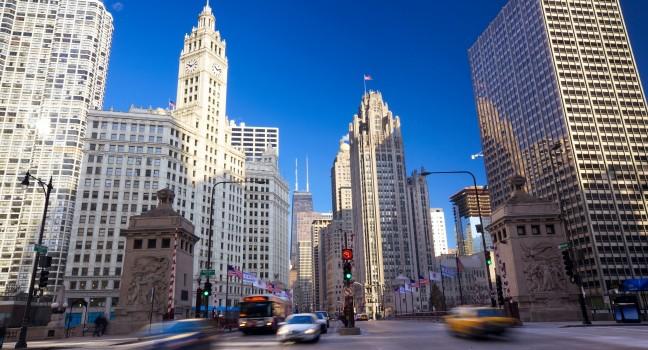
Michigan Avenue, or Mag Mile as some call it, is a potpourri of historic buildings, upscale boutiques, department stores, and posh hotels. (It is also the city's most popular place for people-watching.) Among its jewels are the Tribune Tower, the Wrigley Building, 875 North Michigan Avenue (formerly the John Hancock Center), the Drake Hotel, and the Historic Water Tower.
Millennium Park
Chicago Loop
Fodor's Choice
Share This
Fotoluminate LLC / Shutterstock
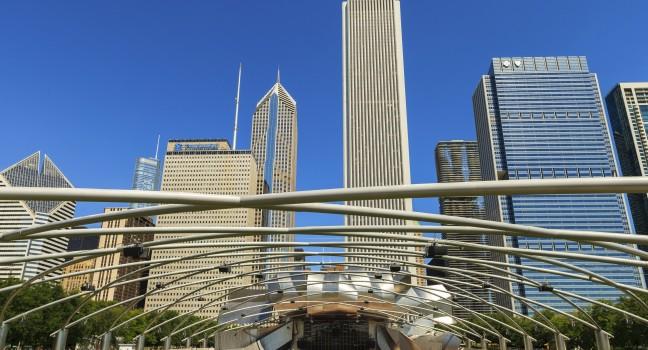
With Anish Kapoor's giant, polished-steel Cloud Gate sculpture (affectionately known as "The Bean"), the fun fountains, and a Disney-esque music pavilion, this park quickly stole the hearts of Chicagoans and visitors alike when it opened in 2004. The showstopper is Frank Gehry's stunning Jay Pritzker Pavilion. Dramatic ribbons of stainless steel stretching 40 feet into the sky look like petals wrapping the music stage. The 1,525-seat Harris Theater for Music and Dance provides an indoor alternative for fans of the performing arts.
In the park's southwest corner, the Crown Fountain features dozens of Chicagoans' faces rotating through on two 50-foot-high glass block–tower fountains. When a face purses its lips, water shoots out its "mouth." Kids love it, and adults feel like kids watching it. More conventional park perks include the lovely Lurie Garden (a four-season delight) and the seasonal McCormick Tribune Ice Rink, which opens for public skating each winter.
The largest Latino cultural museum in the country (and the first Latino one accredited by the American Alliance of Museums) is definitely worth a look. Its galleries house impressive displays of contemporary, traditional, and Mesoamerican art from both sides of the border, as well as vivid exhibits that trace immigration woes and political struggles. The 20,000-piece permanent collection includes pre-Cuauhtemoc artifacts, textiles, folk art, paintings, prints, and drawings. Every fall the giant Day of the Dead exhibit stuns Chicagoans with its altars from artists across the U.S. and Mexico.
Recommended Fodor's Video
The 606
Fodor's Choice
Share This
Similar to New York City’s High Line, this abandoned elevated rail line—open since 2015—is now a fun place to walk or bike and take in art all at once. Edgy, splashy and bright murals are depicted along the 2.7-mile route. The route runs through Wicker Park, Humboldt Park, Bucktown, and Logan Square, making it an appealing way to neighborhood hop without getting snarled in the traffic below. Take along some water and sunscreen; on summer days the more exposed stretches of the trail get rather sunbaked.
Bahá'í Temple House of Worship
Fodor's Choice
Share This
Your mouth is sure to drop to the floor the first time you lay eyes on this stunning structure, a nine-sided building that incorporates architectural styles and symbols from many of the world's religions. With its delicate lacelike details and massive dome, the Louis Bourgeois design emphasizes the 19th-century Persian origins of the Bahá'í religion. The formal gardens are as symmetrical and harmonious as the building they surround. The Bahá'í faith advocates spiritual unity, world peace, racial unity, and equality of the sexes. Stop by the welcome center to examine exhibits that explain it; you can also ask for a guide to show you around.
Chicago Cultural Center
Chicago Loop
Fodor's Choice
Share This
Built in 1897 as the city's original public library, this huge building houses the Chicago Office of Tourism Visitor Information Center, as well as a gift shop, galleries, and a concert hall. Designed by the Boston firm Shepley, Rutan & Coolidge—the team behind the Art Institute of Chicago—it's a palatial affair notable for its Carrara marble, mosaics, gold leaf, and the world's largest Tiffany glass dome.
Graceland Cemetery
Lakeview
Fodor's Choice
Share This
After entering at Clark Street and Irving Park Road, you'll quickly discover that this graveyard has crypts that are almost as strikingly designed as the city skyline. A number of Chicago's most prominent citizens, including city planner Daniel Burnham, railroad magnate George Pullman, and retail icon Marshall Field, are spending eternity here. Architect Louis Sullivan (also a resident) designed some of its more elaborate mausoleums. Free maps, available at the cemetery office, will help you find your way around the pastoral 119-acre property.
Promontory Point
Fodor's Choice
Share This
It’s tough to top the view of Chicago's skyline from the Point—a scenic, man-made peninsula, which projects into Lake Michigan. Opened in 1937 as part of Burnham Park, this 40-acre peninsula, which was originally called 55th Street Promontory, is entered via a tunnel underneath Lake Shore Drive at 55th Street or the Lakefront Trail. The fawn-shaped David Wallach Memorial Fountain is located near the tunnel. The park's field house is a popular wedding venue, so you may catch a glimpse of a beaming bride during your visit. The Promontory Apartments building—Mies van der Rohe's first residential high-rise, completed in 1949—exemplifies the postwar trend toward a clean, simple style. Note the skylines and belching smokestacks of Gary and Hammond, Indiana, to the southeast.
Chicago Board of Trade
Chicago Loop
Share This
(c) Afagundes | Dreamstime.com
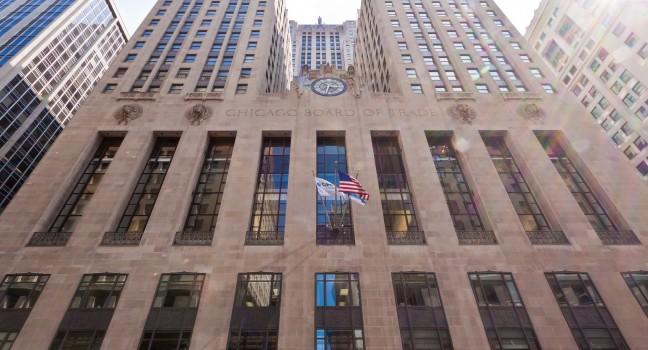
Home of the thriving financial district, relatively narrow LaSalle Street earned the moniker "The Canyon" (and it feels like one) because of the large buildings that flank either end. This one was designed by Holabird & Root and completed in 1930. The streamlined, 45-story giant recalls the days when art deco was all the rage. The artfully lighted marble lobby soars three stories, and Ceres (the Roman goddess of agriculture) stands atop its roof. Trading is no longer done here, but it's worth a look at what was the city's tallest skyscraper until 1955, when the Prudential Center topped it.
150 North Michigan Avenue
Chicago Loop
Share This
Some wags have pointed out that this building, with its diamond-shaped top, looks like a giant pencil sharpener. Built in 1984 as the Smurfit-Stone Building and later known as the Crain Communications Building, it has a slanted top that carves through the top 10 of its floors. In the plaza is Yaacov Agam's Communication X9, a painted, folded aluminum sculpture that was restored (to some controversy) and reinstalled in 2008. You'll see different patterns in the sculpture depending on your vantage point.
190 South LaSalle Street
Chicago Loop
Share This
This 40-story postmodern office building, resembling a supersized château, was designed by John Burgee and Philip Johnson in the mid-1980s. The grand, gold-leaf vaulted lobby is spectacular.
224 South Michigan Avenue
Chicago Loop
Share This
This structure, designed in 1904 by Daniel Burnham, who later moved his office here, was once known as the Railway Exchange Building and the Santa Fe Building, for a "Santa Fe" sign on its roof that has since been removed. The Chicago Architecture Foundation uses the building's atrium for rotating exhibits about the changing landscape of Chicago and other cities. The organization also offers a variety of tours via foot, bus, and boat.
860–880 N. Lake Shore Drive
Near North Side
Share This
These 26-story twin apartment towers overlooking Lake Michigan were an early and eloquent realization of Mies van der Rohe's "less is more" credo, expressed in high-rise form. I-beams running up the facade underscore their verticality; inside, mechanical systems are housed in the center so as to leave the rest of each floor free and open to the spectacular views. Completed in 1951, the buildings, called “flat-chested architecture" by Frank Lloyd Wright, are a prominent example of the International Style, which played a key role in transforming the look of American cities.
Alfred Caldwell Lily Pool
Share This
The work of landscape architect Alfred Caldwell, this serene oasis---comprising a gracefully curving pond and Prairie-style pavilion amid native vegetation---hides in plain sight beside Lincoln Park Zoo’s parking lot, poised to allay weary zoo warriors with a Zen break.
Aon Center
Chicago Loop
Share This
With the open space of Millennium Park at its doorstep, the Aon Center really stands out. Originally built as the Standard Oil Building, the 83-story skyscraper (first referred to as Big Stan) has changed names and appearances twice. Not long after the building went up in 1972, its marble cladding came crashing down, and the whole thing was resheathed in granite.
Block Museum of Art
Share This
Comprised of three galleries, this multipurpose space is among the most notable sights on the Northwestern University campus. The impressive rotating collection includes prints, photographs, and other works on paper spanning the 15th to 21st centuries. An outdoor sculpture garden features pieces by Joan Miró and Barbara Hepworth. Workshops, lectures, and symposia are also hosted here, and the museum's Block Cinema screens classic and contemporary films.
Carbide and Carbon Building
Chicago Loop
Share This
Designed in 1929 by Daniel and Hubert Burnham, sons of the renowned architect Daniel Burnham, this is arguably the jazziest skyscraper in town. A deep-green terra-cotta tower rising from a black-granite base, its upper reaches are embellished with gold leaf. The original public spaces are a luxurious composition in marble and bronze. The story goes that the brothers Burnham got their inspiration from a gold-foiled bottle of champagne. The building is now home to the swanky Pendry Chicago hotel.
Chase Tower
Chicago Loop
Share This
This building's graceful swoop—a novelty when it went up—continues to offer an eye-pleasing respite from all the surrounding right angles, and its spacious, sunken bi-level plaza, with Marc Chagall's mosaic The Four Seasons, is one of the most enjoyable public spaces in the neighborhood. Designed by Perkins & Will and C.F. Murphy Associates in 1969, Chase Tower has been home to a succession of financial institutions. Name changes aside, it remains one of the more distinctive buildings around, not to mention one of the highest in the heart of the Loop.
Chicago Temple
Chicago Loop
Share This
The Gothic-inspired headquarters of the First United Methodist Church of Chicago, built in 1923 by Holabird & Roche, comes complete with a first-floor sanctuary, 21 floors of office space, a sky-high chapel (free tours are available), and an eight-story spire, which is best viewed from the bridge across the Chicago River at Dearborn Street. Outside, along the building's east wall at ground level, stained-glass windows relate the history of Methodism in Chicago. Joan Miró's sculpture Chicago (1981) is in the small plaza just east of the church.
Clarke-Ford House
Prairie Avenue
Share This
This Greek Revival structure dates from 1836, making it Chicago's oldest surviving building. It's a clapboard house in a masonry city, built for Henry and Caroline Palmer Clarke to remind them of the East Coast they left behind. The Doric columns and pilasters were an attempt to civilize Chicago's frontier image, while the everyday objects and furnishings inside evoke a typical 1850s–60s middle-class home. The house has been moved three times from its original location on Michigan Avenue between 16th and 17th streets: the last time, in 1977, it had to be hoisted above the nearby elevated train tracks. In 2022, the house was renamed to affirm the profound role of Bishop Louis Henry and Margaret Ford in preserving the house as a significant part of Chicago’s history.
Dearborn Station
South Loop
Share This
Part of Printers Row, this is Chicago's oldest-standing passenger train station, designed in the Romanesque Revival style in 1885 by New York architect Cyrus L.W. Eidlitz. Now filled with offices and stores, it has a wonderful 12-story clock tower and a red-sandstone and redbrick facade ornamented with terra-cotta. Striking features inside are the marble floor, wraparound brass walkway, and arching wood-frame doorways.
DuSable Bridge (Michigan Avenue Bridge)
River North
Share This
Chicago is a city of bridges—and this one, completed in 1920, is among the most graceful. The structure's four pylons are decorated with impressive sculptures representing major Chicago events: its exploration by Marquette and Joliet, its settlement by trader Jean Baptiste Point du Sable, the Fort Dearborn Massacre of 1812, and the rebuilding of the city after the Great Chicago Fire of 1871. The site of the fort, at the south end of the bridge, is marked by a commemorative plaque. As you stroll Michigan Avenue, be prepared for a possible delay; the bridge rises about 50 times a year between April and November to allow boat traffic to pass underneath.
Federal Center and Plaza
Chicago Loop
Share This
This center is spread over three separate buildings: the Everett McKinley Dirksen Building; the John C. Kluczynski Building (230 S. Dearborn), which includes the Loop's post office; and the Metcalfe Building (77 W. Jackson). Designed in 1959, but not completed until 1974, the severe constellation of buildings around a sweeping plaza was Mies van der Rohe's first mixed-use urban project. Fans of the International Style will groove on this pocket of pure modernism, while others can take comfort in the presence of the Marquette Building, which marks the north side of the site. In contrast to this dark ensemble are the great red arches of Alexander Calder's Flamingo.
Historic Water Tower
Near North Side
Share This
This famous Michigan Avenue structure, designed by William W. Boyington (who also designed the Pumping Station to the East) and completed in 1869, was originally built to house a 135-foot iron standpipe that equalized the pressure of the water pumped by the similar pumping station across the street. Oscar Wilde uncharitably called it "a castellated monstrosity" studded with pepper shakers. One of the few buildings that survived the Great Chicago Fire, it remains a civic landmark and a symbol of the city's spirit. The small gallery inside hosts rotating art exhibitions of local interest.
Humboldt Park
Share This
Another Chicago under-the-radar gem, this park was designed by William Le Baron Jenney in the mid-1800s and his work was expanded upon several years later by Jens Jensen. The 1907 Prairie School boathouse is the park’s centerpiece, home to free cultural events and swan pedal boat rentals. The park has a formal garden, tennis courts, baseball fields, bike paths, and the city's only inland beach. In 2019 Humboldt Park temporarily became the subject of local obsession when an immature alligator---likely someone’s illegal pet---was spotted in its lagoon; rest assured Chance the Snapper (as he was lovingly dubbed) was quickly captured and relocated to a Florida gator sanctuary.
Inland Steel Building
Chicago Loop
Share This
A runt compared to today's tall buildings, this sparkling 19-story high-rise from Skidmore, Owings & Merrill was a trailblazer when it was built in the late 1950s. It was the first skyscraper erected with external supports (allowing for wide-open, unobstructed floors within), the first to employ steel pilings (driven 85 feet down to bedrock), the first in the Loop to be fully air-conditioned, and the first to feature underground parking.
L. Frank Baum Yellow Brick Road
Share This
The house where author L. Frank Baum dreamed up The Wonderful Wizard of Oz has been replaced by an affordable housing complex. But Baum's connection to the corner lot hasn't been forgotten; in 2019, the current building's developer paved the sidewalks with yellow brick, and installed a colorful mosaic depicting Dorothy and the gang beneath the author's famous words, "There's no place like home."
Lincoln Park Conservatory
Lincoln Park
Share This
The tranquility and abundant greenery inside this 1892 conservatory offer a refreshing respite in the heart of a bustling neighborhood. Stroll through permanent displays in the Palm House, Fern Room, and Orchid House, or catch special events like the fragrant Spring Flower Show. Free, timed reservations—available on the conservatory's website—are required.
Logan Square Park
Share This
The park that gives Logan Square its name can look a little worse for the wear---the colossal eagle-topped column at its center has seen its fair share of graffiti tagging---but that doesn’t stop locals from setting up shop for the afternoon with a book and a portable hammock. An old-world Norwegian church and restaurants with busy sidewalk patios fringe the square (really more of an oval), imparting a cosmopolitan vibe. Wide, rambling Kedzie and Logan Boulevards---two of the neighborhood’s loveliest assets---radiate outward from the park; pick out your dream mansion on a postprandial stroll.
Macy's
Chicago Loop
Share This
This neoclassical building, designed by Daniel Burnham, opened in 1907 as one of the world's earliest department stores, Marshall Field's. Macy's acquired the chain in 2005 and changed the store's name. An uproar ensued, and many Chicagoans still refer to the flagship as Marshall Field's. A visit is as much an architectural experience as a retail one. The building has distinct courtyards (one resembling an Italian palazzo), a striking Tiffany dome of mosaic glass, a calming fountain, and gilded pillars. Its green clock at the State and Randolph entrance is a Chicago landmark. For lunch, try the Walnut Room, and make sure to sample Frango mints—the store's specialty, they were once made on the 13th floor.
Subscribe to Newsletter
Sign up for Travel Tips & News
I want emails from Fodor's Travel with travel information and promotions. I can unsubscribe
any time using the unsubscribe link at the end of all emails.
Thank you for your interest!
Look out for our newsletters with travel tips and special offers.
Sign up for Travel Tips & News
By signing up for the
newsletter, I agree to the Privacy Policy. You must check the box to subscribe
Thank you for your interest!
Look out for our newsletters with travel tips and special offers.