39 Best Sights in Chicago, Illinois

Background Illustration for Sights

We've compiled the best of the best in Chicago - browse our top choices for the top things to see or do during your stay.

875 N. Michigan Avenue (formerly the John Hancock Center) and 360 Chicago

Near North Side Fodor's choice
Chicago skyline view from John Hancock Observatory
(c) Sidneyboot | Dreamstime.com

Designed by Skidmore, Owings & Merrill, this multipurpose skyscraper is distinguished by its tapering shape and enormous X braces, which help stabilize its 100 stories. Soon after it went up in 1970, it earned the nickname "Big John." No wonder: it's 1,127 feet tall (the taller east tower is 1,506 feet counting its antennae). Packed with retail space, parking, offices, a restaurant, and residences, it has been likened to a city within a city. Like the Willis Tower, which was designed by the same architectural team, this skyscraper offers views of four states on clear days. To see them, ascend to the 94th-floor observatory—now dubbed 360 Chicago ($30). While there, visitors can grab a cocktail, beer, wine, hot drink or nonalcoholic beverage at Bar 94, which can only be accessed with a General Admission ticket. Thrill seekers can pay an additional fee to take advantage of the tower's most exciting feature, The Tilt ($8), which has eight windows that tilt downward to a 30-degree angle, giving you a unique perspective on the city below. Those with vertigo might prefer a seat in the bar of the 96th-floor Signature Lounge; the tab will be steep, but you don't pay the observatory fee and you'll be steady on your feet.
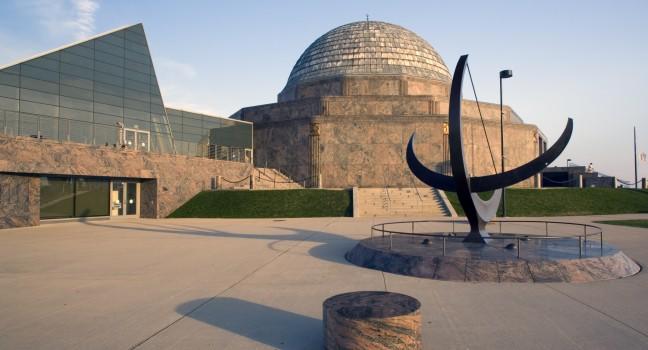
Adler Planetarium and Astronomy Museum

South Loop Fodor's choice
Adler Planetarium, located in downtown Chicago.
Henryk Sadura / Shutterstock

Taking you on a journey through the stars to unlock the mysteries of our galaxy and beyond, the Adler tells amazing stories of space exploration through high-tech exhibits and immersive theater experiences. Artifacts and interactive elements bring these fascinating tales of space and its pioneers down to earth. The Grainger Sky Theater gives an up-close view of stunning space phenomena, and the magnificent imagery is so realistic that it might only be surpassed by actual space travel. The newest permanent exhibit is The Universe: A Walk Through Space and Time. A spectacular projection showcases the enormity of the universe, and touch screens let you investigate diverse and beautiful objects from deep space.

Art Institute of Chicago

Chicago Loop Fodor's choice
CHICAGO, ILLINOIS - SEPTEMBER 8: The Modern Wing of the Art Institute of Chicago designed by architect Renzo Piano on September 8, 2012 in Chicago, Illinois.
luca85/Shutterstock

Come for the sterling collection of old masters and impressionists (an entire room is dedicated to Monet); linger over the extraordinary and comprehensive photography collection; take in a number of fine American works; and discover paintings, drawings, sculpture, and design spanning the ancient to the contemporary world.

With its flanking lions and marble lobby, the Michigan Avenue main building was once part of the World's Columbian Exposition. It opened as the Art Institute on December 8, 1893. While the collection is best known for its impressionist and postimpressionist pieces, visitors will find works from a vast range of periods and places, including Greek, Roman, Byzantine, European, Asian, African, and Native American art. Such iconic works as Grant Wood's American Gothic and Edward Hopper's Nighthawks can be found in the American galleries. Chicago favorites like the Thorne Miniature Room and Marc Chagall's stained-glass American Windows are must-sees as well.

After the Renzo Piano–designed Modern Wing opened in 2009, the Art Institute became one of the largest art museums in the country. The 264,000-square-foot building contains the finest 20th- and 21st-century art in many mediums.

111 S. Michigan Ave., Chicago, IL, 60603, USA
312-443–3600
Sight Details
$32
Closed Tues. and Wed.

Something incorrect in this review?

Recommended Fodor's Video

Lincoln Park Zoo

Lincoln Park Fodor's choice
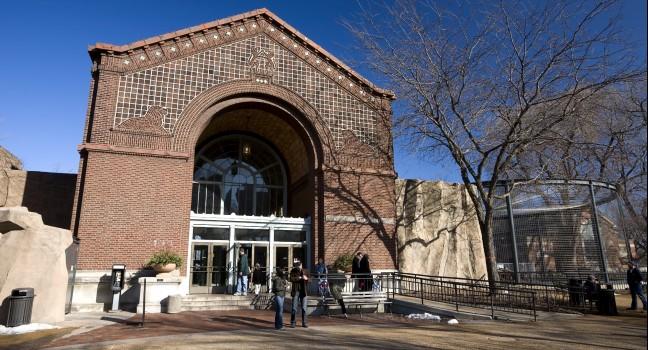
Lincoln Park Zoo, Chicago, Illinois, USA
stevegeer / iStockphoto

At this urban enclave near Lake Michigan, you can watch snow monkeys unwind in the hot springs of the Regenstein Macaque Forest or ogle gorillas and chimpanzees in the sprawling Regenstein Center for African Apes, which has three separate habitats complete with bamboo stands, termite mounds, and 5,000 feet of swinging vines. Brave big cats (separated by a window, of course) outside the Pepper Family Wildlife Center, a 2021 redesign of the zoo’s lion habitat conceived with input from an app that collected data on the star residents’ behavior. Animals both slithery (pythons) and strange (sloths) reside in the glass-domed Regenstein Small Mammal and Reptile House, while the big guys (hippos, giraffes, and black rhinos) are in the Regenstein African Journey.

Bird lovers should make a beeline to the McCormick Bird House, which contains extremely rare species—including the Bali mynah, Guam rail, and Guam Micronesian kingfisher, some of which are extinct in the wild. Families with little ones in tow will also want to see Farm-in-the-Zoo (with its barnyard animals and learning centers), and the Lionel Train Adventure ride. Be sure to leave time for a ride (or two) on the Endangered Species Carousel, featuring a menagerie of 48 rare and endangered animals.

Shutterbugs will want to make a beeline for the Nature Boardwalk at the zoo's southern reaches. In addition to pretty indigenous vegetation, it's home to the Peoples Gas Education Pavilion, a massive honeycomb sculpture that frames the downtown skyline, making for an impressive snapshot. 

2400 N. Cannon Dr, Chicago, IL, 60614, USA
312-742–2000
Sight Details
Free (additional fee for rides); parking from $30

Something incorrect in this review?

Magnificent Mile

Near North Side Fodor's choice
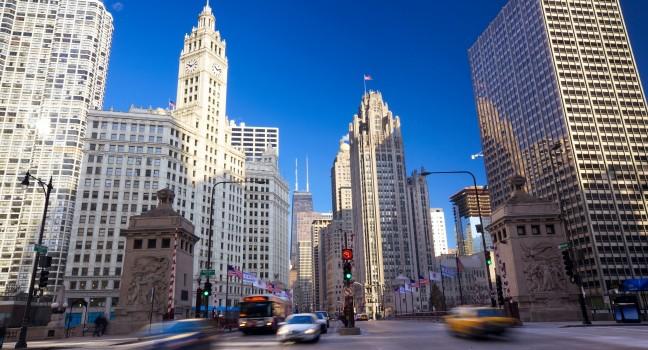
Michigan Avenue Bridge and Magnificent Mile in Chicago, IL, USA.
(c) Dibrova | Dreamstime.com

Michigan Avenue, or Mag Mile as some call it, is a potpourri of historic buildings, upscale boutiques, department stores, and posh hotels. (It is also the city's most popular place for people-watching.) Among its jewels are the Tribune Tower, the Wrigley Building, 875 North Michigan Avenue (formerly the John Hancock Center), the Drake Hotel, and the Historic Water Tower.

Millennium Park

Chicago Loop Fodor's choice
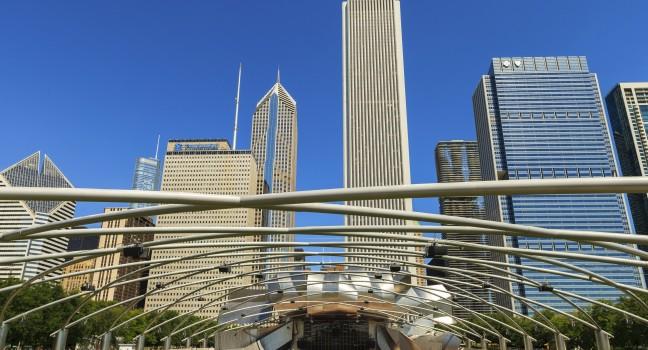
CHICAGO, ILLINOIS AUGUST 21: The popular Jay Pritzker Pavilion in Millennium Park on a beautiful summer day in downtown on August 21, 2011 in Chicago.
Fotoluminate LLC / Shutterstock

With Anish Kapoor's giant, polished-steel Cloud Gate sculpture (affectionately known as "The Bean"), the fun fountains, and a Disney-esque music pavilion, this park quickly stole the hearts of Chicagoans and visitors alike when it opened in 2004. The showstopper is Frank Gehry's stunning Jay Pritzker Pavilion. Dramatic ribbons of stainless steel stretching 40 feet into the sky look like petals wrapping the music stage. The 1,525-seat Harris Theater for Music and Dance provides an indoor alternative for fans of the performing arts.

In the park's southwest corner, the Crown Fountain features dozens of Chicagoans' faces rotating through on two 50-foot-high glass block–tower fountains. When a face purses its lips, water shoots out its "mouth." Kids love it, and adults feel like kids watching it. More conventional park perks include the lovely Lurie Garden (a four-season delight) and the seasonal McCormick Tribune Ice Rink, which opens for public skating each winter.

Shedd Aquarium

South Loop Fodor's choice
John G. Shedd Aquarium on edge of Lake Michigan.
(c) Del7891 | Dreamstime.com

One of the most popular aquariums in the country, the Shedd houses more than 32,500 creatures from around the world. A shark-filled 400,000-gallon tank is part of "Wild Reef," which explores marine biodiversity in the Indo-Pacific. The exhibit also has colorful corals, stingrays that slide by under your feet, and other surprising creatures, all from the waters around the Philippines. Whales and dolphins live in the spectacular Oceanarium, which has pools that seem to blend into Lake Michigan. The aquatic show here stars dancing belugas, leaping dolphins, and comical penguins. Be sure to get an underwater glimpse of the dolphins and whales through the viewing windows on the lower level, where you can also find a bunch of information-packed, hands-on activities. In 2022, the Shedd implemented a dynamic pricing plan for non-Chicago residents: advance ticket prices will vary based on projected attendance. Lines for the Shedd often extend all the way down the neoclassical steps. Buy a ticket in advance to avoid the interminable wait, or spring for a CityPASS.

Willis Tower

Chicago Loop Fodor's choice
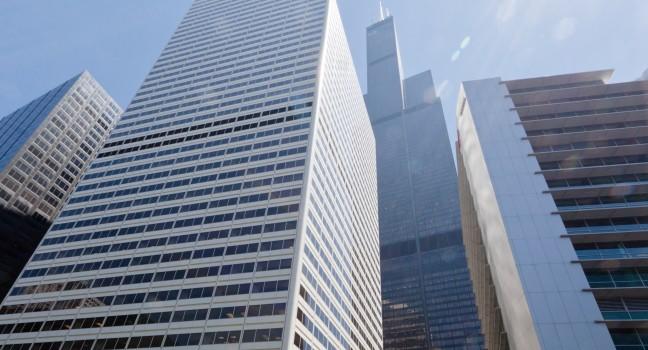
The Willis Tower (formerly Sears Tower) glass windows skyscraper in downtown Chicago, Illinois, United States. The EL mass transport system, pedestrians and cars on the street.
(c) Afagundes | Dreamstime.com

Designed by Skidmore, Owings & Merrill in 1974, the former Sears Tower was the world's tallest building until 1996. The 110-story, 1,730-foot-tall structure may have lost its title and even changed its name, but it’s still tough to top the Willis Tower's 103rd-floor Skydeck—on a clear day it offers views of Illinois, Michigan, Wisconsin, and Indiana. Enter on Jackson Boulevard to take the ear-popping ride up. ( Check the visibility ratings at the security desk before you decide to ascend.) Video monitors turn the 70-second elevator ride into a thrilling trip. Interactive exhibits inside the observatory bring Chicago's dreamers, schemers, architects, musicians, and sports stars to life; and computer kiosks in six languages help international travelers key into Chicago hot spots. For many visitors, though, the highlight (literally) is stepping out on the Ledge, a glass box that extends 4.3 feet from the building, making you feel as if you're suspended 1,353 feet in the air.

Wrigley Field

Wrigleyville Fodor's choice
Wrigley Field, Chicago, Illinois, USA
Mike Liu / Shutterstock

You need not be a baseball fan to enjoy a visit to the nation's second-oldest major league ballpark—venerable, ivy-covered Wrigley Field. This hallowed stadium hosted its first major league game in 1914 and has been home to the Chicago Cubs since 1916; the Bears also played here for a half-century before decamping to Soldier Field in 1970. The original hand-operated scoreboard is still in use today, and even though updates and renovations have added plenty of digital screen space, the character that makes this place so special remains intact. If you look up along Sheffield and Waveland Avenues beyond the bleachers, you can see the rooftop patios where baseball fans pay high prices to cheer for the home team; devoted "ball hawks" sit in lawn chairs on Sheffield, waiting for foul balls and home runs to fly their way. While you're here, check out the Harry Caray statue commemorating the late Cubs announcer, or hang out after the game in Gallagher Way, the new plaza built after the team was acquired from the Tribune Company by the Ricketts family. Big-name concerts by the likes of Pearl Jam and Bruce Springsteen are also staged here when the team is out of town.

The 606

Fodor's choice

Similar to New York City’s High Line, this abandoned elevated rail line—open since 2015—is now a fun place to walk or bike and take in art all at once. Edgy, splashy and bright murals are depicted along the 2.7-mile route. The route runs through Wicker Park, Humboldt Park, Bucktown, and Logan Square, making it an appealing way to neighborhood hop without getting snarled in the traffic below. Take along some water and sunscreen; on summer days the more exposed stretches of the trail get rather sunbaked. 

Andersonville

Andersonville Fodor's choice

Just northwest of Uptown there's a neighborhood that still shows signs of the Swedish settlers who founded it. Andersonville has some great restaurants and bakeries, many of which pay tribute to its Scandinavian roots. In winter months, be sure to drop by Simon's Tavern ( 5210 North Clark) for a glass of glögg (hot mulled wine)—it's a traditional favorite. Helping anchor the area is the Women & Children First bookstore ( 5233 North Clark), which stocks an extensive selection of feminist tomes and children's lit.

Brookfield Zoo

Fodor's choice

There are more than 3,000 animals at this gigantic zoo and highlights include the 7½-acre Great Bear Wilderness exhibit, a sprawling replica of North American woodlands for the zoo's population of grizzlies, polar bears, bison, Mexican gray wolves, and bald eagles. Watch the polar bears from the popular underwater viewing area. Elsewhere, monkeys, otters, birds, and other rainforest fauna cavort in a carefully constructed setting of trees, shrubs, pools, and waterfalls at Tropic World, while at the Living Coast you can venture through passageways to see sharks, rays, and Humboldt penguins.

One of the best educational exhibits is Habitat Africa, where you can explore the dense forest section with animals like the okapi (an animal that looks like a cross between a zebra, giraffe, and horse). In the savanna section, which has a water hole, termite mounds, and characteristic rock formations, you can spy such tiny animals as the 22-inch-tall klipspringer antelope.

The Swamp is about as realistic as you would want an exhibit on swamps to be. It has a springy floor and open habitats with low-flying birds that vividly demonstrate the complex ecosystems. For hands-on family activities, visit the Hamill Family Play Zoo, where kids can play zookeeper, gardener, or veterinarian. Special events—most notably Holiday Magic, which lights up the zoo on select December evenings—are also worth checking out. If you don't want to trek around the 216-acre property, don't worry. You can hop aboard a motorized safari tram ($6) on weekends in warm weather months.

Chicago Botanic Garden

Fodor's choice

Among the 28 different gardens here are the three-island Malott Japanese Garden, the five-acre Evening Island, and the Grunsfeld Children's Growing Garden. Three big greenhouses showcase desert, tropical, and semitropical climates where beautiful and fragrant flowers bloom year-round. Weather permitting, 35-minute tram tours are offered daily and are free with admission from late April through late October. Special summer exhibitions include the 7,500-square-foot Model Railroad Garden with 17 garden-scale trains traveling around nearly 50 models of American landmarks, all made from natural materials. Butterflies & Blooms, a 2,800-square-foot white mesh enclosure, is filled with hundreds of colorful butterflies interacting with plant life; both are free with admission.

Chicago Children's Museum

Near North Side Fodor's choice

"Hands-on" is the operative concept at this brightly colored Navy Pier anchor. Kids can tinker with tools, climb through three stories of tunnels, play at being a firefighter, dig for dinosaur fossils, and create a masterpiece in the Art Studio.

Chicago History Museum

Lincoln Park Fodor's choice

Seeking to bring Chicago's often complicated history to life, this museum has several strong permanent exhibits, including Chicago: Crossroads of America, which celebrates homegrown cultural contributions from urban blues to the skyscraper and demystifies tragedies like the Haymarket Affair, in which a bomb thrown during a labor rally in 1884 led to eight anarchists being convicted of conspiracy. In Sensing Chicago, kids can take a spin on a penny-farthing bicycle or dress up like a Chicago-style hot dog. Don't miss City on Fire: Chicago 1871, which immerses visitors in the destruction and aftermath of the notorious inferno that displaced one-third of the city’s residents in just two days. Like most of the exhibits here, it's presented in a way that's comprehensible to kids, but substantive enough for adults. 

DuSable Museum of African American History

Fodor's choice

Sitting alongside the lagoons of Washington Park, the DuSable Museum, a Smithsonian Institution affiliate, offers an evocative exploration of the African American experience. The most moving displays are about slavery—rusted shackles used on slave ships are among the poignant and disturbing artifacts—as well as Chicago's role in the civil rights movement. The museum also has a significant art collection.

Field Museum

South Loop Fodor's choice

More than 400,000 square feet of exhibit space fill this gigantic museum, which explores cultures and environments from around the world. Interactive displays examine such topics as the secrets of Egyptian mummies, the art and innovations of people living in the Ancient Americas, and the evolution of life on Earth. Originally funded by Chicago retailer Marshall Field, the museum was founded in 1893 to hold material gathered for the World's Columbian Exposition; its current neoclassical home opened in 1921. The museum holds the world's best dinosaur collections but the star of the show is 65-million-year-old "Sue," the largest and most complete Tyrannosaurus rex fossil ever found. Don't hesitate to take toddlers to the Field. In the Crown Family PlayLab, kids two to six years old can play house in a re-created pueblo and compare their footprints with a dinosaur's.

Garfield Park Conservatory

West Loop Fodor's choice

Escape winter's cold or revel in summer sunshine inside this huge "landscape art under glass" structure, which houses tropical palms, spiny cacti, and showy blooms. A children's garden has climbable leaf sculptures and a tube slide that winds through trees. The Sugar from the Sun exhibit focuses on the elements of photosynthesis—sunlight, air, water, and sugar—in a full-sensory environment filled with spewing steam, trickling water, and chirping sounds. Don't miss the historic Jens Jensen–designed Fern Room with its lagoon, waterfalls, and profusion of ferns. On-site events include botanical-themed fashion shows, seasonal flower shows, and great educational programing.

300 N. Central Park Ave., Chicago, IL, 60624, USA
773-638–1766
Sight Details
Free
Closed Mon. and Tues.
Reservations required

Something incorrect in this review?

Museum of Science and Industry

Fodor's choice

The MSI is one of the most-visited sites in Chicago, and for good reason. The sprawling space has 14 acres of exhibit space on three floors, with new exhibits added constantly. The immersive Coal Mine exhibit and the Henry Crown Space Center featuring the Apollo 8 Command Module are perennial favorites. The museum's high-tech interior is hidden by a neoclassical exterior, designed in 1892 by D.H. Burnham & Company to house the Palace of Fine Arts for the World's Columbian Exposition. Beautifully landscaped Jackson Park and its peaceful, Japanese-style Osaka Garden are behind the museum.

Swedish American Museum

Andersonville Fodor's choice

You don't have to be Swedish to find this tiny and welcoming museum interesting. Permanent displays feature items that tell the story of Swedish immigration to America and about Swedish culture in the States. On the third floor, in the only children's museum in the country dedicated to immigration, kids can climb aboard a colorful Viking ship and trace the journey of a young immigrant from a Swedish farmhouse to a cabin in Minnesota. 

Cantigny Park

The 500-acre estate of former Chicago Tribune editor and publisher Robert McCormick (1880–1955) has multiple attractions. For starters, there's the First Division Museum, an impressive military history museum that has interactive, immersive exhibits. The sweeping landscape also incorporates formal gardens, picnic grounds, walking trails, and its own 27-hole public golf course with a separate 9-hole course for kids.

1S151 Winfield Rd., Wheaton, IL, 60189, USA
630-668–5161
Sight Details
$15 per car on weekends May-Oct. otherwise $5 per car; free Wednesdays with advance registration
Closed Jan. and Mon.–Thurs. in Feb.

Something incorrect in this review?

Facets

Lincoln Park

Film buffs shouldn't leave Lincoln Park without visiting this nonprofit movie theater, which presents an eclectic selection of films from around the world. Each year, Facets also hosts the Chicago International Children's Film Festival: one of the only Academy Award–qualifying children’s film festivals in the world, it showcases the best in culturally diverse, value-affirming new cinema for kids.

1517 W. Fullerton Ave., Chicago, IL, 60614, USA
773-281–9075

Something incorrect in this review?

Grant Park and Buckingham Fountain

Chicago Loop

Bordered by Lake Michigan to the east, a spectacular skyline to the west, and the Museum Campus to the south, Grant Park serves as the city's front yard and unofficial gathering place. This pristine open space has walking paths, a stand of stately elm trees, and formal rose gardens, where Loop dwellers and 9-to-5-ers take refuge from the concrete and steel. It also hosts many of the city's largest outdoor events, including the annual Taste of Chicago, a vast picnic featuring foods from more than 70 restaurants.

The park's centerpiece is the gorgeous, tiered Buckingham Fountain (between Columbus and Lake Shore Drives, east of Congress Plaza), which has intricate pink-marble seashell designs, water-spouting fish, and bronze sculptures of sea horses. Built in 1927, it was patterned after one at Versailles but is about twice the size. See the fountain in all its glory between early May and mid-October, when it's elaborately illuminated at night and sprays colorfully lighted waters. Linger long enough to experience the spectacular display that takes place every hour on the hour, and you'll witness the center jet of water shoot 150 feet into the air.

Green City Market

Lincoln Park

On Saturday morning from April through November and Wednesday from May through October, the market takes over a large swath of grass at the south end of Lincoln Park. Farm stands showcase locally grown fruits and vegetables, as well as meats, cheeses, and pastas. Visitors can also dine at food booths and watch cooking demonstrations by local celebrity chefs. When the outdoor season ends, an abbreviated version of the market sets up shop in a warehouse in Avondale.  

Harold Washington Library Center

South Loop

Opened in 1991 and named for Chicago's first African American mayor, this library was primarily designed by architect Thomas Beeby, of Hammond, Beeby & Babka. Gargantuan and almost goofy, the granite-and-brick edifice is a uniquely postmodern homage to Chicago's great architectural past. The heavy, rusticated ground level recalls The Rookery; the stepped-back, arched windows are a reference to the great arches in the Auditorium Theatre; the swirling terra-cotta design is pinched from the Marquette Building; and the glass curtain wall on the west side is a nod to 1950s modernism. The huge, gargoyle-like sculptures atop the building include owls, a symbol of wisdom. The excellent Children's Library, an 18,000-square-foot haven on the second floor, has vibrant wall-mounted figures by Chicago imagist Karl Wirsum. Works by noted Chicago artists are displayed along a second-floor walkway above the main lobby. There's also an impressive Winter Garden with skylights on the ninth floor. Free programs and performances are offered regularly.

Humboldt Park

Another Chicago under-the-radar gem, this park was designed by William Le Baron Jenney in the mid-1800s and his work was expanded upon several years later by Jens Jensen. The 1907 Prairie School boathouse is the park’s centerpiece, home to free cultural events and swan pedal boat rentals. The park has a formal garden, tennis courts, baseball fields, bike paths, and the city's only inland beach. In 2019 Humboldt Park temporarily became the subject of local obsession when an immature alligator---likely someone’s illegal pet---was spotted in its lagoon; rest assured Chance the Snapper (as he was lovingly dubbed) was quickly captured and relocated to a Florida gator sanctuary.

Kohl Children's Museum

Adults are hard-pressed to get youngsters to leave the 17 hands-on exhibits at this Glenview museum. Here toddlers to eight-year-olds can learn about solar power or how sounds make music. They can slip on a white jacket and be pretend doctors in a baby nursery or vets in an animal hospital. Kids can also get into home construction in Hands on House, learn to change a tire, or paint their faces and don costumes. There's also a spot to put on raincoats and play in the water. When weather permits, the two-acre Habitat Park, just outside, is a great place for bug hunting, wall painting, and wandering through a grass maze.

L. Frank Baum Yellow Brick Road

The house where author L. Frank Baum dreamed up The Wonderful Wizard of Oz has been replaced by an affordable housing complex. But Baum's connection to the corner lot hasn't been forgotten; in 2019, the current building's developer paved the sidewalks with yellow brick, and installed a colorful mosaic depicting Dorothy and the gang beneath the author's famous words, "There's no place like home."

1667 N. Humboldt Blvd., Chicago, IL, 60647, USA

Something incorrect in this review?

Lincoln Park Conservatory

Lincoln Park

The tranquility and abundant greenery inside this 1892 conservatory offer a refreshing respite in the heart of a bustling neighborhood. Stroll through permanent displays in the Palm House, Fern Room, and Orchid House, or catch special events like the fragrant Spring Flower Show. Free, timed reservations—available on the conservatory's website—are required.

2391 N. Stockton Dr., Chicago, IL, 60614, USA
312-742–7736
Sight Details
Free
Closed Mon. and Tues.

Something incorrect in this review?

Macy's

Chicago Loop

This neoclassical building, designed by Daniel Burnham, opened in 1907 as one of the world's earliest department stores, Marshall Field's. Macy's acquired the chain in 2005 and changed the store's name. An uproar ensued, and many Chicagoans still refer to the flagship as Marshall Field's. A visit is as much an architectural experience as a retail one. The building has distinct courtyards (one resembling an Italian palazzo), a striking Tiffany dome of mosaic glass, a calming fountain, and gilded pillars. Its green clock at the State and Randolph entrance is a Chicago landmark. For lunch, try the Walnut Room, and make sure to sample Frango mints—the store's specialty, they were once made on the 13th floor.

111 N. State St., Chicago, IL, 60602, USA
312-781–1000

Something incorrect in this review?