8 Best Sights in Oaxaca, Mexico

Background Illustration for Sights

We've compiled the best of the best in Oaxaca - browse our top choices for the top things to see or do during your stay.

Monte Albán

Fodor's Choice
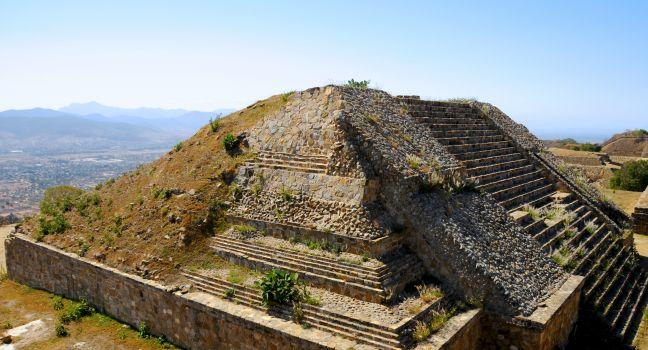
The pyramid ruins of Monte Alban - Oaxaca, Mexico
Nfoto / Shutterstock

The massive temples of Monte Albán, perched atop a mesa, make this one of the country's most spectacular archaeological sites. This vast city was home to more than 30,000 Zapotec. Despite its size, experts estimate that only about 10% of the site has been uncovered. Digs are sporadic, taking place whenever the budget permits.

Monte Albán overlooks the Oaxaca Valley from a flattened mountaintop 5,085 feet high; the views are breathtaking. Either the Zapotec or their predecessors leveled the site around 600 BC. The varying heights of the site follow the contours of distant mountains. The oldest of the four temples is the Galería de los Danzantes, or the Dancers' Gallery, so named for the elaborately carved stone figures that once covered the building. Most of the originals are now in the site museum, but you can still see some in the temple. Experts are unsure whether the nude male figures represent captives, warriors, or some other group; the theory that they were dancers has been discarded because some appear to be bound.

The Zapotec constructed most of the buildings along a north–south axis, except for the so-called Observatorio (Observatory). The arrow-shape structure is set at a 45-degree angle, pointing toward the southwest. It's thought to have been an observatory, as it's more closely aligned with the stars than with the Earth's poles.

The Juego de Pelota, or ball game, was played in the well-excavated court. Hips, shoulders, knees, and elbows were probably used to hit a wooden or rubber ball. The details of these games are sketchy, but there's speculation that they were a means of solving disputes between factions or villages, of celebrating the defeat of a rival, or of worshipping the gods. Although human sacrifice is thought to have been connected with the ball game in certain parts of Mesoamerica, there's no evidence that it happened in Monte Albán.

No one knows for sure whether the Zapotec abandoned the site gradually or suddenly, but by AD 1000 it stood empty. Years afterward the Mixtec used Monte Albán as a lofty necropolis of lavish tombs. More than 200 tombs and 300 burial sites have been explored. The most fantastic of these, Tumba 7, yielded a treasure unequaled in North America. Inside were more than 500 priceless Mixtec objects, including gold breastplates; jade, pearl, ivory, and gold jewelry; and fans, masks, and belt buckles of precious stones and metals. The tomb is north of the parking lot but is seldom open.

At Monte Albán you'll find a small site museum with a gift shop. The cafeteria isn't half bad, and has a great view of the valley; sadly, it closes with the rest of the site at 5 pm.

Mitla

Fodor's Choice

Mitla, 46 km (27 miles) southeast of Oaxaca, expanded and grew in influence as Monte Albán declined. Like its predecessor, Mitla is a complex started by the Zapotec and later taken over by the Mixtec. Unlike Monte Albán, Mitla's attraction lies not in its massive scale, but in its unusual ornamentation; the stonework depicts mesmerizing abstract designs with a powerful harmony. The striking architecture, which dates as late as the 1500s, is almost without equal within Mexico thanks to the exquisite greca workmanship on the fine local volcanic stone, which ranges in hue from pink to yellow.

The first structure you enter is the Grupo del Norte, where the Spanish settlers built Mitla's Catholic cathedral literally on top of the Zapotec structure, integrating the foundation. It's comparable to having the history of Oaxaca laid out before you in one building—truly remarkable. Mitla's name comes from the Nahuatl word mictlan, meaning "place of the dead." Don't expect to see anything resembling a graveyard, however; the Zapotec and Mixtec typically buried their dead under the entrance to the structure where the deceased resided.

There are a few underground tombs in the impressive Grupo de las Columnas (Group of the Columns), the main section of the ruins that are fun to climb down into. In that group is also the palace that forms the most striking architectural achievement of Mitla.

Zona Arqueológica Bocana del Rio Copalita

Copalita Fodor's Choice

The recently excavated Copalita archeological site is just 10 minutes from Huatulco's sleek hotel zone (a MX$70 taxi ride from La Crucecita's main plaza) but feels like a step back into another era. The well-designed site, a joint project by FONATUR and Mexico's National Institute of Anthropology and History, features the restored archaeological remains of the ancient city of Copalitan, occupied by the Zapotec and Mixtec peoples as far back as 500 BC. Plan to spend a few hours browsing the modern museum and its well-curated collection of ceremonial objects such as obsidian knives, jade jewelry, and funeral masks, and leave time for a stroll beneath a canopy of tropical trees to reach a spectacular cliff-side lookout across the Copalita River. Along the way, there are restored buildings from the Classic Period, including the Serpents Pyramid, a ball court, the Great Temple, and a pre-Hispanic lighthouse. Take insect repellent, a hat, water, and sturdy walking shoes.

Blvd. Copalita–Tangolunda tramo 15, Bahías de Huatulco, 70989, Mexico
No phone
Sight Details
MX$80
Tues.–Sun. 8–5

Something incorrect in this review?

Recommended Fodor's Video

Arquitos de Xochimilco

Centro Historico

These stone arches were part of the 18th-century aqueducts that carried water into the city. Through many of the arches you'll find twisting streets or secluded plazas. It's a pretty section of the city for a stroll, far from the crowds in the Centro Histórico. The arches are a 5- to 10-minute walk north of Santo Domingo church. Follow Calle Garcia Vigil north; the arches are north of Calle Cosijopi.

Oaxaca, Mexico

Something incorrect in this review?

Dainzú

The most spectacular sights at Dainzú are the well-restored ball court and the Tumba del Jaguar (Tomb of the Jaguar), with the fearsome head of a jaguar perched above the door. Pre-Columbian pottery shards litter the ground all over, evidence that this is a site that, unlike Monte Albán or Mitla, is still in the earlier stages of excavation. You'll likely have it to yourself, too. The grass-covered ruins are particularly pretty in the late-afternoon light. Note that there are no facilities here. Keep an eye out for the turnoff, because it's poorly marked; arriving from Oaxaca City, it's right before an overpass.

Dainzú, 70430, Mexico
No phone
Sight Details
MX$30
Daily 8–6

Something incorrect in this review?

Lambityeco

Lambityeco was built as the civilization of nearby Mitla was waning. The city flourished until AD 750, when it was abandoned. Many archaeologists believe the inhabitants moved to the better-protected city of Yagul. The Palacio de los Racoqui, or Palace of the Lords, is the last of six larger and larger temples built on top of each other. Here you'll see a pair of carvings of a nobleman and his wife. Between these carvings is the tomb where they were buried. Nearby is the Palacio de Cocijo, dedicated to its namesake, a Zapotec god. A pair of carvings depict the rain god wearing an impressive headdress. The site is clearly visible from the highway.

Tlacolula de Matamoros, 68270, Mexico
No phone
Sight Details
MX$30
Daily 8–5

Something incorrect in this review?

Yagul

The ruins at Yagul aren't as elaborate as those at Monte Albán or Mitla, but their position atop a hill makes them worth a visit. This city was predominantly a fortress protecting a group of temples. The Palacio de los Seis Patios (Palace of the Six Patios), a maze of hallways leading to hidden courtyards, is fun to explore.

If you find the eerie Tumba Triple (Triple Tomb) locked, give the guard $1 or so to open it for you. He may even let you borrow a flashlight to get a good look at the spooky carved skulls. Follow the steep trail that starts near the parking lot for a good hike and great views over the valley and ruins. The site has restrooms, but no other facilities.

Tlacolula de Matamoros, Mexico
Sight Details
MX$47
Daily 8–5

Something incorrect in this review?

Zaachila Zona Arqueológica

Just behind the Temple de Santa María Natividad in Zaachila is the small Zona Arqueológica, with a pair of underground tombs that are fun to explore. A pair of eerie carved owls guards one of the graves containing a noble named Lord Nine Flower. He was buried along with an unidentified young man among riches that rivaled those of Tumba 7 at Monte Albán. These treasures, however, are in the archaeological museum in Mexico City.

Zaachila, Mexico
Sight Details
MX$30
Daily 9–5

Something incorrect in this review?