9 Best Sights in Oaxaca, Mexico

Background Illustration for Sights

We've compiled the best of the best in Oaxaca - browse our top choices for the top things to see or do during your stay.

Monte Albán

Fodor's Choice
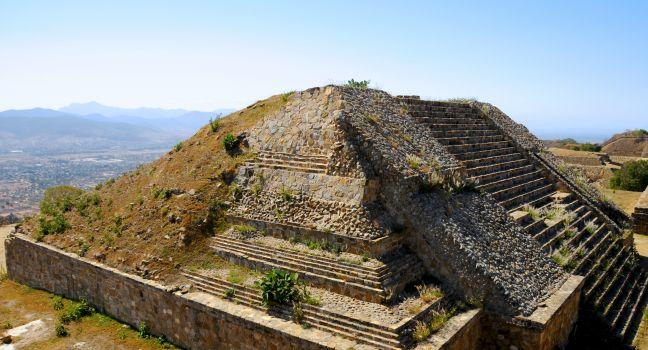
The pyramid ruins of Monte Alban - Oaxaca, Mexico
Nfoto / Shutterstock

The massive temples of Monte Albán, perched atop a mesa, make this one of the country's most spectacular archaeological sites. This vast city was home to more than 30,000 Zapotec. Despite its size, experts estimate that only about 10% of the site has been uncovered. Digs are sporadic, taking place whenever the budget permits.

Monte Albán overlooks the Oaxaca Valley from a flattened mountaintop 5,085 feet high; the views are breathtaking. Either the Zapotec or their predecessors leveled the site around 600 BC. The varying heights of the site follow the contours of distant mountains. The oldest of the four temples is the Galería de los Danzantes, or the Dancers' Gallery, so named for the elaborately carved stone figures that once covered the building. Most of the originals are now in the site museum, but you can still see some in the temple. Experts are unsure whether the nude male figures represent captives, warriors, or some other group; the theory that they were dancers has been discarded because some appear to be bound.

The Zapotec constructed most of the buildings along a north–south axis, except for the so-called Observatorio (Observatory). The arrow-shape structure is set at a 45-degree angle, pointing toward the southwest. It's thought to have been an observatory, as it's more closely aligned with the stars than with the Earth's poles.

The Juego de Pelota, or ball game, was played in the well-excavated court. Hips, shoulders, knees, and elbows were probably used to hit a wooden or rubber ball. The details of these games are sketchy, but there's speculation that they were a means of solving disputes between factions or villages, of celebrating the defeat of a rival, or of worshipping the gods. Although human sacrifice is thought to have been connected with the ball game in certain parts of Mesoamerica, there's no evidence that it happened in Monte Albán.

No one knows for sure whether the Zapotec abandoned the site gradually or suddenly, but by AD 1000 it stood empty. Years afterward the Mixtec used Monte Albán as a lofty necropolis of lavish tombs. More than 200 tombs and 300 burial sites have been explored. The most fantastic of these, Tumba 7, yielded a treasure unequaled in North America. Inside were more than 500 priceless Mixtec objects, including gold breastplates; jade, pearl, ivory, and gold jewelry; and fans, masks, and belt buckles of precious stones and metals. The tomb is north of the parking lot but is seldom open.

At Monte Albán you'll find a small site museum with a gift shop. The cafeteria isn't half bad, and has a great view of the valley; sadly, it closes with the rest of the site at 5 pm.

Iglesia de Santo Domingo

Centro Historico Fodor's Choice

With a 17th-century facade framed by two domed bell towers and an interior that's an energetic profusion of white and real gold leaf (typical of the Mexican baroque style), Santo Domingo is Oaxaca's most brilliantly decorated church. The interior of the dome is adorned with more than 100 medallions depicting various martyrs. Saturdays are usually wedding days. Pass by to see the wedding in process and the traditional dancing afterwards.

Look up at the ceiling just inside the front door to see a gilded rendering of the family tree of Santo Domingo. If you stop by as the sun sets in the afternoon, the light playing on the ceiling is the best show in town.

Macedonio Alcalá at Adolfo Gurrión, Oaxaca, 68000, Mexico
951-516–3720
Sight Details
Mon.–Sat. 7–1 and 4–7:30, Sun. 7–1 and 4–7

Something incorrect in this review?

Laguna de Manialtepec

Las Negras Fodor's Choice

One of the most leisurely day trips from Puerto Escondido is a journey to this tranquil lagoon surrounded by mangroves and lush wetlands just 20 minutes from town. It's home to more than 300 species of migrant and resident birds such as pelicans, hawks, and roseate spoonbills. Although a half-day tour by motorboat, kayak, or canoe with Lalo Ecotours or Canadian naturalist Michael Malone of Hidden Voyages Ecotours (December–March) is the most convenient way to visit, you can also take public transportation and hire a local guide once you arrive. At certain times of the year, the lagoon glows with luminescent plankton and a night-boat tour offers the opportunity for the truly intrepid to jump in and swim amid the phosphorescence.

Puerto Escondido, Mexico

Something incorrect in this review?

Recommended Fodor's Video

Mitla

Fodor's Choice

Mitla, 46 km (27 miles) southeast of Oaxaca, expanded and grew in influence as Monte Albán declined. Like its predecessor, Mitla is a complex started by the Zapotec and later taken over by the Mixtec. Unlike Monte Albán, Mitla's attraction lies not in its massive scale, but in its unusual ornamentation; the stonework depicts mesmerizing abstract designs with a powerful harmony. The striking architecture, which dates as late as the 1500s, is almost without equal within Mexico thanks to the exquisite greca workmanship on the fine local volcanic stone, which ranges in hue from pink to yellow.

The first structure you enter is the Grupo del Norte, where the Spanish settlers built Mitla's Catholic cathedral literally on top of the Zapotec structure, integrating the foundation. It's comparable to having the history of Oaxaca laid out before you in one building—truly remarkable. Mitla's name comes from the Nahuatl word mictlan, meaning "place of the dead." Don't expect to see anything resembling a graveyard, however; the Zapotec and Mixtec typically buried their dead under the entrance to the structure where the deceased resided.

There are a few underground tombs in the impressive Grupo de las Columnas (Group of the Columns), the main section of the ruins that are fun to climb down into. In that group is also the palace that forms the most striking architectural achievement of Mitla.

Museo de las Culturas

Centro Historico Fodor's Choice

This gorgeous museum is laid out in a series of galleries around the cloister of the labyrinthine Ex-Convento de Santo Domingo. On the ground floor are temporary exhibits and a collection of antique books. On the second floor you'll find rooms dedicated to Oaxacan music, medicine, indigenous languages, and pottery. More than a dozen other salons have been organized chronologically.

Here you'll find such Monte Albán treasures as the stunning gold jewelry from Tomb 7.

Signage is in Spanish only, but English-language audio tours are available. Several lovely second-floor balconies have views of the botanical garden. The on-site shop has a wonderful collection of books, including coffee-table volumes on the art and architecture of Oaxaca. There are also plenty of maps and travel guides.

Macedonio Alcalá at Adolfo Gurrión, Oaxaca, 68000, Mexico
951-516–2991
Sight Details
MX$59
Tues.–Sun. 10–8, last entrance at 6:15

Something incorrect in this review?

Playa Carrizalillo

Carrizalillo Fodor's Choice

In a region full of beautiful beaches, Playa Carrizalillo can still take your breath away. The high cliffs that surround it ensure that it's never too crowded. The aquamarine water is clean, clear, and shallow—perfect for swimming and snorkeling, especially around the rocks that frame the beautiful cove. Sometimes there are waves large enough to lure novice surfers. A handful of palm-thatched restaurants offer free use of loungers if you buy food and drinks. The beach is a MX$25 taxi ride from El Adoquin with access to the stairs through an orange archway on the Rinconada. From there it's 167 steps down to the water, but the steep stone staircase is well maintained and there's a handrail to help you along. Amenities: parking (no fee); toilets; food and drink; water sports. Best for: swimming; snorkeling; surfing.

Puerto Escondido, 71980, Mexico

Something incorrect in this review?

Playa Manzanillo

Fodor's Choice

Of Puerto Escondido's seven beaches, Playa Manzanillo, which rings Puerto Angelito, is one of the safest for swimming. It's also one of the best for snorkeling, with a sandy ocean floor (watch for the occasional large rock), some coral formations, and calm, clear water. Locals are working towards Blue Flag eco-certification, so you'll see recycling bins, solar-powered lighting, and eco-toilets. Dogs must be leashed. You can reach this beach on foot (a 15-minute walk west of the Adoquín), by taxi (MX$25), or via a pathway from Playa Angelito. There's a long staircase down to the beach. The beach offers plenty of shade and is lined with casual beach restaurants (Palapa de Carrasco is a top choice) with lounge chairs. Amenities: food and drink; toilets; water sports. Best for: swimming; snorkeling.

5a Sur, Puerto Escondido, 71980, Mexico

Something incorrect in this review?

Playa San Agustinillo

Fodor's Choice

This divine stretch of sand between Zipolite and Playa Mazunte is fringed by elegant coconut palms. It's somewhat safe for swimming, although the current can be strong. Keep to the western edge of the beach for the calmest waters. Early mornings you're likely to see people practicing yoga poses on the sand; there are several yoga schools nearby, including the world-renowned Hridaya Yoga Center and Solstice Yoga. Afternoons, as on neighboring beaches, vendors roam the sand selling ice cream, roasted peanuts, and serapes. Several excellent restaurants offer grilled fish, pizza, and welcome shade from the strong sun. Hang out for the day in a beach lounger; they're free with the purchase of food. Amenities: food and drink; water sports. Best for: swimming; walking; surfing.

San Agustinillo, 70900, Mexico

Something incorrect in this review?

Zona Arqueológica Bocana del Rio Copalita

Copalita Fodor's Choice

The recently excavated Copalita archeological site is just 10 minutes from Huatulco's sleek hotel zone (a MX$70 taxi ride from La Crucecita's main plaza) but feels like a step back into another era. The well-designed site, a joint project by FONATUR and Mexico's National Institute of Anthropology and History, features the restored archaeological remains of the ancient city of Copalitan, occupied by the Zapotec and Mixtec peoples as far back as 500 BC. Plan to spend a few hours browsing the modern museum and its well-curated collection of ceremonial objects such as obsidian knives, jade jewelry, and funeral masks, and leave time for a stroll beneath a canopy of tropical trees to reach a spectacular cliff-side lookout across the Copalita River. Along the way, there are restored buildings from the Classic Period, including the Serpents Pyramid, a ball court, the Great Temple, and a pre-Hispanic lighthouse. Take insect repellent, a hat, water, and sturdy walking shoes.

Blvd. Copalita–Tangolunda tramo 15, Bahías de Huatulco, 70989, Mexico
No phone
Sight Details
MX$80
Tues.–Sun. 8–5

Something incorrect in this review?