11 Best Sights in Istanbul, Turkey

Background Illustration for Sights

We've compiled the best of the best in Istanbul - browse our top choices for the top things to see or do during your stay.

Ayasofya Mosque

Sultanahmet Fodor's Choice
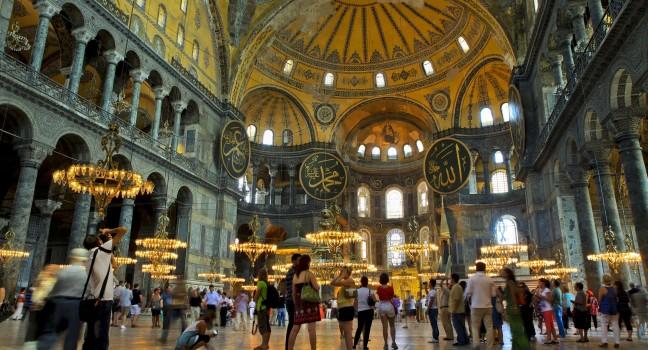
ISTANBUL,TURKEY - AUGUST 15: Tourists visit Hagia Sophia on August 15, 2012 in Istanbul, Turkey. Hagia Sophia is a former Orthodox patriarchal basilica, later a mosque and now a museum.
Sadik Gulec / Shutterstock

Variously referred to as either Hagia Sophia or Ayasofya, this soaring edifice is perhaps the greatest work of Byzantine architecture, and for almost a thousand years, starting from its completion in 537, it was the world's largest and most important religious monument. As Emperor Justinian may well have intended, the impression that will stay with you longest, years after a visit, is the sight of the dome. As you enter, the half domes trick you before the great space opens up with the immense dome, almost 18 stories high and more than 100 feet across, towering above. Look up into it, and you'll see the spectacle of thousands of gold tiles glittering in the light of 40 windows. Only Saint Peter's in Rome, not completed until the 17th century, surpasses Ayasofya in size and grandeur. It was the cathedral of Constantinople, the heart of the city's spiritual life, and the scene of imperial coronations.

When Mehmet II conquered the city in 1453, he famously sprinkled dirt on his head before entering the church after the conquest as a sign of humility. His first order was for Ayasofya to be turned into a mosque, and, in keeping with the Islamic proscription against figural images, mosaics were plastered over. Successive sultans added the four minarets, mihrab (prayer niche), and minbar (pulpit for the imam) that visitors see today, as well as the large black medallions inscribed in Arabic with the names of Allah, Muhammad, and the early caliphs. In 1935, Atatürk turned Ayasofya into a museum—a project of restoration, including the uncovering of precious mosaics, began, with the later now mostly finished and visible. In 2020, Ayasofya reverted into an active mosque, but it's possible to visit as a non-Muslim.

Restoration efforts uncovered, among other things, four large, beautifully preserved mosaics of seraphim, or six-winged angels, in the pendentive of the dome, which had been plastered over 160 years earlier but these and the mosaics in the upstairs galleries are currently closed. At the far end of the south gallery are several imperial portraits, including, on the left, the Empress Zoe, whose husband's face and name were clearly changed as she went through three of them. On the right is Emperor John Comnenus II with his Hungarian wife Irene and their son, Alexius, on the perpendicular wall. Also in the upper level is the great 13th-century Deesis mosaic of Christ flanked by the Virgin and John the Baptist, breathing the life of the early Renaissance that Byzantine artists would carry west to Italy after the fall of the city to the Turks—note how the shadows match the true light source to the left. The central gallery was used by female worshippers. The north gallery is famous for its graffiti, ranging from Nordic runes to a complete Byzantine galley under sail. On your way out of the church, through the "vestibule of the warriors," a mirror reminds you to look back at the mosaic of Justinian and Constantine presenting Ayasofya and Constantinople, respectively, to the Virgin Mary.

The tombs of various sultans and princes can be visited for free through a separate entrance around the back of Ayasofya (daily 9–7:30).
Dolmabahçe Sarayı

Besiktas Fodor's Choice
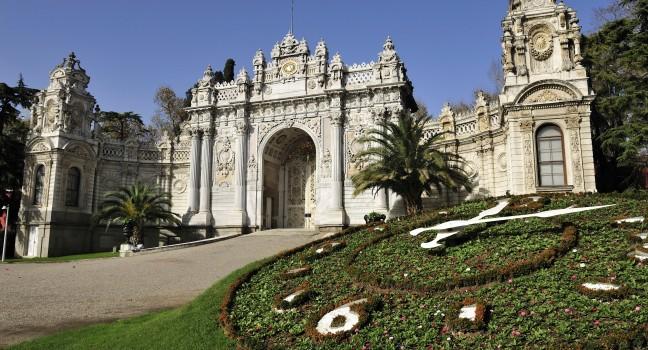
Dolmabahce palace, Istanbul, Turkey.
senai aksoy / Shutterstock

Abdülmecid I, whose free-spending lifestyle later bankrupted the empire, had this palace built between 1843 and 1856 as a symbol of Turkey's march toward European-style modernization. It's also where Atatürk died (and all clocks in the palace are turned to his time of death). Its name means "filled-in garden," inspired by the imperial garden planted here by Sultan Ahmet I (ruled 1603–17). Abdülmecid gave father and son Garabet and Nikoğos Balyan complete freedom and an unlimited budget, the only demand being that the palace "surpass any other palace of any other potentate anywhere in the world." The result, an extraordinary mixture of Turkish and European architectural and decorative styles, is as over-the-top and showy as a palace should be—and every bit as garish as Versailles. Dolmabahçe is divided into the public Selamlık and the private Harem. Afterward, stroll along the palace's nearly ½-km (¼-mile)-long waterfront facade and through the formal gardens, which have the Crystal Pavilion and Clock Museum.

Kapalı Çarşı

The Bazaar Quarter and Environs Fodor's Choice
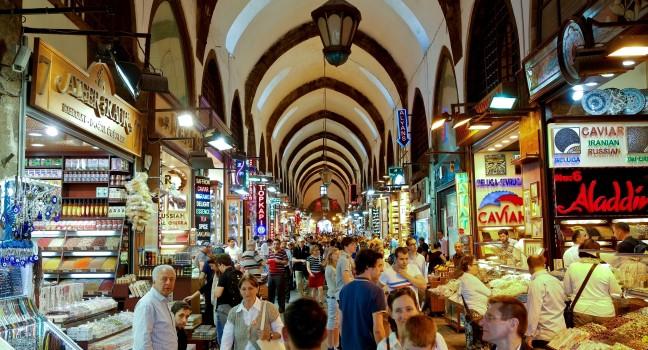
ISTANBUL, May1: People shopping in the Grand Bazar in Istanbul, Turkey, one of the largest covered markets in the world, Istanbul, May 1, 2013
Rob van Esch / Shutterstock

Take a deep breath and plunge into this maze of winding covered streets crammed with more than 4,000 tiny shops, cafés, restaurants, mosques, and courtyards. Originally built by Mehmet II (the Conqueror) in 1461 over the main Byzantine shopping streets, the Grand Bazaar was rebuilt after fires in both 1943 and 1954. It's said that this early version of a shopping mall contains the largest concentration of stores under one roof anywhere in the world, and that's easy to believe.

Some of the most aggressive salesmanship in the world takes place here, so take yet another deep breath, and put up your guard while exploring. Oddly enough, though, the sales pitches, the crowds, and the sheer volume of junky trinkets on offer can be hypnotizing. Enjoy a glass of tea while you browse through leather goods, carpets, fabric, clothing, furniture, ceramics, and gold and silver jewelry. Remember, whether you're bargaining for a pair of shoes or an antique carpet, the best prices are offered when the would-be seller thinks you are about to slip away.

Yeniçeriler Cad. and Çadırcılar Cad., Istanbul, Türkiye
212-519–1248
Sight Details
Closed Sun.

Something incorrect in this review?

Recommended Fodor's Video

İstanbul Arkeoloji Müzeleri

Sultanahmet Fodor's Choice
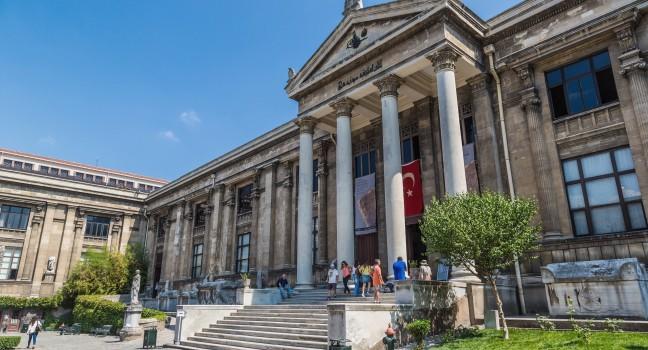
ISTANBUL - MAY 25: Istanbul Archaeology Museums on may 25, 2013 in Istanbul, Turkey. The complex of three museums contain more than a million pieces of different eras.
S-F / Shutterstock

Step into this vast repository of spectacular finds, housed in a three-building complex in a forecourt of Topkapı Palace, to get a head-spinning look at the civilizations that have thrived for thousands of years in and around Turkey. The main museum was established in 1891, when forward-thinking archaeologist and painter Osman Hamdi Bey campaigned to keep native antiquities and some items from the former countries of the Ottoman Empire in Turkish hands. The most stunning pieces are sarcophagi that include the so-called Alexander Sarcophagus, found in Lebanon, carved with scenes from Alexander the Great's battles, and once believed, wrongly, to be his final resting place. A fascinating exhibit on Istanbul through the ages has artifacts and fragments brought from historical sites around the city that shed light on its complex past, from prehistory through the Byzantine period. Exhibits on Anatolia include a display of some of the artifacts found in excavations at Troy, including a smattering of gold jewelry.

Don't miss a visit to the Çinili Köşk (Tiled Pavilion), one of the most visually pleasing sights in all of Istanbul—a bright profusion of colored tiles covers this onetime hunting lodge of Mehmet the Conqueror, built in 1472. Inside are ceramics from the early Seljuk and Ottoman empires, as well as brilliant tiles from İznik, the city that produced perhaps the finest ceramics in the world during the 16th and 17th centuries. In summer, you can mull over these glimpses into the distant past as you sip coffee or tea at the café in the garden, surrounded by fragments of ancient sculptures.

The Eski Şark Eserleri Müzesi (Museum of the Ancient Orient) transports you to even earlier times: a majority of the panels, mosaics, obelisks, and other artifacts here, from Anatolia, Mesopotamia, and elsewhere in the Arab world, date from the pre-Christian centuries. One of the most significant pieces in the collection is a 13th-century BC tablet on which is recorded the Treaty of Kadesh, perhaps the world's earliest known peace treaty, an accord between the Hittite King Hattusili III and the Egyptian pharaoh Ramesses II. Also noteworthy are reliefs from the ancient city of Babylon, dating from the era of the famous king Nebuchadnezzar II. As of this writing, it is temporarily closed.

İstanbul Modern

Beyoglu Fodor's Choice
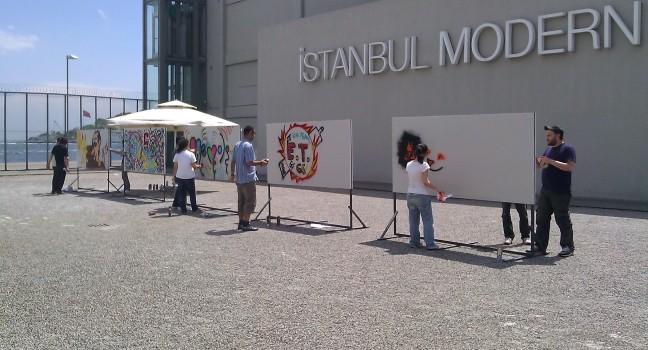
Street Art Istanbul Modern Style 2
Street Art Istanbul Modern Style 2 by

Istanbul's first museum for contemporary art showcases paintings, sculptures, photography, and magnificent works in other media from Turkey and around the world. The Renzo Piano–designed building (of Paris's Pompidou and London's The Shard fame), unveiled in 2022 after a four-year build, is worth seeing just by itself. A private tour can be organized in English for groups of 10 or more (400 TL per person) and will give you a good introduction to the art scene in Turkey. The museum also has a small cinema, café, and design store.

Tophane İskele Cd. 1/1, Istanbul, 34433, Türkiye
212-334–7300
Sight Details
650 TL
Closed Mon.

Something incorrect in this review?

Süleymaniye Mosque

The Bazaar Quarter and Environs Fodor's Choice
ISTANBUL MAY 05: The Suleiman Mosque (Turkish: Suleymaniye Camii) is a grand 16th-century mosque in Istanbul, on May 05 2014 in Istanbul, Turkey.
muratart / Shutterstock

On a hilltop opposite Istanbul University is one of the city's most magnificent mosques, considered one of the architect Sinan's masterpieces. The architectural thrill of the mosque, which was built between 1550 and 1557 and fully restored in 2010, is the enormous dome, the highest of any Ottoman mosque. Supported by four square columns and arches, as well as exterior walls with smaller domes on either side, the soaring space gives the impression that it's held up principally by divine intervention. Except for around the mihrab (prayer niche), there is little in the way of tile work—though the intricate stained-glass windows and baroque decorations painted on the domes more than make up for that. The tomb of Sinan is just outside the walls, on the northern corner, while those of his patron, Süleyman the Magnificent, and the sultan's wife, Roxelana, are in the adjacent cemetery. Stroll around the beautiful grounds, and don't miss the wonderful views of the Golden Horn.

Sultan Ahmed Mosque (Blue Mosque)

Sultanahmet Fodor's Choice
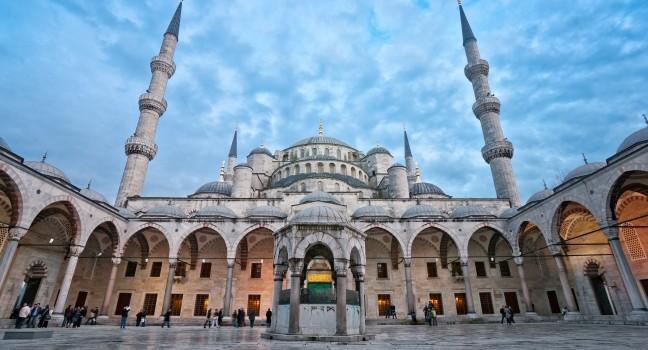
The Blue Mosque, (Sultanahmet Camii), Istanbul, Turkey.
Luciano Mortula / Shutterstock

Only after you enter this mosque, most often referred to as the Blue Mosque, do you understand its moniker. The inside is covered with 20,000 shimmering blue-green İznik tiles interspersed with 260 stained-glass windows; calligraphy and intricate floral patterns are painted on the ceiling. After the dark corners and stern faces of the Byzantine mosaics in Ayasofya, this mosque feels gloriously airy and full of light. Indeed, this favorable comparison was the intention of architect Mehmet Ağa (a former student of the famous Ottoman architect Sinan), whose goal was to surpass Justinian's crowning achievement (Ayasofya). At the behest of Sultan Ahmet I (ruled 1603–17), he created this masterpiece of Ottoman craftsmanship, starting in 1609 and completing it in just eight years, and many believe he indeed succeeded in outdoing the splendor of Ayasofya.

Mehmet Ağa actually went a little too far, though, when he surrounded the massive structure with six minarets: this number linked the Blue Mosque with the Masjid al-Haram in Mecca—and this could not be allowed. So Sultan Ahmet I was forced to send Mehmet Ağa down to the Holy City to build a seventh minaret for al-Haram and re-establish the eminence of that mosque. Sultan Ahmet and some of his family are interred in the türbe (mausoleum) at a corner of the complex.

From outside of the Blue Mosque you can see the genius of Mehmet Ağa, who didn't attempt to surpass the massive dome of Ayasofya across the way, but instead built a secession of domes of varying sizes to cover the huge interior space, creating an effect that is both whimsical and uplifting.

Sultanahmet Sq., Istanbul, Türkiye
Sight Details
Free
Visit outside of prayer times.

Something incorrect in this review?

Topkapı Sarayı

Sultanahmet Fodor's Choice
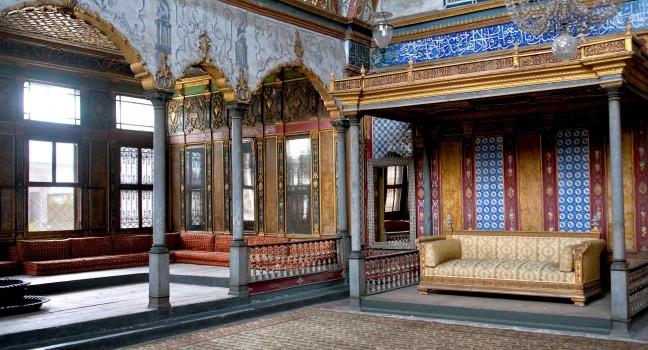
Harem in Topkapi palace, Istanbul, Turkey
vvoe / Shutterstock

This vast palace on Sarayburnu (Seraglio Point) was the residence of sultans and their harems in addition to being the seat of Ottoman rule from the 1460s until the mid-19th century, when Sultan Abdülmecid I moved his court to Dolmabahçe Palace. Sultan Mehmet II built the original Topkapı Palace between 1459 and 1465, shortly after his conquest of Constantinople. Over the centuries, it grew to include four courtyards and quarters for some 5,000 full-time residents. The main entrance, or Imperial Gate, leads to the Court of the Janissaries, also known as the First Courtyard. The modestly beautiful Hagia Irene (Church of St. Irene) is believed to stand on the site of the first church of Byzantium (separate admission). You will begin to experience the grandeur of the palace when you pass through the Bab-üs Selam (Gate of Salutation). Enter the Harem (separate admission) on the other side of the Divan from the Outer Treasury. The Treasury contains the popular jewels, including the 86-carat Spoonmaker's Diamond, the emerald-studded Topkapı Dagger, and two uncut emeralds (each weighing about 8 pounds).

Yerebatan Sarnıcı

Sultanahmet Fodor's Choice
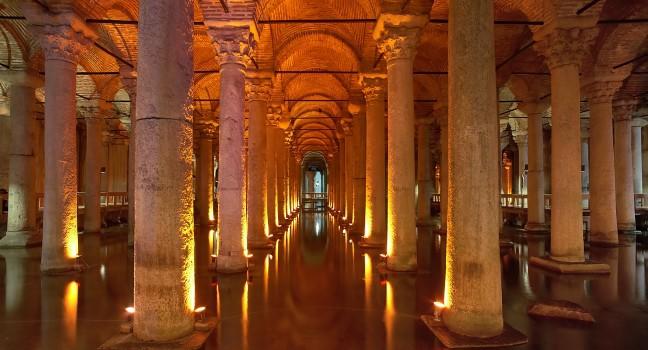
Underground Basilica Cistern (Yerebatan Sarnici) in Istanbul, Turkey.
Mikhail Markovskiy / Shutterstock

The major problem with the site of Byzantium was the lack of fresh water. So, for the city to grow, a great system of aqueducts and cisterns was built, the most famous of which is the Basilica Cistern, whose present form dates from the reign of Justinian in the 6th century. A journey through this ancient underground waterway takes you along dimly lit walkways that weave around 336 marble columns rising 26 feet to support Byzantine arches and domes, from which water drips unceasingly. The two most famous columns feature upturned Medusa heads. The cistern was always kept full as a precaution against long sieges, and fish, presumably descendants of those that arrived in Byzantine times, still flit through the dark waters. A hauntingly beautiful oasis of cool, shadowed, cathedral-like stillness (with Turkish instrumental music playing softly in the background), the cistern is a particularly relaxing place to get away from the hubbub of the Old City. What's more, an extensive renovation has just been completed, which aimed to strengthen its resilience against earthquakes. Come early to avoid the long lines and have a more peaceful visit.

Yerebatan Cad. at Divan Yolu, Istanbul, Türkiye
212-512–1570
Sight Details
Day ticket TL900. Night ticket TL1,400.

Something incorrect in this review?

Sakıp Sabancı Müzesi

Bosphorus Fodor's Choice

One of Istanbul's premier private museums has world-class exhibits and a stunning location in a historic villa overlooking the water in the leafy suburb of Emirgan, on the European shore of the Bosphorus. The permanent collection includes late-19th-century Orientalist and early Republican Turkish paintings, rare examples of Ottoman calligraphy, and antique furnishings such as exquisite Sèvres vases—all from the private collection of the industrialist Sabancı family. The biggest draws, though, are the world-class temporary installations, which range from retrospectives on major artists like Picasso and leading contemporary names such as Ai Weiwei to exhibits on Anatolian archaeology and masterpieces of Islamic art. The beautiful grounds, with 150-year-old monumental trees and a variety of rare plants from around the world, are perfect for a stroll after viewing the art.

Türk ve İslam Eserleri Müzesi

Sultanahmet Fodor's Choice

Süleyman the Magnificent commissioned Sinan to build this grandiose stone palace overlooking the Hippodrome in about 1520 for his brother-in-law, the grand vizier Ibrahim Pasha, and it is one of the most important surviving examples of secular Ottoman architecture from its time. It now houses the Museum of Turkish and Islamic Arts, which has an exceptional collection of Islamic art and artifacts dating from the 7th through 20th century, including lavishly illustrated Korans and other calligraphic manuscripts; intricate metalwork; wood and stone carvings; an astrolabe from the 1200s; colorful ceramics; religious relics and artifacts, including an elaborate hajj certificate and device for determining the direction of Mecca; and one of the world's most highly regarded troves of antique carpets.