337 Best Sights in Italy

Background Illustration for Sights

We've compiled the best of the best in Italy - browse our top choices for the top things to see or do during your stay.

Mausoleo di Galla Placidia

Fodor's Choice

The little tomb and the great church stand side by side, but the tomb predates the Basilica di San Vitale by at least 100 years: these two adjacent sights are decorated with the best-known, most elaborate mosaics in Ravenna. Galla Placidia was the sister of the Roman emperor Honorius, who moved the imperial capital to Ravenna in AD 402. This mid-5th-century mausoleum is her memorial.

The simple redbrick exterior only serves to enhance by contrast the richness of the interior mosaics, in deep midnight blue and glittering gold. The tiny central dome is decorated with symbols of Christ, the evangelists, and striking gold stars. Eight of the Apostles are represented in groups of two on the four inner walls of the dome; the other four appear singly on the walls of the two transepts. There are three sarcophagi in the tomb, none of which are believed to actually contain the remains of Galla Placidia.  Visit early or late in the day to avoid the school groups that can sometimes swamp the Mausoleo from March through mid-June.

Via San Vitale 17, Ravenna, 48121, Italy
0544-541688
Sight Details
€11 combination ticket, includes other diocesan monuments (€2 supplement for mausoleum and baptistery)

Something incorrect in this review?

Sacra di San Michele

Fodor's Choice

To reach the churchbuilt between 983 and 987 AD, and which inspired Umberto Eco to write The Name of the Roseyou must climb 150 steps from the Porta dello Zodiaco, a splendid Romanesque doorway decorated with the signs of the zodiac. On the left side of the interior are 16th-century frescoes representing New Testament themes; on the right are depictions of the founding of the church.

Via Sacra di San Michele 14, Sant'Ambrogio di Torino, 10057, Italy
011-939130
Sight Details
€8, €10 with guided tour (in Italian only)

Something incorrect in this review?

San Biagio

Fodor's Choice

Designed by Antonio da Sangallo il Vecchio, and considered his masterpiece, this church sits on the hillside below the town walls and is a model of High Renaissance architectural perfection. Inside is a painting of the Madonna that, according to legend, was the only thing remaining in an abandoned church that two young girls entered on April 23, 1518. The girls saw the eyes of the Madonna moving, and that same afternoon so did a farmer and a cow, who knelt down in front of the painting. In 1963, the image was proclaimed the Madonna del Buon Viaggio (Madonna of the Good Journey), the protector of tourists in Italy.

Recommended Fodor's Video

San Luigi dei Francesi

Piazza Navona Fodor's Choice

San Luigi's Contarelli Chapel (the fifth and last chapel on the left, toward the main altar) is adorned with three stunningly dramatic works by Caravaggio (1571–1610), the Baroque master of the heightened approach to light and dark. They were commissioned for the tomb of Mattheiu Cointerel in one of Rome's French churches (San Luigi is St. Louis, patron saint of France). The inevitable coin machine will light up his Calling of Saint Matthew, Saint Matthew and the Angel, and Martyrdom of Saint Matthew (seen from left to right), and Caravaggio's mastery of light takes it from there.

When painted, they caused considerable consternation among the clergy of San Luigi, who thought the artist's dramatically realistic approach was scandalously disrespectful. A first version of the altarpiece was rejected; the priests were not particularly happy with the other two, either. Time has fully vindicated Caravaggio's patron, Cardinal Francesco del Monte, who secured the commission for these works and staunchly defended them. This church regularly enforces the rule of covered knees and shoulders, and turns away those who do not abide.

San Pietro

Fodor's Choice

With its black-and-white-striped exterior, this 13th-century Gothic church is a spectacular landmark recognizable from far out at sea and upon entering the village. It is built on the site of an ancient pagan shrine, on a formidable solid mass of rock above the Grotto Arpaia. There's a fantastic view of the Cinque Terre coastline from the church's front porch.

San Pietro in Vincoli

Monti Fodor's Choice

Michelangelo's Moses, carved in the early 16th century for the never-completed tomb of Pope Julius II, has put this church on the map. The tomb was to include dozens of statues and stand nearly 40 feet tall when installed in St. Peter's Basilica. But only three statues—Moses and the two that flank it here, Leah and Rachel—had been completed when Julius died. Julius's successor as pope, from the rival Medici family, had other plans for Michelangelo, and the tomb was abandoned unfinished.

The fierce power of this remarkable sculpture dominates its setting. People say that you can see the sculptor's profile in the lock of Moses's beard right under his lip and that the pope's profile can also be seen. As for the rest of the church, St. Peter takes second billing to Moses. The reputed sets of chains (vincoli) that bound St. Peter during his imprisonment by the Romans in both Jerusalem and Rome are in a bronze and crystal urn under the main altar. Other treasures include a 7th-century mosaic of St. Sebastian, in front of the second altar to the left of the main altar, and, by the door, the tomb of the Pollaiuolo brothers, two 15th-century Florentine artists.

Piazza di San Pietro in Vincoli, 4/A, Rome, 00184, Italy
06-97844952

Something incorrect in this review?

San Zeno Maggiore

Fodor's Choice

One of Italy's finest Romanesque churches is filled with treasures, including a rose window by the 13th-century sculptor Brioloto that represents a wheel of fortune, with six of the spokes formed by statues depicting the rising and falling fortunes of mankind. The 12th-century porch is the work of Maestro Niccolò; it's flanked by marble reliefs by Niccolò and Maestro Guglielmo depicting scenes from the Old and New Testaments and from the legend of Theodoric. The bronze doors date from the 11th and 12th centuries; some were probably imported from Saxony, and some are from Veronese workshops. They combine allegorical representations with scenes from the lives of saints.

Inside, look for the 12th-century statue of San Zeno to the left of the main altar. In modern times it has been dubbed the "Laughing San Zeno" because of a misinterpretation of its conventional Romanesque grin. A famous Madonna and Saints triptych by Andrea Mantegna (1431–1506) hangs over the main altar, and a peaceful cloister (1120–38) lies to the left of the nave. The detached bell tower was finished in 1173.

Piazza San Zeno, Verona, 37100, Italy
045-592813
Sight Details
€4 (€8 Chiese Vive Cumulative Ticket or free with Verona Card)

Something incorrect in this review?

Sant'Agostino

Piazza Navona Fodor's Choice

This basilica set atop a steep staircase between Piazza Navona and the Pantheon houses several treasures. In the first chapel on the left is Caravaggio's celebrated Madonna of the Pilgrims, which scandalized all of Rome for depicting a kneeling pilgrim all too realistically for the era's tastes, with dirt on the soles of his feet and the Madonna standing in a less-than-majestic pose in a dilapidated doorway. Pause at the third column on the left of the nave to admire Raphael's blue-robed Isaiah, said to be inspired by Michelangelo's prophets on the Sistine ceiling (Raphael, with the help of Bramante, had taken the odd peek at the master's original against strict orders of secrecy). Directly below is Sansovino's Leonardo-influenced sculpture, St. Anne and the Madonna with Child.

As you leave, in a niche just inside the door, is the sculpted Madonna and Child, known to the Romans as the "Madonna del Parto" (of Childbirth) and piled high with ex-voto offerings giving thanks for the safe deliveries of children. The artist was Jacopo Tatti, also sometimes confusingly known as Sansovino after his master.

Sant'Anna dei Lombardi

Toledo Fodor's Choice

This church, simple and rather anonymous from the outside, houses some of the most important ensembles of Renaissance sculpture in southern Italy. Begun with the adjacent convent of the Olivetani and its four cloisters in 1411, it was given a Baroque makeover in the mid-17th century by Gennaro Sacco.

To the left of the Ligorio Altar is the Mastrogiudice Chapel, whose altar contains Scenes from the Life of Jesus (1489) by Benedetto da Maiano, a great name in Tuscan sculpture. On the other side of the entrance is the Piccolomini Chapel, with a Crucifixion by Giulio Mazzoni (circa 1550), a refined marble altar (circa 1475), and a funerary monument to Maria d'Aragona by another prominent Florentine sculptor, Antonello Rossellino (circa 1475).

Piazza Monteoliveto 15, Naples, 80134, Italy
081-4420039
Sight Details
Side chapels, oratory, and sacristy €6; Abbots' Crypt €2
Side chapels, oratory, and sacristy closed Sun. morning

Something incorrect in this review?

Santa Caterina a Formiello

Porta Capuana Fodor's Choice

With museum-worthy paintings and sculptures, this church is a must-see. The Formiello in the name refers to the formali, the nearby underground aqueduct, which, according to history, the Aragonese also used to capture the town. The church and its dark piperno stone was designed for the Dominicans by the Tuscan architect Romolo Balsimelli, a student of Brunelleschi.

The side chapels are as interesting for their relics as they are for their art. In the Orsini chapel are the elaborately framed remains of Vincent Martyr and other Dominican saints, while the fourth chapel displays some 20 martyrs' skulls that were brought to Naples by King Alfonso in 1490 after the 1480 Ottoman sack of Otranto, during which 813 Christians were executed for refusing to renounce their faith. This event is depicted in the rather surrealistic altar painting of the beheading of Antonio Primaldo, whose decapitated body, through the strength of faith, stands upright to confound his Ottoman executioner.

In the fifth chapel, a cycle of paintings by Giacomo del Po shows the life and afterlife of St. Catherine, while in the vault Luigi Garzi depicts the same saint in glory. Up in the faded dome, painted by Paolo di Mattei, Catherine and the Madonna implore the Trinity to watch over the city.

Santa Cecilia in Trastevere

Trastevere Fodor's Choice

This basilica commemorates the aristocratic St. Cecilia, patron saint of musicians. One of ancient Rome's most celebrated early Christian martyrs, she was most likely put to death by the Emperor Diocletian just before the year AD 300. After an abortive attempt to suffocate her in the baths of her own house (a favorite means of quietly disposing of aristocrats in Roman days), she was brought before the executioner. But not even three blows of the executioner's sword could dispatch the young girl. She lingered for several days, converting others to the Christian cause, before finally dying. In 1595, her body was exhumed—it was said to look as fresh as if she still breathed—and the heart-wrenching sculpture by eyewitness Stefano Maderno that lies below the main altar was, he insisted, exactly how she looked.

The basilica is built atop the ruins of a Republican-age home that purportedly belonged to the martyr herself. It is possible to descend to the ruins, as well as to an underground gilt chapel via the bookstore. Time your visit in the morning to also enter the cloistered convent to see what remains of Pietro Cavallini's Last Judgment, dating from 1293. It's the only major fresco in existence known to have been painted by Cavallini, a contemporary of Giotto. To visit the frescoes, ring the bell of the convent to the left of the church entrance between 10 am and 12 pm.

Piazza di Santa Cecilia, 22, Rome, 00153, Italy
06-45492739
Sight Details
Frescoes €3, underground €2.50
Access to frescoes closed in the afternoon

Something incorrect in this review?

Santa Maria Maggiore

Monti Fodor's Choice

Despite its florid 18th-century facade, Santa Maria Maggiore is one of the city's oldest churches, built around 440 by Pope Sixtus III. One of Rome's four great pilgrimage churches, it's also the city center's best example of an early Christian basilica—one of the immense, hall-like structures derived from ancient Roman civic buildings and divided into thirds by two great rows of columns marching up the nave. The other three major basilicas in Rome (San Giovanni in Laterano, St. Peter's, and St. Paul Outside the Walls) have largely been rebuilt. Paradoxically, the major reason why this church is such a striking example of early Christian design is that the same man who built the undulating exteriors circa 1740, Ferdinando Fuga, also conscientiously restored the interior, throwing out later additions and, crucially, replacing a number of the great columns.

Precious 5th-century mosaics high on the nave walls and on the triumphal arch in front of the main altar bear splendid testimony to the basilica's venerable age. Those along the nave show 36 scenes from the Old Testament (unfortunately, tough to see clearly without binoculars), and those on the arch illustrate the Annunciation and the Youth of Christ. The resplendent carved-wood ceiling dates from the early 16th century; it's supposed to have been gilded with the first gold brought from the New World. The inlaid marble pavement (called cosmatesque, after the family of master artisans who developed the technique) in the central nave is even older, dating from the 12th century.

The Cappella Sistina (Sistine Chapel), in the right-hand transept, was created by architect Domenico Fontana for Pope Sixtus V in 1585. Elaborately decorated with precious marbles "liberated" from the monuments of ancient Rome, the chapel includes a lower-level museum in which some 13th-century sculptures by Arnolfo da Cambio are all that's left of what was the once richly endowed chapel of the presepio (Christmas crèche), looted during the Sack of Rome in 1527.

Directly opposite, on the church's other side, stands the Cappella Paolina (Pauline Chapel), a rich Baroque setting for the tombs of the Borghese popes Paul V—who commissioned the chapel in 1611 with the declared intention of outdoing Sixtus's chapel across the nave—and Clement VIII. The Cappella Sforza (Sforza Chapel) next door was designed by Michelangelo and completed by Della Porta. Just right of the altar, next to his father, lies Gian Lorenzo Bernini; his monument is an engraved slab, as humble as the tombs of his patrons are grand. Above the loggia, the outside mosaic of Christ raising his hand in blessing is one of Rome's most beautiful sights, especially when lighted at night.

Santa Maria sopra Minerva

Piazza Navona Fodor's Choice

The name of the church reveals that it was built sopra (over) the ruins of a temple of Minerva, the ancient goddess of wisdom. Erected in 1280 by Dominicans along severe Italian Gothic lines, it has undergone a number of more or less happy interior restorations. Certainly, as the city's major Gothic church, it provides a refreshing contrast to Baroque flamboyance. Have a €1 coin handy to illuminate the Cappella Carafa in the right transept; the small investment is worth it to better see Filippino Lippi's (1457–1504) glowing frescoes featuring a deep azure expanse of sky and musical angels hovering around the Virgin.

Under the main altar is the tomb of St. Catherine of Siena, one of Italy's patron saints and a major destination for faithful locals who drop written prayers on her final resting place. Left of the altar you'll find Michelangelo's Risen Christ and the tomb of the gentle artist Fra Angelico. Bernini's unusual and little-known monument to the Blessed Maria Raggi is on the fifth pier of the left-hand aisle.

In front of the church, Bernini's Elephant and Obelisk is perhaps the city's most charming sculpture. An inscription on the base references the church's ancient patroness, reading something to the effect that it takes a strong mind to sustain solid wisdom.

Santi Cosma e Damiano

Campitelli Fodor's Choice

Home to one of the most striking early Christian mosaics, this church was adapted in the 6th century from two ancient buildings: the library in Vespasian's Forum of Peace and a hall of the Temple of Romulus (dedicated to the son of Maxentius, who had been named for Rome's founder). In the apse is the famous AD 530 mosaic of Christ in Glory. It reveals how popes at the time strove to recreate the splendor of imperial audience halls into Christian churches: Christ wears a gold, Roman-style toga, and his pose recalls that of an emperor addressing his subjects. He floats on a blue sky streaked with a flaming sunset—a miracle of tesserae mosaic work. To his side are the figures of Saint Peter and Saint Paul, who represent Cosmas and Damian (patron saints of doctors), two Syrian benefactors whose charity was such that they were branded Christians and condemned to death. Beneath this awe-inspiring work is an enchanting mosaic frieze of holy lambs.

Santo Stefano

University area Fodor's Choice

This splendid and unusual basilica contains between four and seven connected churches (authorities differ). A 4th-century temple dedicated to Isis originally occupied this site, but much of what you see was erected between the 10th and 12th centuries. Just outside the church, which probably dates from the 5th century (with later alterations), is the Cortile di Pilato (Pilate's Courtyard), named for the basin in the center. Despite the fact that the basin was probably crafted around the 8th century, legend has it that Pontius Pilate washed his hands in it after condemning Christ. 

Santuario di Tindari

Fodor's Choice

A very old place of worship, the Santuario di Tindari has been an important place for religious pilgrims since the Middle Ages, after a mysterious statue of the dark-skinned Madonna was retrieved from a nearby beached ship and claimed to be a miraculous image by locals. Today Tindari is still popular with religious visitors and the clergy in general; Pope John Paul II even visited to perform mass in the 1980s. The stunning modern cathedral has been built around the original tiny medieval church, and you can access the old church from a side gate near the front altar. The newer church is filled with mosaic art, stained-glass windows, an impressive church organ, and an elaborate building that still houses the famed Madonna statue.

Located high up in the mountains, Tindari has lovely views along the coast in both directions. Along a side road from the church, past a collection of tourist shops, you will find the archaeological area that includes an ancient Roman theater and several ruins of bathhouses and villas that once accommodated Roman visitors. The small museum here houses five rooms filled with fascinating finds from the site, including a massive sculpture of Emperor Augustus's head excavated in the basilica ruins. 

Below the Church of Tindari, there are also the natural lakes of Marinello and the pristine Spiaggia Mongiove, which are popular places for local beachgoers to explore. Even though the beaches are devoid of facilities, the spot is secluded and quite stunning.

Via Monsignor Pullano 12, 98066, Italy
0941-369003
Sight Details
€5; combined ticket with La Villa Romana €7
Closed Mon.

Something incorrect in this review?

Santuario Madonna di San Luca

Beyond the City Center Fodor's Choice

With panoramic views and grandiose Baroque architecture atop the forested Colle della Guardia hill some 5 km (3 miles) southwest of Piazza Maggiore, the 1765-consecrated Sanctuary of San Luca church is a symbol of Bologna. For a bona fide Bolognese pilgrimage, climb the 950-foot hill on foot from Porta Saragozza protected by the 666 arches (alluding to the Madonna-crushed devil) and 15 chapels of the world's longest portico (3.9 km/2.4 miles). The final ceremonial section (completed in 1721) begins at the monumental Arco del Meloncello, which echoes the orange-hued architecture of the basilica itself. Visitors can ascend a further 110 steps into the cupola for 180-degree views as part of the new San Luca Sky Experience. For a less strenuous route to the sanctuary hop on the No. 20 bus then the 58 minibus (from Villa Spada), or the San Luca Express trenino (mini tourist train; €13 return) from the city center. To avoid the crowds, set out early morning.

Tempietto Longobardo

Fodor's Choice

Seeing the beautiful and historically important Tempietto Longobardo from the 8th century is more than enough reason to visit Cividale. Now inside the 16th-century Monastery of Santa Maria in Valle, the Tempietto was originally the chapel of the ducal palace, known as the Gastaldia. The west wall is the best-preserved example of the art and architecture of the Lombards, a Germanic people who entered Italy in 568. It has an archway with an exquisitely rendered vine motif, guarded by an 8th-century procession of female figures, showing the Lombard interpretation of classical forms that resembles the style of the much earlier Byzantine mosaics in Ravenna, a town that had passed briefly to Lombard rule in 737. The post-Lombard frescoes decorating the vaults and the east wall date from the 13th and 14th centuries, and the fine carved wooden stalls also date from the 14th century.

Via Monastero Maggiore, Cividale del Friuli, 33051, Italy
0432-700867
Sight Details
€6; €15 combined ticket, includes Museo Archeologico, Monastero/Tempietto and Museo Cristiano e Tesoro del Duomo (free with FVG Card)

Something incorrect in this review?

Abbazia di Novacella

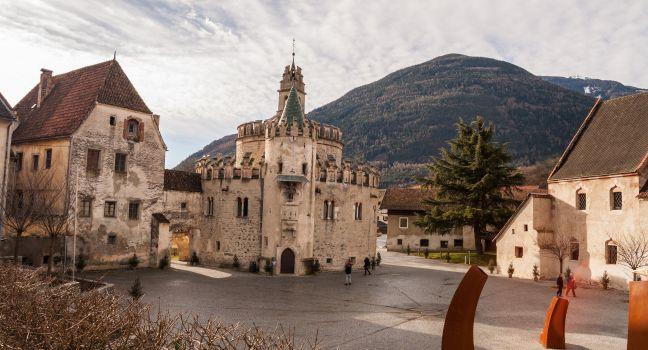
Novacella Monastery, Varna, Bolzano, Trentino Alto Adige, Italy
gab90 / Shutterstock

This Augustinian abbey founded in 1142 has been producing wine for at least nine centuries and is most famous for the delicate stone-fruit character of its dry white Sylvaner. As you wander the delightful grounds, note the progression of Romanesque, Gothic, and Baroque building styles. Guided tours of the abbey, in various languages, depart daily except Sunday. Guided tours of the vineyard are also available, in English, by reservation.

Via Abbazia 1, Varna, 39040, Italy
0472-836189
Sight Details
Abbey visit €12 with audioguide, €17 with guided tour; wine tastings with vineyard tour €25
Closed Sun.

Something incorrect in this review?

Basilica di Santa Maria in Aracoeli

Campitelli
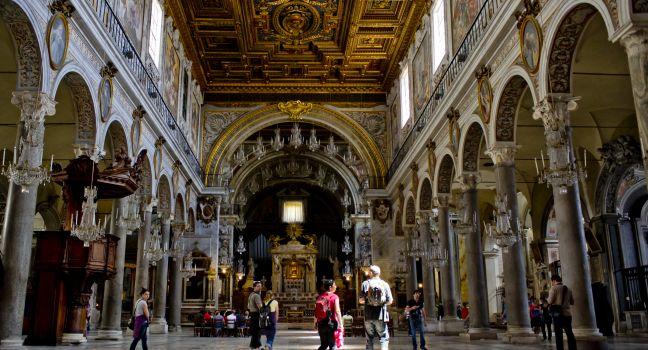
Santa Maria di Aracoeli, Campidoglio, Ancient Rome, Rome, Italy.
© Zach Nelson / Fodors Travel

Perched atop 124 steps, on the north slope of the Capitoline Hill, Santa Maria in Aracoeli occupies the site of the temple of Juno Moneta (Admonishing Juno), which also housed the Roman mint. According to legend, it was here that the Sibyl, a prophetess, predicted to Augustus the coming of a Redeemer. Augustus responded by erecting an altar, the Ara Coeli (Altar of Heaven). This was eventually replaced by a Benedictine monastery and then by a church, which was passed in 1250 to the Franciscans, who restored and enlarged it in Romanesque-Gothic style.

Today, the Aracoeli is best known for the Santo Bambino, a much-revered olivewood figure of the Christ Child (a copy of the 15th-century original, which was stolen in 1994). At Christmas, everyone pays homage to the "Bambinello" as children recite poems from a miniature pulpit. In true Roman style, the church interior is a historical hodgepodge, with classical columns and large marble fragments from pagan buildings, as well as a 13th-century cosmatesque pavement. The richly gilded Renaissance ceiling commemorates the naval victory at Lepanto in 1571 over the Turks. The first chapel on the right is noteworthy for Pinturicchio's frescoes of St. Bernardino of Siena (1486).

Scala dell'Arce Capitolina 14, Rome, 00186, Italy
06-69763839

Something incorrect in this review?

San Carlo alle Quattro Fontane

Quirinale
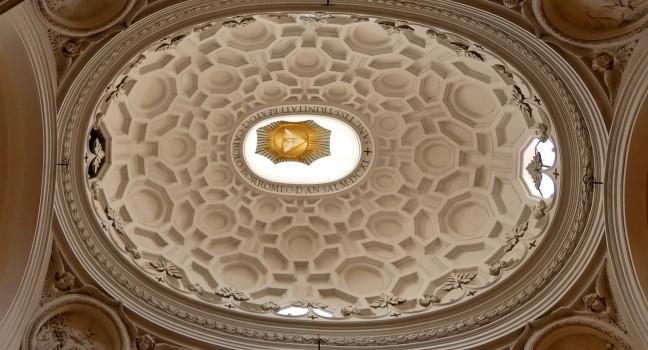
Elliptic dome of San Carlo alle Quattro Fontane (1638-1641) in Rome, designed by Francesco Borromini.
Marie-Lan Nguyen [public domain], via Wikimedia Commons

Sometimes known as San Carlino because of its tiny size, this is one of Borromini's masterpieces. In a space no larger than the base of one of the piers of St. Peter's Basilica, he created a church that is an intricate exercise in geometric perfection, with a coffered dome that seems to float above the curves of the walls. Borromini's work is often bizarre, definitely intellectual, and intensely concerned with pure form. In San Carlo, he invented an original treatment of space that creates an effect of rippling movement, especially evident in the double-S curves of the facade. Characteristically, the interior decoration is subdued, in white stucco with no more than a few touches of gilding, so as not to distract from the form. Don't miss the cloister: a tiny, understated Baroque jewel, with a graceful portico and loggia above, echoing the lines of the church.

Via del Quirinale, 23, Rome, 00187, Italy
06-48907729
Sight Details
Closed Sun.

Something incorrect in this review?

San Stae

VENICE, ITALY - APRIL 20: Venice famous landmark San Stae Church on April 20, 2012 in Venice, Italy. San Stae church locates in the sestiere di Santa Croce and is constructed by Domenico Rossi.
(c) Maigi | Dreamstime.com

The church of San Stae—the Venetian name for Sant' Eustachio (St. Eustace)—was reconstructed in 1687 by Giovanni Grassi and given a new facade in 1707 by Domenico Rossi. Renowned Venetian painters and sculptors of the early 18th century decorated this church around 1717 with the legacy left by Doge Alvise II Mocenigo, who's buried in the center aisle. San Stae affords a good opportunity to see the early works of Gianbattista Tiepolo, Sebastiano Ricci, and Giovanni Battista Piazzetta, as well as those of the previous generation of Venetian painters, with whom they had studied.

Campo San Stae, 30135, Italy
041-2750462
Sight Details
€3.50 (free with Chorus Pass)
Closed Fri.–Tues.

Something incorrect in this review?

Sant'Alvise

Cannaregio
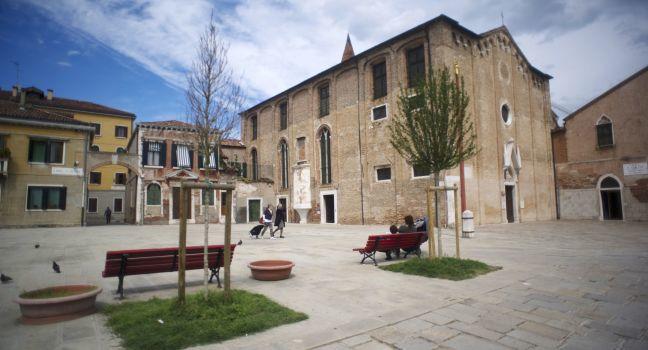
venice Sant'Alvise is a church in the sestiere of Cannaregio in Venice, northern Italy. According to tradition, it was built by Antonia Venier in 1338 and dedicated to St. Louis of Toulouse, and located next to an adjacent convent.
© Zach Nelson / Fodors Travel

For Tiepolo fans, trekking to the outer reaches of a pleasant residential section of Cannaregio to visit the unassuming Gothic church of Sant'Alvise is well worth the trouble. The little church holds Gianbattista Tiepolo's three panels of the Passion of Christ. He painted these panels, which display a new interest in dramatic intensity, and perhaps the influence of Tintoretto and Titian, for the church during his middle period, between 1737 and 1740.

Campo Sant' Alvise, Venice, 30121, Italy
041-2750462-Chorus Foundation
Sight Details
€3.50, free with Chorus Pass

Something incorrect in this review?

Santa Pudenziana

Monti
Santa Pudenziana, Rome, Italy
© Halie Cousineau/ Fodors Travel

Apart from Ravenna, Rome has some of Italy's most opulent mosaics, and this church has the earliest example. Commissioned during the papacy of Innocent I, its early 5th-century apse mosaic, depicting Christ teaching the apostles, sits above a Baroque altarpiece surrounded by a bevy of florid 18th-century paintings. The mosaic is remarkable for its iconography; at the center sits Christ Enthroned, shown as an emperor or as a philosopher holding court, surrounded by his apostles. Each apostle faces the spectator, literally rubbing shoulders with his companion (unlike later hieratic styles in which each figure is isolated) and bears an individualized expression. Above these figures and a landscape symbolizing Heavenly Jerusalem float the signs of the four evangelists in a blue sky flecked with the orange of sunset, made from thousands of tesserae (mosaic tiles).

To either side of Christ, saints Praxedes and Pudentiana hold wreaths over the heads of saints Peter and Paul. These two women were actually daughters of the Roman senator Pudens (probably the one mentioned in 2 Timothy 4:21), whose family befriended both apostles. During the persecutions of Nero, both sisters collected the blood of many martyrs before suffering their fate. Pudentiana transformed her house into a church, but her namesake church was constructed over a 2nd-century bathhouse. Beyond the sheer beauty of the mosaic work, the size, rich detail, and number of figures make this both the last gasp of ancient Roman art and one of the first major works of Early Christian art.

Via Urbana, 160, Rome, 00184, Italy
06-4817292
Sight Details
Closed Sun.

Something incorrect in this review?

Santi Quattro Coronati

Celio
Roma, Santi Quattro Coronati: chiostro
Lalupa (CC BY-SA 3.0), via Wikimedia Commons

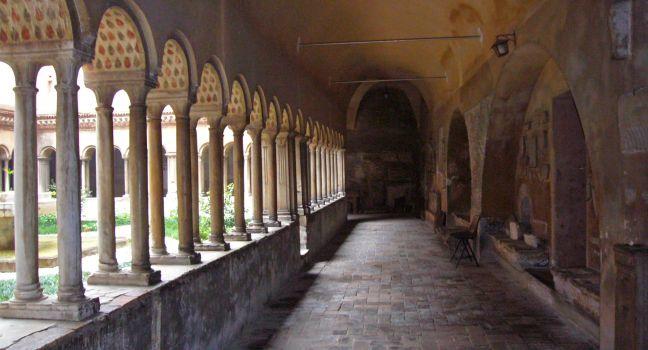
Situated on one of those evocative cul-de-sacs in Rome where history seems to be holding its breath, this quiet citadel has resisted the tides of time and traffic. The church—which is both strongly imbued with the sanctity of the Romanesque era and marvelously redolent of the Middle Ages—dates from the 4th century and honors the Four Crowned Saints: the four brothers Severus, Severianus, Carpophorus, and Victorinus, all Roman officials who were whipped to death for their faith by Emperor Diocletian (284–305).

After its 9th-century reconstruction, the church was twice as large as it is now; the abbey was partially destroyed during the Normans' sack of Rome in 1084 but reconstructed about 30 years later. This explains the inordinate size of the apse in relation to the small nave. Don't miss the cloister, with its well-tended gardens and 12th-century fountain. The entrance is the door in the left nave; ring the bell if it's not open.

There's another medieval gem hidden away off the courtyard at the church entrance: the Chapel of San Silvestro. The chapel has remained, for the most part, as it was when consecrated in 1246. Some of the best-preserved medieval frescoes in Rome decorate the walls, telling the story of the Christian emperor Constantine's recovery from leprosy thanks to Pope Sylvester I. Note, too, the delightful Last Judgment fresco above the door, in which the angel on the left neatly rolls up sky and stars like a backdrop, signaling the end of the world.

Santissimo Redentore

Santissimo Redentore, Giudecca, Venice, Italy.
© Ross Brinkerhoff / Fodors Travel

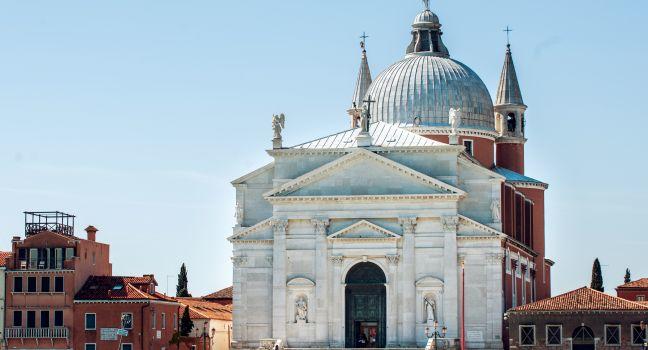
After a plague in 1576 claimed some 50,000 people—nearly one-third of the city's population (including Titian)—Andrea Palladio was asked to design a commemorative church. Giudecca's Capuchin friars offered land and their services, provided the building's design was in keeping with the simplicity of their hermitage. Consecrated in 1592, after Palladio's death, the Redentore (considered Palladio's supreme achievement in ecclesiastical design) is dominated by a dome and a pair of slim, almost minaretlike bell towers. Its deceptively simple, stately facade leads to a bright, airy interior. There aren't any paintings or sculptures of note, but the harmony and elegance of the interior makes a visit worthwhile.

Fondamenta San Giacomo, Giudecca, 30133, Italy
041-5231415-church office
Sight Details
€3.50 (free with Chorus Pass)
Closed Sun.

Something incorrect in this review?

Abbazia di San Fruttuoso

A medieval stronghold built by the Benedictines of Monte Cassino protects a minuscule fishing village that can be reached only on foot or by water—a 20-minute boat ride from Portofino and also reachable from Camogli, Santa Margherita Ligure, and Rapallo. The restored abbey is now the property of a national conservation fund (FAI) and occasionally hosts temporary exhibitions; it also contains the tombs of some illustrious members of the Doria family. Plan on spending a few hours enjoying the abbey and grounds, and perhaps lunching at one of the modest beachfront trattorias nearby (open only in summer). Boatloads of visitors can make this place very crowded very fast; you might appreciate it most off-season.

Abbazia di San Galgano

The church was built in the 13th century by Cistercian monks, who designed it after churches built by their order in France. But, starting in the 15th century, it fell into ruin, declining gradually over centuries. Grass has grown through the floor, and the roof and windows are gone. What's left of its facade and walls makes a grandiose and desolate picture. In July and August the scene is enlivened by evening concerts arranged by the Accademia Musicale Chigiana in Siena. Contact the tourist information office at the abbey for details.

Strada Comunale di S. Galgano, Massa Marittima, Italy
0577-049312
Sight Details
€5

Something incorrect in this review?

Abbey of San Nilo Grottaferrata

In Grottaferrata, a busy village a couple of miles from Frascati, the main attraction is a walled citadel founded by St. Nilo, who brought his group of Basilian monks here in 1004, when he was 90. The order is unique in that it's Roman Catholic but observes Greek Orthodox rites. It is the last surviving Byzantine-Greek monastery in Italy and has a distinctive blend of art and architecture.

The fortified abbey with its soaring bell tower, considered a masterpiece of martial architecture, was restructured in the 15th century by Antonio da Sangallo for the future Pope Julius II. The abbey church, inside the second courtyard, has glittering Byzantine mosaics and a revered icon of Mary with child set into a marble tabernacle designed by Bernini. The Farnese chapel, leading from the right nave, contains a series of frescoes by Domenichino.

If you make arrangements in advance, you can visit the library, which is one of the oldest in Italy. The abbey also has a famous laboratory for the restoration of antique books and manuscripts, where Leonardo's Codex Atlanticus was restored in 1962 and more than a thousand precious volumes were saved after the disastrous Florence flood in 1966.

Corso del Popolo, 128, Grottaferrata, 00046, Italy
06-9459309
Sight Details
Free

Something incorrect in this review?

Assumption of Our Lady Cathedral

A lacy spire looks down on the mosaic-like roof tiles of the city's Gothic cathedral, built between the 12th and 14th centuries. Inside are 14th- and 15th-century frescoes and an intricately carved stone pulpit dating from 1514. Outside, don't miss the Porta del Vino (Wine Gate) on the northeast side facing the square; decorative carvings of grapes and harvest workers attest to the long-standing importance of wine to this region.

Piazza della Parrocchia 27, Bolzano, 39100, Italy
0471-978676
Sight Details
Free
Closed Sat.

Something incorrect in this review?