


Ascending the Blue Dragon: Traversing Vietnam from South to North
 Apr 19th, 2025 | 07:32 AM
#1
Original Poster

Joined: Sep 2012
Posts: 3,517
Likes: 0
Ascending the Blue Dragon: Traversing Vietnam from South to North
Welcome to Vietnam. Over the next three weeks, we will make our way up the Southeast Asian country of 100 million.
We begin in its largest city, Ho Chi Minh City, more commonly known as Saigon. From there, we fly to Danang in the middle of the country. Once in Danang, we make our way to Hoi An by car and hired driver and then travel up north to Hue, Phong Nha, Ninh Binh, and Hanoi.
Given the time of our year of this trip, we will be travelling from south to north as we understand the south will become hotter and more humid as the days go by. Even so, judging by the weather forecasts, we expect some very hot and humid days. Good excuses for ice coffee breaks I guess.
Our three-week trip combines modern, urban Vietnam with smaller towns and villages and some of the countryside. We hope to sample its food, be among the people, experience some of the culture, and enjoy what nature has to offer.
I admittedly do not know a lot about Vietnam except perhaps there will be similarities among some of the other countries in the region we've previously visited: Cambodia and Thailand. This will be the first Communist country we will be visiting, so there's slight anxiety there. Then again, given the march towards some of these excesses at home in the United States, we're looking forward to getting away from it, even for a bit. Speaking of politics, there's also the Vietnam War, a period about which I learned in the history books. Coincidentally, we will be in Vietnam as the country celebrates the end of the decades-long war and the 50th anniversary of reunification. At present, we are scheduled to pass the DMZ on April 30th, 50 years to the day of end of the war.
Thank you to all the Fodorites who helped us plan our trip, as well as the wonderful trip reports that you've shared of your own trips to Vietnam.
Here we go.
We begin in its largest city, Ho Chi Minh City, more commonly known as Saigon. From there, we fly to Danang in the middle of the country. Once in Danang, we make our way to Hoi An by car and hired driver and then travel up north to Hue, Phong Nha, Ninh Binh, and Hanoi.
Given the time of our year of this trip, we will be travelling from south to north as we understand the south will become hotter and more humid as the days go by. Even so, judging by the weather forecasts, we expect some very hot and humid days. Good excuses for ice coffee breaks I guess.
Our three-week trip combines modern, urban Vietnam with smaller towns and villages and some of the countryside. We hope to sample its food, be among the people, experience some of the culture, and enjoy what nature has to offer.
I admittedly do not know a lot about Vietnam except perhaps there will be similarities among some of the other countries in the region we've previously visited: Cambodia and Thailand. This will be the first Communist country we will be visiting, so there's slight anxiety there. Then again, given the march towards some of these excesses at home in the United States, we're looking forward to getting away from it, even for a bit. Speaking of politics, there's also the Vietnam War, a period about which I learned in the history books. Coincidentally, we will be in Vietnam as the country celebrates the end of the decades-long war and the 50th anniversary of reunification. At present, we are scheduled to pass the DMZ on April 30th, 50 years to the day of end of the war.
Thank you to all the Fodorites who helped us plan our trip, as well as the wonderful trip reports that you've shared of your own trips to Vietnam.
Here we go.


 Apr 20th, 2025 | 04:44 AM
#4

Joined: Jan 2004
Posts: 3,618
Likes: 0
Safe tavels, and looking forward to following along and reliving a few recent experiences! We were in HCMC, Hue and Hoi An in January - and Hanoi and parts of the north on a different trip in 2011. I'm not as organized as you, and couldn't get a trip report together, but we really enjoyed our time there. I'm happy to share any info/experiences. It will be hot, but I'm sure you'll have a great time.
Apr 20th, 2025 | 06:40 AM
#5
Original Poster
Joined: Sep 2012
Posts: 3,517
Likes: 0
shelemm, DinHo, and ms_go, thank you. Saigon sure is hot but not much different than what we experienced in Cambodia and in Thailand in the past. For our first day today, acclimatization meant multiple coffee and water breaks, which are part of the enjoyment of travel.
21st Century Metropolis
We traveled from Washington, DC, to Saigon, via London and Kuala Lumpur, on American Airlines and Malaysia Airlines. We left on Friday afternoon and arrived on Sunday morning, for a total of 21 flight hours.
Greeting us at Tan Son Nhat International Airport in Saigon was what I expected of Communist Party bureaucracy. Upon arrival at the airport, we proceeded to the immigration line. While waiting, a couple of airport agents visited us, checking our passports and e-visas and then walked away, disappointed that there was no currency of any kind tucked between the pages (we caught on that this was what they were doing because we saw one of the agents put some U.S. cash in his pocket and escorted people who provided "gifts" being pulled out of our line to a line in which there was no wait about 3 or 4 times). After about an hour in line, our passports were stamped into Vietnam and we were on our way to our hotel via taxi cab.
The ride from the airport to our hotel took about 30 minutes. The roads were in good condition. Our first impressions of Saigon was that it looked similar to what we saw in Bangkok and in Phnom Penh. Buildings of different sizes were densely-packed and scattered as far as the eye can see. Punctuating the mid-rise buildings were numerous high-rises. High-rises dominated as we moved into the city center, although we also saw numerous edifices from the colonial French era. We assumed some of the wide, tree-lined boulevards also date to this era.
Because our rooms weren't ready upon arrival, we dropped off our bags, freshened up in the lobby bathrooms, and hit the ground running. We dived head first into the urban hustle and bustle, walking along the Saigon Riverfront and admiring the city skyline. From the riverfront we strolled Dong Khoi Street, formerly known as Rue Catinat, and Nguyen Hue Street, formerly known as Boulevard Charner. We passed several impressive colonial era buildings such as the Saigon Opera House, the General Post Office, and City Hall. We also caught a glimpse of Notre Dame Cathedral from the Post Office, although its entire frontal facade is covered in scaffolding for restoration. We ended our 4-hour walking tour (we walked for maybe 2 hours; we took 2 coffee and water breaks given how hot and humid it was) at Bitexco Financial Tower, from where we surveyed much of the city skyline from the tower's 49th floor observatory.
Both on the ground and up above, we understood how modern Saigon has become. In addition to all the glass that is typical of cities all over Asia and frankly around the world, we also experienced how capitalistic the city is. For a Communist country, Vietnam seemed every bit as Westernized and relaxed as any Western country we visited.

Saigon Skyline from Riverfront

Saigon Skyline from Riverfront

General Post Office

General Post Office
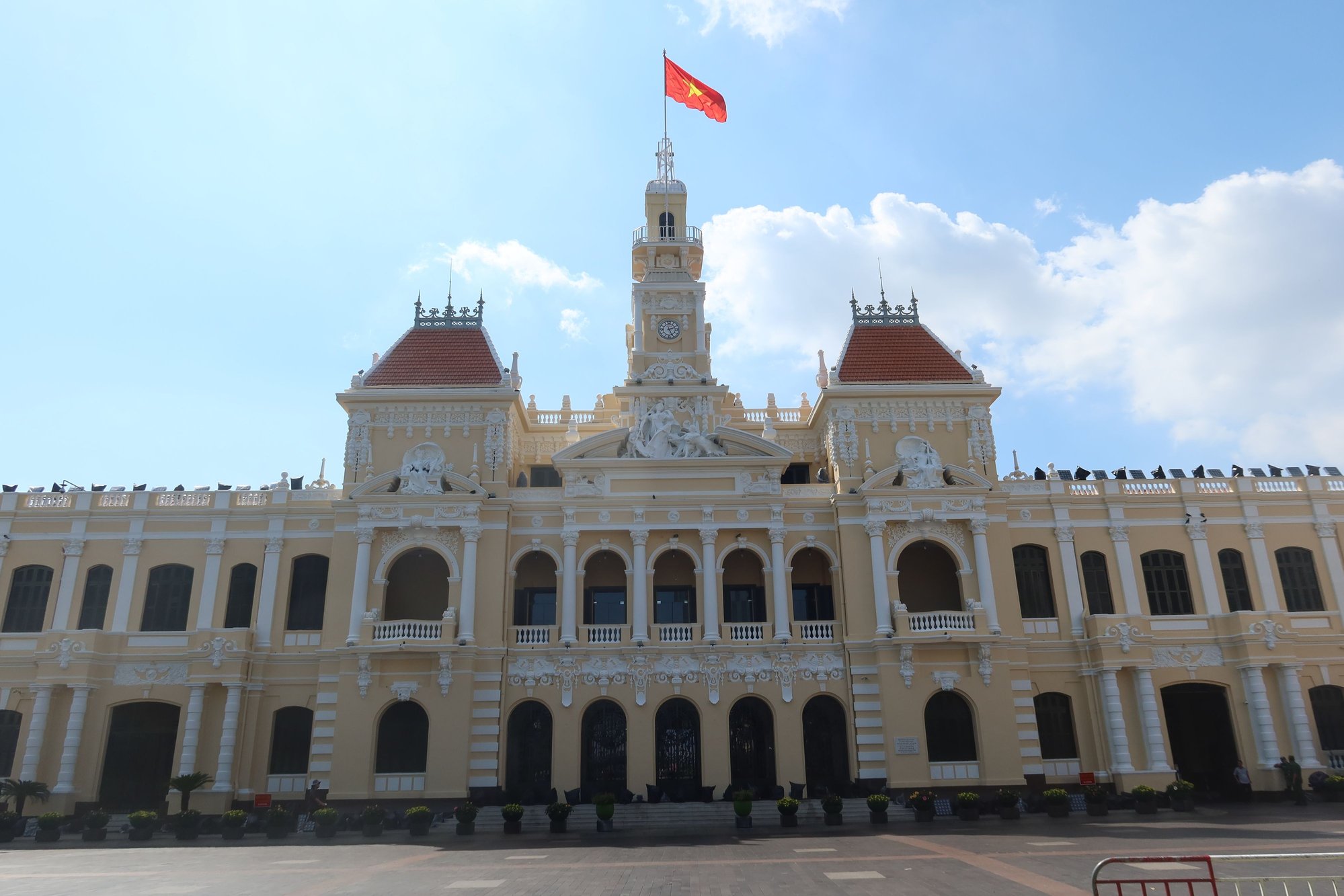
City Hall

50th Anniversary Decorations

Bitexco Financial Tower
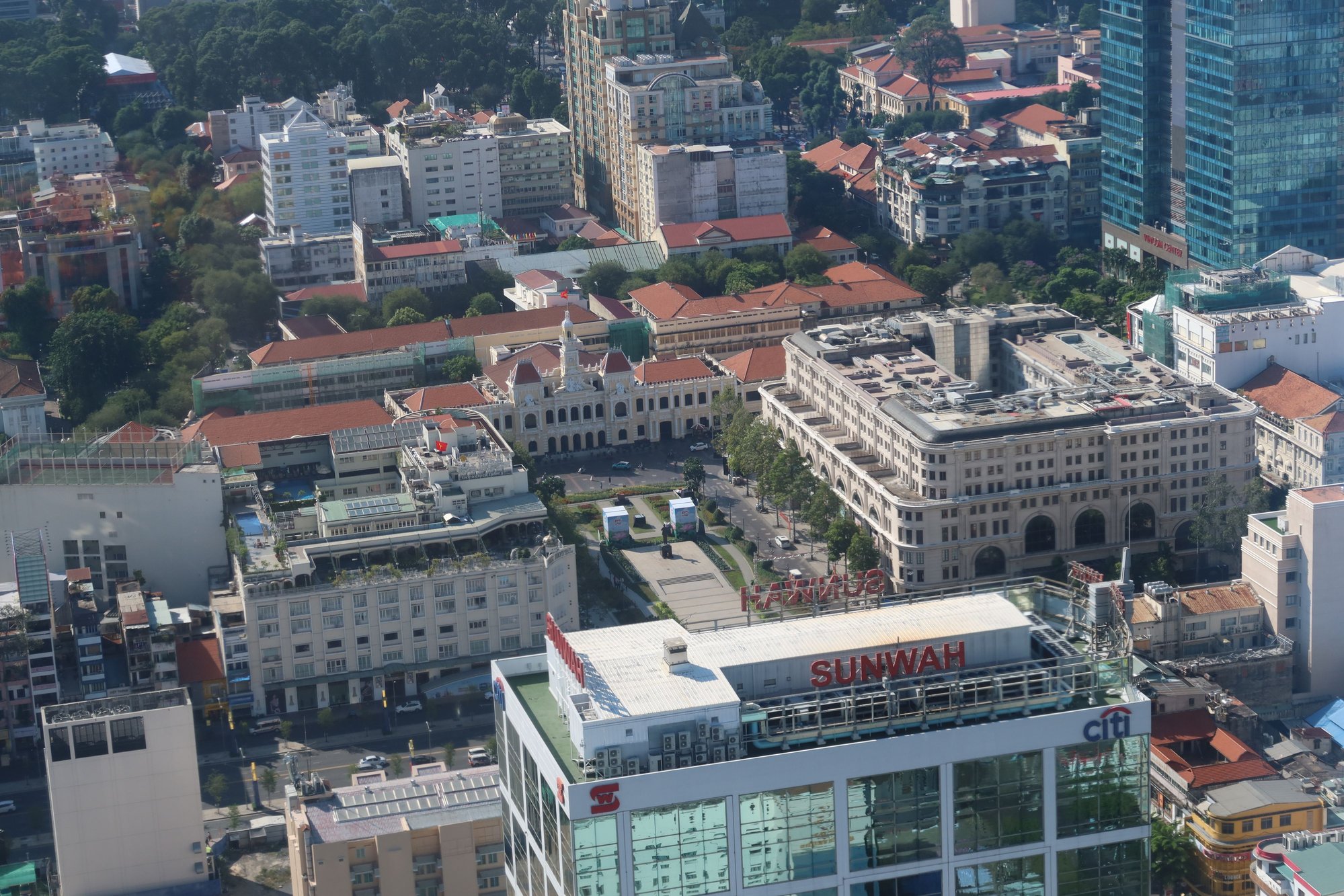
City Hall from Bitexco
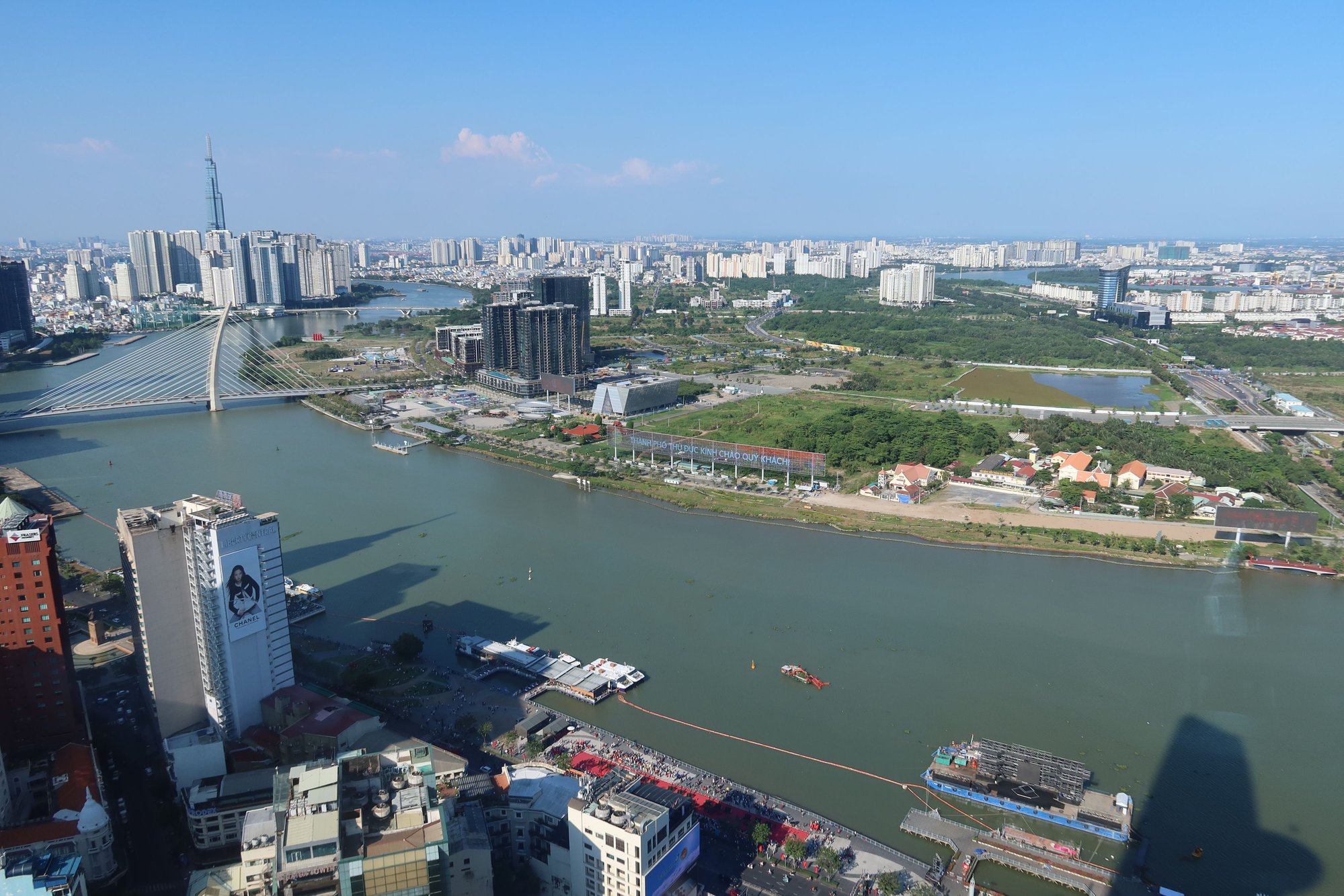
Saigon River from Bitexco
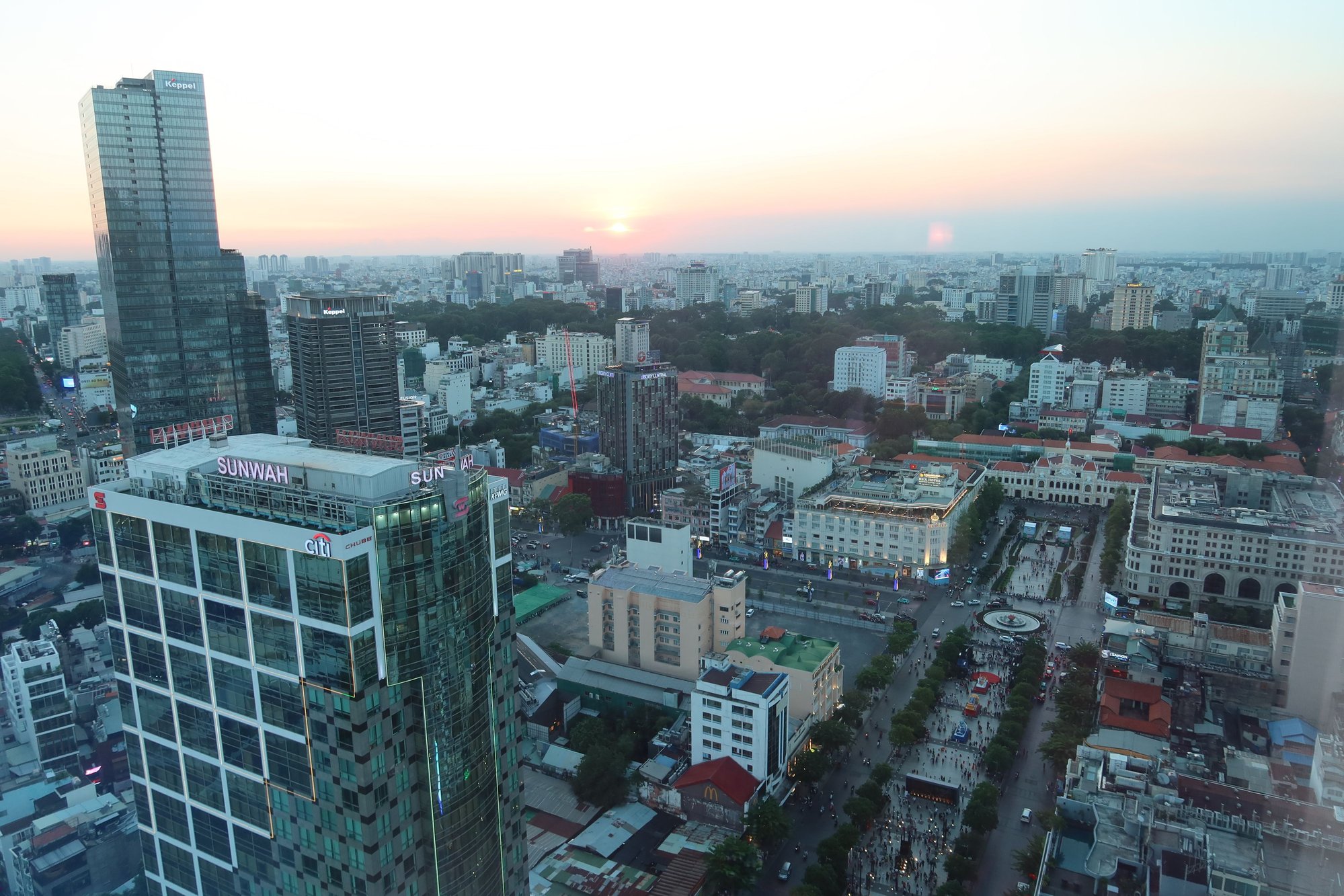
Sunset over Saigon
21st Century Metropolis
We traveled from Washington, DC, to Saigon, via London and Kuala Lumpur, on American Airlines and Malaysia Airlines. We left on Friday afternoon and arrived on Sunday morning, for a total of 21 flight hours.
Greeting us at Tan Son Nhat International Airport in Saigon was what I expected of Communist Party bureaucracy. Upon arrival at the airport, we proceeded to the immigration line. While waiting, a couple of airport agents visited us, checking our passports and e-visas and then walked away, disappointed that there was no currency of any kind tucked between the pages (we caught on that this was what they were doing because we saw one of the agents put some U.S. cash in his pocket and escorted people who provided "gifts" being pulled out of our line to a line in which there was no wait about 3 or 4 times). After about an hour in line, our passports were stamped into Vietnam and we were on our way to our hotel via taxi cab.
The ride from the airport to our hotel took about 30 minutes. The roads were in good condition. Our first impressions of Saigon was that it looked similar to what we saw in Bangkok and in Phnom Penh. Buildings of different sizes were densely-packed and scattered as far as the eye can see. Punctuating the mid-rise buildings were numerous high-rises. High-rises dominated as we moved into the city center, although we also saw numerous edifices from the colonial French era. We assumed some of the wide, tree-lined boulevards also date to this era.
Because our rooms weren't ready upon arrival, we dropped off our bags, freshened up in the lobby bathrooms, and hit the ground running. We dived head first into the urban hustle and bustle, walking along the Saigon Riverfront and admiring the city skyline. From the riverfront we strolled Dong Khoi Street, formerly known as Rue Catinat, and Nguyen Hue Street, formerly known as Boulevard Charner. We passed several impressive colonial era buildings such as the Saigon Opera House, the General Post Office, and City Hall. We also caught a glimpse of Notre Dame Cathedral from the Post Office, although its entire frontal facade is covered in scaffolding for restoration. We ended our 4-hour walking tour (we walked for maybe 2 hours; we took 2 coffee and water breaks given how hot and humid it was) at Bitexco Financial Tower, from where we surveyed much of the city skyline from the tower's 49th floor observatory.
Both on the ground and up above, we understood how modern Saigon has become. In addition to all the glass that is typical of cities all over Asia and frankly around the world, we also experienced how capitalistic the city is. For a Communist country, Vietnam seemed every bit as Westernized and relaxed as any Western country we visited.
Saigon Skyline from Riverfront
Saigon Skyline from Riverfront
General Post Office
General Post Office
City Hall
50th Anniversary Decorations
Bitexco Financial Tower
City Hall from Bitexco
Saigon River from Bitexco
Sunset over Saigon
Apr 20th, 2025 | 07:09 AM
#6
Joined: Oct 2012
Posts: 2,245
Likes: 0
So, far, how is it between those water breaks? And did you choose the time of year to go, or did it choose you? I mean, sometimes it can't be helped. That's life and you make the best of it. Not that there's a lot of fluctuation in HCMC......
Apr 20th, 2025 | 07:40 AM
#7
Original Poster
Joined: Sep 2012
Posts: 3,517
Likes: 0
shelemm, we managed as best as we could. It didn't take us away from our plans, for example. The weather wasn't that dissimilar to what we experience at home in DC during the peak days of summer. Definitely less humid than what we experienced in Mumbai last December. As for timing, it's a combination of both. We originally thought about going in November and December, but would have forgone central Vietnam given the increased likelihood of heavy rains, and we didn't want to have to do that on our first trip. We understand that February and early March may be a better time to visit if we want to travel the length of the country, but it's hard for us to schedule anything more than a few days for two of the four of us, given work considerations.
Trending Topics
Apr 20th, 2025 | 10:53 AM
#8
Joined: Jan 2004
Posts: 3,618
Likes: 0
I don't remember our entry into Vietnam being anything like that, but we got there at 11 pm, and there wasn't a line. Our entry to Japan a day earlier for a 21-hour layover was much more notable, because the line was over an hour long and all over the place. I think we gave fingerprints three times.
We took a similar walk on our first day, with at least one refreshment break. It was hot but probably not like it is now. I don't usually seek out hotels with pools for our travels, but we were very happy to have decent pools at both of our Saigon hotels (Mai House and Park Hyatt). We definitely took advantage of them to cool off. Looking forward to more!
We took a similar walk on our first day, with at least one refreshment break. It was hot but probably not like it is now. I don't usually seek out hotels with pools for our travels, but we were very happy to have decent pools at both of our Saigon hotels (Mai House and Park Hyatt). We definitely took advantage of them to cool off. Looking forward to more!
Last edited by ms_go; Apr 20th, 2025 at 11:04 AM.
Apr 21st, 2025 | 06:49 AM
#9
Joined: Oct 2012
Posts: 2,245
Likes: 0
shelemm, we managed as best as we could. It didn't take us away from our plans, for example. The weather wasn't that dissimilar to what we experience at home in DC during the peak days of summer. Definitely less humid than what we experienced in Mumbai last December. As for timing, it's a combination of both. We originally thought about going in November and December, but would have forgone central Vietnam given the increased likelihood of heavy rains, and we didn't want to have to do that on our first trip. We understand that February and early March may be a better time to visit if we want to travel the length of the country, but it's hard for us to schedule anything more than a few days for two of the four of us, given work considerations.
Apr 21st, 2025 | 07:58 AM
#10
Original Poster
Joined: Sep 2012
Posts: 3,517
Likes: 0
ms_go, could just be the time of day and the number of flights arriving as you mentioned.
shelemm, good to know you're a neighbor. The heat and humidity is definitely manageable as long as you have some tolerance and plan accordingly.
The Recent Past
After enjoying a massive spread at our hotel buffet, we set out for a full day in Ho Chi Minh City. We began at the Independence Palace, the former home of the President of South Vietnam. Built in the 1960s to replace the previous French colonial palace that was bombed by the North Vietnamese during the war, the present building was built in a modern Western style. The interior is minimalist with clean lines and colors although some of the decorations, especially the carpets, are Vietnamese or even Chinese in style. We toured the four stories, from the offices to public rooms to the residences. Underneath the building is a network of rooms that served as a bunker, complete with communications equipment from the 1960s. The palace was fairly crowded this morning. Most of the visitors were Vietnamese in Communist Vietnamese garb.
From the palace we walked a few blocks to the War Remnants Museum, where we toured the exhibits detailing the events of what is referred to here as the War for Liberation and Reunification. The exhibits consist mostly of photographs from the three decades of warfare, from the fight against the French who resisted Vietnamese Independence to the war against American aggression. The visit was poignant and very moving, especially the exhibits about our use of Agent Orange and phosphorous bombs during the war. My feelings and reactions were comparable to what I had experienced visiting Hiroshima. It was quite heavy to say the least.
We walked along Le Duan Boulevard, watching some of the preparations for the 50th anniversary of reunification / liberation celebrations. We were happy to see the energy and spirit of the Vietnamese people on display, especially after what they or their forebearers went through not too long ago. Along Le Duan are the consulates of most of the Western countries. We walked past the Consulates of France, Germany, the United States, and Great Britain. From Le Duan, we made our way to the nearest Metro station to take it to Ben Thanh Market for a look around.
Ben Thanh sold everything from cheap souvenirs to clothing and food. There was a mix of locals and tourists at the market. A 15-minute walk from Ben Thanh is Dan Sinh Market, which sold stuff from the war era as well as hardware and other household items.
Our next stop was the Ho Chi Minh Fine Arts Museum, which houses a wide variety of artwork across three French colonial buildings. We viewed everything from landscape paintings to social realist art to ceramics and stonework from earlier eras. It took us about an hour and a half to browse the entire collection on display.
From here we made our way back to our hotel, where we rested and freshened up before dinner.
As with yesterday, we felt much more relaxed than what we were expecting. At minimum, we expect more visible security and surveillance as what we had experienced during our time in the Central Asian republics last year. Other than traffic police, there wasn't much visible law enforcement presence. Even around some of the government buildings, the security presence seemed relaxed. While there were cameras, it was nothing as pervasive as we experienced in Tashkent, Almaty, and Bishkek.
The weather also felt less oppressive today than yesterday, especially in the latter half of the day. Part of it is probably because we've had some time to acclimate. Part of it may also be the increased cloud cover at times throughout the day. Nonetheless, we kept up with coffee, water, and general rest breaks.
While we mostly walked from place to place, other than the one Metro ride, we used Grab this morning to get from our hotel to Independence Palace. The Uber of Southeast Asia, Grab works the same way. It's much more enjoyable to be able to book taxis this way than to worry about whether or not a driver wants to turn on a taxi meter, the haggling over fares, and the bait=and-switch when it comes to pricing that is still commonplace in some parts of the world.
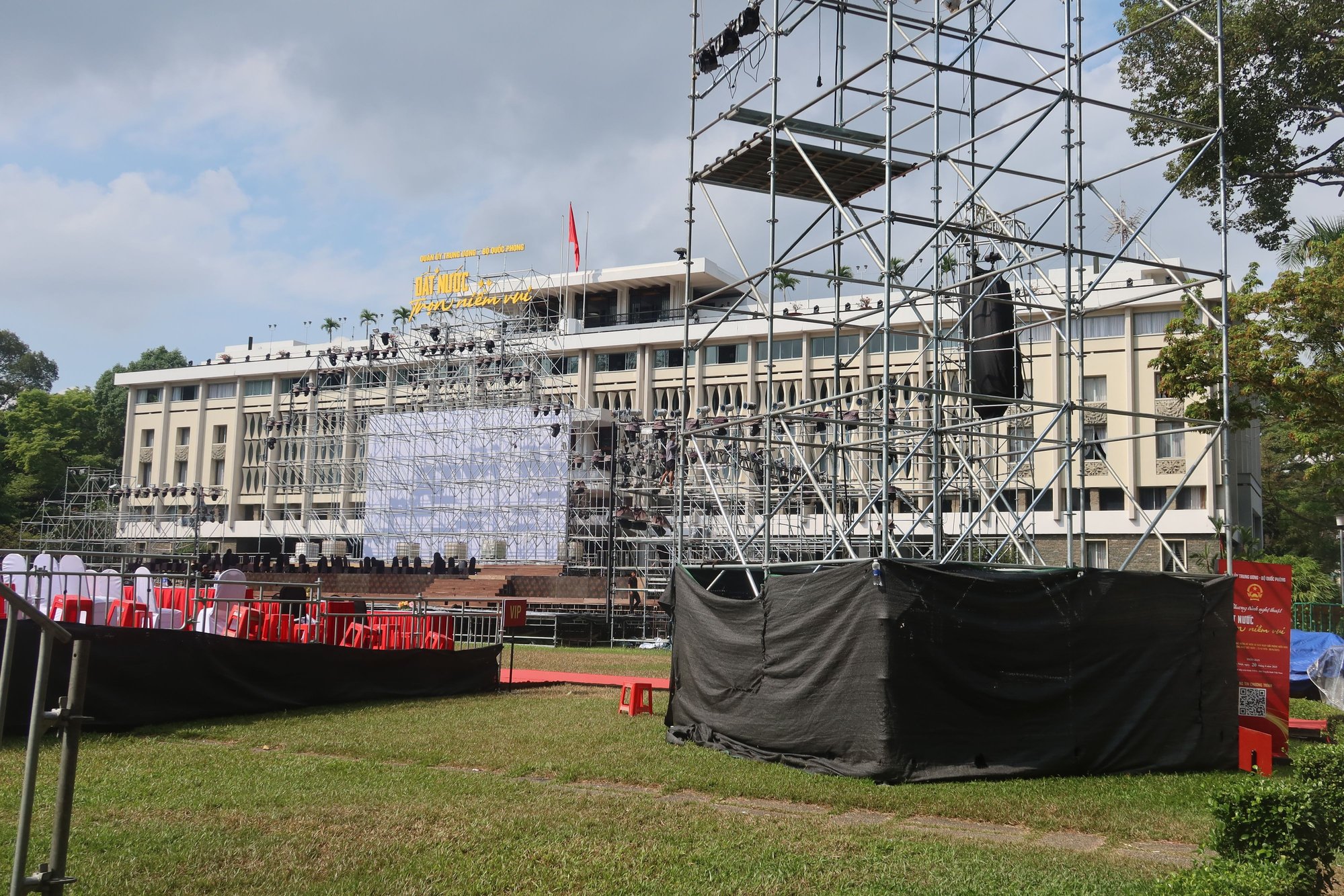
Independence Palace with staging for the 50th anniversary events
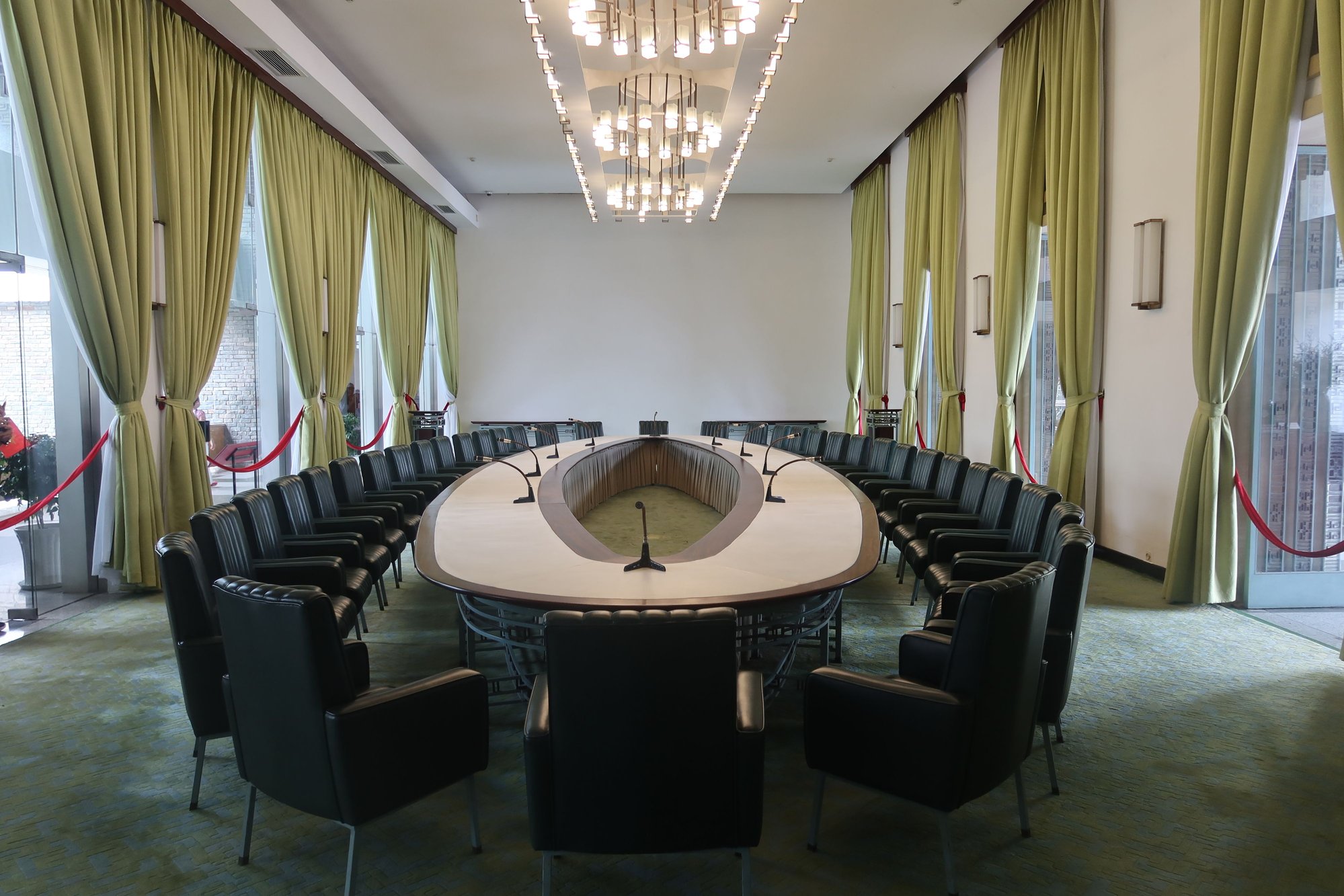
Cabinet meeting room, Independence Palace
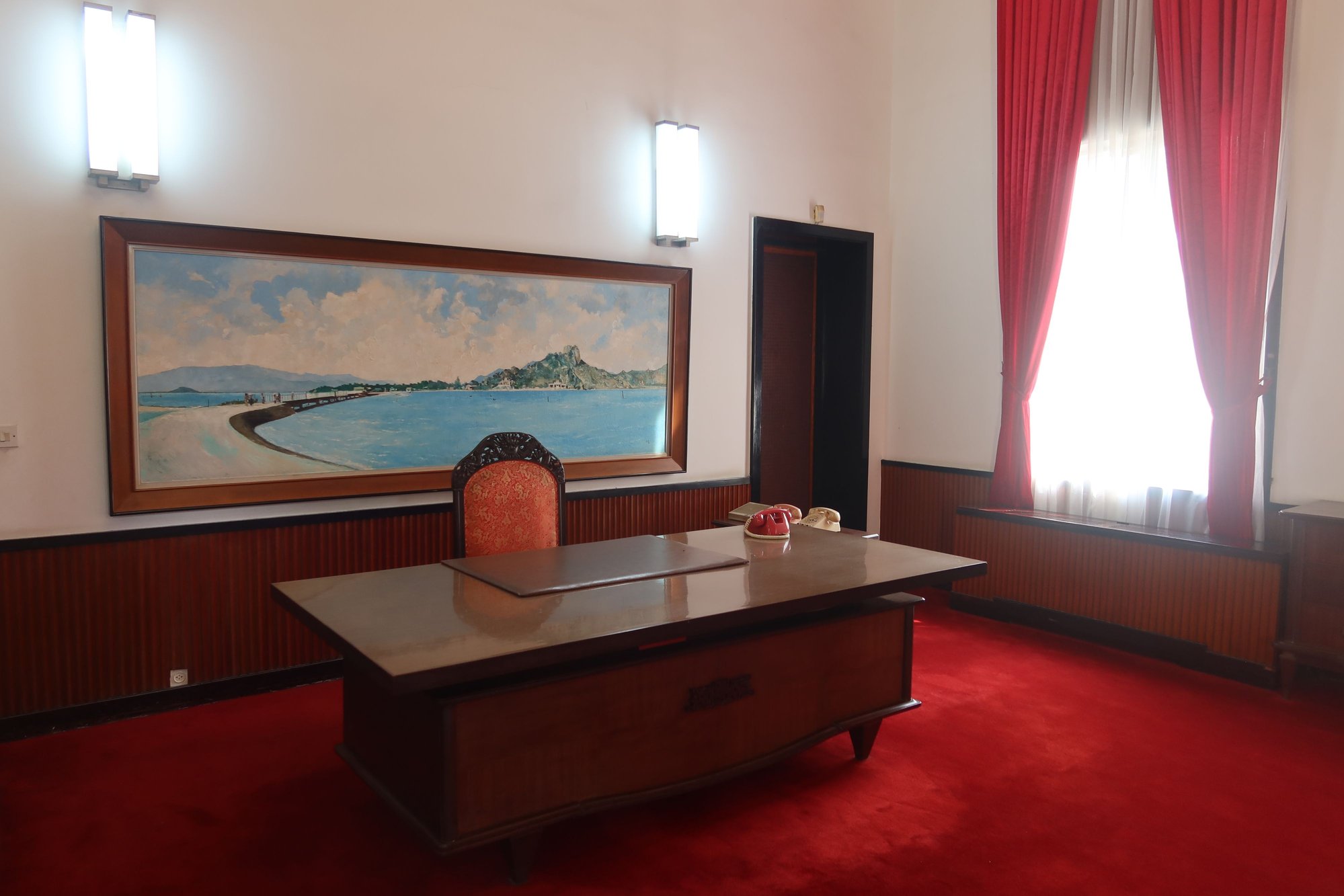
President's Office, Independence Palace
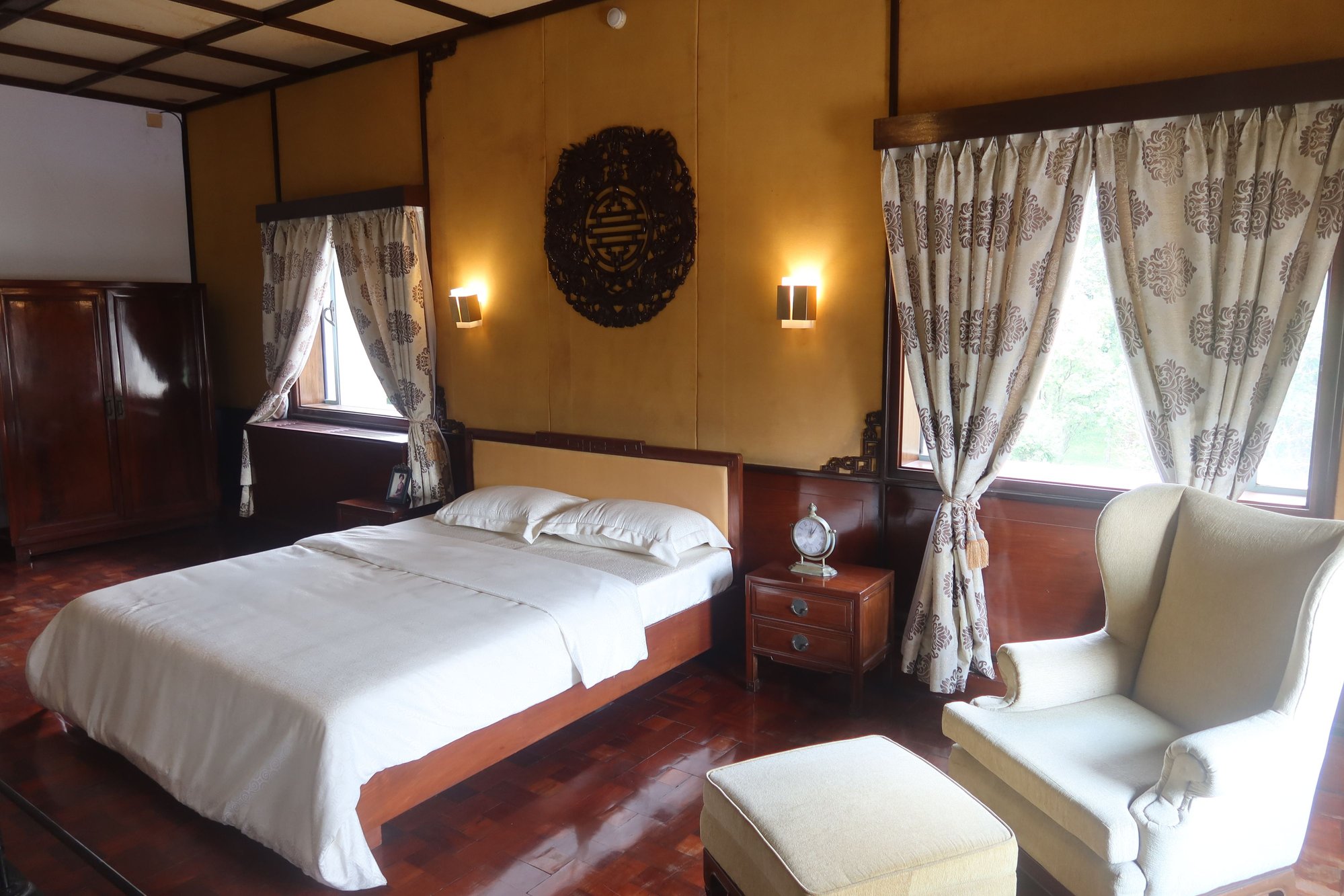
President's Bedroom, Independence Palace
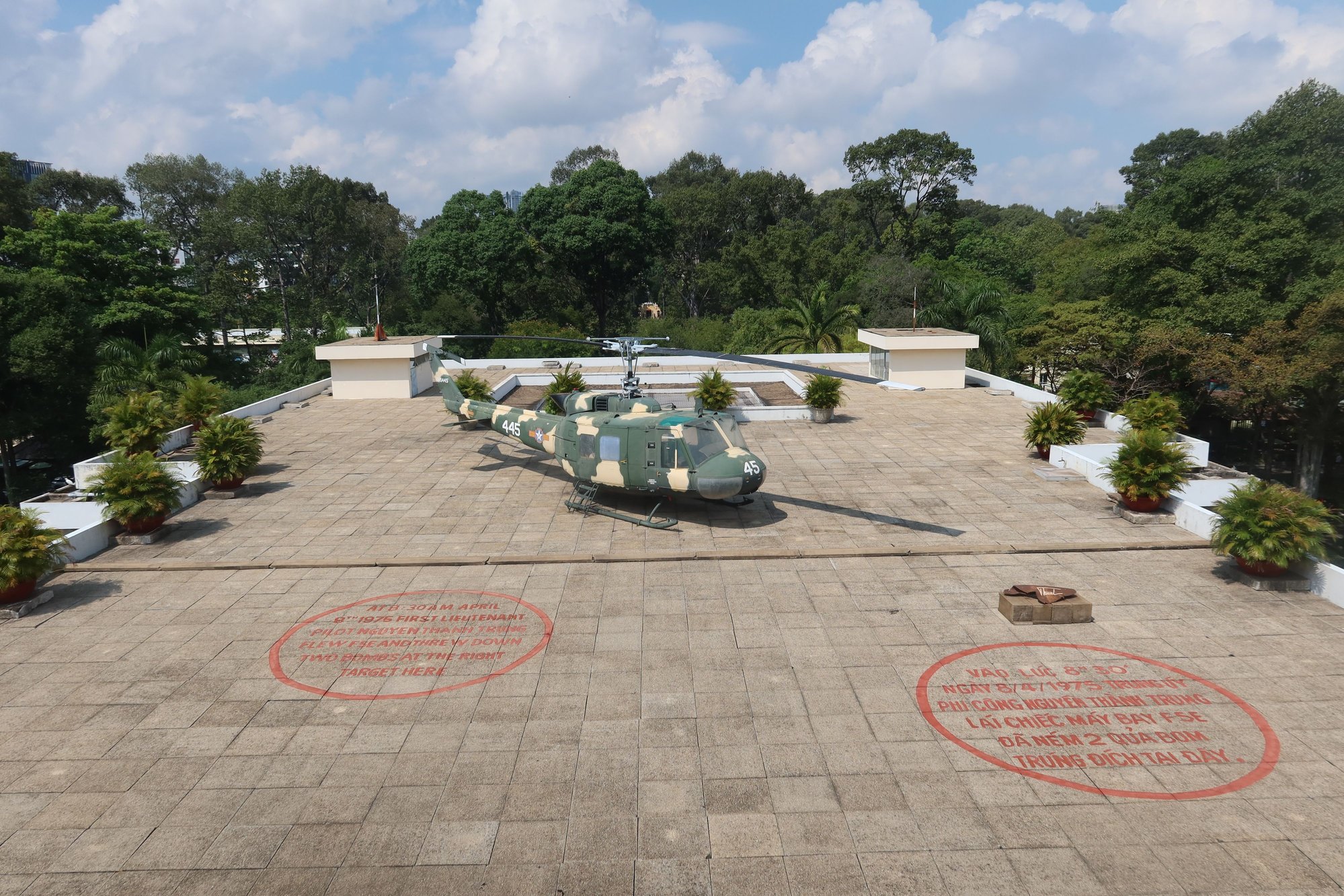
Rooftop with Helicopter Similar to the One Used during the Fall of Saigon in 1975, Independence Palace

Bunker Room, Independence Palace
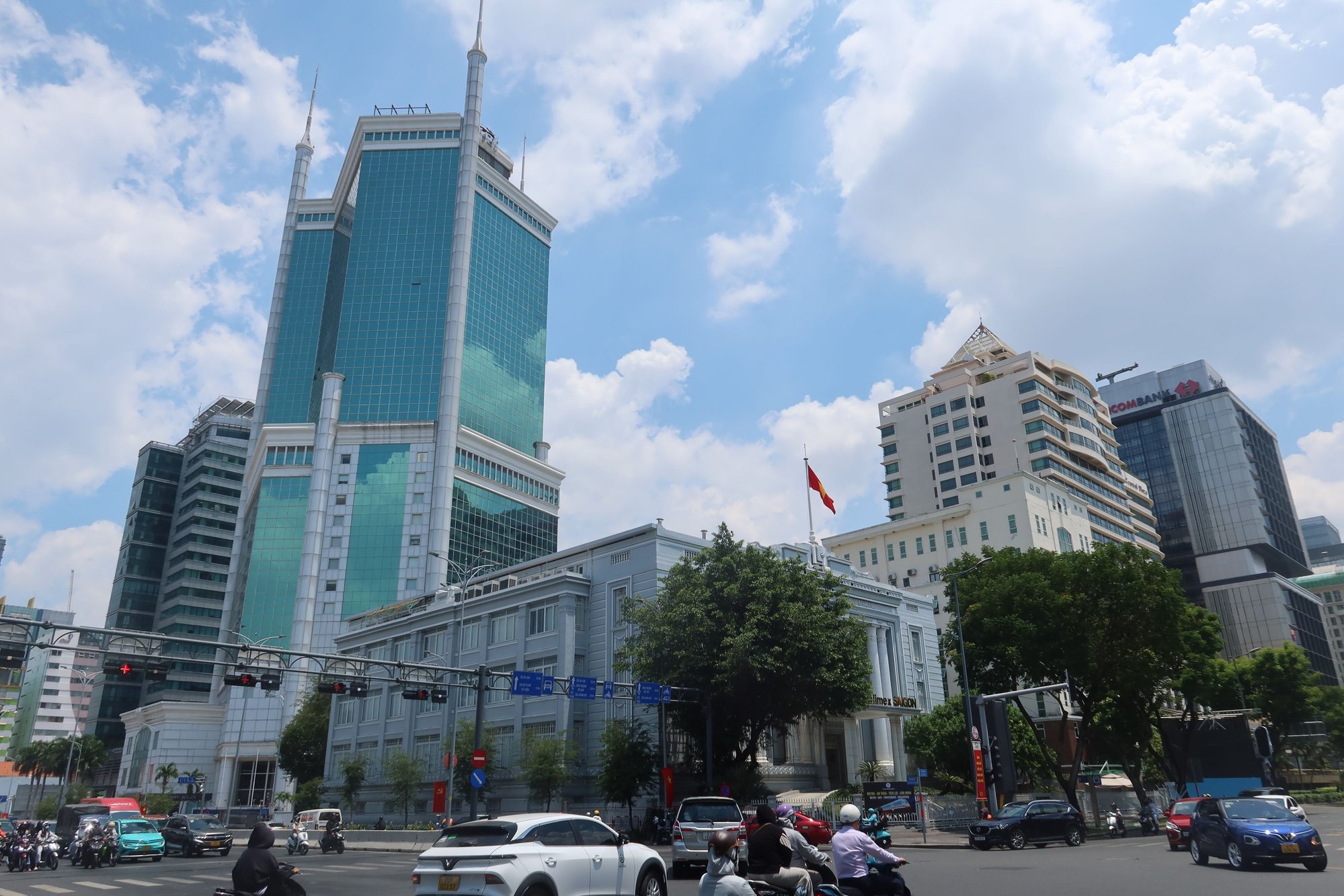
Le Duan Boulevard
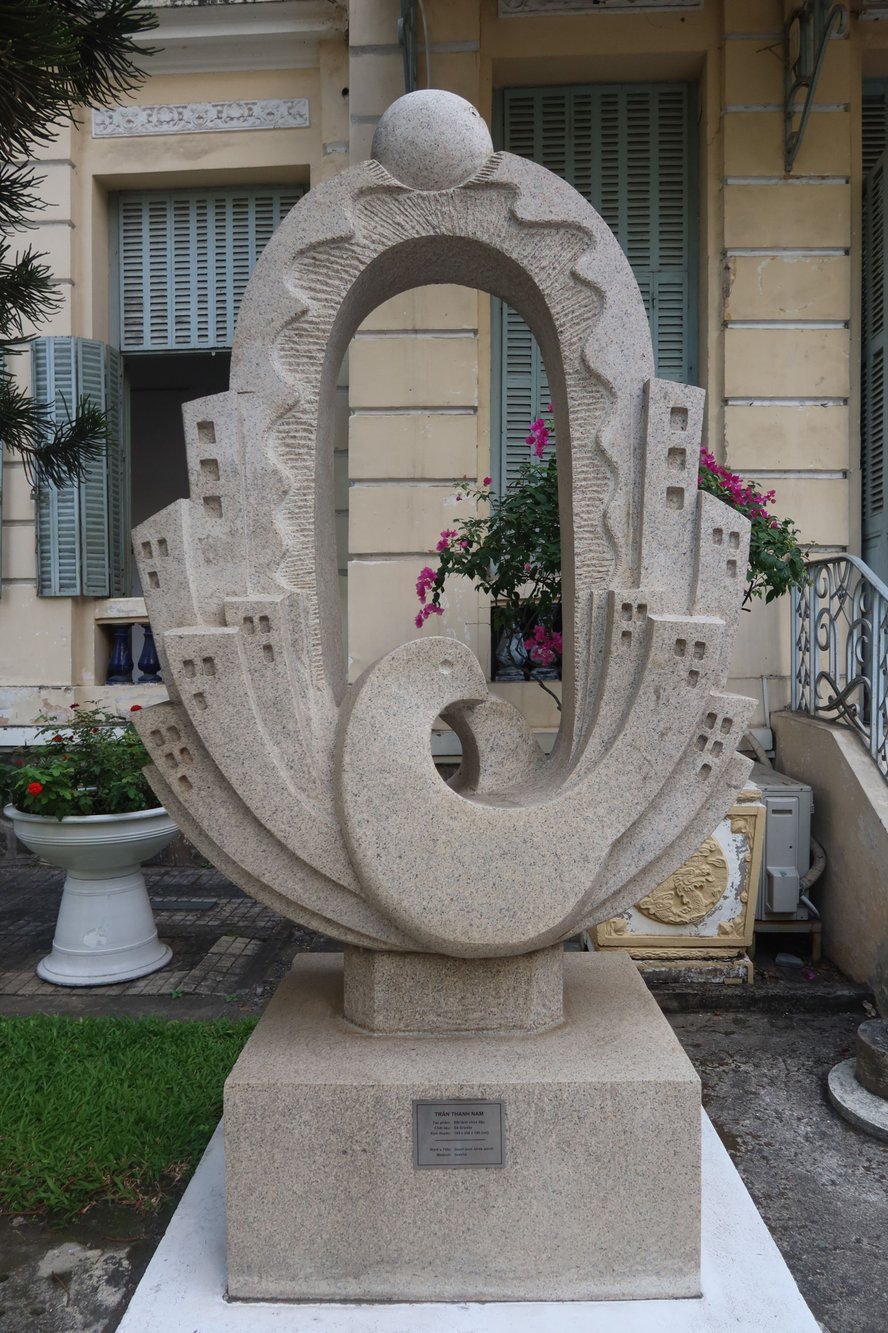
Artwork, HCMC Fine Arts Museum
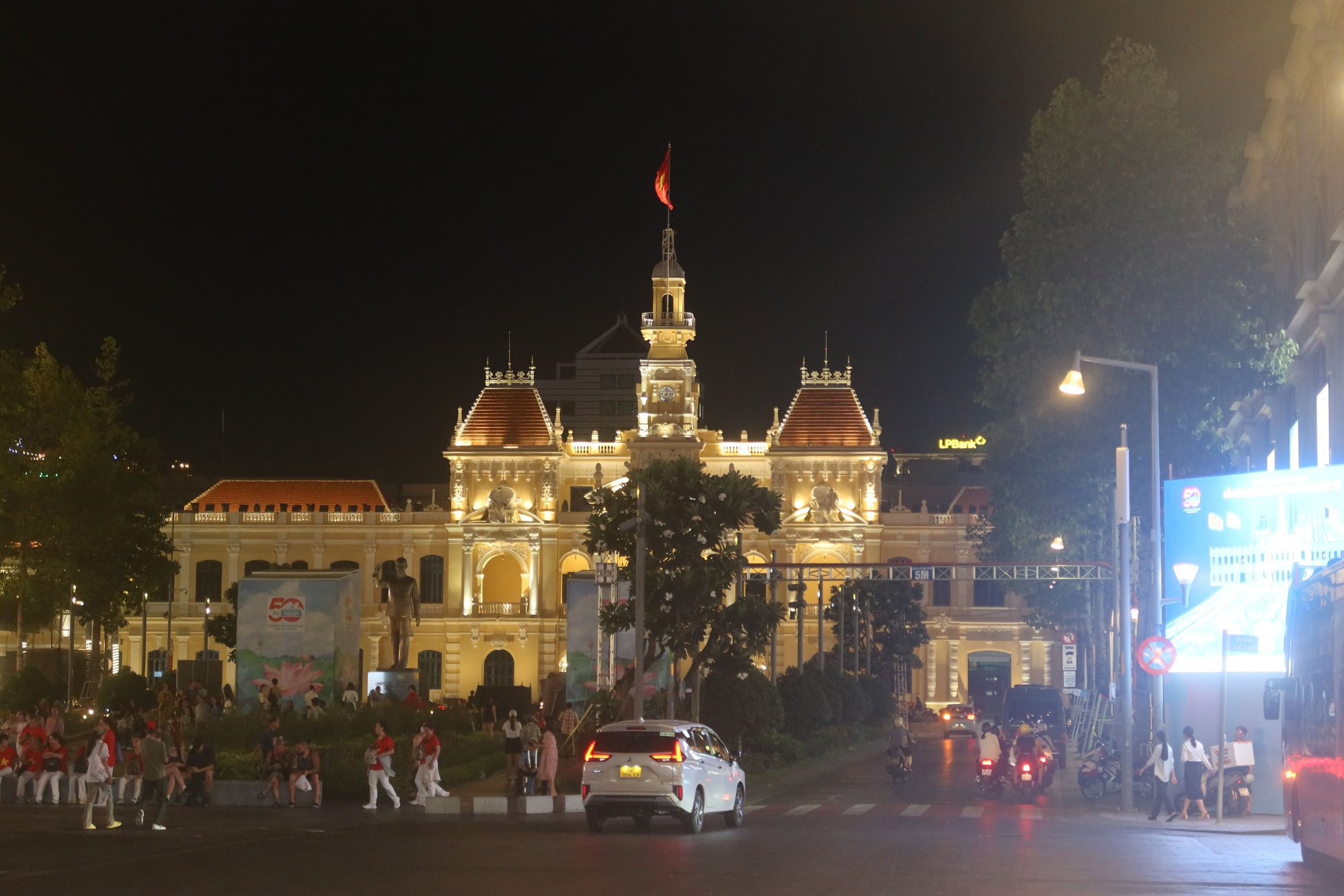
City Hall at Night

Saigon Opera House at Night
shelemm, good to know you're a neighbor. The heat and humidity is definitely manageable as long as you have some tolerance and plan accordingly.
The Recent Past
After enjoying a massive spread at our hotel buffet, we set out for a full day in Ho Chi Minh City. We began at the Independence Palace, the former home of the President of South Vietnam. Built in the 1960s to replace the previous French colonial palace that was bombed by the North Vietnamese during the war, the present building was built in a modern Western style. The interior is minimalist with clean lines and colors although some of the decorations, especially the carpets, are Vietnamese or even Chinese in style. We toured the four stories, from the offices to public rooms to the residences. Underneath the building is a network of rooms that served as a bunker, complete with communications equipment from the 1960s. The palace was fairly crowded this morning. Most of the visitors were Vietnamese in Communist Vietnamese garb.
From the palace we walked a few blocks to the War Remnants Museum, where we toured the exhibits detailing the events of what is referred to here as the War for Liberation and Reunification. The exhibits consist mostly of photographs from the three decades of warfare, from the fight against the French who resisted Vietnamese Independence to the war against American aggression. The visit was poignant and very moving, especially the exhibits about our use of Agent Orange and phosphorous bombs during the war. My feelings and reactions were comparable to what I had experienced visiting Hiroshima. It was quite heavy to say the least.
We walked along Le Duan Boulevard, watching some of the preparations for the 50th anniversary of reunification / liberation celebrations. We were happy to see the energy and spirit of the Vietnamese people on display, especially after what they or their forebearers went through not too long ago. Along Le Duan are the consulates of most of the Western countries. We walked past the Consulates of France, Germany, the United States, and Great Britain. From Le Duan, we made our way to the nearest Metro station to take it to Ben Thanh Market for a look around.
Ben Thanh sold everything from cheap souvenirs to clothing and food. There was a mix of locals and tourists at the market. A 15-minute walk from Ben Thanh is Dan Sinh Market, which sold stuff from the war era as well as hardware and other household items.
Our next stop was the Ho Chi Minh Fine Arts Museum, which houses a wide variety of artwork across three French colonial buildings. We viewed everything from landscape paintings to social realist art to ceramics and stonework from earlier eras. It took us about an hour and a half to browse the entire collection on display.
From here we made our way back to our hotel, where we rested and freshened up before dinner.
As with yesterday, we felt much more relaxed than what we were expecting. At minimum, we expect more visible security and surveillance as what we had experienced during our time in the Central Asian republics last year. Other than traffic police, there wasn't much visible law enforcement presence. Even around some of the government buildings, the security presence seemed relaxed. While there were cameras, it was nothing as pervasive as we experienced in Tashkent, Almaty, and Bishkek.
The weather also felt less oppressive today than yesterday, especially in the latter half of the day. Part of it is probably because we've had some time to acclimate. Part of it may also be the increased cloud cover at times throughout the day. Nonetheless, we kept up with coffee, water, and general rest breaks.
While we mostly walked from place to place, other than the one Metro ride, we used Grab this morning to get from our hotel to Independence Palace. The Uber of Southeast Asia, Grab works the same way. It's much more enjoyable to be able to book taxis this way than to worry about whether or not a driver wants to turn on a taxi meter, the haggling over fares, and the bait=and-switch when it comes to pricing that is still commonplace in some parts of the world.
Independence Palace with staging for the 50th anniversary events
Cabinet meeting room, Independence Palace
President's Office, Independence Palace
President's Bedroom, Independence Palace
Rooftop with Helicopter Similar to the One Used during the Fall of Saigon in 1975, Independence Palace
Bunker Room, Independence Palace
Le Duan Boulevard
Artwork, HCMC Fine Arts Museum
City Hall at Night
Saigon Opera House at Night
Apr 22nd, 2025 | 09:33 AM
#11
Original Poster
Joined: Sep 2012
Posts: 3,517
Likes: 0
Religious Life in Saigon
We began our day at the Jade Emperor Pagoda. According to Daoism, the Jade Emperor rules over the underworld. He judges people upon death based on their deeds in life and determines if someone goes to heaven or hell. Along with the Jade Emperor are various deities that govern the underworld alongside him. Daoists pray to the Jade Emperor and the other deities for blessings in this world and the one after. The temple is not a big one but houses exquisite statues of the Daoist deities as well as Buddhist deities. Carved out of wood and intricately decorated, the statues look very lifelike. In the temple are also lacquered panels along with the statues. (Apologies that I do not have photographs of the interior to share as taking pictures is not allowed.) The smell of incense filled the temple as well as the fragrance of the flowers that adorn its grounds.
From the Pagoda, we traveled by taxi to the Temple to Le Van Duyet, an 18th century Vietnamese military general. Also a Daoist temple, it is built in traditional Vietnamese style, which is heavily influenced by classical Chinese architecture. The temple is laid out with several successive prayer altars. There were interesting stuff to look at throughout the temple, from columns adorned with dragons, wood carvings, and tiled roofs with fishes and other animals and figures.
We hopped back in a taxi, this time to the Ho Chi Minh City Museum. The museum chronicles the history of Vietnam from prehistory to the end of dynastic rule. The exhibits featured ceramics, religious statues, tools, and the like. We spent about an hour browsing the full collection on display.
From here we made our way down Le Duan Boulevard and Dong Khoi Street. We enjoyed a leisurely Cantonese dim sum lunch at one of the branches of Dim Tu Tac, which featured all traditional dishes. Everything we ordered tasted so good and featured very high-quality, fresh ingredients.
We returned to our hotel rooms for a short midday break before going to Cholon, home to Saigon's Chinatown, one of the world's largest. We wandered the vast Binh Tay Market, browsing its wares from clothing to household goods to nuts and other dried and preserved foods. Binh Tay was much more authentic than Ben Thanh, and was more interesting to explore.
Besides Binh Tay, we wandered the streets and alleyways of Cholon. We browsed some of the shops selling everything from flowers to clothes to funerary offerings. We also visited several Buddhist and Daoist temples and village halls. Most communities home to sizable immigrant Chinese populations have village halls in their adopted home cities, with Saigon being no exception. Each of the temples we visited in this area had an adjacent village hall attached, and the village halls had at least a small temple or two. We worshipped at Quan Am (also known as Guanyin or Kannon) Temple, offering incense to our patron goddess. We also stepped inside one dedicated to Thien Hau, a goddess worshipped by many in the Fujianese community. We chatted with some of the locals hailing from Guangdong and played with kids whose ancestors came from Teochow. We learned that some of the residents in Cholon came from descendants dating as far back as the 15th century while others came to Vietnam as refugees fleeing communism in China. It was a fun excursion for us, as we felt we were able to get to know the place and its people. Their experiences also resonated with our own.
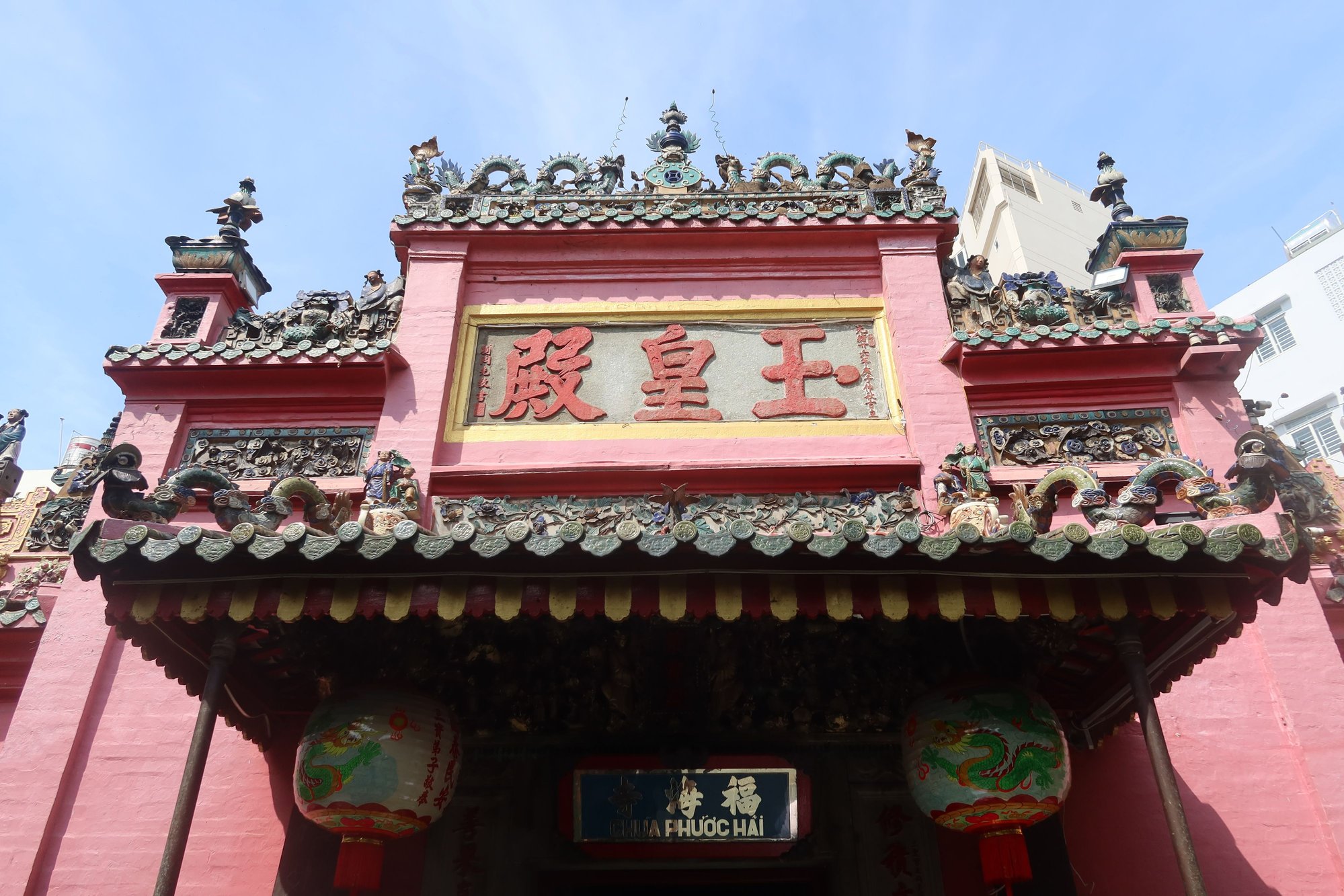
Jade Emperor Pagoda (the Chinese characters in this case are read from right to left)

Le Van Duyet Temple

Le Van Duyet Altar
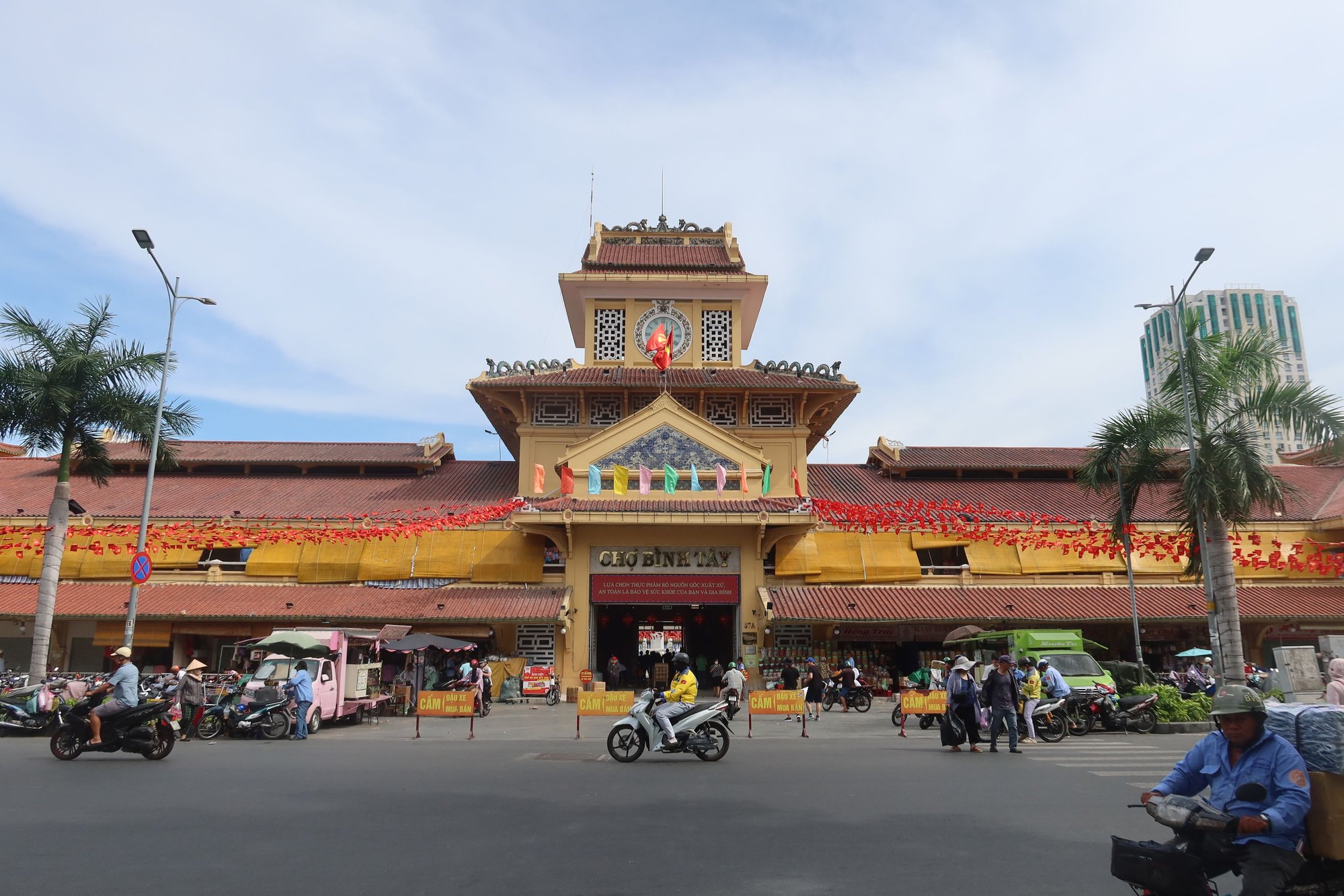
Binh Tay Market
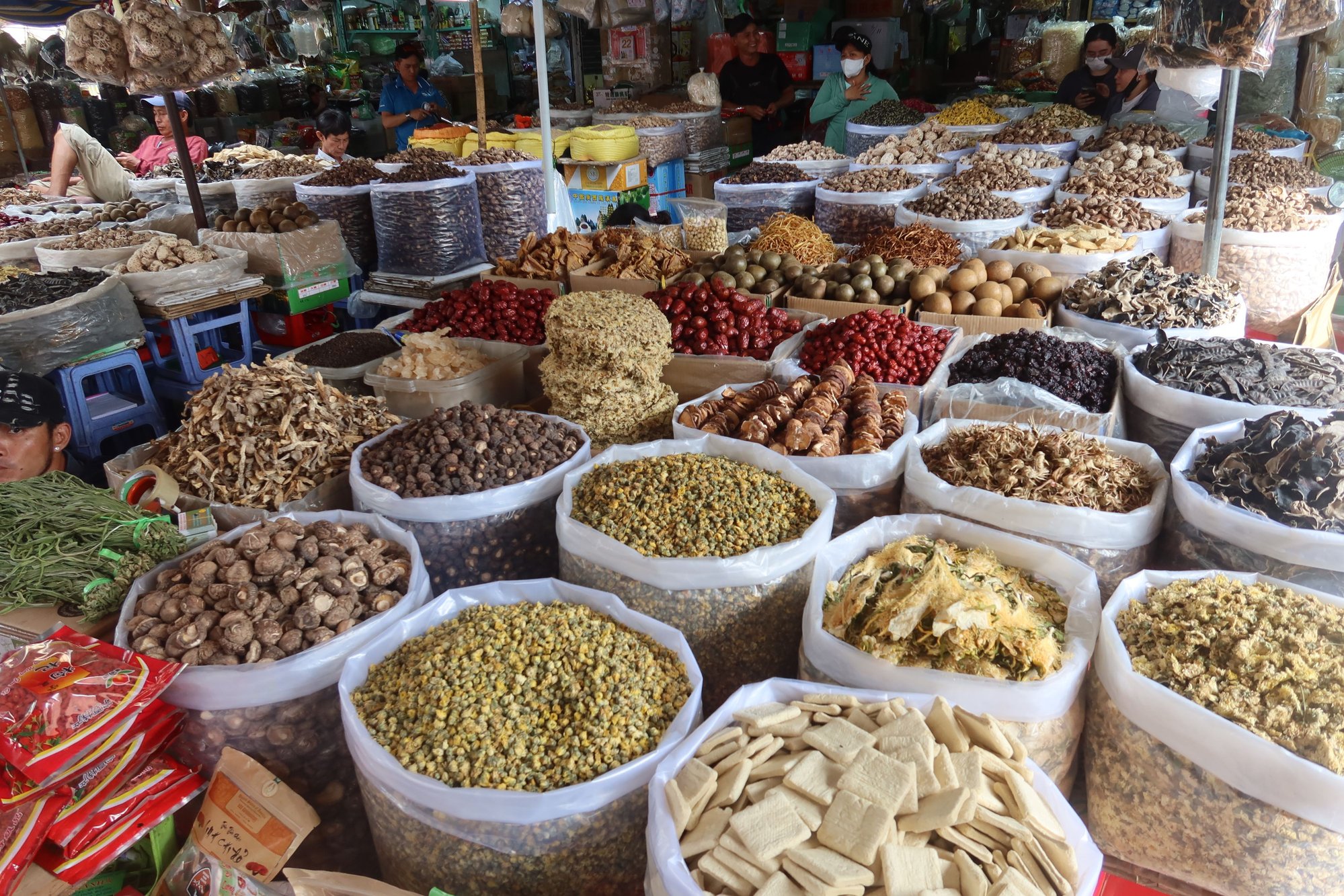
Dried Foods for Sale at Binh Tay

Thien Hau Altar

Burning Incense

Saigon Riverfront at Night
We began our day at the Jade Emperor Pagoda. According to Daoism, the Jade Emperor rules over the underworld. He judges people upon death based on their deeds in life and determines if someone goes to heaven or hell. Along with the Jade Emperor are various deities that govern the underworld alongside him. Daoists pray to the Jade Emperor and the other deities for blessings in this world and the one after. The temple is not a big one but houses exquisite statues of the Daoist deities as well as Buddhist deities. Carved out of wood and intricately decorated, the statues look very lifelike. In the temple are also lacquered panels along with the statues. (Apologies that I do not have photographs of the interior to share as taking pictures is not allowed.) The smell of incense filled the temple as well as the fragrance of the flowers that adorn its grounds.
From the Pagoda, we traveled by taxi to the Temple to Le Van Duyet, an 18th century Vietnamese military general. Also a Daoist temple, it is built in traditional Vietnamese style, which is heavily influenced by classical Chinese architecture. The temple is laid out with several successive prayer altars. There were interesting stuff to look at throughout the temple, from columns adorned with dragons, wood carvings, and tiled roofs with fishes and other animals and figures.
We hopped back in a taxi, this time to the Ho Chi Minh City Museum. The museum chronicles the history of Vietnam from prehistory to the end of dynastic rule. The exhibits featured ceramics, religious statues, tools, and the like. We spent about an hour browsing the full collection on display.
From here we made our way down Le Duan Boulevard and Dong Khoi Street. We enjoyed a leisurely Cantonese dim sum lunch at one of the branches of Dim Tu Tac, which featured all traditional dishes. Everything we ordered tasted so good and featured very high-quality, fresh ingredients.
We returned to our hotel rooms for a short midday break before going to Cholon, home to Saigon's Chinatown, one of the world's largest. We wandered the vast Binh Tay Market, browsing its wares from clothing to household goods to nuts and other dried and preserved foods. Binh Tay was much more authentic than Ben Thanh, and was more interesting to explore.
Besides Binh Tay, we wandered the streets and alleyways of Cholon. We browsed some of the shops selling everything from flowers to clothes to funerary offerings. We also visited several Buddhist and Daoist temples and village halls. Most communities home to sizable immigrant Chinese populations have village halls in their adopted home cities, with Saigon being no exception. Each of the temples we visited in this area had an adjacent village hall attached, and the village halls had at least a small temple or two. We worshipped at Quan Am (also known as Guanyin or Kannon) Temple, offering incense to our patron goddess. We also stepped inside one dedicated to Thien Hau, a goddess worshipped by many in the Fujianese community. We chatted with some of the locals hailing from Guangdong and played with kids whose ancestors came from Teochow. We learned that some of the residents in Cholon came from descendants dating as far back as the 15th century while others came to Vietnam as refugees fleeing communism in China. It was a fun excursion for us, as we felt we were able to get to know the place and its people. Their experiences also resonated with our own.
Jade Emperor Pagoda (the Chinese characters in this case are read from right to left)
Le Van Duyet Temple
Le Van Duyet Altar
Binh Tay Market
Dried Foods for Sale at Binh Tay
Thien Hau Altar
Burning Incense
Saigon Riverfront at Night
Apr 22nd, 2025 | 04:35 PM
#12
Joined: Jan 2004
Posts: 3,618
Likes: 0
Thanks for the detailed posts! I'm enjoying reliving our time in HCMC. We covered a lot of the same sites. We walked to the Jade Emperor Pagoda, and crossing several of the streets to get there was terrifying. Should have taken a Grab. We did use Grab a few other times, including back to the airport, and it worked well.
Interesting to see the decorations for reunification anniversary. We were there just before Tet, and there were a lot of decorations going up for the new year. It was fun seeing all the people out in traditional dress posing for photos -- everywhere, including all over the museums and hotels. Looking forward to more!
Interesting to see the decorations for reunification anniversary. We were there just before Tet, and there were a lot of decorations going up for the new year. It was fun seeing all the people out in traditional dress posing for photos -- everywhere, including all over the museums and hotels. Looking forward to more!
Apr 22nd, 2025 | 06:58 PM
#13
Original Poster
Joined: Sep 2012
Posts: 3,517
Likes: 0
ms_go, you're welcome. Glad I can help you relive some of your own experiences here. Seeing the different costumes and people in high spirits definitely enlivened our experience.
Dining and Accommodations in Saigon
During our time in Saigon we ate at four restaurants and sipped coffee and tea at multiple cafes across the city. Coffee and tea shops are ubiquitous in Saigon. There are sometimes 3 or 4 on the same block. The ones with the most outlets are Phuc Long, Katina, and Highlands Coffee. Starbucks has multiple outlets as well. In addition to the traditional Western-style coffee, we also enjoyed the strong and distinct flavors of Vietnamese coffee. Most of the shops have an expansive tea selection as well.
Other than Dim Tu Tac for dim sum, we dined at:
Long Trieu, a Cantonese restaurant, located at the Times Square building. The restaurant serves classical Cantonese cuisine. We ordered a sampling of food, all very satisfying.
Le Corto, a French restaurant, about a block away from the Saigon Opera House. The truffle soup was memorable and the duck, beef, and fish dishes we ordered were excellent.
Akuna, an innovative dining experience by an Australian chef featuring elements of Vietnamese, Japanese, and Australian ingredients and techniques. The tasting menu was fun. In addition to the delicious food, we enjoyed interacting with the different food utensils and eating with our eyes on the presentation.
Our home in Ho Chi Minh City was the Reverie, ranked among the city's leading hotels. The Reverie is well located, right between Nguyen Hue and Dong Khoi Streets and a block away from the Saigon Riverfront. There is plenty of pedestrian activity around the hotel and lots of restaurants and shops nearby. The rooms are large and comfortable. The service is good. And the buffet breakfast offer a good selection of Vietnamese, Western, and other Asian options. It's a place we would gladly return to.
Dining and Accommodations in Saigon
During our time in Saigon we ate at four restaurants and sipped coffee and tea at multiple cafes across the city. Coffee and tea shops are ubiquitous in Saigon. There are sometimes 3 or 4 on the same block. The ones with the most outlets are Phuc Long, Katina, and Highlands Coffee. Starbucks has multiple outlets as well. In addition to the traditional Western-style coffee, we also enjoyed the strong and distinct flavors of Vietnamese coffee. Most of the shops have an expansive tea selection as well.
Other than Dim Tu Tac for dim sum, we dined at:
Long Trieu, a Cantonese restaurant, located at the Times Square building. The restaurant serves classical Cantonese cuisine. We ordered a sampling of food, all very satisfying.
Le Corto, a French restaurant, about a block away from the Saigon Opera House. The truffle soup was memorable and the duck, beef, and fish dishes we ordered were excellent.
Akuna, an innovative dining experience by an Australian chef featuring elements of Vietnamese, Japanese, and Australian ingredients and techniques. The tasting menu was fun. In addition to the delicious food, we enjoyed interacting with the different food utensils and eating with our eyes on the presentation.
Our home in Ho Chi Minh City was the Reverie, ranked among the city's leading hotels. The Reverie is well located, right between Nguyen Hue and Dong Khoi Streets and a block away from the Saigon Riverfront. There is plenty of pedestrian activity around the hotel and lots of restaurants and shops nearby. The rooms are large and comfortable. The service is good. And the buffet breakfast offer a good selection of Vietnamese, Western, and other Asian options. It's a place we would gladly return to.
Apr 23rd, 2025 | 10:30 AM
#14
Original Poster
Joined: Sep 2012
Posts: 3,517
Likes: 0
Riverside Bliss
This morning we flew from Ho Chi Minh City to Danang, in central Vietnam, on Vietnam Airlines. Other than a 90-minute delay due to the wait for the inbound aircraft, the hourlong flight was uneventful. We arrived in Danang shortly after noon and traveled by taxi to our hotel, the Hilton Danang right on the left bank of the Han River.
We spent the afternoon walking around the city center. We browsed the Han Market but didn't stay long as the stuff on sale weren't interesting and the lanes were incredibly crowded and hard to navigate with multiple Korean tour groups on site. From there we walked to the nearby Cathedral; the inside was closed so we took a couple of photographs and headed to our next stop, the Museum of Cham Sculpture. The museum houses a good collection of stone statues and artifacts from the Champa Kingdom that spread across much of central and southern Vietnam. A Hindu kingdom with similarities to the Khmer in neighboring Cambodia, much of the artwork we enjoyed was familiar to us and reminded us of our visit to Angkor a few years ago. The statues of Shiva, Vishnu, Ganesh, Garuda, and Hanuman were among our favorites. The collection of costumes on the second floor was nice as well.
After we were done with sightseeing, we enjoyed a stroll on the banks of the Han River. The buildings and bridges spanning the river are interesting, and it's a good place to people watch. Walking in the noticeably cooler weather with a gentle breeze coming from the water made the late afternoon wander a delight. Parts of the street fronting the left bank, with all its inviting cafes and restaurants, reminded us of Southern California and South Florida vibes. We wandered for about three hours, including a stop for a coffee break, putting us in a much more chill mode.
After that, we ate dinner at Luna Pub, just a block inland. Luna is an Italian restaurant that offers a good selection of salads, pastas, and pizzas, perfect for what we were interested in this evening. The food was very good.
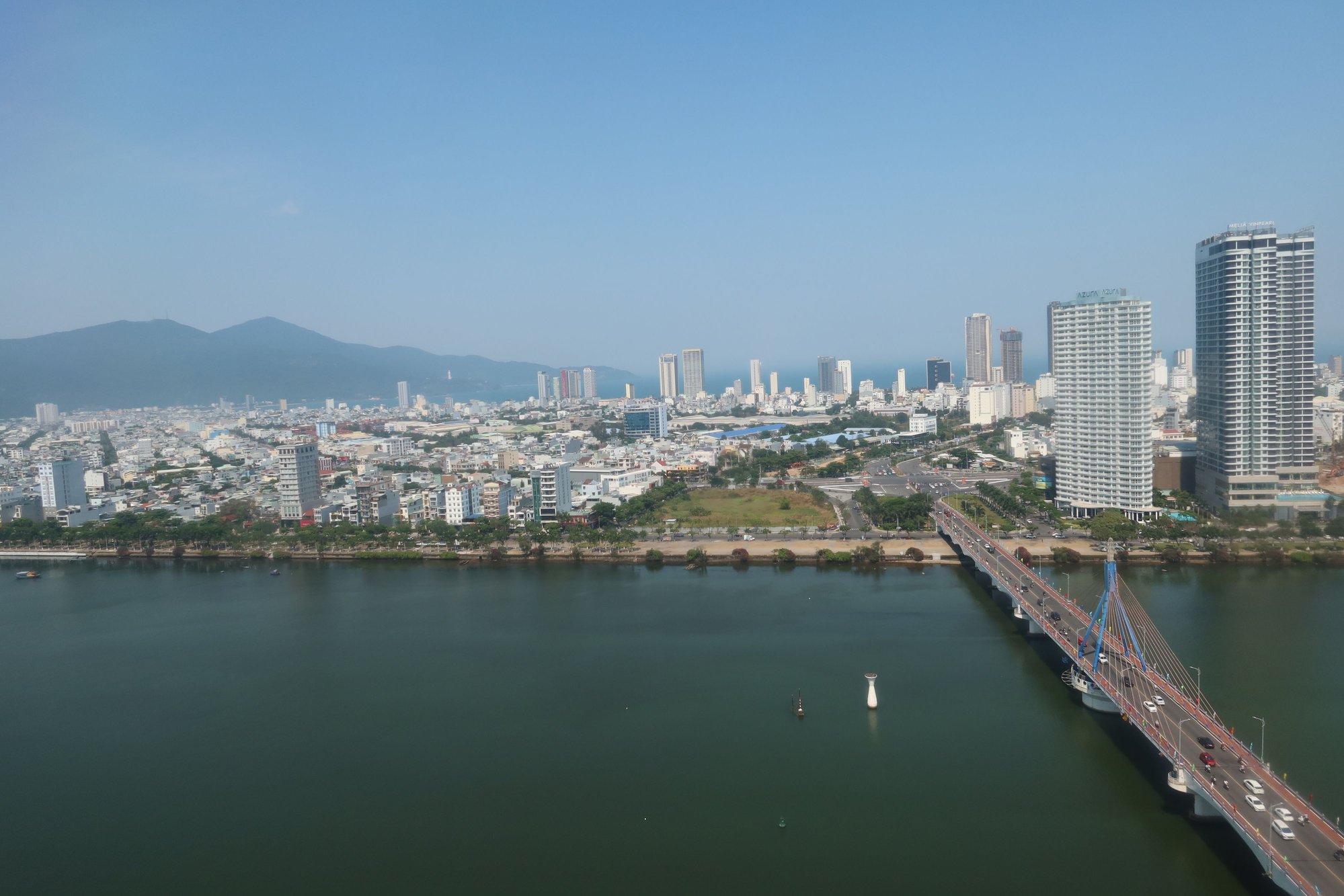
Danang Skyline from Hotel Room
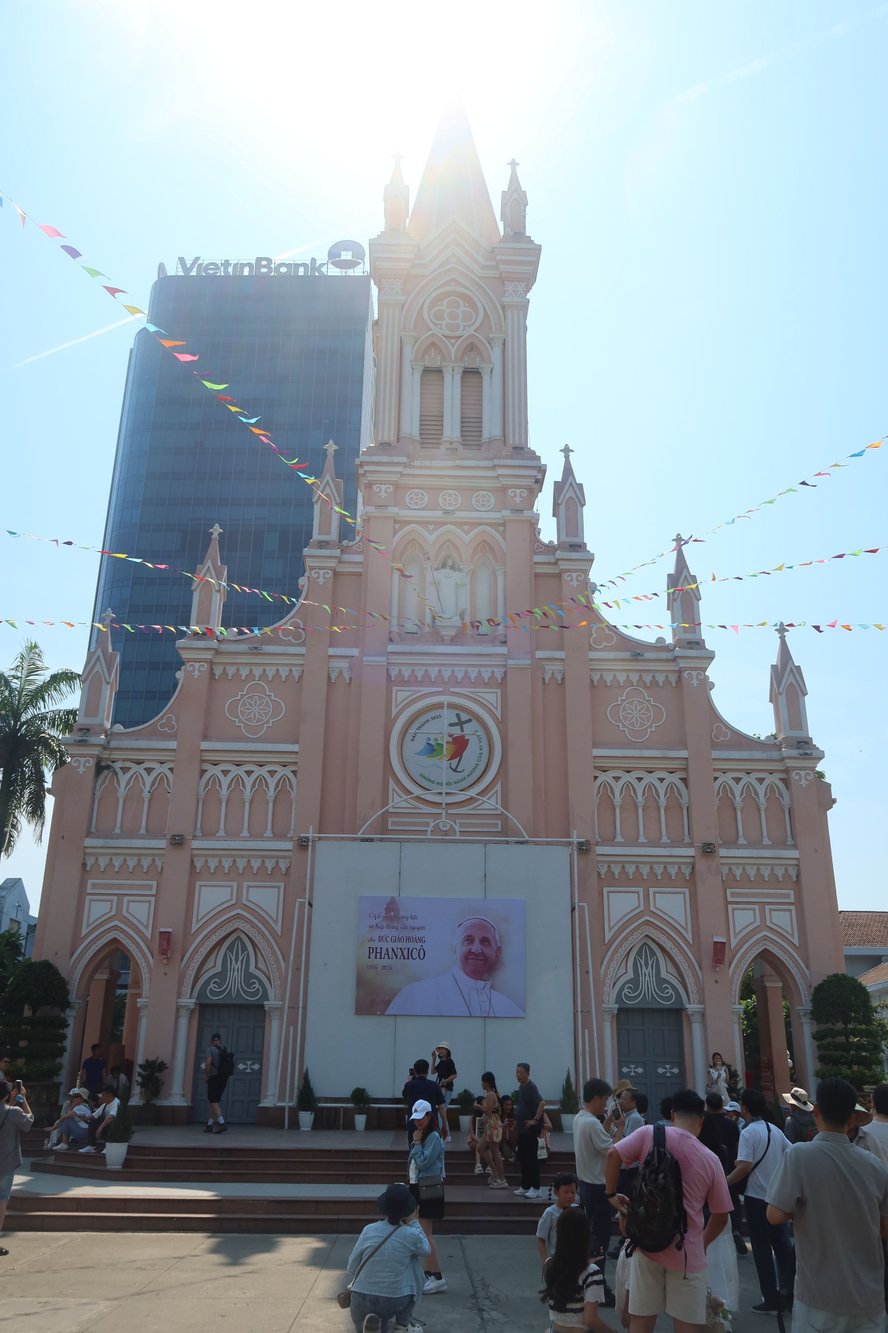
Danang Cathedral
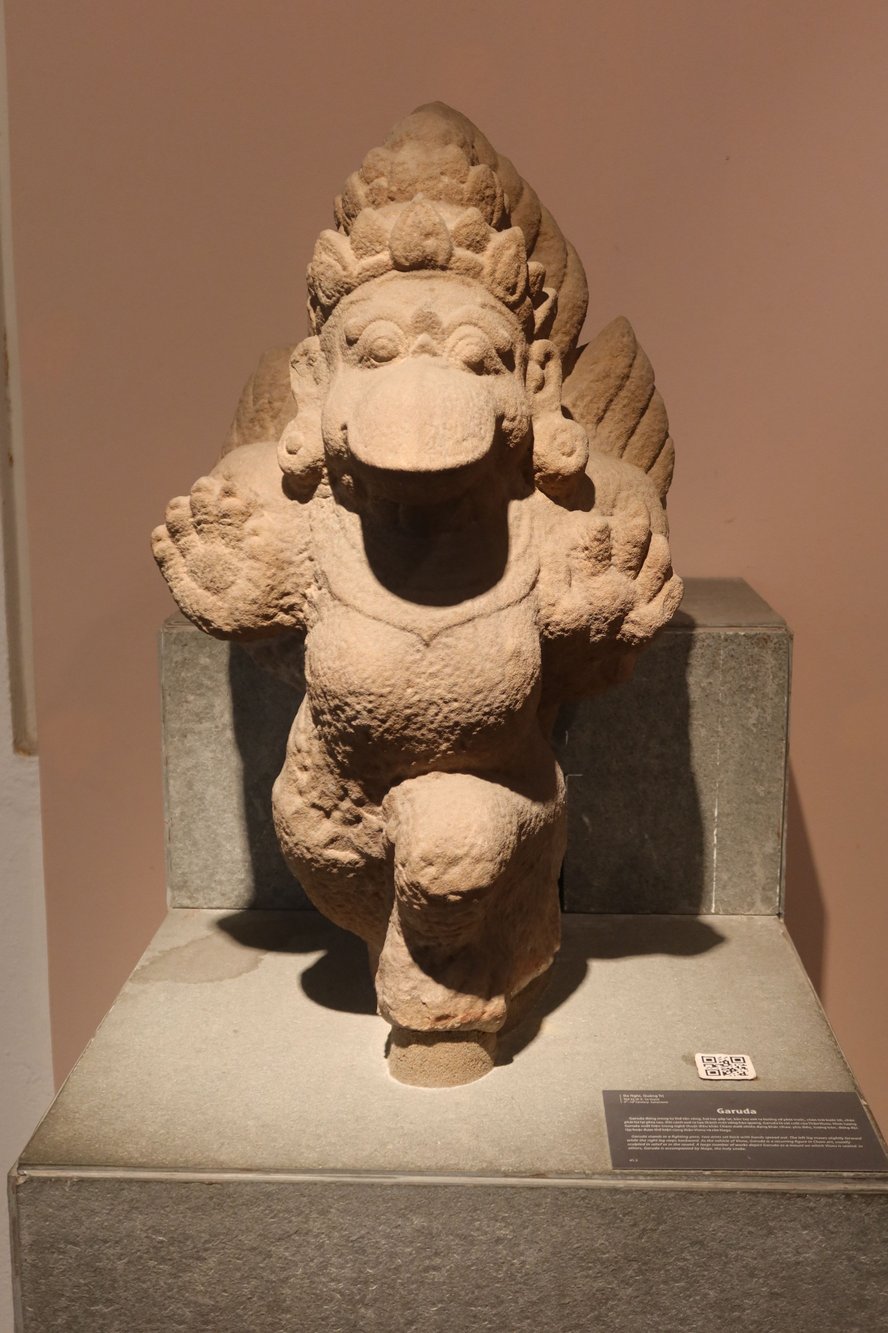
Garuda Statue, Museum of Cham Sculpture

Hanuman Statue, Museum of Cham Sculpture
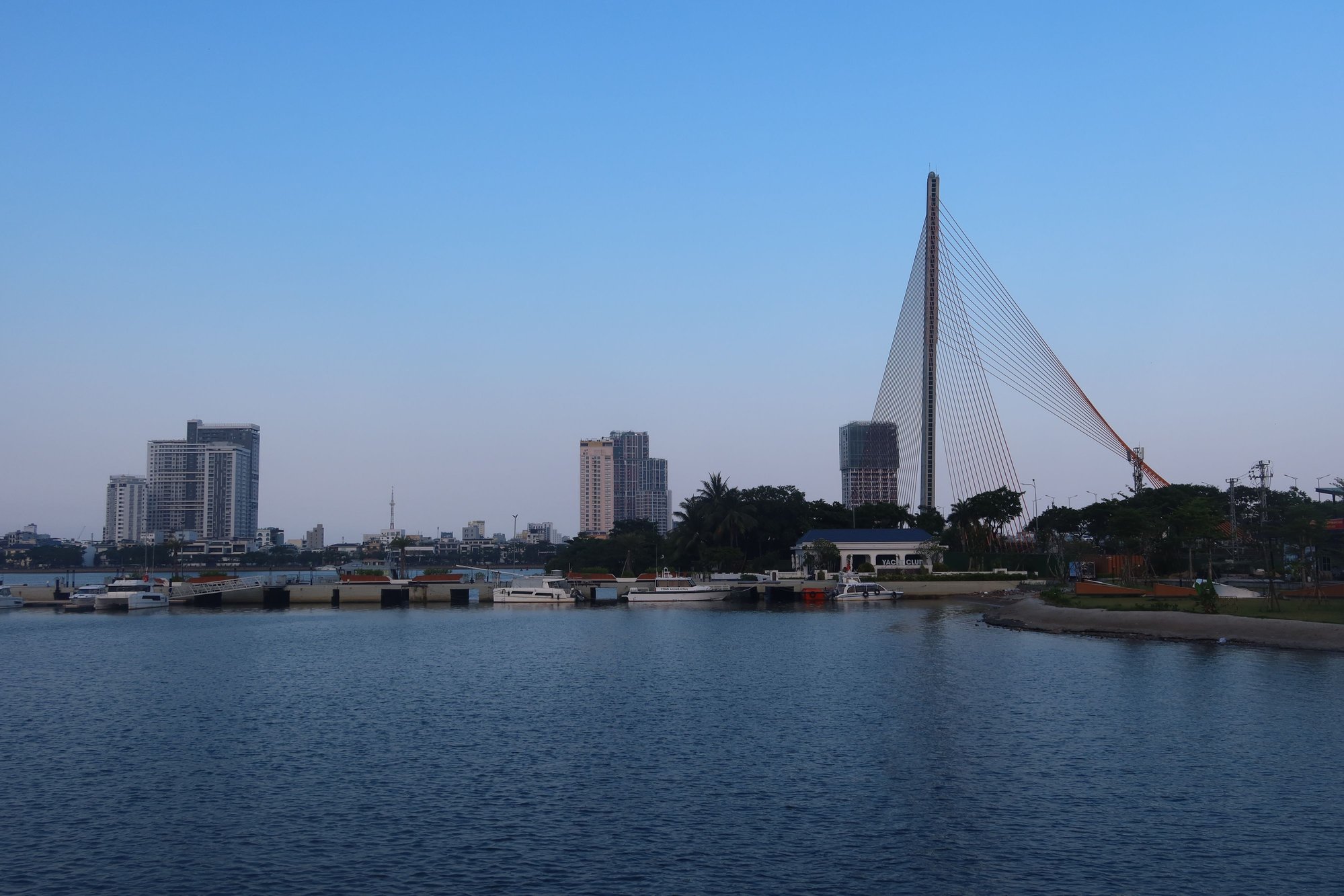
Tran Thi Ly Bridge

Bridges and Buildings of Danang
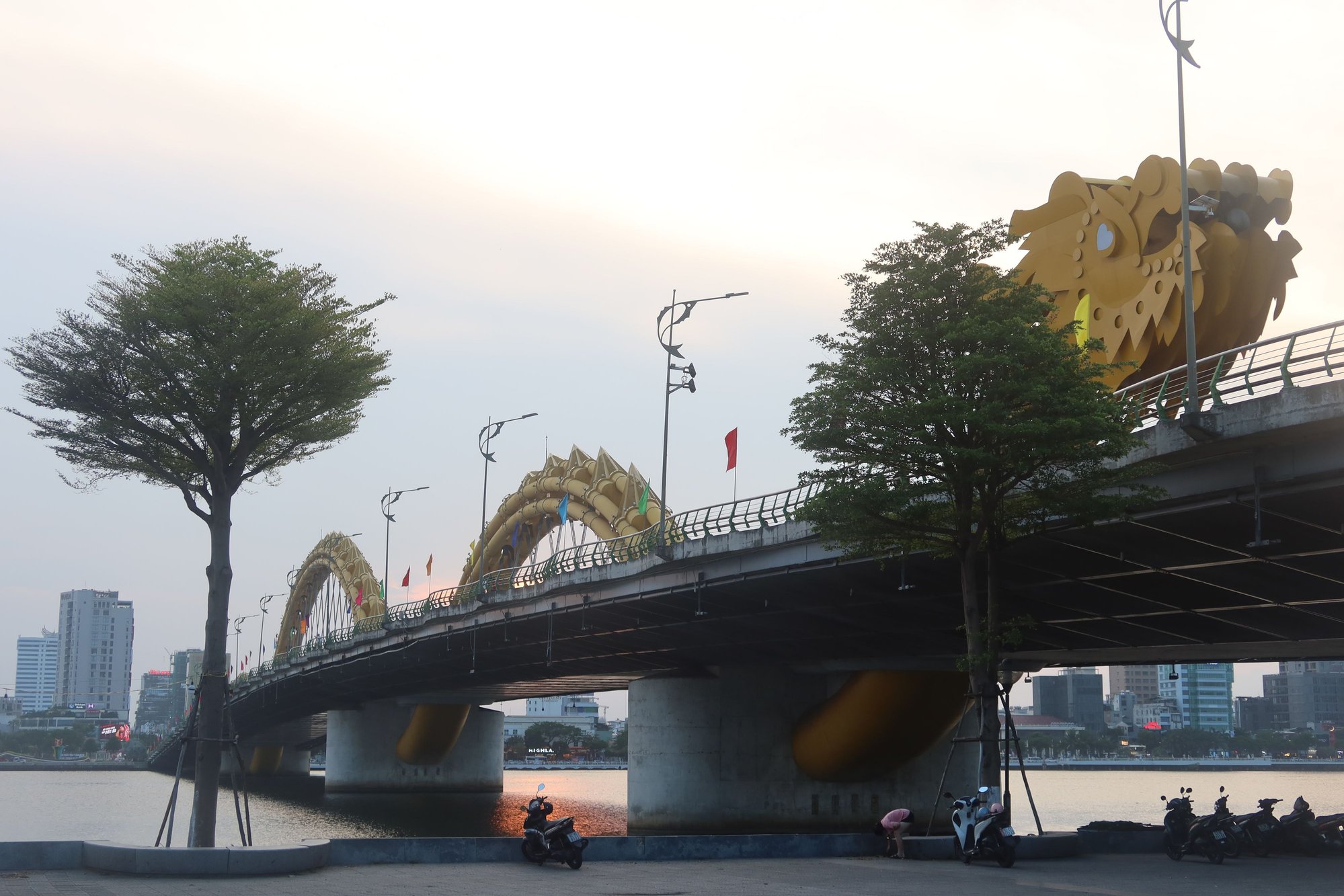
Dragon Bridge

Han Bridge
This morning we flew from Ho Chi Minh City to Danang, in central Vietnam, on Vietnam Airlines. Other than a 90-minute delay due to the wait for the inbound aircraft, the hourlong flight was uneventful. We arrived in Danang shortly after noon and traveled by taxi to our hotel, the Hilton Danang right on the left bank of the Han River.
We spent the afternoon walking around the city center. We browsed the Han Market but didn't stay long as the stuff on sale weren't interesting and the lanes were incredibly crowded and hard to navigate with multiple Korean tour groups on site. From there we walked to the nearby Cathedral; the inside was closed so we took a couple of photographs and headed to our next stop, the Museum of Cham Sculpture. The museum houses a good collection of stone statues and artifacts from the Champa Kingdom that spread across much of central and southern Vietnam. A Hindu kingdom with similarities to the Khmer in neighboring Cambodia, much of the artwork we enjoyed was familiar to us and reminded us of our visit to Angkor a few years ago. The statues of Shiva, Vishnu, Ganesh, Garuda, and Hanuman were among our favorites. The collection of costumes on the second floor was nice as well.
After we were done with sightseeing, we enjoyed a stroll on the banks of the Han River. The buildings and bridges spanning the river are interesting, and it's a good place to people watch. Walking in the noticeably cooler weather with a gentle breeze coming from the water made the late afternoon wander a delight. Parts of the street fronting the left bank, with all its inviting cafes and restaurants, reminded us of Southern California and South Florida vibes. We wandered for about three hours, including a stop for a coffee break, putting us in a much more chill mode.
After that, we ate dinner at Luna Pub, just a block inland. Luna is an Italian restaurant that offers a good selection of salads, pastas, and pizzas, perfect for what we were interested in this evening. The food was very good.
Danang Skyline from Hotel Room
Danang Cathedral
Garuda Statue, Museum of Cham Sculpture
Hanuman Statue, Museum of Cham Sculpture
Tran Thi Ly Bridge
Bridges and Buildings of Danang
Dragon Bridge
Han Bridge
Apr 23rd, 2025 | 06:13 PM
#16
Original Poster
Joined: Sep 2012
Posts: 3,517
Likes: 0
shelemm, absolutely. We ate pho, broken rice, and shared a couple of banh mi sandwiches during our time in Saigon - all fantastic - but didn’t have the names of the places we ate at as we just stopped at what looked appealing on our walks. We expect to mostly be dining on Vietnamese food as we journey north between Danang and Hanoi. Anything other than the most well-known dishes you would recommend?
Apr 23rd, 2025 | 06:27 PM
#17
Joined: Oct 2012
Posts: 2,245
Likes: 0
I have not been to Vietnam,.. but when I go (hopefully my next big trip), I want to find Bún Sườn. Aside from that, I usually seek out dishes and ingredients I don't have access to where I live. And I live within walking distance of Eden Center.
Apr 24th, 2025 | 04:46 AM
#18
Joined: Jan 2004
Posts: 3,618
Likes: 0
Interesting to see Danang. We just drove through on the way from Hue to Hoi An, and then going back to the airport.
Speaking of Hue and Vietnamese cuisine, Hue is known for some regional specialties -- nem lui (pork on lemongrass skewers), banh khaoi (deep fried rice pancake), banh loc (tapioca dumplings with pork or shrimp), etc. -- not to mention bun bo Hue (please pardon lack of accent marks). We watched the Parts Unknown episode from Hue before traveling and had a list to try. You'll find these in various restaurants. Our favorite was Quan an an Tam, down a tiny alley near the confluence of the rivers, with plastic chairs and sheets of paper to check the things you want to try. I think our dinner came to about $8.50.
Speaking of Hue and Vietnamese cuisine, Hue is known for some regional specialties -- nem lui (pork on lemongrass skewers), banh khaoi (deep fried rice pancake), banh loc (tapioca dumplings with pork or shrimp), etc. -- not to mention bun bo Hue (please pardon lack of accent marks). We watched the Parts Unknown episode from Hue before traveling and had a list to try. You'll find these in various restaurants. Our favorite was Quan an an Tam, down a tiny alley near the confluence of the rivers, with plastic chairs and sheets of paper to check the things you want to try. I think our dinner came to about $8.50.
Apr 24th, 2025 | 07:33 AM
#19
Original Poster
Joined: Sep 2012
Posts: 3,517
Likes: 0
shelemm, I didn't see bun suon on the menu tonight but will look out for it. But boy did we have an outstanding Vietnamese meal this evening. Definitely the best meal on this trip so far.
ms_go, thank you for the tips. Will make note of these suggestions for the Hue leg of our trip.
Between Mountains and Ocean
We began our morning at the beach, My Khe Beach, that is. Also known to Americans as China Beach during the war, My Khe is a gorgeous stretch of powdery, soft sand on the shores of the South China Sea. Along the promenade of My Khe are cafes, restaurants, and shops renting jet skis and other water sports equipment. We enjoyed our relaxing morning stroll underneath the beautiful palm trees and on the warm, silky sands, with tropical fruit juices in hand.
In the distance are the mountains of the Son Tra Peninsula, where we headed next. Situated among the mountains is Ling Unh Temple, a Buddhist complex of multiple worship halls and a statue of Quan Am that could be seen from My Khe Beach as well as from the high-rises in Danang's city center. We worshipped at several of the prayer halls and paid a visit to our Guanyin, enjoying being in her presence among other worshippers (who were mostly Vietnamese, Korean, Chinese, French or German and Indian) and visitors. I would love to be here on a Buddhist holy day. Next time!
While on the way to Ling Unh, we made arrangements with our Grab driver to take us to our next stop of the day, Ba Na Hills, a former French hill station that is now home to hotels, a theme park, a golf course, and other entertainment. The star attraction of Ba Na Hills is the Golden Bridge; it's the one that looks like giant hands are holding up the span. To reach the Golden Bridge from the entrance of Sun World, the entertainment complex, is a 20-25 minute cable car ride up to the mountaintops. While the bridge is novel, it was also way too crowded for our liking. As such, we didn't linger on the bridge as most tourists did. The complex, connected by multiple ropeways and trains, was home to several gardens, a faux French village, and a series of Vietnamese-style Buddhist temples. The French village felt the most artificial, similar to Disney World. Our favorite part of Sun World were the Buddhist temples, where we enjoyed the religious iconography as well as the views of the surrounding mountains. In total, we spent about four hours at the complex, located just about an hour outside of Danang's city center.
We selected Madame Lan, a homestyle Vietnamese restaurant, for our dinner this evening. We ordered and ate family style, expanding the number of dishes we could sample. Everything was excellent although the highlights were the bun oc, a noodle soup with sea snails; a glass noodle stir-fry with crab meat (not skimpy on the crab meat at all); and the green beans with minced meat. The absolute star - the beef with black pepper sauce on a hot plate. Definitely one of the best beef dishes we've had anywhere. My mouth is watering just thinking about it. If we had another night, we would no doubt go back to Madame Lan.
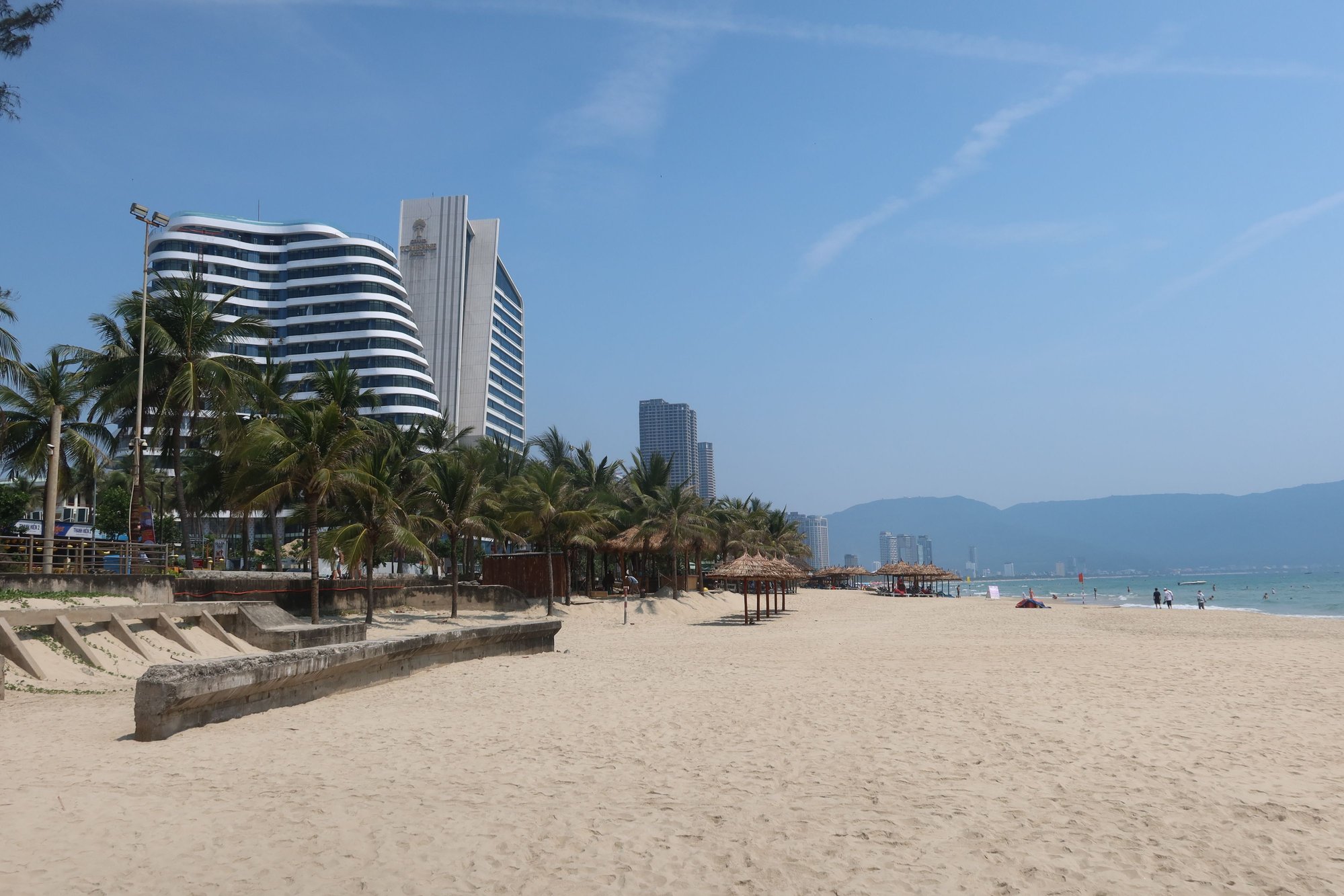
My Khe Beach
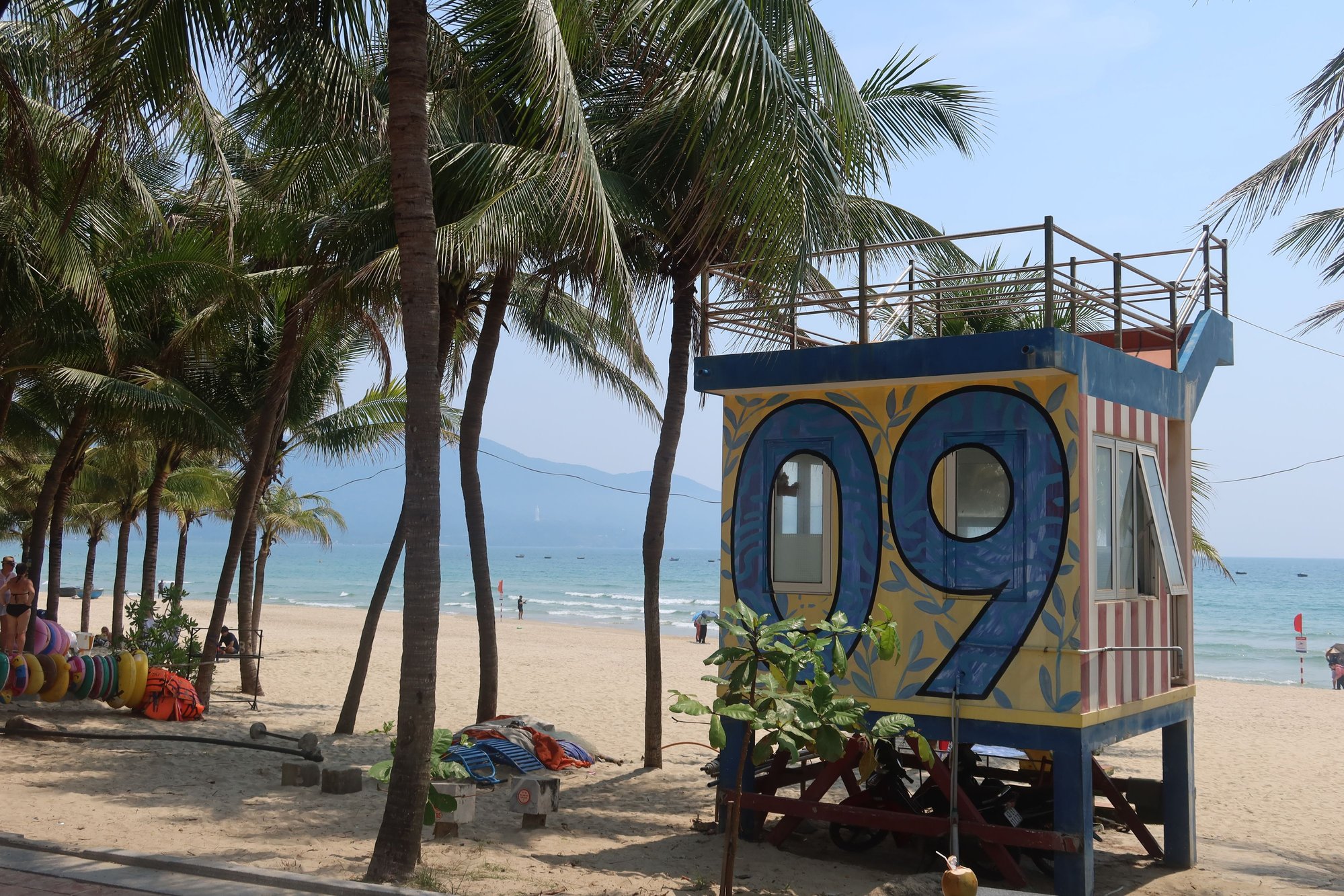
Lifeguard Post, My Khe Beach

Artwork, My Khe Beach
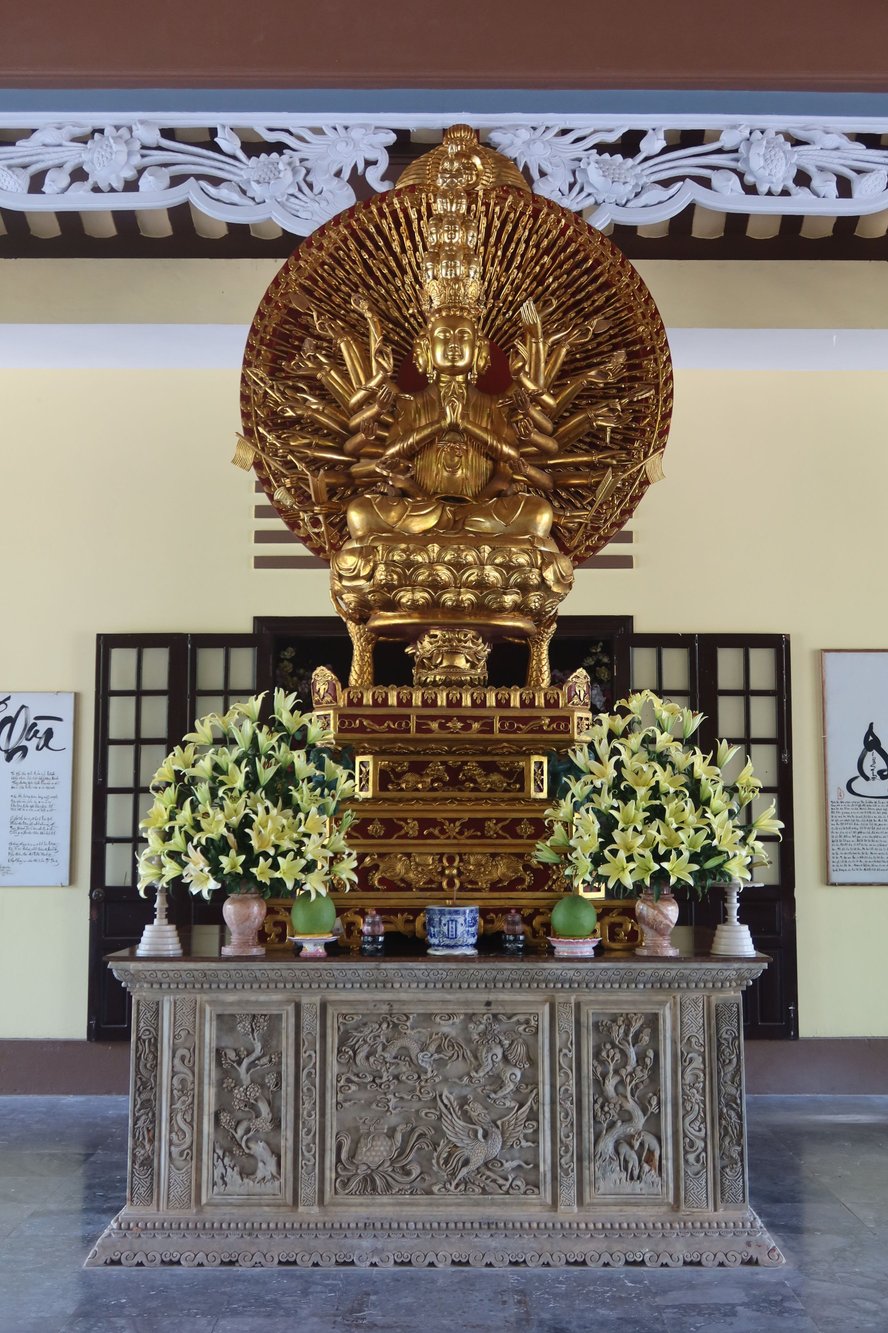
Thousand-Armed Quan Am, Ling Unh Temple
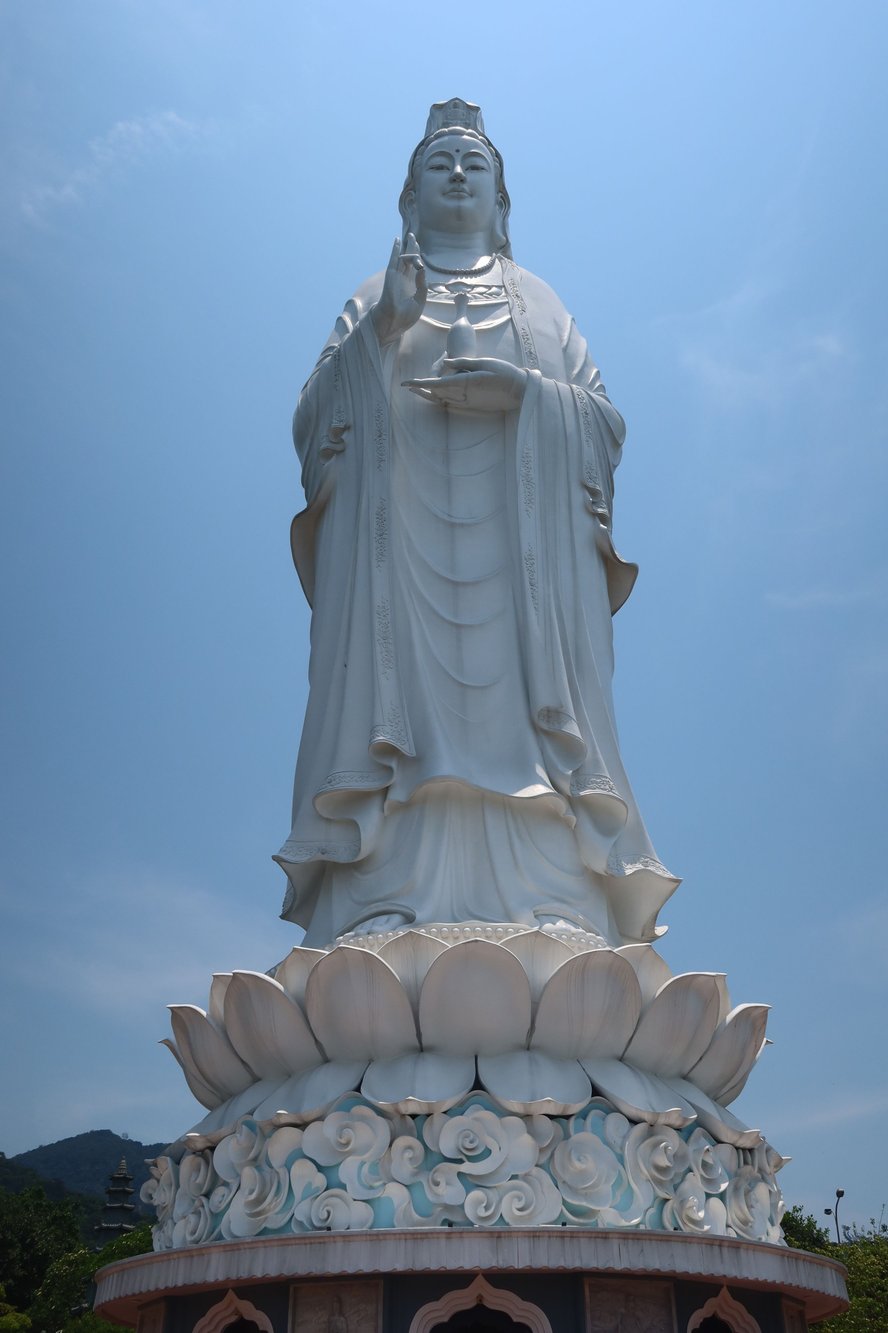
Quan Am (also known as the "Lady Buddha", Guanyin in Chinese, Kannon in Japanese), Ling Unh Temple
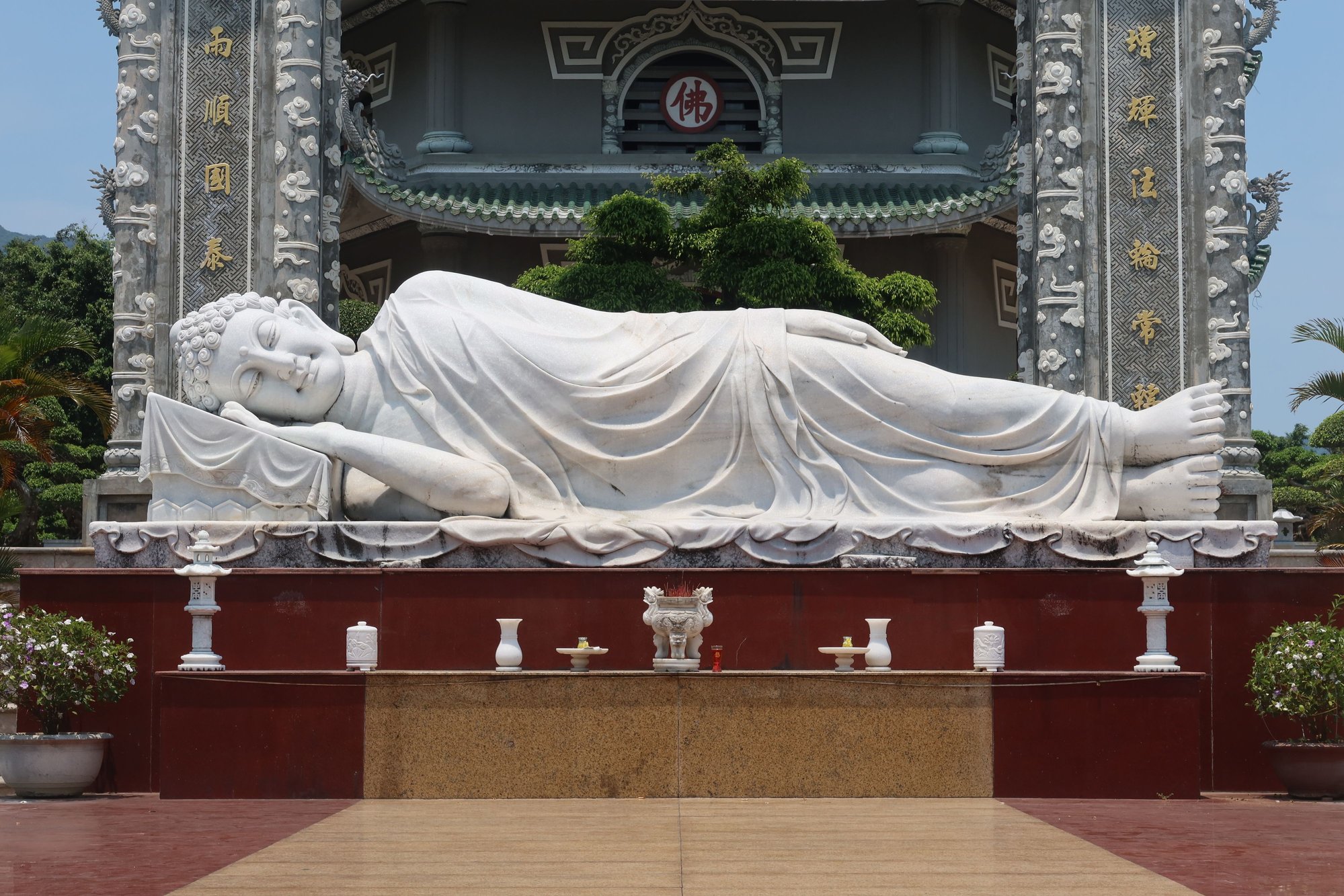
Reclining Buddha, Ling Unh Temple

Ba Na Hills
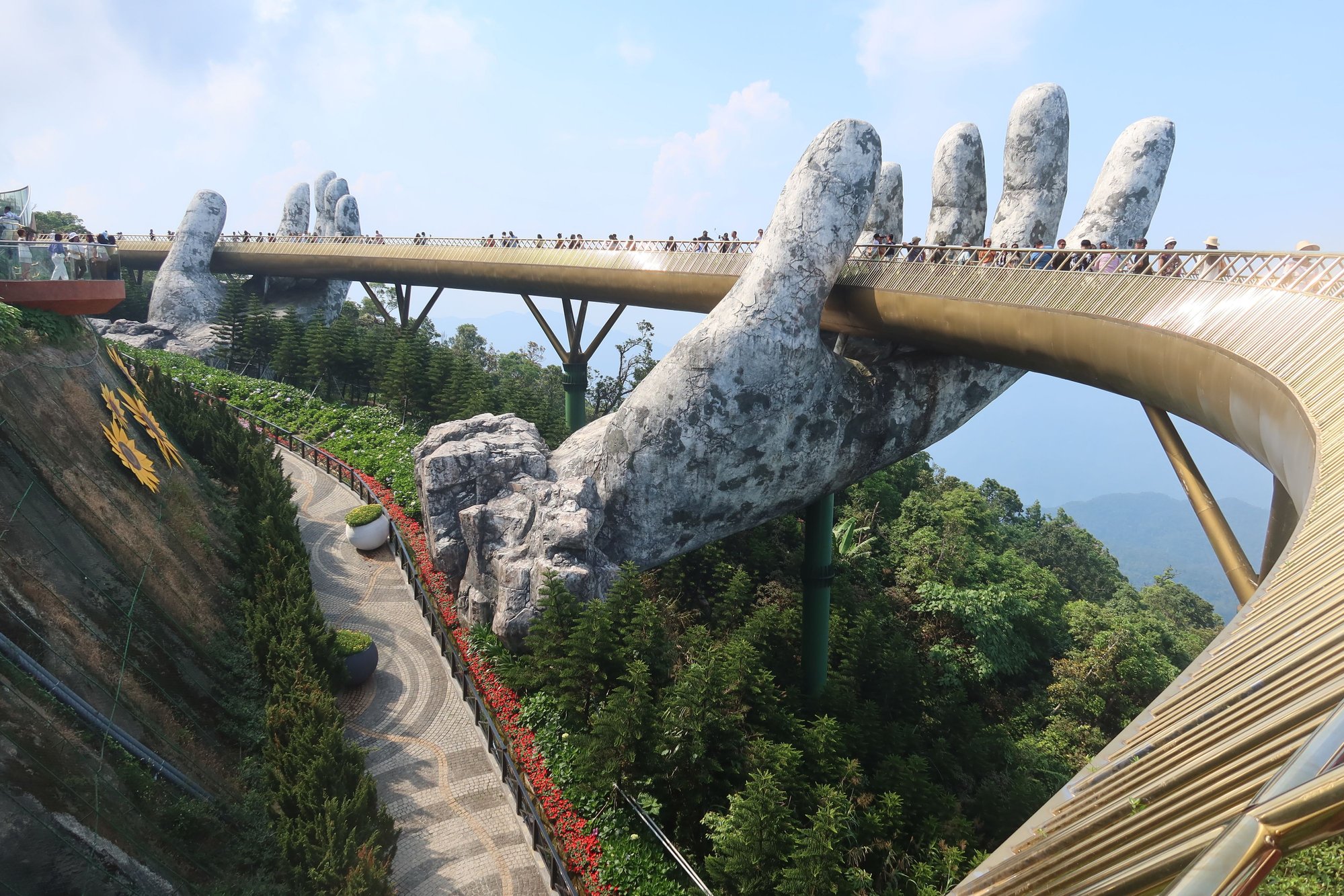
Golden Bridge, Ba Na Hills
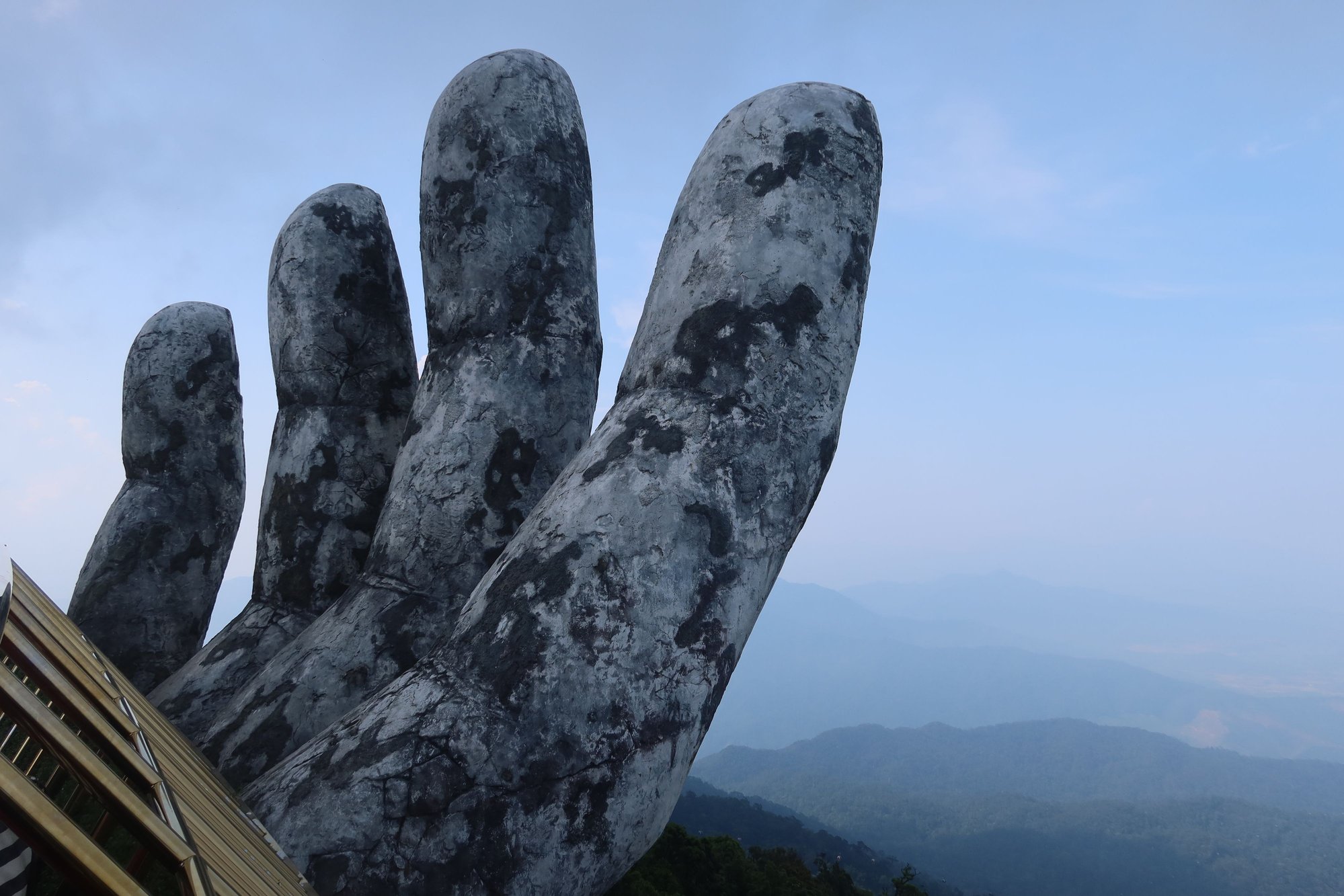
Golden Bridge, Ba Na Hills
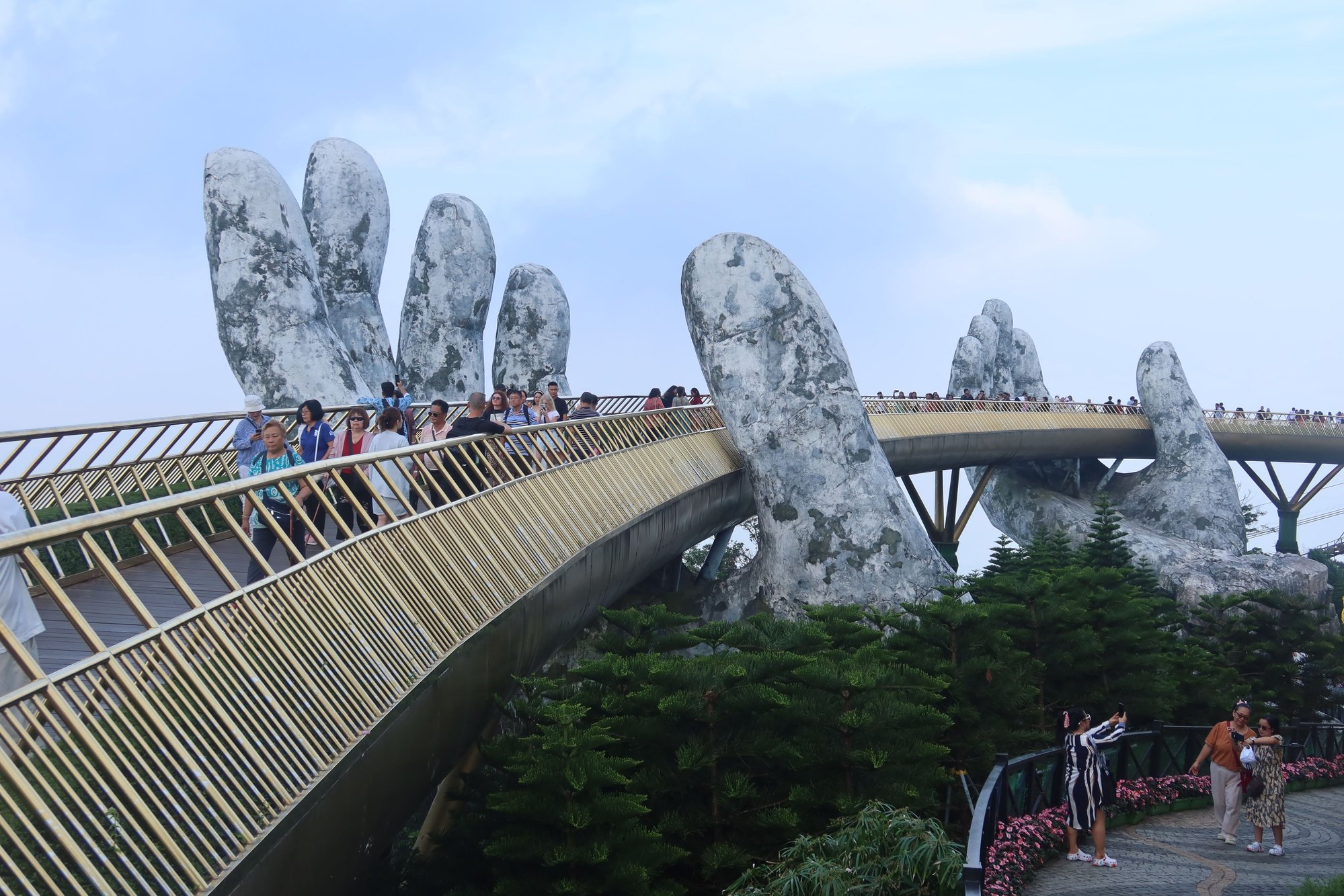
Golden Bridge, Ba Na Hills
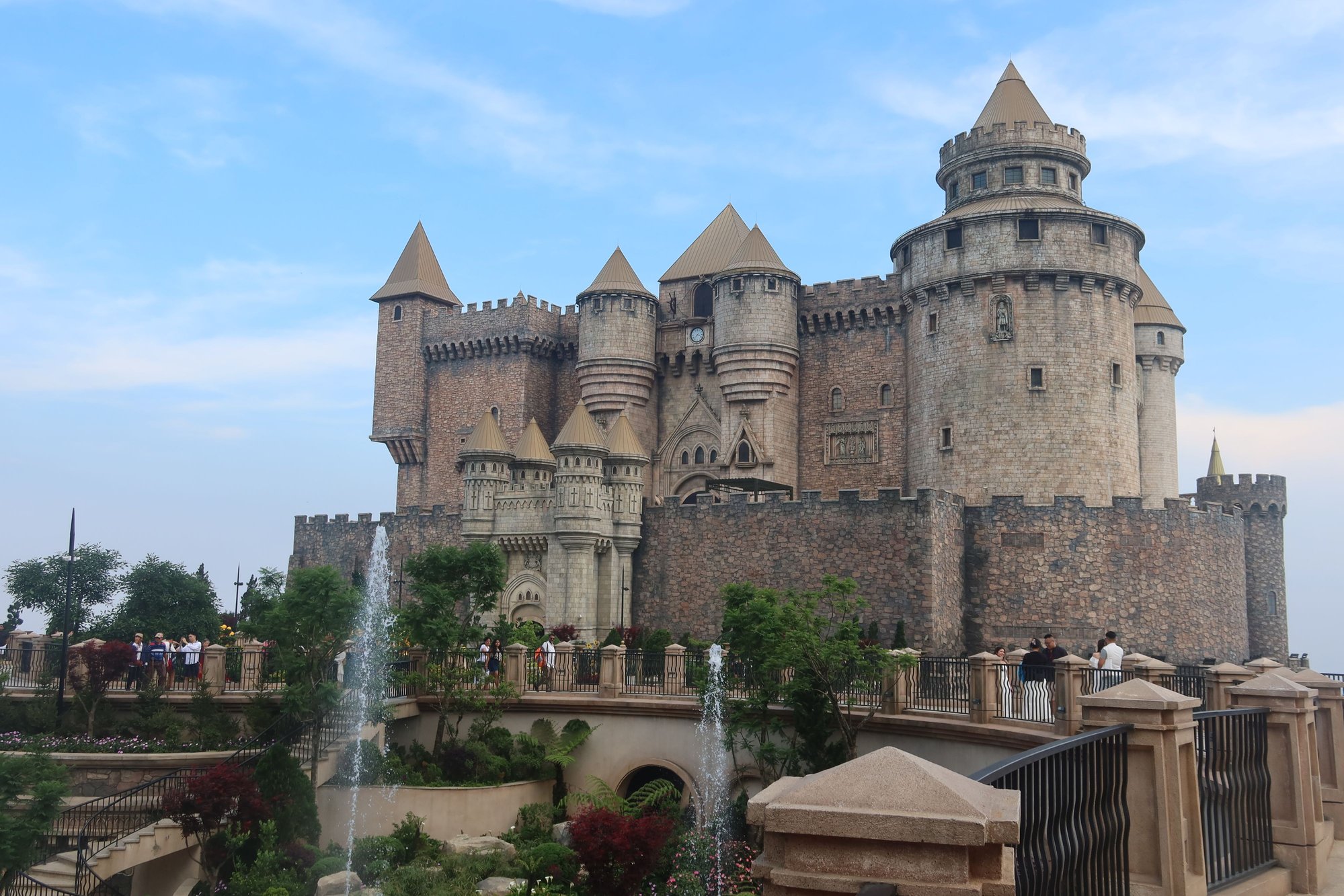
Faux French Castle, Ba Na Hills
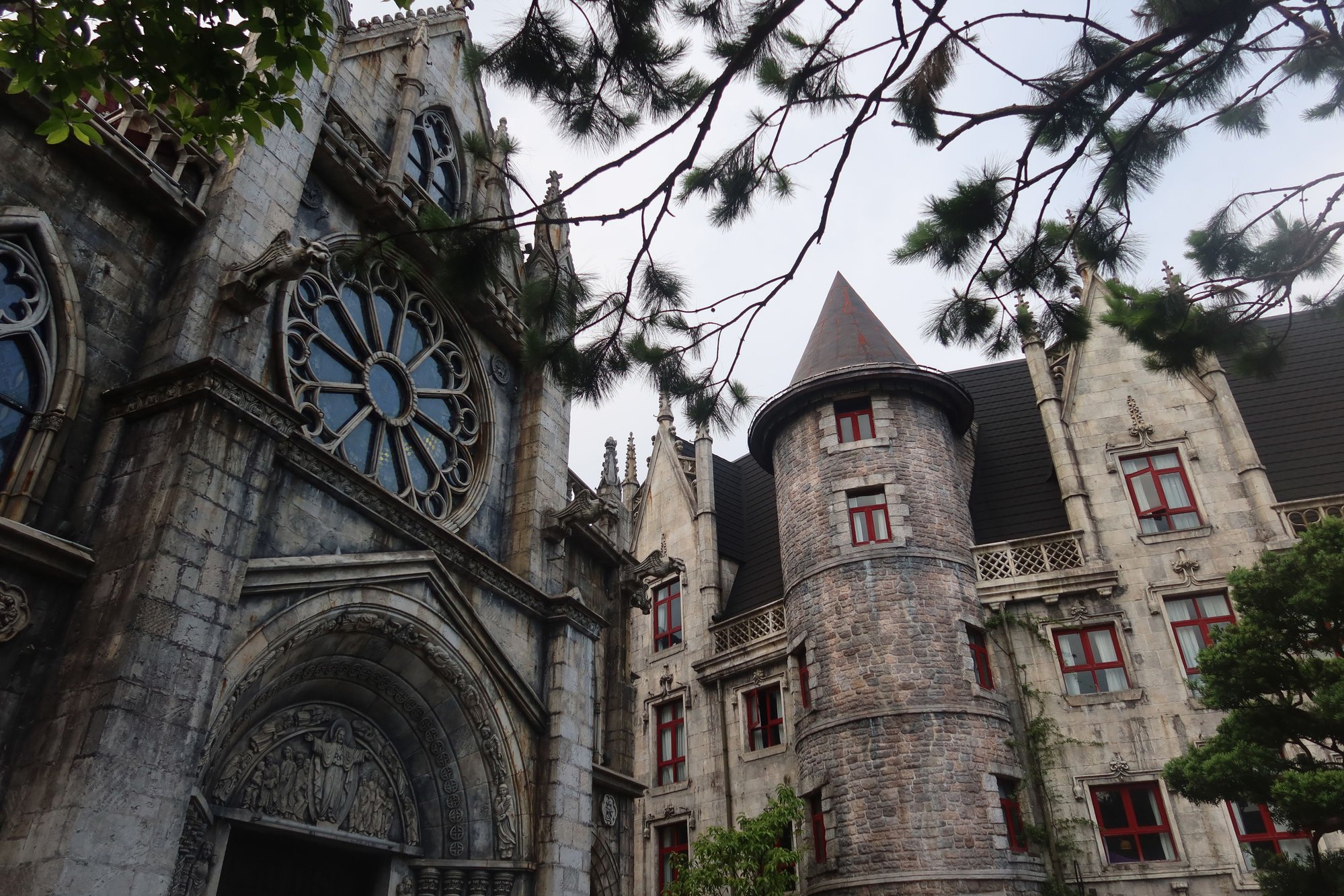
Buildings in French-Themed Village, Ba Na Hills

Arhats, Ba Na Hills

Temple and Pagoda, Ba Na Hills
ms_go, thank you for the tips. Will make note of these suggestions for the Hue leg of our trip.
Between Mountains and Ocean
We began our morning at the beach, My Khe Beach, that is. Also known to Americans as China Beach during the war, My Khe is a gorgeous stretch of powdery, soft sand on the shores of the South China Sea. Along the promenade of My Khe are cafes, restaurants, and shops renting jet skis and other water sports equipment. We enjoyed our relaxing morning stroll underneath the beautiful palm trees and on the warm, silky sands, with tropical fruit juices in hand.
In the distance are the mountains of the Son Tra Peninsula, where we headed next. Situated among the mountains is Ling Unh Temple, a Buddhist complex of multiple worship halls and a statue of Quan Am that could be seen from My Khe Beach as well as from the high-rises in Danang's city center. We worshipped at several of the prayer halls and paid a visit to our Guanyin, enjoying being in her presence among other worshippers (who were mostly Vietnamese, Korean, Chinese, French or German and Indian) and visitors. I would love to be here on a Buddhist holy day. Next time!
While on the way to Ling Unh, we made arrangements with our Grab driver to take us to our next stop of the day, Ba Na Hills, a former French hill station that is now home to hotels, a theme park, a golf course, and other entertainment. The star attraction of Ba Na Hills is the Golden Bridge; it's the one that looks like giant hands are holding up the span. To reach the Golden Bridge from the entrance of Sun World, the entertainment complex, is a 20-25 minute cable car ride up to the mountaintops. While the bridge is novel, it was also way too crowded for our liking. As such, we didn't linger on the bridge as most tourists did. The complex, connected by multiple ropeways and trains, was home to several gardens, a faux French village, and a series of Vietnamese-style Buddhist temples. The French village felt the most artificial, similar to Disney World. Our favorite part of Sun World were the Buddhist temples, where we enjoyed the religious iconography as well as the views of the surrounding mountains. In total, we spent about four hours at the complex, located just about an hour outside of Danang's city center.
We selected Madame Lan, a homestyle Vietnamese restaurant, for our dinner this evening. We ordered and ate family style, expanding the number of dishes we could sample. Everything was excellent although the highlights were the bun oc, a noodle soup with sea snails; a glass noodle stir-fry with crab meat (not skimpy on the crab meat at all); and the green beans with minced meat. The absolute star - the beef with black pepper sauce on a hot plate. Definitely one of the best beef dishes we've had anywhere. My mouth is watering just thinking about it. If we had another night, we would no doubt go back to Madame Lan.
My Khe Beach
Lifeguard Post, My Khe Beach
Artwork, My Khe Beach
Thousand-Armed Quan Am, Ling Unh Temple
Quan Am (also known as the "Lady Buddha", Guanyin in Chinese, Kannon in Japanese), Ling Unh Temple
Reclining Buddha, Ling Unh Temple
Ba Na Hills
Golden Bridge, Ba Na Hills
Golden Bridge, Ba Na Hills
Golden Bridge, Ba Na Hills
Faux French Castle, Ba Na Hills
Buildings in French-Themed Village, Ba Na Hills
Arhats, Ba Na Hills
Temple and Pagoda, Ba Na Hills
Apr 25th, 2025 | 06:12 AM
#20
Original Poster
Joined: Sep 2012
Posts: 3,517
Likes: 0
The Marble Mountains
Between Danang and Hoi An sit the Marble Mountains. It is a collection of five peaks, each named for an element in Chinese philosophy - metal, wood, fire, water, and earth.
We visited the Water Mountain, home of a collection of temples built into the caves deep in the mountains. We began at the cave carved to illustrate the world of hell in the Daoist religion. Spread across a collection of caves are scenes from the judgment of people after death and the various sins that merit a sentence to hell - disrespect of one's parents and elders, theft, prostitution, etc. After we journeyed through hell, we attempted to reach heaven, by way of a series of stone steps leading up the mountain. Near the top is a pile of limestone that one had to scramble in order to reach the summit. While not challenging, one required sure footing as it was quite slippery. The reward at the top are incredible views of the other Marble Mountains and the Valley below. We could see Danang and beyond. Even though the hike was not difficult for us, it was exhausting because of the extreme heat and humidity. The dew point was well above 80, which made it very oppressive. We were sweating a lot, which meant lots of water was needed. It was definitely the most uncomfortable we've been on this trip.
Also at the site we're multiple other caves and temples. We visited a massive cave with statues of Buddha and of Quan Am carved out of the stone walls. Truly spectacular.
We continued on to Hoi An and our hotel, the Little Riverside, our home for the next three nights. After two business hotel stays (not complaining at all, as we really enjoyed the creature comforts at the Reverie and at the Hilton), the boutique Little Riverside was a welcome change. The suites were tastefully decorated with little accent touches, the bathrooms spacious, and the balconies overlooking the river inviting and oozing with charm.
After freshening up and resting briefly we headed out to explore Hoi An. We wandered the little streets, viewing the yellow ochre rowhouses that dominate the townscape. We browsed the shops and took breaks at the welcoming cafes. We walked through the markets and strolled along the river that meanders through the heart of town. Hoi An felt very relaxed and laid back. It reminded us of Chiang Mai and Ubud.
Unlike the other places we've travelled thus far, though, Hoi An was teeming with tourists, particularly Western tourists. We heard more French and Italian here than anywhere else we've been, as well as American-, British-, and Australian-accented English. The only downside is the number of hawkers around town. From the lady selling snacks from a tray to boat captains and rickshaw drivers, no does not seem to be a word they comprehend. Luckily nobody was really aggressive, and walking away always worked.
After about two hours or so of walking, we decided on an earlier dinner than usual this evening. We dined at Morning Glory Original, a restaurant specializing in street food. Once again, we went family style and went with a sampling of items. Tonight's favorites were a crispy shrimp roll, a stewed duck leg, and caramelized pork belly with five spice sauce, served with a delicious sticky rice. After dinner, we took an evening stroll back to our hotel, gelato in hand, admiring all the beautiful lanterns that hang from the street, trees, and in front of shops.
We're probably going to turn in early tonight, but right now, we're enjoying some tea on our balconies watching the lantern-decorated boats glide down the river. Magical.
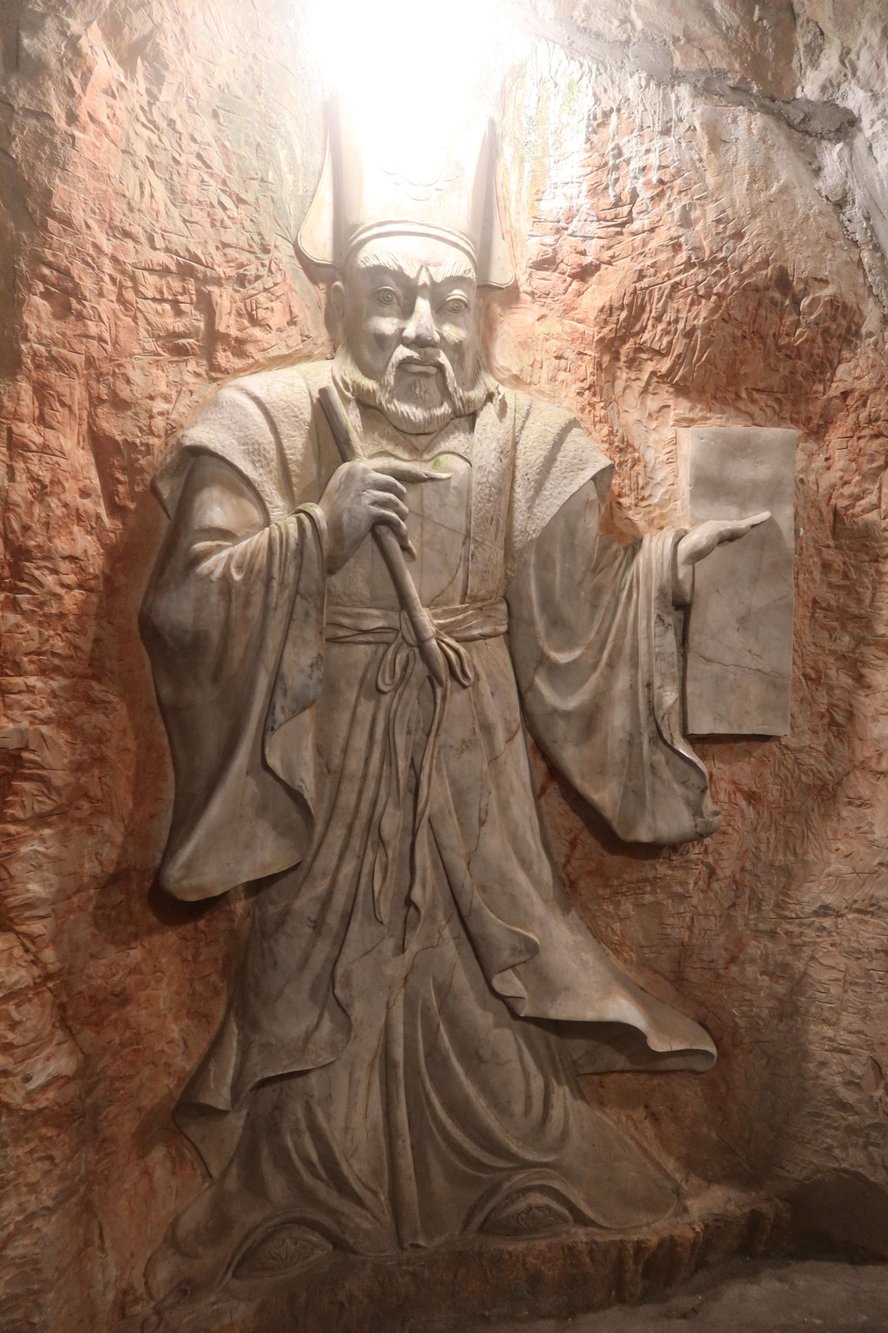
Jade Emperor at Entrance to Cave of Hell
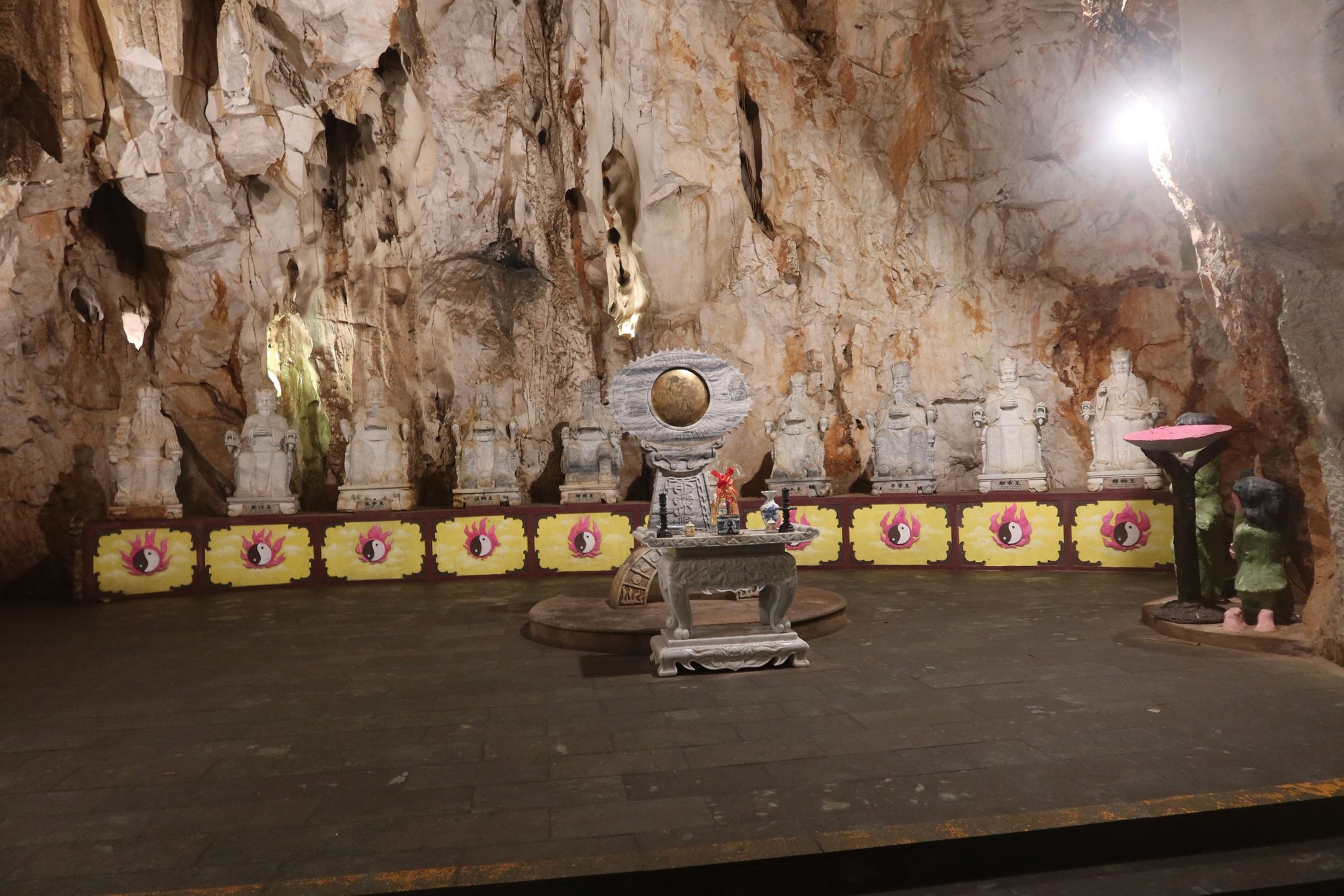
Judgment Panel at Gates of Hell
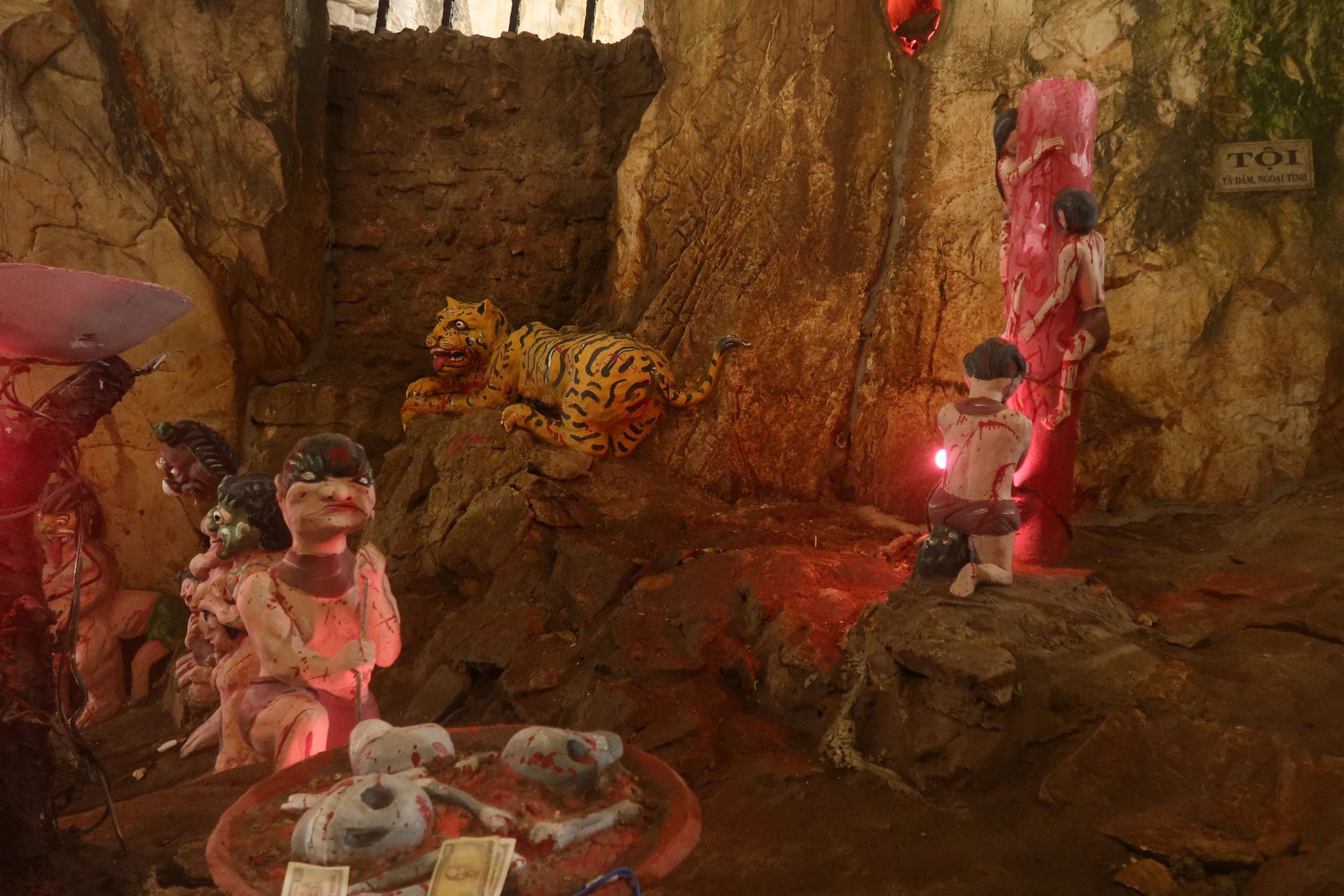
Scene from Hell (people's heads cut off and cooked, animal eating person alive, etc.)
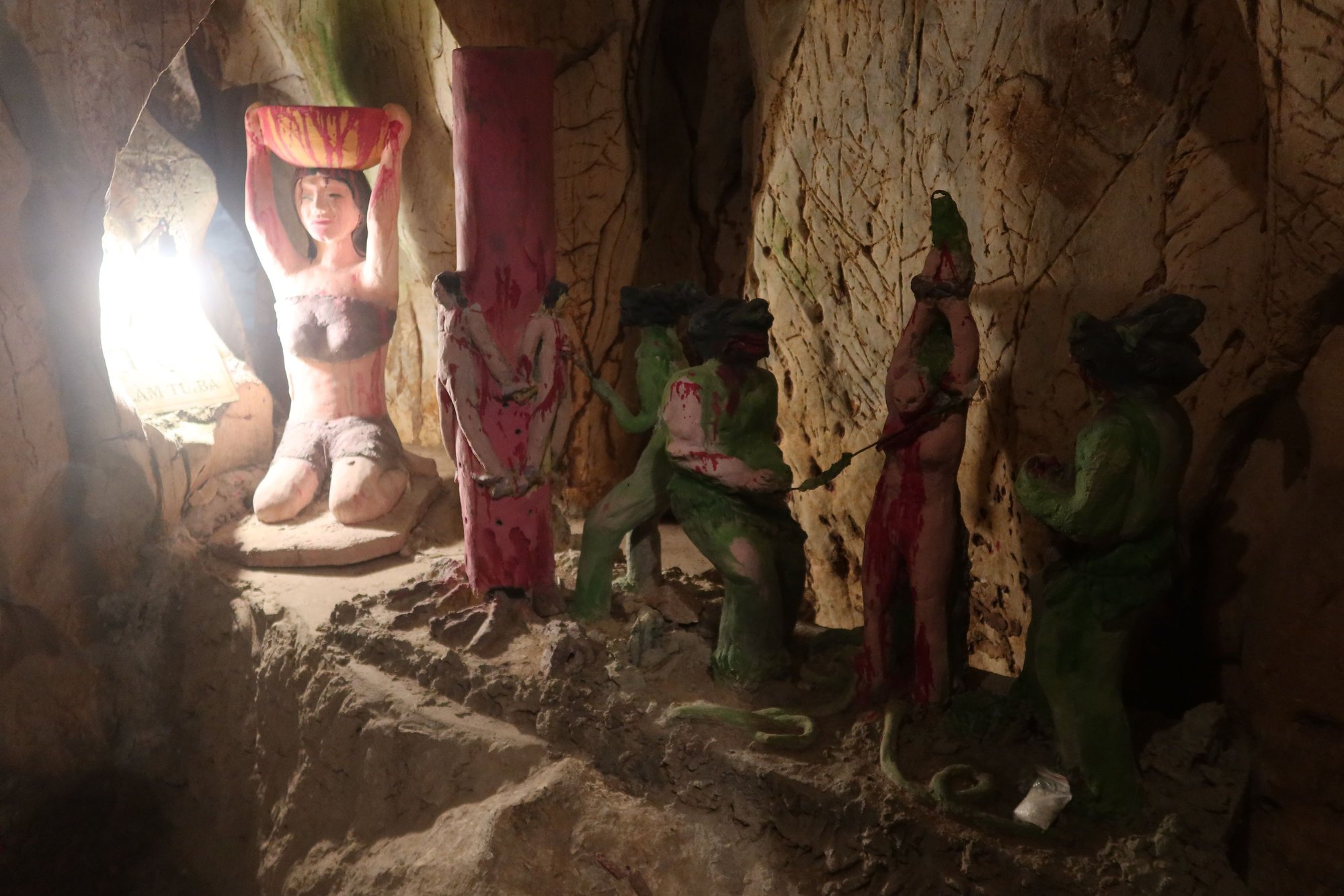
Scene from Hell (torture of body parts)
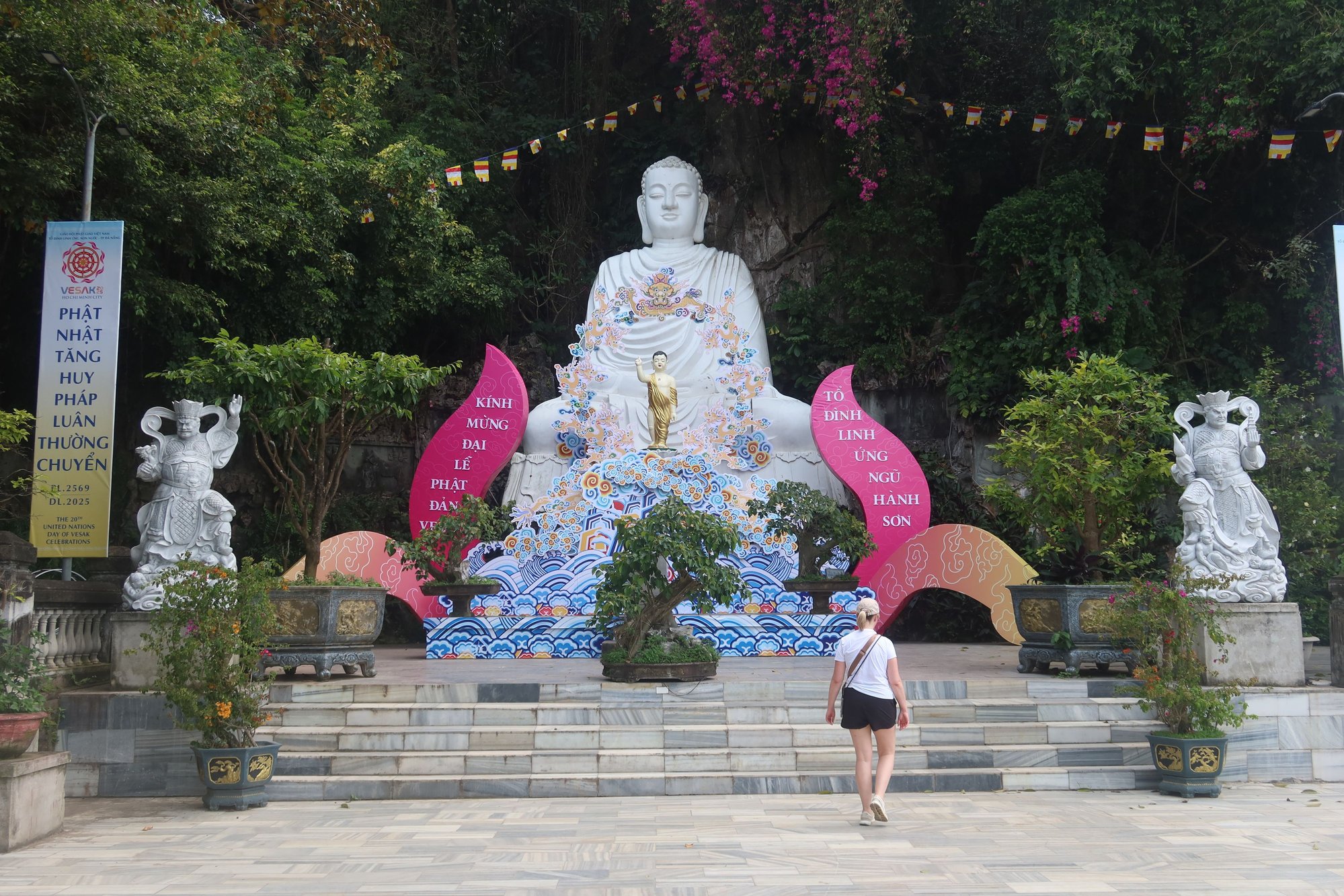
Buddha at Ling Unh Temple
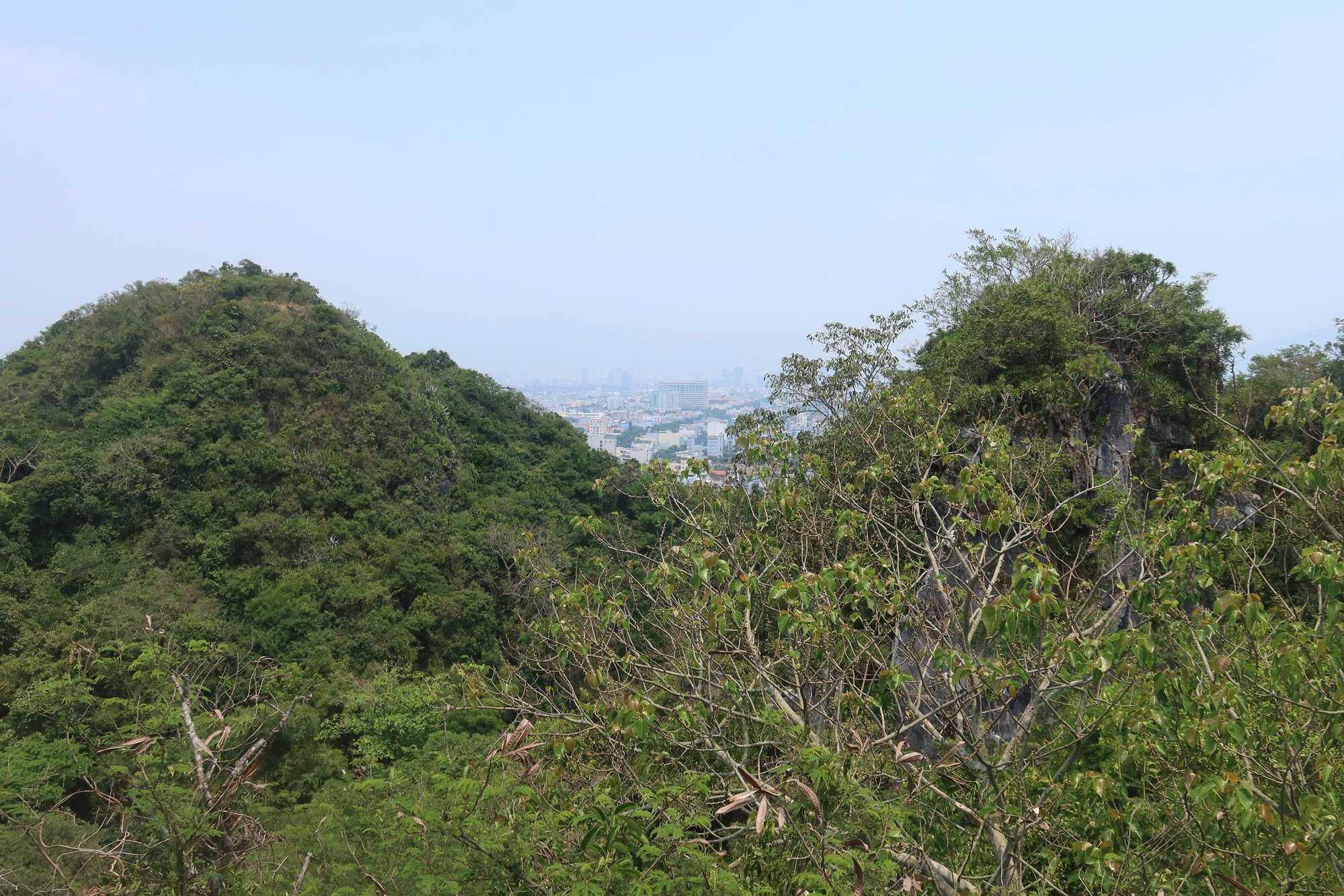
View from Top of Heaven's Gate

Quan Am Inside Cave
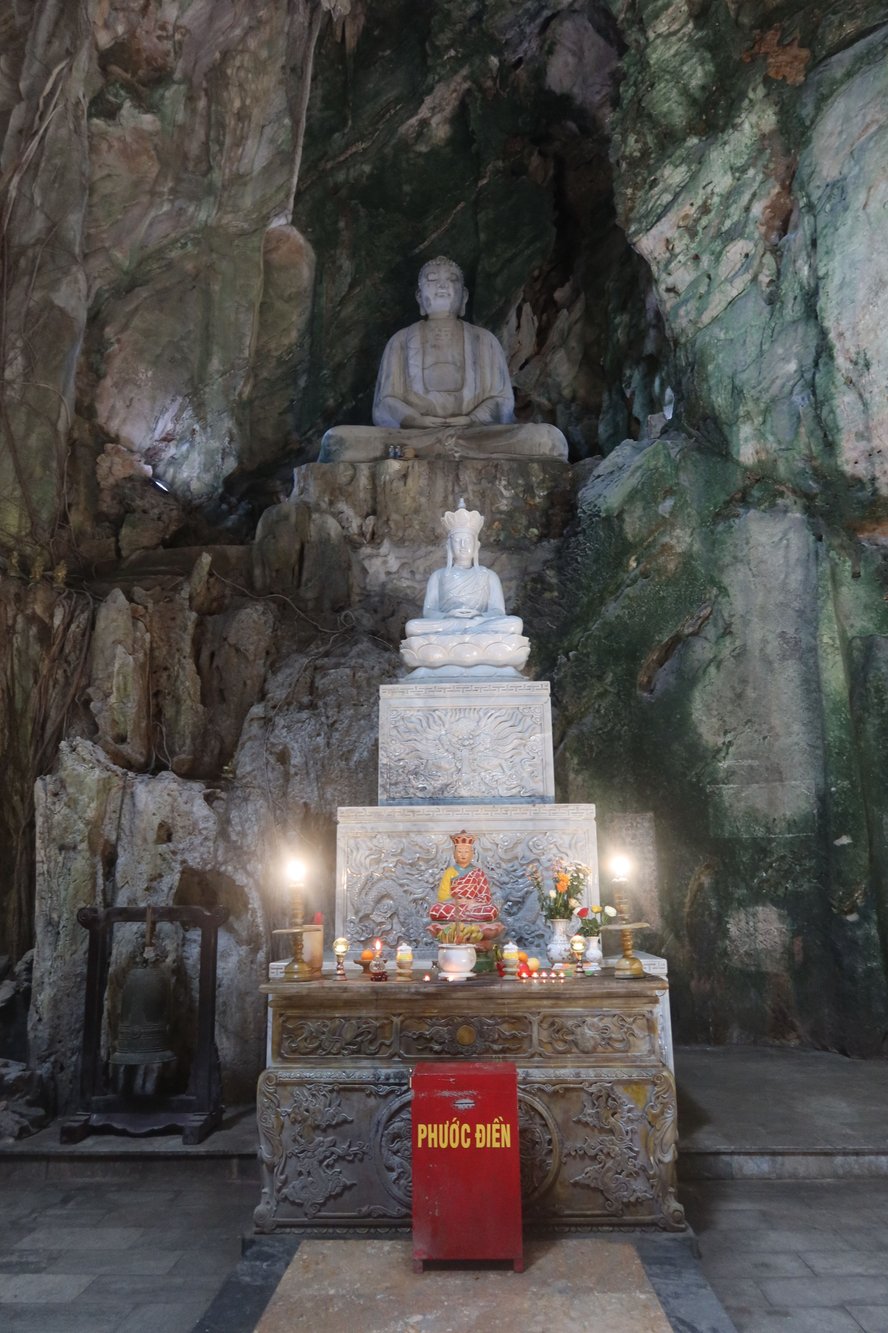
Buddha Inside Cave
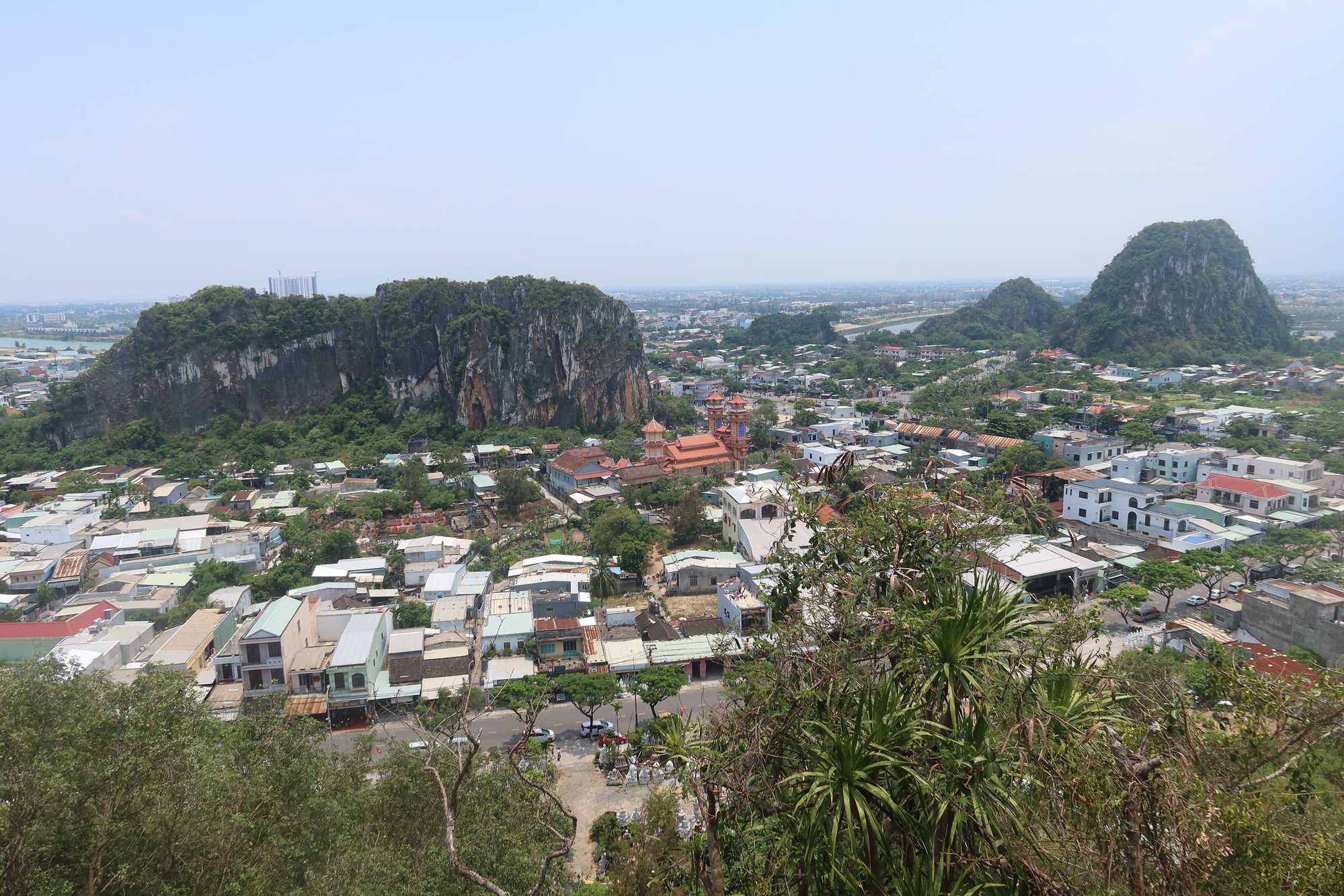
View of the Marble Mountains from One of the Pagodas

Hoi An Architecture
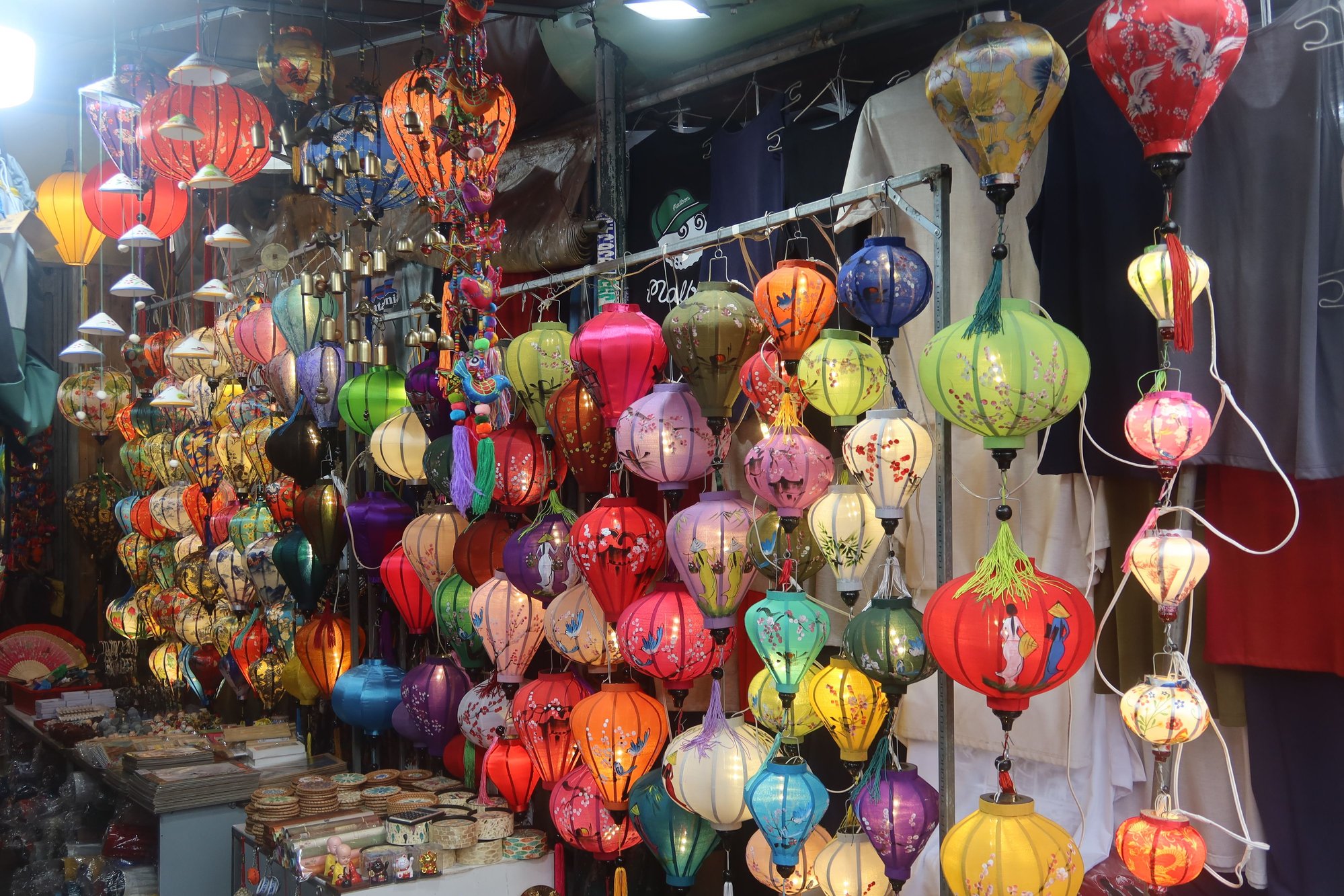
Lanterns for Sale, Hoi An Market
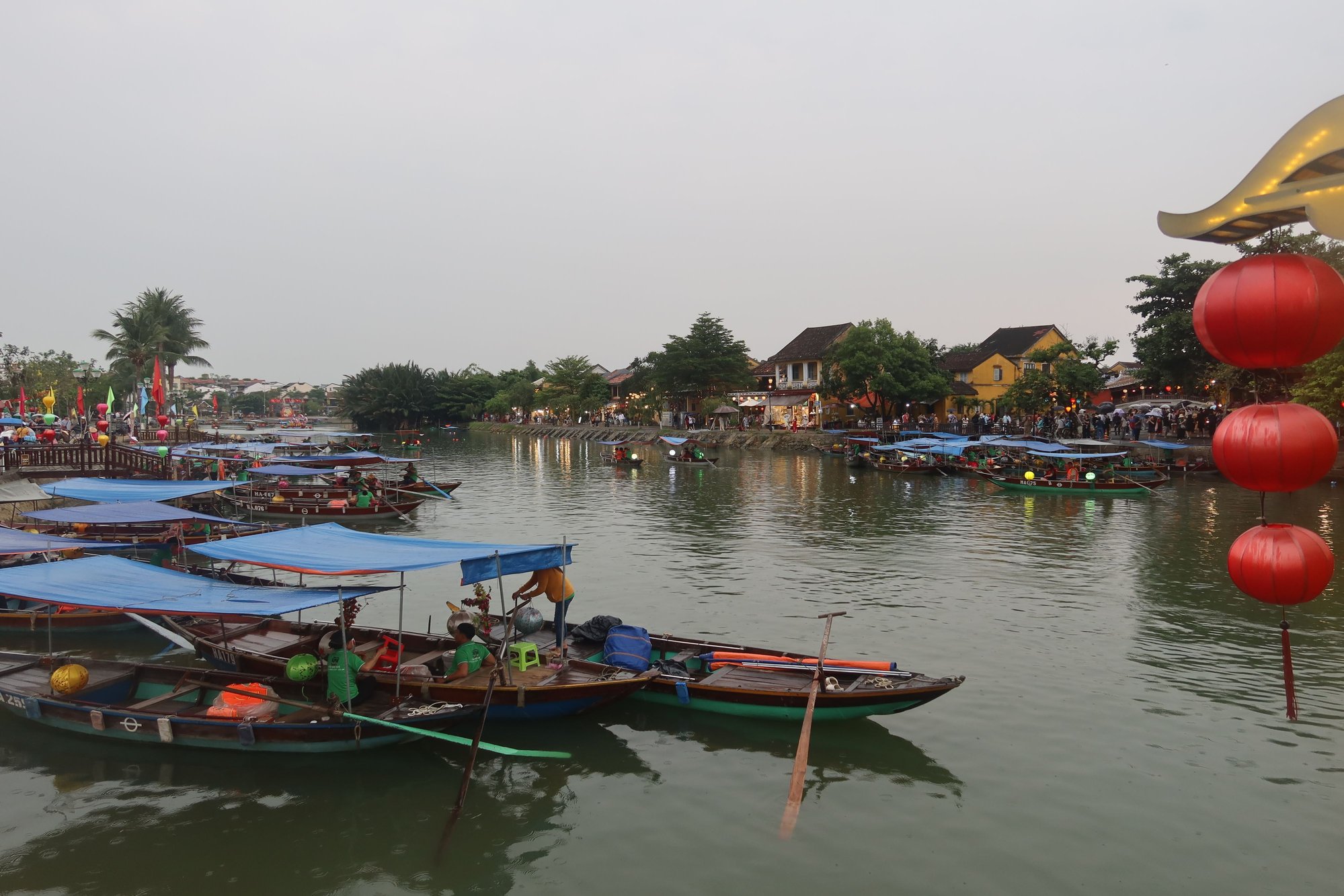
Hoi An from Riverfront
Between Danang and Hoi An sit the Marble Mountains. It is a collection of five peaks, each named for an element in Chinese philosophy - metal, wood, fire, water, and earth.
We visited the Water Mountain, home of a collection of temples built into the caves deep in the mountains. We began at the cave carved to illustrate the world of hell in the Daoist religion. Spread across a collection of caves are scenes from the judgment of people after death and the various sins that merit a sentence to hell - disrespect of one's parents and elders, theft, prostitution, etc. After we journeyed through hell, we attempted to reach heaven, by way of a series of stone steps leading up the mountain. Near the top is a pile of limestone that one had to scramble in order to reach the summit. While not challenging, one required sure footing as it was quite slippery. The reward at the top are incredible views of the other Marble Mountains and the Valley below. We could see Danang and beyond. Even though the hike was not difficult for us, it was exhausting because of the extreme heat and humidity. The dew point was well above 80, which made it very oppressive. We were sweating a lot, which meant lots of water was needed. It was definitely the most uncomfortable we've been on this trip.
Also at the site we're multiple other caves and temples. We visited a massive cave with statues of Buddha and of Quan Am carved out of the stone walls. Truly spectacular.
We continued on to Hoi An and our hotel, the Little Riverside, our home for the next three nights. After two business hotel stays (not complaining at all, as we really enjoyed the creature comforts at the Reverie and at the Hilton), the boutique Little Riverside was a welcome change. The suites were tastefully decorated with little accent touches, the bathrooms spacious, and the balconies overlooking the river inviting and oozing with charm.
After freshening up and resting briefly we headed out to explore Hoi An. We wandered the little streets, viewing the yellow ochre rowhouses that dominate the townscape. We browsed the shops and took breaks at the welcoming cafes. We walked through the markets and strolled along the river that meanders through the heart of town. Hoi An felt very relaxed and laid back. It reminded us of Chiang Mai and Ubud.
Unlike the other places we've travelled thus far, though, Hoi An was teeming with tourists, particularly Western tourists. We heard more French and Italian here than anywhere else we've been, as well as American-, British-, and Australian-accented English. The only downside is the number of hawkers around town. From the lady selling snacks from a tray to boat captains and rickshaw drivers, no does not seem to be a word they comprehend. Luckily nobody was really aggressive, and walking away always worked.
After about two hours or so of walking, we decided on an earlier dinner than usual this evening. We dined at Morning Glory Original, a restaurant specializing in street food. Once again, we went family style and went with a sampling of items. Tonight's favorites were a crispy shrimp roll, a stewed duck leg, and caramelized pork belly with five spice sauce, served with a delicious sticky rice. After dinner, we took an evening stroll back to our hotel, gelato in hand, admiring all the beautiful lanterns that hang from the street, trees, and in front of shops.
We're probably going to turn in early tonight, but right now, we're enjoying some tea on our balconies watching the lantern-decorated boats glide down the river. Magical.
Jade Emperor at Entrance to Cave of Hell
Judgment Panel at Gates of Hell
Scene from Hell (people's heads cut off and cooked, animal eating person alive, etc.)
Scene from Hell (torture of body parts)
Buddha at Ling Unh Temple
View from Top of Heaven's Gate
Quan Am Inside Cave
Buddha Inside Cave
View of the Marble Mountains from One of the Pagodas
Hoi An Architecture
Lanterns for Sale, Hoi An Market
Hoi An from Riverfront


