Oaxaca City is freshly recovered from a crippling series of strikes and protests that led to high-profile confrontations between demonstrators and police during the second half of 2006. The bad news is that the city's economy suffered dramatically from the protests. Businesses closed, jobs were lost, and tourists stayed away. The good news is that the protests are over and the city is fully operational again. If not quite its old self behind closed doors, it's almost indistinguishable from the city of superlative colonial charm that has stolen the hearts of countless visitors, and now is as good a time as any to visit.
Oaxaca City's Centro Histórico is a pastel collage of colonial- and Republican-era mansions, civic edifices, and churches that delight the eye. The colonial heart is laid out in a simple grid, with all the attractions within a few blocks of one another. Most streets change names when they pass the Zócalo; for example, Calle Trujano becomes Calle Guerrero as it travels from west to east. Only the two major east-west arteries -- Avenida Morelos and Avenida Independencia -- keep their names.
Spreading south and east from Oaxaca City, the Valles Centrales, or Central Valleys, are well worth exploring. You could easily fill a week visiting the dozens of villages here. Looking for colonial-era splendor? There are charming squares dominated by graceful churches in Ocotlán and Santa Ana del Valle, to name but two. Unique crafts? San Bartolo Coyotepec is known for its beautiful barro negro, or black pottery, made without the benefit of a pottery wheel, while in Teotitlán del Valle the streets are lined with shops selling tapetes, the woven wool rugs that are known all around Mexico. Colorful markets? Take your pick. There are outdoor markets each day of the week, and each is different. In Zaachila, for example, you could pick up some animals -- either small carvings or the real thing. Best of all, most markets are geared toward locals, so they don't sell the typical tourist wares, giving you a real sense of each village.
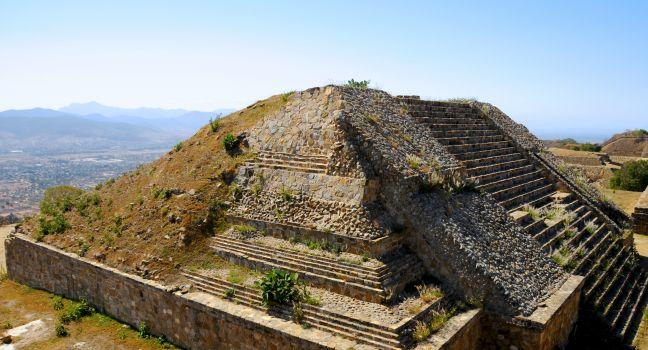
And don't forget the striking ruins of cities built by the Zapotec. The must-see on everyone's itinerary is Monte Albán, one of the country's most impressive ancient cities. Its proximity to the city makes it a destination for busloads of tourists, so don't expect to have the place to yourself. If you want to escape the crowds, head to some of the ruins that are less crowded, especially Mitla, whose elaborate stonework is unparalleled. And if you head to small archaeological sites such as Dainzú and Yagul, you'll probably have the place to yourself.
Planning a trip to the Valles Centrales is a snap. Many of the most popular sights are along or just off Carretera 175 (to Ocotlán), Carretera 131 (to Zaachila), or Carretera 190 (to Mitla). This makes it easy to visit two or three villages in a morning or afternoon. Renting a car is an easy and delightful way to cover the distances. Buses, colectivos (minibuses), and taxis round out the options.
Oaxaca's 520-km (322-mi) coastline is one of Mexico's last Pacific frontiers. The town of Puerto Escondido has long been prime territory for international surfers. Its pedestrian walkways, crowded with open-air seafood restaurants, shops, and cafés, is indeed lively, but also incredibly relaxed. Fishing boats pull double duty as water taxis, ferrying folks to lovely scallops of sand up the coast. Across the highway, the "real" town above provides a look at local life and a dazzling view of the coast.
Midway between Puerto Escondido and Huatulco, tiny Puerto Angel has a limited selection of unpolished hotels and funky bungalows tucked into the hills. The growing number of accommodations in nearby beach burgs such as Zipolite -- one of the hottest spots on the Mexican coast -- and Mazunte has seduced some of Puerto Angel's previously faithful sun-lovers.
Huatulco covers 51,900 acres, 40,000 of which are dedicated as a nature reserve. The focal point of the development, which was masterminded in the 1980s by Fonatur (the government's tourism developer), is a string of nine sheltered bays that stretches across 35 km (22 mi) of stunning coast. The first in this necklace is Conejos, which has Huatulco's most luxurious private villas and two boutique hotels. The town of La Crucecita, originally built to house the construction crews working on area developments, has the requisite plaza with a Catholic church as well as a thriving market, small shops, budget and moderately priced hotels, and plenty of restaurants.
Bahía Tangolunda is home to Huatulco's most exclusive hotels, whereas Santa Cruz has mid-range hotels as well as a marina and a cruise-ship terminal. Development of Bahía Chahué has begun with an 88-slip marina, a luxury spa, and a few small hotels. A parking lot makes the beach accessible, and a public beach club has changing rooms, a restaurant, and a swimming pool. A Best Western and a few other small hotels, bars, and restaurants are near this bay, but most are across the highway on Boulevard Benito Juárez.
No matter where you hole up along Mexico's southern Pacific coast, you'll find that it's all about the beach, the water, and the waves. Surfers and bodysurfers whoop it up at Zicatela and less famous breaks; snorkelers hug rocky coves in search of new and unusual specimens; and divers share the depths with dolphins, rays, eels, and schools of fish instead of shoals of other humans. Friendly locals, superb vistas, and first-rate beaches combine to make Oaxaca's coast a stunner.