Residenz
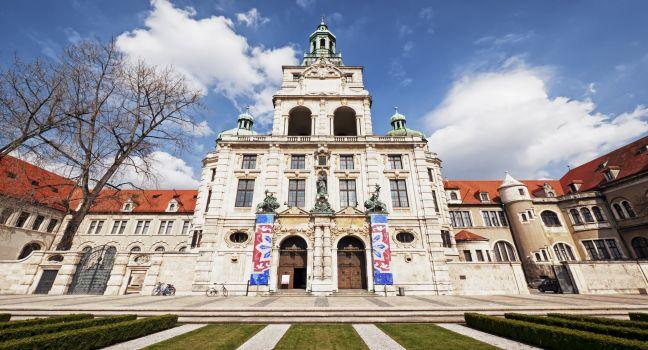
One of Germany's true treasures, Munich's royal Residenz (Residence) began in 1385 as the modest Neuveste (New Fortress) on the northeastern city boundary. By the time the Bavarian monarchy fell in 1918, the palace could compare favorably with the best in Europe. With the Residenz's central location, it was pretty much inevitable that the Allied bombing of 1944–45 would cause immense damage, and subsequent reconstruction took decades. For tourists today, however, it really is a treasure chamber of delights. A wander around the Residenz can last anywhere from three hours to all day. The 16th-century, 216-foot-long arched Antiquarium, built for Duke Albrecht V's collection of antiques, is recognized as one of the most impressive Renaissance creations outside Italy (today it's used chiefly for state receptions). There are a number of halls and courtyards that show concerts, from the postwar Neuer Herkulessaal to the outdoor Brunnenhof. And particular favorites for visitors are the re-creations of many private royal chambers and apartments. The accumulated Wittelsbach treasures are on view in several museums that comprise the Residenz. At a corner of the Residenz's Apothekenhof (courtyard) is the incomparable Rococo Cuvilliés-Theater where Mozart's opera Idomeneo premiered in 1781. The Schatzkammer (Treasury) and Staatliche Münzsammlung (State Coin Museum) are also here.
\nThe Residenzmuseum comprises everything in the Residenz apart from the Schatzkammer (Treasury), Staatliche Münzsammlung, and the Cuvilliés-Theater, which have separate admission charges.