32 Best Sights in Munich, Germany

Background Illustration for Sights

Munich is a wealthy city—and it shows. At times this affluence may come across as conservatism. But what makes Munich so unique is that it's a new city superimposed on the old. The hip neighborhoods that make up the City Center (Innenstadt) are replete with traditional locales, and flashy materialism thrives together with a love of the outdoors.

Deutsches Museum

Isarvorstadt Fodor's Choice
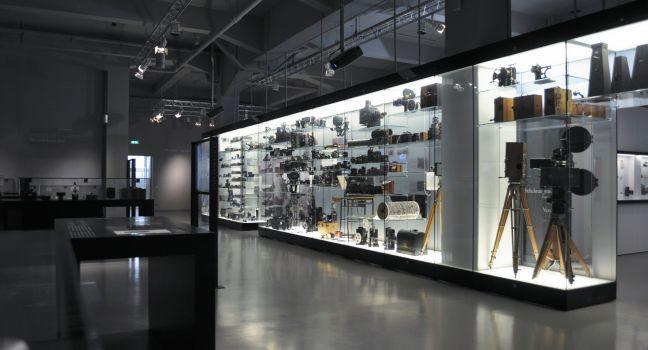
Photocamera Display from Deutsches Museum in Munich, Germany
(c) Ifeelstock | Dreamstime.com

Aircraft, vehicles, cutting-edge technology, and historic machinery fill the seven levels of this monumental building on an island in the Isar River, home to one of the biggest science and technology museums in the world. There are some 215,000 square feet and 20 exhibits to explore (the other half of the museum is closed until 2028 for modernization). Highlights include exhibitions on nanotechnology, biotechnology, and robotics. Children have their own “kingdom,” the Kinderreich, where they can learn about modern technology and science through numerous interactive displays (parents must accompany their children). One of the most technically advanced planetariums in Europe has two to four shows daily, depending on the day, albeit in German only. Two affiliated off-site museums are the Verkehrszentrum (Center for Transportation), on the former trade fair grounds at the Theresienhöhe, and the Flugwerft Schleissheim, an airfield and hangar packed with historical aircraft in Oberschleissheim, north of Munich.
Englischer Garten

Schwabing Fodor's Choice
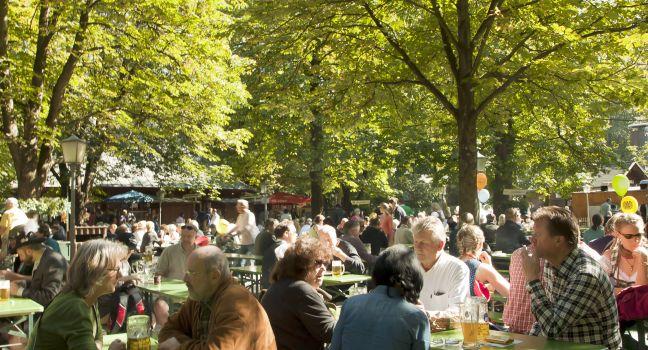
People relax outdoor on a beautiful October day, sitting in the sun, drinking beer and eating Bavarian traditional food in one of the many open air seasonal restaurant (Biergarten) of the Englischer Garten in Munich.
Acrogame | Dreamstime.com

This seemingly endless green space blends into the open countryside at the north of the city. Today's park covers nearly 1,000 acres and has 78 km (48 miles) of paths and more than 100 bridges. The open, informal landscaping—reminiscent of the English-style rolling parklands of the 18th century—gave the park its name. It has a boating lake, four beer gardens (open seasonally), and a series of curious decorative and monumental constructions. In the center of the park's most popular beer garden is a Chinese pagoda, erected in 1790 (reconstructed after World War II). The Englischer Garten is a paradise for joggers, cyclists, musicians, soccer players, sunbathers, and, in winter, cross-country skiers. There's even surfing year-round, at two continuous man-made waves; the larger, Eisbachwelle, below the Eisbach bridge, draws crowds of onlookers. The park has semi-official areas for nude sunbathing—the Germans have a positively pagan attitude toward the sun—so in some areas don't be surprised to see naked bodies bordering the flower beds and paths.

Marienplatz

Altstadt Fodor's Choice
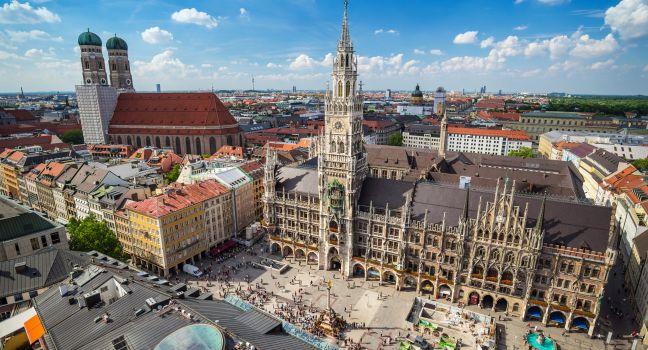
Marienplatz town hall - Munich - Germany.
Noppasinw | Dreamstime.com

Bordered by the Neues Rathaus, shops, and cafés, this square is named after the gilded statue of the Virgin Mary that has watched over it for more than three centuries. It was erected in 1638 at the behest of Elector Maximilian I as an act of thanksgiving for the city's survival of the Thirty Years' War, the cataclysmic, partly religious struggle that devastated vast regions of Germany. When the statue was taken down from its marble column for cleaning in 1960, workmen found a small casket in the base containing a splinter of wood said to be from the cross of Christ. On the fifth floor of a building facing the Neues Rathaus is Café Glockenspiel. It overlooks the entire square and provides a perfect view of the glockenspiel. Entrance is around the back.

Recommended Fodor's Video

Pinakothek der Moderne

Maxvorstadt Fodor's Choice
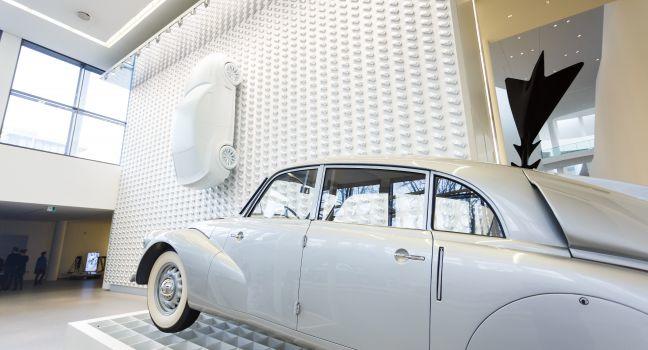
Munich, Germany - January 03 2016: Old white car on the exhibition in Pinakothek der Moderne museum, situated in the city centre of Munich.
(c) Castenoid | Dreamstime.com

This striking 130,000-square-foot glass-and-concrete complex by Stefan Braunfels is home to four outstanding museums under one cupola-topped roof: art, graphic art, architecture, and design, all from the 20th and 21st centuries. There's an outstanding collection of important modern and contemporary artwork, including an entire room devoted to the massive paintings of German postwar artist Georg Baselitz. The design museum is particularly popular, with permanent exhibitions in vehicle design, computer culture, and other design ideas.

Schloss Nymphenburg

Nymphenburg Fodor's Choice
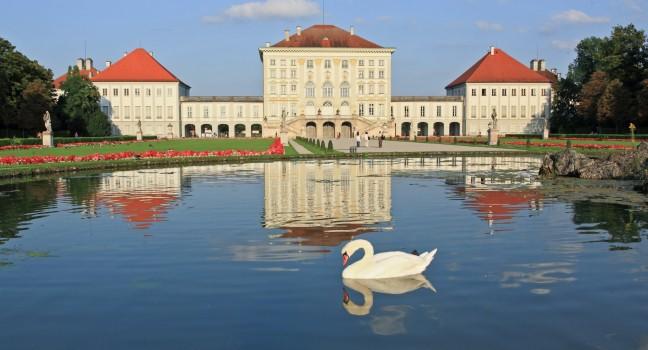
The scenery at the Nymphenburg palace in Munich Germany; Shutterstock ID 18390400; Project/Title: Fodors; Downloader: Melanie Marin
gary718 / Shutterstock

This glorious Baroque and Rococo palace, the largest in Germany, grew in size and scope over more than 200 years. Begun in 1662 by the Italian architect Agostino Barelli, it was completed by his successor, Enrico Zuccalli. It represents a tremendous high point of Italian cultural influence, in what is undoubtedly Germany's most Italian city. Within the original building, now the central axis of the palace complex, is the magnificent Steinerner Saal (Great hall), extending over two floors and richly decorated with stucco and grandiose frescoes by masters such as François Cuvilliés the Elder and Johann Baptist Zimmermann. One of the surrounding royal chambers houses Ludwig I's famous Schönheitsgalerie (Gallery of Beauties), portraits of women who caught his roving eye. The palace park is laid out in formal French style, with low hedges and gravel walks extending into woodland. Among the ancient trees are three fascinating pavilions, including the Amalienburg hunting lodge by François Cuvilliés. It's also worth visiting the former royal stables, now the Marstallmuseum, which houses a fleet of carriages, coaches, and sleighs. In its upper rooms are examples of the world-renowned Nymphenburg porcelain, the electoral porcelain factory founded by Max III Joseph in 1747.

Dachau Concentration Camp Memorial Site

Fodor's Choice

The site of the infamous camp, now the KZ–Gedenkstätte Dachau, is just outside town. Photographs, contemporary documents, the few cell blocks, and the grim crematorium create a somber and moving picture of the camp, where more than 41,000 of the 200,000-plus prisoners lost their lives. A documentary film in English is shown five times daily. The former camp has become more than just a grisly memorial: it's now a place where people of all nations meet to reflect upon the past and on the present.

Museum Mensch und Natur

Nymphenburg Fodor's Choice

This popular museum in the north wing of Schloss Nymphenburg has nothing to do with the Wittelsbachs but is one of the palace's major attractions. Through interactive exhibits, the Museum Mensch und Natur looks at the variety of life on Earth, the history of humankind, and our place in the environment, as well as genetics and nature conservation. Main exhibits include a huge representation of the human brain and a chunk of Alpine crystal weighing half a ton.

Neues Rathaus

Altstadt Fodor's Choice

Munich's present neo-Gothic town hall was built in three sections and two phases between 1867 and 1905. It was a necessary enlargement on the nearby Old Town Hall, but city fathers also saw it as presenting Munich as a modern city, independent from the waning powers of the Bavarian Wittelsbach royal house. Architectural historians are divided over its merits, although its dramatic scale and lavish detailing are impressive. The main tower's 1908 glockenspiel (a chiming clock with mechanical figures), the largest in Germany, plays daily at 11 am and noon, with an additional performance at 5 pm March–October. As chimes peal out over the square, the clock's doors flip open and brightly colored dancers and jousting knights act out two events from Munich's past: a tournament held in Marienplatz in 1568 and the Schäfflertanz (Dance of the Coopers), which commemorated the end of the plague of 1515–17. You, too, can travel up there, by elevator, to an observation point near the top of one of the towers. On a clear day the view across the city with the Alps beyond is spectacular.

Residenz

Altstadt Fodor's Choice

One of Germany's true treasures, Munich's royal Residenz (Residence) began in 1385 as the modest Neuveste (New Fortress) on the northeastern city boundary. By the time the Bavarian monarchy fell in 1918, the palace could compare favorably with the best in Europe. With the Residenz's central location, it was pretty much inevitable that the Allied bombing of 1944–45 would cause immense damage, and subsequent reconstruction took decades. For tourists today, however, it really is a treasure chamber of delights. A wander around the Residenz can last anywhere from three hours to all day. The 16th-century, 216-foot-long arched Antiquarium, built for Duke Albrecht V's collection of antiques, is recognized as one of the most impressive Renaissance creations outside Italy (today it's used chiefly for state receptions). There are a number of halls and courtyards that show concerts, from the postwar Neuer Herkulessaal to the outdoor Brunnenhof. And particular favorites for visitors are the re-creations of many private royal chambers and apartments. The accumulated Wittelsbach treasures are on view in several museums that comprise the Residenz. At a corner of the Residenz's Apothekenhof (courtyard) is the incomparable Rococo Cuvilliés-Theater where Mozart's opera Idomeneo premiered in 1781. The Schatzkammer (Treasury) and Staatliche Münzsammlung (State Coin Museum) are also here.

The Residenzmuseum comprises everything in the Residenz apart from the Schatzkammer (Treasury), Staatliche Münzsammlung, and the Cuvilliés-Theater, which have separate admission charges.

Viktualienmarkt

Altstadt Fodor's Choice

The city's open-air market really is the beating heart of downtown Munich. Around 100 stalls and shops sell everything from produce to meat to coffee to baked goods, as well as German and international specialties. All kinds of people come here for a quick bite, from well-heeled businesspeople and casual tourists to local workers. It's also the realm of the garrulous, sturdy market women who run the stalls with dictatorial authority; do not try to select your pickings by hand: ask, and let it be served to you. There's a great beer garden (open pretty much whenever the sun is shining), where you can enjoy your snacks with cold local beer. A sign above the counter tells you what's on tap. The choice rotates throughout the year among the six major Munich breweries, which are displayed on the maypole. These are also the only six breweries officially allowed to serve their wares at the Oktoberfest.

Bavaria Statue and Hall of Fame

Ludwigsvorstadt
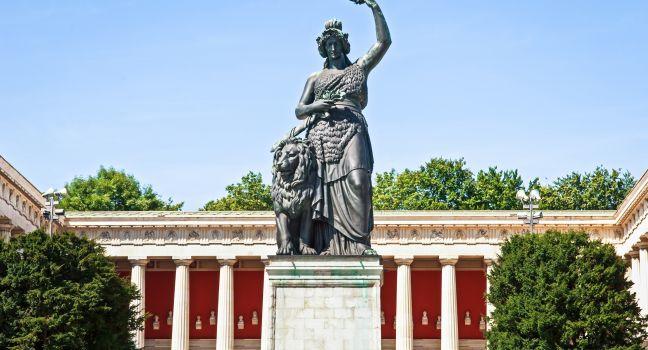
Famous statue of bavaria at the theresienwiese in munich, germany.
(c) Fottoo | Dreamstime.com

Overlooking the Theresienwiese, home of the Oktoberfest, is a 19th-century hall of fame (Ruhmeshalle) featuring busts of famous Bavarian scientists, artists, engineers, generals, and philosophers, and a monumental bronze statue of the maiden Bavaria. Unsurprisingly, it was commissioned by the art- and architecture-obsessed King Ludwig I, though not finished before his abdication in 1848. The Bavaria is more than 60 feet high and at the time was the largest bronze figure since antiquity. The statue is hollow, and an initial 48 steps take you up to its base. Once inside, there are 66 steps to her knee, and a further 52 all the way into the braided head, where the reward is a view of Munich through Bavaria's eyes.

Bayerisches Nationalmuseum

Lehel
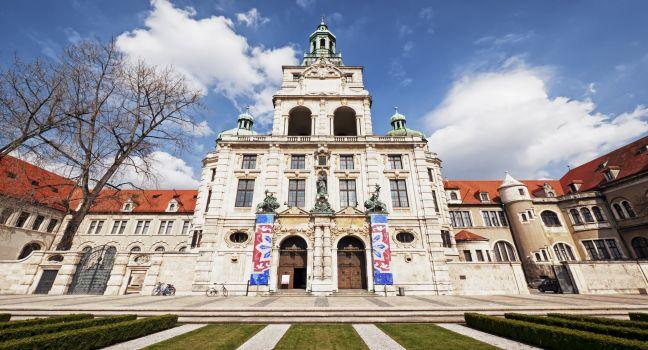
Famous bayerisches nationalmuseum in munich.
(c) Fottoo | Dreamstime.com

Although the museum places emphasis on Bavarian cultural history, it has art and artifacts of international importance and regular exhibitions that attract worldwide attention. The museum is a journey through time, principally from the early Middle Ages to the 20th century, with medieval and Renaissance wood carvings, a unique collection of Christmas crèches (the Krippenschau), and a significant Jugendstil (art nouveau) collection.

BMW Museum

Milbertshofen
MUNICH - GERMANY JUNE 12: BMW building museum on June 12, 2011, Munich, Germany. The BMW Museum is located near the Olympiapark in Munich and was established in 1972 shortly before the Summer Olympics; Shutterstock ID 115418476; Project/Title: Photo Databa
meunierd/Shutterstock

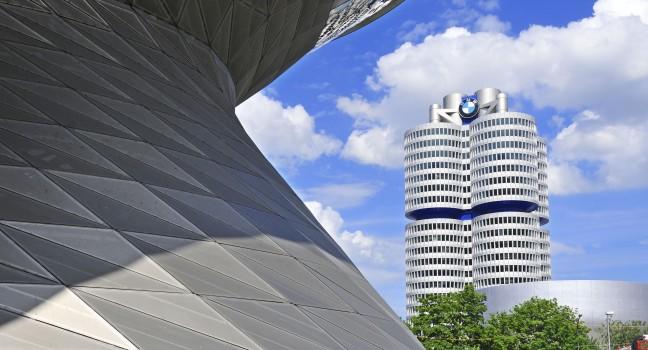
Munich serves as the headquarters for the famous BMW car company. The circular tower of its museum in the Olympiapark is one of the defining icons of Munich's modern cityscape. It contains not only a dazzling collection of BMWs old and new but also items and exhibitions relating to the company's social history and its technical developments. 

Am Olympiapark 2, Munich, 80809, Germany
089-1250–16001
Sight Details
€12
Closed Mon.

Something incorrect in this review?

BMW Welt

Milbertshofen
MUNICH - SEPTEMBER 4: The BMW World in Munich at night on September 4, 2014 in Munich.
(c) Kunertus | Dreamstime.com

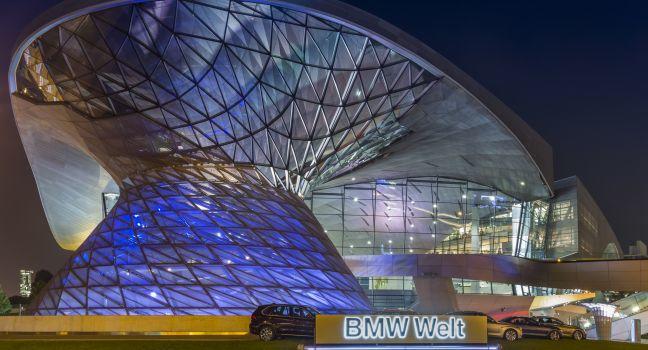
Opened in 2007, the cutting-edge design of BMW Welt, with its sweeping, futuristic facade, is one structure helping to overcome the conservative image Munich has had in the realm of architecture since 1945. Even if you have just a passing interest in cars and engines, this showroom is a must—it has averaged 2 million visitors a year since its opening. In addition to tours of the building, there are readings, concerts, and exhibitions. Tours are in high demand, so it's best to book ahead via telephone or email. You can also visit the BMW Plant to see how a BMW car is made. It can be toured on weekdays (minimum age to participate is six, with an adult). Registration for plant tours, which last for two hours, is only possible with a reservation. The tours start and finish at the north information counter at BMW Welt. Reserve at least two weeks in advance via phone or email; see the website for details.

\n

Am Olympiapark 1, Munich, 80809, Germany
089-1250–16001
Sight Details
BMW Welt tour €13; BMW Plant tour €18
BMW Plant closed weekends

Something incorrect in this review?

Museum Fünf Kontinente

Lehel
Five continents museum in munich
(c) Tomnex | Dreamstime.com

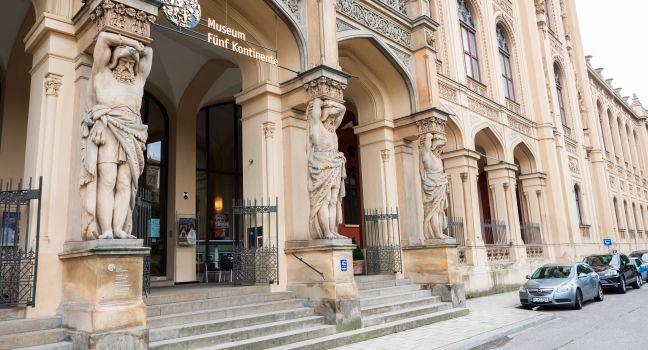
Founded in 1862, this museum houses an enormous quantity of ethnographic articles from around the world, including arts, crafts, photographs, and library material. The extensive museum takes a peek into non-European cultures from Africa, America, Asia, Australia, the Near and Middle East, and the South Seas to see how they differ (or not) from Europe with both permanent displays and special exhibits.

Neues Schloss Schleissheim

Neues Schloss of the Schleissheim Palace, Germany;
Scirocco340 / Shutterstock

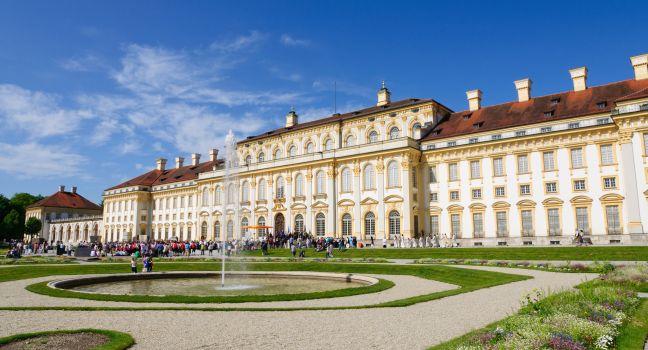
Duke Wilhelm V found the perfect peaceful retreat outside Munich, and in 1598 built what is now known as the Altes Schloss Schleissheim (Schleissheim Old Palace). In 1685 Elector Max Emanuel added Lustheim, which houses one of Germany's most impressive collections of Meissen porcelain, and at the beginning of the 18th century the Neues Schloss Schleissheim (Schleissheim New Palace). This baroque palace's rooms display great works of art and outstanding interior decoration.

Olympiapark

Milbertshofen
Munich, Germany - TV Tower in Munich's Olympic Park (Germany).
(c) Fottoo | Dreamstime.com

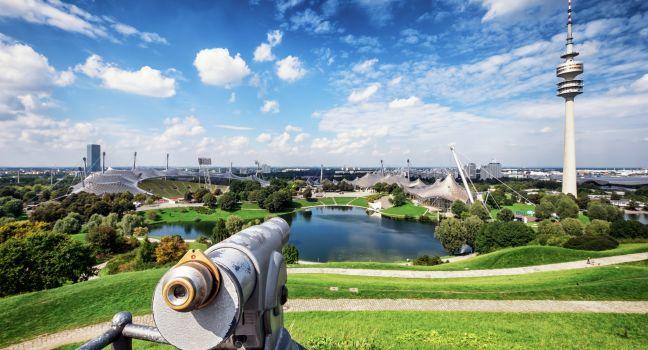
Built for the 1972 Olympic Games on the staggering quantities of rubble delivered from the wartime destruction of Munich, the Olympiapark was—and still is—considered an architectural and landscape wonder. The jewel in the crown is the Olympic Stadium, former home of Bayern Munich soccer team. With its truly avant-garde sweeping canopy roof, winding its way across various parts of the complex, it was an inspired design for the big events of the 1972 Olympic Games. Tragically, a bigger event relegated what was heading to be the most successful Games to date to the sidelines. It was from the adjacent accommodation area that a terrorist attack on the Israeli team began, eventually leaving 17 people dead.

\n

Unlike many former Olympic sites around the world, today the area is heavily used; it's home to numerous concerts and sporting events, and is a haven for joggers, swimmers, and people just wishing to relax. Tours of the park are conducted on a Disneyland-style train throughout the day. For the more adventurous, how about climbing the roof of the Olympic Stadium and rappelling down or zip-lining 115 feet in the air across the stadium? 

Spiridon-Louis-Ring 21, Munich, 80809, Germany
089-3067–0
Sight Details
Stadium €3.50; Stadium tour €10
Stadium closed Mon.; Olympic Tower closed until 2026.

Something incorrect in this review?

Altes Rathaus

Altstadt

Much of the work on Munich's first town hall was done in the 15th century, though various alterations were made through the centuries. Its great hall—destroyed in 1943–45 but now fully restored—was the work of the renowned architect Jörg von Halspach. Postwar, the tower was rebuilt as it looked in the 15th century and now it's used for official receptions and is not usually open to the public. The tower provides a fairy-tale-like setting for the Spielzeugmuseum (Toy Museum), accessible via a winding staircase. Its toys, dolls, and teddy bears are on display, together with a collection of Barbies from the United States.

Archäologische Staatssammlung

Altstadt

This is Bavaria's fascinating record of its history, from prehistoric times through the Middle Ages through a rich collection of archaeological finds. Head down to the basement to see the fine Roman mosaic floor, and head up to the SOLÂ restaurant and its seasonal open-air terrace.

Lerchenfeldstrasse 2, Munich, 80538, Germany
089-1259--96910
Sight Details
€7 (€1 on Sun.)
Closed Mon.

Something incorrect in this review?

Bavaria Filmstadt

Geiselgasteig

For movie buffs, Munich has its own Hollywood-like neighborhood, the Geiselgasteig, in the affluent Grünwald district, on the southern outskirts of the city. A number of notable films, such as Die Unendliche Geschichte (The Neverending Story), were made here. Visitors can peek into the submarine used in the filming of Das Boot (The Boat) and see the space station set from the recent sci-fi thriller Stowaway. Admission price includes a 90-minute guided tour and entry to the cinema, which screens a 10-minute family-friendly film complete with motion simulator and 4D effects. A daily tour in English is offered on most days at noon; if not, free audio guides are available.

Bavariafilmpl. 7, Munich, 82031, Germany
089-6499–2000
Sight Details
€23

Something incorrect in this review?

Botanischer Garten

Nymphenburg

On the northern edge of Schloss Nymphenburg, this collection of some 19,000 plants, including orchids, cacti, cycads, alpine flowers, and rhododendrons, covers over 52 acres and makes up one of the most extensive botanical gardens in Europe. It is also used to provide a refuge for bee species, and for scientific research by local university students.

Menzingerstr. 65, Munich, 80638, Germany
089-1786–1321
Sight Details
€5.50

Something incorrect in this review?

Deutsches Jagd- und Fischereimuseum

Altstadt

This quirky museum is in the enormous former St. Augustus Church, and it contains a large collection of fishhooks, taxidermy animals (including a 6½-foot-tall brown bear and a grizzly from Alaska), and a 12,000-year-old megaloceros (giant deer) skeleton. You'll even find the Wolpertinger, a mythical creature with body parts of various animals. There are also rotating special exhibitions exploring native wildlife, as well as the history of hunting and fishing.

Karlsplatz

Altstadt

In 1728, Eustachius Föderl opened an inn and beer garden here, which might be how the square came to be called Stachus—it's still called that by the locals although both are long gone. One of Munich's most popular fountains is here. It’s a magnet on hot summer days and makes way for an ice-skating rink in winter. Karlsplatz is a bustling meeting point, even more so because of the underground shopping center.

MUCA München—Museum for Urban and Contemporary Art

Altstadt

Did you know that Munich was a pioneer of the European graffiti scene? Since 2016, MUCA has contributed to the historical acknowledgment of the urban street art scene and is the first museum of urban art in Germany in the very heart of Munich’s city center. While the facade of the former World War II bunker is an artwork in itself, the three floors showcase changing exhibitions as well as permanent works of national and international street artists. The museum also offers Street Art Bike Tours to known and hidden graffiti art, which end at the MUCA Museum. If you want to add a fancy meal to your visit, the mural restaurants serves lunch and dinner on select days. 

Hotterstr. 12, Munich, 80331, Germany
Sight Details
From €12
Closed Mon.

Something incorrect in this review?

Münzhof

Altstadt

Originally built between 1563 and 1567, the ground floor was home to Duke Albrecht V's stables, the second floor to living quarters for the servants, and the third to the ducal collection of high art and curiosities (6,000 pieces by 1600). Between 1809 and 1983 it housed the Bavarian mint, and a neoclassical facade, with allegories of copper, silver, and gold, was added in 1808–09. Today, with its slightly garish green exterior on three sides, it can appear to be little more than the somewhat undistinguished home to the Bavarian Land Bureau for the Conservation of Historic Monuments, but step inside the inner arcade to see a jewel of German Renaissance architecture.

Hofgraben 4, Munich, 80539, Germany
Sight Details
Free
Closed weekends

Something incorrect in this review?

Nationaltheater

Altstadt

Bavaria's original National Theater at Max-Joseph-Platz didn't last long. Opened in 1818, it burned to the ground in 1823 before it was completely finished. By 1825 it was rebuilt with its eight-column portico, and went on to premiere Richard Wagner's world-famous Tristan und Isolde (1865), Meistersinger von Nürnberg (1868), Rheingold (1869), and Walküre (1870). Allied bombs destroyed much of the interior in 1943, and its facade and elements of its interior were rebuilt as it was prewar. It finally reopened in 1963. Today, it is one of Europe's largest opera houses and contains some of the world's most advanced stage technologies. As the principal home to the Bavarian State Opera, it is considered one of the world's outstanding opera houses. Family opera is also available for children under 18 with an accompanying adult. The Munich Opera Festival takes place in late June and July, including performances, free open-air Opera for All events, and live streaming opera online with Staatsoper TV.

Max-Joseph-Pl. 2, Munich, 80539, Germany
089-2185–1025
Sight Details
From €5

Something incorrect in this review?

Schloss Dachau

This hilltop castle, built in 1715, dominates the town. During the Napoleonic Wars the palace served as a field hospital and then was partially destroyed. King Max Joseph lacked the money to rebuild it, so all that's left is a handsome cream-and-white building, with an elegant pillared and lantern-hung café on the ground floor and a former ballroom above. About once a month the grand Renaissance hall, with a richly decorated and carved ceiling, is used for chamber concerts. The east terrace affords panoramic views of Munich and, on fine days, the distant Alps.

Staatliche Münzsammlung

Altstadt

More than 300,000 coins, banknotes, medals, and precious stones, some 5,000 years old, are among the treasures of the Bavarian State Coin Collection.

Staatliche Sammlung Ägyptischer Kunst

Maxvorstadt

Various Bavarian rulers were fascinated with the ancient world and in the 19th century accumulated huge quantities of significant Egyptian treasures, part of which make up the Staatliche Sammlung Ägyptischer Kunst. The collection is housed in an impressive modern building in Munich's superb Kunstareal.

Gabelsbergerstr. 35, Munich, 80333, Germany
089-2892–7630
Sight Details
€7
Closed Mon.

Something incorrect in this review?

Tierpark Hellabrunn

Harlaching

On the Isar, just upstream from the city, this attractive zoo has many parklike enclosures but a minimum of cages. Founded in 1911, the zoo is slightly different from many others in that it's a self-styled nature reserve, and it follows a concept called Geo-zoo, which means care has been taken to group animals according to their natural and geographical habitats. Critics of the concept of zoos won't agree, but supporters appreciate the extra attention to detail. The huge zoo area, covering nearly 100 acres, also includes restaurants and children's areas, and some of the older buildings are in typical art nouveau style.

Tierparkstr. 30, Munich, 81543, Germany
089-625–080
Sight Details
€18

Something incorrect in this review?