Museums / Galleries, Louvre/Tuileries
Fodor's Review:
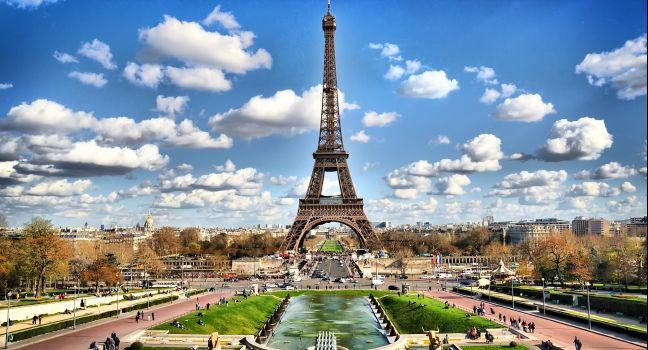
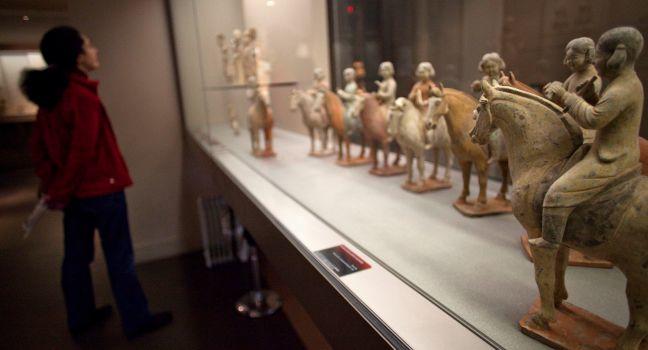
The most recognized symbol of Paris is the Tour Eiffel, but the ultimate traveler's prize is the Louvre. This is the world's greatest art museum -- and the largest, with representative examples from almost every civilization on earth. In addition to Leonardo da Vinci's eternally inscrutable Mona Lisa, you can see works by virtually every major pre-20th-century Western painter, heart tuggers such as Delacroix's Liberty Guiding the People, and entire wings devoted to French decorative arts, Iranian treasures, and classical fragments. There's a not unfounded stereotype of Americans racing through the building, timing each other as they jog past the Big Three (the Venus de Milo, the Winged Victory, and the Mona Lisa). It's far more enjoyable to take your time, but pace yourself: thousands of treasures are on display, and despite well-located benches, it's easy to get tired as you wander through rooms crowded with Botticellis, Caravaggios, Poussins, and Géricaults. The Louvre is a coherent, unified structure, but it can be overwhelming. Instead of trying to see everything, focus on highlights that interest you personally -- and don't despair if you get lost, for you're bound to stumble onto something fascinating.
The Louvre is much more than a museum -- it is a saga that started centuries ago. Begun as a fortress by Philippe-Auguste at the turn of the 13th century, it became a royal residence under Charles V, who moved into the Louvre in 1364 after a bloody revolt on Île de la Cité. It was not until the 16th century, under François I, that today's Louvre began to take shape. Successive rulers expanded and adapted the palace, trying to make it both more comfortable and more impressive. In 1572 Henri de Navarre, who became Henri IV, narrowly escaped assassination here, while his retinue was slaughtered and the St. Bartholomew's Day Massacre raged through the capital. In 1594 he returned to the palace to outline a sweeping expansion plan. Through the years Louis XIII, Louis XIV, Napoléon I, and Napoléon III all contributed to its construction.
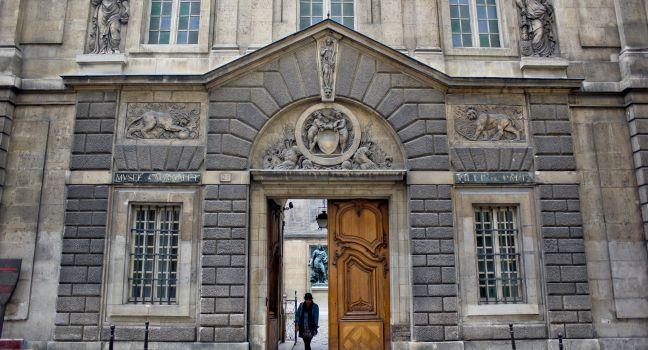
The construction of the stately Cour Carrée (Square Court), mainly during the reign of Louis XIII, marked the beginning of the Louvre as you see it today. When a competition for architects to design a suitably imposing east facade was held in 1668, a young draftsman named Claude Perrault teamed up with the seasoned illustrator and painter Charles Le Brun to produce the winning proposal. You'd have thought its muscular rhythms would have wowed the Sun King, but he left the city for Versailles in 1682, making only rare visits to the Louvre, which unsurprisingly fell into disrepair. After the Revolution, part of the Louvre was opened as a public museum, its galleries stocked with nationalized art taken from the Church, the royal family, and the nobility. Napoléon Bonaparte's military campaigns at the turn of the 19th century brought a new influx of holdings, as his soldiers carried off treasures from each invaded country. But Parisians had only a limited time to enjoy the new collection: with Napoléon's fall in 1815, the museum was forced to return many of its works to the original owners. Three more French kings, Louis XVIII, Charles X, and Louis-Philippe, followed by Emperor Napoléon III, all used the Louvre as their power base. During World War II some of the most precious artworks were hidden, while the remainder was looted; German occupiers used the Louvre's rooms as office spaces. Most of the stolen pieces were recovered after the liberation of Paris. No large-scale changes were made until François Mitterrand was elected President in 1981.
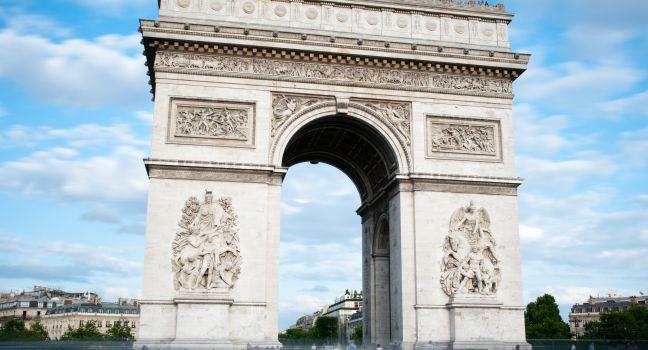
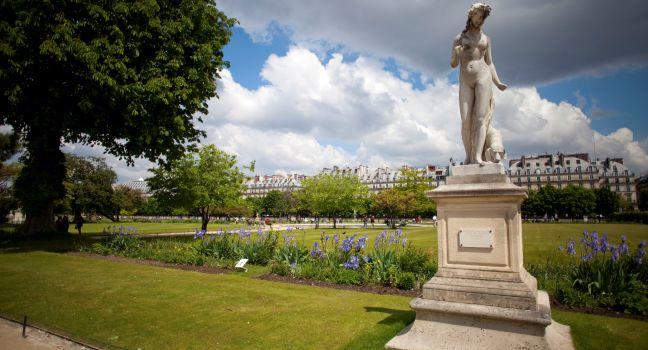
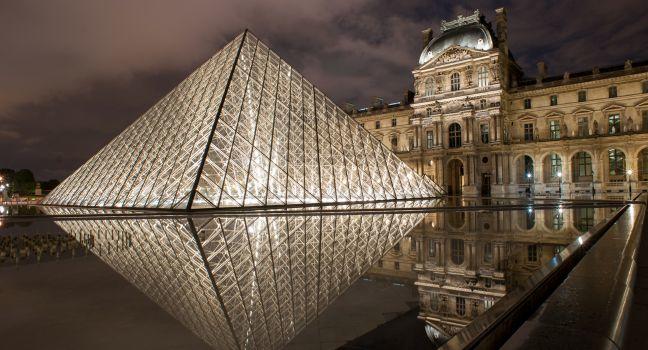
Mitterrand viewed Paris the way a king might consider his palace: the city was to be an architectural reflection of his power and taste. His Grands Projets studded Paris with new and updated monuments, kicking off with the renovation of the Louvre. Mitterrand commissioned I. M. Pei's Pyramide, the giant glass pyramid surrounded by three smaller pyramids in the Cour Napoléon. Unveiled in March 1989, it's more than just a grandiloquent gesture; the pyramid provided a new, much-needed museum entrance. Moreover, it acts as a viewpoint for the majestic vista stretching through the Arc du Carrousel, the Jardin des Tuileries, across place de la Concorde, up the Champs-Élysées to the towering Arc de Triomphe, and ending at the giant modern arch at La Défense, 4 km (2 1/2 mi) farther west.
The Pyramide is now the museum's main entry point. To get into the Louvre, you may have to wait in two long lines: one outside the Pyramide entrance and another downstairs at the ticket booths. There is another entrance at the Porte de Lions, on the Seine side of the museum's wing that reaches into the Jardin des Tuileries, but this door is often closed. The third, and often quickest, entrance is in the underground mall, Carrousel du Louvre, where you can buy passes at automatic ticket machines. Be sure to hold onto your ticket; it will get you into any and all wings as many times as you like during one day.
Once inside, you should stop by the information desk to pick up a free color-coded map and check which rooms are closed for the day. (Closures rotate through the week.) Beyond this, you'll have all you need -- shops, a post office, and places to eat. Café Marly may have an enviable location facing into the Cour Napoléon, but its food is decidedly lackluster. For a more soigné lunch, keep your appetite in check until you get to the museum's stylish Café Richelieu, or head outside the palace walls. (Remember, your entry ticket is valid all day and once you have your ticket you can skip the entry line.)
The awesome collections are divided into sections: Near Eastern antiquities, Egyptian antiquities, Greek and Roman antiquities, sculpture, objets d'art, paintings, and prints and drawings. The Louvre also has temporary exhibitions. The museum bookstore sells plenty of English-language books and catalogs that delve into the collections. There's also a full calendar of lectures, films, concerts, and special exhibits; some are part of the excellent lunch-hour series called Les Midis du Louvre. Most are not included in the basic ticket price -- pick up a three-month schedule at the information desk or check online for information.
Member Reviews & Ratings:
Visit the Travel Talk forums for help on planning your trip