


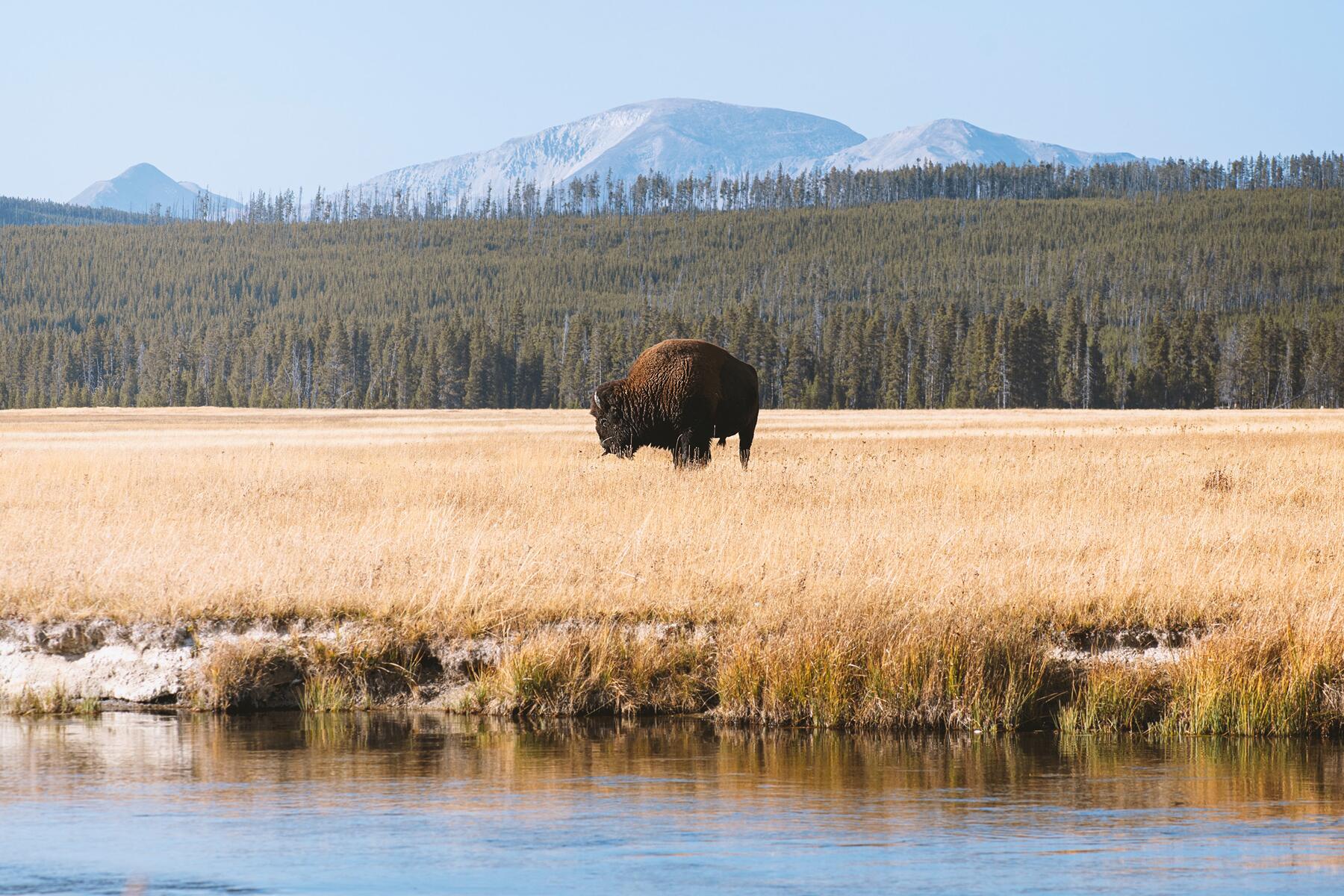

A bison calf was euthanized due to human interference.
On May 20, a visitor to Yellowstone National Park saw a baby bison struggling in Lamar Valley. The calf had separated from its herd while crossing the Lamar River, and the man carried it onto the roadway. This seemingly kind act cost the baby its life.
Park officials reported that rangers tried to help the calf rejoin its herd, but the efforts proved futile as human interference often leads to the herd rejecting their offspring. Unfortunately, the baby bison had to be euthanized because it was “causing a hazardous situation by approaching cars and people along the roadway,” a press release explained.
Clifford Walters pled guilty to feeding, touching, teasing, frightening, or intentionally disturbing wildlife and he was fined more than $1,000.
Related: These National Parks Are Requiring Reservations in 2023
After backlash on social media, the park explained why there was no other course of action. As per federal and state regulations, bison can’t be transported out of the park without testing. Although Yellowstone has a quarantine facility, a newborn calf who can’t care for itself can’t be quarantined. So, the baby couldn’t be taken to a sanctuary.
Top Picks for You

Recommended Fodor’s Video
The calf was endangering itself and people around him with its behavior on roads. “We made the choice we did, not because we are lazy, uncaring, or inexpert in our understanding of bison biology,” said the statement from the park. “We made the choice we did because national parks preserve natural processes. By this we mean undomesticated wildlife and the ecosystems they both depend on and contribute to.”
The statement also explained the cycle of life, highlighting that 25% of the bison calves born this season will die and they will benefit other animals who feed on them.
Yellowstone is not a zoo and it doesn’t interfere with natural selection or biological processes. Hence, rehabilitation and rescue aren’t part of its mission.
In 2016, the same decision had to be made when visitors carried a baby bison into their car. The calf was rejected by its herd and it wasn’t eating and kept going to the roadways. It had to be put down so it didn’t starve to death or get hit by a car.
Let this serve as a lesson that you should stay away from wildlife when you’re visiting National Parks. You need to be at least 25 yards away from wildlife including bison, elk, and deer, and 100 yards from bears and wolves.
Related: What’s Better: Yellowstone National Park or Wind River?
Leave Them Alone
Sadly, it isn’t the only incident of humans disturbing wildlife this season.
Visitors over the Memorial Day weekend picked up a newborn elk, put it in their car, and drove it to the police station. The calf ran off into the forest and officials have no information about its whereabouts.
In another video that surfaced online, a woman was seen taking selfies with a resting bison. Instagram account Tourons of Yellowstone has more such stunts from tourists who completely disregarding park rules.
After several such instances, Yellowstone made another appeal to visitors to stay away from wildlife for everyone’s safety. “Approaching wild animals can drastically affect their well-being and, in some cases, their survival. When an animal is near a campsite, trail, boardwalk, parking lot, on a road, or in a developed area, leave it alone and give it space.”
It also reminded tourists to drive 55 mph or less on U.S. Highway 191 and stay under 45 mph on park roads. “Use extra caution at night. Animal fur absorbs light, making them very difficult to see on roads at night, even while using bright headlights.” This warning comes after two adult black bears were struck by cars and killed on U.S. 191.
The park welcomed 4.86 million visitors in 2021, making it the busiest year ever. Now that summer is here, camping trips and national park visits will increase. But if you’re planning to spend time in the wild, mind the warnings and follow the rules. If you notice someone behaving in a harmful way, talk to a ranger or call 911.
Related: Have You Made a Reservation for the National Parks Yet? You Better Read This