88 Best Sights in USA

Background Illustration for Sights

We've compiled the best of the best in USA - browse our top choices for the top things to see or do during your stay.

Casino Point Dive Park

The crystal clear waters of the Casino Point Dive Park are home to protected marine life. This is where moray eels, bat rays, spiny lobsters, harbor seals, and brilliant orange garibaldi (California's state marine fish) cruise around kelp forests and along the sandy bottom. It's a terrific site for scuba diving, with some shallow areas suitable for snorkeling. Equipment can be rented on-site next to the world-famous Catalina Casino. Water temperature ranges in the mid-60s to low 70s during the summer, with September to mid-October being the warmest.

CSKT Bison Range

Fodor's Choice
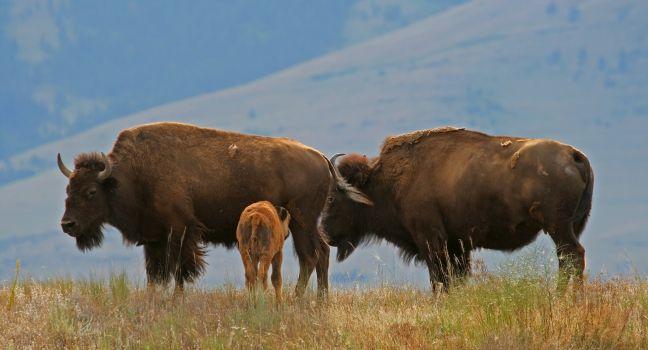
American bison (Bison bison) with calf, National Bison Range, Montana
Larsek / Shutterstock

The Red Sleep Mountain Drive, a 19-mile loop road, allows close-up views of bison, elk, pronghorn, deer, and mountain sheep. The gravel road rises 2,000 feet and takes about two hours to complete; you're required to begin the drive no later than 6 pm and to finish before the gate closes at 8 pm. The 19,000-acre refuge at the foot of the Mission Mountains was established in 1908 by Theodore Roosevelt. Today the Confederated Salish and Kootenai Tribes own the refuge and manage the herd of approximately 350 bison. A visitor center explains the history, habits, and habitat of the bison. To reach the bison range, follow the signs west, then north from the junction of U.S. 93 and Route 200 in Ravalli.

58355 Bison Range Rd., Moiese, MT, 59824, USA
406-644–2211
Sight Details
$20 per vehicle
Scenic Dr. and Red Sleep Rd. closed Nov.--Apr.

Something incorrect in this review?

Dungeness Spit

Fodor's Choice
Driftwood and logs at the beach on Dungeness spit, Washington
Eugene Kalenkovich / Shutterstock

Curving nearly 6 miles into the Strait of Juan de Fuca, the longest natural sand spit in the United States is a wild, beautiful section of shoreline. More than 30,000 migratory waterfowl stop here each spring and fall, but you'll see plenty of birdlife year-round. The entire spit is part of the Dungeness National Wildlife Refuge. You can access it from the trail that begins in the 216-acre Dungeness Recreation Area, which serves as a portal to the shoreline. At the end of the spit is the towering white 1857 New Dungeness Lighthouse ( www.newdungenesslighthouse.com). Tours, including a 74-step climb to the top, are available, though access is limited to those who can hike 5½ miles or paddle about 3½ miles out to the end of the spit—the closest launch is from Cline Spit County Park, and boaters are required to call the refuge office before landing. You can also enroll to serve a one-week stint as a lighthouse keeper. If you'd prefer not to make the long trek to the lighthouse, an endeavor you should only attempt at low tide to avoid having to climb over massive driftwood logs, you can still take in beautiful scenery and spot myriad wildlife by hiking a mile or so out along the spit and back.

Recommended Fodor's Video

Beaver Marsh Boardwalk

Fodor's Choice

Just north of the Ira Trailhead on the Towpath Trail, this former junkyard-turned-boardwalk is one of the top wildlife-viewing locations in the park. Forty years ago, the area was littered with broken-down automobiles; today, it teems with more than 50 nesting bird species and other wildlife, mainly beavers, who’ve made a comfortable home of the surrounding marshlands. Designated as an Important Bird Area by the National Audubon Society, Beaver Marsh Boardwalk is an ideal spot for hikers and trail runners looking to take in the view. Waterfowl, wrens, sparrows, orioles, frogs, water snakes, and even the occasional otter make appearances here.

Best Friends Animal Sanctuary

Fodor's Choice

On a typical day, this 3,700-acre compound 7 miles north of town houses some 1,600 rescued animals, mostly dogs and cats but also horses, rabbits, farm animals, and even wildlife in need of shelter. They receive dozens of visitors who come to take one of the free 90-minute tours (offered four times daily) or a special tour of Dogtown, Cat World Headquarters, Bunny House, Parrot Garden, or one of the other animal-specific areas of the sanctuary and to walk through the animal cemetery or even hike in adjacent Angel Canyon. Founded in 1984 and with several other adoption centers and offices around the country, Best Friends is the largest animal sanctuary in the United States and one of the world's most successful and influential no-kill animal rescue advocacy organizations. It's a rewarding visit if you love animals, and if you have the time and interest, you and your family can volunteer for a day at this amazing place. The organization also operates the Best Friends Roadhouse and Mercantile, a unique pet-centric hotel and gift shop. All tours should be booked online or by phone, even if same day.

Bill Frank Jr. Nisqually National Wildlife Refuge

Fodor's Choice

More than 250 different bird species along with a slew of reptiles, mammals, and amphibians thrive amid the marshes and grasslands of this 4,529-acre refuge—the largest estuary restoration in the Pacific Northwest—situated on the delta formed by the Nisqually River's confluence with Puget Sound. Just 8 miles east of downtown Olympia, the tranquil space feels a world away from civilization and is laced with 4 miles of trails, some of them along boardwalks. Naturalists lead guided walks and give lectures on weekends from April through September, and a visitor center contains exhibits and a nature store.

Bosque del Apache National Wildlife Refuge

Fodor's Choice

Hundreds of different types of birds, including snow geese, cranes, herons, and eagles, can be spotted from viewing platforms and directly through your car window at the popular Bosque del Apache National Wildlife Refuge. Besides serving as a rest stop for migrating birds, the Bosque del Apache also shelters mule deer, turkeys, quail, and other wildlife. Photo opportunities abound on the 12-mile auto loop tour; you can also hike through arid shrub land or bike through the refuge or take a van tour. October and November are the months the cottonwoods show their colors. In winter months, the refuge echoes with the haunting cries of whooping cranes flocking for the evening. Snow geese are so thick on lakes at times that shores are white with feathers washed ashore. Whether you're a bird-watcher or not, it is well worth bringing binoculars or a spotting scope to get some idea of how many varieties of birds land here (nearly 400 species have been spotted since 1940). The Festival of the Cranes () in mid-November draws thousands of people.

Botany Bay Heritage Preserve

Fodor's Choice
This 3,363-acre wildlife management area was deeded to the state by a private owner in the early 2000s and is now one of the most popular publicly accessible natural beaches in South Carolina. The boneyard beach stretches over nearly a mile of forest overtaken by the ocean. Walk amid the fallen trees at low tide, or watch the waves overtake them at high tide. A driving tour passes through impoundments and maritime forest and past saltwater marsh, making it one of the most diverse and car-accessible coastal habitats in the Southeast. For birders, it's the Lowcountry's closest thing to paradise. If you're visiting in the fall, note that most weekends and some entire weeks are closed to allow for deer hunting.

Cape Romain National Wildlife Refuge

Fodor's Choice

Maritime forests, barrier islands, salt marshes, beaches, and coastal waterways make up this 66,287-acre refuge established in 1932 as a migratory bird haven. The Sewee Visitor and Environmental Education Center has information and exhibits on the property and its trails, as well as an outdoor enclosure housing endangered red wolves. The refuge is aiding the recovery of the threatened loggerhead sea turtle, and a video details the work. From the mainland refuge, you can take a $40 ferry ride to remote and wild Bulls Island to explore its boneyard beach and freshwater ponds teeming with alligators.

Crystal River National Wildlife Refuge

Fodor's Choice

This is a U.S. Fish and Wildlife Service sanctuary for the manatee. Kings Bay, around which manatees congregate in winter (generally from November to March), feeds crystal clear water into the river at 72°F year-round. This is one of the sure-bet places to see manatees in winter since hundreds congregate near this 90-acre refuge. The small visitor center has displays about the manatee and other refuge inhabitants.

If you want to get an even closer look at these gentle giants, several dive companies provide opportunities for you to swim among them—if you don't mind shelling out some extra cash, donning a wet suit, and adhering to some strict interaction guidelines. In warmer months, when most manatees scatter, the main spring is fun for a swim or scuba diving.

Havasu National Wildlife Refuge

Fodor's Choice

Situated between Needles and Lake Havasu City, this spectacular 37,515-acre refuge is home to wintering Canada geese and other waterfowl, such as the snowy egret and the great blue heron. More than 315 species have been observed resting and nesting here.

Hawaiian Islands Humpback Whale National Marine Sanctuary

Fodor's Choice

This nature center sits in prime humpback-viewing territory. Whether the whales are here or not, the education center is a great stop for youngsters curious to know more about underwater life and for anyone eager to gain insight into the cultural connection between Hawaii and its whale residents. Interactive displays and informative naturalists explain it all, including the sanctuary that acts as a breeding ground for humpbacks. Throughout the year, the center hosts activities that include talks, labs, and volunteer opportunities. The sanctuary itself includes virtually all the waters surrounding the archipelago. Just outside the visitor center is the ancient Koieie fishpond; it is a popular place for locals to bring their children to wade in the water.

John Heinz National Wildlife Refuge at Tinicum

South Philadelphia Fodor's Choice

Part of the appeal of this refuge is its truly strange location for a nature preserve: it's between the airport and an oil refinery, and visitors seem to really enjoy the oddity of it. More than 280 species of hawks, swallows, herons, egrets, geese, gallinules, eagles, orioles, ducks, and other birds have been spotted at this 1,200-acre preserve, the largest remaining freshwater tidal marsh in Pennsylvania. There are 10 miles of foot trails, an observation deck, and boardwalks through the wet areas. The refuge is also home to fox, deer, muskrat, turtles, and frogs, and you'll likely see large carp and catfish flopping about the lilies. An environmental education center has some explanatory exhibits on wetlands and regional wildlife. There are many guided tours. You can even canoe, kayak, and mountain bike, but there are no rentals here. Binoculars and fishing rods are available for loan, free of charge. The refuge is convenient to I–95, which you can pick up from Penn's Landing.

Kilauea Point National Wildlife Refuge and Kilauea Lighthouse

Fodor's Choice

A beacon for sea traffic since it was dedicated in 1913, this National Historic Landmark has the world's largest clamshell lens in a lighthouse and stands within a wildlife refuge where thousands of seabirds soar on the trade winds and nest on the steep ocean cliffs. It's well worth the site's modest entry fee to see nene geese (the state bird, a threatened species), white- and red-tailed tropic birds, and more (identifiable by educational signboards), as well as native plants, dolphins, humpback whales (in season), the huge winter surf, and gorgeous North Shore views. The gift shop has a great selection of books about the island's natural history and an array of unique merchandise, with all proceeds benefiting education and preservation efforts. Advance reservations are required via  recreation.gov.

Kodiak National Wildlife Refuge

Fodor's Choice

Just the opportunity to view Kodiak brown bears alone is worth the trip here. Approximately 3,000 Kodiak brown bears, the biggest brown bears anywhere—sometimes topping out at more than 1,500 pounds—share the refuge with a few other land mammals: red foxes, river otters, short-tailed weasels, and tundra voles. Additionally, a number of mammals have been introduced to the archipelago: Sitka black-tailed deer, snowshoe hare, beavers, muskrat, Roosevelt elk, and mountain goats. The 1.9-million-acre refuge lies mostly on Kodiak Island and neighboring Afognak and Uganik Islands, in the Gulf of Alaska. All are part of the Kodiak Archipelago, separated from Alaska's mainland by stormy Shelikof Strait.

Within the refuge are rugged mountains, tundra meadows and lowlands, and thickly forested hills, plus lakes, marshes, and hundreds of miles of pristine coastland. No place in the refuge is more than 15 miles from the ocean. The weather here is generally wet and cool, and storms born in the North Pacific often bring heavy rains. Dozens of species of birds flock to the refuge each spring and summer, including Aleutian terns, horned puffins, black oystercatchers, ravens, ptarmigan, and chickadees. At least 600 pairs of bald eagles live on the islands, building the world's largest bird nests on shoreline cliffs and in tall trees. Six species of Pacific salmon—chums, kings, pinks, silvers, sockeyes, and steelhead—return to Kodiak's waters from May to October. Other resident species include rainbow trout, Dolly Varden (an anadromous trout waiting for promotion to salmon), and arctic char. The abundance of fish and bears makes Kodiak National Wildlife Refuge popular with anglers, hunters, and wildlife watchers.

Little Bookcliffs Wild Horse Range

Fodor's Choice

One of just three ranges in the United States set aside for wild horses, this range encompasses 36,113 acres of rugged canyons and plateaus in the Bookcliffs. Between 90 and 150 wild horses roam the sagebrush-covered hills. Most years new foals can be spotted with their mothers in spring and early summer on the hillsides just off the main trails. Local favorites for mountain biking and hiking include the Coal Canyon Trail and Main Canyon Trail, where the herd often goes in winter. Vehicles are permitted on designated trails.

Loggerhead Park Marine Life Center of Juno Beach

Fodor's Choice

Located in a certified green building in Loggerhead Park—and established by Eleanor N. Fletcher, the "turtle lady of Juno Beach"—the center focuses on the conservation of sea turtles, using education, research, and rehabilitation. The education center houses displays of coastal natural history, detailing Florida's marine ecosystems and the life and plight of the various species of sea turtles found on Florida's shores. You can visit recovering turtles in their outdoor hospital tanks; volunteers are happy to tell you the turtles' heroic tales of survival. The center has regularly scheduled activities, such as Kids' Story Time and Junior Vet Lab, and most are free of charge. During peak nesting season, the center hosts night walks to experience turtle nesting in action. Given that the adjacent beach is part of the second-biggest nesting ground for loggerhead turtles in the world, your chances of seeing this natural phenomenon are pretty high (over 15,000 loggerheads nested here during one recent season).

Lower Klamath National Wildlife Refuge

Fodor's Choice

As many as 500 bald eagles make Klamath Basin their rest stop, amounting to the largest wintering concentration of these birds in the contiguous United States. Located along the Pacific Flyway bird migration route, the more than 50,000 acres of freshwater wetlands in this complex of six different refuges serve as a stopover for around 1.8 million waterfowl in the fall. Any time of year is bird-watching season; more than 400 species of birds—including about 30 types of raptors—have been spotted in the Klamath Basin, along with many mammals, reptiles, and amphibians. For a leisurely excursion by car, follow the tour routes in the Lower Klamath and Tule Lake refuges—the latter has a superb bookstore and visitor center and is also a short drive from Lava Beds National Monument.

Manatee Lagoon

Fodor's Choice

Once a casual spot next to the local electric plant's discharge waters, this center celebrating the manatee—South Florida's popular winter visitors—opened at a spot where the peaceful creatures naturally congregate. The airy, two-story facility is surrounded by wraparound decks to accommodate sea-cow spotters from fall to spring. Educational, interactive displays tell the story of this once-endangered species. A long deck along the seawall leads to picnic pavilions from where you can watch the action at nearby Peanut Island and the Port of Palm Beach. Free admission makes it group-friendly; a live "manatee cam" shows manatee counts before you go. The center offers various community events but requires advance registration; check their calendar for details.

Mass Audubon Wellfleet Bay Wildlife Sanctuary

Fodor's Choice

Encompassing nearly 1,000 acres, this reserve is home to more than 300 species of birds. A jewel of Mass Audubon's statewide network of wildlife sanctuaries, Wellfleet Bay is a superb place for walking, birding, and watching the sun set over the salt marsh and Cape Cod Bay. The Esther Underwood Johnson Nature Center contains six aquariums that offer an up-close look at marine life common to the region's tidal flats, marshes, and ponds. From the nature center you can hike five short nature trails, including a fascinating boardwalk trail that leads over a salt marsh to a small beach, or you can wander through the pollinator garden.

Merritt Island National Wildlife Refuge

Fodor's Choice

Owned by NASA but part of the National Wildlife Refuge System, this 140,000-acre refuge, which adjoins the Canaveral National Seashore, acts as a buffer around Kennedy Space Center while protecting 1,000 species of plants and 500 species of wildlife, 15 of which are considered threatened or endangered. It's an immense area dotted by brackish estuaries and marshes, coastal dunes, hardwood hammocks, and pine forests. You can borrow field guides and binoculars at the visitor center (5 miles east of U.S. 1 in Titusville on State Road 402) to track down falcons, ospreys, eagles, turkeys, doves, cuckoos, owls, and woodpeckers, as well as loggerhead turtles, alligators, wild boar, and otters. A 20-minute video about refuge wildlife and accessibility—only 10,000 acres are developed—can help orient you. This is a wild, natural area, not a zoo or theme park. Use appropriate caution, as this is home to snakes, alligators, and stinging insects.

You might take a self-guided driving tour along the 7-mile Black Point Wildlife Drive. Several roads and trails are vulnerable to hurricane damage, and may be closed if there has been a strong storm. Check the website or call ahead ( 321/861–2352) for updates on closures. If you exit the north end of the refuge, look for the Manatee Observation Deck, just north of the Haulover Canal (maps are at the visitor center). They usually show up in spring and fall. There are also fishing camps, fishing boat ramps, and six hiking trails scattered throughout the area. If you do want to fish, a free downloadable permit is required.

Monomoy National Wildlife Refuge

Fodor's Choice

This windswept landscape of sand, dunes, and marshes includes the Monomoy Islands, a fragile 8-mile-long barrier-beach area south of Chatham. A haven for bird-watchers, the refuge is an important stop along the North Atlantic Flyway for migratory waterfowl and shorebirds—peak migration times are May and late July. It also provides nesting and resting grounds for 25 species, including gulls—great black-backed, herring, and laughing—and several tern species. White-tailed deer wander the islands, and harbor and gray seals frequent the shores in winter. The only structure on the islands is the Monomoy Point Light Station, built in 1849. The visitor center offers maps and some guided walks in the summer (open Memorial Day through Labor Day.) 

Pryor Mountain Wild Horse Range

Fodor's Choice

When Spanish explorers introduced horses to the Americas, some of the animals inevitably escaped and roamed wild across the land. You can see some of the last members of these breeds in the Pryor Mountain Wild Horse Range, the first such nationally designated refuge. Approximately 120 horses, generally broken into small family groupings, roam these arid slopes with bighorn sheep, elk, deer, and mountain lions. Coat variations such as grulla, blue roan, dun, and sabino indicate Spanish lineage, as do markings such as dorsal stripes, zebra stripes on the legs, and a stripe on the withers. The easiest way to view the herds is simply to drive along Route 37 and look out your window, but Pryor Wild Mustang Center in Lovell, Wyoming ( www.pryormustangs.org), offers tours from May 15 through September for $240/person.

Safari West

Fodor's Choice

An unexpected bit of wilderness in the Wine Country, this preserve with African wildlife covers 400 acres. Begin your visit with a stroll around enclosures housing lemurs, cheetahs, giraffes, and rare birds like the brightly colored scarlet ibis. Next, climb with your guide onto open-air vehicles that spend about two hours combing the expansive property, where more than 80 species—including gazelles, cape buffalo, antelope, wildebeests, and zebras—inhabit the hillsides. If you'd like to extend your stay, "glamping” in Botswana-made tent cabins is available.

3115 Porter Creek Rd., Santa Rosa, CA, 95404, USA
707-579–2551
Sight Details
From $110 Sept.–May, from $132 June–Aug.

Something incorrect in this review?

St. Marks National Wildlife Refuge and Lighthouse

Fodor's Choice

Natural salt marshes, tidal flats, and freshwater pools used by early Indigenous peoples set the stage for the once-powerful Ft. San Marcos de Apalache, which was built nearby in 1639. Stones salvaged from it were used to construct the lighthouse. In winter, the refuge on the shores of Apalachee Bay is the resting place for thousands of migratory birds of more than 270 species, but the alligators seem to like it year-round (keep your eyes open and your camera ready). Fishing is allowed, and the visitor center has information on more than 75 miles of marked trails. One of the most popular times to visit is in October, when Monarch butterflies flock to the refuge for a little R&R during their winter migration to Mexico. The refuge is 25 miles south of Tallahassee via Route 363.

Theodore Roosevelt Island

Fodor's Choice

Designed as a living memorial to the environmentally minded 26th U.S. president, this wildlife sanctuary is off the George Washington Parkway near the Virginia side of the Potomac—close to Foggy Bottom, Georgetown, East Potomac Park, and the Kennedy Center. Hikers and bicyclists can reach the island by crossing the Theodore Roosevelt Memorial Bridge or walking for 15 minutes from the Rosslyn Metro. Bikes are not allowed on the island and must be docked near the footbridge.

Tualatin River Wildlife Refuge

Fodor's Choice

This sanctuary for indigenous and migrating birds, waterfowl, and mammals is in Sherwood (about 18 miles south of Hillsboro). It is one of only a handful of national urban refuges in the United States and has restored much of the natural landscape common to western Oregon prior to human settlement. The refuge is home to nearly 200 species of birds, 50 species of mammals, 25 species of reptiles and amphibians, and a variety of insects, fish, and plants. It features an interpretive center, a gift shop, photography blinds, and restrooms. This restoration has attracted animals back to the area in great numbers, and with a keen eye, birders and animal watchers can catch a glimpse of these creatures year-round. In May the refuge hosts its Tualatin River Bird Festival.

Willapa National Wildlife Refuge

Fodor's Choice

Headquartered about 3 miles east of downtown Long Beach via a bumpy and windy road, this 17,000-acre refuge comprises four main units: the largest is Long Island, an estuarine island with old-growth forest that's reached by kayak or canoe, most easily from the boat ramp across from the smaller East Hills unit, off U.S. 101 about 11 miles north of Ilwaco. The South Bay unit, where the headquarters and a small visitor center are located, consists of wetlands and marshes inhabited by bear, elk, bobcats, and all sorts of birds. Three trails (½ to 2½ miles) traverse it. The Leadbetter Point Unit, which adjoins Leadbetter State Park at the north end of the peninsula, 3 miles beyond Oysterville, is great for bird-watching. Black brants, sandpipers, turnstones, yellowlegs, sanderlings, and knots are among the more than 200 species here. The dune area at the end of the point is closed from March to September to protect the nesting snowy plover. From the parking lot, the ½-mile  paved, wheelchair-accessible Beach Trail leads to the ocean, and a 2½-mile loop trail winds through the dunes along the ocean and Willapa Bay. Several trails along the loop lead to isolated patches of coastline. These trails flood from late fall through early spring, so call the headquarters for guidance at this time.

Alamosa National Wildlife Refuge

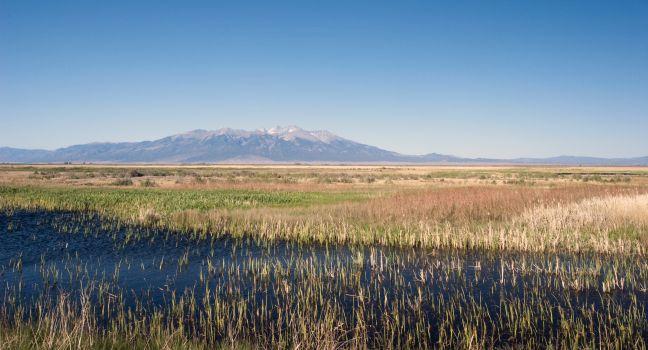
Alamosa National Wildlife Refuge is a great marsh on the Rio Grande, with Blanca Mountain in the background.
Marthamarks | Dreamstime.com

Less than an hour's drive southwest of Great Sand Dunes is a sanctuary for songbirds, waterbirds, and raptors (it's also home to many other types of birds, along with mule deer, beavers, and coyotes). The Rio Grande runs through the park comprising more than 12,000 acres of natural and man-made wetlands. You can take a 4-mile hike round-trip along the river or a 3½-mile wildlife drive on the park's western side or a drive along Bluff Road to an overlook on the park's eastern side. The refuge office is staffed by volunteers sporadically from March through November and closed in winter, but a self-service kiosk provides visitor information year-round.

Andrée Clark Bird Refuge

This peaceful lagoon and its gardens sit north of East Beach. Bike trails and footpaths, punctuated by signs identifying native and migratory birds, skirt the lagoon.

1400 E. Cabrillo Blvd., Santa Barbara, CA, 93108, USA
Sight Details
Free

Something incorrect in this review?