71 Best Sights in USA

Background Illustration for Sights

We've compiled the best of the best in USA - browse our top choices for the top things to see or do during your stay.

Ephrata Cloister

Fodor's Choice
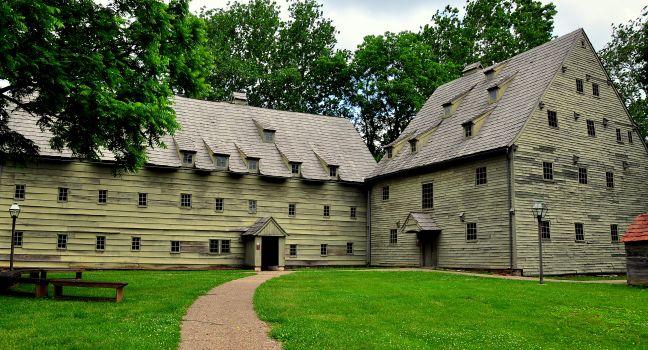
Ephrata, Pennsylvania: The wooden 1743 Saron (Sisters' House) on left and 1741 fachwerk Saal (Meeting House) at the Ephrata Cloister historic Germanic religious settlement. Photo taken on: June 06th, 2015
(c) Leesniderphotoimages | Dreamstime.com

Formerly the home of a unique monastic community, Ephrata Cloister was founded in 1732 by German immigrant Conrad Beissel. He assembled a secluded society of 80 celibate brothers and sisters who lived an austere life of work, study, and prayer. On 250 acres of wilderness, the sect built 30 structures, including a monastery and a printing press. The last celibate member died in 1813, and the members who lived outside the cloister closed the church in 1934. The Commonwealth of Pennsylvania turned the complex into a museum that now offers 75-minute tours of two restored buildings. You can poke through nine others on your own, including the stable, printshop, and crafts shop. 

Canterbury Shaker Village

Fodor's Choice

Established in 1792, this community flourished in the 1800s and practiced equality of the sexes and races, common ownership, celibacy, and pacifism. The last member of the religious community passed away in 1992. Shakers invented such household items as the clothespin and the flat broom and were known for the simplicity and integrity of their designs. Engaging guided tours—you can also explore on your own—pass through some of the 694-acre property's nearly 30 restored buildings, many of them with original furnishings. Crafts demonstrations take place daily. An excellent shop sells handcrafted wares.

Charles Towne Landing

Fodor's Choice

This off-the-radar gem of a park (and zoo) marks the site of the original 1670 settlement of Charles Towne, the first permanent European settlement in South Carolina. Begin with the visitor center's 12-room, interactive museum and exhibit hall that tells the history of the early settlers and their relationship with the Kiawah people, who were here when they arrived. Be sure to visit the exhibits about the enslaved people and indentured servants who also arrived with the English. Kids will make a beeline for the Adventure, a full-size replica of the colonists' 17th-century tall ship that's docked on the creek running alongside the park. The grounds are threaded with 6 miles of paths through forest and marsh, including the Animal Forest zoo, where you can see otters, black bears, bobcats, pumas, deer, and bison. All in all, there are 664 acres of gardens and forest, including an elegant live oak alley. Leashed dogs are allowed (although not in the Animal Forest), and rental bikes are available for $5 an hour.

Recommended Fodor's Video

Columbia State Historic Park

Fodor's Choice

Columbia, whose mines yielded $87 million in gold, is both a functioning community and a historically preserved town. Usually you can ride a stagecoach, pan for gold, and watch a blacksmith working at an anvil. Street musicians perform in summer. Restored or reconstructed buildings include a Wells Fargo Express office, a Masonic temple, an old-fashioned candy store, saloons, a firehouse, churches, a school, and a newspaper office. At times, all are staffed to simulate a working 1850s town. Also in the park is the Fallon House Theatre, a gorgeous Victorian structure that hosts plays and live music. The town's two reasonably priced historic lodgings, the Fallon Hotel and City Hotel, perch you in the past.

Fort Vancouver National Historic Site

Fodor's Choice

The earliest permanent settlement on either side of the Columbia River was established as a trading post in 1824 by Hudson's Bay Company. When Washington fell under complete control of the United States through the 1846 Oregon Treaty, Fort Vancouver became the nation's foremost military post in the Pacific Northwest. This 207-acre site in the middle of present-day Vancouver tells the story of the settlement's early days, and how it's been the home of such renowned military leaders as Ulysses S. Grant, George McClellan, and George Marshall (of Marshall Plan fame). In this impressive and somewhat overlooked component of the National Park System, orient yourself at the park visitor center, where you can watch a film about its history. Then tour the reconstructed fort stockade and barracks, and visit the 22 stately Victorian homes of Officer's Row (including the Queen Anne–style Marshall House, which is operated by the Clark County Historical Museum). The Pearson Air Museum is also part of the park.

1501 E. Evergreen Blvd., OR, 98661, USA
360-816–6230
Sight Details
Park free; reconstructed Fort Vancouver $10
Buildings closed Sun. and Mon.

Something incorrect in this review?

Historic Bethabara Park

University Fodor's Choice

Set in a wooded 183-acre wildlife preserve, this was the site of the first Moravian settlement in North Carolina. The reconstructed village showcasing the mid-18th-century community includes the original 1788 Gemeinhaus congregation house, a colonial homestead, and well-maintained medicinal gardens. God's Acre, the first colony cemetery, is a short walk away. Children love the reconstructed fort from the French and Indian War, and hiking trails head off into the hills around the settlement. Brochures for self-guided walking tours are available year-round at the visitor center, where interpreters in period attire help bring this bygone era to life.

Jamestown Settlement

Fodor's Choice

Adjacent to but distinct from Historic Jamestowne is a mainland living-history museum called Jamestown Settlement. The site marries 40,000 square feet of indoor facilities with outdoor replicas of the early James Fort, the three ships that brought the founding colonists from England, and a Powhatan Indian village. The introductory film 1607: A Nation Takes Root is shown in the theater. The handsome Tudor-style Great Hall is arranged by decades from 1607 to 1699, when the capital was moved to Williamsburg. Gallery exhibits examine the lives of the Powhatans and their English-born neighbors, their interaction, and world conditions that encouraged colonization. Outdoors within James Fort, interpreters in costume cook, forge metal, and describe what life was like living under thatch roofs and between walls of wattle and daub (stick framework covered with mud plaster). In the Powhatan Indian village you can enter a yehakin (house) and see buckskin-costumed interpreters cultivate crops and make tools. At the pier are full-scale reproductions of the ships in which the settlers arrived: Godspeed, Discovery, and Susan Constant. All the vessels are seaworthy; you may climb aboard the Susan Constant and find out more from the sailor-interpreters. A riverfront discovery area provides information about 17th-century water travel, commerce, and cultural exchange, reflecting Powhatan Indian, European, and African traditions. Dugout-canoe making takes place in this area. Spring and fall bring lots of school groups, so it's best to arrive after 2 pm.

2100 Jamestown Rd., Jamestown, VA, 23185, USA
757-253–4838
Sight Details
$17; combination ticket with Yorktown Victory Center $21.25
June 15–Aug. 15, daily 9–6; Aug. 16–June 14, daily 9–5

Something incorrect in this review?

Landis Valley Village & Farm Museum

Fodor's Choice

This open-air museum showcases Pennsylvania German rural life and local folk culture between 1750 and 1940. Founded by brothers Henry and George Landis on their homestead in the 1920s, the farm and village are now operated by the Pennsylvania Historical and Museum Commission. You can visit the more than 15 historical buildings that have been moved here from other Lancaster County locations, with costumed guides providing interesting bits of history. There are demonstrations of skills such as spinning and weaving, pottery making, and tinsmithing. Many of the crafts are for sale in the delightful museum shop.

Laurance S. Rockefeller Preserve Center

Fodor's Choice

This contemporary structure feels more like an art gallery than an interpretive facility. The elegant, eco-friendly building is more than just eye candy—you can experience the sounds of the park in a cylindrical audio chamber, and laminated maps in the reading room are great for trip planning. Rangers here promote "contemplative hiking" and are well informed about the many birds around the center's trailheads. It's best to get here in the early morning or late evening because the small parking area fills quickly. A ranger leads a daily hike to Phelps Lake.

End of LSR Preserve Entrance Rd., Grand Teton National Park, WY, 83012, USA
307-739–3300
Sight Details
Closed late Sept.–early June

Something incorrect in this review?

Laws Railroad Museum & Historical Site

Fodor's Choice

Laid-back and wholly nostalgic, this 11-acre celebrates the Carson and Colorado Railroad Company, which set up a narrow-gauge railyard here in 1883. Among the village's 50 rescued buildings—many containing the "modern amenities" of days gone by—are a post office, the original 1883 train depot, and a restored 1900 ranch house. On summer weekends and other select dates, you can also take a ride aboard Brill Car No. 5 from the Death Valley Railroad.

Los Luceros Historic Site

Fodor's Choice

Set amid cottonwood trees, fertile fields, and lush gardens that back up to the Rio Grande, this beautifully preserved 148-acre ranch just off the Low Road between Española and Dixon is one of the region's underrated gems. After getting oriented and talking with the knowledgeable staff in the Spanish-colonial visitor center, you can pick up a self-guided tour map or use your phone to scan QR codes for a virtual ranger tour and explore the extensive grounds, which include a stately Territorial-style hacienda, a chapel dating back to the 1700s, a farmyard and barn, and short walking trails through the woodlands. There's also an apple orchard and a pond that attracts all kinds of wildlife, from migrating waterfowl to occasional beavers and otters. It's easy to spend at least a couple of hours here without running out of engaging things to explore.

Mountain Farm Museum

Fodor's Choice

This is perhaps the best re-creation anywhere of an Appalachian mountain farmstead. The nine farm buildings, all dating from the late 19th century, were moved in the 1950s to this site next to the Oconaluftee Visitor Center from various locations within the park. Besides a furnished two-story chestnut log cabin, there is a barn, apple house, corncrib, smokehouse, bee gums, springhouse, chicken coop, and other outbuildings. In season, corn, tomatoes, pole beans, squash, and other mountain crops are grown in the garden, and the park staff sometimes puts on demonstrations of pioneer activities, such as making apple butter and molasses. Two easy 1½-mile walking trails begin near the museum. Dogs on leashes are allowed on the trail but not within the farm grounds. Elk are sometimes seen grazing in the pastures adjoining the farm, and occasionally you may see white-tailed deer and wild turkeys. This is an extremely popular place to visit, but in the evening after the visitor center closes, you're likely to have it to yourself.

Mystic Seaport Museum

Fodor's Choice

Mystic Seaport, the nation's leading maritime museum, encompasses 19 acres stretched along the Mystic River. The indoor and outdoor exhibits include a re-created New England coastal village, a working shipyard, and formal museum buildings with more than 1 million artifacts, including figureheads, models, tools, ship plans, scrimshaw, paintings, photos, and recordings. Along the narrow village streets and in some of the historic buildings, craftspeople demonstrate skills such as open-hearth cooking and weaving, interpreters bring the past to life, musicians sing sea chanteys, and special squads with maritime skills show how to properly set sails on a square-rigged ship. The museum's more than 500 vessels include the Charles W. Morgan, the last remaining wooden whaling ship afloat, and the 1882 training ship Joseph Conrad; you can climb aboard both for a look around or for sail-setting demonstrations and reenactments of whale hunts.

Children under three are admitted free.

Old Alabama Town

Fodor's Choice

Travel back 100-plus years along six blocks of restored structures that illustrate Montgomery life long ago. Elegant Victorian pieces furnish the central, circa-1850s Ordeman House, a contrast to the village's humble log cabin and simple church, school, and tavern. The Landmarks Foundation that runs the site found so many relics during restorations of 19th- and 20th-century buildings that it launched the nearby Rescued Relics, a nonprofit salvage warehouse offering historic architectural elements and materials.

Old Bethpage Village Restoration

Fodor's Choice

Re-creating a pre–Civil War farming community, this living-history museum sits on 200 pastoral acres with soft hills and lovely meadows. The 45 historic buildings were moved to this spot from other parts of Long Island and include two general stores, nine homes, a schoolhouse, a tavern, a church, and a working farm with animals. The guides, dressed in period costume, love sharing their knowledge of local history. Special events and seasonal celebrations are held throughout the year.

1303 Round Swamp Rd., Old Bethpage, NY, 11804, USA
516-572–8401
Sight Details
$10
Mar.–Dec., Wed.–Sun. 10–4
Closed Mon. and Tues.

Something incorrect in this review?

Old Salem Museums and Gardens

Old Salem Fodor's Choice

Founded in 1766 as a backcountry trading center, Old Salem is one of the nation's most well-documented colonial sites. This living-history museum, a few blocks from downtown Winston-Salem, is filled with dozens of original and reconstructed buildings. Costumed guides demonstrate trades and household activities common in the late-18th- and early-19th-century Moravian communities, and an interactive audio tour tells the stories of the Native Americans, enslaved Africans, and European settlers that lived here. The preserved streets and buildings of the old town are still a functioning community that includes the campus of Salem College. Be sure to stop at Winkler Bakery, where you can buy bread, the pillowy, best-selling sugar cakes, and scrumptious Moravian ginger cookies, baked in traditional brick ovens.

Don't miss "America's largest coffee pot," a 12-foot-tall vessel built by Julius Mickey in 1858 to advertise his tinsmith shop. After surviving two separate car collisions, it was moved to its present location at the edge of Old Salem in 1959.

900 Old Salem Rd., Winston-Salem, NC, 27101, USA
336-721–7300
Sight Details
$27, includes admission to Museum of Early Southern Decorative Arts
Closed Sun.–Tues., although the town can be walked through any time of day

Something incorrect in this review?

Old Sturbridge Village

Fodor's Choice

A re-creation of a New England village circa 1790–1840, this site contains more than 40 historic buildings moved here from other towns. There are several industrial buildings, including a working sawmill, and guides in period costumes demonstrate home-based crafts like spinning, weaving, and shoemaking. In season, take an informative stagecoach ride, or cruise the Quinebaug River while learning about river life in 19th-century New England and catching glimpses of ducks, geese, turtles, and other local wildlife. Other popular seasonal events include Christmas by Candlelight weekends in December, and the Redcoats and Rebels reenactment brigade during the first week of August. An associated inn is available for those looking to spend multiple days immersed.

1 Old Sturbridge Village Rd., Sturbridge, MA, 01566, USA
508-347–3362
Sight Details
$30
Closed Mon. and Tues.

Something incorrect in this review?

Old Town San Diego State Historic Park

Old Town Fodor's Choice

The six square blocks on the site of San Diego's original pueblo are the heart of Old Town. Most of the 20 historic buildings preserved or re-created by the park cluster are around Old Town Plaza, bounded by Wallace Street on the west, Calhoun Street on the north, Mason Street on the east, and San Diego Avenue on the south. The plaza is a pleasant place to rest, plan your tour of the park, and watch passersby. San Diego Avenue is closed to vehicle traffic here.

Some of Old Town's buildings were destroyed in a fire in 1872, but after the site became a state historic park in 1968, reconstruction and restoration of the remaining structures began. Five of the original adobes are still intact: La Casa de Estudillo, La Casa de Machado y Stewart, La Casa de Machado y Silvas, the Pedrorena-Altamirano House, and La Casa de Bandini (now the Cosmopolitan Hotel).

Facing Old Town Plaza, the Robinson-Rose House was the original commercial center of Old San Diego, housing railroad offices, law offices, and the first newspaper press. The largest and most elaborate of the original adobe homes, the Casa de Estudillo was occupied by members of the Estudillo family until 1887 and later gained popularity for its billing as "Ramona's Marriage Place" based on a popular novel of the time. Albert Seeley, a stagecoach entrepreneur, opened the Cosmopolitan Hotel in 1869 as a way station for travelers on the daylong trip south from Los Angeles. Next door to the Cosmopolitan Hotel, the Seeley Stable served as San Diego's stagecoach stop in 1867 and was the transportation hub of Old Town until 1887, when trains became the favored mode of travel.

Several reconstructed buildings serve as restaurants or as shops purveying wares reminiscent of those that might have been available in the original Old Town. Racine & Laramie, a painstakingly reproduced version of San Diego's first cigar store in 1868, is especially interesting.

Pamphlets available at the Robinson-Rose House give details about all the historic houses on the plaza and in its vicinity. Free 45-minute walking tours of the historic park are offered daily at 11 am and 2 pm; they depart from the Robinson-Rose House.

The covered wagon located near the intersection of Mason and Calhoun Streets provides a great photo op.

Penobscot Marine Museum

Fodor's Choice

On a stroll-able campus that feels like a mini–New England village, this fine museum just off Main Street explores the centuries-long maritime culture of the Penobscot Bay region and the Maine coast. Exhibits of artifacts and paintings are spread throughout six buildings, most dating to the first half of the 19th century; a former sea captain's home is appointed with period furnishings. The story of Maine's long connections to the sea can be traced in photos of local ship captains, model ships, lots of scrimshaw, navigational instruments, and objects brought home from world-spanning voyages. Exhibits of vintage tools speak of the area's history of logging, granite mining, and ice cutting. Outstanding marine art includes a notable collection of works by Thomas and James Buttersworth. There are also engaging exhibits just for kids.

Plimoth Patuxet Museums

Fodor's Choice

Against the backdrop of the Atlantic Ocean, and 3 miles south of downtown Plymouth, this living museum shares the rich, interwoven story of the Plymouth Colony and the Wampanoag homeland through engaging daily programs and special events. A 1620s Pilgrim village has been carefully re-created, from the thatch roofs, cramped quarters, and open fireplaces to the long-horned livestock. Throw away your preconception of white collars and funny hats; through ongoing research, the staff has developed a portrait of the Pilgrims that's more complex than the dour folk in school textbooks. Listen to the accents of the "residents," who never break out of character. Feel free to engage them in conversation about their life. Don't worry, 21st-century museum educators are on hand to help answer any questions you have as well. On the Wampanoag homesite, meet Native people speaking from a modern perspective on the traditions, lifeways, and culture of Eastern Woodlands Indigenous people. Note that there's not a lot of shade here in summer.

137 Warren Ave. (Rte. 3A), Plymouth, MA, 02360, USA
508-746–1622
Sight Details
$35; combination tickets available for other sites
Closed late Nov.–late Mar.

Something incorrect in this review?

Strawbery Banke Museum

Fodor's Choice

The first English settlers named what's now Portsmouth for the wild strawberries along the shores of the Piscataqua River. The name survives in this 10-acre outdoor history museum, which comprises 37 homes and other structures dating from 1695 to 1954, some furnished to a particular period, others with historical exhibits. Half of the interior of the Shapley-Drisco House depicts its use as a Colonial dry-goods store, but its living room and kitchen are decorated as they were in the 1950s, showing how buildings were adapted over time. The Shapiro House has been restored to reflect the life of the Russian-Jewish immigrant family who lived there in the early 1900s. Done in decadent Victorian style, the 1860 Goodwin Mansion is one of the more opulent buildings. Although the houses are closed in winter, the grounds are open year-round, and an outdoor skating rink operates December–early March.

Vermilionville Historic Village

Fodor's Choice

Directly behind the Acadian Cultural Center, this living-history village—serene and set beautifully along a bayou—re-creates the early life of the region's Creoles, Cajuns, and American Indians, focusing on the late 1700s to 1890. On select days, visitors can see a blacksmith demonstration or watch weavers at work. There are exhibits in 19 Acadian-style structures, including a music hall where live Cajun or zydeco music is played on weekend afternoons, often luring locals onto the dance floor. A large, rustic restaurant serves Cajun classics. Check ahead for live demonstrations from the on-site cooking school.

Dallas Heritage Village

My Garden - Dallas Heritage Village
Mrs. Loh / Shutterstock

It may be difficult to imagine Dallas without its shiny skyscrapers, far-flung suburbs, and miles and miles of highway, but Heritage Village at Old City Park allows visitors to experience what life was like in Big D before 1910. The museum, set on 13 acres just south of I–30 and Downtown Dallas, consists of 38 restored buildings, furnished inside and out as they would have been (way) back in the day. You'll also meet a couple of donkeys, a cow, some chickens, and other barnyard animals. Visitors can tour structures such as a log cabin, an antebellum mansion, a schoolhouse, a church, a farmhouse, and a shotgun shack. The re-created Main Street features a sturdy bank (rebuilt on site brick by brick), a print shop, a general store, and a saloon, where you may be able to order an ice-cold root beer, play a game of cards or checkers, and even catch a gunfight that spills into the street. Docents are in period costume and stay in character, describing in detail their daily lives and challenges.

1515 S. Harwood, Dallas, TX, 75215, USA
214-421--5141
Sight Details
$9
Tues.–Sat. 10–4, Sun. noon–4
Closed Mon.

Something incorrect in this review?

Acadian Village

Most of the structures at this re-creation of an early-19th-century bayou settlement were moved here to construct a representative "village." They actually represent a broad range of Acadian architectural styles, and the rustic general store, smithy, and chapel are replicas. The park is on 10 wooded acres, with a meandering bayou crisscrossed by wooden footbridges. Each house is decorated with antique furnishings. The weeks before Christmas bring "Noel Acadien au Village," with evening-only hours, musicians, food, and buildings covered in festive lights.

200 Greenleaf Dr., Lafayette, LA, 70506, USA
337-981–2364
Sight Details
$10
Closed Sun.

Something incorrect in this review?

Aiken County Historical Museum

One wing of this 1862 estate is devoted to early regional culture, including Native American artifacts and firearms. The grounds include an authentically furnished 1808 log cabin, a schoolhouse, and a miniature circus display.

American West Heritage Center

On U.S. 89/91 en route to Logan from points south, this 160-acre living history museum interprets the Cache Valley's development from 1820 to 1920. At the farm, antique implements are on display, draft horses still pull their weight, pony and train rides entertain the kids, and docents dressed in period clothing demonstrate sheepshearing and carding and offer bison tours. Baby Animal Days is popular in the spring, and the fall corn maze is actually quite challenging. Late July's Pioneer Festival features additional displays and reenactments, along with food booths, cowboy poetry readings, ice-cream making, and concerts.

4025 S. U.S. 89/91, Wellsville, UT, 84339, USA
435-245–6050
Sight Details
$7
Closed Sun. and Mon.

Something incorrect in this review?

The Amish Farm and House

The 40-minute tour of this family-owned farm museum takes you through a 10-room circa-1805 house furnished in the Old Order Amish style, and another tour takes you through a one-room schoolhouse. You can explore the grounds on your own to see a waterwheel, lime kiln, and working artisans such as blacksmiths and farriers. Farm animals and Amish scooters entertain the kids, and van tours are on offer; some include a farm visit. 

2395 Covered Bridge Dr., Lancaster, PA, 17602, USA
717-394–6185
Sight Details
$13.95 farm and house tour; $27.95 combo farm, house, and 90-min bus tour

Something incorrect in this review?

Amish Village

This 12-acre historic homestead offers guided tours of an authentically furnished 1840 home and one-room schoolhouse. The property includes a barn with farm animals, blacksmith shop, simulated smokehouse, and market. There are outdoor picnic grounds when the weather permits, and shuttle-bus tours of the area are also available.

199 Hartman Bridge Rd., Ronks, PA, 17572, USA
717-687–8511
Sight Details
$14 house and village only; $28 backroads bus tour; $36 combo bus, house, and village tour
Closed Jan.–mid-Feb.

Something incorrect in this review?

Bighorn County Historical Museum and Visitor Information Center

Focusing on Native American and early homestead settlement, the 35-acre Bighorn County Historical Museum and Visitor Information Center complex comprises 24 historic buildings that have been relocated to the site. The buildings are open from Memorial Day to Labor Day, and interpretive exhibits in the museum explore the region's Native American and pioneer history. Friendly staff and volunteers help bring life to the museum.

1163 3rd St. E, Hardin, MT, 59034, USA
406-665–1671
Sight Details
$15 (Memorial Day--Labor Day), $8 (Labor Day–Memorial Day)
Closed weekends Labor Day–Memorial Day

Something incorrect in this review?

Browns Park Recreation Area

If you're looking for a glimpse of the Wild West, head to Browns Park. Lying along a quieter stretch of the Green River and extending into Colorado, this area features plenty of high-desert scenery, a national waterfowl refuge, and a history complete with notorious outlaws of the late 1800s. You can explore several buildings on the John Jarvie Historic Ranch site and visit the museum, where a video details the ranch's history. Buildings date from 1880 to the early 1900s, and there's also a cemetery containing the graves of a few men who met violent ends nearby. In addition to his ranch, Jarvie ran a post office, store, and river ferry, and his spread was a major hideout on the so-called Outlaw Trail. The area also includes several campgrounds, OHV (off-highway vehicle) trails, and river-rafting opportunities. Reach Browns Park by driving 65 miles north of Vernal on U.S. 191, then 22 miles east on a gravel road, following signs to the ranch.

Browns Park Rd., Browns Park, UT, 84078, USA
435-885–3307-John Jarvie Ranch
Sight Details
Free

Something incorrect in this review?