102 Best Sights in USA

Background Illustration for Sights

We've compiled the best of the best in USA - browse our top choices for the top things to see or do during your stay.

Fort McHenry National Monument and Historic Shrine

Fodor's Choice
Cannon outside Fort McHenry National Monument in Baltimore, MD
Joseph Sohm / Shutterstock

This star-shaped brick fort is forever associated with Francis Scott Key and "The Star-Spangled Banner," which Key penned while watching the British bombardment of Baltimore during the War of 1812. Through the next day and night, as the battle raged, Key strained to be sure, through the smoke and haze, that the flag still flew above Fort McHenry—indicating that Baltimore's defenders held firm. "By the dawn's early light" of September 14, 1814, he saw the 30- by 42-foot "Star-Spangled Banner" still aloft and was inspired to pen the words to a poem (set to the tune of an old English drinking song). The flag that flew above Fort McHenry that day had 15 stars and 15 stripes, and was hand-sewn for the fort. A visit to the fort includes a 15-minute history film, guided tour, and frequent living-history displays on summer weekends. To see how the formidable fortifications might have appeared to the bombarding British, catch a water taxi from the Inner Harbor to the fort instead of driving.

Gettysburg National Military Park

Fodor's Choice
A cannon in a cemetery at Gettysburg National Military Park in Pennsylvania,USA.
© Delmas Lehman | Dreamstime.com

There are few American landmarks as moving as Gettysburg National Military Park, where General Robert E. Lee and his Confederate troops fought and lost to the Union forces of General George Meade from July 1 through 3, 1863. More than 1,300 mournful and inspiring markers and monuments honor the estimated 7,058 soldiers killed in the battle. Thirty-plus miles of marked roads lead through the 6,000-acre park to key battle sites; you can traverse them by driving, bicycling, or hiking yourelf or with a licensed guide, or via guided bus tours. In the first week of July, Civil War reenactors dress in period uniforms and costumes to commemorate the three-day battle.

Antietam National Battlefield

Fodor's Choice

Time has returned Antietam National Battlefield, the site of the bloodiest one-day battle of the Civil War, to its tranquil antebellum appearance, with woodlands giving way to sloping cornfields bound by rough-hewn fences. On September 17, 1862, more than 23,000 Union and Confederate troops were killed, wounded, or missing here. The gruesome battle led Abraham Lincoln to issue the preliminary Emancipation Proclamation. A self-guided tour by car follows 8½ miles of well-preserved battlefield including Dunkard Church and Bloody Lane. An hour-long documentary is shown at the visitor center at noon each day, and there is an exhibit of Civil War artifacts. You can also hike the battlefields with an audio tour or accompanied by a ranger. Stop at the Pry House Field Hospital Museum (an extension of Frederick's National Museum of Civil War Medicine), where a re-created operating room and implements used to care for the wounded are displayed.

5831 Dunker Church Rd., Sharpsburg, MD, 21782, USA
301-432--5124
Sight Details
$5
8am-5:30pm

Something incorrect in this review?

Recommended Fodor's Video

Battleship North Carolina

Downtown Fodor's Choice

Across the Cape Fear River from downtown, take a self-guided tour of a ship that participated in every major naval offensive in the Pacific during World War II. Exploring the floating city, with living quarters, a post office, chapel, laundry, and even an ice cream shop, takes about two hours. A climb down into the ship's interior is not for the claustrophobic. A ½-mile timber walkway lets visitors tour the ship's exterior with no cost of admission. The ship, which is open for tours every day of the year, can be reached by car or via river taxi from the downtown waterfront.

Castillo de San Marcos National Monument

Fodor's Choice

The focal point of St. Augustine, this commanding structure was completed by the Spaniards in 1695 (English pirates were handy with a torch back then), and it looks every day of its three centuries. The fort was constructed of coquina, a soft limestone made of broken shells and coral that, unexpectedly, could absorb the impact of British cannonballs. (Unlike solid stone, the softer coquina wouldn't shatter when hit by large munitions.) The fort was also used as a prison during the Revolutionary and Civil wars. Tours are self-guided, so be sure to pick up a brochure and map. Children 15 and under are admitted free and must be accompanied by an adult. Save your receipts, since admission is valid for seven consecutive days.

Chickamauga and Chattanooga National Military Park

Fodor's Choice

A visit to this 9,000-acre military park could easily take all day—or multiple days. The park spans the borders of Georgia and Tennessee, with major sites at Chickamauga, Lookout Mountain, Moccasin Bend, Missionary Ridge, Orchard Knob, and Signal Point. Overall, there are more than 1,400 commemorative features throughout the park including monuments, markers, and tablets placed by veterans and by states whose citizens saw combat here. Start at Chickamauga Battlefield, the park's headquarters, which makes up the largest part of the park. It was here on September 19–20, 1863, that the Battle of Chickamauga was fought. The excellent visitor center and museum offers a film and exhibits about the battle. There's also a 7-mile self-guided auto tour through the park, and on weekends during the spring and fall, you can join a free two-hour auto caravan, led by a park ranger. During the summer, rangers offer the tours daily. The rest of the park lies about 30 minutes north of Chickamauga: Lookout Mountain Battlefield and Point Park, a memorial park that overlooks the city of Chattanooga.

Fort Clinch State Park

Fodor's Choice

One of the country's best-preserved and most complete 19th-century brick forts, Fort Clinch was built to discourage further British intrusion after the War of 1812 and was occupied in 1863 by the Confederacy; a year later it was retaken by the Union. During the Spanish-American War it was reactivated for a brief time, but no battles were ever fought on its grounds (which explains why it's so well preserved). Wander through restored buildings, including furnished barracks, a kitchen, and a repair shop. Living-history reenactments of Civil War garrison life are scheduled throughout the year.

The 1,400-acre park surrounding the fort has full-facility camping, nature trails, a swimming beach, and surf and pier fishing. Fort Clinch is also the only state park in northeast Florida designated by the Florida Fish and Wildlife Conservation Commission as a viewing destination for the eastern brown pelican, green sea turtle, and loggerhead sea turtle.

2601 Atlantic Ave., Fernandina Beach, FL, 32034, USA
904-277–7274
Sight Details
$6 per vehicle, up to 8 people; $4 single-occupant vehicle; $2.50 per person entry to fort

Something incorrect in this review?

Fort Fisher State Historic Site

Fodor's Choice

This is one of the South's largest and most important earthworks fortifications from the Civil War, so tough and strategically placed along the Cape Fear River that it was known as the Southern Gibraltar. The fall of the fort in January 1865, closing the last supply lines for the South, helped seal the fate of the Confederacy. You can explore the restored battery with its reconstructed artillery and follow trails along the river. A museum—soon to be replaced by a $25 million new build next door—displays Civil War relics, a fiber-optic battle map, and artifacts from sunken blockade runners. It's also known for its underwater archaeological sites.

Fort Fisher includes a beach access point with showers. It's one of the most attractive beaches in the area.

Fort Greene Park

Fort Greene Fodor's Choice
With 30 acres of green hills, Brooklyn's oldest park is the unofficial nucleus of the neighborhood. It served as a military fort during the Revolutionary War and again during the War of 1812. At its center, the Prison Ship Martyrs Monument commemorates American war prisoners. Although it predates them, landscape architects Olmsted and Vaux (known for designing Central Park and Prospect Park) designed the current layout of Fort Greene Park.

Fort Mifflin

South Philadelphia Fodor's Choice

There are number of strange, forgotten sights in Philadelphia that in any other city would be a major, if not the major tourist attraction. Fort Mifflin may be the best of these sights in Southwest Philadelphia. The fort is enormous and nearly always empty. Within its walls, spread out on a huge lawn, are cannons and carriages, officers' quarters, soldiers' barracks, an artillery shed, a blacksmith shop, a bomb shelter, and a museum. The exhibits are dated, but the stories are fascinating, from the 40-day battle in 1777 to hold off British ships coming up the Delaware to the use of the site as a prison during the Civil War. The fort was almost totally destroyed during the Revolution, but was rebuilt in 1798 from plans by French architect Pierre L'Enfant, who also designed Washington, D.C. If you wander off beyond the fort and into the other parts of the 49-acre National Historic Landmark, you will find a long embankment of overgrown and unexcavated battlements from the 1800s. From Penn's Landing it's an easy jaunt on I–95.

6400 Hog Island Rd., Philadelphia, PA, 19153, USA
856-831–5690
Sight Details
$16
Closed mid-Dec.--Feb.
You can call to arrange an appointment or private tour during the off-season

Something incorrect in this review?

Fort Moultrie

Fodor's Choice

This is the site where in 1776 Colonel William Moultrie's South Carolinians repelled a British assault in one of the first Patriot victories of the Revolutionary War. Located on the edge of Sullivan's Island, 10 miles southeast of Charleston, Moultrie's first fort was made of palmetto logs and sand. The one there today, the third fortress in this location, was completed in 1809. Across the street, the fort's companion museum shows a 22-minute educational film that tells the colorful history of the fort, which was active through World War II. The additional exhibit on Sullivan Island's role in the transatlantic slave trade is a must-see. Plan to spend the day bicycling through Sullivan's Island, where you'll see beach cottages, island mansions, and a smattering of historical homes.

Fort Pulaski National Monument

Thunderbolt Fodor's Choice

 Named for Casimir Pulaski, the Polish count and Revolutionary War hero, this must-see sight for history buffs was designed by Napoléon's military engineer and built on Cockspur Island between 1829 and 1847. Robert E. Lee's first assignment after graduating from West Point was as an engineer here. The fort was thought to be impervious to attack, but as weapons advanced, it proved penetrable. During the Civil War, the fort fell after bombardment by newfangled rifled cannons. The restored fortification, operated by the National Park Service, has moats, drawbridges, massive ramparts, towering walls, and an informative visitors center. Trails, picnic areas, and a protected bird refuge surround the park.

Fort Sumter National Monument

Fodor's Choice

Set on a man-made island in Charleston Harbor, this is the hallowed spot where the Civil War began. On April 12, 1861, the first shot of the war was fired at the fort from Fort Johnson on James Island. After a 34-hour battle, Union forces surrendered and the Confederacy managed to hold it, despite almost continual bombardment, from August 1863 to February 1865. When it was finally evacuated, the fort was a heap of rubble. Today, the National Park Service oversees it, and rangers give interpretive talks. To reach the fort, take a ferry with Fort Sumter Tours from downtown's Fort Sumter Visitor Education Center, which includes exhibitions on the Civil War era, or from Patriots Point in Mount Pleasant. There are as many as seven trips daily to the fort between mid-March and mid-August; fewer the rest of the year.

Fort Yellowstone

Fodor's Choice

The oldest buildings here served as Fort Yellowstone from 1891 to 1918, when the U.S. Army managed the park. The redbrick buildings cluster around an open area reminiscent of a frontier-era parade ground. Pick up a self-guided tour map of the area from the Albright Visitors Center on Officers Row, and start your walking tour there.

2 Barracks St., Yellowstone National Park, WY, USA

Something incorrect in this review?

Fort Zachary Taylor Historic State Park

Fodor's Choice

Construction of the redbrick fort began in 1845 but was halted during the Civil War. Even though Florida seceded from the Union, Yankee forces used the fort as a base to block Confederate shipping. More than 1,500 Confederate vessels were detained in Key West's harbor. The fort, completed in 1866, was also used in the Spanish-American War. Take a 30-minute guided walking tour of this National Historic Landmark at noon and 2 or do a self-guided tour anytime between 8 and 5. One of the park's most popular features is its man-made beach, a rest stop for migrating birds in the spring and fall; there are also picnic areas, hiking and biking trails, and a kayak launch.

Manassas National Battlefield Park

Fodor's Choice

The Confederacy won two important victories—in July 1861 and August 1862—at this battlefield, also known as Bull Run. General Thomas Jackson earned his nickname Stonewall here, when he and his brigade stood "like a stone wall." When the second battle ended, the Confederacy was at the zenith of its power. Originally farmland, the battlefield bore witness to casualties of nearly 30,000 troops. The Stone House, used as an aid station during the war, still stands. In 1911, 50 years after the first, battle, President Taft led a "Peace Jubilee," a peaceful reunion of thousands of veterans here.. .A self-guided walking or driving tour of the park begins at the visitor center, whose exhibits and audiovisual presentations greatly enhance a visit. Manassas is a 30-mile drive from Washington; from Arlington and Fairfax take I–66 west to Exit 47B (Sudley Road/Route 234 North). Don't be fooled by the earlier Manassas exit for Route 28. The visitor center is ½ mile north on the right.

National Infantry Museum and Soldier Center

Fodor's Choice

Located outside the gates of Fort Moore, this museum examines the role of the U.S. infantry for every war in the nation's history through interactive, technology-rich displays. A must for military buffs, the facility holds more than 70,000 artifacts, including weaponry, uniforms, and equipment from the Revolutionary War to the present day, including a re-created World War II Company Street, which includes General Patton's sleeping quarters. On the museum grounds is the moving Global War on Terrorism Memorial, which is rededicated every year to honor service members who have lost their lives. The center also features a Giant Screen theater that shows both documentaries and Hollywood blockbusters. A variety of virtual reality simulators are also available for a fee.

National Naval Aviation Museum

Fodor's Choice

In addition to being where the U.S. Navy Flight Demonstration Squadron Blue Angels launches its practice flights, the Pensacola Naval Air Station (NAS) is home to a 300,000-square-foot museum with more than 140 aircraft representing more than 100 years of naval aviation. Currently, however, access to the NAS is not available to the general public unless they're accompanied by someone who holds a Department of Defense ID card (e.g., active or retired military personnel or a member of their families). If you don't have someone to accompany you, it's worth calling ahead or checking online to see if this requirement has changed, and, if so, make time for a visit.

On display are the NC-4, which, in 1919, became the first plane to cross the Atlantic; the famous F-6 Hellcat World War II fighter; the Skylab Command Module; an atomic bomb (it's defused, we promise); and the restored Cubi Bar Café, a very cool airmen's club transplanted here from the Philippines. The museum also offers a giant-screen theater showing Magic of Flight, Aircraft Carrier, and other educational films.

If you're feeling more adventurous, the MaxFlight Simulator—featuring interactive, 360-degree, pitch-and-roll technology—offers the chance to experience air-to-air combat or stunt flying. Alternatively, you can see what it's like to fly with the Blue Angels or take off from an aircraft carrier and do battle in the Iraqi desert in an HD Motion-Based Simulator. If you'd rather reach for the stars, opt for the Apollo 11 VR Experience.

1750 Radford Blvd., Pensacola, FL, 32508, USA
850-452–8450-for information on access to the NAS
Sight Details
Museum free; movies $11; MaxFlight 360 Simulator $25 for one or two people; HD Motion-Based Simulator $7.50 for up to 15 people; Apollo 11 VR Experience $10

Something incorrect in this review?

Patriots Point Naval and Maritime Museum

Fodor's Choice

Climb aboard the USS Yorktown aircraft carrier—which contains the Congressional Medal of Honor Museum—as well as the destroyer USS Laffey. The carrier's flight deck features stunning views of the harbor and city skyline and up-close views of 25 airplanes and helicopters from throughout the last century of American warfare. A life-size replica of a Vietnam support base camp showcases naval air and watercraft used in that military action.

Richmond National Battlefield Park Visitor Center

Fodor's Choice

Inside what was once the Tredegar Iron Works, the visitor center is the best place to get maps and other materials on the Civil War battlefields and attractions in the Richmond area. A self-guided tour and optional tape tour for purchase covers the two major military threats to Richmond—the Peninsula Campaign of 1862 and the Overland Campaign of 1864—as well as the impact on Richmond's home front. Three floors of exhibits in the main building include unique artifacts on loan from other Civil War history institutions. Other original buildings on-site are a carpentry shop, gun foundry, office, and company store.

Kids can participate in the Junior Ranger program where they're given a workbook leading them through the exhibits in search of "clues." Once they've completed their book, they receive their choice of an embroidered Ranger patch or a Ranger pin.

Built in 1837, the iron works, along with smaller area iron foundries, made Richmond the center of iron manufacturing in the South. When the Civil War began in 1861, the iron works geared up to make the artillery, ammunition, and other material that sustained the Confederate war machine. Its rolling mills provided the armor plating for warships, including the ironclad CSS Virginia. The works—saved from burning in 1865—went on to play an important role in rebuilding the devastated South; it also produced munitions in both world wars. Free parking is available next door at the Belle Isle lot. Also, be aware that the American Civil War Center is also on this site, but is a private museum that charges admission. However, if you're visiting the museum along with the visitor center, parking is included in the admission.

U.S. Air Force Academy

Fodor's Choice

The academy, which set up camp in 1954, is one of the most popular attractions in Colorado. Highlights include the futuristic design, 18,500 beautiful acres of land, and antique and historic aircraft displays. At the visitor center you'll find photo exhibits, a model of a cadet's room, a gift shop, a snack bar in the summer, and a film highlighting the history and bravery of the Air Force. Other stops on the self-guided tour include a B-52 display, sports facilities, and the chapel. Some days you can catch the impressive cadet lunch formation that begins between 11:30 and noon. The Air Force chapel, which can accommodate simultaneous Catholic, Jewish, and Protestant services, is easily recognized by its unconventional design featuring 17 spires that resemble airplane wings. Visitors can enter only through the North and South gates.

U.S. Space and Rocket Center

Fodor's Choice

Experience missions to the moon and beyond at this collection of rockets, space memorabilia, and simulators that mimic rocket launches and gravity forces. Train like an astronaut at the U.S. Space Camp and Space Academy or like a military jet pilot at Aviation Challenge. The center runs a bus tour of NASA labs and shuttle test sites. The Spacedome Theater shows IMAX movies.

United States Military Academy at West Point

Fodor's Choice

Occupying the western shore of one of the most scenic bends in the Hudson River, the academy consists of some 16,000 acres of training grounds, playing fields, and buildings constructed of native granite in the Military Gothic style. The oldest continually garrisoned post in the U.S. Army, the citadel was founded in 1778 and opened as a military academy in 1802. Distinguished graduates include Robert E. Lee, Ulysses S. Grant, and Douglas MacArthur. The world's oldest and largest military museum, the West Point Museum in Olmstead Hall, showcases a vast collection of uniforms, weapons, flags, American military art, and other memorabilia. Fort Putnam, built in 1778 and a key component of West Point's defense during the Revolutionary War, was restored in the 1970s. Campus visits are by bus tour only (bring photo ID), but you do get a chance to step off the bus, look at a few memorials and cannons up close, and perhaps glimpse cadets in action. Civilians are also allowed on campus for sporting and cultural events, including football games, theater presentations, parades, and concerts. You can visit the museum and visitor center without taking the $11 tour. Tours aren't given during graduation week (usually late May) and on Saturdays of home football games.

606 Thayer Rd., West Point, NY, 10996, USA
845-938–2638-visitor center
Sight Details
Free
Visitor center daily 9–4:45, museum daily 10:30–4:15

Something incorrect in this review?

USS Constitution

Charlestown Fodor's Choice

Affectionately known as "Old Ironsides," the USS Constitution rides proudly at anchor in her berth at the Charlestown Navy Yard. The oldest commissioned ship in the U.S. fleet is a battlewagon of the old school, of the days of "wooden ships and iron men"—when she and her crew of 200 succeeded at the perilous task of asserting the sovereignty of an improbable new nation. Every July 4, she's towed out for a celebratory turnabout in Boston Harbor, where her keel was laid in 1797.

The venerable craft has narrowly escaped the scrap heap several times in her long history. She was launched on October 21, 1797, as part of the nation's fledgling navy. Her hull was made of live oak, the toughest wood grown in North America; her bottom was sheathed in copper, provided by Paul Revere at a nominal cost. Her principal service was during Thomas Jefferson's campaign against the Barbary pirates, off the coast of North Africa, and in the War of 1812. In 42 engagements her record was 42–0.

The nickname "Old Ironsides" was acquired during the War of 1812, when shots from the British warship Guerrière appeared to bounce off her hull. Talk of scrapping the ship began as early as 1830, but she was saved by a public campaign sparked by Oliver Wendell Holmes's poem "Old Ironsides." She underwent a major restoration in the early 1990s. Today she continues, the oldest commissioned warship afloat in the world, to be a part of the U.S. Navy. In 2015, she was dry docked for a 26-month restoration that included replacement of select hull planks, the 1995 copper sheathing, and deck beams, returning to the water in 2017.

The active navy personnel who look after the Constitution maintain a 24-hour watch. Instead of taking the T, you can get closer to the ship by taking MBTA Bus 93 to Chelsea Street from Haymarket. Or you can take the Boston Harbor Cruise water shuttle from Long Wharf to Pier 4. This is Freedom Trail stop 15.

USS Midway Museum

Embarcadero Fodor's Choice

After 47 years of worldwide service, the retired USS Midway began a new tour of duty on the south side of the Navy pier in 2004. Launched in 1945, the 1,001-foot-long ship was the largest in the world for the first 10 years of its existence. The most visible landmark on the north Embarcadero, it now serves as a floating interactive museum—an appropriate addition to the town that is home to one-third of the Pacific fleet and the birthplace of naval aviation. A free audio tour guides you through the massive ship while offering insight from former sailors. As you clamber through passageways and up and down ladder wells, you'll get a feel for how the Midway's 4,500 crew members lived and worked on this "city at sea."

Though the entire tour is impressive, you'll really be wowed when you step out onto the 4-acre flight deck—not only the best place to get an idea of the ship's scale, but also one of the most interesting vantage points for bay and city skyline views. An F-14 Tomcat jet fighter is just one of many vintage aircraft on display. Free guided tours of the bridge and primary flight control, known as "the Island," depart regularly from the flight deck. Many of the docents stationed throughout the ship served in the Navy, some even on the Midway, and they are eager to answer questions or share stories. The museum also offers multiple flight simulators for an additional fee, climb-aboard cockpits, and interactive exhibits focusing on naval aviation. There is a gift shop and a café with pleasant outdoor seating. This is a wildly popular stop, with most visits lasting several hours.

Despite efforts to provide accessibility throughout the ship, some areas can only be reached via fairly steep steps; a video tour of these areas is available on the hangar deck.

Nike Missile Site SF-88

Fodor's Choice

The only fully restored site of its kind in the United States, the museum at SF-88 provides a firsthand view of menacing Cold War–era Hercules and Ajax missiles and missile-tracking radar, the country's last line of defense against Soviet nuclear bombers. It's worth timing your visit to take the guided tour, which features period uniforms and vehicles and includes a visit to the missile-launching bunker. On the first Saturday of the month the site holds an open house during which Nike veterans describe their experiences.

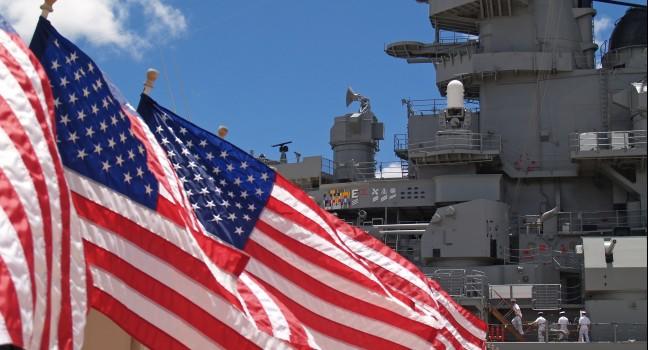
Battleship Missouri Memorial

US flags flying beside the Battleship Missouri in Pearl Harbor, Honolulu, Oahu, Hawaii with 4 sailors walking on deck.
Lindasj22 / Shutterstock

Together with the Arizona Memorial, the USS Missouri's presence in Pearl Harbor perfectly frames America's World War II experience, which began December 7, 1941, and ended on the "Mighty Mo's" starboard deck with the signing of the Terms of Surrender on September 2, 1945. To begin your visit on the fully restored vessel, pick up tickets online or at the Pearl Harbor Visitor Center. Then board a shuttle bus for the eight-minute ride to Ford Island and the teak decks and towering superstructure of the last American battleship ever built. Join a guided tour to learn more about the Missouri's long and dramatic history. Two options for upgraded tours (an additional $30) provide an up-close look at areas not on the main tour, including the captain's cabin, the bridge, and engine and fire rooms.

The Missouri is 887 feet long and 209 feet tall, with nine 116-ton guns capable of firing up to 23 miles. Absorb these numbers during the tour, then stop to take advantage of the view from the decks. Near the entrance is a gift shop, as well as a lunch wagon and shave ice stand that serve casual fare.

63 Cowpens St., Pearl Harbor, HI, 96701, USA
808-455–1600
Sight Details
From $35

Something incorrect in this review?

African American Military History Museum

Renovated following extensive damage from a 2013 hurricane, this museum pays tribute to African Americans who served in the U.S. military over the last 150 years or so. The impressive exhibit is located in America's only remaining original African Amercian USO Club.

309 E. 6th St., Hattiesburg, MS, 39401, USA
601-450–1942
Sight Details
Free
Wed.–Fri., 10-4, Sat. noon–4

Something incorrect in this review?

Air Force Armament Museum

The collection at this museum just outside the Eglin Air Force Base's main gate contains interactive displays and more than 5,000 armaments from World Wars I and II and the Korean, Vietnam, and Gulf wars. Included are uniforms, engines, weapons, aircraft, and flight simulators. You can't miss the museum: there's a squadron of aircraft—including a B-17 Flying Fortress, an SR-71 Blackbird, a B-52, and a B-25—on the grounds in front. A continuously playing 32-minute movie, Arming the Future, features current weapons and Eglin's history and its role in their development. You can take a self-guided tour, and you're allowed to take photos.

100 Museum Dr. (Rte. 85), Fort Walton Beach, FL, 32542, USA
850-882–4062
Sight Details
Free
Closed Sun.

Something incorrect in this review?

Albacore Park

Built in Portsmouth in 1953, the USS Albacore is the centerpiece of Albacore Park. You can board this prototype submarine, which served as a floating laboratory to test an innovative hull design, dive brakes, and sonar systems for the Navy. The visitor center, which underwent a significant expansion in 2024, exhibits Albacore artifacts, and the nearby Memorial Garden is dedicated to those who have lost their lives in submarine service.

600 Market St., Portsmouth, NH, 03801, USA
603-436–3680
Sight Details
$12
Closed mid-Dec.--mid-Feb.

Something incorrect in this review?