
558 Best Sights in USA

Background Illustration for Sights

We've compiled the best of the best in USA - browse our top choices for the top things to see or do during your stay.

Rufus Porter Museum of Art and Ingenuity

Fodor's Choice

Local youth Rufus Porter became a leading folk artist, painting murals of rural landscapes and harbors inside New England homes in the first half of the 1800s. Several museum rooms bear examples of this then-on-trend decor, but as visitors learn, Porter was also an “ahead of his time” inventor and writer and founded Scientific American magazine. An eye-catching 1830s former residence on Main Street has exhibits about Porter, including early issues of the magazine, his miniature portraits, and models of inventions such as a corn shucker and a revolving rifle whose design and production rights he sold to gunmaker Samuel Colt. In the excellent gift shop, you'll find books by and about this ingenious man. The late-1700s, barn red, Cape Cod–style Nathan Church House, moved here in 2016, has two rooms with unsigned Porter murals. Among his apprentices was his nephew Jonathan D. Poor, whose art adorns two rooms and a hall in a barn like 2024 building: the muraled walls were moved here from a home elsewhere in Maine. Clustered together, the buildings have permanent and changing exhibits, many interactive and kid-friendly.

San Antonio African American Community Archive and Museum

Downtown Fodor's Choice

An important museum with an important mission, the goal of SAACAM (pronounced say-cam) is to preserve and share the history and culture of African Americans in San Antonio. It's a small place with a huge story, one that's told beautifully with well-organized exhibits and thoughtful events, like the Black History Film Series, book discussions, workshops, and activities. One permanent exhibit presents a timeline that illustrates black history in San Antonio through archival photographs and documents.

Overall the museum uses timeline displays and digital archives to tell the story of African Americans in San Antonio dating from the 1500s to present day. There's even a kiosk for visitors to share their own stories. The small but striking gift shop features items only from San Antonio authors and artisans. The museum is also where you can book river tours on African American history in conjunction with GO RIO Cruises. 

San Juan County Historical Society Mining Heritage Center

Fodor's Choice

This large, well-kept museum houses an assortment of mining memorabilia, minerals, and local artifacts, including walk-in mining-tunnel replicas. The museum also includes the old San Juan County Jail, built in 1902. Here you can get a glimpse of turn-of-the-20th-century life in the region.

Recommended Fodor's Video

Seal Cove Auto Museum

Fodor's Choice

Some 65 immaculately maintained vehicles from the “Brass Era”—the beginning of auto production until about 1915—are displayed in this large warehouse-type space. There are gasoline, steam, and electric vehicles, each with a sign detailing its history. The big red 1914 Stanley Mountain Wagon ferried passengers between hotel and train station, and hence the term "station wagon." Enticing not only car buffs, changing exhibits show the impact of early automobiles on society and culture (for example, "Engines of Change" explores how autos helped drive the suffragette movement). The museum also displays several vintage motorcycles. On Tuesdays, you can watch car mechanics at work. For Cars & Coffee (10 am–1 pm on select Saturdays), folks head over in historic and unique vehicles; admission is free during the event (and always for kids under age 18). Check the website for information on special events this family-welcoming museum holds throughout the season.

Sitka National Historical Park

Fodor's Choice

The main building at this 113-acre park houses a small museum with fascinating historical exhibits and photos of Tlingit Native culture. Highlights include a brass peace hat given to the Sitka Kiks.ádi by Russian traders in the early 1800s and Chilkat robes. Head to the theater to watch a 12-minute video about Russian–Tlingit conflict in the 19th century. Ask a ranger to point you toward the Centennial Totem Pole, installed in 2011 to honor the park's 100th anniversary. Sometimes Native artisans demonstrate their silversmithing, weaving, wood carving, and basketry abilities. Make an effort to strike up a conversation with the artists if you see them; they're there to showcase and discuss their work and Tlingit cultural traditions. At the far end of the building are seven totems (some more than a century old) that have been brought indoors to protect them from decay. Behind the center a wide, 2-mile path winds through the forest and along the shore of Sitka Sound. Scattered along the way are some of the most skillfully carved Native totem poles in Alaska. Keep going on the trail to see spawning salmon from the footbridge over Indian River. In summer, rangers lead themed walks that focus on the Russian–Tlingit conflict, the area's natural history, and the park's totem poles.

Smithsonian National Museum of American History

The Mall Fodor's Choice

The 3 million artifacts and archival materials in the country's largest American history museum explore America's cultural, political, and scientific past. The centerpiece of the Star-Spangled Banner gallery is the banner that in 1814 was hoisted to show that Fort McHenry had survived 25 hours of British rocket attacks and inspired Francis Scott Key to write the lyrics that became the national anthem. Exhibits also explore food history, innovation, and the different cultural groups in the United States.

South Carolina Historical Society Museum

Fodor's Choice
Trace 350 years of the state's history through the interactive exhibits here, focusing on everything from Native American cultures and the atrocities of plantation life to Charleston heroes like Robert Smalls, a formerly enslaved man who successfully sought his freedom and went on to serve five terms in Congress. The museum occupies the second floor of the Fireproof Building, a Greek Doric-style National Historic Landmark designed by architect Robert Mills (the mind behind the Washington Monument) in 1827 to store public records.

Tamástslikt Cultural Institute

Fodor's Choice

Located at the Wildhorse Resort and Casino, this impressive 45,000-square-foot interpretive center depicts history from the perspective of the Cayuse, Umatilla, and Walla Walla tribes (Tamástslikt means "interpret" in the Walla Walla native language). An art gallery showcases the work of local and regional tribal artists, and on Saturday in summer you can visit the adjacent Living Culture Village, Naami Nishaycht, and watch a variety of talks and demonstrations on everything from tepee building to traditional community games. There's also a museum gift shop, a theater showing a short film about the tribe's heritage, and a café.

Telluride Historical Museum

Fodor's Choice

Housed in the 1896 Miner's Hospital, the Telluride Historical Museum hosts exhibits on the town's past, including work in the nearby mines, techniques used by local doctors, and an 860-year-old Native American blanket. It is one of only six Smithsonian-affiliated museums in Colorado.

University of Alaska Museum of the North

Fodor's Choice

With sweeping exterior curves and graceful lines that evoke glaciers, mountains, and the northern lights, this don't-miss museum is one of Alaska's most distinctive architectural works. Inside, two-story viewing windows look out on the Alaska Range, while the lobby features a 43-foot bowhead whale skeleton (and a beluga skeleton) suspended from the ceiling. "Please touch" items include the molars of a mammoth and a mastodon, animal pelts and bones, replica petroglyphs, and a massive quartz crystal found in Alaska's Brooks Range. The gallery also contains dioramas showing the state's animals and how they interact, and the fantastic collection of Alaska Native clothes, tools, and boats provides insights into the ways that different groups came to terms with climatic extremes. Another highlight is the superb Rose Berry Alaska Art Gallery, representing 2,000 years of Alaska's art, from ancient to modern times. Future plans call for Bus 142 (of Christopher McCandless's Into the Wild fame), which is currently being restored, to be placed outside the grounds sometime in 2025, and eventually for the construction of a planetarium at the museum.

University of Oregon Museum of Natural and Cultural History

Fodor's Choice

Relics on display are devoted to Pacific Northwest anthropology and the natural sciences. Highlights include the fossil collection of Thomas Condon, Oregon's first geologist, and a pair of 9,000-year-old sandals made of sagebrush.

USS Constitution Museum

Charlestown Fodor's Choice

With nearly 2,000 artifacts and more than 10,000 archival records pertaining to the USS Constitution on display, exhibits spark excitement about maritime culture and naval service. All ages enjoy “All Hands on Deck: A Sailor’s Life in 1812,” complete with opportunities to scrub decks, scramble aloft to furl a sail, eat a meal of salted meat and ship’s biscuit, and crawl into a hammock. History buffs get a stem-to-stern look at the ship's history, from its creation to battles.

Washington State History Museum

Fodor's Choice

Washington's official history museum presents interactive exhibits and multimedia installations about the exploration and settlement of the state. Exhibits are wide-ranging and artfully designed, and feature Native American, Inuit, and pioneer artifacts, and mining, logging, and railroad relics. The upstairs gallery hosts rotating exhibits, and summer programs are staged in the outdoor amphitheater. During the winter holiday season, the Model Train Festival is one of the museum's top draws.

Westport Maritime Museum

Fodor's Choice

Check out the 17-foot-tall Destruction Island Lens, a lighthouse beacon that was built in 1888 and weighs almost 6 tons, at this engaging maritime museum set inside a former Coast Guard station. Operated by the Westport South Beach Historical Society (WSBHS), it is filled with historic photos, equipment, clothing, and other relics from the life-saving service and artifacts related the area's local fishing, logging, and cranberry farming industries. WSBHS also operates the octagonal 1898 Grays Harbor Lighthouse, which at 107 feet is the tallest on the Washington coast. It's 2 miles south of the museum and adjacent to Westport Light State Park.

2201 Westhaven Dr., Westport, 98595, USA
360-268–0078
Sight Details
$5 each for museum and climbing the lighthouse
Museum closed Tues. and Wed. Lighthouse closed Mon.–Wed. from Aug.–Feb.

Something incorrect in this review?

Whaling Museum

Town of Nantucket Fodor's Choice

With exhibits that include a fully rigged whaleboat and a skeleton of a 46-foot sperm whale, this must-see museum—a complex that includes a restored 1846 spermaceti candle factory—offers a crash course in the island's colorful history. Items on display include harpoons and other whale-hunting implements; portraits of whaling captains and their wives (a few of whom went whaling as well); the South Seas curiosities they brought home; a large collection of sailors' crafts; a full-size tryworks once used to process whale oil; and the original 16-foot-high 1850 lens from Sankaty Head Lighthouse. The museum also offers a rotating gallery with new exhibits each season, a fine art gallery, and a world-class scrimshaw collection. The Children's Discovery Room provides interactive learning opportunities. Be sure to climb—or take the wheelchair-accessible elevator—up to Tucker's Roofwalk for a view of the harbor.

13 Broad St., Nantucket, MA, 02554, USA
508-228–1894
Sight Details
$25, includes other historic sites
Closed for about six weeks in Jan. and Feb.

Something incorrect in this review?

Whatcom Museum

Fodor's Choice

Bellingham's art and history museum fills three buildings near one another downtown; its centerpiece is the Lightcatcher, a LEED-certified building with an 180-foot-long translucent wall. It's home to FIG, the hands-on Family Interactive Gallery, along with permanent collections of contemporary Northwest artists and spaces for rotating exhibits. Three blocks away, Bellingham's imposing redbrick former city hall dates to 1892, became a museum in 1941, and now contains historic exhibits. The third building, the Syre Education Center, contains a photographic archive. The museum's restaurant, Bar Cicotti, is in the Lightcatcher and garners raves for its creative Northern Italian lunch and dinner fare.

Whitney Plantation

Fodor's Choice

The only plantation museum in the area focused exclusively on slavery, the goal of Whitney Plantation is to convince visitors that a plantation tour isn't about a house, but rather about the cruel and unfair system of human bondage that took place on these grounds in the 18th and 19th centuries. Ninety-minute guided tours (as well as self-guided tours) are offered multiple times each day, leading visitors into and around 16 original structures, including the Big House and slave cabins. The plantation also features several memorials to enslaved African Americans forced to live and work across Louisiana. Before or after the tour, there's are exhibits focused on topics such as the slave trade, and a gift shop with an impressive collection of indigenous crafts and topical books. The house might not be the grandest, and the plantation's subject matter is harrowing, but that's the point: it's impossible to get an accurate picture of the region without confronting the atrocities Whitney Plantation wants to ensure we understand. Tours are extremely popular and online reservations are strongly recommended.

Wilson Museum

Fodor's Choice

The 4-acre campus of this museum has multiple historic structures, and a fascinating lot of information to impart. The main building houses anthropologist-geologist John Howard Wilson’s collection of prehistoric artifacts from around the world. The John & Phebe Perkins House is a restored 1763 residence originally built on what is now Court Street. The house fell into disrepair until the 1960s, when the Castine Scientific Society had it taken down piece by piece and reassembled on the grounds here. Inside, you can find Perkins family heirlooms and 18th- and early-19th-century furnishings. On the lower level, exhibits in the Perkins Gallery share stories and objects from 19th-century Castine, Penobscot, and Brooksville. The museum shop here features a curated selection of books for all ages, historical maps and prints, souvenirs, crafts, and educational toys.

The Hutchins Education Center offers year-round programs and seasonal exhibits. The Blacksmith Shop holds demonstrations showing all the tricks of this old-time trade. In addition to displays of small traditional boats, the Wood Shop has woodworking demonstrations and a workshop where boats are often under construction. The Bagaduce Engine Company showcases early firefighting memorabilia, including Castine’s 1917 fire alarm, which still works.

Wing Luke Museum of the Asian Pacific American Experience

International District Fodor's Choice

One of the only museums in the United States devoted to the Asian Pacific American experience provides a sophisticated and often somber look at how immigrants and their descendants have transformed (and been transformed by) American culture. The evolution of the museum has been driven by community participation—the museum's library has an oral history lab, and many of the rotating exhibits are focused on stories from longtime residents. Museum admission includes a guided tour through the East Kong Yick building, where scores of immigrant workers from China, Japan, and the Philippines first found refuge in Seattle (check the schedule, as this is the only way to see this section). The museum also offers weekly guided tours of the neighborhood along rotating themes.

Winterthur Museum, Garden & Library

Fodor's Choice

Henry Francis du Pont (1880–1969) housed his nearly 90,000 objects of American decorative art in this 1,000-acre country estate with a sprawling mansion; his collection, displayed in 175 rooms, is recognized as one of the nation's finest. Its objects, created or used in America between 1640 and 1860, include Chippendale furniture, silver tankards by Paul Revere, and Chinese porcelain made for George Washington. General admission includes a self-guided introductory tour and access to special exhibitions, the garden tram, and grounds. Themed guided tours (reserve in advance; extra fee) allow a deeper look at the ceramics, textiles, furniture, and more. Children are welcome on introductory tours but must be eight years old for themed tours. Surrounding the museum are landscaped lawns and 60 acres of famous naturalistic gardens, including spectacular azaleas in spring, which you visit on a narrated tram ride (weather permitting) or on your own. There are also 25 miles of walking trails. The Enchanted Woods is a fantasy-theme 3-acre children's garden with an 8-foot-wide bird's nest, a faerie cottage with a thatch roof, and a troll bridge. A gift shop and cafeteria are on the grounds.  Allow four hours minimum to explore the museum, gardens, and grounds.

5105 Kennett Pike (Rte. 52), Winterthur, DE, 19735, USA
302-888–4600
Sight Details
$25 ($29 mid-Nov.–early Jan.) for self-guided introductory house tour, special exhibition galleries, garden tram, and grounds; $10 extra for special guided tours (reservations required); admission valid for 2 consecutive days but includes only one self-guided introductory tour)
Closed early Jan.–early Mar., and Mon. early Mar.–mid-Nov. Library closed weekends

Something incorrect in this review?

The Witte Museum

Alamo Heights Fodor's Choice

A treasure trove of Texas and regional history, art, heritage, natural history, and science, the Witte is one of the city's best museums. As you enter, walk through the H-E-B Lantern, where a replica of a giant Quetzalcoatlus overhead ushers visitors into the beginning of their journey into Texas Deep Time. The Kittie West Nelson Ferguson People of the Pecos Gallery spans the entire second floor and focuses on the prehistoric hunter-gatherers of Texas. Other demonstrations include encounters with native Texas animals that make the Witte their home and exhibits on how the People of the Pecos created rock art that has survived thousands of years. The Bolner Family Museum Store has exclusive items inspired by the museum's collections and exhibitions.

Woodman Museum

Fodor's Choice

This campus of four impressive, historic museums consists of the 1675 Damm Garrison House, the 1813 Hale House (home to abolitionist Senator John P. Hale from 1840 to 1873), the 1818 Woodman House, and the 1825 Keefe House, which contains the excellent Thom Hindle Gallery. Exhibits focus on Early American cooking utensils, clothing, furniture, and Native American artifacts, as well as natural history and New Hampshire's involvement in the Civil War.

Wright Museum

Fodor's Choice

Uniforms, vehicles, and other artifacts at this museum illustrate the contributions of those on the home front to the U.S. World War II effort.

Yale Peabody Museum

Fodor's Choice

One of the first natural history museums in America, the Peabody Museum reopened to the public after a four-year redesign in 2024. The new-look Peabody retains its renowned Hall of Dinosaurs with its Brontosaurus skeleton backed by the 110-foot-long Age of Reptiles mural still greeting visitors. It also holds more than 13 million specimens, making it one of the nation's largest natural history museums, including exhibits on Egyptian, Andean, Mesoamerican, and Pacific cultures. Visitors can explore life from ancient oceans, the new world created by the asteroid impact that spelled the end of the dinosaurs, the history of science, rocks from the moon and Mars, and a living laboratory with live animals. It is an unforgettable way to spend a day in New Haven.

Independence Seaport Museum

Penn's Landing
Picton Castle, a 179’ long, 284-ton, three-masted barque sails in front of the Independence Seaport Museum (formerly the Philadelphia Maritime Museum) in the Penn's Landing complex along the Delaware River during Parade of Sails as part of Tall Ship
(c) Aneese | Dreamstime.com

Philadelphia's maritime museum houses many nautical artifacts, figureheads, and ship models, as well as interactive exhibits that convey just what the Delaware and Schuylkill rivers have meant to the city's fortunes over the years. You can climb in the gray, cold, wooden bunks used in steerage; unload cargo from giant container ships with a miniature crane; or even try your hand at designing your own boat. Enter the museum by passing under the three-story replica of the Benjamin Franklin Bridge, and be sure to check out the Seaport Boat Shop and Ship Model Shack, where members of the Philadelphia Ship Model Society put together scale-model ships in front of visitors' eyes. Tickets to tour the USS Becunia in addition to the museum cost slightly more. During summer season only, visitors can dine at the adjacent Liberty Point restaurant.

211 S. Columbus Blvd., Philadelphia, PA, 19106, USA
215-413–8655
Sight Details
$33 for museum and USS Olympia

Something incorrect in this review?

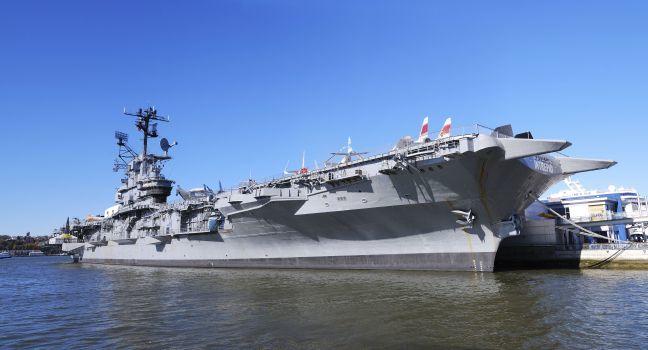
Intrepid Sea, Air & Space Museum

Midtown West
NEW YORK CITY - NOV 2: Intrepid museum at Hudson shore on November 2, 2010 in Manhattan, New York City. USS Intrepid is one of 24 Essex-class aircraft carriers built during WWII for the US Navy.; Shutterstock ID 106415465; Project/Title: MB_NYPhotoMap
Songquan Deng/Shutterstock

Manhattan's only floating museum—a historic, nonprofit, and educational institution like no other—occupies the Intrepid, a 900-foot-long aircraft carrier that was launched in 1943 and decommissioned in 1974. The carrier's most trying moment of service, the day it was attacked in World War II by kamikaze pilots, is recounted in a stirring multimedia presentation. On the ship’s various indoor and outdoor decks is a collection of 28 aircraft. NASA's original prototype orbiter that paved the way for the space-shuttle program, the Enterprise, is housed in a climate-controlled pavilion on the Intrepid’s flight deck. Fascinating exhibits share the shuttle's history, along with many more stories and artifacts from America's aviation, naval, and military heritage.

\n

Docked alongside the Intrepid, the submarine Growler—the only American guided-missile submarine open to the public—offers a firsthand look at life aboard a submarine, as well as a close-up inspection of the once top-secret missile command center. Also in the museum’s collection is a retired British Airways Concorde Alpha Delta G-BOAD passenger jet, which holds the record for the fastest Atlantic crossing by any Concorde. The museum provides specialized programs and resources to support visitors with disabilities and their families.

12th Ave., New York, NY, 10036-4103, USA
212-245–0072
Sight Details
$38 (free for U.S. military/veterans)

Something incorrect in this review?

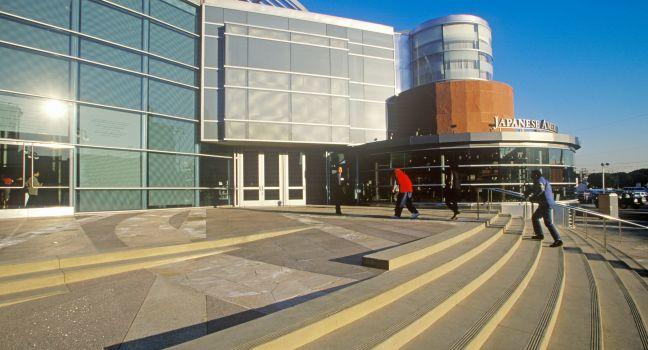
Japanese American National Museum

Downtown
LOS ANGELES, CALIFORNIA - CIRCA 1990'S: Japanese-American National Museum in Little Tokyo, Los Angeles, California; Shutterstock ID 148915628; Project/Title: 20 Ultimate Must-Dos in LA; Downloader: Melanie Marin
spirit of america/Shutterstock

What was it like to grow up on a sugar plantation in Hawaii? How difficult was life for Japanese Americans interned in concentration camps during World War II? These questions are addressed by changing exhibitions at this museum in Little Tokyo that also include fun tributes to anime and Hello Kitty. Volunteer docents are on hand to share their own stories and experiences. The museum occupies its original site in a renovated 1925 Buddhist temple and an 85,000-square-foot adjacent pavilion.

Take the Metro and get $2 off general admission and a 10% discount at adjoining Chado Tea Room.

100 N. Central Ave., Los Angeles, CA, 90012, USA
213-625–0414
Sight Details
$16; free Thurs. 5–8 and all day every 3rd Thurs. of month
Closed Mon.

Something incorrect in this review?

9/11 Tribute Museum

Financial District

This nonprofit project of the September 11th Families' Association opened in 2006 with the intent of putting the events of that day into context—at the time, there was little to see beyond a big construction site. Its galleries include displays about the history and construction of Lower Manhattan; the events of September 11, 2001; the response and recovery efforts after the attacks; and first-person histories. A Tribute visit tends to feel more intimate, and is a good alternative or complement to the broader mission of the separate National 9/11 Memorial & Museum. Guided walking tours are often led by survivors or first responders and cover the gallery and the memorial (not the National 9/11 Memorial Museum on the WTC site).

92 Greenwich St., New York, NY, 10006, USA
866-737–1184
Sight Details
$17 for galleries; $35 for galleries and guided walking tour

Something incorrect in this review?

A. R. Bowman Memorial Museum

A tough little stone building (it was once a bank, and banks out here needed to be solid) is the site of the museum of the Crook County Historical Society. The 1910 edifice is on the National Register of Historic Places, with the inside vault and teller cages seemingly untouched. Prominent in the museum are old guns, relics from the lumber mills, and Native American artifacts that define early Prineville. An expansion houses a research library and life-size representations of an Old West street.

246 N. Main St., Prineville, OR, 97754, USA
541-447–3715
Sight Details
Free
Closed Sun., Mon., and Jan.

Something incorrect in this review?

A.L. Lewis Museum at American Beach

This museum celebrates the resilience and preservation of the American Beach community founded during the Great Depression in 1935. A.L. Lewis created this resort-style beach community for African Americans, providing a destination for "recreation and relaxation without humiliation." The museum also honors area preservationist MaVynee Oshun Betsch by telling stories of her life as well as of the community. 

1600 Julia St., Amelia Island, FL, 32034, USA
904-510–7036
Sight Details
$10
Closed Tues.–Thurs.

Something incorrect in this review?