189 Best Sights in USA

Background Illustration for Sights

We've compiled the best of the best in USA - browse our top choices for the top things to see or do during your stay.

Kamakahonu and Ahuena Heiau

Fodor's Choice

In the early 1800s, King Kamehameha the Great built a large royal compound at Kamakahonu, the bay fronting what is now the Courtyard King Kamehameha's Kona Beach Hotel; today it is one of the most revered and historically significant sites in all of Hawaii. Kamakahonu, meaning "eye of the turtle," was named for a prominent turtle-shaped rock there, covered in cement when the hotel and pier were built. The Ahuena Heiau, an impressive heiau (temple), was dedicated to Lono, the Hawaiian god of peace and prosperity. It was also used as a seat of government. The compound features a scaled-down replica of the temple and is a National Historic Landmark. You can't go inside the heiau, but you can view it from the beach or directly next door at the hotel's luau grounds.

London Bridge

Fodor's Choice

Remember the old nursery rhyme "London Bridge Is Falling Down"? Well, it was. In 1968, after about 150 years of constant use, the 294-foot-long landmark was sinking into the Thames. When Lake Havasu City founder Robert McCulloch heard about this predicament, he set about buying London Bridge, having it disassembled, shipped more than 5,000 miles to northwest Arizona, and rebuilt, stone by stone. The bridge was reconstructed on mounds of sand and took three years to complete. When it was finished, a mile-long channel was dredged under the bridge and water was diverted from Lake Havasu through the Bridgewater Channel. Today the entire city is centered on this unusual attraction. Pick up a self-guided walking tour brochure at the Lake Havasu City Visitor Information Center; guided tours are offered for groups of 10--24 from October through April. Both tours begin at the visitor center at the eastern base of the bridge, where you'll find a colorful re-creation of an English Village that houses a few curio shops and restaurants and offers good views of the channel of cool blue water flowing under London Bridge. On the western side, you'll find a handful of more urbane restaurants as well as the hip Heat Hotel.

1550 London Bridge Rd., Lake Havasu City, AZ, 86403, USA
928-855–5655-for guided group tours

Something incorrect in this review?

Lyndon B. Johnson National Historical Park

Fodor's Choice

History buffs will enjoy wandering through the rooms of Lyndon Baines Johnson's boyhood home in Johnson City, where every effort has been made to restore the home to its 1920s appearance. LBJ lived here from the age of five until his 1924 high school graduation, and the house gives an insightful look into the 36th president's childhood and how he grew into the man he became. It's part of the Lyndon B. Johnson National Historical Park, which also includes the LBJ Ranch in Stonewall.

Recommended Fodor's Video

Manzanar National Historic Site

Fodor's Choice

A reminder of an ugly episode in U.S. history, this site is where more than 10,000 Japanese-Americans were contained behind barbed-wire fences between 1942 and 1945. A visit here is both deeply moving and inspiring—the former because it’s hard to comprehend that the United States was capable of confining its citizens in such a way, the latter because those imprisoned here persevered despite the adversity.

The best place to start is the outstanding interpretive center, which screens a 22-minute documentary film and displays historical photos, artifacts, and a model of the camp as it was during WWII. Although few of the original 1940s structures remain, the area known as Block 14 has a restored mess hall and reconstructions of a women's latrine as well as two barracks, where four exhibits highlight what daily life was like here. You can also drive or bike the 3.2-mile road through the site, taking a self-guided tour of Japanese rock gardens, various signposted ruins, and a small cemetery.

Martin Luther King Jr. National Historic Site and Birth Home

Sweet Auburn Fodor's Choice

The modest Queen Anne–style residence is where Martin Luther King Jr. was born and raised. Besides items that belonged to the family, the house contains an outstanding multimedia exhibit focused on the civil rights movement. A limited number of visitors are allowed to tour the house each day. Advance reservations are not possible, so sign up early in the day. 

Note: Tours of the Birth Home will be suspended until November 2025 to allow for an extensive rehabilitation project. 

McLeod Plantation Historic Site

Fodor's Choice

Directly across the Ashley River from downtown Charleston, this 37-acre former cotton plantation on James Island focuses on the experiences of those who have lived here: enslaved people, free people, white people, and black people. Guided and self-led tours encourage visitors to compare the row of well-preserved slave quarters with the site's large plantation house. Its Transition to Freedom program imagines what life was like for the enslaved people who labored here, and the ramifications that the injustices they endured have on society today. The site, with its stunning oak allée, has had many lives: it was once home to Confederate troops, then to those of the Union, and was also the location of the island's Freedman's Bureau. Until 1990, when it became a Gullah-Geechee historic site, descendants of the McLeods, Gathers, and other families long associated with the plantation still resided there.

Minuteman Missile National Historic Site

Fodor's Choice

Treaties with the Soviet Union caused the removal of the nuclear missiles that formerly stood ready to launch in underground silos across western South Dakota, but one silo and disarmed missile, and its underground launch-control facility, were preserved as part of this historic site. The site consists of three spots along a 15-mile stretch of Interstate 90: a modern visitor center, which is full of exhibits about the Cold War, and the silo and launch-control facility. The visitor center and silo are free and open to the public, but there's a fee and a required reservation for the launch-control tour.

24545 Cottonwood Rd., SD, 57567, USA
605-433–5552
Sight Details
Closed 4 pm weekdays, 3 pm on weekends

Something incorrect in this review?

Mission Inn Museum

Fodor's Choice

The crown jewel of Riverside is the Mission Inn, a Spanish-Revival hotel whose elaborate turrets, clock tower, mission bells, and flying buttresses rise above downtown. Taking his cues from the Spanish missions in San Gabriel and Carmel, architect Arthur B. Benton designed the initial wing, which opened in 1903. Locals G. Stanley Wilson and Peter Weber are credited with the grand fourth section, the Rotunda Wing, completed in 1931.

You can climb to the top of its five-story spiral stairway, or linger in the Courtyard of the Birds, where a tinkling fountain and shady trees invite meditation. If a wedding isn't taking place, you can also peek inside the St. Francis Chapel, where celebrities such as Bette Davis, Humphrey Bogart, and Richard and Pat Nixon tied the knot before the Mexican cedar altar. Ten U.S. presidents have patronized the Presidential Lounge, a bright, wood-panel bar.

Docents of the Mission Inn Foundation, whose museum contains displays depicting the building's illustrious history, lead guided tours. On occasion, Friends of the Mission Inn ( www.friendsofthemissioninn.com) host silent movie nights with music played by the pipe organ in the Ball Room. 

Mission San Juan Capistrano

Fodor's Choice

Founded in 1776 by Father Junípero Serra, Mission San Juan Capistrano was one of two Roman Catholic outposts between Los Angeles and San Diego. The Great Stone Church, built in 1797, is the largest structure created by the Spanish in California. After extensive retrofitting, the golden-hued interiors are open to visitors who may feel they are touring among ruins in Italy rather than the O.C. Many of the mission's adobe buildings have been restored to illustrate mission life, with exhibits of an olive millstone, tallow ovens, tanning vats, metalworking furnaces, and the padres' living quarters. The beautiful gardens are lovely to wander around. The bougainvillea-covered Serra Chapel is believed to be the oldest church still standing in California and is the only building remaining in which St. Serra actually led Mass.

26801 Ortega Hwy., San Juan Capistrano, CA, 92675, USA
949-234–1300
Sight Details
$18
Closed Mon.
Advance online tickets are encouraged

Something incorrect in this review?

Mount Rushmore National Memorial

Fodor's Choice

Abraham Lincoln was tall in real life—6 feet, 4 inches, though add a few more for his hat. But at one of the nation's most iconic sights, Honest Abe, along with presidents George Washington, Thomas Jefferson, and Theodore Roosevelt, towers over the Black Hills in a 60-foot-high likeness. The four images look especially spectacular at night, when they're always illuminated.

Follow the Presidential Trail through the forest to gain excellent views of the colossal sculpture, or stroll the Avenue of Flags for a different perspective. Also on-site are an impressive museum, an indoor theater where an introductory film is shown, an outdoor amphitheater for live performances, an award-winning audio tour, and concession facilities. The nightly ranger program and special memorial lighting ceremony (June through mid-September) is reportedly the most popular interpretive program in all of the National Park Service system. Be sure to see the Avenue of Flags, running from the entrance of the memorial to the museum and amphitheater at the base of the mountain. This avenue has the flag of each state, commonwealth, district, and territory---arranged alphabetically—of the United States. At the Youth Exploration Area, along the Presidential Trail beneath the towering visage of George Washington, rangers present interactive programs for youngsters.

13000 Hwy. 244, Mount Rushmore, SD, 57751, USA
605-574–2523
Sight Details
Free; parking from $10 per vehicle

Something incorrect in this review?

Nantucket Historical Association

Town of Nantucket Fodor's Choice

This association maintains an assortment of venerable properties in town. A $25 pass gets you into all of the association's sites, including the glorious Whaling Museum and Hadwen House: historic properties including the Oldest House, Old Mill, Old Gaol, Greater Light are free for all visitors. Reserve in advance for the 60-minute Historic Downtown walking tour ( $25), which departs Monday through Saturday, late May–early September.

The Old Exchange & Provost Dungeon

Fodor's Choice

Built as a customs house in 1771, this building once served as the commercial and social center of Charleston and was the primary site of the city's public auctions of enslaved people. It was also the site of many historic events, including the state's ratification of the Constitution in 1788 and two grand celebrations hosted for George Washington. In addition to its role in the transatlantic slave trade, it was also used by the British to house prisoners during the Revolutionary War, experiences that are both detailed in exhibits. Costumed interpreters bring history to life on guided tours.

Old Mission Santa Barbara

Fodor's Choice

Dating from 1786 and widely referred to as the "Queen of Missions," this is one of the most beautiful and frequently photographed buildings in coastal California. The architecture evolved from adobe-brick buildings with thatch roofs to more permanent edifices as the mission's population burgeoned. An 1812 earthquake destroyed the third church built on the site. Its replacement, the present structure, is still a functioning Catholic church. Old Mission Santa Barbara has a splendid Spanish/Mexican colonial art collection, as well as Chumash sculptures and the only Native American–made altar and tabernacle left in the California missions.

Old North Church & Historic Site

North End Fodor's Choice

At one end of the Paul Revere Mall is a church famous not only for being the oldest standing church building in Boston (built in 1723) but also for housing the two lanterns that glimmered from its steeple on the night of April 18, 1775, and celebrating the 250th anniversary of this famed lighting. This is Christ (or Old North) Church, where Paul Revere and the young sexton Robert Newman managed that night to signal the departure by water of the British regulars to Lexington and Concord. Newman, carrying the lanterns, ascended the steeple, while Revere began his clandestine trip by boat across the Charles.

Although William Price designed the structure after studying Christopher Wren's London churches, Old North—which still has an active Episcopal congregation (including descendants of the Reveres)—is an impressive building in its own right. Inside, note the gallery and the graceful arrangement of pews; the bust of George Washington, pronounced by the Marquis de Lafayette to be the truest likeness of the general he ever saw; the brass chandeliers, made in Amsterdam in 1700 and installed here in 1724; and the clock, the oldest still running in an American public building. 

Try to visit when changes are rung on the bells, after the 11 am Sunday service; they bear the inscription, "We are the first ring of bells cast for the British Empire in North America." The steeple itself is not the original—the tower was destroyed in a hurricane in 1804 and was replaced in 1954. 

On the Sunday closest to April 18, descendants of the patriots reenact the raising of the lanterns in the church belfry during a special ticketed evening service, which also includes readings of Longfellow’s renowned poem, “Paul Revere’s Ride,” and Revere’s first-person account of that fateful night. Visitors are welcome to drop in for a self-guided tour (with an immersive audio tour for an extra fee) or guided tours with additional explorations of the bell-ringing chamber, sanctuary gallery (where Black and Indigenous congregants once sat), and recently restored crypt. On the North Church campus, you’ll also find newly redesigned outdoor green spaces, including two large courtyards, two formal gardens, and a war memorial to soldiers fallen in Iraq and Afghanistan, the first of its kind built in the City of Boston.  This is Freedom Trail stop 13.

193 Salem St., Boston, MA, 02113, USA
617-858–8231
Sight Details
$5, additional $5 for crypt tour and $3 for immersive audio

Something incorrect in this review?

Old Slater Mill National Historic Landmark

Fodor's Choice

Concord and Lexington may legitimately lay claim to what Ralph Waldo Emerson called "the shot heard 'round the world" in 1775, but Pawtucket's Slater Mill provided the necessary economic shot in the arm in 1793. This National Historic Landmark, the first successful water-powered spinning mill in America, touched off an industrial revolution that helped secure America's sovereign independence in the early days of the republic. The museum complex explores this era with U.S. National Park Service rangers and expert interpretive guides, who demonstrate fiber-to-yarn and yarn-to-fabric processes and hand-operated and powered machinery and discuss how industrialization forever changed this nation. It's peaceful just to watch the water wheel turn and to contemplate how much we owe to "Slater the Traitor."

Old Slave Mart Museum

Fodor's Choice

Used as a site for the auctioning of enslaved people (as well as a jail and morgue) until 1863, this building is now a museum that educates visitors on Charleston's role in the transatlantic slave trade. Charleston was a commercial center for the South's plantation economy, and enslaved people were forced to perform most labor within and beyond the city on the surrounding plantations. Galleries are outfitted with interactive exhibits, including push buttons that allow you to hear the historical accounts of enslaved people. The museum sits on one of the few remaining cobblestone streets in town.

Pendleton Underground Tours

Fodor's Choice

This 90-minute tour transports you belowground and back through Pendleton's history of gambling, girls, and gold. The Underground Tours depict town life from more than a century ago (when 32 saloons and 18 brothels were operating in full swing) to the 1953 closure of the Cozy Rooms, the best-known bordello in town. The Underground Tour eventually resurfaces, climbing the "31 Steps to Heaven" to those Cozy Rooms where madam Stella Darby reigned. The secret gambling lairs, opium dens, and bathhouses that lie directly below the pavement will give you a whole new perspective of the streets of Pendleton. Reservations are required.

San Antonio Missions National Historical Park

Southside Fodor's Choice

A National Park Service site and the only UNESCO World Heritage site in Texas, the San Antonio Missions National Historical Park is located on the Southside about 10 minutes south of downtown. Except for the Alamo, San Antonio's missions constitute the park and all four are active Catholic parishes to this day. Established along the San Antonio River in the 18th century by Franciscan friars, the missions stand as reminders of Spain's most successful attempt to extend its New World dominion northward from Mexico. The missions had the responsibility of converting the natives (primarily American Indians) to Catholicism. The missions were also centers of work, education, and trade. They represented the greatest concentration of Catholic missions in North America, and were the basis of the founding of San Antonio. The four missions from north to south are Mission Concepción, Mission San José, Mission San Juan, and Mission Espada. They are roughly 2½ miles apart from one another, but driving between them is easy—they are connected by Mission Road and Mission Parkway—and there is free parking at each mission. Admission to all missions is free. The visitor center and store for the park district is at Mission San José. Pick up a map of the grounds there and ask about upcoming special programming; the park is regularly alive with community gatherings, artists working plein air, festivals, and more.

San Juan Island National Historical Park

Fodor's Choice

Fortifications and other 19th-century military installments commemorate the Pig War, in which the United States and Great Britain nearly went into battle over their respective claims on the San Juan Islands. The park comprises two separate areas on opposite sides of the island. English Camp, in a sheltered cove of Garrison Bay on the northern end, includes a blockhouse, a commissary, and barracks. American Camp, on the southern end, has a visitor center and the remains of fortifications; it stretches along driftwood-strewn beaches. Great views greet you from the top of the Mt. Finlayson Trail—if you're lucky, you might be able to see Mt. Baker and Mt. Rainier along with the Olympics. From June to August you can take guided hikes and see reenactments of 1860s-era military life.

4668 Cattle Point Rd., San Juan Island, 98250, USA
360-378–2240
Sight Details
Free
Visitor centers closed Wed. America Camp visitor center closed Dec.–Feb. English Camp visitor center closed Oct.–Apr.

Something incorrect in this review?

Stonewall National Monument Visitor Center

Greenwich Village Fodor's Choice

Opened in June 2024, the Stonewall National Monument Visitor Center on Christopher Street is an information hub and an immersive exhibition on the Gay Rights movement that started right next door at the Stonewall Inn during the June 1969 Stonewall Riots when LGBTQ+ patrons fought back against one of the police department's routine raids, ultimately galvanizing America's homosexual civil-rights movement. You can spend time in the info center learning about how the movement started and progressed and then move next door to the historic bar, literally drinking in the history of the place via a beer or cocktail among the friendly locals and visitors who frequent the place. The bar is open nightly until late.

Tallac Historic Site

Fodor's Choice

Three historic mansions—the Pope House, the Baldwin Museum, and the Heller Estate—open in late spring and summer, but you can stroll the grounds or picnic year-round. George S. Pope, who made his money in shipping and lumber and played host to 1920s America's business and cultural elite, commissioned the magnificent 1894 Pope House. The Baldwin Museum is in the estate that once belonged to entrepreneur "Lucky" Baldwin; today it houses a collection of family memorabilia and Washoe Indian artifacts.

With a spectacular floor-to-ceiling stone fireplace, the Heller Estate, also known as Valhalla, was occupied for years by Walter and Claire Heller. (Tidbit: after their divorce, each visited the property on alternate weekends, though she held the title.) The estate's Grand Hall, Grand Lawn, and a boathouse refurbished as a theater host the summertime Valhalla Art, Music and Theatre Festival ( valhallatahoe.com) of concerts, plays, and cultural activities.

Hwy. 89, CA, 96150, USA
530-541–5227-late May–mid-Sept.
Sight Details
Free, summer guided site walk $5, Pope House tour $10
House and museum closed late Sept.–late May

Something incorrect in this review?

Tombstone Courthouse State Historic Park

Fodor's Choice

For an introduction to the town's—and the area's—past, visit the Tombstone Courthouse State Historic Park. This redbrick 1882 county courthouse offers exhibits on the area's mining and ranching history and a collection of Wyatt Earp's letters; you can also see the restored 1904 courtroom and district attorney's office. The two-story building housed the Cochise County jail, a courtroom, and public offices until the county seat was moved to Bisbee in 1929. The stately building became the cornerstone of Tombstone's historic-preservation efforts in the 1950s, and was Arizona's first operational state park.

Trinity Site

Fodor's Choice

Only a monument remains at Trinity Site, where the world's first atomic bomb exploded, on July 16, 1945. The resulting crater has been filled in, but the test site and monument are open for public viewing and self-guided tours two days of the year (the first Satudays in April and October). The McDonald ranch house, where the first plutonium core for the bomb was assembled, can be toured on those days. Picnic tables are available. It's wheelchair-accessible.

There are no vehicle services or gas at the site, and visitors must bring their own food and water.

Weaverville Joss House State Historic Park

Fodor's Choice

Weaverville's main attraction is the Joss House, a Taoist temple built in 1874 and called Won Lim Miao ("the temple of the forest beneath the clouds") by Chinese miners. The oldest continuously used Chinese temple in California, it attracts worshippers from around the world. With its golden altar, antique weaponry, and carved wooden canopies, the Joss House is a piece of California history best appreciated on a guided 30-minute tour.

630 Main St., Weaverville, CA, 96093, USA
530-623–5284
Sight Details
Museum free; guided tour $5
Closed Mon.–Wed.

Something incorrect in this review?

Wright Brothers National Memorial

Fodor's Choice

One of the most popular photo sites on the Outer Banks is the 60-foot granite airplane's tail that pays tribute to Wilbur and Orville Wright, two bicycle mechanics from Ohio who took to the air here on December 17, 1903. A sculptured replica of their WrightFlyer and stone markers showing the exact points and distances soared help you experience the historic day humans first made powered flight—and the multiyear, trial-and-error process the perseverant brothers endured leading up to it. Informative talks by National Park Service rangers also help bring the event to life. The museum and visitor center uses historical artifacts, reproductions, and displays to dive into the lives, legends, and flight process of the brothers.

Bent's Old Fort National Historic Site

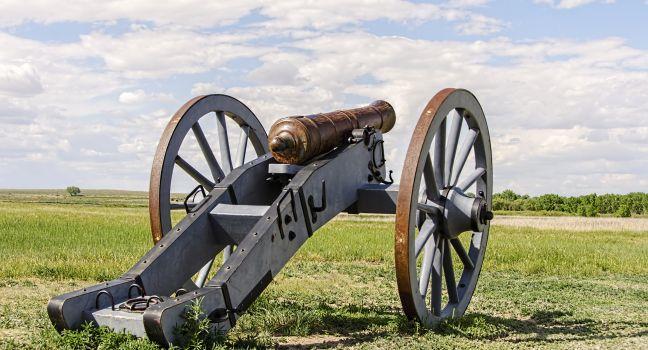
Bent's Old Fort (1833-1849) - Situated on the north bank of the Arkansas River near present-day La Junta, Colorado, this non-military post was one of the most significant outposts on the Santa Fe Trail.
Mckown | Dreamstime.com

About 8 miles east of La Junta, Bent's Old Fort National Historic Site painstakingly re-creates what life was like in this adobe fort. The 1840s fort was situated along the commercially vital Santa Fe Trail, providing both protection and a meeting place for the soldiers, trappers, and traders of the era. The museum's interior reveals daily life at a trading post, providing looks at a smithy and carpenter's workshop and featuring educational films and guided tours.

35110 Rte. 194, La Junta, CO, 81050, USA
719-383–5010
Sight Details
$10

Something incorrect in this review?

Mission Santa Inés

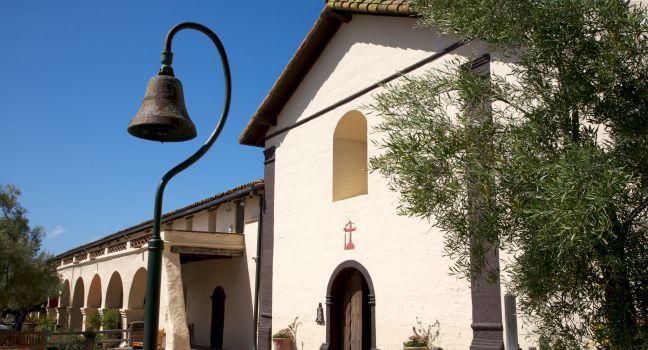
Mission Santa Ines Virgen y Martir, founded 1804, near Solvang, California
Julie Vader / Shutterstock

The mission holds an impressive collection of paintings, statuary, vestments, and Chumash and Spanish artifacts in a serene bluff-top setting. You can tour the museum, sanctuary, and gardens.

Washington Crossing Historic Park

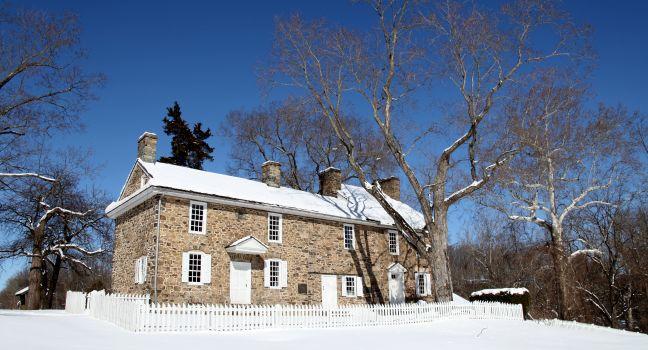
The Thompson-Neely House was used as a military hospital during the American Revolutionary War by General George Washington’s Continental Army. Located in Washington Crossing State Park, Pennsylvania.
(c) Reddy | Dreamstime.com

It was from this evocative site, now a 500-acre park, that on Christmas night in 1776 General Washington and 2,400 of his men crossed the ice-studded Delaware River, attacked the Hessian stronghold at Trenton, and secured a desperately needed victory for the Continental Army. This crossing was immortalized in Emanuel Leutze's famous 1851 painting, which hangs in New York's Metropolitan Museum of Art. The park's visitor center, historic houses, and memorials are divided between the Lower Park (McConkey Ferry section) and Upper Park (Thompson-Neely section), about 5 miles apart.

In the Lower Park, the visitor center has park information, a short film, and helpful historic exhibits; it also sells tickets for informative guided tours in both areas. The Crossing the Delaware tour in the Lower Park emphasizes the role that ten crucial days played in the American Revolution. You can see replicas of the Durham boats used in the crossing, and for the country's 250th anniversary in 2026 a newly constructed replica will be placed along the Delaware as part of a new interpretive trail.

In the Upper Park, 125-foot-tall Bowman's Hill Tower offers a commanding view of the area. The Thompson-Neely House tour describes life in Bucks County; it was used as a hospital during the 1776–77 encampment of Washington's army. There's also a gristmill tour. The park's special events include a popular reenactment of the crossing in December.

On the New Jersey side of the Delaware, across the narrow Washington Crossing Bridge, is Washington Crossing State Park ( 355 Washington Crossing–Pennington Rd., Titusville  609/737–0623  nj.gov/dep  $10 per car NJ residents, $20 per car others Memorial Day–Labor Day; free rest of year). It has a visitor center with a film and a museum that covers New Jersey's role in the Revolution, and a separate area with the Johnson Ferry House by the site where Washington and his troops landed. The park is also popular for its nature trails. At this writing, a new and expanded visitor center overlooking the Delaware is set to open by mid-2026.  

1112 River Rd. (Rte. 32), Washington Crossing, PA, 18977, USA
215-493–4076
Sight Details
Grounds free, 1 tour or tower $7, 2 tours and tower $15
Tower and Thompson-Neely House closed Jan., Feb., and weekdays Dec. and Mar. No historic village tours weekdays Jan.–Mar.

Something incorrect in this review?

African Burial Ground National Monument

Financial District

Often overlooked due to its location amid downtown’s Civic Center courthouses and high-rises, this powerful, compact site is well worth a visit to learn about a lesser-known part of New York’s colonial history. The African Burial Ground National Monument commemorates what was once a 6-acre cemetery, discovered in 1991 when an archaeological study for a new development revealed more than 15,000 intact skeletal remains of enslaved and free Africans. Today, visitors can view the 24-foot-high Ancestral Chamber and the large Circle of the Diaspora, each made of stone from Africa and North America, adorned with African symbols, and designed with symbolic details that honor those who were laid to rest at the site. On the other side of the block, the visitor center features the “Reclaiming Our History” exhibit, details about the work and life of African people in early New York, and the 20th-century community success that preserved the burial ground. The memorial was proclaimed a national monument in 2006 in a ceremony presided over by former mayor Michael Bloomberg and poet Maya Angelou. The visitor center is located at 290 Broadway and the Outdoor Monument is located on the corner of Duane Street and African Burial Ground Way (Elk Street).

290 Broadway, New York, NY, 10007, USA
212-238–4367
Sight Details
Free
Closed Sun. and Mon.

Something incorrect in this review?

Andersonville National Historic Site

About 20 miles northeast of Plains, Andersonville National Historic Site is a solemn reminder of the Civil War's tragic toll. Andersonville, also known as Camp Sumter, was the war's deadliest prisoner-of-war camp. Some 13,000 Union prisoners died here, mostly from disease, neglect, and malnutrition. Photographs, artifacts, and high-tech exhibits detail not just the plight of Civil War prisoners but also prison life and conditions affecting all of America's 800,000 POWs since the Revolutionary War.