189 Best Sights in USA

Background Illustration for Sights

We've compiled the best of the best in USA - browse our top choices for the top things to see or do during your stay.

9/11 Memorial & Museum
Financial District Fodor's Choice
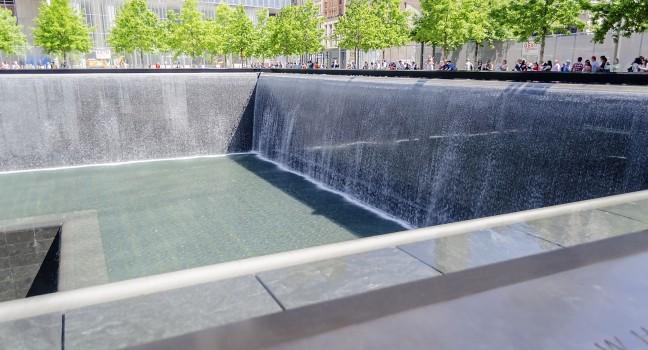
NEW YORK - MAY 27: NYC's 9/11 Memorial at World Trade Center Ground Zero seen on May 27, 2013. The memorial is located at the World Trade Center site, on the former location of the Twin Towers
(c) Marcorubino | Dreamstime.com

Opened in 2011 to mark the 10th anniversary of the September 11, 2001, terrorist attacks, the somber 9/11 Memorial is an open-access, free public plaza occupying much of the 16-acre World Trade Center site. It comprises two giant, recessed square footprints lined with 30-foot-tall waterfalls marking where the Twin Towers once stood. Edging the memorial pools are bronze panels inscribed with the names of the nearly 3,000 people who were killed in the 1993 and 2001 terrorist attacks. Around the plaza are benches, grassy strips, and more than 400 swamp white oak trees harvested from within a 500-mile radius of the site, as well as from Pennsylvania and the Washington, D.C., area. Be sure to stop at the remarkable Callery pear "Survivor Tree" that, rather miraculously, withstood the 2001 attacks and was nurtured back to health.

Along Liberty Street on the south side of the site is the elevated Liberty Park, home to Fritz Koenig's The Sphere, which for three decades stood on the plaza at the World Trade Center as a symbol of peace. Damaged in the 2001 attacks, the sculpture was installed in the park in 2017. On the park's east end stands St. Nicholas Greek Orthodox Church and National Shrine ( stnicholaswtc.org), erected to replace the church that was destroyed on 9/11. Unlike an average church, this house of worship cost $85 million, took 21 years to design and construct, and among its splendid features, was built with white marble sourced from the same Greek quarry as the Parthenon's stone. Visitors are welcome daily (except Tuesday), 10–3.

Beside the twin pools that form the 9/11 Memorial Plaza is the glass pavilion of the 9/11 Memorial Museum. The museum descends some seven stories down to the Twin Towers' original bedrock foundations, and the vast space displays a poignant, powerful collection of artifacts, memorabilia, photographs, and multimedia exhibits, as well as a gallery that takes visitors through the history of events surrounding both the 1993 and 2001 attacks. You might appreciate the tissue boxes around the museum when beholding the memorial wall with portraits and personal stories of those who perished. There's a panoramic media installation about the site's "rebirth," as well as World Trade Center–related art and history exhibits that change throughout the year. Giant pieces of the towers' structural steel and foundations are displayed, along with the partially destroyed Ladder Company 3 fire truck. You can also see the remnants of the Survivors Stairs, which allowed hundreds of people to escape the buildings that fateful September day. (Check the website for current ticket packages and other discounts.)
180 Greenwich St., New York, NY, 10007, USA
212-266–5211-general information
Sight Details
Memorial is free; museum admission $36

Something incorrect in this review?

Anna Ranch Heritage Center

Fodor's Choice
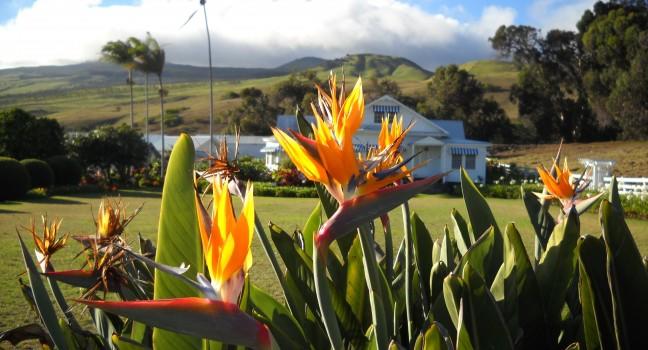
Anna Ranch, Kamuela, Hawaii 189/365. A historic landmark with beautiful gardens.
Anna Ranch, Kamuela, Hawaii 189/365 by Jen R

On the National and State Registers of Historic Places, this stunning heritage property belonged to the "first lady" of Hawaii ranching, Anna Lindsey Perry-Fiske, and now provides a rare opportunity to see a fully restored cattle ranch compound and learn about the life of this fascinating woman. She rounded up and butchered cattle by day and threw lavish parties by night. Wander the picturesque grounds and gardens on a self-guided walk, watch a master saddlemaker and an ironsmith in action, and take a guided tour (by appointment only) of the historic house, where Anna's furniture, gowns, and elaborate pau (parade riding) costumes are on display. The knowledgeable staff shares anecdotes about Anna's life. (Some staff and visitors have even reported strange goings-on in the main house, suggesting that Anna may still be "hanging around.")

65-1480 Kawaihae Rd., Waimea (Hawaii County), HI, 96743, USA
808-885–4426
Sight Details
Grounds and Discovery Trail free, historic home tours $10
Closed Sat.–Mon.

Something incorrect in this review?

Boathouse Row

Fairmount Park Fodor's Choice
Boathouse Row, Fairmount Park, Philadelphia , PA.
(c) Fairiegoodmother | Dreamstime.com

These architecturally varied, quaint-looking 19th-century buildings on the park's east side—a National Historic Landmark and riverside city icons built in Victorian Gothic, Gothic Revival, and Italianate styles—are home to the rowing clubs that make up the Schuylkill Navy ( boathouserow.org), an association of boating clubs organized in 1858. The clubs host various races, including the Dad Vail Regatta (held in New Jersey in 2025 due to work being done on the Schuylkill River) and the Head of the Schuylkill Regatta. You can see the boathouse up close from the path along Kelly Drive, but the view of the 15 buildings from the west side of the Schuylkill (along MLK Drive) is a cherished Philly favorite, especially at night when they're outlined with 6,400 LED lights upgraded in 2024 to allow for more special effects and colors; white is the classic look. The close-up look Lloyd Hall ( 1 Boathouse Row), is a public recreation center with a gymnasium, bicycle rentals in season, a café, and restrooms.

Recommended Fodor's Video

Cataloochee Valley

Fodor's Choice
Essence of Autumn
Danny R. Buxton / Shutterstock

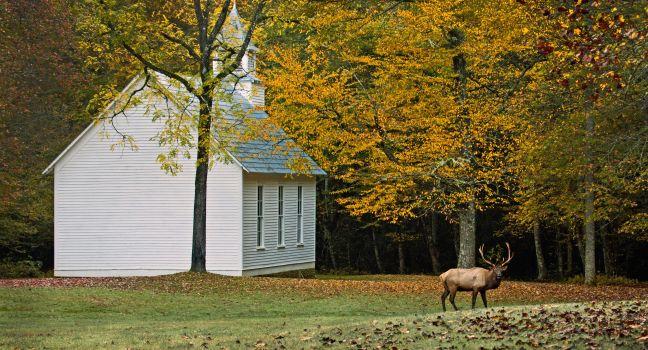
This is one of the most memorable and eeriest sights in all of the Smokies. At one time Cataloochee was a community of more than 1,200 people. After the land was annexed for the national park in 1934, the community dispersed. Although many of the original buildings are gone, more than a dozen houses, cabins, barns, and churches still stand. You can visit the Palmer Methodist Chapel, the Beech Grove School, and the Woody, Caldwell, and Messer homesteads. You have a good chance of spotting elk here, especially in the evening and early morning. You'll also likely see wild turkeys, deer, and perhaps bears. Cataloochee is one of the most remote parts of the Smokies, reachable by car via a narrow, winding gravel road that rises over a steep pass before dropping you into the isolated valley. Take the 5 mph speed limit seriously on the blind curves. At dawn and dusk, this uncrowded valley is pure beautiful magic.

Hollywood Sign

Hollywood Fodor's Choice
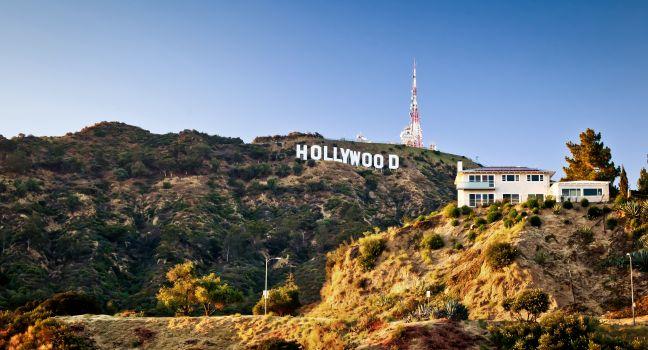
LOS ANGELES, USA - JULY 18: View of Hollywood sign on July 18, 2011 in Los Angeles, California. Sign is located in the Hollywood hills area of Mount Lee, built in 1923.
Bayda127 | Dreamstime.com

With letters 50 feet tall, Hollywood's trademark sign can be spotted from miles away. The icon, which originally read "Hollywoodland," was erected in the Hollywood Hills in 1923 to advertise a new housing development and was outfitted with 4,000 light bulbs. In 1949 the "land" portion of the sign was taken down. By 1973 the sign had earned landmark status, but because the letters were made of wood, its longevity came into question. A makeover project was launched and the letters were auctioned off (rocker Alice Cooper bought an "O" and singing cowboy Gene Autry sponsored an "L") to make way for a new sign made of steel. Inevitably, the sign has drawn pranksters who have altered it over the years, albeit temporarily, to spell out "Hollyweed" (in the 1970s, to push for more lenient marijuana laws), "Go Navy" (before a Rose Bowl game), and "Perotwood" (during businessman Ross Perot's 1992 presidential bid). A fence and surveillance equipment have since been installed to deter intruders, but another vandal managed to pull the "Hollyweed" prank once again in 2017 after Californians voted to make recreational use of marijuana legal statewide. And while it's still very illegal to get anywhere near the sign, several area hikes will get you as close as possible for some photo ops; you can hike just over six miles up behind the sign via the Brush Canyon trail for epic views, especially at sunset.  Use caution if driving in the hills below the sign on residential streets; many cars speed around the blind corners. Some streets have restricted parking to deter visitors.

Independence Hall

Old City Fodor's Choice
Independence Hall in Philadelphia, Pennsylvania.
F11photo | Dreamstime.com

The birthplace of the United States, this redbrick building with its clock tower and steeple is one of the nation's greatest icons. It was constructed in 1732–56 as the Pennsylvania State House. What happened here between 1775 and 1787 changed the course of American history—and the name of the building to Independence Hall. The delegates to the Second Continental Congress met in the Assembly Room in May 1776, united in anger over British troops firing on citizens in Concord, Massachusetts. In this same room, George Washington was appointed commander in chief of the Continental Army, Thomas Jefferson's eloquent Declaration of Independence was signed, and later the Constitution of the United States was adopted. Here the first foreign minister to visit the United States was welcomed; the news of Cornwallis's defeat was announced, signaling the end of the Revolutionary War; and, later, John Adams and Abraham Lincoln lay in state. The memories this building holds linger in the collection of polished muskets, the silver inkstand used by delegates to sign the Declaration of Independence, and the "Rising Sun" chair in which George Washington sat. (After the Constitution was adopted, Benjamin Franklin said about the carving on the chair: "I have the happiness to know that it is a rising and not a setting sun.")

In the East Wing—attached to Independence Hall by a short colonnade—you can embark on free tours that start every 15 to 20 minutes and last 35 minutes. Admission is first-come, first-served; pick up free, timed tickets from the visitor center to avoid waiting in line. The West Wing of Independence Hall contains an exhibit of our nation's founding documents: the final draft of the Constitution, a working copy of the Articles of Confederation, and the first printing of the Declaration of Independence.

In front of Independence Hall, next to the statue of George Washington, note the plaques marking the spots where Abraham Lincoln stood on February 22, 1861, and where John F. Kennedy delivered an address on July 4, 1962. With Independence Hall in front of you and the Liberty Bell behind you, this is a place to stand for a moment and soak up a sense of history. From March through December and on major holidays, free, timed tickets from the Independence Visitor Center are required for entry. Tickets also can be reserved online. For tickets, visit  www.recreation.gov/ticket/234639/ticket/90.

Puukohola Heiau National Historic Site

Fodor's Choice
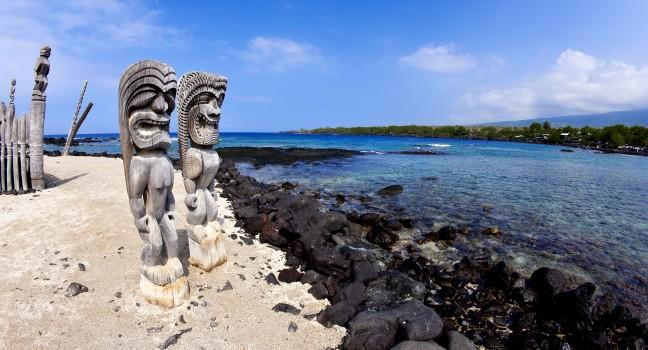
The Ki’i guard the Temple of Hale o Keawe at Place of Refuge in Kona Hawaii.
Ocean Image Photography / Shutterstock

Quite simply, this is one of the most historic and commanding sites in all of Hawaii: here, in 1810, on top of Puukohola (Hill of the Whale), Kamehameha the Great built the war heiau, or temple, that would serve to unify the Hawaiian Islands, ending 500 years of warring chiefdoms. The oceanfront, fortresslike site is foreboding and impressive. A paved ½-mile looped trail runs from the visitor center to the main temple sites. An even older temple, dedicated to the shark gods, lies submerged just offshore, where sharks can be spotted swimming, usually first thing in the morning. A museum displays ancient Hawaiian weapons, including clubs, spears, a replica of a bronze cannon that warriors dragged into battle on a Hawaiian sled, and three original paintings by artist Herb Kane. This underrated park is often very uncrowded. Rangers are available to answer questions, or you can take a free audio tour on your smartphone. Plan about an hour to see everything.

Tenement Museum

Lower East Side Fodor's Choice
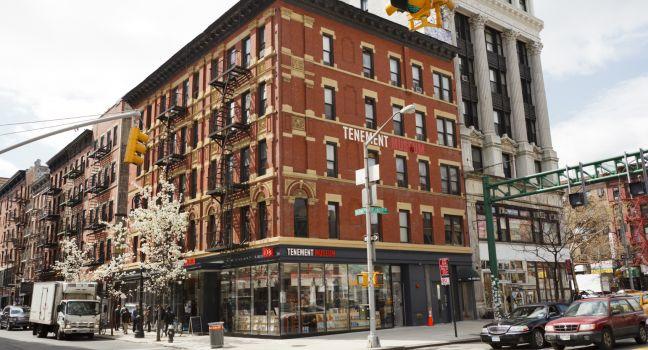
The Tenement Museum located on the lower east side of Manhattan. Among other things, the museum has recreated-preserved living and working spaces to show what tenement life was like spanning the turn of the of the century (latter half of 1800's to early pa
wdstock / iStockphoto

For a step back to various points in time on the Lower East Side, book one of the experiences that revolve around the partially restored 19th-century buildings that comprise the Tenement Museum. Options include apartment tours, neighborhood walks (including "Reclaiming Black Lives" introduced in 2021), and informative talks. At 97 Orchard Street, theme tours take you through the preserved apartments of several generations of immigrants who lived in the building. The "Hard Times" tour visits the homes of Natalie Gumpertz, a German–Jewish dressmaker (dating from 1878), and Adolph and Rosaria Baldizzi, Catholic immigrants from Sicily (1935). "Sweatshop Workers" visits the Levine family's garment shop–apartment and the home of the Rogarshevsky family from Eastern Europe (1918), while "Irish Outsiders" explores the life of the Moores, an Irish American family living in the building in 1869. Nearby, at 103 Orchard Street, the Under One Roof exhibition explores the lives of immigrant families from Poland, China, and Puerto Rico who lived in the building after World War II. All the tours fill up fast so it's best to sign up in advance.

103 Orchard St., New York, NY, 10002, USA
877-975–3786
Sight Details
Most tours $30 (not all allow children under 5)

Something incorrect in this review?

1719 Museum & Hans Herr House

Fodor's Choice

Built in 1719 and listed on the National Register of Historic Places, the Hans Herr House is the oldest building in Lancaster County and the oldest remaining Mennonite meeting house in the Western Hemisphere. It is believed to have been the residence of Herr, a Mennonite bishop, and was where his descendants lived. The main house remained a home until the early 1900s, when it fell into disuse. Never modernized, the house retains most of its original old-country German features, which were preserved when it was restored in the 1970s. An hour-plus tour covers the house and grounds, which include two other Pennsylvania German homes, Colonial-era barns and outbuildings, and a collection of period farm equipment. The site's re-created Native American longhouse, which illuminates the culture of the Conestoga–Susquehannock tribe, is a highlight.

The Alamo

Downtown Fodor's Choice

At the heart of San Antonio, this one-time Franciscan mission established in 1718 as Mission San Antonio de Valero stands as a revered repository of 300 years of Texas history. It is a monument to the 187 Texan and Tejano (Texans of Mexican descent) volunteers who fought and died here during a 13-day siege in February and March of 1836 led by Mexican dictator General Antonio López de Santa Anna. The Texan army lost, but the defeat inspired an April victory at the Battle of San Jacinto with the rallying cry "Remember the Alamo," spurring Texas toward independence from Mexico. Today the historic shrine (Alamo Church) and Long Barrack are the only structures remaining from the 1836 battle. Admission to those two are free, but you must have a timed ticket (reserve online or on-site) to keep crowds at a minimum inside the shrine. Once inside, be sure to see the Church's Sacristy Exhibit, an immersive journey through time all the way to its role as a sanctuary for women and children during the siege. You can also upgrade from the free tour to the "A Line in the Sand" self-guided experience ($20), which includes the audio tour, the Alamo Exhibit, and entry to Alamo Church. For the ultimate history lesson, take the "Remember the Alamo Guided Tour" ($45) led by Alamo History interpreters; it's 45 minutes long with a 30-minute guided walking tour and time for Q&A. This tour includes entry into the church and the Alamo Exhibit in the Ralston Family Collections Center, where you can explore artifacts from the Phil Collins Collection and others in 10,000 square feet of gallery space with more than 500 artifacts on display (rotated out of a collection of 5,000). You can also purchase tickets separately to the Ralston Center. The ongoing construction around the Alamo is part of a multi-year (through 2027) $550 million renovation and redevelopment of Alamo Plaza, including plans for a Plaza de Valero pavilion, a reconstructed walkway from the Hyatt Regency Riverwalk hotel to Alamo Plaza, a new education center (150,000 school children visit the Alamo each year), and a $185 million visitor center and Alamo museum in the historic Crockett Building across from the plaza.

300 Alamo Plaza, San Antonio, TX, 78205, USA
210-225–1391
Sight Details
Alamo Church and Long Barrack free but must reserve timed-entry ticket; self-guided audio tour and Alamo Exhibit $14; expert guided tour $45; Ralston Family Collections Center admission, $14

Something incorrect in this review?

Alekoko (Menehune) Fishpond

Fodor's Choice

No one knows just who built this large, intricate, almost 1,000-year-old aquaculture structure in the Huleia River, but legend attributes it to the Menehune, a mythical—or real, depending on who you ask—ancient race of people known for their small stature, industrious nature, and superb stone-working skills. Volcanic rock was cut and skillfully fit together into massive walls 4 feet thick and 5 feet high, forming a centuries-old enclosure for raising mullet and other freshwater fish. Volunteers removed invasive mangroves and restored the pond to its original condition. You can view it from an overlook about 4 miles from downtown Lihue.

Angels Flight Railway

Downtown Fodor's Choice

The turn-of-the-20th-century funicular, dubbed "the shortest railway in the world," operated between 1901 and 1969, when it was dismantled to make room for an urban renewal project. Almost 30 years later, Angels Flight returned with its original orange-and-black wooden cable cars hauling travelers up a 298-foot incline from Hill Street to the fountain-filled Watercourt at California Plaza. Your reward is a stellar view of the neighborhood. Tickets are $1 each way, but you can buy a souvenir round-trip ticket for $2 if you want something to take home with you.

Bill Speidel's Underground Tour

Pioneer Square Fodor's Choice

Present-day Pioneer Square is actually one story higher than it used to be. After the Great Seattle Fire of 1889, Seattle's planners regraded the neighborhood's streets, which had been built on filled-in tide lands and regularly flooded. The result? There is now an intricate and expansive array of subterranean passageways and basements beneath Pioneer Square, and Bill Speidel's Underground Tour is the only way to explore them. Speidel was an irreverent historian and former Seattle Times reporter who took it upon himself to preserve historic Seattle, and this 75-minute tour is packed with his sardonic wit and playful humor. Younger kids will almost certainly be bored, as there's not much to see at the specific sites, which are more used as launching points for the stories (some of the tour is above ground, as well). Comfortable shoes, a love for quirky historical yarns, and an appreciation of bad puns are musts.

Bluff Fort

Fodor's Choice

With grounds almost a full city block in size, this very kid-friendly restored fort is a must-see, transporting you back to the 1880s and into the lives of the Mormon pioneers who settled in Bluff. Wander in and out of tiny re-created cabins (plus one original), each representing the experience of a founding family. Their descendants even helped build and decorate the cabins with family artifacts and photos, displayed alongside written histories. Children can try their hand at roping toy steers or buy some of the house-made candy at the little kitchen, which also sells soft-serve ice cream and other snacks.

A reconstructed co-op store anchors the fort and doubles as a visitor center, displaying photos and a video that tell more of the area's past. There you can also buy crafts handmade by the fort's many friendly volunteers. Dressed in historical garb, they're happy to go into even more detail with you about the history of this place and the stunning area that surrounds it. Though the grounds are open daily, the store closes on Sunday.

Carl Sandburg Home National Historic Site

Fodor's Choice

Connemara Farm is where the famed poet and biographer Carl Sandburg moved with his wife, Lillian, in 1945; he lived there until his death in 1967. Guided tours of their 1830s house—beautifully reconstructed in 2017—are given by National Park Service rangers. Sandburg's papers are still scattered on his desk as if he had just stepped away for a moment, and there are 11,000 of his books on shelves. Kids enjoy cavorting around the 264-acre farm, which still maintains descendants of the Sandburg family goats. There are also miles of trails.

Castle Island

South Boston Fodor's Choice

Although it once was, Castle Island is no longer, well, an island. Capping the South Boston neighborhood, Castle Island is accessible by car and by foot from Day Boulevard. Its centerpiece is Fort Independence, built in 1801 (although there have been battlements on-site since 1644), open for free tours on summer weekend afternoons. Castle Island is a popular spot to walk dogs, jog, or cycle, whether just around the island itself or along the water-set Pleasure Bay Loop. There's also a nice playground for kids. Stop by Castle Island institution Sullivan's for a hot dog, fried seafood dinner, or ice cream. Views of the harbor and its outlying islands are expansive.

El Pueblo de Los Angeles

Downtown Fodor's Choice

The oldest section of the city, known as El Pueblo de Los Angeles, represents the rich Mexican heritage of L.A. It had a close shave with disintegration in the early 20th century, but key buildings were preserved, and eventually Olvera Street, the district's heart, was transformed into a Mexican American marketplace. Today vendors still sell puppets, leather goods, sandals, and woolen shawls from stalls lining the narrow street. You can find everything from salt and pepper shakers shaped like donkeys to gorgeous glassware and pottery.

At the beginning of Olvera Street is the Plaza, a Mexican-style park with plenty of benches and walkways shaded by a huge Moreton Bay fig tree. On weekends, mariachi bands and folkloric dance groups perform. Nearby places worth investigating include the historic Avila Adobe, the Chinese American Museum, the Plaza Firehouse Museum, and the America Tropical Interpretive Center. Exhibits at the Italian American Museum of Los Angeles chronicle the area's formerly heavy Italian presence.

125 Paseo De La Plaza, Los Angeles, CA, 90012, USA
213-485–6855
Sight Details
Free for Olvera St. and self-guided tours; fees at some museums

Something incorrect in this review?

Elfreth's Alley

Old City Fodor's Choice

This alley is the oldest continuously occupied residential street in America, dating back to 1702. Much of Colonial Philadelphia resembled this area, with its cobblestone streets and narrow two- or three-story brick houses. These were modest row homes rented by craftsmen, such as cabinetmakers, silversmiths, pewterers, and those who made their living in the shipping industry. The earliest houses have pent eaves; taller houses, built after the Revolution, show the influence of the Federal style. The Elfreth's Alley Museum includes two homes that have been restored by the Elfreth's Alley Association: No. 124, home of a Windsor chair maker, and No. 126, a Colonial dressmaker's home, with authentic furnishings and a Colonial kitchen. In early June residents celebrate Fete Day, when some of the 30 homes are open to the public for tours hosted by guides in Colonial garb. In December, residents again welcome visitors for “Deck the Alley,” a holiday-themed celebration. Both of these special events require advance tickets. You can stop at the museum and purchase an audio tour or simply stroll down the street anytime. 

124–126 Elfreth's Alley, Philadelphia, PA, 19106, USA
215-627–8680
Sight Details
$3 for self-guided Museum House tour, $8 for guided tour

Something incorrect in this review?

Faneuil Hall

Government Center Fodor's Choice

Faneuil Hall (pronounced Fan-yoo'uhl or Fan-yuhl) was erected in 1742, the gift of wealthy merchant Peter Faneuil, who wanted the hall to serve as both a place for town meetings and a public market. It burned in 1761 and was immediately reconstructed according to the original plan of its designer, the Scottish portrait painter John Smibert (who lies in the Granary Burying Ground). In 1763 the political leader James Otis helped inaugurate the era that culminated in American independence when he dedicated the rebuilt hall to the cause of liberty.

In 1772, Samuel Adams stood here and first suggested that Massachusetts and the other colonies organize a Committee of Correspondence to maintain semiclandestine lines of communication in the face of hardening British repression. In later years the hall again lived up to Otis's dedication when the abolitionists Wendell Phillips and Charles Sumner pleaded for support from its podium. The tradition continues to this day: in presidential-election years the hall is the site of debates between contenders in the Massachusetts primary.

Faneuil Hall was substantially enlarged and remodeled in 1805 according to a Greek Revival design of the noted architect Charles Bulfinch; this is the building you see today. Its purposes remain the same: the balconied Great Hall is available to citizens' groups on presentation of a request signed by a required number of responsible parties; it also plays host to regular concerts.

Inside Faneuil Hall are dozens of paintings of famous Americans, including the mural Webster's Reply to Hayne and Gilbert Stuart's portrait of Washington at Dorchester Heights. Park rangers give informational talks about the history and importance of Faneuil Hall every half hour. There are interactive displays about Boston sights, and National Park Service rangers at the visitor center on the first floor can provide maps and other information.

On the building's top floors are the headquarters and museum and library of the Ancient and Honorable Artillery Company of Massachusetts, which is free to visit (but a donation is welcome). Founded in 1638, it's the oldest militia in the Western Hemisphere, and the third-oldest in the world, after the Swiss Guard and the Honourable Artillery Company of London. The museum is open Wednesday through Friday from 11 am to 3 pm.

When such men as Andrew Jackson and Daniel Webster debated the future of the Republic here, the fragrances of bacon and snuff—sold by merchants in Quincy Market across the road—greeted their noses. Today the aroma of coffee wafts through the hall from a snack bar. The shops at ground level sell New England bric-a-brac. This is Freedom Trail stop 11.

Fort Laramie National Historic Site

Fodor's Choice

Fort Laramie is one of the most important historic sites in Wyoming, in part because its original buildings are extremely well preserved, but also because it played a role in several significant periods in Western history. Near the confluence of the Laramie and North Platte rivers, the fort began as a trading post in 1834, and it was an important provisioning point for travelers on the Oregon Trail in 1843, the Mormon Trail in 1847, and the California Trail in 1849, when it also became a military site. The 1868 Treaty of Fort Laramie was signed here, leading to the end of the First Sioux War, also known as Red Cloud's War. National Park Service rangers interpret scenes of military life and talk about the fur trade, overland migration, and relations between settlers and Native Americans.

Fort Union National Monument

Fodor's Choice

The ruins of New Mexico's largest American frontier-era fort sit on an empty windswept plain about a half-hour drive north of Las Vegas. It still echoes with the isolation surely felt by the soldiers stationed here between 1851 and 1890, when the fort was established to protect travelers and settlers along the Santa Fe Trail. It eventually became a military supply depot for the Southwest, but was eventually abandoned. The visitor center provides historical background about the fort and you can walk among the extensive ruins on your own or explore different parts of the grounds on a ranger tour (they're given throughout the year, but more often in the busier spring and fall seasons).

French Legation State Historic State

East Austin Fodor's Choice

Texans take great pride in their state history, particularly the period between 1836 and 1845 when Texas was an independent country. During the Republic of Texas era, many foreign diplomats traveled to Austin, including the French chargé d'affaires, sent to assess the new sovereign nation. He resided in this French-Creole-Greek-Revival–style house, now a state historic site just east of I–35, often referred to as the "old French embassy." It remains the oldest home in Austin (established 1841) in its original location and still boasts a protected corridor view of the Texas Capitol amid its high-rise surroundings. The small house museum is open for tours, which also tell the history of the surrounding Robertson Hill's freedman community. The 2-acre grounds, free and open to the public, are beautifully manicured with native gardens and sloping, grassy fields. Special events are hosted throughout the year, including vintage markets, Bastille Day celebrations, front porch concert series, and SXSW showcases. We suggest grabbing a picnic lunch from nearby East 11th Street (Paperboy and Franklin Barbecue are a five-minute walk) and enjoying it under the shady oak trees of this historic hidden gem.

Golden Spike National Historical Park

Fodor's Choice

The Union Pacific and Central Pacific Railroads met here at Promontory Summit on May 10, 1869, to celebrate the completion of the first transcontinental rail route. Today, the National Park Service runs the site, which includes a visitor center and two beautifully maintained locomotives that are replicas of the originals that met here for the "wedding of the rails." Every May 10 (and on Saturday and holidays in summer), a reenactment of the driving of the golden spike is held, and throughout summer you can watch the trains in action on demonstration runs a few times a day. You can also walk a 1½-mile trail around the site and drive two scenic auto tour routes that reveal the terrain and engineering feats involved in creating this remote stretch of the rail line. In August, boiler stoking, rail walking, and buffalo-chip throwing test participants' skills at the Railroader's Festival. The Winter Steam Festival around Christmas gives steam buffs opportunities to photograph the locomotives in the cold, when the steam from the smokestacks forms billowing clouds. To get here, it's about a 40-minute drive west from Brigham City and a 90-minute drive north of Salt Lake City.

Hampton Plantation State Historic Site

Fodor's Choice

The true star of Archibald Rutledge's home (he was the poet laureate of South Carolina for 39 years until his death in 1973) may not be his 18th-century plantation house but the centuries-old Washington Oak in the yard, a now-massive tree saved by the first president. The mansion's exterior has been restored; cutaway sections in the finely crafted interior show the changes made through the centuries. There are walking trails and picnic areas on the grounds. You can also learn more about the slaves that toiled on the plantation, as well as freed people who made their homes in the area after emancipation.

Historic Camden Revolutionary War Site

Fodor's Choice

This 107-acre outdoor museum complex and Revolutionary War historic site emphasizes the period surrounding the British occupation of 1780. Several structures dot the site, including the 1789 Craven House, the Blacksmith Shed, and the Kershaw House, a reconstruction of the circa-1770 home of Camden's founder, Joseph Kershaw, which also served as Cornwallis's headquarters; it's furnished with period pieces. Recently relocated here is the Bonds Conway House, a circa-1812 structure with impressive woodwork that was built by the first African American in Camden to buy his freedom. It now serves as the home of the Kershaw County Historical Society. The grounds also include a nature trail, fortifications, powder magazine, picnic area, and a crafts shop. Guided tours are at 10:30 and 2:30.

Historic RCA Studio B

Edgehill Fodor's Choice

Music lovers will revel in the behind-the-scenes peek into Music Row’s storied past at Historic RCA Studio B. Known as Nashville’s “Home of 1,000 Hits,” visitors are permitted into the studio space where hits like Dolly Parton’s “I Will Always Love You,” Roy Orbison’s “Only the Lonely,” and many more were recorded; guides provide history, commentary, and priceless stories about the likes of Elvis Presley, who recorded more than 240 songs at the studio. Tours depart daily from the Country Music Hall of Fame and Museum and are only available as an add-on to museum admission.

Hubbell Trading Post National Historic Site

Fodor's Choice

Merchant John Lorenzo Hubbell established this trading post in 1876. In addition to trading goods, Hubbell taught, translated letters, settled family quarrels, and explained government policy to the Navajo, and during an 1886 smallpox epidemic he turned his home into a hospital and ministered to the sick and dying. He died in 1930 and is buried near the trading post. Visitors today can tour the historic home and explore the grounds and outbuildings.

The Hubbell Trading Post National Historic Site is famous for "Ganado red" Navajo rugs, which are sold at the store here. Rugs can cost anywhere from $100 to more than $30,000, but considering the quality and time that goes into weaving each one, the prices are quite reasonable. Documents of authenticity are provided for all works. Note: when photographing weavers, ask permission first. They expect a few dollars in return.

James White’s Fort

Fodor's Choice

Different eras of Knoxville's history are celebrated at this walled fort of rough-hewn log cabins on the perimeter of downtown, where the city's first home was built in 1786. Their survival over the centuries is remarkable, and exhibits inside include pioneer artifacts, authentic furnishings, and information about James White's role in the American Revolution.

Jimmy Carter National Historic Site

Fodor's Choice

Three different historic sites highlight the life and work of the 39th president of the United States, Jimmy Carter. You can visit the late-1880s railroad depot that once housed his 1976 presidential campaign headquarters. Vintage phones play recordings of Carter discussing his grassroots run for the White House. A couple of miles outside town on the Old Plains Highway is the 360-acre Jimmy Carter Boyhood Farm, where the Carter family grew cotton, peanuts, and corn; it has been restored to its original appearance before electricity was introduced. Period furniture fills the house, and the battery-powered radio plays Carter's reminiscences of growing up on a Depression-era farm. Plains High School, where the Carters attended school, is now a museum and the headquarters of the historic site. Note that the Carter's current ranch style home is a part of the historic district, but not open to the public. Rosalynn Carter's grave site is there. Start your visit here with a short orientation film, and pick up a self-guided tour book that explains the sites.

Kam Wah Chung State Heritage Site

Fodor's Choice

This ramshackle building operated by the state park system was a trading post on The Dalles Military Road in 1866 and 1867, then later served as a general store, a Chinese labor exchange for the area's mines, a doctor's shop, and an opium den. Listed on the National Register of Historic Places, the museum is an extraordinary testament to the early Chinese community in Oregon. Tours are on the hour with groups limited to eight people; if you miss it, you can always catch a 5- or 30-minute video at the interpretive center across the street.