103 Best Sights in USA

Background Illustration for Sights

We've compiled the best of the best in USA - browse our top choices for the top things to see or do during your stay.

Exploratorium

Embarcadero Fodor's Choice
Exploratorium, San Francisco, California, USA
Exploratorium, San Francisco by Yuichi Sakuraba

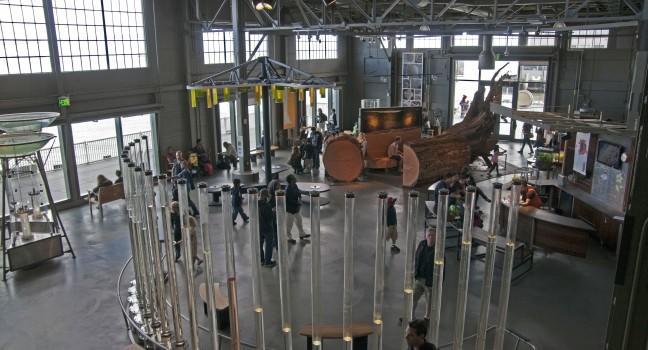
Walking into this fascinating museum of "science, art, and human perception" is like visiting a mad-scientist's laboratory, but one in which most of the exhibits are supersize and you can play with everything. Signature experiential exhibits include the Tinkering Studio and a glass Bay Observatory building, where the exhibits help visitors better understand what they see outside. Get an Alice-in-Wonderland feeling in the Distorted Room, where you seem to shrink and grow as you walk across the slanted, checkered floor. In the Shadow Box, a powerful flash freezes an image of your shadow on the wall; jumping is a favorite pose. More than 650 other exhibits focus on sea and insect life, ice crystals, electricity, patterns and light, novelties like bicycle-powered jump rope, the weather, and more. Don't miss a walk around the outside of the museum afterward for superb views and a lesson about the bay's sediment and water motion in the Bay Windows presentation.
Maine Mineral & Gem Museum

Fodor's Choice

Space rocks, Maine mineralogy, and western Maine's mineral and gem mining legacy converge at this impressive interactive 15,000-square-foot museum—unexpected for a town Bethel’s size. Surrounding the handsome structure that joined two Main Street buildings is a garden with large rocks, some resembling modern sculpture and all placarded with interesting facts about their origins, etc. Opened in 2019, the two-story museum has 19 exhibits in four galleries. Kids love the simulated mining blast, part of an exhibit on gem discoveries and mica and feldspar mining in the Bethel area. The museum's collection includes 37,940 mineral specimens, many Maine-mined. A replica of a Maine mineral store, once a tourist hot spot, showcases prized specimens. In the Hall of Gems (and the gift shop!), jewelry featuring Maine's famed pink and watermelon tourmaline, and other gems bedazzles. The Space Rocks gallery darkens every half hour for a 3D film that beams about as if a meteorite shower has blown up the walls, revealing Bethel. Strikingly displayed is a famed meteorite collection: the museum has the world's "largest known" pieces of the moon and Mars and more lunar meteorites than other museums combined. Visitors can hold a space rock, and scientists relate interesting facts via life-size videos as though they were in the room. Off the gift shop, the free Discovery Gallery has changing exhibits and drawers with minerals, rocks, and fossils. Check the website for events like the summertime outdoor sluice.

American Museum of Natural History

Upper West Side Fodor's Choice
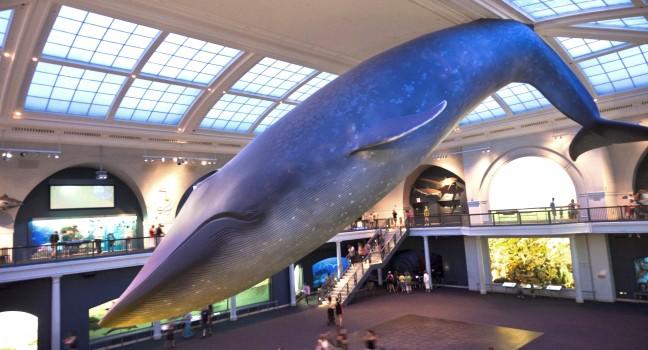
The famous American Museum for National History holds a large collection of prehistoric and human exhibits from all over the world.  Open for public at July 8,2010, New York,  USA.
Jorg Hackemann / Shutterstock

With more than 40 exhibition halls and 34 million artifacts and specimens, the world's largest and most important museum of natural history can easily keep you occupied for more than a day. The dioramas might seem a bit dated but are still fun; dinosaur fossils and exhibits, including a massive T. rex, are highlights for many people, especially kids. A 94-foot model of a blue whale, another museum icon, is suspended from the ceiling in the Milstein Hall of Ocean Life. Attached to the museum is the Rose Center for Earth and Space featuring various exhibits, the Hayden Planetarium, a giant-screen theater, and the Worlds Beyond Earth space show, which takes you on a cosmic journey to the inner reaches of our solar system. Do your bling thing at the dazzling Mignone Halls of Gems and Minerals, displaying giant geodes, diamonds, and sapphires, and explore the revitalized Northwest Coast Hall, where you will find exhibits on the history and creativity of the cultures of the Pacific Northwest. The latest addition to this ever-changing museum is the Richard Gilder Center for Science, Innovation, and Education, which opened in mid-2023 adding an organic, canyonlike atrium with large skylights to create a welcoming new space for discovery; new galleries dedicated to insects; a permanent butterfly vivarium; classrooms; a research library; and a state-of-the-art theater-in-the-round. 

Many family-friendly events, including storytelling and dance performances, are included with admission. Purchase timed entry tickets in advance, and check the website for special programs, including sleepovers for kids.

200 Central Park W, New York, NY, 10024, USA
212-769–5100
Sight Details
$30 includes admission to Rose Center for Earth and Space; $36 includes one ticketed exhibition, giant-screen film, or space show

Something incorrect in this review?

Recommended Fodor's Video

Imiloa Astronomy Center

Fodor's Choice
Family trip to the Big Island for New Year's. The 'Imiloa Astronomy Center
Trip by Ryan Ozawa

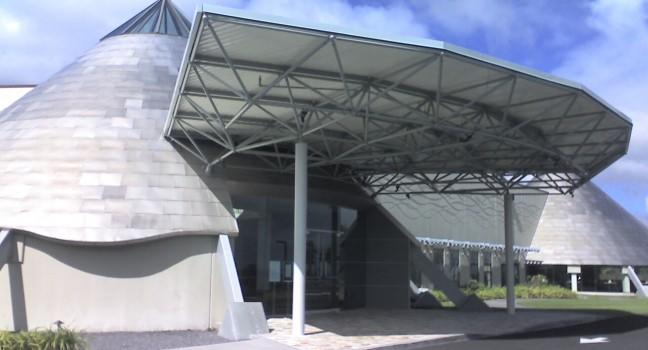
Part Hawaiian cultural center, part astronomy museum, part planetarium, this center provides community outreach for the astronomy program at the University of Hawaii at Hilo. With its interactive exhibits, full-dome planetarium shows, and regularly scheduled talks and events, the center is a must-see for anyone interested in the stars and planets, Hawaiian cultural history, and early Polynesian navigation. Admission includes one planetarium show and an all-day pass to the exhibit hall, which features more than 100 interactive displays. The lunch buffet at the adjoining Sky Garden Restaurant is popular and affordable. A five-minute drive from downtown Hilo, the center is located above the main campus at the university's Science and Technology Park.

Smithsonian National Air and Space Museum

The Mall Fodor's Choice
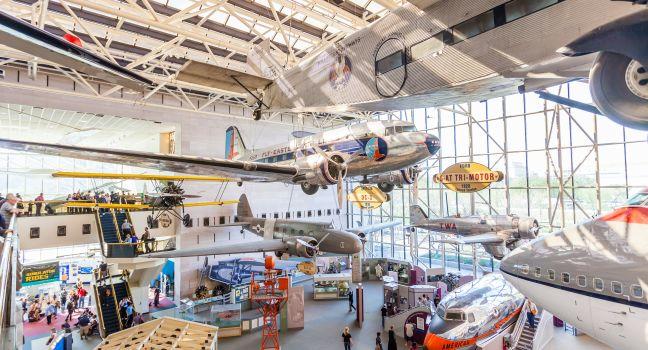
WASHINGTON DC - APRIL 10: National Air and Space museum in Washington on April 10, 2014. It holds the largest collection of historic aircraft and spacecraft in the world. Open for public at July 14, 2010.
F11photo | Dreamstime.com

This is one of the country's most visited museums. Between its two buildings, it attracts 6 to 8 million people annually to the world's largest collection of historic aircraft and spacecraft. More than 20 galleries tell the story of aviation—from the earliest human attempts at flight to supersonic jets and spacecraft. The museum reopened in late 2022 after undergoing a series of renovations, and more are currently in the works. The renovated museum features hundreds of new artifacts to the building, such as the WR-3 air racer built by Neal Loving, the first African American certified to race airplanes; a T-38 flown by Jackie Cochran, the first woman to break the sound barrier; and Sean Tucker's custom-built aerobatic biplane, and the Aviation Specialties Unlimited Challenger III.

Buy IMAX theater and planetarium tickets up to two weeks in advance or as soon as you arrive (times and prices vary); then tour the museum. Museum tickets are free, but visitors must reserve tickets in advance for every member of their group, regardless of age.

The three-story museum store is the largest (and one of the best) in all the Smithsonian museums. You'll find souvenirs, clothing, books and movies, kites, and many collector items. It is closed during construction, but two satellite stores are available.

Adventure Science Center

Wedgewood-Houston Fodor's Choice

Yes, this is a space designed with kids in mind, but there are also several elements that adults can enjoy, such as virtual reality stations, planetarium and laser shows, and the Max Flight: Full Motion simulator. Popular Way Late Play Dates are after-hours events exclusively for adults 21 and older. The Adventure Science Center sits on a bluff with good views of Downtown.

800 Fort Negley Blvd., Nashville, TN, 37203, USA
615-862–5160
Sight Details
$22; $9 for planetarium shows; $1 for laser shows; $10 for Max Flight simulator
Closed Tues. and Wed.

Something incorrect in this review?

Bruce Museum of Arts and Science

Fodor's Choice

The owner of this 19th-century home, wealthy textile merchant Robert Moffat Bruce, bequeathed it to the town of Greenwich in 1908 with the stipulation that it be used "as a natural history, historical, and art museum." Today this diversity remains, reflected in the museum's changing exhibitions—more than a dozen new ones each year—highlighting fine and decorative arts, natural history, and anthropology. On permanent display is a spectacular mineral collection. Kids especially enjoy the touchable meteorite and glow-in-the-dark minerals, as well as the fossilized dinosaur tracks. The gift shop is terrific, too!

California Academy of Sciences

Golden Gate Park Fodor's Choice

With its native plant–covered living roof, retractable ceiling, three-story rainforest, gigantic planetarium, living coral reef, and frolicking penguins, the California Academy of Sciences is one of the city's most spectacular treasures. Dramatically designed by Renzo Piano, it's an eco-friendly, energy-efficient adventure in biodiversity and green architecture. Moving away from a restrictive role as a museum that cataloged natural history, the academy these days is all about sustainability and the future, but the locally beloved dioramas in African Hall remain.

It's best to look at the academy's floor plan to design your visit before you arrive. Here's the quick version: head left from the entrance to the wooden walkway over otherworldly rays in the Philippine Coral Reef, then continue to the Swamp to see Claude, the famous albino alligator. Swing through African Hall and study the penguins, take the elevator up to the living roof, then return to the main floor and get in line to explore the Rainforests of the World. You'll end up below ground in the Amazonian Flooded Rainforest, where you can explore the academy's other aquarium exhibits. The popular adults-only NightLife event, held every Thursday evening, includes after-dark access to all exhibits, as well as special programming and a full bar.  Considering the hefty price of admission, start early and take advantage of in-and-out privileges to take a break. Buy tickets a few days ahead for the best rate.

55 Music Concourse Dr., San Francisco, CA, 94118, USA
415-379–8000
Sight Details
From $40; save $3 if you bike, walk, or take public transit here

Something incorrect in this review?

Connecticut Science Center

Fodor's Choice

This strikingly modern building, designed by world-renowned architect César Pelli, houses 40,000 square feet of exhibit space under a wavelike roof that appears to float over the structure. Among the more than 165 hands-on exhibits, youngsters, teens, and adults alike can dive into a black hole and examine the moon's craters in the Exploring Space exhibit, race mini-sailboats and magnetic trains at Forces in Motion, and discover hidden athletic talents in the Sports Lab. Kid Space is perfect for ages three to six, and everyone enjoys mingling with free-flying butterflies in the Butterfly Encounter. Complete your visit by taking in a movie in the 3D digital theater.

250 Columbus Blvd., Hartford, CT, 06103, USA
860-724–3623
Sight Details
general admission $29; butterfly encounter and theater shows $7
Closed some Mondays and Tuesdays

Something incorrect in this review?

Denver Museum of Nature & Science

City Park Fodor's Choice

Founded in 1900, the museum has amassed more than 775,000 objects, making it the largest natural history museum in the western United States. It houses a rich combination of traditional collections—dinosaur remains, animal dioramas, a mineralogy display, an Egyptology wing—and intriguing hands-on exhibits. In Expedition Health you can test your health and fitness on a variety of contraptions and receive a personalized health profile. The Prehistoric Journey exhibit covers the seven stages of Earth's development. The massive complex also includes an IMAX movie theater and a planetarium, where the Space Odyssey exhibit simulates a trip to Mars. An impressive eating-and-relaxation area has a full-window panoramic view of the Rocky Mountains. Tickets to the museum, the planetarium, and IMAX are sold by date and time only.

2001 Colorado Blvd., Denver, CO, 80205, USA
303-370–6000
Sight Details
Museum $22.95; planetarium $5 (plus museum admission); IMAX $12.95
Reserved tickets required

Something incorrect in this review?

Fernbank Museum of Natural History

Emory Fodor's Choice

One of the largest natural-history museums south of the Smithsonian Institution in Washington, D.C., this museum offers more than 12,000 square feet of gallery space and an on-site 3D theater. The Giants of the Mesozoic exhibit includes an exact replica of the world's largest dinosaur. The café, with an exquisite view of the forest, serves great food.

On the second Friday of each month, the museum hosts Fernbank After Dark, which includes live music and food and cocktails for purchase.

The Franklin Institute

Parkway Museum District Fodor's Choice

Founded in 1824 to honor Benjamin Franklin, this large science museum is as clever as its namesake, thanks to many dazzling hands-on exhibits. Visitors of all ages can experience everything from sitting in the cockpit of a T-33 jet trainer to walking through an enormous artificial heart (15,000 times life-size). To optimize your time, study the daily schedule of science demonstrations and events online before visiting. Also check special exhibitions such as a major traveling show premiering in early 2026 that will look at the creativity of Universal Destinations and Experiences' theme parks. Don't miss the 30-ton white-marble statue of Franklin; you can see the likeness (and an accompanying 3½-minute multimedia presentation) without paying admission. Weekday afternoons are less busy. 

The Franklin Air Show celebrates powered flight with the Wright Model B Flyer and has virtual reality flight simulator experiences. Wondrous Space examines everything from gravity and asteroids to space careers and possible life beyond Earth. The SportsZone conveys the physics, physiology, and material science behind your favorite sport by simulating surfing, testing your reaction time, and more. Shows in the Fels Planetarium (one show included in general admission) focus on the stars, space exploration, comets, and other phenomena. Open seasonally, the outdoor Science Park has play equipment and picnic tables.

222 N. 20th St., Philadelphia, PA, 19103, USA
215-448–1200
Sight Details
$29; special exhibitions require additional fees

Something incorrect in this review?

Harvard Museum of Natural History

Harvard Square Fodor's Choice

The Harvard Museum of Natural History (which exhibits specimens from the Museum of Comparative Zoology, the Harvard University Herbaria, and the Mineralogical and Geological Museum) reminds us nature is the original masterpiece. Cases are packed with zoological specimens, from tiny hummingbirds and deer mice to rare Indian rhinoceroses and one of the largest Amazon pirarucu ever caught. View fossils and skeletons alongside marvelous minerals, including a 1,600-pound amethyst geode. Harvard's world-famous Blaschka Glass Flowers collection is a creative approach to flora, with more than 4,300 hand-blown glass plant models. The museum combines historic exhibits drawn from the university's vast collections with new and changing multimedia exhibitions, such as In Search of Thoreau’s Flowers: An Exploration of Change and the new The Blaschkas at the Microscope: Lessons in Botany, plus a renovated Earth & Planetary Sciences gallery.

IMAG History and Science Center

Fodor's Choice

Kids love the wonderful interactive exhibits at this lively museum–aquarium combo that explores technology, physics, weather, and other science topics. Check out the stingrays and other marine life in the aquariums, touch tanks, and the USS Mohawk artificial reef tank featured on Animal Planet’s show Tanked. Feed the fish, turtles, and swans in the outdoor lagoon; see a tarantula, python, hissing cockroach, juvenile alligator, and other live critters in the Animal Lab; dig for dinosaur bones; watch a 3-D movie in the theater; take part in a hands-on Animal Encounter demonstration, and touch a cloud. Other highlights include the Mini Museum early childhood area, Backyard Nature, aquaponics area, Nano Lab, Idea Lab engineering design center, Build-Your-Own-Coaster, and Science of Motion. History exhibits include underwater plane wrecks, a Columbian mammoth, and giant ground sloth, as well as a replica Cracker House.

Maryland Science Center

Fodor's Choice

Originally known as the Maryland Academy of Sciences, this 200-year-old scientific institution is one of the oldest in the United States. Now housed in a contemporary building, the three floors of exhibits on the Chesapeake Bay, Earth science, physics, the body, dinosaurs, and outer space are an invitation to engage, experiment, and explore. The center has a planetarium, a simulated paleontological dinosaur dig, an IMAX movie theater with a screen five stories high, and a playroom especially designed for young children.

Montshire Museum of Science

Fodor's Choice

More than 150 hands-on exhibits at this 100-acre science museum explore nature and technology. Kids can make giant bubbles, watch marine life swim in aquariums, construct working hot air balloons, and explore a maze of outdoor trails by the river. Adults will happily join the fun. An ideal destination for a rainy day, this is one of the finest museums in New England.

MOXI–The Wolf Museum of Exploration and Innovation

Fodor's Choice

It took more than two decades of unrelenting community advocacy to develop this exceptional science hub, which opened in early 2017 in a three-story, Spanish-Mediterranean building next to the train station and a block from Stearns Wharf and the beach. The 70-plus interactive exhibits—devoted to science, technology, engineering, arts, and mathematics (STEAM)—are integrated so curious visitors of all ages can explore seven themed areas (called tracks).

In the Speed Track, build a model car and race it against two others on a test track—then use the collected data to reconfigure your car for improved performance. In the Fantastic Forces space, construct a contraption to send on a test flight in a wind column. Other sections include the Light, Tech, and Sound Tracks, plus the Innovation Workshop maker space and the Interactive Media Track, which hosts temporary exhibits. On the rooftop Sky Garden, which has terrific downtown panoramas, make music with wind- and solar-powered instruments, splash around in the interactive Whitewater feature, and peer down through glass floor windows to view the happy faces of explorers below.

Museum of Science

West End Fodor's Choice

From its perch above the Charles River, the Museum of Science sits half in Cambridge and half in Boston. This unique trait is the first of many at this 70-plus-year-old institution that's focused on science, technology, and hands-on learning. Diverse permanent exhibits explore dinosaurs, the electromagnetic spectrum, modern conservation, math, motion, nanotechnology, the natural world, space travel, a garden walk and insect zoo. The Theater of Electricity hosts explosive daily lightening shows, which can be scary for children under age seven. 

In the Green Wing, "The Hall of Human Life" walks visitors through the inner workings of their own bodies. A barcode bracelet picked up at the entrance tracks personal data gathered at dozens of interactive components and makes comparisons. At "Science in the Park," kids test out physics, motion, and momentum while playing on swings, a seesaw, and other familiar objects.

The Charles Hayden Planetarium, with its sophisticated multimedia system based on a Zeiss planetarium projector, produces exciting programs on astronomical discoveries. Laser light shows, with laser graphics and computer animation, are offered daily. The museum also features the Mugar Omni Theater, a five-story dome screen with 360-degree projection that allows the audience to feel like they're experiencing the action within the IMAX films on-screen.

Museum of Science and Industry

Fodor's Choice

The MSI is one of the most-visited sites in Chicago, and for good reason. The sprawling space has 14 acres of exhibit space on three floors, with new exhibits added constantly. The immersive Coal Mine exhibit and the Henry Crown Space Center featuring the Apollo 8 Command Module are perennial favorites. The museum's high-tech interior is hidden by a neoclassical exterior, designed in 1892 by D.H. Burnham & Company to house the Palace of Fine Arts for the World's Columbian Exposition. Beautifully landscaped Jackson Park and its peaceful, Japanese-style Osaka Garden are behind the museum.

Natural History Museum of Utah

Fodor's Choice

Stop and admire the sleek copper and granite form of this contemporary museum on the University of Utah campus before stepping inside to learn about the formation of the region's incredible landscape of parks, mountain ranges, lakes, and basins. Immerse yourself in prehistoric Utah, home to prolific research on dinosaurs and some of the most famous fossil recoveries in history. Superb rotating exhibits, which can touch on anything from environmental themes to the ancient cultures of Asia and Africa, typically take place once or twice a year.

North Carolina Museum of Natural Sciences

Downtown Fodor's Choice

With seven floors of immersive exhibits spread across two buildings connected via sky bridge, this museum is the largest of its kind in the Southeast. Exhibits and dioramas celebrate the incredible diversity of species in the state's various regions. There are enough live animals and insects—including butterflies, snakes, and a two-toed sloth—to qualify as a midsize zoo. Massive and rare whale skeletons hang from the ceiling. The pièce de résistance, however, is the Terror of the South exhibit, featuring the dinosaur skeleton of "Acro," a giant carnivore that lived in the region 110 million years ago. The impressive bones are the world's most complete Acrocanthosaurus dinosaur skeleton. In the Nature Research Center, visitors can have live conversations with scientists.

Oregon Museum of Science and Industry

Fodor's Choice

Hundreds of engaging exhibits draw families to this outstanding interactive science museum, which also contains the Empirical Theater (featuring Portland's biggest screen), and the Northwest's largest planetarium. The many permanent and touring exhibits are loaded with enough hands-on play for kids to fill a whole day exploring robotics, ecology, rockets, animation, and outer space. Moored in the Willamette River as part of the museum is a 240-foot submarine, the USS Blueback, which can be toured for an extra charge. OMSI also offers some very cool event programming for adults, including the hugely popular monthly OMSI After Dark nights, where "science nerds" can enjoy food, drink, and science fun, and the twice-monthly OMSI Science Pub nights, where local and national experts lecture on a wide range of topics in the museum's Empirical Theater.

1945 S.E. Water Ave., OR, 97214, USA
503-797–4000
Sight Details
Museum $16, planetarium $7.50, Empirical Theater Show $7.50, submarine $8.50, parking $5
Closed Mon. early Sept.–early Mar.

Something incorrect in this review?

Orlando Science Center

Central Orlando Fodor's Choice

With exhibits about the human body, mechanics, computers, math, nature, the solar system, and optics, the science center has something for every child's (or adult's) inner geek. The 11,000-square-foot KidsTown is the most popular attraction, and traveling shows have included those on the astronaut experience and the science of human anatomy. There's also an annual interactive technology expo called Spark STEM Fest.

The four-story, internal atrium is home to live gators and turtles, giving you a glimpse of Old Florida. The 300-seat Dr. Phillips CineDome, a movie theater with a giant eight-story screen, offers films and planetarium programs. The Crosby Observatory and Florida's largest publicly accessible refractor telescope are here, as are several smaller telescopes. Late-evening weekend date nights make the observatory a fun draw for adults, who can also enjoy events like the annual Science of Wine and the very popular monthly Science Night Live.

Pajarito Environmental Education Center

Fodor's Choice

This angular, contemporary nature center stands out as much for its dramatic design as for the engaging exhibits within. Families appreciate the interactive Children's Discovery Area and the giant scale model of the Pajarito Plateau that kids are encouraged to play on. There's also a high-tech planetarium with astronomy shows or films most weekends, nature trails, wildlife and conservation exhibits, and gardens with local flora and plenty of visiting birdlife.

Phillip and Patricia Frost Museum of Science

Fodor's Choice

Equal parts style and science, this hypermodern, $300 million–plus museum along Biscayne Bay is totally worth forgoing time at the beach. The high-design museum transitions the indoors and outdoors over multiple levels and an impressive 250,000 square feet, crowned by a see-through, shark-filled, 500,000-gallon aquarium. Beyond exhibitions dedicated to oceans, engineering, and the Everglades, look forward to one of the most sophisticated planetariums in the country, which uses 16-million-color 8K projection.

San Diego Air & Space Museum

Balboa Park Fodor's Choice

By day, the streamlined edifice looks like any other structure in the park; at night, outlined in blue neon, the round building appears—appropriately enough—to be a landed UFO. Every available inch of space in the rotunda is filled with exhibits about aviation and aerospace pioneers, including examples of enemy planes from World War I and II. There are dozens of full-size aircraft on the floor and hanging from the rafters. In addition to exhibits from the dawn of flight to the jet age, the museum displays a growing number of space-age exhibits, including the actual Apollo 9 command module. To test your own skills, you can ride in a two-seat Max Flight simulator or try out one of the four aerial combat simulators. Movies in the 3D/4D theater are included with admission.

Tahoe Science Center

Fodor's Choice

Learn how Lake Tahoe was formed, why it’s so blue, and how its ecosystem is changing at Tahoe’s only science center. Hands-on exhibits include aquariums, a virtual ecology lab and research boat, a watershed map with the 63 streams that flow into the lake (and the only one that flows out, the Truckee River), tables that teach how to identify trees, and a theater projecting an intriguing 3D movie. Visitors ages eight and older will gain the most from the experience.

Tybee Island Marine Science Center

Fodor's Choice

Don't miss the Tybee Island Marine Science Center's interesting exhibit on Coastal Georgia, which houses local wildlife ranging from Ogeechee corn snakes to American alligators. Schedule one of two guided walks along the beach and marshes if you're interested in the flora and fauna of the Lowcountry. There is also a "Turtle Talk," which consists of a classroom discussion and hands-on workshop. Arrive early, as parking near the center can be competitive in the busier months.

University of Colorado Museum of Natural History

Fodor's Choice

With more than 5 million objects, this museum is home to the largest natural history collection in the Rocky Mountain region. There are five galleries and a discovery corner for kids. Permanent and changing exhibits feature CU research, fossils, archaeological finds, dinosaur relics, plants, and invertebrates. Depending on your level of interest, you could spend anywhere from an hour to all day here.

Utah Field House of Natural History State Park Museum

Fodor's Choice

Around 150 million years ago, this was the stomping ground of dinosaurs, and you can see rock samples, fossils, Fremont and Ute nation artifacts, and a viewing lab where you can watch paleontologists restore actual fossils. The biggest attraction for kids is undoubtedly the outdoor Dinosaur Garden with its 18 life-size models of prehistoric creatures, including a T. rex and a woolly mammoth. The Field House also doubles as a visitor center for all of Dinosaurland, so stop here for maps and guides for the entire area.