490 Best Sights in USA

Background Illustration for Sights

We've compiled the best of the best in USA - browse our top choices for the top things to see or do during your stay.

Filoli

Fodor's Choice

The Bay Area’s definitive early 20th century mansion and gardens reside in a quiet area along the beautiful Crystal Springs Reservoir at the base of the Santa Cruz Mountains, just a short drive from Menlo Park on I–280. The East Coast has several of these lavish estates from the titans of the Gilded Age with all kinds of Rockefeller and Vanderbilt family homes on view today to the public. However, it’s very rare to find those in Northern California. Part of the National Trust for Historic Preservation, Filoli dates back to 1917 when it was built for the Bourn family based on a fortune from gold mining, along with investing in water and electricity (investing in Silicon Valley was much more humble back then). The estate was purchased by William Roth and Lurline Matson Roth, the latter the daughter of Captain William Matson, who founded the still-important namesake shipping company.

The Roths continued maintaining the impeccable estate, both inside and outside, before handing it over to the public after William’s death in the 1970s. Across 654 acres, the estate features several beautiful gardens, farmland, different ecosystems, and even crosses the San Andreas Fault (the source of many Northern California earthquakes). A 1-mile trail gives a good general overview of the grounds. For most visitors, the enchanting gardens are the highlights, particularly in spring when the daffodils and myriad other flowers are in full bloom. Summer sees the rose garden at its stunning peak. The holiday season is also wonderful when the gardens include festive light displays, but it’s truly special any time of year. The house is quite spectacular, as well, with beautiful terraces facing the gardens, and the interior features 10 bedrooms for the family, 15 bathrooms, and 17 fireplaces. The Georgian Revival–style architecture is very impressive throughout the home, particularly in the grand ballroom with a mural of Ireland's Muckross House, the posh reception room, and the warm, mahogany-paneled library.

Biltmore House and Estate

Fodor's Choice
ASHEVILLE, NORTH CAROLINA OCTOBER 11: The Biltmore House and Gardens, a popular tourist attraction, built by George Vanderbilt in 1895 is America's largest home in Asheville on October 10, 2013.;
Fotoluminate LLC / Shutterstock

Built in the 1890s as the home of George Vanderbilt, this astonishing 250-room, 175,000-square-foot French Renaissance château is America's largest private house and the number one attraction of its kind in North Carolina. Richard Morris Hunt designed it, and Frederick Law Olmsted landscaped the original 125,000-acre estate (now 8,000 acres). It took 1,000 workers five years to complete the gargantuan project. On view are the antiques and art collected by the Vanderbilts, including notable paintings by Renoir and John Singer Sargent, along with 75 acres of gardens, formally landscaped grounds, and hiking and biking trails. You can also see the on-site Biltmore Winery, the most visited winery in America.

Also on the grounds are a deluxe hotel, a more moderately priced hotel, many restaurants, and an equestrian center. Antler Hill Village includes a hotel, shops, restaurants, farm buildings, and crafts demonstrations. Most people tour the house on their own, but guided tours are available. Candlelight tours of the house are offered at Christmastime. Note that there are a lot of stairs to climb, but much of the house is accessible for guests in wheelchairs or with limited mobility. Pricing is complex, varying by month and day of the week, and not inexpensive, but a visit is well worth the cost for its access to the house, gardens, winery, and extensive grounds. If time allows, a bike rental from the Bike Barn in Antler Hill Village allows you to fully explore the pastoral countryside that feels miles from the nearby city. 

Self-guided visits to the interior of the house typically require advance reservations.

Frederick C. Robie House

Fodor's Choice
Frank Llloyd Wright's Robie House. Oak Park, Chicago, Illinois.
(c) Tedholt | Dreamstime.com

Named one of the 10 most significant buildings of the 20th century by the American Institute of Architects, the 9,063-square-foot Robie House (1910) is long and low. Massive overhangs shoot out from the low-pitched roof, and windows run along the facade in a glittering stretch. Inside, Wright's "open plan" echoes the great outdoors, as one space flows into another, while sunlight streaming through decorative leaded windows bathes the rooms in patterns. The original dining room had a table with lanterns at each corner, giving the illusion that the table itself was a separate room. Other Wright innovations include a three-car garage (now the gift shop), an intercom, and a central vacuum-cleaner system.

Recommended Fodor's Video

The Mount

Fodor's Choice
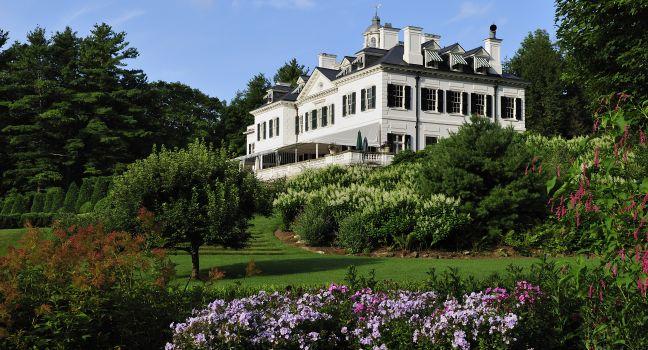
Berkshires, MA, USA -August. 30. 2011: The Mount, the summer home of the novelist Edith Wharton, now is museum in Lenox, state of Massachusetts, USA
T photography / Shutterstock

This 1902 mansion with myriad classical influences was the summer home of novelist Edith Wharton. The 42-room house and 3 acres of formal gardens were designed by Wharton, who is considered by many to have set the standard for 20th-century interior decoration. In designing the Mount, she followed the principles set forth in her book The Decoration of Houses (1897), creating a calm and well-ordered home. Summer is a fine time to enjoy the informal café and occasional free concerts on the terrace. Guided tours take place during regular hours, the private "ghost tour" after hours, and noteworthy authors make regular visits to discuss their latest books.

2 Plunkett St., Lenox, MA, 01240, USA
413-551–5111
Sight Details
$20
The grounds are free and open daily from dawn to dusk

Something incorrect in this review?

Owens-Thomas House & Slave Quarters

Historic District Fodor's Choice
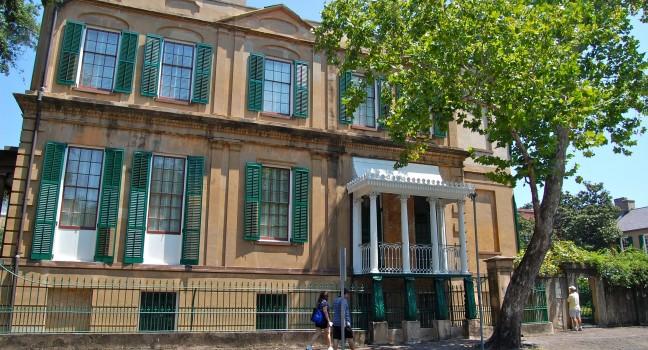
Lafayette's balcony where he addressed crowd in 1825
Lafayette's balcony where he addressed crowd in 1825 by David McSpadden

 Designed by William Jay, the Owens-Thomas House is widely considered to be one of the finest examples of English Regency architecture in America. Built in 1816–19, the house was constructed with local materials. Of particular note are the curving walls, Greek-inspired ornamental molding, half-moon arches, stained-glass panels, original Duncan Phyfe furniture, the hardwood "bridge" on the second floor, and the indoor toilets, which it had before the White House or Versailles. In 2018, the site renamed itself the Owens-Thomas House & Slave Quarters and revealed a new interpretive exhibition that includes the restored dwellings of those enslaved here and stories of their lives and work. Owned and administered by Telfair Museums, this home gives an inside perspective on Savannah's history.

Adams House

Fodor's Choice

A tour of the restored Adams House includes an explanation of the tragedies and triumphs of two of the community's founding families (the Franklins and the Adamses) who lived here. The 1892 Queen Anne–style mansion was closed in the mid-1930s and sat empty for more than 50 years, preserving the original furniture and decor that you see today.

22 Van Buren St., Deadwood, SD, 57732, USA
605-578–3724
Sight Details
$10
May 1–Sept. 30, daily 9–5; Oct. 1–Apr. 30, Tues.–Sat. 10–4

Something incorrect in this review?

Aiken-Rhett House Museum

Fodor's Choice

A prime example of the wealth derived from chattel slavery, the Aiken-Rhett House is considered one of the best preserved town-house complexes in the country. Built in 1820 and virtually unaltered since 1858, it boasts original wallpaper, paint, and some furnishings. Two of the former owners, Governor Aiken and his wife, Harriet, bought many of the chandeliers, sculptures, and paintings in Europe. The carriage house remains out back, along with a building that contained the kitchen, laundry, and housing for enslaved laborers, making this the most intact property to showcase urban life in pre–Civil War Charleston. Be sure to take the audio tour, as it vividly describes the surroundings, giving historical and family details throughout.

The Breakers

Fodor's Choice

The 70-room summer estate of Cornelius Vanderbilt II, chairman and president of the New York Central Railroad, was built in 1895. Architect Richard Morris Hunt modeled the four-story residence after 16th-century Italian Renaissance palaces. This mansion is not only big, but grand—be sure to look for the sculpted figures tucked above the pillars. The interior includes rare marble, alabaster, and gilded rooms with open-air terraces that reveal magnificent ocean views. Noteworthy are a blue marble fireplace and walls in the billiard room, rose alabaster pillars in the dining room, and a porch with a mosaic ceiling that took six months for Italian artisans, lying on their backs, to install. The Beneath the Breakers tour offers a look at the technology underlying the home that was state-of-the-art in the late 19th century, including the electrical and plumbing systems used to keep the massive household running.

Chateau-sur-Mer

Fodor's Choice

Built in 1852 for William Shepard Wetmore, a merchant in the China Trade, the palatial Chateau-sur-Mer, a stunning example of High Victorian architecture, was Newport's first grand residence. In 1857, Wetmore threw an extravagant, unprecedented "country picnic" for more than 2,000 people, ushering in the Gilded Age in Newport. The house is a treasure trove of Victorian architecture, furniture, wallpapers, ceramics, and stenciling; see hand-carved Italian woodwork, Chinese porcelains, and Japanese and Egyptian Revival wallpapers. The grounds contain rare trees from as far away as Mongolia. Chateau-sur-Mer, along with several other Newport mansions, is among the stars of HBO's series, The Gilded Age.

Chief Vann House

Fodor's Choice

This beautiful home with all the trappings of the wealthy planter lifestyle is fascinating because of the intermingling of cultures that took place here. Known as Diamond Hill, this historic site was home to a 1,000-acre plantation—the largest and most prosperous in Cherokee history. In 1804 James Vann, a Cherokee leader of mixed Scottish and Cherokee parentage, built the plantation’s stately redbrick mansion with the help of Moravian missionaries and enslaved workers. When Vann was murdered in 1809, his son Joseph took over the property until he was forcibly evicted in 1835. Diamond Hill and surrounding lands were then given away in a land lottery to white settlers, its Cherokee origins wiped away.

Start your visit in the visitor center where you can view a short film and browse exhibits about the site’s history. Rangers lead tours of the home at the top of each hour (last tour at 4 pm), but outdoor exhibits, such as a re-created Cherokee farmstead and plantation kitchen, are self-guided. The kitchen outbuilding also houses an exhibit focused on the daily lives of the 110 enslaved people who resided at Diamond Hill before Vann’s departure in 1835.

Davenport House Museum

Historic District Fodor's Choice

Semicircular stairs with wrought-iron railings lead to the recessed doorway of the redbrick Federal home constructed by master builder Isaiah Davenport for his family between 1815 and 1820. Three dormered windows poke through the sloping roof of the stately house, and the interior has polished hardwood floors and fine woodwork and plasterwork, showcasing Davenport's talents to potential clients. The proposed demolition of this historic Savannah structure galvanized the city's residents into action to save their treasured buildings. The home endured a history of dilapidation that had lingered since the 1920s, when it was divided into tenements. When someone proposed razing it to build a parking lot in 1955, a small group of neighbors raised $22,000 in 24 hours to buy and restore the property. This action was the inception of the Historic Savannah Foundation and the first of many successful efforts to preserve the architectural treasure that is the city today.

Edison and Ford Winter Estates

Fodor's Choice

Fort Myers's premier attraction pays homage to two of America's most ingenious inventors: Thomas A. Edison, who gave the world the stock ticker, the incandescent lamp, and the phonograph, among other inventions; and his friend and neighbor, automaker Henry Ford. Donated to the city by Edison's widow, his once 12-acre estate has been expanded into a remarkable 25 acres, with three homes, two caretaker cottages, a laboratory, botanical gardens, and a museum. The laboratory contains the same gadgets and gizmos as when Edison last stepped foot into it, and you can see many of his inventions, along with historic photographs and memorabilia, in the museum.

Edison traveled south from New Jersey and devoted much of his time here to inventing things (there are 1,093 patents to his name), experimenting with rubber for friend and frequent visitor Harvey Firestone, and planting hundreds of plant species collected around the world. Next door to Edison's two identical homes is Ford's "Mangoes," the more modest seasonal home of Edison's fellow inventor. The property's oldest building, the Edison Caretaker's House, dates from 1860. Guided tours and self-guided audio tours are available. One admission covers the homes of both men; separate museum-and-laboratory-only tickets and botanical-garden tour tickets are also available.

The Elms

Fodor's Choice

Architect Horace Trumbauer modeled this imposing 48-room French neoclassical home and its grounds after the Château d'Asnières near Paris. The Elms was built in 1901 for Edward Julius Berwind, a coal baron from Philadelphia and New York. It was one of the first Newport mansions to be fully electrified. At the foot of the 10-acre estate is a spectacular sunken garden, marble pavilions, and fountains. The Servant Life tour, which offers a glimpse into the lives of the Elms' staff members and the operation of facilities like the boiler room and kitchen, is one of the best of the mansion tours.

367 Bellevue Ave., Newport, RI, 02840, USA
401-847–1000
Sight Details
$29
Closed mid-Oct.–mid-May, except for the holiday season

Something incorrect in this review?

The Ernest Hemingway Home & Museum

Fodor's Choice

Amusing anecdotes spice up the guided tours of Ernest Hemingway's home, built in 1851 by the town's most successful wrecker. While living here between 1931 and 1942, Hemingway wrote about 70% of his life's work, including classics like For Whom the Bell Tolls. Few of his belongings remain aside from some books, and there's little about his actual work, but photographs help you visualize his day-to-day life. The famous six-toed descendants of Hemingway's cats—many named for actors, artists, authors, and even a hurricane—have free rein of the property. Tours begin every 10 minutes and take 30 minutes; then you're free to explore on your own. Be sure to find out why there is a urinal in the garden!

Fallingwater

Fodor's Choice

About an hour and a half southeast of Pittsburgh is Frank Lloyd Wright's residential masterwork—a stone, concrete, and glass house dramatically cantilevered over a waterfall. In 1936, Edgar J. Kaufmann—who'd made a fortune as owner of Kaufmann's, Pittsburgh's premier department store—hired Wright to design a weekend retreat for his family on a piece of land in Mill Run. Wright's design incorporated much of what was already on the site, including rocks, trees, and a rushing creek. Battles of will between Kaufmann and Wright over the details of the house design became legendary. Wright wanted to cover the concrete parapets of the house with gold leaf; Kaufmann didn't. Kaufmann wanted a swimming pool on one of the balconies; Wright didn't. And so on. Despite their many differences, they produced an amazing house. The only way to see the house is on a guided tour; children under six cannot tour the house. Reservations are essential for the detailed tour.

Farnsworth House

Fodor's Choice

This 1951 minimalist dwelling by Ludwig Mies Van der Rohe sits just down the Fox River from Aurora. Constructed of steel, wood, and travertine marble, it appears to nearly float against a backdrop of serene river views and woodland landscapes. Now operated as a museum by the National Trust for Historic Preservation, Farnsworth House may only be seen by guided tour (advance reservations are required). Note that the house is a half-mile walk from the visitor center.

14520 River Rd., Plano, IL, 60545, USA
630-552–0052
Sight Details
$30, purchase at least 24 hrs in advance
Closed Mon. and Tues. Tours available Apr.–Nov.

Something incorrect in this review?

Flannery O’Connor Childhood Home

Historic District Fodor's Choice

 Flannery O’Connor, Southern Gothic's literary grand dame, lived in this three-story house on Lafayette Square until she was ten (when her family decamped to Milledgeville, Georgia, to live at Andalusia Farm), experiencing her first brush with fame when she taught a chicken to walk backwards.

50-minute fully guided tours of the home are scheduled Thursday through Sunday at 11 am, 1 pm, and 3 pm; self-guided tours are also possible. The gift shop sells copies of  Flannery's novels and other souvenirs. 

Frank Lloyd Wright Home and Studio

Fodor's Choice

Wright designed and built his first home in 1889, on the strength of a $5,000 loan from his then employer and mentor, seminal Chicago architect Louis Sullivan. Only 22 at the time, he would continually remodel the modest dwelling over the next two decades, so a visit here provides a unique look into the architect's developing ideas. This is where Wright's nascent architectural philosophy first bloomed; the house was intended not only to hold his rapidly growing family, but also to showcase his then-revolutionary notions. It combines elements of the 19th-century Shingle Style with subtle innovations that stamp its originality.

Wright established his own practice in 1893 and added a studio to the house in 1898. In 1909, he spread his innovative designs across the United States and abroad (at this time he also abandoned his wife and six children for the wife of a client). He sold his home and studio in 1925, which was later turned into apartments that eventually fell into disrepair. In 1974, a group of local citizens calling itself the Frank Lloyd Wright Home and Studio Foundation, together with the National Trust for Historic Preservation, embarked on a 13-year restoration that returned the building to its 1909 appearance. Today, Wright's Oak Park home and studio are owned by the Frank Lloyd Wright Trust.

Wright's home, made of brick and dark shingles, is filled with earth-toned spaces. The architect's determination to create an integrated environment prompted him to design the natural wood furniture as well—though his apparent lack of regard for comfort is often the subject of commentary. The lead windows have colored-glass designs, and several rooms have skylights or other indirect lighting. A spacious barrel-vaulted playroom on the second floor includes a hidden piano for the children's theatrical productions. The adjacent studio is made up of four spaces—an office, a large reception room, an octagonal library, and an octagonal drafting room that uses a chain harness system rather than traditional beams to support its balcony, roof, and walls.

To see the interior, you must take one of the small-group tours, led by well-informed guides who discuss the architecture, point out artifacts from the family's life, and tell amusing stories about the rambunctious Wright clan. Reservations are advised: without one, you'll need to arrive as early as possible to snag a spot—not later than early afternoon to make the last tour on any given day. Tours begin at the Frank Lloyd Wright Home and Studio Museum Shop, which carries architecture-related books and gifts. You can pick up a map noting other examples of Wright's work that are within easy walking or driving distance; guided tours and self-guided audio ones of the neighborhood are also available.

The annual Wright Plus Architectural Housewalk on the third Saturday in May offers interior tours of private homes designed by Wright and his contemporaries in Oak Park and other nearby villages.

Franklin D. Roosevelt National Historic Site

Fodor's Choice

The birthplace and home of the country's 32nd president, Springwood is just as it was when the Roosevelts lived here. It contains family furnishings and keepsakes, and Franklin, Eleanor, and their beloved dog Fala are buried in the wonderful rose garden. At the Franklin D. Roosevelt Library and Museum, photographs, letters, speeches, and memorabilia document FDR's life; a multimedia exhibit examines World War II. The first of the presidential libraries, the building was designed by Roosevelt himself.

4079 Albany Post Rd., Hyde Park, NY, 12538, USA
845-229–9115
Sight Details
Tour $14, grounds free
Daily 9–5

Something incorrect in this review?

George Mason's Gunston Hall

Fodor's Choice

The Georgian-style mansion has some of the finest hand-carved ornamented interiors in the country and is the handiwork of the 18th-century's foremost architect, William Buckland, originally an indentured servant from England. Construction of Gunston Hall took place between 1755 and 1758. Buckland went on to design several notable buildings in Virginia and Maryland, including the Hammond-Harwood and Chase-Lloyd houses in Annapolis. It is believed he worked closely with another indentured servant, William Bernard Sears, to complete the house. Unlike other Virginia colonial homes, which tended to be very simple, Gunston Hall was, possibly, the only or one of a few houses known to have had chinoiserie decoration. The interior and the outbuildings have been meticulously restored.

While it is alleged that one of the reasons Mason didn’t sign the Declaration of Independence is that it didn’t stop the importation of enslaved people, Mason was himself a slaveholder of at least 300 people in his lifetime, many of whom lived at Gunston Hall. While touring the property, you have the opportunity to learn about the lives of some of these individuals, although there is currently not a permanent exhibit focusing on them.

The Riverside Garden currently is being restored; you can view the Potomac from the garden terraces. There are three hiking trails on the 500-plus-acre property. Guided tours are offered daily at 10 am and 11 am, as well as at 1, 2, 3, and 4 pm.

George Washington's Mount Vernon

Fodor's Choice

The former plantation of George Washington and his wife, Martha, Mount Vernon sits on the banks of the Potomac River about 10 miles south of Alexandria. Washington’s great-grandfather, John Washington, was awarded the land grant in 1674 for what would become Mount Vernon. It grew into 5,000 acres with four operating farms by the time the future president inherited it all in 1761. Washington used his wife’s financial wealth and hundreds of enslaved people to transform the main house from an ordinary farm dwelling into what was, for the time, a grand mansion. The red-roof main house is elegant though understated, with quite ornate first-floor rooms, especially the formal large dining room, with a molded ceiling decorated with agricultural motifs.

You can stroll around the estate’s 500 acres and four gardens, visiting workshops, a kitchen, a carriage house, a greenhouse, quarters for enslaved African Americans, and, down the hill, the tomb of George and Martha Washington. There’s also a four-acre, 18th-century farm site with costumed interpreters and a reconstructed 16-sided treading barn as its centerpiece.

Throughout Mount Vernon, you can learn about the more than 300 enslaved people who lived here, and whose labor you see all around you. Relevant tours include “The Enslaved People of Mount Vernon” tour and the "Through My Eyes" tour, both of which explore the lives and experiences of the people who lived here and the role slavery had in the life of Washington and how he built and ran this estate.

Visitors, especially children, tend to enjoy the Museum and Education Center’s 23 galleries and theaters, including hundreds of artifacts, interactive displays, and a 4D theater that brings Washington's story to life. Actors in period dress, General Washington and his wife, welcome visitors at special occasions throughout the year, including President’s Day, Mother’s and Father’s Day, and July 4.

Georgia O'Keeffe Home & Studio

Fodor's Choice

In 1945 Georgia O'Keeffe bought a large, dilapidated late-18th-century Spanish-colonial adobe compound just off the plaza in Abiquiú. Upon the 1946 death of her husband, photographer Alfred Stieglitz, she left New York City and began dividing her time permanently between this home, which figured prominently in many of her works, and one in nearby Ghost Ranch. The patio is featured in Black Patio Door (1955) and Patio with Cloud (1956). O'Keeffe died in 1986 at the age of 98 and left provisions in her will to ensure that the property's houses would never be public monuments.

Highly engaging 75- to 90-minute tours are available by advance reservation through Santa Fe's Georgia O'Keeffe Museum, which owns the house and operates the tours from early March through late November. Costs range from $60 for a standard tour to $200 for "Pita's Tour," which is led by Pita Lopez, who served as O'Keeffe's former secretary and companion and shares fascinating first-hand anecdotes about the artist. All of the tours focus on O’Keeffe’s distinctly modern decorating style, which drew on Indigenous and Spanish influences. Tours depart by shuttle bus from the welcome center beside the Abiquiu Inn. Book well ahead in summer, as these tours fill up quickly.

Gifford House Store and Museum

Fodor's Choice

A mile south of the visitor center in a grassy meadow with the Fremont River flowing by, this is an idyllic shady spot in the Fruita Historic District to enjoy a sack lunch (if you have packed one), complete with tables, drinking water, grills, and a convenient restroom. The store sells reproductions of pioneer tools and items made by local craftspeople; there's also locally made fruit pies and ice cream to enjoy with your picnic.

Scenic Dr., by Fruita Campground, Capitol Reef National Park, UT, 84775, USA

Something incorrect in this review?

Glessner House

Prairie Avenue Fodor's Choice

This fortresslike residence is the only surviving building in Chicago by architect H.H. Richardson, who also designed Boston's Trinity Church. Completed in 1887, the L-shaped mansion's stone construction and short towers are characteristic of the Richardsonian Romanesque Revival style. It's also one of the few great mansions left on Prairie Avenue, once home to such heavy hitters as retailer Marshall Field and meatpacking magnate Philip Armour. The area has lately seen the arrival of new, high-end construction, but nothing beats a tour of Glessner House, a remarkable relic of the days when merchant princes really lived like royalty. Enjoy the lavish interiors and the many artifacts, from silver pieces and art glass to antique ceramics and Isaac Scott carvings and furnishings. Guided tours run Wednesday, Friday, and Saturday year-round.

1800 S. Prairie Ave., Chicago, IL, 60616, USA
312-326–1480
Sight Details
$20
Closed Sun.-Tues. and Thurs.
Advance tickets required

Something incorrect in this review?

Graceland

South Haven Fodor's Choice

Graceland, the estate once owned by Elvis Presley, is 12 miles south of Downtown. A guided tour of the mansion, which Elvis bought in 1957 at age 22, as well as the adjoining automobile museum reveals the spoils of stardom. Graceland might be the only colonial suburban home on record to have a jungle room, a pink Cadillac, and close to 700,000 guests annually. Elvis is buried outside the mansion, and tours conclude with many fans leaving tokens at his gravesite. Reservations are recommended, especially in August during "Elvis Week."

Hale Hoikeike at the Bailey House

Fodor's Choice

This repository of the largest and best collection of Hawaiian artifacts on Maui includes objects from the sacred island of Kahoolawe. Erected in 1833 on the site of the compound of Kahekili (the last ruling chief of Maui), the building was occupied by the family of missionary teachers Edward and Caroline Bailey until 1888. Edward Bailey was something of a Renaissance man: not only a missionary, but also a surveyor, a naturalist, and an excellent artist. The museum contains missionary-period furniture and displays a number of Bailey's landscape paintings, which provide a snapshot of the island during his time. The grounds include gardens with native Hawaiian plants and a fine example of a traditional canoe. The gift shop is one of the best sources on Maui for items that are actually made in Hawaii. Before visiting, check the website for current hours of operation.

Hay House

Fodor's Choice

Nicknamed the "Palace of the South," the 18,000-square-foot mansion spans four stories and is crowned by a two-story cupola. Designed by the New York firm T. Thomas and Son in the mid-1800s, the Hay House is a study in fine Italianate architecture prior to the Civil War. The marvelous stained-glass windows and many technological advances, including indoor plumbing and gas lighting, make a tour worthwhile. Tours depart on the hour. For a small upcharge, and when weather permits, you can do the Top of the House tour, which explores the soaring cupola and widow's walk. 

934 Georgia Ave., Macon, GA, 31201, USA
478-742–8155
Sight Details
$20
Closed Mon. and Tues.
Last tour begins at 3 daily

Something incorrect in this review?

Henry Morrison Flagler Museum

Fodor's Choice

The worldly sophistication of Florida's Gilded Age lives on at Whitehall, the plush 55-room "marble palace" Henry Flagler commissioned in 1901 for his third wife, Mary Lily Kenan. Architects John Carrère and Thomas Hastings were instructed to create the finest home imaginable—and they outdid themselves. Whitehall rivals the grandeur of European palaces and has an entrance hall with a baroque ceiling similar to Louis XIV's Versailles. Here you'll see original furnishings; a hidden staircase Flagler used to sneak from his bedroom to the billiards room; an art collection; a 1,200-pipe organ; and Florida East Coast Railway exhibits, along with Flagler's personal railcar, No. 91, showcased in an 8,000-square-foot Beaux Arts–style pavilion behind the mansion. Docent-led tours and audio tours are included with admission. The museum's Café des Beaux-Arts, open from Thanksgiving through mid-April, offers a Gilded Age–style early afternoon tea for $60 (11:30 am–2:30 pm); the price includes museum admission.

Historic Deerfield

Fodor's Choice

With 52 buildings on 93 acres, Historic Deerfield provides a vivid glimpse into 18th- and 19th-century America. Along the tree-lined main street are 12 museum houses, built between 1720 and 1850, some with original doorways. Four are open to the public on self-guided tours, and the remainder can be seen on guided tours that begin on the hour. The Frary House displays arts and crafts from the 1900s; the attached Barnard Tavern was the main meeting place for Deerfield's villagers. Other houses depict 18th-century life, including everything from kitchens to adult cradles for those who had fallen victim to tuberculosis. Also of note is a one-room schoolhouse, an old burial ground, and the Flynt Center of Early New England Life, which contains needlework, textiles, and clothing dating back to the 1600s. The visitor center is located at Hall Tavern, 80 Old Main Street. Plan to spend at least one full day at Historic Deerfield.

John and Mable Ringling Museum of Art

Fodor's Choice

Administered by Florida State University, this 20-acre waterfront compound encompasses the entire estate of circus magnate John Ringling and his wife, Mable. This includes not only the museum built to house their enormous personal art collection, but also their Ca' d'Zan mansion and its expansive gardens; the Circus Museum; the Historic Asolo Theater, home to the Asolo Repertory Company; restaurants; an education center; and a research library.

The Museum of Art, completed in 1931, was a dream long in the making, with setbacks that included a land bust and Mable's death. Works here range from Indian doorways elaborately carved with Jain deities to paintings by Rubens and other Old Masters—all of it displayed in a seemingly endless number of gorgeously appointed rooms. Contemporary art has dedicated space here, too, as do selections from the museum's photography collection. A newer wing, with its facade of jade-tinged terracotta, houses ancient and contemporary Asian art.

Patterned after the Doge's Palace in Venice, Ringling's grand home, Ca' d'Zan, has 32 rooms, 15 bathrooms, and the 61-foot Belvedere Tower. Completed in 1925, the mansion sits along the bay, and its 8,000-square-foot terrace overlooks the dock where Mable moored her gondola. Thirty-minute mansion tours occur on the hour; if you prefer to explore on your own, show up on the half hour for a self-guided tour. Allow time to wander around in Mable's Rose Garden, a lush labyrinth surrounded by towering banyans and filled with rare blooms and haunting statues.

Although the Circus Museum offers a colorful glimpse at the history of the American circus, it's main attraction is arguably the world's largest miniature circus, a 40-year endeavor by master model builder Howard Tibbals. His impressive to-scale replica of the circa 1920s and '30s Ringling Bros. and Barnum & Bailey Circus is astonishingly detailed and accurate—from the number of pancakes the cooks are flipping to the likenesses and costumes of the performers to the names of the animals marked on the mess buckets. If you're looking for clown noses, ringmaster hats, and circus-themed T-shirts, check out the Ringling Museum of Art Store.

5401 Bay Shore Rd., Sarasota, FL, 34243, USA
941-359–5700
Sight Details
$25 (art museum only, free on Mon.); $10 Ca’ d'Zan first-floor self-guided tour plus museum entry; $60 Ca’ d'Zan Experience Tour

Something incorrect in this review?