490 Best Sights in USA

Background Illustration for Sights

We've compiled the best of the best in USA - browse our top choices for the top things to see or do during your stay.

Thomas Wolfe Memorial

Fodor's Choice

Asheville's most famous son, novelist Thomas Wolfe (1900–1938), grew up in a 29-room Queen Anne–style home that his mother ran as a boardinghouse. In his prime in the 1930s, Wolfe was widely viewed as one of the best writers America had ever produced. The house—memorialized as "Dixieland" in Wolfe's novel Look Homeward, Angel—has been restored to its original 1916 condition, including the canary-color (Wolfe called it "dirty yellow") exterior. Guided tours of the house and heirloom gardens begin at half past each hour.

Thunderbird Lodge

Fodor's Choice

George Whittell, a San Francisco socialite who once owned 40,000 acres of property along the lake, began building this lodge in 1936, completing it in 1941. Arriving via bus or boat (reservations essential), you can tour the mansion and grounds, and though it's pricey to do so, you'll be rewarded with a rare glimpse into a time when only the very wealthy had spectacular lakeside homes.

5000 Hwy. 28, Incline Village, NV, 96150, USA
800-468–2463-tours
Sight Details
Tours from $75
Closed mid-Oct.–late May and Sat.–Mon., Wed., and Thurs. late May–mid-Oct.

Something incorrect in this review?

Vanderbilt Mansion National Historic Site

Fodor's Choice

The imposing 1898 McKim, Mead, and White mansion, built for Cornelius Vanderbilt's grandson Fredrick, makes a striking contrast with its Roosevelt neighbor, Springwood. A fine example of life in the Gilded Age, the house is lavishly furnished and full of paintings. It conveys the wealth and privilege of one of the state's most prominent families. The grounds offer excellent views of the Hudson River and encompass lovely Italian gardens.

81 Vanderbilt Park Rd, Hyde Park, NY, 12538, USA
845-229–9115
Sight Details
$10
Daily 9–5

Something incorrect in this review?

Recommended Fodor's Video

Vizcaya Museum & Gardens

Coconut Grove Fodor's Choice

Of the 10,000 people living in Miami between 1912 and 1916, about 1,000 of them were gainfully employed by Chicago industrialist James Deering to build this European-inspired residence that resembles a tropical version of Versailles. Once comprising 180 acres, this National Historic Landmark now occupies a 30-acre tract that includes a rockland hammock (native forest) and more than 10 acres of formal gardens with fountains overlooking Biscayne Bay. The house, open to the public, contains 70 rooms, 34 of which are filled with paintings, sculpture, antique furniture, and other fine and decorative arts. The collection spans 2,000 years and represents the Renaissance, baroque, rococo, and neoclassical periods. The 90-minute self-guided Discover Vizcaya Audio Tour is available in multiple languages for an additional $5. Moonlight tours, offered on evenings that are nearest the full moon, provide a magical look at the gardens; call for reservations.

The Whaley House Museum

Old Town Fodor's Choice

A New York entrepreneur, Thomas Whaley came to California during the gold rush. He wanted to provide his East Coast wife with all the comforts of home, so in 1857 he had Southern California's first two-story brick structure built, making it the oldest double-story brick building on the West Coast. The house, which served as the county courthouse and government seat during the 1870s, stands in strong contrast to the Spanish-style adobe residences that surround the nearby historic plaza and marks an early stage of San Diego's "Americanization." A garden out back includes many varieties of prehybrid roses from before 1867. The place is perhaps most famed, however, for the ghosts that are said to inhabit it. You can tour on your own during the day, but must visit by guided tour after 4:30 pm. The evening tours are geared toward the supernatural aspects of the house. Tours start at 5 pm and are offered every half hour, with the last tour departing at 9:30 pm.

Winslow Homer Studio

Fodor's Choice

The great American landscape painter created many of his best-known works in this seaside home from 1883 until his death in 1910. It's easy to see how this rocky, jagged peninsula might have been inspiring. Access to the historic property, which is on a gated residents-only road, is only allowed via a guided 2½-hour tour with the Portland Museum of Art. Tours depart from the museum’s downtown Portland campus at 7 Congress Square.

Chesterwood

Stockbridge, Massachusetts - September 16, 2014:  1896 Colonial Revival Chesterwood, summer estate of American sculptor Daniel Chester French (1850-1931)
LEE SNIDER PHOTO IMAGES / Shutterstock

For 33 years, this was the summer home of the sculptor Daniel Chester French (1850–1931), who created The Minute Man in Concord and the Lincoln Memorial's famous seated statue of the president in Washington, D.C. Occasional tours are given of the house, which is maintained in the style of the 1920s, but the real prize is the studio, where you can view the casts and models French used to create the Lincoln Memorial. The beautifully landscaped 122-acre grounds make for an enchanting stroll or bucolic picnic.

4 Williamsville Rd., Stockbridge, MA, 01262, USA
413-298–2023
Sight Details
$16
Closed Oct.–May

Something incorrect in this review?

Cliveden

Germantown
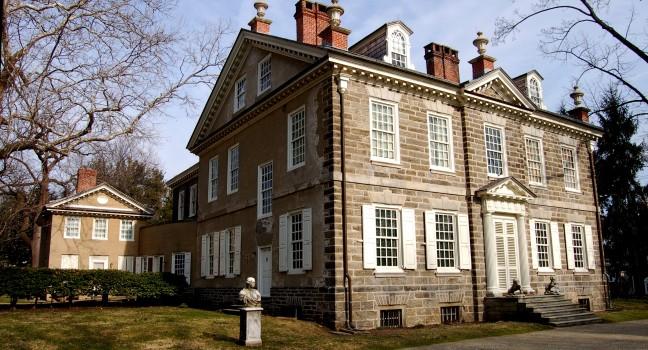
The Chew House, also known as Cliveden, in the Germantown section of Philadelphia, PA.  Americans soldiers fought from inside of the house during the Battle of Germantown in the Revolutionary War
Daniel M. Silva / Shutterstock

The grounds take up an entire block, and they are free to walk around. Cliveden's (rhymes with lived in) unique history, impressive architecture, and the guides who spin a good yarn combine to make the site perhaps the best visiting experience of the historic Germantown homes. The elaborate country house was built in 1767 by Benjamin Chew (1722–1810), a Quaker and chief justice of the colonies, and something of a fence-straddler during the Revolution. Cliveden was at the center of the Battle of Germantown, occupied by British troops, and the walls still bear the marks of American cannon fire. An elaborate reenactment of the Battle of Germantown is held here annually on the first Saturday in October. Cliveden excels at its robust programming, which is year-round, and much of which explores the experiences of slaves, servants, and workers at Cliveden, and larger themes of Northern slavery and slaveholders, like the Chew family, who owned plantations in the South. The house, on 6 acres, can be seen on a 45-minute guided tours. Off-season tours can be arranged by calling.

6401 Germantown Ave., Philadelphia, PA, 19144, USA
215-848–1777
Sight Details
$15
Closed Mon.–Wed. and Dec.–Apr.; tours on the hr, last tour at 3 pm

Something incorrect in this review?

Grumblethorpe

Germantown
Grumblethorpe Tenant House, Germantown, Pennsylvania
Smallbones [Public Domain], via Wikimedia Commons

The blood of General James Agnew, who died after being struck by musket balls during the Battle of Germantown, stains the floor in the parlor of this Georgian house—and no one has bothered to clean it up yet! Built by Philadelphia merchant and wine importer John Wister in 1744, Grumblethorpe is one of Germantown's leading examples of early-18th-century Pennsylvania-German architecture. The Wister family lived here for 160 years, and during the Revolution a teenage Sally Wister kept a diary that has become an important historical source for what that time was like. On display are period furnishings and family mementos, but the best part of the house is the large garden. Wisteria, the flowering vine, is named after Charles Wister (John's grandson), who was an avid botanist and amateur scientist, and there is plenty of it in the garden. There are also an enormous hundred-year-old rosebush, a peony alley, a two-story arbor with climbing clematis and a grapevine working its way across its base, and tulips in season.

Tours are offered May–October, on the second Saturday of the month; additional tours can be scheduled.

5267 Germantown Ave., Philadelphia, PA, 19144, USA
215-843–4820
Sight Details
$10
Closed Nov.–Apr.

Something incorrect in this review?

Parry Mansion

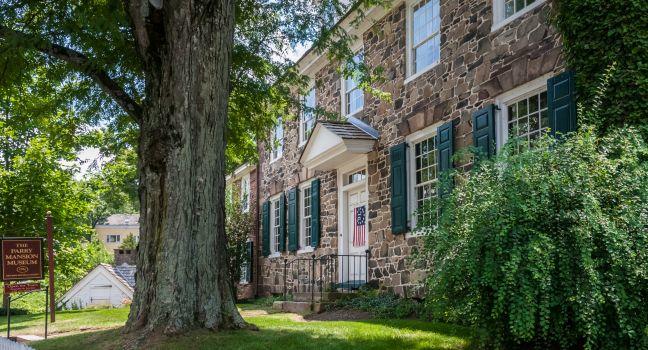
The Parry Mansion Museum, New Hope, Pennsylvania, USA.
(c) Mullan101 | Dreamstime.com

Built in 1784 and now home to the New Hope Historical Society, this stone house is fascinating because the furnishings reflect decorative changes from 1775 (Colonial) to 1900 (Victorian)—including candles, whitewashed walls, oil lamps, and wallpaper. Wealthy Quaker lumber- and flour-mill owner and businessman Benjamin Parry, often called the "father of New Hope," built the house, which was occupied by five generations of his family. Guided house tours, including a brief film, give you a good sense of town history. The historical society also offers a one-hour walking tour of New Hope ($10) from May through October on the first and third Sunday of each month.

45 S. Main St., New Hope, PA, 18938, USA
215-862--5652
Sight Details
$10 house tour
Closed for tours Sept.–Apr., also weekdays May–Aug.

Something incorrect in this review?

The 1768 Jeremiah Lee Mansion

Marblehead's 18th-century high society is exemplified in this mansion run by the Marblehead Museum. Colonel Lee was the wealthiest merchant and ship owner in Massachusetts in 1768, and although few original furnishings remain, the unique hand-painted wallpaper and fine collection of traditional North Shore furniture provide clues to the life of an American gentleman. Across the street at the main museum (open year-round), the J.O.J. Frost Gallery & Carolyn Lynch Education Center pays tribute to the town's talented 19th-century native son.

1850 House

French Quarter

This well-preserved town house and courtyard provide rare public access beyond the storefronts to the interior of the exclusive Pontalba Buildings. The rooms are furnished in the style of the mid-19th century, when the buildings were designed as upscale residences and retail spaces. Notice the ornate ironwork on the balconies of the apartments; the original owner, Baroness Micaela Pontalba, popularized cast (or molded) iron with these buildings, and it eventually replaced much of the old handwrought ironwork in the French Quarter. The initials for her families, A and P (Almonester and Pontalba), are worked into the design. A gift shop and bookstore run by the Friends of the Cabildo is downstairs. The Friends also offer informative two-hour walking tours of the French Quarter ($22) from this location Tuesday through Sunday at 10:30 am and 1:30 pm that include admission to the house.

1879 Avery House

The stately sandstone Avery House was built in 1879 by Franklin Avery, who set the tone for Old Town's broad streets when he surveyed the city in 1873. You can tour the inside on weekends. The Avery House is just one of 36 sites on the Poudre Landmark Foundation's historic walking-tour map, which includes several self-guided options.

328 W. Mountain Ave., Fort Collins, CO, 80521, USA
970-221–0533
Sight Details
Free
Closed weekdays

Something incorrect in this review?

75½ Bedford Street

Rising real-estate prices inspired the construction of New York City's narrowest house—just 9½ feet wide and 32 feet deep—in 1873. Built on a lot that was originally a carriage entrance of the Isaacs-Hendricks House next door, this sliver of a building has illustrious past residents including actor John Barrymore and poet Edna St. Vincent Millay.

75½ Bedford St., New York, NY, 10014, USA

Something incorrect in this review?

A. J. Snyder Estate

The estate includes the Widow Jane Mine, cement kilns, and parts of the D&H Canal. A museum concentrates on the local cement industry and showcases antique sleighs and carriages. It's about 3 miles east of High Falls.

668 Rte. 213, Rosendale, NY, 12472, USA
845-658–9900
Sight Details
$5
May–Oct., weekends 1–4

Something incorrect in this review?

Adamson House and Malibu Lagoon Museum

With spectacular views of Surfrider Beach and lush garden grounds, this Moorish Spanish–style house epitomizes all the reasons to live in Malibu. It was built in 1929 by the Rindge family, who owned much of the Malibu area in the early part of the 20th century. The Rindges had an enviable Malibu lifestyle, decades before the area was trendy. In the 1920s, Malibu was quite isolated; in fact, all visitors and some of the supplies arrived by boat at the nearby Malibu Pier. (The town becomes isolated today whenever rockslides close the highway.) The house, covered with magnificent tile work in rich blues, greens, yellows, and oranges from the now-defunct Malibu Potteries, is right on the beach—high chain-link fences keep out curious beachgoers. Even an outside dog bathtub near the servants' door is a tiled gem. Docent-led tours provide insights on family life here as well as the history of Malibu and its real estate. Signs posted around the grounds outside direct you on a self-guided tour, but you can't go inside the house without a guide. Guided tours take place Wednesday through Saturday from 11 am to 2 pm on the hour. There's paid parking in the adjacent county lot or in the lot at PCH and Cross Creek Road.

23200 Pacific Coast Hwy., Malibu, CA, 90265, USA
310-456–8432
Sight Details
$7 (cash only)

Something incorrect in this review?

Agecroft Hall

Built in Lancashire, England, in the 15th century during the reign of King Henry VIII, Agecroft Hall was transported here in 1926. It's one of the finest Tudor manor houses in the United States. Set amid gardens planted with specimens typical of 1580–1640, the house contains an extensive assortment of Tudor and early Stuart art and furniture (1485–1660) as well as collector's items from England and elsewhere in Europe. A Tudor kitchen lets visitors learn about the culinary tools of that age.

4305 Sulgrave Rd., Richmond, VA, 23221, USA
804-353–4241
Sight Details
$8
Closed Mon.

Something incorrect in this review?

Amish Country Homestead

At this designated Lancaster County heritage site, take a guided tour of a replica nine-room Old Order Amish house and attached one-room schoolhouse. Along the way, you'll learn about Amish culture, clothing, and day-to-day life. The Super-Saver Tour Package ($47.95) includes a 90-minute mini-shuttle tour; a guided tour of the homestead; and a ticket to see the film Jacob's Choice.

3121 Old Philadelphia Pike, Bird-in-Hand, PA, 17505, USA
717-768–8400
Sight Details
$15.95
Closed Jan.--Mar.

Something incorrect in this review?

Andalusia

A picturesque farm with peacocks, a pond, and a lofty barn, Andalusia inspired much of Flannery O'Connor's work. Now a museum, the 1850s farmhouse has been preserved just as it was (original furnishings and all) in 1964 when O'Connor passed away from complications of lupus at the age of 39. A visit here provides incredible insight into the life of this prolific writer. Guided tours are offered of the home daily on the hour. A small gift shop sells her books and other memorabilia.

2628 N. Columbia St., Milledgeville, GA, 31059, USA
478-445--8722
Sight Details
$7
Closed Mon.

Something incorrect in this review?

Anderson House

Dupont Circle

The palatial, Gilded Age Anderson House is the headquarters of the Society of the Cincinnati, the nation's oldest historical organization promoting knowledge and appreciation of America's independence. The society was founded by Revolutionary War veterans in 1783—George Washington was its first president general—and this has been its home since 1938. Guided tours of the first and second floors reveal the history of the society, the significance of the American Revolution, and the lives and collections of the home's first owners, Larz and Isabel Anderson. Built in 1905, the home was the Andersons' winter residence and retains much of its original contents—an eclectic mix of furniture, tapestries, paintings, sculpture, and Asian art. Larz, a U.S. diplomat from 1891 to 1913, and his wife, Isabel, an author and benefactress, assembled their collection as they traveled the world during diplomatic postings. Today, the house also features an exhibition gallery, open every day except Monday, and a research library that you can visit by appointment.

2118 Massachusetts Ave. NW, Washington, DC, 20008, USA
202-785–2040
Sight Details
Free
Closed Mon.; library visits by appointment only

Something incorrect in this review?

Andrew Low House

Historic District

Built on the site of the former city jail, this residence was constructed in 1848 for Andrew Low, a native of Scotland and one of Savannah's merchant princes. Designed by architect John S. Norris, the residence later belonged to Low's son, William, who inherited his father's wealth and married his longtime sweetheart, Juliette Gordon. The couple moved to England and several years after her husband's death, Juliette returned to this house and founded the Girl Scouts here on March 12, 1912. The house has 19th-century antiques, stunning silver, and some of the finest ornamental ironwork in Savannah, but it is the story and history of the family—even a bedroom named after family friend and visitor General Robert E. Lee—that is fascinating and well told by the tour guides.

329 Abercorn St., Savannah, GA, 31401, USA
912-233–1828
Sight Details
$12

Something incorrect in this review?

Arlington House

It was in Arlington that the two most famous names in Virginia history—Washington and Lee—became intertwined. George Washington Parke Custis, raised by Martha and George Washington, his grandmother and step-grandfather, built Arlington House (also known as the Custis-Lee Mansion) between 1802 and 1818 on a 1,100-acre estate overlooking the Potomac. After Custis's death, the property went to his daughter, Mary Anna Randolph Custis. In 1831 Mary married Robert E. Lee, a graduate of West Point. For the next 30 years she lived at Arlington House while Lee went wherever the Army sent him, including the superintendency of West Point.

In 1861 Lee was offered command of the Union forces in Washington. It was understood that the first order of business would be a troop movement into nearby Virginia. He declined and resigned from the U.S. Army, deciding that he could never take up arms against his native Virginia. The Lees left Arlington House that spring, never to return. Federal troops crossed the Potomac not long after that, fortified the estate's ridges, and turned the home into the Army of the Potomac's headquarters. Arlington House and the estate were confiscated in May 1864 when the Lees failed to pay $92 and change in property taxes in person. (General Lee's eldest son sued the U.S. government, and after a 5–4 decision by the U.S. Supreme Court, was eventually compensated for the land.) Two hundred nearby acres were set aside as a national cemetery in 1864. One thousand soldiers were buried there by the end of that year. Soldiers from the Revolutionary War and the War of 1812 were reinterred at Arlington as their bodies were discovered in other resting places.

The building's heavy Doric columns and severe pediment make Arlington House one of the area's best examples of Greek Revival architecture. The plantation home was designed by George Hadfield, a young English architect who, for a while, supervised construction of the Capitol. The view of Washington from the front of the house is superb. In 1933 the National Park Service acquired Arlington House and continued the restoration that the War Department had begun, and in 1972 Congress designated the Custis-Lee Mansion as Arlington House, the Robert E. Lee Memorial. It looks much as it did in the 19th century, and a quick tour takes you past objects once owned by the Custises and the Lees.

In front of Arlington House, next to a flag that flies at half staff whenever there's a funeral in the cemetery, is the flat-top grave of Pierre Charles L'Enfant, designer of Washington, D.C.

321 Sherman Dr., Arlington, VA, 22211, USA
703-235–1530
Sight Details
Free

Something incorrect in this review?

Ash Lawn–Highland

Standing in contrast to the grandiose Monticello is the modest home of James Monroe, who held more major political offices than any other U.S. president. He intentionally kept it a simple farmhouse, building the home in 1799, two miles from his friend Jefferson's estate. A later owner added on a more prominent two-story section where two of the original Monroe rooms burned down. Though it definitely has a more common feel than Monticello, the small rooms in Ash Lawn–Highland are similarly crowded, with gifts from notables and souvenirs from Monroe's time as envoy to France. Allow a couple of hours to visit Monroe's estate, a perfect way to complete a day that begins at Monticello.

2050 James Monroe Pkwy., Charlottesville, VA, 22902, USA
434-293–8000
Sight Details
$14
Apr.–Oct., daily 9–6; Nov.–Mar., daily 11–5

Something incorrect in this review?

Atherton House

Pacific Heights

The somewhat quirky design of this Victorian-era house incorporates Queen Anne, Stick-Eastlake, and other architectural elements. Many claim the house—now apartments—is haunted by the ghosts of its 19th-century residents, who (supposedly) regularly whisper, glow, and generally cause a mild fuss. It's not open to the public.

1990 California St., San Francisco, CA, 94109, USA

Something incorrect in this review?

Audubon State Historic Site and Oakley Plantation House

John James Audubon did a major portion of his Birds of America studies in this 100-acre park, and the three-story Oakley Plantation House is where Audubon tutored the young Eliza Pirrie, daughter of Mr. and Mrs. James Pirrie, who owned the house. The simple—even spartan—interior contrasts sharply with the extravagances of many of the River Road plantations and demonstrates the Puritan influence in this region. The grounds, too, recall the English penchant for a blending of order and wilderness in their gardens. You must follow a short, peaceful walking path to reach the house from the parking lot. A state-run museum at the start of the path provides an informative look at plantation life as it was lived in this region 200 years ago. A permanent exhibit tells the story of the enslaved people who lived on this site—including many of their names—and the grounds include a pair of authentic slave cabins brought here from another plantation.

11788 LA Hwy. 965, St. Francisville, LA, 70775, USA
225-635–3739
Sight Details
Admission and plantation tour $10; $5 for admission only

Something incorrect in this review?

Avila Adobe

Downtown

Built as a private home for cattle rancher and pueblo of L.A. mayor Francisco Ávila in 1818, this museum preserves seven of what were originally 18 rooms in the city's oldest standing residence. The graceful structure features 3-foot-thick walls made of adobe brick over cottonwood timbers, a traditional interior courtyard, and 1840s-era furnishings that bring to life an era when the city was still part of Mexico. The museum is open daily from 9 am to 4 pm and the complex is a California Historical Landmark.

10 Olvera St., Los Angeles, CA, 90012, USA
213-485–6855

Something incorrect in this review?

Babe Ruth Birthplace and Museum

West Baltimore

This plain brick row house, three blocks from Oriole Park at Camden Yards, was the birthplace of "the Bambino." Although Ruth was born here in 1895, his family never lived here; they lived in a nearby apartment, above a tavern run by Ruth's father. The row house and the adjoining buildings make up a museum devoted to Ruth's life and to the local Orioles baseball club. Film clips and props, rare photos of Ruth, Yankees payroll checks, a score book from Ruth's first professional game, and many other artifacts can be found here.

216 Emory St., Baltimore, MD, 21230, USA
410-727–1539
Sight Details
$6
Apr.–Oct., daily 10–5, until 7 before Oriole home games; Nov.–Mar., daily 10–5

Something incorrect in this review?

Badger Hole

Cowboy poet Charles Badger Clark was the first poet laureate of South Dakota and spent 30 years of his life in a rustic cabin within Custer State Park. He died in 1957, but his cabin is preserved and open to visitors. There's a 1-mile hiking trail behind the cabin that's still lined with some of Clark's stonework.

Bay Ridge Architecture Tour

Bay Ridge has no shortage of eclectic architecture. Wandering the neighborhood, you'll see everything from one of the oldest freestanding Greek Revival homes in Brooklyn (99th Street and Shore Road) to circa-1880 Shingle-style Victorians with conical towers (81st and 82nd streets, between 3rd and Colonial avenues); rows of limestone houses on Bay Ridge Parkway (lit by working gas lamps); and charming cul-de-sacs lined with redbrick, slate-roof homes (68th Street between Ridge Boulevard and 3rd Avenue). The most popular architectural attraction in the neighborhood, though, is the fanciful Arts and Crafts home known to locals as the Gingerbread House. Built for shipping magnate Howard E. Jones in 1917, the 6,000-square-foot private home at 8220 Narrows Avenue has a thatched-style shingle roof, rustic stonework, and abundant landscaped greenery that make it look like it came straight out of a Hans Christian Andersen story.
8220 Narrows Ave., Brooklyn, NY, 11209, USA

Something incorrect in this review?

Beauregard-Keyes House and Garden Museum

French Quarter

This stately 19th-century mansion was briefly home to Confederate general and Louisiana native P.G.T. Beauregard, but a longer-term resident was the novelist Frances Parkinson Keyes, who found the place in a sad state when she arrived in the 1940s. Keyes restored the home—today filled with period furnishings—and her studio at the back of the large courtyard remains intact, complete with family photos, original manuscripts, and her doll, fan, and teapot collections. Keyes wrote 40 novels there, all in longhand, among them local favorite Dinner at Antoine's. Even if you don't have time for a tour, take a peek at the beautiful walled garden through the gates at the corner of Chartres and Ursulines Streets. Landscaped in the same sun pattern as Jackson Square, it blooms year-round. The house was used most recently as the interior for the Fairplay Saloon in the TV series Interview with the Vampire. Tours (45 minutes) begin on the hour.

1113 Chartres St., New Orleans, LA, 70116, USA
504-523–7257
Sight Details
$10
Closed Sun.

Something incorrect in this review?