32 Best Sights in Massachusetts, USA

Background Illustration for Sights

We've compiled the best of the best in Massachusetts - browse our top choices for the top things to see or do during your stay.

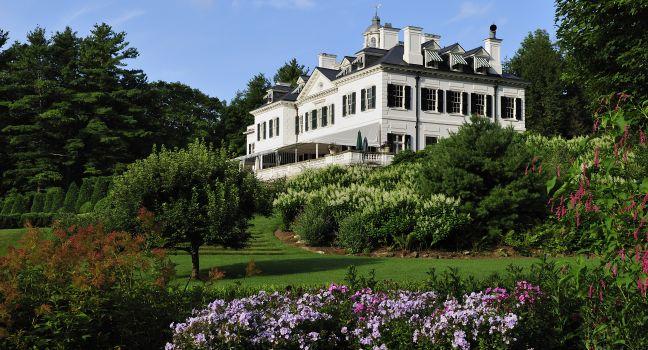
The Mount

Fodor's choice
Berkshires, MA, USA -August. 30. 2011: The Mount, the summer home of the novelist Edith Wharton, now is museum in Lenox, state of Massachusetts, USA
T photography / Shutterstock

This 1902 mansion with myriad classical influences was the summer home of novelist Edith Wharton. The 42-room house and 3 acres of formal gardens were designed by Wharton, who is considered by many to have set the standard for 20th-century interior decoration. In designing the Mount, she followed the principles set forth in her book The Decoration of Houses (1897), creating a calm and well-ordered home. Summer is a fine time to enjoy the informal café and occasional free concerts on the terrace. Guided tours take place during regular hours, the private "ghost tour" after hours, and noteworthy authors make regular visits to discuss their latest books.

2 Plunkett St., Lenox, MA, 01240, USA
413-551–5111
Sight Details
$20
The grounds are free and open daily from dawn to dusk

Something incorrect in this review?

Historic Deerfield

Fodor's choice

With 52 buildings on 93 acres, Historic Deerfield provides a vivid glimpse into 18th- and 19th-century America. Along the tree-lined main street are 12 museum houses, built between 1720 and 1850, some with original doorways. Four are open to the public on self-guided tours, and the remainder can be seen on guided tours that begin on the hour. The Frary House displays arts and crafts from the 1900s; the attached Barnard Tavern was the main meeting place for Deerfield's villagers. Other houses depict 18th-century life, including everything from kitchens to adult cradles for those who had fallen victim to tuberculosis. Also of note is a one-room schoolhouse, an old burial ground, and the Flynt Center of Early New England Life, which contains needlework, textiles, and clothing dating back to the 1600s. The visitor center is located at Hall Tavern, 80 Old Main Street. Plan to spend at least one full day at Historic Deerfield.

Naumkeag

Fodor's choice

The Berkshire cottage of Joseph Choate (1832–1917), an influential New York City lawyer and the ambassador to Great Britain during President William McKinley's administration, provides a glimpse into the Gilded Age lifestyle. The 44-room gabled mansion, designed by Stanford White and completed in 1887, sits atop Prospect Hill. Its many original furnishings and artworks span three centuries; the collection of Chinese porcelain is particularly noteworthy. The meticulously kept 8 acres of formal gardens, a three-decade project of Choate's daughter, Mabel, and landscape designer Fletcher Steele, alone make this site worth a visit. Creative use of the property now includes a Winter Lights display, with over 200,000 twinkling LED lights; a Halloween-inspired pumpkin trail and haunted house; live music nights with picnics; and a springtime Daffodil Festival.

Recommended Fodor's Video

The Old Manse

Fodor's choice

The Reverend William Emerson, grandfather of Ralph Waldo Emerson, watched rebels and Redcoats battle from behind his home, which was within sight of the Old North Bridge. The house, built in 1770, was occupied continuously by the Emerson family for almost two centuries, except for a 3½-year period during which Nathaniel Hawthorne rented it. Furnishings date from the late 18th century. Different themed guided tours inside are available (Old Manse; Women of the Manse; Family-friendly; Attic; American Contradictions). The grounds are open year-round, from sunrise to sunset.

Chesterwood

Stockbridge, Massachusetts - September 16, 2014:  1896 Colonial Revival Chesterwood, summer estate of American sculptor Daniel Chester French (1850-1931)
LEE SNIDER PHOTO IMAGES / Shutterstock

For 33 years, this was the summer home of the sculptor Daniel Chester French (1850–1931), who created The Minute Man in Concord and the Lincoln Memorial's famous seated statue of the president in Washington, D.C. Occasional tours are given of the house, which is maintained in the style of the 1920s, but the real prize is the studio, where you can view the casts and models French used to create the Lincoln Memorial. The beautifully landscaped 122-acre grounds make for an enchanting stroll or bucolic picnic.

4 Williamsville Rd., Stockbridge, MA, 01262, USA
413-298–2023
Sight Details
$16
Closed Oct.–May

Something incorrect in this review?

The 1768 Jeremiah Lee Mansion

Marblehead's 18th-century high society is exemplified in this mansion run by the Marblehead Museum. Colonel Lee was the wealthiest merchant and ship owner in Massachusetts in 1768, and although few original furnishings remain, the unique hand-painted wallpaper and fine collection of traditional North Shore furniture provide clues to the life of an American gentleman. Across the street at the main museum (open year-round), the J.O.J. Frost Gallery & Carolyn Lynch Education Center pays tribute to the town's talented 19th-century native son.

Brattle House

Brattle Street

This charming, yellow, 18th-century, gambrel-roof Colonial once belonged to the Loyalist William Brattle. He moved to Boston in 1774 to escape the patriots' anger, then left in 1776 with the British troops. From 1831 to 1833 the house was the residence of Margaret Fuller, feminist author and editor of The Dial. Today it's the office of the Cambridge Center for Adult Education, and is listed on the National Register of Historic Places.

42 Brattle St., Cambridge, MA, 02138, USA
617-547–6789

Something incorrect in this review?

Castle Hill on the Crane Estate

This 59-room Stuart-style mansion, built in 1927 for Richard Crane—of the Crane plumbing company—and his family, is part of the Crane Estate, a stretch of more than 2,100 acres along the Essex and Ipswich rivers, encompassing Castle Hill, Crane Beach, and the Crane Wildlife Refuge, all of which are now owned and operated by the nonprofit Trustees of Reservations. Although the original furnishings were sold at auction, the mansion has been elaborately refurnished in period style; photographs in most of the rooms show their original appearance. The Great House is open for guided and self-guided tours and also hosts concerts and other events. Inquire about seasonal programs like fly-fishing or kayaking. If you're looking for an opulent and exquisite overnight stay, book a room at the on-site Inn at Castle Hill.

290 Argilla Rd., Boston, MA, 01938, USA
978-356–4351
Sight Details
Grounds: $15 per car; $2 per bicycle; $5 per motorcycle. Tours: prices vary
Memorial Day–Columbus Day weekends, Wed.–Sat., call for hrs
House closed Jan.--mid-Apr. Grounds open yr-round

Something incorrect in this review?

Clough House at Old North

North End

Built in 1712, this house (whose name rhymes with "fluff") is now the only local survivor of its era aside from Old North Church, which stands nearby. Picture the streets lined with houses such as this, with an occasional grander Georgian mansion and some modest wooden-frame survivors of old Boston's many fires—this is what the North End looked like when Paul Revere was young. Today, Clough House is home to two new attractions: the Printing Office of Edes & Gill, which offers visitors live Colonial-printing demonstrations, and Heritage Goods + Gifts, a shop dedicated to New England artisans and small businesses with a special focus on locally made products from BIPOC- and women-owned businesses.

Elmwood

Tory Row

Shortly after its construction in 1767, this three-story Georgian house was abandoned by its owner, Colonial governor Thomas Oliver. Also known as the Oliver-Gerry-Lowell House, it was home to the accomplished Lowell family for two centuries. Elmwood is now the Harvard University president's residence, ever since student riots in 1969 drove president Nathan Pusey from his house in Harvard Yard. Although it's not open to the public, it affords a nice view from the street.

33 Elmwood Ave., Cambridge, MA, 02138, USA

Something incorrect in this review?

Emily Dickinson Museum

The famed Amherst poet lived and wrote in this brick Federal-style home. Admission is by guided tour only, and to say that the tour guides are knowledgeable would be a massive understatement; the highlight of the tour is the sunlit bedroom where the poet wrote many of her works. Next door is The Evergreens, the imposing Italianate Victorian mansion in which Emily's brother Austin and his family resided for more than 50 years.

280 Main St., Amherst, MA, 01002, USA
413-542–8161
Sight Details
$20 (timed tickets required)
Closed Mon. and Tues.

Something incorrect in this review?

Frederick Law Olmsted National Historic Site

Frederick Law Olmsted (1822–1903) is considered the nation's preeminent creator of parks. In 1883, while immersed in planning Boston's Emerald Necklace of parks, Olmsted set up his first permanent office at Fairsted, an 18-room farmhouse dating from 1810, to which he added another 18 rooms for his design offices. Plans and drawings on display include the U.S. Capitol grounds, Stanford University, and Mount Royal Park in Montréal. You can also tour the design rooms (some now in use as an archive library) where Olmsted and staff drew up their plans; highlights include a 1904 "electric blueprint machine," a kind of primitive photocopier.

The 1¾-acre site incorporates many trademark Olmstedian designs, including areas of meadow, wild garden, and woodland; Olmsted believed body and spirit could be healed through close association with nature. The site became part of the National Park Service in 1980; Olmsted's office played an influential role in the creation of this federal agency. Call ahead to inquire about house tour hours, which change with the seasons, though the grounds are open year-round.

99 Warren St., Brookline, MA, 02445, USA
617-566–1689
Sight Details
Free
Interior closed Dec.–late Apr.

Something incorrect in this review?

Frelinghuysen Morris House & Studio

This modernist property on a 46-acre site exhibits the works of American abstract artists Suzy Frelinghuysen and George L. K. Morris, as well as those of their contemporaries, including Pablo Picasso, Georges Braque, and Juan Gris. In addition to the paintings, frescoes, and sculptures on display, a 57-minute documentary on Frelinghuysen and Morris plays on a continuous loop. Tours are offered on the hour—just be aware that it's a long walk to the house. Painting demonstrations and workshops occasionally take place.

92 Hawthorne St., Lenox, MA, 01240, USA
413-637–0166
Sight Details
$20
Closed Nov.–mid-June

Something incorrect in this review?

Gibson House Museum

Back Bay

Through the foresight of an eccentric bon vivant, this house provides an authentic glimpse into daily life in Boston's Victorian era. One of the first Back Bay residences (1859), the Gibson House is relatively modest in comparison with some of the grand mansions built during the decades that followed; yet its furnishings, from its 1795 Willard clock to the raised and gilded wallpaper to the multipiece faux-bamboo bedroom set, seem sumptuous to modern eyes. Unlike other Back Bay houses, the Gibson family home has been preserved with all its Victorian fixtures and furniture intact. The house served as an interior for the 1984 Merchant Ivory film The Bostonians, as well as the 2019 movie Little Women The museum is only open to the public by hourly guided tours Thursday 3 pm to 5 pm, and Friday and Saturday 1 pm to 3 pm with suggested advance ticket purchase.

137 Beacon St., Boston, MA, 02116, USA
617-267–6338
Sight Details
$15
Closed Mon. and Tues.

Something incorrect in this review?

Henry Vassall House

Tory Row

Brattle Street's seven houses known as "Tory Row" were once occupied by wealthy families linked by friendship, if not blood. Portions of this house may have been built as early as 1636. In 1737 it was purchased by John Vassall Sr.; four years later he sold it to his younger brother Henry and his wife Penelope. It was used as a hospital during the Revolution, and the traitor Dr. Benjamin Church was held here as a prisoner. The house was remodeled during the 19th century. It's now a private residence, but from the street you can view the Colonial home with its black-shuttered windows and multiple dormers.

94 Brattle St., Cambridge, MA, 02138, USA

Something incorrect in this review?

Herman Melville's Arrowhead

Literary fans (and those particularly fond of Moby-Dick) will want to visit this historical 18th-century house where Herman Melville lived and wrote his most famous works. After viewing all the exhibits, take a walk around the meadow that boasts over 100 species of wildflowers, hike a trail, or just enjoy the majestic view of Mt. Greylock, the inspiration for Melville's white whale.   Mid-May through October, guided tours are offered on the hour beginning at 10 am with the last tour at 3 pm. November through mid-May, guided tours are available Saturday at 11 am. 

780 Holmes Rd., Pittsfield, MA, 01201, USA
413-442–1793
Sight Details
$20 (guided tours included)
Closed Tues. and Wed. mid-May–Oct. and Sun.–Fri. Nov.–mid-May

Something incorrect in this review?

Hooper-Lee-Nichols House

Tory Row

The headquarters of the History Cambridge historical society, this Georgian mansion was built in 1685 and is one of the oldest houses in New England. It has been remodeled at least six times while still maintaining much of the original structure. The downstairs is elegantly, although sparsely, appointed with period books, portraits, and wallpaper. An upstairs bedroom has been furnished with period antiques, some belonging to the original residents. Check the website for special events including public art installations, and to see a virtual tour of the house.

The House of the Seven Gables

Immortalized in Nathaniel Hawthorne's classic novel, this site is itself a historic treasure. Built in 1668 and also known as the Turner-Ingersoll Mansion, the house includes the famous secret staircase, a re-creation of Hepzibah's scent shop from The House of Seven Gables, and some of the finest Georgian interiors in the country. Also on the property is the small house where Hawthorne was born in 1804; built in 1750, it was moved from its original location a few blocks away. To visit the house, you must join a guided tour.

115 Derby St., Salem, MA, 01970, USA
978-744–0991
Sight Details
$25 for house tour and grounds; $12 for grounds only May--Sept.; $6 for grounds only Nov.--Apr.

Something incorrect in this review?

John F. Kennedy National Historic Site

This was the home of the 35th president from his birth on May 29, 1917, until 1921, when the family moved to nearby Naples and Abbottsford streets. Rose Kennedy provided the furnishings for the restored 2½-story, wood-frame structure. You can pick up a brochure for a walking tour of Kennedy's school, church, and neighborhood. To get here, take the MBTA Green Line to Coolidge Corner and walk north on Harvard Street four blocks. The house is open seasonally (usually beginning in June) and by appointment. Ongoing renovations mean parts of the home may be closed. Call in advance to confirm hours.

83 Beals St., Brookline, MA, 02446, USA
617-566–7937
Sight Details
Free

Something incorrect in this review?

Longfellow House–Washington's Headquarters

Tory Row

Henry Wadsworth Longfellow, the poet whose stirring tales of the village blacksmith, Evangeline, Hiawatha, and Paul Revere's midnight ride thrilled 19th-century America, once lived in this elegant Georgian mansion. One of several original Tory Row homes on Brattle Street, the house was built in 1759 by John Vassall Jr., and George Washington lived (and slept!) here during the Siege of Boston from July 1775 to April 1776. Longfellow first boarded here in 1837 and later received the house as a gift from his father-in-law on his marriage to Frances Appleton, who burned to death here in an accident in 1861. For 45 years Longfellow wrote his famous verses here and filled the house with the exuberant spirit of his literary circle, which included Ralph Waldo Emerson, Nathaniel Hawthorne, and Charles Sumner, an abolitionist senator. Longfellow died in 1882, but his presence in the house lives on—from the Longfellow family furniture to the wallpaper to the books on the shelves (many the poet's own).

The home, preserved and run by the National Park Service, hosts free guided tours Memorial Day through October. The formal garden is the perfect place to relax; the grounds are open year-round. Longfellow Park, across the street, is the place to stand to take photos of the house. The park was created to preserve the view immortalized in the poet's "To the River Charles." 

105 Brattle St., Cambridge, MA, 02138, USA
617-876–4491
Sight Details
Free
Closed Tues.–Thurs. and Nov.–Apr.

Something incorrect in this review?

Louisa May Alcott's Orchard House

The dark brown exterior of Louisa May Alcott's family home sharply contrasts with the light, wit, and energy so much in evidence within. Named for the apple orchard that once surrounded it, Orchard House was the Alcott family home from 1857 to 1877. Here Louisa wrote Little Women, based in part on her life with her three sisters; and her father, Bronson, founded the Concord School of Philosophy—the building remains behind the house. Because Orchard House had just one owner after the Alcotts left, and because it became a museum in 1911, more than 80% of the original furnishings remain, including the semicircular shelf-desk where Louisa wrote Little Women. The only way to visit the house is by guided tour; reservations are recommended.

399 Lexington Rd., Concord, MA, 01742, USA
978-369–4118
Sight Details
$15

Something incorrect in this review?

Nichols House Museum

Beacon Hill

The only Mt. Vernon Street home open to the public, the Nichols House was built in 1804, and its design is attributed to Charles Bulfinch. It became the lifelong home of Rose Standish Nichols (1872–1960), Beacon Hill eccentric, philanthropist, peace advocate, and one of the first female landscape architects. Nichols inherited the Victorian furnishings, but she added a number of Colonial-style pieces to the mix, and the result is a delightful mélange of styles. To see the house, you must take a guided tour, and space is limited.

55 Mt. Vernon St., Boston, MA, 02108, USA
617-227–6993
Sight Details
$16
Closed Mon.–Wed.

Something incorrect in this review?

Otis House (1796)

West End

The stately Federal-style manor in Bowdoin Square was designed by Charles Bulfinch for former Boston mayor and lawyer Harrison Gray Otis. Today, the National Historic Landmark serves as the headquarters for the heritage organization Historic New England, and visitors can stop in for guided tours that offer insight into wealthy domestic life during the early 1800s. Due to its age, this building is not ADA accessible.

Paul Revere House

North End

2025 marks the 250th anniversaries surrounding Paul Revere's Midnight Ride and the start of the American Revolution. Special programming related to the anniversaries is offered all year long throughout the city, including at the Paul Revere House. Originally on the site was the parsonage of the Second Church of Boston, home to the Rev. Increase Mather, the Second Church's minister. Mather's house burned in the great fire of 1676, and the house that Revere was to occupy was built on its location about four years later, nearly 100 years before Revere's 1775 midnight ride through Middlesex County. Revere owned the house from 1770 until 1800, although he lived there for only 10 years and rented it out for the next two decades. Pre-1900 photographs show it as a shabby warren of storefronts and apartments. The clapboard sheathing is a replacement, but 90% of the framework is original; note the Elizabethan-style overhang and leaded windowpanes. A few Revere furnishings are on display here, and just gazing at his silverwork—much more of which is displayed at the Museum of Fine Arts—brings the man alive. Special events are scheduled throughout the year, many designed with children in mind, such as role-play by characters dressed in period costume serving apple-cider cake and other Colonial-era goodies, a silversmith practicing his trade, a dulcimer player entertaining a crowd, or a military-reenactment group in full period regalia.

The immediate neighborhood also has Revere associations. The little cobblestone park in North Square is named after Rachel Revere, his second wife, and the adjacent brick Pierce-Hichborn House once belonged to relatives of Revere. The garden connecting the Revere House and the Pierce-Hichborn House is planted with flowers and medicinal herbs favored in Revere's day. This is Freedom Trail stop 12.

Ralph Waldo Emerson House

The 19th-century essayist and poet Ralph Waldo Emerson lived briefly in the Old Manse in 1834–35, then moved to this home, where he lived until his death in 1882. Here he wrote Essays. Except for artifacts from Emerson's study, now at the nearby Concord Museum, the Emerson House furnishings have been preserved as the writer left them, down to his hat resting on the newel post. You must join one of the 45-minute-long tours to see the interior.

28 Cambridge Tpke., Concord, MA, 01742, USA
978-369–2236
Sight Details
$15
Closed Mon.–Wed. and Nov.–late Apr.

Something incorrect in this review?

Richard Sparrow House

Built in 1640, Sparrow House is Plymouth's oldest structure. One of several historic houses in town that are open to visitors, it allows guests to take a peek into rooms furnished in the spartan style of the Pilgrims' era. In the adjoining 1720 section of the building is an art gallery, which supports the museum and has been in operation since the 1930s.

42 Summer St., Plymouth, MA, 02360, USA
508-747–1240
Sight Details
Museum $2; gallery free
Closed Sun.–Wed.

Something incorrect in this review?

Ventfort Hall Mansion and Gilded Age Museum

Built in 1893, Ventfort Hall was the summer "cottage" of Sarah Morgan, the sister of financier J. P. Morgan. Lively tours offer a peek into the lifestyles of Lenox's superrich "cottage class." The museum's temporary exhibits explore the role of Lenox and the Berkshires as the era's definitive mountain retreat. Victorian high tea served during guest lectures and workshops is among the highlights.

104 Walker St., Lenox, MA, 01240, USA
413-637–3206
Sight Details
$20
Self-guided audio tour is available

Something incorrect in this review?

Wadsworth House

Harvard Square

On the Harvard University side of Harvard Square stands the Wadsworth House, a yellow clapboard structure built in 1726 as a home for Harvard presidents. It served as the first Massachusetts headquarters for George Washington, who arrived on July 2, 1775, just a day before he took command of the Continental Army. The building traded presidents in for students (such as Ralph Waldo Emerson) and visiting preachers as its boarders, and today, it houses Harvard's general offices.

The Wayside

Nathaniel Hawthorne lived at the Old Manse in 1842–45, working on stories and sketches; he then moved to Salem (where he wrote The Scarlet Letter) and later to Lenox (The House of the Seven Gables). In 1852 he returned to Concord, bought this rambling structure called The Wayside, and lived here until his death in 1864. The home certainly appealed to literary types: the subsequent owner of The Wayside, Margaret Sidney, wrote the children's book Five Little Peppers and How They Grew (1881), and before Hawthorne moved in, the Alcotts lived here, from 1845 to 1848. Notably, The Wayside is a site on the National Underground Railroad Network to Freedom program, as the Alcotts helped at least one enslaved person on his way to Canada and freedom. An exhibit center, in the former barn, provides information about the Wayside authors and links them to major events in American history (open for special events). Hawthorne's tower-study, with his stand-up writing desk, is substantially as he left it.

William Cullen Bryant Homestead

About 20 miles northwest of Northampton, in the scenic hills west of the Pioneer Valley, is the country estate of the 19th-century poet and author William Cullen Bryant. The 195-acre grounds overlooking the Westfield River Valley are a great venue for bird-watching, cross-country skiing, and picnics. Experience one of the many literary-themed events held throughout the year on the property.