108 Best Sights in Massachusetts, USA

Background Illustration for Sights

We've compiled the best of the best in Massachusetts - browse our top choices for the top things to see or do during your stay.

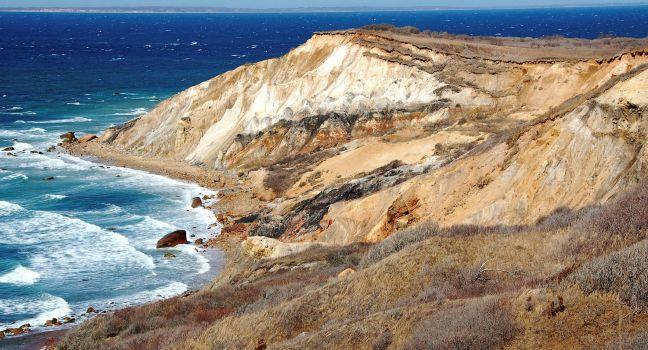
Aquinnah Cliffs

Aquinnah Fodor's choice
Aquinnah Cliffs at Martha's Vineyard
(c) Mwaits | Dreamstime.com

A National Historic Landmark, the spectacular Aquinnah Cliffs are part of the Wampanoag Reservation land. These dramatically striated walls of red clay are the island's major attraction, as evidenced by the tour bus–filled parking lot. Native American crafts and food shops line the short approach to the overlook. Gaze toward the Elizabeth Islands to the northeast across Vineyard Sound and Nomans Land Island, a wildlife preserve, 3 miles off the Vineyard's southern coast.

State Rd., Martha's Vineyard, MA, 02535, USA

Something incorrect in this review?

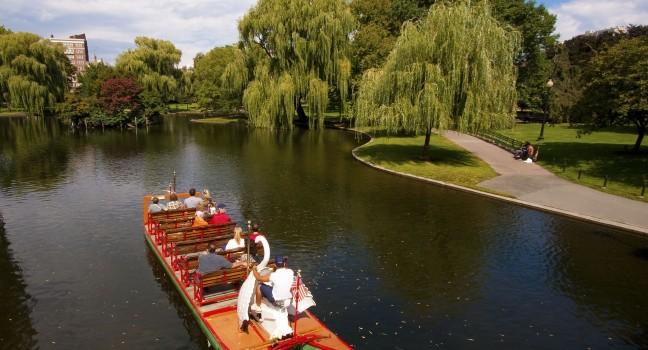
Boston Public Garden

Back Bay Fodor's choice
Public Garden in Boston with the famous Swam Boats. Massachusetts - USA.
Marcio Jose Bastos Silva / Shutterstock

America's oldest botanical garden is replete with gorgeous formal plantings, a 4-acre lagoon famous since 1877 for its foot-pedal–powered (by a captain) Swan Boats ( swanboats.com), and the Make Way for Ducklings bronzes sculpted by Nancy Schön, a tribute to the 1941 classic children's story by Robert McCloskey.

Keep in mind that Boston Public Garden and Boston Common are two separate entities with different histories and purposes and a distinct boundary between them at Charles Street. The Common has been public land since Boston was founded in 1630, whereas the Public Garden belongs to a newer Boston, occupying what had been salt marshes on the edge of the Common. By 1837 the tract was covered with an abundance of ornamental plantings donated by a group of private citizens. Near the Swan Boat dock is what has been described as the world's smallest suspension bridge, designed in 1867 to cross the pond at its narrowest point. The beds along the main walkways are replanted every spring. The tulips during the first two weeks of May are especially colorful, and there's a sampling of native and European tree species.

Acorn Street

Beacon Hill Fodor's choice

Often called the city's most photographed passageway, Acorn Street offers its visitors an iconic image of "historic Boston." Short, steep, and narrow, the cobblestone street may be Boston's roughest ride, so leave your car behind. Brick row houses—once the homes of 19th-century artisans and tradespeople—line one side and, on the other, doors lead to Mt. Vernon's hidden gardens. Find American flags, creative door knockers, window boxes, and gas lights aplenty.

Recommended Fodor's Video

Arnold Arboretum of Harvard University

Jamaica Plain Fodor's choice

This 281-acre living laboratory contains more than 4,000 kinds of woody plants, most from the hardy north temperate zone. The rhododendrons, azaleas, lilacs, magnolias, and fruit trees are eye-popping when in bloom, and something is always in season from April through September. The Larz Anderson bonsai collection contains individual specimens imported from Japan. In the visitor center there is a 40-to-1 scale model of the arboretum (with 4,000 tiny trees). If you visit during May, Lilac Sunday (usually held on Mother's Day) is a celebration of blooming trees, and is the only day picnicking is allowed in the arboretum.

Boston Common

Beacon Hill Fodor's choice

Nothing is more central to the city than Boston Common, the oldest public park in the United States and undoubtedly the largest and most famous of the town commons around which New England settlements were traditionally arranged. Dating from 1634, the Common started as 50 acres for grazing cattle until 1830 when cows were banned. Don't confuse the Common with its sister park, the Public Garden, where the Swan Boats glide and flowers bloom three seasons of the year.

Take a break and enjoy lunch at one of the food trucks parked at the Brewer Fountain Plaza from spring through fall. A few steps away, the Freedom Trail starts in front of the Boston Visitor Information Center. The new MLK memorial sculpture, The Embrace, is close by and worth a visit.

The Common's highest point, near the Parkman Bandstand, was once called Flagstaff Hill and is now surmounted by the Soldiers and Sailors Monument, honoring Civil War troops. The Common's only body of water is the Frog Pond, a tame and frog-free concrete depression used as a wading pool and spray fountain during summer and for ice-skating in winter.

Central Burying Ground lends the park an eerie vibe at its site on Boylston Street; in fact, the Common boasts a fair amount of haunted history. Across from the State House, on the Beacon Street side, sits the splendidly restored Robert Gould Shaw 54th Regiment Memorial, executed in deep-relief bronze by Augustus Saint-Gaudens in 1897.  This is Freedom Trail stop 1.

Boston Harbor Islands National Recreation Area

Waterfront Fodor's choice

Comprising 34 tiny islands and peninsulas, this is one of the city's best hidden gems—and it's literally out of sight. Stretching from South Boston (Castle Island) to the coastlines of South Shore towns Hingham and Hull, each island is different, but most feature abundant nature with miles of lightly traveled trails, shoreline, sea life, and wild plants. The focal point is 39-acre Georges Island and its partially restored pre–Civil War Fort Warren that once held Confederate prisoners. Pets and alcohol are not allowed on the Harbor Islands.  Ferries shuttle visitors from Boston's Long Wharf to Georges, Thompson, and Spectacle islands daily during summer months. Plan to spend a whole day exploring!

191 W. Atlantic Ave., Boston, MA, 02110, USA
617-227–4321
Sight Details
$24.95 (round-trip ferry ticket)
Ferry schedule runs mid-May--mid-Oct. and goes from Boston to Georges, Thompson, and Spectacle islands

Something incorrect in this review?

Boston Harborwalk

Seaport Fodor's choice

Stretching for 43 continuous miles, Boston Harborwalk is a walking trail that skirts the twists and turns of the coast from Charlestown down to the city of Quincy. In the Seaport District specifically, the Harborwalk journeys along Fort Point Channel, around Fan Pier, up Seaport Boulevard, and out and around the Black Falcon Cruise Terminal. Along the way, pedestrians can see art exhibits, stationary viewfinders, open green spaces, and incredible Boston Harbor views. Marked signs point the way, and maps can be found online.

Boston Public Library

Back Bay Fodor's choice

This venerable institution is a handsome temple to reading and a valuable research library, as well as an art gallery of sorts, and you don't need a library card to enjoy it. At the main entrance hall of the 1895 Renaissance Revival building, take in the immense stone lions by Louis St. Gaudens, the vaulted ceiling, and the marble staircase. The corridor at the top of the stairs leads to Bates Hall, one of Boston's most sumptuous interior spaces. This is the main reading room, 218 feet long with a barrel vault ceiling 50 feet high. The murals at the head of the staircase, depicting the nine muses, are the work of the French artist Pierre Puvis de Chavannes; those in the room to the right are Edwin Austin Abbey's interpretations of the Holy Grail legend. Upstairs, in the public areas, is John Singer Sargent's mural series Triumph of Religion. The library offers free art and architecture tours. The McKim building contains a Renaissance-style courtyard inspired by Rome's Palazzo della Cancelleria. A covered arcade furnished with chairs rings a fountain; you can bring books or lunch into the peaceful courtyard.

Bunker Hill Monument

Charlestown Fodor's choice

 Two misunderstandings surround this famous monument. First, the Battle of Bunker Hill was actually fought on Breed's Hill, which is where the monument sits today. (The real Bunker Hill is about ½ mile to the north of the monument.) In truth, Bunker was the originally planned locale for the battle, and for that reason its name stuck. Second, although the battle is generally considered a Colonial success, the Americans lost. It was a Pyrrhic victory for the British Redcoats, who sacrificed nearly half of their 2,200 men; American casualties numbered 400 to 600. One thing is true: the Battle of Bunker Hill put the British on notice that they were up against a formidable opponent. According to history books, this is also the location of the famous war cry, "Don't fire until you see the whites of their eyes," uttered by American colonel William Prescott or General Israel Putnam (there's still debate on who gave the actual command). This was a shout-out to an 18th-century Prussian warning to soldiers that lack of ammunition and notorious musket inaccuracy meant every shot needed to count. The Americans did employ a deadly delayed-action strategy on June 17, 1775, and conclusively proved themselves capable of defeating the forces of the British Empire.

Among the dead were the brilliant young American doctor and political activist Joseph Warren, recently commissioned as a major general but fighting as a private, and the British major John Pitcairn, who two months prior had led the Redcoats into Lexington. Pitcairn is believed to be buried in the crypt of Old North Church.

In 1823 the committee formed to construct a monument on the site of the battle chose the form of an Egyptian obelisk. Architect Solomon Willard designed a 221-foot-tall granite obelisk, a tremendous feat of engineering for its day. The Marquis de Lafayette laid the cornerstone of the monument in 1825, but because of a lack of funds, it wasn't dedicated until 1843. Daniel Webster's stirring words at the ceremony commemorating the laying of its cornerstone have gone down in history: "Let it rise! Let it rise, till it meets the sun in his coming. Let the earliest light of the morning gild it, and parting day linger and play upon its summit."

The monument's zenith is reached by a flight of 294 tightly spiraled steps. While the elevator is still under repair, the views from the observatory are worth the effort of the arduous climb if you can. The tower is only open for climbing between 1 and 4 pm. The adjacent museum's artifacts and exhibits tell the story of the battle, while a detailed diorama depicts the action in miniature. This is Freedom Trail stop 16.

Cape Cod National Seashore

Fodor's choice

The region's most expansive national treasure, Cape Cod National Seashore was established in 1961 by President John F. Kennedy, for whom Cape Cod was home and haven. The lands and waters of the Seashore comprise 44,000 acres of the Cape, extending from Chatham to Provincetown. The protected area includes 40 miles of pristine sandy beach; rolling dunes; swamps, marshes, and wetlands; and pitch-pine and scrub-oak forest. Self-guided nature trails, as well as biking and horse trails, wind through these landscapes. Hiking trails from Salt Pond Visitor Center lead to Nauset Marsh, Salt Pond, and the Buttonbush Trail, a quarter-mile nature path designed for people with low or no vision. A hike or bike ride to Coast Guard Beach leads to a turnout looking out over marsh and sea. A section of the cliff here was washed away in 1990, revealing the remains of a prehistoric dwelling. The National Seashore has two visitor centers, one in Eastham and one in Provincetown.

Salt Pond Visitor Center, open year-round at the southern end of the Seashore, reveals sweeping views of the Salt Pond and Nauset Marsh. Activities offered (typically from May to October) include ranger-led walks, canoe and kayak tours, demonstrations, and lectures, as well as evening beach walks, campfire talks, and other programs. The centerpiece of the visitor center lobby is a large map showing Cape Cod's location in the Gulf of Maine, displaying the Cape's glacial history and the powerful natural forces that continue to shape it. The visitor center's museum explores the cultural themes represented on Cape Cod, including the Wampanoag, "The First People of the Light," plus European settlement, fishing, life-saving, lighthouses, communication technology and tourism. An air-conditioned auditorium shows films on geology, sea rescues, whaling, Henry David Thoreau, and Guglielmo Marconi.

Castle Island

South Boston Fodor's choice

Although it once was, Castle Island is no longer, well, an island. Capping the South Boston neighborhood, Castle Island is accessible by car and by foot from Day Boulevard. Its centerpiece is Fort Independence, built in 1801 (although there have been battlements on-site since 1644), open for free tours on summer weekend afternoons. Castle Island is a popular spot to walk dogs, jog, or cycle, whether just around the island itself or along the water-set Pleasure Bay Loop. There's also a nice playground for kids. Stop by Castle Island institution Sullivan's for a hot dog, fried seafood dinner, or ice cream. Views of the harbor and its outlying islands are expansive.

Charles Street

Beacon Hill Fodor's choice

In keeping with the historic character of the area, Charles Street is void of neon signs, but you will see bricks aplenty in Beacon Hill's most popular—and only—commercial development. Spend the day shopping at locally owned clothing, antiques, and gift boutiques. Make sure to stop for lunch at one of the local cafés or the legendary Sevens bar. Charles Street sparkles at dusk from gas-fueled street lamps, making it a romantic place for an evening stroll.

Custom House & Tower

Financial District Fodor's choice

At the time of its construction in 1847, the Custom House was the most expensive ever built in the United States and today it is one of Boston’s most recognizable buildings. It resembles a Greek Revival temple and features an iconic tower that was added in 1915, earning it the title of the city's tallest skyscraper. Today, Marriott operates it as a hotel and vacation club, but the public can take two elevators up 26 floors to the observation deck for unparalleled views of Downtown and Boston Harbor. Tours (30 minutes) leave once daily at 2 pm; there are no tours on Friday. Tours are free, but space is limited, so call ahead to make a reservation---tours book out months in advance.

Emerald Necklace Conservancy

Fenway-Kenmore Fodor's choice

The six large public parks known as Boston's Emerald Necklace stretch 7 miles from the Back Bay Fens to Franklin Park in Dorchester, and include Arnold Arboretum, Jamaica Pond, Olmsted Park, and the Riverway. The linear parks, designed by master landscape architect Frederick Law Olmsted more than 100 years ago, remain a well-groomed urban masterpiece.

Faneuil Hall

Government Center Fodor's choice

Faneuil Hall (pronounced Fan-yoo'uhl or Fan-yuhl) was erected in 1742, the gift of wealthy merchant Peter Faneuil, who wanted the hall to serve as both a place for town meetings and a public market. It burned in 1761 and was immediately reconstructed according to the original plan of its designer, the Scottish portrait painter John Smibert (who lies in the Granary Burying Ground). In 1763 the political leader James Otis helped inaugurate the era that culminated in American independence when he dedicated the rebuilt hall to the cause of liberty.

In 1772, Samuel Adams stood here and first suggested that Massachusetts and the other colonies organize a Committee of Correspondence to maintain semiclandestine lines of communication in the face of hardening British repression. In later years the hall again lived up to Otis's dedication when the abolitionists Wendell Phillips and Charles Sumner pleaded for support from its podium. The tradition continues to this day: in presidential-election years the hall is the site of debates between contenders in the Massachusetts primary.

Faneuil Hall was substantially enlarged and remodeled in 1805 according to a Greek Revival design of the noted architect Charles Bulfinch; this is the building you see today. Its purposes remain the same: the balconied Great Hall is available to citizens' groups on presentation of a request signed by a required number of responsible parties; it also plays host to regular concerts.

Inside Faneuil Hall are dozens of paintings of famous Americans, including the mural Webster's Reply to Hayne and Gilbert Stuart's portrait of Washington at Dorchester Heights. Park rangers give informational talks about the history and importance of Faneuil Hall every half hour. There are interactive displays about Boston sights, and National Park Service rangers at the visitor center on the first floor can provide maps and other information.

On the building's top floors are the headquarters and museum and library of the Ancient and Honorable Artillery Company of Massachusetts, which is free to visit (but a donation is welcome). Founded in 1638, it's the oldest militia in the Western Hemisphere, and the third-oldest in the world, after the Swiss Guard and the Honourable Artillery Company of London. The museum is open Wednesday through Friday from 11 am to 3 pm.

When such men as Andrew Jackson and Daniel Webster debated the future of the Republic here, the fragrances of bacon and snuff—sold by merchants in Quincy Market across the road—greeted their noses. Today the aroma of coffee wafts through the hall from a snack bar. The shops at ground level sell New England bric-a-brac. This is Freedom Trail stop 11.

Faneuil Hall Marketplace

Government Center Fodor's choice

A well-known complex of historical significance, shopping, eating, and street performers, Faneuil Hall Marketplace is a place for all things Boston. Stretching out in front of historical Faneuil Hall, the largest area known as Quincy Market attracts huge crowds of tourists and locals throughout the year. In the early ’70s, demolition was a distinct possibility for the decrepit buildings. Fortunately, with the participation of the Boston Redevelopment Authority, architect Benjamin Thompson planned a renovation of Quincy Market, and the Rouse Corporation of Baltimore undertook its restoration, which was completed in 1976. Try to look beyond the shop windows to the grand design of the market buildings themselves; they represent a vision of the market as urban centerpiece, an idea whose time has certainly come again.

The market consists of three block-long annexes: Quincy Market, North Market, and South Market, each 535 feet long and across a plaza from Faneuil Hall and ending at the horseshoe-shaped building of Marketplace Center Shops. The structures were designed in 1826 by Alexander Parris as part of a public-works project instituted by Boston's second mayor, Josiah Quincy, to alleviate the cramped conditions of Faneuil Hall and clean up the refuse that collected in Town Dock, the pond behind it. The central structure, made of granite, with a Doric colonnade at either end and topped by a classical dome and rotunda, has kept its traditional market-stall layout, but the stalls now purvey international and specialty foods: sushi, frozen yogurt, bagels, calzones, sausage-on-a-stick, Chinese noodles, barbecue, and baklava, plus all the boutique chocolate-chip cookies your heart desires. ArtsBoston's BOSTIX Booth can also be found in the marketplace; stop by for same-day, discounted theater and sight tickets. 

In between Quincy Market and South Market colonnades, be sure to stop and take a seat next to the sculpture of legendary Boston Celtics coach, Red Auerbach, smoking one of his famous stogies.

Along the arcades on either side of the Central Market are mostly kiosk-based vendors selling sweatshirts, photographs of Boston, and arts and crafts—some schlocky, some not—alongside a couple of patioed bars and restaurants, including the new Sam Adams Brewery (perfectly poised within sight of his famous statue). The North and South markets house a mixture of chain stores and specialty boutiques.

Faneuil Hall provides a splash of color; during the winter holidays, trees along the cobblestone walks are strung with thousands of sparkling lights and the interior Quincy Market rotunda is home to a 20-foot Christmas tree. In summer up to 50,000 people a day descend on the market; the outdoor cafés are an excellent spot to watch the hordes if you can find a seat. Year-round the pedestrian walkways draw street performers, and rings of strollers form around magicians and musicians.

Granary Burying Ground

Beacon Hill Fodor's choice

Boston's cemeteries are among the most historic in America, and the Granary, established in 1660, is no exception. Headstones are elaborately ornamented with skeletons, winged skulls, and other carved Colonial folk art. Samuel Adams, John Hancock, and Paul Revere are among the impressive list of the estimated 5,000 folks interred here; there hasn't been a new burial since 1880. Note the winged hourglasses carved into the stone gateway of the burial ground; they are a 19th-century addition. This is Freedom Trail stop 4.

Harvard Art Museums

Harvard Square Fodor's choice

This is Harvard University's oldest museum, and in late 2014, it became the combined collections of the Busch-Reisinger, Fogg, and Arthur M. Sackler Museums. All three were united under one glorious, mostly glass roof, under the umbrella name Harvard Art Museums. Housed in a facility designed by award-winning architect Renzo Piano, the 204,000-square-foot museum is spread over seven levels, allowing more of Harvard’s 250,000-piece art collection, featuring European and American art from the Middle Ages to the present day, to be seen in one place. Highlights include American and European paintings, sculptures, and decorative arts from the Fogg Museum; Asian art, Buddhist cave-temple sculptures, and Chinese bronzes from the Arthur M. Sackler collection; and works by German expressionists, materials related to the Bauhaus, and postwar contemporary art from German-speaking Europe from the Busch-Reisinger Museum.

Thanks to a new initiative in 2023, you can explore the three museums for free. In addition to the gallery spaces, there's a 300-seat theater, Jenny's Cafe, a museum shop, and the Calderwood Courtyard, plus conservation and research labs.

Harvard Square

Fodor's choice

Tides of students, tourists, and politically charged proponents are all part of the nonstop pedestrian flow at this most celebrated of Cambridge crossroads. Harvard Square is where Massachusetts Avenue, coming from Boston, turns and widens into a triangle broad enough to accommodate a brick peninsula (above the T station). The restored 1928 kiosk in the center of the square once served as the entrance to the MBTA station, and is now home to lively street musicians and artists selling their paintings and photos on blankets. Harvard Yard, with its lecture halls, residential houses, libraries, and museums, is one long border of the square; the other three are composed of clusters of banks, retailers, and restaurants.

Time in the square raises people-watching to a high art form. On an average afternoon you'll hear earnest conversations in dozens of foreign languages; see every kind of youthful uniform from slouchy sweats to impeccable prep; wander by street musicians playing guitars and flutes; and wonder at how students reading textbooks out in the sunshine can get any work done among the commotion.

The historic buildings are worth noting. It's a thrill to walk though the big brick-and-wrought-iron gates to Harvard Yard on up to Widener Library, the university's flagship library. More than 50 miles of bookshelves snake around this imposing neoclassical structure, designed by one of the nation's first major African American architects, Julian Abele. It holds more than 3.5 million volumes in 450 languages, but is unfortunately only open to students and four guests.

Across Garden Street, through an ornamental arch, is Cambridge Common, decreed a public pasture in 1631. It's said that under a large tree that once stood in this meadow George Washington took command of the Continental Army on July 3, 1775. A stone memorial now marks the site of the "Washington Elm." Also on the common is the Irish Famine Memorial by Derry artist Maurice Harron, unveiled in 1997 to coincide with the 150th anniversary of "Black ’47," the deadliest year of the potato famine. At the center of the common a large memorial commemorates the Union soldiers who lost their lives in the Civil War. On the far side of the common is a fantastic park and newly renovated playground.

The Lawn on D

Seaport Fodor's choice

Stop, rest awhile, and have some fun. That's the purpose of The Lawn on D, a free-to-all open green space that features a plethora of games like bocce, corn hole, Ping-Pong, and pickleball, and chairs for lounging. In warmer weather, you can often catch a live concert or film screening here, or a public art installation. A concession stand makes sure visitors are well fed. The only catch? You can't bring Fido.

Province Lands Visitor Center

Fodor's choice

Part of the Cape Cod National Seashore, the Province Lands stretch from High Head in Truro to the tip of Provincetown and are scattered with ponds, cranberry bogs, and scrub. More than 7 miles of bike and walking trails lace through forests of stunted pines, beech, and oak and across desertlike expanses of rolling dunes. At the visitor center you'll find short films on local geology and exhibits on the life of the dunes and the shore. You can also pick up information on guided walks, birding trips, lectures, and other programs, as well as on the Province Lands' pristine beaches, Race Point and Herring Cove, and walking, biking, and horse trails. Don't miss the awe-inspiring panoramic view of the dunes and the surrounding ocean from the observation deck. This terrain provides optimal conditions for the deer tick, which can cause Lyme disease, so use extra caution.

Rose Kennedy Greenway

Waterfront Fodor's choice

This 1 linear mile of winding parks marks the path that a major highway once took through the city. A walk through the greenway shows off a wide variety of flora and fauna from the North End to Chinatown. Lawn furniture and games, seasonal farmers' and artists' markets, art installations, water features, live performances, free Wi-Fi, a beer garden, and more make it a lively spot, especially in warmer months. There's a one-of-a-kind, hand-carved carousel; and the food truck scene is bustling.

Truro Vineyards of Cape Cod

Fodor's choice

Halfway between Wellfleet and Provincetown, this vineyard owned and operated by the Roberts family, makes several notable blends, both red and white. It also makes a red table wine that's flavored with cranberries and known for its unusual bottle, shaped like a lighthouse. There is also an aged rum, whiskey, and gin distillery on the property, South Hollow Spirits, which produces small-batch spirits; tours and tastings are available. They also host several popular wine and food events scheduled throughout the summer. It's a great place to picnic, and there's a food truck on-site.

USS Constitution

Charlestown Fodor's choice

Affectionately known as "Old Ironsides," the USS Constitution rides proudly at anchor in her berth at the Charlestown Navy Yard. The oldest commissioned ship in the U.S. fleet is a battlewagon of the old school, of the days of "wooden ships and iron men"—when she and her crew of 200 succeeded at the perilous task of asserting the sovereignty of an improbable new nation. Every July 4, she's towed out for a celebratory turnabout in Boston Harbor, where her keel was laid in 1797.

The venerable craft has narrowly escaped the scrap heap several times in her long history. She was launched on October 21, 1797, as part of the nation's fledgling navy. Her hull was made of live oak, the toughest wood grown in North America; her bottom was sheathed in copper, provided by Paul Revere at a nominal cost. Her principal service was during Thomas Jefferson's campaign against the Barbary pirates, off the coast of North Africa, and in the War of 1812. In 42 engagements her record was 42–0.

The nickname "Old Ironsides" was acquired during the War of 1812, when shots from the British warship Guerrière appeared to bounce off her hull. Talk of scrapping the ship began as early as 1830, but she was saved by a public campaign sparked by Oliver Wendell Holmes's poem "Old Ironsides." She underwent a major restoration in the early 1990s. Today she continues, the oldest commissioned warship afloat in the world, to be a part of the U.S. Navy. In 2015, she was dry docked for a 26-month restoration that included replacement of select hull planks, the 1995 copper sheathing, and deck beams, returning to the water in 2017.

The active navy personnel who look after the Constitution maintain a 24-hour watch. Instead of taking the T, you can get closer to the ship by taking MBTA Bus 93 to Chelsea Street from Haymarket. Or you can take the Boston Harbor Cruise water shuttle from Long Wharf to Pier 4. This is Freedom Trail stop 15.

USS Constitution Museum

Charlestown Fodor's choice

With nearly 2,000 artifacts and more than 10,000 archival records pertaining to the USS Constitution on display, exhibits spark excitement about maritime culture and naval service. All ages enjoy “All Hands on Deck: A Sailor’s Life in 1812,” complete with opportunities to scrub decks, scramble aloft to furl a sail, eat a meal of salted meat and ship’s biscuit, and crawl into a hammock. History buffs get a stem-to-stern look at the ship's history, from its creation to battles.

Woods Hole Science Aquarium

Fodor's choice

This impressive facility displays numerous large tanks and many more smaller ones filled with fish and shellfish from the waters of the Northeast and mid-Atlantic. Rooms are small, but they are crammed with stuff to see. Magnifying glasses and a dissecting scope help you examine marine life. Several hands-on pools hold banded lobsters, crabs, snails, starfish, and other creatures. The stars of the show are two harbor seals, on view in the outdoor pool near the entrance; watch their feedings, most days, at 11 and 4.

Bay Village

South End

This pocket of early-19th-century brick row houses, near Arlington and Piedmont streets, is a fine, mellow neighborhood (Edgar Allan Poe was born here) that's actually Boston's smallest officially recognized neighborhood. Its window boxes and short, narrow streets make the area seem a toylike reproduction of Beacon Hill. Note that, owing to the street pattern, it's difficult to drive to Bay Village, and it's easy to miss on foot.

Bounded (roughly) by Arlington, Stuart, Charles, and Marginal Sts., Boston, MA, 02117, USA

Something incorrect in this review?

Beacon Street

Beacon Hill

Some New Englanders believe that wealth is a burden to be borne with a minimum of display. Happily, the early residents of Beacon Street were not among them. They erected many fine architectural statements, from the magnificent State House to grand patrician mansions. Here are some of the most important buildings of Charles Bulfinch, the ultimate designer of the Federal style in America. See dozens of bowfront row houses, the Somerset Club, and the William Hickling Prescott mansion.

Beacon St., Boston, MA, 02108, USA

Something incorrect in this review?

Belle Isle Marsh Reservation

East Boston

This 300-acre patch of remaining wetland environment is indicative of the salt marsh landscape that covered Boston when early settlers arrived and which today has been filled in. As you walk or run Belle Isle's gravel paths, listen to the sound of the marsh's diverse bird community, which includes the American kestrel, belted kingfisher, great blue heron, northern harrier, and salt marsh sparrow. Boardwalks venture into the marsh for great viewing and photo ops.

Benjamin Franklin Statue/Boston Latin School

Downtown

This stop on the Freedom Trail, in front of Old City Hall, commemorates the revolutionary, statesman, and inventor that every school child knows by name. Speaking of education, Franklin's likeness marks the original location of the Boston Latin School, the country's oldest public school (founded in 1635). Franklin attended Boston Latin with three other signers of the Declaration of Independence—Samuel Adams, John Hancock, and Robert Treat Paine. However, he has the dubious distinction of being the only one of the four not to graduate. This is Freedom Trail stop 6.