
4 Best Sights in New Orleans, Louisiana

Background Illustration for Sights

We've compiled the best of the best in New Orleans - browse our top choices for the top things to see or do during your stay.

National World War II Museum
Warehouse District Fodor's Choice
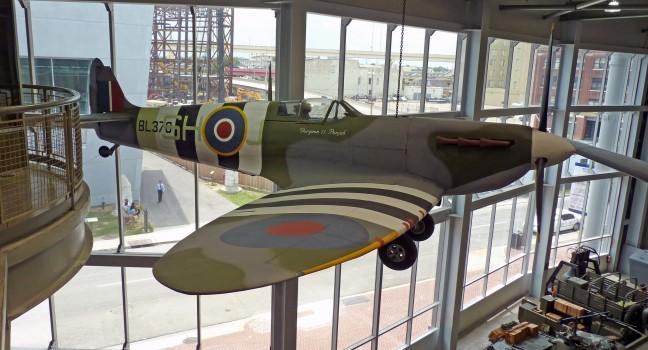
Supermarine Spitfire Mk Vb Fighter at the National World War II Museum, New Orleans
P1060929 by

This vast and still-expanding museum is a moving and well-executed examination of World War II events and its aftermath. Seminal moments are re-created through vintage propaganda from the period, including posters, radio, and film clips; more than 7,500 oral histories of the military personnel involved; a number of short documentary films; and collections of weapons, personal items, and other artifacts from the war. Highlights of the museum include "Final Mission: The USS Tang Experience," which re-creates the experience of being in a submarine, and the 4-D theater experience (across the street from the main exhibits) called "Beyond All Boundaries," produced and narrated by Tom Hanks. Other popular exhibits are the replicas of the Higgins boat troop landing craft, which was invented and manufactured in New Orleans by Andrew Jackson Higgins during WWII, and the U.S. Freedom Pavilion: The Boeing Center, which honors all service branches and includes a restored Boeing B-17. Galleries dedicated to the European and Pacific theaters, as well as the Homefront's role in the war, are among the museum's comprehensive permanent exhibits. The Stage Door Canteen features WWII-era entertainment and an adjoining restaurant serves a "Victory Garden-to-table" menu. Check the website for updates on the museum's ongoing expansion and for current offerings.

945 Magazine St., New Orleans, LA, 70130, USA
504-528–1944
Sight Details
$35; Beyond All Boundaries presentations and showings at Freedom Theater $11 each

Something incorrect in this review?

The Presbytère

French Quarter Fodor's Choice
The Presbytere, historic colonial building in the French Quarter, New Orleans.
(c) Wilsilver77 | Dreamstime.com

One of the twin Spanish colonial buildings flanking the St. Louis Cathedral, this one, on the right, was built on the site of the priests' residence, or presbytère. It served as a courthouse under the Spanish and later under the Americans. It is now a museum showcasing a spectacular collection of Mardi Gras memorabilia. Displays highlight both the little-known and popular traditions associated with New Orleans's most famous festival. "Living with Hurricanes: Katrina and Beyond" is a $7.5-million exhibition exploring the history, science, and powerful human drama of one of nature's most destructive forces. The building's cupola, destroyed by a hurricane in 1915, was restored to match the one atop its twin, the Cabildo. Allow at least an hour to see the exhibits.

New Orleans Jazz Museum

French Quarter Fodor's Choice

Minting began in 1838 in this ambitious Ionic structure, a project of President Andrew Jackson's. The New Orleans mint was to provide currency for the South and the West, which it did until Louisiana seceded from the Union in 1861. Both the short-lived Republic of Louisiana and the Confederacy minted coins here. When Confederate supplies ran out, the building served as a barracks—and then a prison—for Confederate soldiers. The production of U.S. coins recommenced only in 1879; it stopped again, for good, in 1909. After years of neglect, the federal government handed the Old Mint over to Louisiana in 1966. The state now uses the building for exhibitions of the Louisiana State Museum collection, and the New Orleans Jazz National Historical Park has events here too. At the main Barracks Street entrance, which is set back from the surrounding gates and not well marked, notice the one remaining section of the mint's old walls—it'll give you an idea of the extent of the building's deterioration before it was restored. Hurricane Katrina ripped away a large section of the copper roof, and for months the twisted metal remained on the ground here, one of the most dramatic reminders of the storm in the French Quarter. After repairs, the museum reopened to the public in 2007.

The first-floor exhibit recounts the history of the mint. The principal draw, however, is the second floor, dedicated to items from the New Orleans Jazz Collection. At the end of the exhibit, displayed in its own room like the Crown Jewels, you'll find Louis Armstrong's first cornet. The third floor of the building is now a performance space for the Jazz National Historical Park, which has a packed calendar of free performances throughout the week. Check in with the helpful Park Ranger office for details.

The Louisiana Historical Center, which holds the French and Spanish Louisiana archives, is open to researchers by appointment. At the foot of Esplanade Avenue, notice the memorial to the French rebels against early Spanish rule. The rebel leaders were executed on this spot and gave nearby Frenchmen Street its name.

Recommended Fodor's Video

New Orleans Pharmacy Museum

French Quarter Fodor's Choice

To tour this musty shop is to step back into 19th-century medicine—the window display alone, with its enormous leech jar and other antiquated paraphernalia, is fascinating. This building was the apothecary shop and residence of Louis J. Dufilho Jr., America's first licensed pharmacist, in the 1820s. His botanical and herbal gardens are still cultivated in the pretty back courtyard (complete with a postcard-worthy fountain). Watch for free 19th-century seasonal health tips posted in the front window.