94 Best Sights in Oahu, Hawaii

Background Illustration for Sights

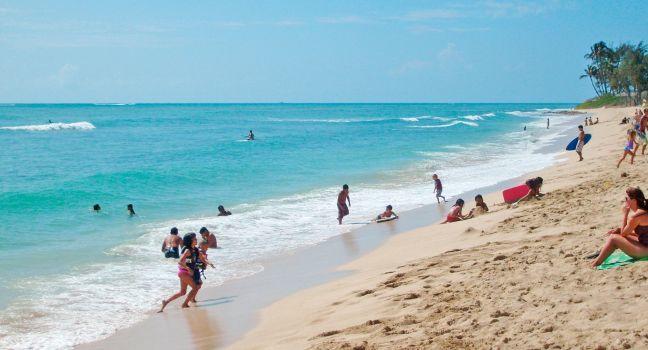
Oahu is one-stop Hawaii—all the allure of the Islands in a plate-lunch mix that has you kayaking around offshore islets by day and sitting in a jazz club 'round midnight, all without ever having to take another flight or repack your suitcase. It offers both the buzz of modern living in jam-packed Honolulu (the state's capital) and the allure of slow-paced island life on its northern and eastern shores. It is, in many ways, the center of the Hawaiian universe.

There are more museums, staffed historic sites, and guided tours here than you'll find on any other island. And only here do a wealth of renovated buildings and well-preserved neighborhoods so clearly spin the story of Hawaii's history. It's the only place to experience Islands-style urbanity, since there are no other true cities in the state. And yet you can get as lost in the rural landscape and be as laid-back as you wish.

Oahu is home to Waikiki, the most famous Hawaiian beach, as well as some of the world's most famous surf on the North Shore, and Hawaii's best-known historical site—Pearl Harbor. If it's isolation, peace, and quiet you want, Oahu might not be for you, but if you'd like a bit of spice with your piece of paradise, this island provides it.

Encompassing 597 square miles, Oahu is the third-largest island in the Hawaiian chain. Scientists believe the island was formed about 4 million years ago by three shield volcanoes: Waianae, Koolau, and the recently discovered Kaena. Recognized in mid-2014, Kaena is the oldest of the three and has long since been submerged 62 miles from Kaena Point on Oahu's northwestern side. Waianae created the mountain range on the western side of the island, whereas Koolau shapes the eastern side. Central Oahu is an elevated plateau bordered by the two mountain ranges, with Pearl Harbor to the south. Several of Oahu's most famous natural landmarks, including Diamond Head and Hanauma Bay, are tuff rings and cinder cones formed during a renewed volcanic stage (roughly 1 million years ago).

The northern and eastern sides of Oahu—and of each Hawaiian island—are together referred to as the Windward side, and generally have a cooler, wetter climate. The island's southern and western sides are commonly called the Leeward side, and are typically warmer and more arid. The island's official flower, the little orange ilima, grows predominantly in the east, but lei throughout the island incorporate ilima. Numerous tropical fish call the reef at Hanauma Bay home, migrating humpback whales can be spotted off the coast past Waikiki and Diamond Head December–April, spinner dolphins pop in and out of the island's bays, and the 15 islets off Oahu's eastern coast provide refuge for endangered seabirds.

Oahu is the most visited Hawaiian island because early tourism to Hawaii started here. It's also the most inhabited island today—69% of the state's population lives on Oahu—due to job opportunities and the island's military bases. Although Kilauea volcano on Hawaii was a tourist attraction in the late 1800s, it was the building of the Moana Hotel on Waikiki Beach in 1901 and subsequent advertising of Hawaii to wealthy San Franciscans that really fueled tourism in the Islands. Oahu was drawing tens of thousands of guests yearly when, on December 7, 1941, Japanese Zeros appeared at dawn to bomb Pearl Harbor. Though tourism understandably dipped during the war (Waikiki Beach was fenced with barbed wire), the subsequent memorial only seemed to attract more visitors, and Oahu remains hugely popular with tourists—especially the Japanese—to this day.

Ala Moana Regional Park

Ala Moana Fodor's choice
A view of Ala Moana from the park-lands point, situated on the island of Oahu, Hawaii.
(c) Dubphoto | Dreamstime.com

A protective reef makes Ala Moana essentially a ½-mile-wide saltwater swimming pool. Very smooth sand and no waves create a haven for families and stand-up paddleboarders. After Waikiki, this is the most popular beach among visitors, and the free parking area can fill up quickly on sunny weekends. On the Waikiki side is a peninsula called Magic Island, with shady trees and paved sidewalks ideal for jogging. Ala Moana Regional Park also has playing fields, tennis courts, and a couple of small ponds for sailing toy boats. The beach is for everyone, but only in the daytime; after dark, it's a high-crime area, with many unhoused people. Amenities: food and drink; lifeguards; parking (free); showers; toilets. Best for: swimming; walking.

Bishop Museum

Kapalama Fodor's choice
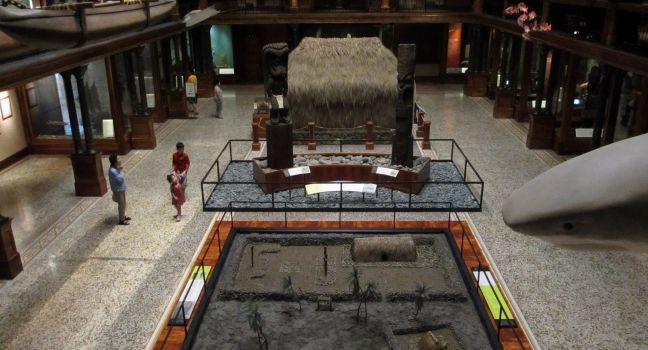
HONOLULU, HI - FEBUARY 25: People explore the Hawaiian Hall Exhibit at the Bishop Musuem taken Febuary 25, 2012 Honolulu, Hawaii.
(c) Brodogg1313 | Dreamstime.com

The state's designated history and culture museum, founded in 1889 by Charles R. Bishop as a memorial to his wife, Princess Bernice Pauahi Bishop, began as a repository for the royal possessions of this last direct descendant of King Kamehameha the Great. Today, its five excellent exhibit halls contain almost 25 million items that tell the history of the Hawaiian Islands and their Pacific neighbors.

Gain understanding of the entire region in the Pacific Hall, and learn about the culture of the Islands through state-of-the-art and often-interactive displays in the Hawaiian Hall. Spectacular artifacts—lustrous feather capes, bone fishhooks, the skeleton of a giant sperm whale, photography and crafts displays, and a well-preserved grass house—are displayed inside a three-story, 19th-century, Victorian-style gallery. The building alone, with its huge turrets and immense stone walls, is worth seeing.

In the 16,500-square-foot science adventure wing, it's hard to miss the three-story simulated volcano where kids (young and young at heart) can make lava burble. A walk through the glowing black light tunnel is another fun feature. Also check out the planetarium, Hawaiian cultural and science demonstrations, special exhibits, and the Shop Pacifica.

Byodo-In Temple

Fodor's choice
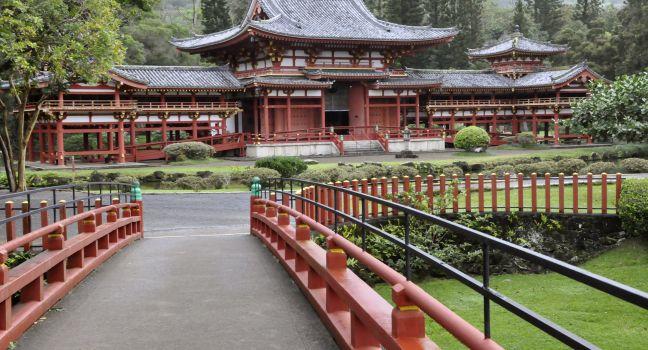
Byodo-In Temple in Oahu, Hawaii; Shutterstock ID 125126825; Project/Title: Photo Database Top 200; Downloader: Jennifer Romains
Ritu Manoj Jethani/Shutterstock

Tucked away in the back of the Valley of the Temples Memorial Park is a replica of the 11th-century temple at Uji in Japan, built in 1963. An impressive 2-ton, carved-wood statue of the Buddha presides inside the main building. Next to the temple are a meditation pavilion and gardens set dramatically against the sheer, green cliffs of the Koolau Mountains. You can ring the 5-foot, 3-ton brass bell for good luck; feed some of the hundreds of koi, ducks, and swans that inhabit the garden's 2-acre pond (buy fish food at the gift shop); and relax and enjoy the peaceful surroundings.

47-200 Kahekili Hwy., Kaneohe, HI, 96744, USA
808-239–8811
Sight Details
$5

Something incorrect in this review?

Recommended Fodor's Video

Diamond Head State Monument

Waikiki Fodor's choice
Rim of Diamondhead Crater, Waikiki Beach and all of Honolulu in the distance from the top of the trail.
(c) Sgoodwin4813 | Dreamstime.com

Panoramas from this 760-foot extinct volcanic peak, which was once used as a military fortification, extend from Waikiki and Honolulu in one direction and out to Koko Head in the other, with surfers and windsurfers scattered like confetti on the cresting waves below. The 360-degree perspective is a great orientation for first-time visitors. On a clear day, look east past Koko Head to glimpse the outlines of the islands of Maui and Molokai.

Reservations to enter this popular park are required in advance for those who are not Hawaii residents, and an entrance and parking fee must be paid via credit card. You can reserve up to 30 days in advance; the last reservation is 4 pm. From Waikiki, take Kalakaua Avenue east, turn left at Monsarrat Avenue, head a mile up the hill, and look for a sign on the right. Drive through the tunnel to the inside of the crater. The ¾-mile trail to the top begins at the parking lot, and the hike up to the crater is steep, with numerous stairs to climb. So if you aren't in the habit of getting occasional exercise, this might not be for you. At the top, you have a somewhat awkward scramble through a dark tunnel and bunker out into the open air, but the view is worth it.

As you walk, note the color of the vegetation: if the mountain is brown, Honolulu has been without significant rain for a while, but if the trees and undergrowth glow green, you'll know it's the wet season (winter) without looking at a calendar. Winter is when rare Hawaiian marsh plants revive on the floor of the crater. Wear closed-toe shoes or sneakers, a hat, and take bottled water with you to stay hydrated under the tropical sun. There are no water stations (or any shade) along the hike. Keep an eye on your watch if you're here at day's end: the gates close promptly at 6 pm.  To beat the heat and the crowds, rise early and make the hike before 8 am.

Hanauma Bay Nature Preserve

Fodor's choice
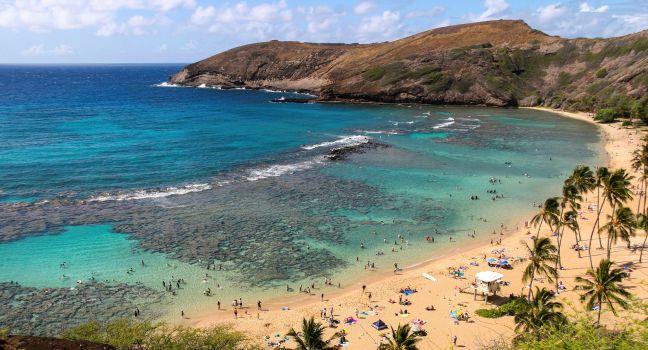
Hanauma Bay in Oahu, Hawaii. Formed in a volcanic crater
TanArt / Shutterstock

Picture this as the world's biggest open-air aquarium: you come to see fish, and fish you'll see. Due to their exposure to thousands of visitors every week, these fish are more like family pets than the skittish marine life you might expect. An old volcanic crater has created a haven from the waves where the coral has thrived. Note that there's a fee for nonresidents to enter the preserve; make reservations and prepay online ahead of time (locals have a morning time period where they can walk in without a reservation). You must also watch a nine-minute video about the nature preserve in its educational center before being allowed down to the bay. Snorkel equipment and lockers are available for rent, and you can walk the short distance from the parking lot or take a tram. It's best to visit early in the morning (around 7), as it's difficult to park later in the day. Need transportation? Take TheBus each way from anywhere on the island. Amenities: food and drink; lifeguards; parking (fee); showers; toilets. Best for: snorkeling; swimming.

7455 Kalanianaole Hwy., Hawaii Kai, HI, 96825, USA
808-768–6861
Sight Details
Nonresidents $25; parking $3 (cash only); snorkel rental $20
Closed Mon. and Tues.

Something incorrect in this review?

Iolani Palace

Downtown Fodor's choice
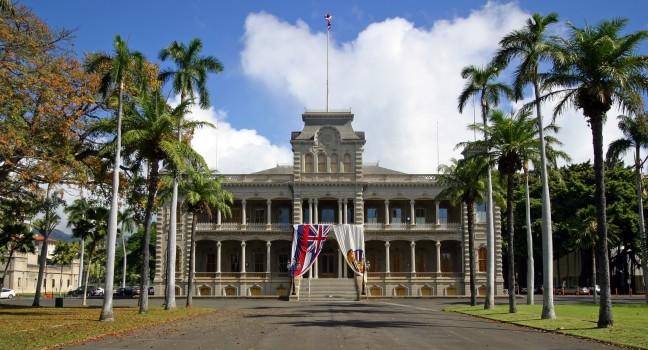
Iolani Palace in Honolulu, Hawaii.  The only royal palace in the United States.
Bryan Busovicki / Shutterstock

America's only official royal residence, on the site of an earlier palace, was completed in 1882 and contains the thrones of King Kalakaua and his successor (and sister) Queen Liliuokalani. Bucking the stereotype of simple island life, the palace had electric lights even before the White House. Downstairs galleries showcase the royal jewelry, as well as a kitchen and offices that have been restored to the glory of the monarchy era. The palace gift shop and ticket office are in what was formerly the Iolani Barracks, built to house the Royal Guard. The palace has self-guided audio tours, docent-led tours, and specialty tours. It's best to make reservations for guided tours a few days in advance.

364 S. King St., Honolulu, HI, 96804, USA
808-522–0832
Sight Details
$33 guided tour, $27 audio tour
Closed Sun. and Mon. (except for monthly Kamaaina Sun.)

Something incorrect in this review?

Kailua Beach Park

Fodor's choice
KAILUA, HAWAII - AUGUST 26: tourists and locals in tropical Kailua Beach, on August 26, 2013 in Kailua, Oahu, Hawaii. Kailua is one of the most popular tourist destinations in Oahu.
Eddygaleotti | Dreamstime.com

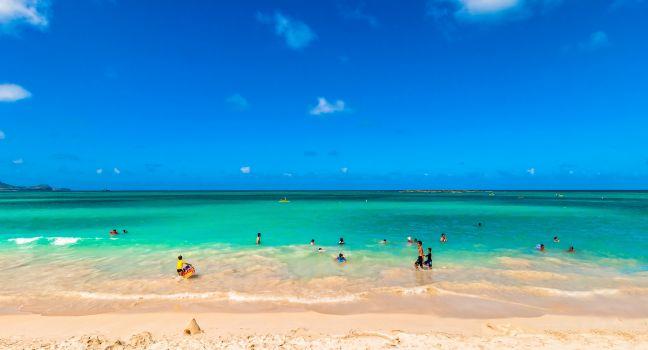
A cobalt-blue sea and a wide, continuous arc of powdery sand make this one of the island's best beaches, as illustrated by the crowds of local families who spend their weekend days here. The water is calm, a line of palms and ironwoods provides shade on the sand, and a huge park has picnic pavilions where you can escape the heat. This is also the "it" spot for windsurfing or kiteboarding, and you can rent kayaks nearby at Kailua Beach Adventures ( 130 Kailua Rd.) for day trips to the Mokulua Islands. Amenities: lifeguards; parking (no fee); showers; toilets; water sports. Best for: swimming; walking; windsurfing.

Pearl Harbor Visitor Center

Fodor's choice

Sandy Beach Park

Fodor's choice
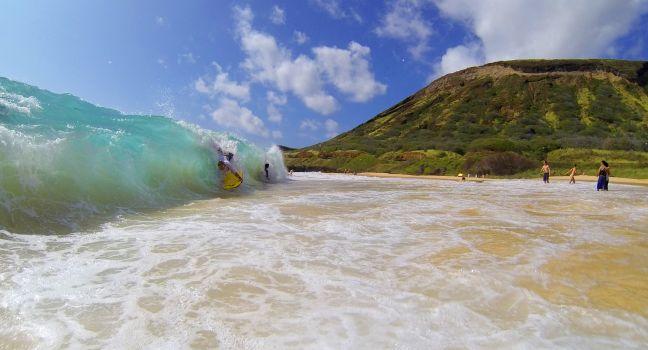
Body boarding waves at Sandy Beach Hawaii.
(c) Phillipgray | Dreamstime.com

Very popular with locals, this broad, sloping beach is covered with sunbathers who come to soak up the rays and watch "The Show"—a shore break that's like no other in the Islands. Monster ocean swells rolling into the beach combined with the sudden rise in the ocean floor cause waves to jack up and crash magnificently. Expert surfers and bodyboarders young and old brave the dangers to enjoy some of the biggest barrels around.  Use extreme caution when swimming here. The stretch is nicknamed Break-Neck Beach for a reason: many neck and back injuries are sustained here each year. Amenities: lifeguards; parking (no fee); showers; toilets. Best for: walking.

7850 Kalanianaole Hwy., Hawaii Kai, HI, 96825, USA

Something incorrect in this review?

Waimea Bay Beach Park

Fodor's choice
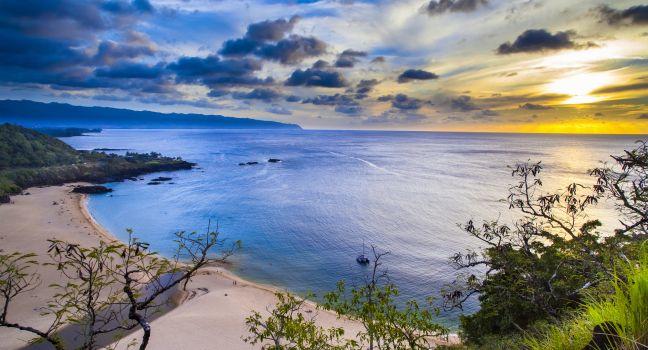
Sunset from above Waimea Bay on Oahu, Hawaii's North Shore.
Shane Myers Photography / Shutterstock

Made popular in that old Beach Boys song "Surfin' U.S.A.," this is a slice of big-wave (25 to 30 feet) heaven in winter. Summer is the time to swim and snorkel in the calm waters, and the beach is good for families then. The shore break is great for novice bodysurfers. Due to the beach's popularity, its postage-stamp parking lot is often full, but it's also possible to park along the side of the road and walk in. Amenities: lifeguards; parking (no fee); showers; toilets. Best for: snorkeling; surfing; swimming.

61-31 Kamehameha Hwy., Pupukea, HI, 96712, USA

Something incorrect in this review?

Waimea Valley

Fodor's choice
Waimea Falls, Waimea Valley, Oahu, Hawaii
(c) Kraskoff | Dreamstime.com

Waimea gets lots of press for the giant winter waves in the bay, but the valley itself is a newsmaker and an ecological treasure, with a local nonprofit working to conserve and restore its natural habitat. Follow the Kamananui Stream up the valley through the 1,875 acres of gardens. The botanical collections here have more than 5,000 species of tropical flora, including a superb gathering of native Hawaiian and international plants. It's the best place on the island to see native species, such as the endangered Hawaiian moorhen. You can visit the restored Hale o Lono heiau (shrine) and other ancient archaeological sites as well; evidence suggests that the area was an important spiritual center. Daily activities include botanical walking tours and cultural tours. This is also the venue for the Haleiwa Farmers' Market every Thursday from 2 to 6. At the back of the valley (a ¾-mile walk one-way), Waihi Falls plunges 45 feet into a swimming pond. Bring your board shorts—a swim is the perfect way to end your hike, although the pond can get crowded. Bring mosquito repellent, too; it can get buggy.

White Plains Beach

Fodor's choice
White Plains beach
S6300128 by b b

Concealed from the public eye for many years as part of the former Barbers Point Naval Air Station, this beach is reminiscent of Waikiki but without the condos and the crowds. It is a long, sloping stretch with numerous surf breaks, but the beach is also mild enough at the shore for older children to play freely. It has views of Pearl Harbor and, over that, Diamond Head. Although the sand lives up to its name, the real impact of this beach comes from its history as part of a military property for the better part of a century. Expansive parking, great restroom facilities, and numerous tree-covered barbecue areas make it a great day-trip spot. As a bonus, a Hawaiian monk seal takes up residence here several months out of the year (seals are rare in the Islands). Amenities: lifeguards; parking (no fee); showers; toilets. Best for: surfing; swimming.

Essex Rd. and Tripoli Rd., Kapolei, HI, 96707, USA

Something incorrect in this review?

Fort DeRussy Beach Park

Waikiki Fodor's choice

A wide, soft, ultra-white shore with gently lapping waves makes this fine beach a family favorite for running-jumping-frolicking fun. Other bonuses include the shaded, grassy grilling area, pickleball courts, and many aquatic rental options. The beach fronts the Hale Koa Hotel as well as Fort DeRussy. Amenities: food and drink; lifeguards; showers; toilets; water sports. Best for: swimming; walking.

Haleiwa Alii Beach Park

Fodor's choice

The winter waves are impressive here, but in summer, the ocean is like a lake, ideal for family swimming. The beach itself is big and tends to be full of locals. Its broad lawn off the highway is often the site of volleyball and Frisbee games, family barbecues, and art festivals and carnivals. Surf contests for amateurs and professionals regularly take place here. Amenities: lifeguards; parking (no fee); showers; toilets. Best for: surfing; swimming.

66-167 Haleiwa Rd., Haleiwa, HI, 96712, USA

Something incorrect in this review?

Halona Blowhole

Fodor's choice

Below a scenic turnout along the Koko Head shoreline, this oft-photographed lava tube sucks the ocean in and spits it out. Don't get too close, as conditions can get dangerous. Look to your right to see the tiny beach below that was used to film the wave-washed love scene in From Here to Eternity. In winter, this is a good spot to watch whales at play. Offshore, the island of Molokai calls like a distant siren, and, every once in a while, Lanai is visible in blue silhouette. Take your valuables with you, and lock your car, because this popular scenic location is a hot spot for petty thieves.

Kalanianaole Hwy., Hawaii Kai, HI, 96825, USA

Something incorrect in this review?

Honolulu Museum of Art

Downtown Fodor's choice

The museum holds an impressive permanent collection that includes the third-largest assembly of Hiroshige's ukiyo-e Japanese prints in the country (donated by author James Michener); Italian Renaissance paintings; American and European art by Monet, Van Gogh, and Whistler, among many others; and a newer gallery of Hawaiian art. Originally built around the collection of a Honolulu matron who donated much of her estate to the museum, it is housed in a maze of courtyards, cloistered walkways, and quiet, low-ceiling spaces. The newer Luce Pavilion complex, nicely incorporated into the more traditional architecture of the museum, has a traveling-exhibit gallery, an excellent café, and a gift shop. The Doris Duke Theatre screens art films. This is also the jumping-off point for tours of Doris Duke's striking estate, which is now the Shangri La Museum of Islamic Art, Culture, and Design. If you wish to visit Shangri La, you should reserve tickets well in advance.

900 S. Beretania St., Honolulu, HI, 96814, USA
808-532–8700
Sight Details
$20
Closed Mon.–Wed.

Something incorrect in this review?

Hoomaluhia Botanical Garden

Fodor's choice

The name, which means "a peaceful refuge," describes the serenity and feeling of endless space you find in this verdant garden framed by the stunning Koolau Range. Its 400 acres contain specimens from such tropical areas as the Americas, Africa, Melanesia, the Philippines, and Hawaii. Not just for the botanist, Hoomaluhia has a 32-acre lake, easy walking trails, and open lawns ideal for picnicking and camping by permit. Families can also take advantage of the park's catch-and-release tilapia fishing program; free bamboo fishing poles are sometimes available for borrowing at the visitor center. If you see unusually dressed-up visitors, they are likely selfie seekers doing it for the 'gram. Hoomaluhia is very photogenic; just make sure you're not blocking the roadways in search of the perfect shot.

Ko Hana Distillers

Fodor's choice

Polynesians brought sugarcane to Hawaii more than 1,000 years ago, long before plantations were established on the Islands in the 1800s. Ko Hana grows 34 varieties of heirloom sugarcane and harvests it all by hand, then presses and distills the juice to make small-batch pure-cane rums. Stop by the tasting room at the farm in rural Kunia near Wahiawa, in the heart of the central valley, for tastings. Standout rums include Koho, a barrel-aged rum, and Kokoleka, made with pure cacao and raw honey. Sign up in advance for tours, which happen daily every hour until 4 pm and include a side-by-side tasting of white and barrel-aged rums. For a more in-depth experience, reserve a spot on a farm tour (Thursday morning at 10) and sample canes as well as rums.

92-1770 Kunia Rd., Kunia, HI, 96759, USA
808-649–0830
Sight Details
Tasting $10, tour and tasting $25, farm tour $45

Something incorrect in this review?

Ko Olina Beach

Fodor's choice

This is the best spot on the island if you have small kids. The resort area commissioned a series of four man-made lagoons, but, as it has to provide public beach access, you are the winner. Huge rock walls protect the lagoons, making them perfect spots for the kids to get their first taste of the ocean without getting bowled over. The large expanses of seashore grass and hala trees that surround the semicircle beaches are made-to-order for nap time. A 1½-mile jogging track connects the lagoons. Due to its appeal for keiki (children), Ko Olina is popular, and the parking lot fills up quickly when school is out and on weekends. Try to get here before 10 am; the biggest parking lot is at the farthest lagoon from the entrance. There are actually four resorts here: Aulani (the Disney resort), Four Seasons Resort Oahu, Marriot's Ko Olina Beach Club (which has a time-share section as well), and Beach Villas at Ko Olina (condominiums with private vacation rentals). The area is 23 miles west of Honolulu. Amenities: food and drink; parking (no fee); showers; toilets. Best for: sunset; swimming; walking.

Kualoa Ranch

Fodor's choice

Encompassing 4,000 acres, this working ranch about 45 minutes by car from Waikiki offers a wide range of activities—from ATV and horseback tours to zip-lining or expeditions into the valley on an electric bike. The mountains that serve as the backdrop here may seem familiar: the ranch has served as the set for movies such as Jurassic Park and Windtalkers, as well as TV shows like Magnum P.I. and Lost (and you can take a film locations tour). From the grounds, you'll have a wonderful view of the ocean and Mokolii (Chinaman's Hat). You can drop by the visitor center anytime, but it's best to book activities and tours two or three days in advance.

49-560 Kamehameha Hwy., Kaaawa, HI, 96730, USA
808-237–7321
Sight Details
Tours and activities from $52

Something incorrect in this review?

Kualoa Regional Park

Fodor's choice

Grassy expanses border a long, narrow stretch of sand with spectacular views of Kaneohe Bay and the Koolau Mountains, making Kualoa one of the island's most beautiful picnic, camping, and beach areas. Dominating the view is an islet called Mokolii, also known as Chinaman's Hat, which rises 206 feet above the water. You can swim in the shallow areas of this rarely crowded beach year-round. The one drawback is that it's usually windy here, but the wide-open spaces are ideal for kite flying. Amenities: lifeguards; showers; toilets. Best for: solitude; swimming.

49-479 Kamehameha Hwy., Kaaawa, HI, 96744, USA

Something incorrect in this review?

The LineUp at Wai Kai

Fodor's choice

An all-in-one, surf-themed recreation complex at Hoakalei Resort (a master-planned community) on the Ewa Beach waterfront, the LineUp celebrates Hawaii’s connection with water, surf, and cultural traditions. It centers around the Wai Kai Wave, a 100-foot wave pool that emulates river surfing, and there's also a 52-acre lagoon for paddling or floating. Wai Kai doesn’t have a hotel yet, but it serves as a popular community hub, with three restaurants and numerous programs and activities, such as farmers markets, surfing classes, and performances. It’s just a 10-minute drive from Kapolei and worth the drive to check out the complex. You can ride a shuttle to Wai Kai from West Oahu (Ko Olina, $35 round-trip) or Waikiki (from various resorts, $35 round-trip).

91-1621 Keoneula Blvd., Ewa Beach, HI, 96706, USA
808-515–7873
Sight Details
$50 for 4 hours at the Lagoon; from $60 for the Wave; $125 for Learn to Surf

Something incorrect in this review?

Makapuu Point Lighthouse Trail

Fodor's choice

This trail has breathtaking views of the ocean, mountains, and the windward Islands. The point of land jutting out in the distance is Mokapuu Peninsula, site of a U.S. Marine base. The spired mountain peak is Mt. Olomana. On the long pier is part of the Makai Undersea Test Range, a research facility that's closed to the public. Offshore is Manana Island (Rabbit Island), a picturesque cay said to resemble a swimming bunny with its ears pulled back. Ironically enough, Manana Island was once overrun with rabbits, thanks to a rancher who let a few hares run wild on the land. They were eradicated in 1994 by biologists who grew concerned that the rabbits were destroying the island's native plants.

Nestled in the cliff face is the Makapuu Lighthouse, which became operational in 1909 and has the largest lighthouse lens in the United States. The lighthouse is closed to the public, but near the Makapuu Point turnout is the start of a paved mile-long road (it's closed to vehicular traffic). Hike to the top of the 647-foot bluff to get a closer view of the lighthouse and, in winter, to do some whale-watching.  Park in the free parking lot for the trail (it's busiest on the weekends), but don't attempt to continue driving to the gates for the military base since civilian vehicles are not allowed.

Nuuanu Pali State Wayside

Fodor's choice

This panoramic perch looks out to expansive views of Windward Oahu—from Kaneohe Bay to a small island off the coast called Mokolii ("little lizard," also known as Chinaman's Hat). It was in this region that King Kamehameha I drove defending forces over the edges of the 1,200-foot-high cliffs, thus winning the decisive battle for control of the island in 1795. Temperatures at the summit are several degrees cooler than in warm Waikiki, so bring a jacket along. Hang on tight to any loose possessions, and consider wearing pants; it gets extremely windy at the lookout, which is part of the fun. After arriving in the pay-to-park lot, remove valuables from your car and lock it. Break-ins have occurred here; this wayside is in the most trafficked state park in Hawaii.

Pearl Harbor National Memorial

Fodor's choice

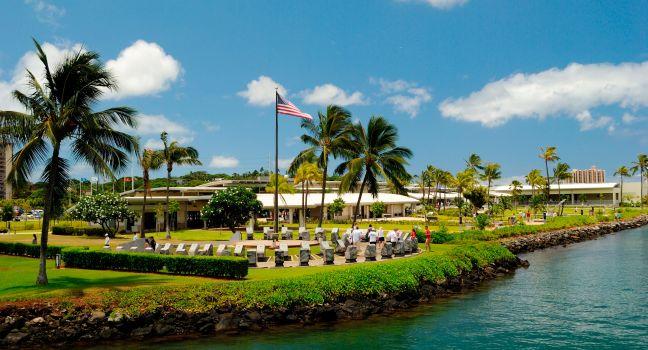
Pearl Harbor is still a working military base as well as Oahu’s most visited attraction, consisting of five distinct destinations. Managed by the National Park Service, the Pearl Harbor Visitor Center and USS Arizona Memorial make up the national memorial, where exhibits tell the story not only of the devastating Japanese attack on Pearl Harbor on December 7, 1941, but also of the wartime internment of Japanese Americans, World War II battles in the Aleutian Islands, and the occupation of Japan after the war. The history continues at three privately operated sights: the Pacific Fleet Submarine Museum (whose centerpiece is the USS Bowfin), the Battleship Missouri Memorial, and the Pearl Harbor Aviation Museum.

A valid government-issued photo ID is required to enter the base. You can walk to the visitor center or the submarine museum from the parking lot, but access to the USS Arizona requires a ferry ride (and ticket reservations via  www.recreation.gov), and access to other sites, including the USS Missouri and the aviation museum, requires a shuttle bus trip. Advance reservations are required to access USS Arizona Memorial. There are no same-day tickets except rare standby spots.

No bags of any kind except clear stadium ones—not even small purses—are allowed at any of the sights, though cameras, cell phones, and wallets can be hand-carried. A bag check is available. Children under four can visit the submarine museum, but for safety reasons, they are not allowed on the USS Bowfin itself.

1 Arizona Memorial Pl., Pearl Harbor, HI, USA
808-422–3399-timed ticket reservations
Sight Details
Visitor center and USS Arizona Memorial free (aside from $1 ticket reservation fee); fees for other sites; parking $7

Something incorrect in this review?

Pupukea Beach Park

Fodor's choice

Surrounded by shade trees, Pupukea Beach is pounded by surf in the winter months but offers great diving and snorkeling in summer (March through October). Its cavernous lava tubes and tunnels are great for both novice and experienced snorkelers and divers, though you must wear reef shoes at all times since there are a lot of sharp rocks. Sharp rocks also mean that this beach isn't the best for little ones. Some dive-tour companies offer round-trip transportation from Waikiki. Equipment rentals and dining options are nearby. Amenities: parking (no fee); showers; toilets. Best for: diving; snorkeling; swimming.

59-729 Kamehameha Hwy., Pupukea, HI, 96712, USA

Something incorrect in this review?

Shangri La Museum of Islamic Art, Culture & Design

Downtown Fodor's choice

In 1936, heiress Doris Duke bought 5 acres at Black Point, down the coast from Waikiki, and began to build and furnish the first home that would be all her own. She called it Shangri La. For more than 50 years, the home was a work in progress as Duke traveled the world, buying art and furnishings, picking up ideas for her Mughal Garden, for the Playhouse in the style of a 17th-century Irani pavilion, and for the water terraces and tropical gardens. When she died in 1993, Duke left instructions that her home was to become a public center for the study of Islamic art.

Outside of minor conservation-oriented changes and 2017 renovations to the courtyard and pool, the house and gardens have remained much as Duke left them. To walk through them is to experience the personal style of someone who saw everything as raw material for her art. With her trusted houseman, Jin de Silva, she helped build the elaborate Turkish Room, trimming tiles and painting panels to retrofit the existing space (including raising the ceiling and lowering the floor) and building a fountain of her own design.

Among many aspects of the home inspired by the Muslim tradition is the entry: an anonymous gate, a blank white wall, and a wooden door that bids you, "Enter herein in peace and security" in Arabic script. Inside, tiles glow, fountains tinkle, and shafts of light illuminate artwork through arches and high windows. In 2014, after years of renovation, Duke's bedroom (the Mughal Suite) opened to the public. This was her private world, entered only by trusted friends. The house is open only via the guided tours that depart from downtown's Honolulu Museum of Art. Tours take about 2½ hours including transit time, and reservations are required. Book your spot as early as possible, and note that children under eight are not permitted.

900 S. Beretania St., Honolulu, HI, USA
808-532–3853-for Honolulu Museum of Art
Sight Details
$25
Closed Sun.–Wed.
$5 parking at Honolulu Museum of Art

Something incorrect in this review?

Sunset Beach Park

Fodor's choice

The beach is broad, the sand is soft, the summer waves are gentle—making for good snorkeling—and the winter surf is crashing. Many love searching this shore for the puka shells that adorn the necklaces you see everywhere. Amenities: lifeguards; parking (no fee); showers; toilets. Best for: snorkeling; sunset; surfing.

59-144 Kamehameha Hwy., Pupukea, HI, 96712, USA

Something incorrect in this review?

USS Arizona Memorial

Fodor's choice

Lined up tight in a row of seven battleships off Ford Island, the USS Arizona took a direct hit on December 7, 1941, exploded, and rests still on the shallow bottom where she settled. You must reserve tickets ( www.recreation.gov) ahead of time to ensure access to the memorial; same-day tickets are no longer offered. As spaces are limited and tend to fill up, reserve as far ahead as possible; you can do so up to two months in advance. When your tour starts, you watch a short documentary film, then board the ferry to the memorial.

The swooping, stark-white structure, which straddles the wreck of the USS Arizona, was designed by Honolulu architect Alfred Preis to represent both the depths of the low-spirited, early days of the war and the uplift of victory. A somber, contemplative mood descends upon visitors during the ferry ride; this is a place where 1,177 people died. Gaze at the names of the dead carved into the wall of white marble. Look at oil on the water's surface, still slowly escaping from the sunken ship. Scatter flowers (but no lei—the string is bad for the fish). Salute the flag. Remember Pearl Harbor.

Pearl Harbor, HI, 96818, USA
808-422–3399
Sight Details
Free (advance reservation fee for timed-entry tickets $1); audio tours and other features cost extra

Something incorrect in this review?

Waimanalo Bay Beach Park

Fodor's choice

One of the most beautiful beaches on Oahu, Waimanalo is a local pick, busy with picnicking families and active sports fields. Expect a wide stretch of sand; turquoise, emerald, and deep-blue water; and gentle shore-breaking waves that are fun for all ages. Theft is an occasional problem, so lock your car. Amenities: lifeguards; parking (no fee); showers; toilets. Best for: sunrise; swimming; walking.

41-849 Kalanianaole Hwy., Waimanalo, HI, 96795, USA

Something incorrect in this review?