66 Best Sights in Big Island, Hawaii

Background Illustration for Sights

Nicknamed "The Big Island," Hawaii Island is a microcosm of Hawaii the state. From long white-sand beaches and crystal-clear bays to rain forests, waterfalls, valleys, exotic flowers, and birds, all things quintessentially Hawaii are well represented here.

An assortment of happy surprises also distinguishes the Big Island from the rest of Hawaii—an active volcano (Kilauea) oozing red lava and creating new earth every day, the clearest place in the world to view stars in the night sky (Maunakea), and some seriously good coffee from the famous Kona district, and also from neighboring Kau.

Home to eight of the world’s 13 sub-climate zones, this is the land of fire (thanks to active Kilauea volcano) and ice (compliments of not-so-active Maunakea, topped with snow and expensive telescopes). At just under a million years old, Hawaii is the youngest of the main Hawaiian Islands. Three of its five volcanoes are considered active: Mauna Loa, Hualalai, and Kilauea. The Southeast Rift Zone of Kilauea has been spewing lava regularly since January 3, 1983; another eruption began at Kilauea's summit caldera in March 2008, the first since 1982. Back in 1984, Mauna Loa's eruptions crept almost to Hilo, and it could fire up again any minute—or not for years. Hualalai last erupted in 1801, and geologists say it will definitely do so again within 100 years. Maunakea is currently considered dormant but may very well erupt again. Kohala, which last erupted some 120,000 years ago, is inactive, but on volatile Hawaii Island, you can never be sure.

Anaehoomalu Bay

Fodor's Choice
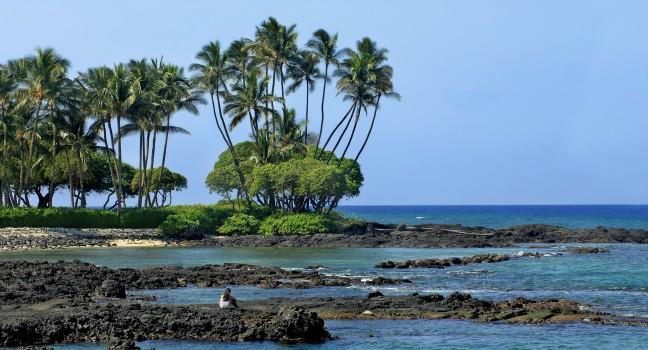
Young woman sits on the lava rocks of Anaehoomalu Bay on the Kohala Coast of the Big Island of Hawaii.  She is watching a green sea turtle that is basking in the sunlight and resting.
Bonita R. Cheshier / Shutterstock

This gorgeous, expansive stretch of white sand, fringed with coconut palms, fronts the Waikoloa Beach Marriott and is a perfect spot for swimming, windsurfing, snorkeling, and diving. Unlike some Kohala Coast beaches near hotel properties, this one is very accessible to the public and offers plenty of free parking. The bay is well protected, so even when the surf is rough or the trade winds are blasting, it's fairly calm here. (Mornings are calmest.) Snorkel gear, kayaks, and body boards are available for rent at the north end.

 Locals will appreciate your efforts to use the proper name (pronounced ā'-nāe-ho'o-mā'lu) rather than simply its nickname, "A-Bay."

Behind the beach are two ancient Hawaiian fishponds, Kuualii and Kahapapa, that once served ancient Hawaiian royalty. A walking trail follows the coastline to the Hilton Waikoloa Village next door, passing by tide pools, ponds, and a turtle sanctuary where sea turtles can often be spotted sunbathing on the sand. Footwear is recommended for the trail. Amenities: food and drink; parking (no fee); showers; toilets; water sports. Best for: snorkeling; sunset; swimming; walking.
69-275 Waikoloa Beach Dr., Waikoloa, HI, 96738, USA
Sight Details
Free

Something incorrect in this review?

Kaunaoa Beach

Fodor's Choice
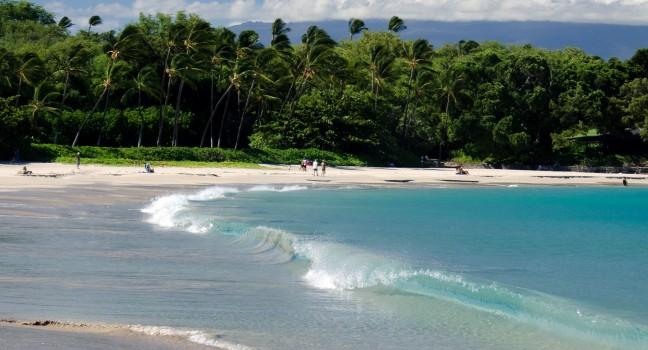
Short surf wave at Mauna Kea beach, Big Island, Hawaii.
(c) Dmitriko | Dreamstime.com

Hands down one of the most beautiful beaches on the island, if not the whole state, Kaunaoa features a short crescent of pure white sand framed by coconut palms. The beach, which fronts the Mauna Kea Beach Hotel, slopes very gradually, and there's great snorkeling along the rocks. Classic Hawaii postcard views abound, especially in winter, when snow tops Maunakea to the east. When conditions permit, waves are good for body and board surfing also. Currents can be strong in winter, so be careful. Get a cocktail at the beach cabana and enjoy the sunset. Public parking is limited to a few spaces, so arrive before 10 am or after 4 pm. If the lot is full, head to nearby Hapuna Beach, where there's a huge parking lot ($10 per vehicle). Try this spot again another day—it's worth it!Amenities: parking (no fee); showers; toilets; water sports. Best for: snorkeling; sunset; swimming; walking.
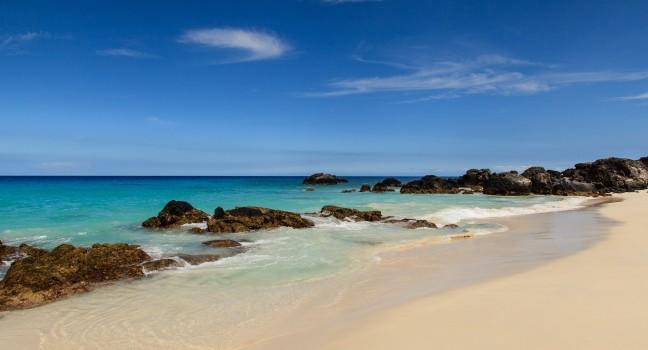
62-100 Mauna Kea Beach Dr., Mauna Kea, HI, 96743, USA
Sight Details
Free

Something incorrect in this review?

Kealakekua Bay State Historical Park

Fodor's Choice
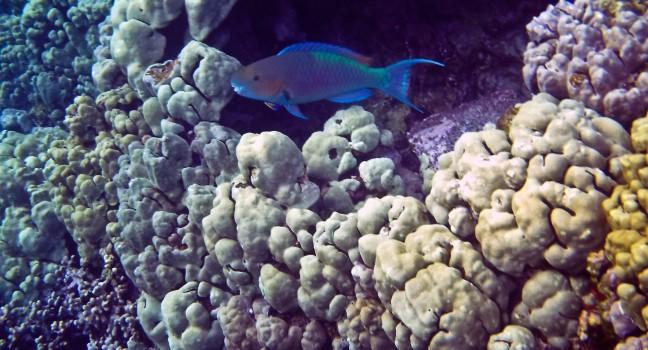
A parrotfish navigates the coral in Hawaii's Kealakekua Bay.
(c) Cecoffman | Dreamstime.com

One of the most beautiful spots in the state, this underwater marine reserve has dramatic cliffs that surround super deep, crystal clear, turquoise water chock-full of stunning coral pinnacles and tropical fish. The federally protected dolphins that frequent the sanctuary should not be disturbed, as they use the bay to sleep and escape predators. There's very little sand at west-facing Napoopoo Beach, but this is a nice place to enter the water and swim (when the water is calm) as it's well protected from currents. There are no lifeguards, but there are bathrooms, a pavilion, shower, and limited parking. The Captain James Cook Monument, marking where the explorer died, is at the northern edge of the bay. Stay at least 300 feet from the shoreline along the cliffs, which have become unstable during recent earthquakes. A limited number of tour operators offer snorkeling and kayaking tours nearby.

Recommended Fodor's Video

Kekaha Kai State Park -- Mahaiula Side

Fodor's Choice
Kekaha Kai State Park.
SYLVIO MICHEL / Shutterstock

It's slow going down a 1.8-mile, bumpy but partially paved road off Highway 19 to this beach park, but the lovely beaches are worth it when you reach the end. Very low-profile rentals may have some trouble making the drive. This state park encompasses three beaches: from south to north, Mahaiula, Makalawena, and Kua Bay, which has its own entrance. Mahaiula and Makalawena are classically beautiful expanses of white sand with dunes. Makalawena has great swimming and body boarding. ( Makalawena, sandwiched between the two state parks, is private property and falls under the jurisdiction of Kamehameha Schools Bishop Estates.) Watch out for rough surf and strong currents, especially in winter. From Makalawena, a 4½-mile trail leads to Kua Bay. If you're game, work your way on foot to the top of Puu Kuili, a 342-foot-high cinder cone with a fantastic coastline view. But be prepared for the heat and bring water, as there are no services of any kind in the park. Gates at the highway entrance close promptly at 7, so you must leave the lot by about 6:30. Amenities: toilets. Best for: swimming.

Mokuaikaua Church

Fodor's Choice
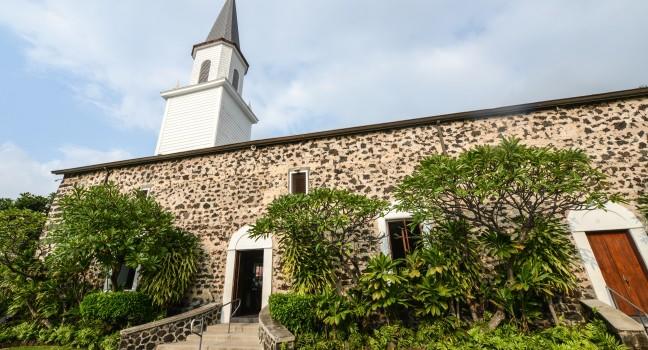
Mokuaikaua Church in Kona is the oldest Christian church in the Hawaiian Islands.
(c) Demerzel21 | Dreamstime.com

Site of the first Christian church in the Hawaiian Islands, this solid lava-rock structure, completed in 1837, is mortared with burned lime, coral, and kukui (candlenut) oil and topped by an impressive 112-foot steeple. The ceiling and interior were crafted of timbers harvested from a forest on Hualalai and are held together with wooden pegs, not nails. Inside, behind a panel of gleaming koa wood, rests a model of the brig Thaddeus as well as a koa-wood table crafted by Henry Boshard, pastor for 43 years. The sanctuary is still undergoing renovations, but if you attend Sunday services, they are glad to give you a tour.

Panaewa Rainforest Zoo and Gardens

Fodor's Choice
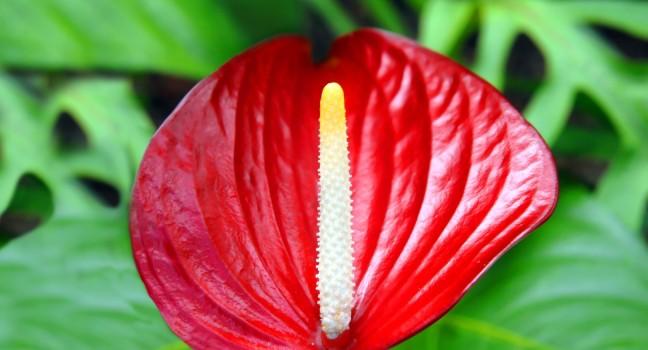
Vivid red, waxy leaves, and tall erect white and yellow spadex, this Anthurium thrives in the shade of ferns on the Big Island of Hawaii at the Panaewa Rain Forest Zoo.
(c) Bonniemarie | Dreamstime.com

Billed as "the only natural tropical rain forest zoo in the United States," this 12-acre county zoo features native Hawaiian species such as the nene goose and the io (hawk), as well as many other rare birds such as the highly endangered Hawaiian crow, or alala. Two Bengal tigers are also part of the collection. The white-faced whistling tree ducks are a highlight, along with monkeys, sloths, and lemurs. There's also a petting zoo on Saturdays from 1:30 to 2:30. Myriad species of lush, unusual tropical plants fill the grounds. To get here, turn left on Mamaki off Highway 11; it's just past the "Kulani 19, Stainback Hwy." sign.

800 Stainback Hwy., Hilo, HI, 96749, USA
808-959–7224
Sight Details
Free, donations encouraged

Something incorrect in this review?

Punaluu Black Sand Beach Park

Fodor's Choice
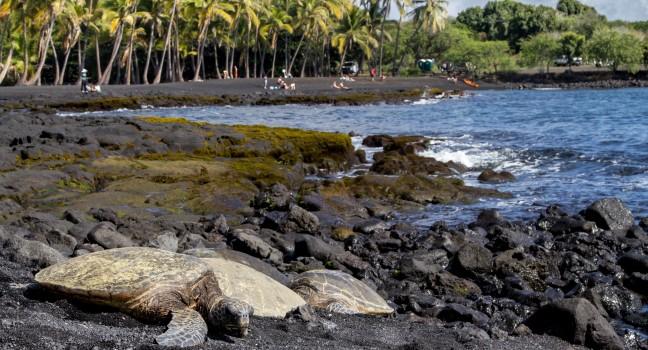
Turtles on Black Sand Beach on the Big Island in Hawaii.
David Lousick / Shutterstock

A must-do on a south-southeast-bound trip to the volcano, this easily accessible black-sand beach is backed by low dunes, brackish ponds, and tall coco palms. The shoreline is jagged, reefed, and rocky. Most days, large groups of sea turtles nap on the sand—a stunning sight. Resist the urge to get too close or disturb them; they're protected by federal and state law, and fines for harassment can be hefty. Removing black sand is also prohibited.  Extremely strong rip currents prevail, so only experienced ocean swimmers should consider getting in the water here. A popular stop for locals and tour buses alike, this beach park can get busy; the north parking lot is usually quieter. Shade from palm trees provides an escape from the sun, and at the northern end of the beach lie the ruins of Kaneeleele Heiau, an old Hawaiian temple. Amenities: parking (no fee); showers; toilets. Best for: walking.

Hwy. 11, HI, 96772, USA
808-961–8311
Sight Details
Free

Something incorrect in this review?

Puukohola Heiau National Historic Site

Fodor's Choice
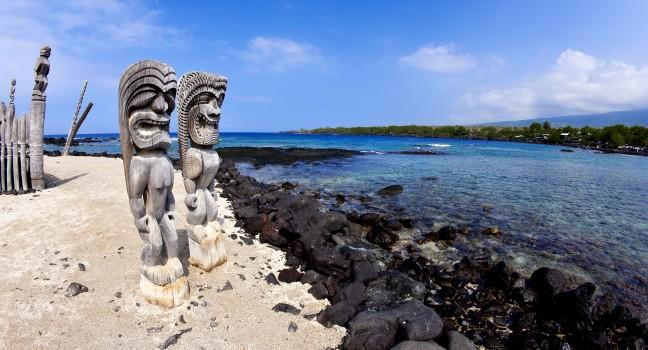
The Ki’i guard the Temple of Hale o Keawe at Place of Refuge in Kona Hawaii.
Ocean Image Photography / Shutterstock

Quite simply, this is one of the most historic and commanding sites in all of Hawaii: here, in 1810, on top of Puukohola (Hill of the Whale), Kamehameha the Great built the war heiau, or temple, that would serve to unify the Hawaiian Islands, ending 500 years of warring chiefdoms. The oceanfront, fortresslike site is foreboding and impressive. A paved ½-mile looped trail runs from the visitor center to the main temple sites. An even older temple, dedicated to the shark gods, lies submerged just offshore, where sharks can be spotted swimming, usually first thing in the morning. A museum displays ancient Hawaiian weapons, including clubs, spears, a replica of a bronze cannon that warriors dragged into battle on a Hawaiian sled, and three original paintings by artist Herb Kane. This underrated park is often very uncrowded. Rangers are available to answer questions, or you can take a free audio tour on your smartphone. Plan about an hour to see everything.

Greenwell Farms

Fodor's Choice

Depending on the season, the 20-minute walking tour of this working farm takes in various stages of coffee production, including a look at the 100-year-old coffee trees. The Greenwell family played a significant role in the cultivation of the first commercial coffee in the Kona area (as well as the first grocery store). No reservations are required, unless you are booking for a private party, which does have a cost. You can also book a master brewing class.

Kaloko–Honokohau National Historical Park

Fodor's Choice

The trails at this sheltered 1,160-acre coastal park near Honokohau Harbor, just north of Kailua-Kona, are popular with walkers and hikers, and the park is a good place to observe Hawaiian archaeological history and intact ruins. These include a heiau (temple), house platforms, ancient fishponds, and numerous petroglyphs along a boardwalk. The park's wetlands provide refuge to waterbirds such as the endemic Hawaiian stilt and coot. Two beaches here are good for swimming, sunbathing, and sea turtle spotting: Aiopio, a few yards north of the harbor, is small and calm, with protected swimming areas (good for kids); Honokohau Beach, also north of the harbor, is a ¾-mile stretch with ruins of ancient fishponds. Of the park's three entrances, the middle one leads to a visitor center with helpful rangers and lots of information. Local docents with backgrounds in geology or other subjects give nature walks. To go directly to the beaches, take the harbor road north of the Gentry retail center, park in the gravel lot, and follow the signs.

Kalopa State Recreation Area

Fodor's Choice

Northwest of the old plantation town of Paauilo, at a cool elevation of 2,000 feet, lies this sweet 100-acre state park with a lush forested area with picnic tables and restrooms. There's an easy 0.7-mile loop trail with additional paths in the adjacent forest reserve. Small signs identify some of the plants, including the Gothic-looking native ohia and the rare loulu palm. It's chilly and damp here, making it a good escape from the heat at sea level. Three campground areas with full-service kitchens, as well as four cabins, can be reserved online.

Kamakahonu Beach

Fodor's Choice

This beach is where King Kamehameha spent his final days—the replica of the Ahuena Heiau sits on a platform across from the sand. Adjacent to Kailua Pier, the scenic crescent of white sand is one of the few beaches in downtown Kailua-Kona. The water here is almost always calm and the beach clean, making this a perfect spot for kids. For adults, it's a great place for swimming, stand-up paddleboarding (SUP), watching outrigger teams practice, or enjoying a lazy beach day, but it can get crowded on weekends. Snorkeling can be good north of the beach, and snorkeling, SUP, and kayaking equipment can be rented nearby. There's lots of grass and shade. Amenities: food and drink; showers; toilets; water sports. Best for: snorkeling; swimming.

75-5660 Palani Rd., Kailua-Kona, HI, 96740, USA
Sight Details
Free

Something incorrect in this review?

Onizuka Center for International Astronomy Visitor Information Station

Fodor's Choice

At 9,200 feet, this excellent amateur observation site is a great way to get a sense of the mountain and the observatory work without going all the way to the summit. It's open daily from 9 am to 9 pm and offers free monthly stargazing events (which require preregistration and are weather dependent). The center is also a good place to stop to acclimatize yourself to the altitude if you're heading for the summit. Peruse the gift shop and exhibits about ancient Hawaiian celestial navigation, the mountain's significance as a quarry for the best basalt in the Hawaiian Islands, and Maunakea as a revered spiritual destination. You'll also learn about modern astronomy and ongoing projects at the summit. Nights are clear 90% of the year, so the chances are good for seeing some amazing sights in the sky. Surprisingly, stargazing here is actually better than at the summit itself because of reduced oxygen there. The parking lot can get crowded.

Parker Ranch

Fodor's Choice

Exceeding 130,000 acres and regularly running tens of thousands of head of cattle, Parker Ranch is an impressive and compelling backdrop for the scenic town of Waimea. It was established in 1847 by a sailor from Massachusetts, John Palmer Parker, who was permitted by the Hawaiian ruler King Kamehameha I to cull vast herds of out-of-control cattle; thus, the ranch was born. It later grew into the empire it is today, and the foundation started by Parker's descendants supports community health care, the arts, and education, as well as a commitment to sustainability. In addition to taking self-guided tours of two of the ranch's historic homes—Hale Mana and Puuopelu—you can also visit Parker Ranch Center, the town's largest shopping and restaurant complex. The Round Up club, founded by Parker Ranch employees, holds rodeos year round.

66-1304 Mamalahoa Hwy., Waimea (Hawaii County), HI, 96743, USA
808-885--7311
Sight Details
$20
Closed Sat. and Sun.

Something incorrect in this review?

Waipio Valley Lookout

Fodor's Choice

An easily accessible access point to see the beauty of the Waipio Valley, this lookout offers a stunning view of the valley and the high cliffs that surround it. Not surprisingly, it's a popular spot, but there's plenty of parking to handle the cars on most days; Hawaii County maintains the park at the top. A treacherous paved road leads down from the Waipio Valley Lookout, but no car rental companies on the island allow their cars to be driven down. Please don't try, even if you rented a four-wheel drive. You can walk it, and you should if you can. The distance is actually less than a mile from the lookout point—just keep in mind that the climb back gains 1,000 feet in elevation and is highly strenuous, so bring water and a walking stick. Your best bet for seeing the wonders of the valley floor is with a guided four-wheel-drive tour such as the Waipio Valley Shuttle. Due to repair work, Waipio Valley Road going down to the valley was closed at the time of writing for all but essential uses. Check ahead and confirm with outfitters.

Hwy. 240, Kukuihaele, HI, 96727, USA
Sight Details
Free

Something incorrect in this review?

Ka Lae

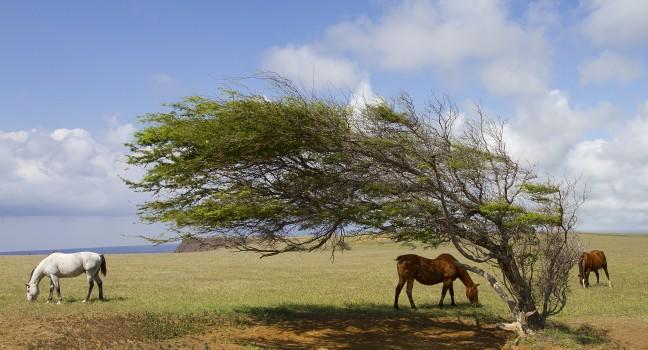
Horses at South Point graving around a wind blown tree.
Marty Wakat / Shutterstock

According to ancient Hawaiian lore, the first Polynesians came ashore at South Point, known in Hawaiian as "Ka Lae." The southernmost point of land in the United States, the South Point Complex is a National Historic Landmark known for the oldest Hawaiian settlement in the Islands, uncovered by archaeologists in 1956. Old canoe-mooring holes, still visible, were carved through the rocks, possibly by settlers from Tahiti as early as AD 750. Today, visitors come here for the views and access to Green Sand Beach. To get to the beach, drive 12 miles down the turnoff road, past rows of giant electricity-producing windmills powered by the nearly constant winds sweeping across this coastal plain. Bear left when the road forks, and park in the lot at the end. Walk past the boat hoists toward the little lighthouse. South Point is just past the lighthouse at the southernmost cliff. You may see brave locals jumping off the cliffs and then climbing up rusty old ladders, but swimming here is not recommended. Don't leave anything of value in your car. The area is isolated and without services. Green Sand Beach is a 40-minute hike down the coast.

South Point Rd. off Mamalahoa Hwy., HI, 96772, USA
Sight Details
Free

Something incorrect in this review?

Boiling Pots

Four separate streams fall into a series of circular pools here, fed by Peepee Falls just above, and the resulting turbulent action—best seen after a good rain—has earned this scenic stretch of the Wailuku River the nickname Boiling Pots. Swimming is not allowed at Boiling Pots or anywhere in the Wailuku River, due to extremely dangerous currents and undertows. The falls are 3 miles northwest of downtown Hilo off Waianuenue Avenue; keep to the right when the road splits and look for the sign. The gate opens at 7 am and closes at 6 pm. You may want to combine a drive to this site with a visit to Rainbow Falls, a bit closer to downtown.  You may be tempted, as you watch others ignore the signs and climb over guardrails, to jump in, but resist. Swimming is prohibited and unsafe, and people have died here.

Courtyard King Kamehameha's Kona Beach Hotel

Even if you're not staying here, make time to stroll through the expansive lobby of this Kailua-Kona fixture to view impressive displays of Hawaiian artifacts, including feathered helmets, capes, ancient hula instruments, and battle weapons. Portraits of Hawaiian royalty adorn the walls. You'll also see mounted marlin from Hawaii International Billfish tournaments (Kailua Pier used to be the weigh-in point, and these "grander" marlin weighed 1,000 pounds or more). One of the best collections of works by Hawaiian artist Herb Kane is on display in the breezeway. Activities in Hawaiian arts and crafts are conducted regularly by on-site cultural staff, and there are nice gift shops, shave ice, and cafés scattered throughout the small mall.

75-5660 Palani Rd., Kailua-Kona, HI, 96740, USA
808-329–2911

Something incorrect in this review?

Haili Congregational Church

Constructed in 1859 by New England missionaries, this church is known for its services in Hawaiian and for the choir, which sings hymns in Hawaiian. In 1902, Hawaiian musical legends Harry K. Naope Sr. and Albert Nahalea Sr. began the choral traditions still practiced by their descendants. The church, with its iconic yellow spire, has an interesting history that dates to 1824 when it was a thatched structure.

211 Haili St., Hilo, HI, 96720, USA
808-935–4847
Sight Details
Free, donations welcome

Something incorrect in this review?

Hikiau Heiau

This stone platform, once an impressive temple dedicated to the god Lono, was built by King Kalaniopuu. When Captain Cook arrived in 1778, ceremonies in his honor were held here. It's still considered a religious site, so visit with respect and do not walk on the platform. There are small pathways nearby, and the heiau is tended to by lineal descendants of people who lived in the area.

Captain Cook, HI, USA
Sight Details
Free

Something incorrect in this review?

Hilo Coffee Mill

With all the buzz about Kona coffee, it's easy to forget that estate-grown coffee is produced throughout the rest of the island; the Hilo Coffee Mill, on 24 acres in lush Mountain View, is a pleasant reminder of that. In addition to farming its own coffee on-site, the mill has partnered with several small coffee farmers in East Hawaii in an effort to put the region on the world's coffee map. You can sample the company's efforts, tour the mill, and watch the roasters in action. They host a farmers' market every Saturday from 9 to 2.

17-995 Volcano Rd. (Hwy. 11), Hilo, HI, 96771, USA
808-968–1333
Sight Details
Free
Closed Sun., Mon., and Fri

Something incorrect in this review?

Holoholokai Beach Park and Petroglyph Trail

While mostly rocky topography makes swimming and snorkeling a bit difficult here, this little park is still scenic and relaxing. Take the short trail over to the petroglyph trail; interpretive signs will guide you. There are showers, picnic tables, and restrooms; public parking is limited.

Holoholokai Beach Park Rd., Mauna Lani, HI, 96743, USA
808-657--3293
Sight Details
Free

Something incorrect in this review?

Holualoa Kona Coffee Company

There is a lot going on at this USDA-organic-certified coffee farm and processing facility, from growing the beans to milling and drying. The processing plant next door to the farm demonstrates how the beans are roasted and packaged. A flock of 50 geese welcomes visitors and "provides fertilizer" for the plantation at no charge. Holualoa also processes beans for 200 coffee farms in the area. Enjoy a cup of their finest as you peruse the gift shop after the tour.

77-6261 Old Mamalahoa Hwy., Holualoa, HI, 96725, USA
808-322–9937
Sight Details
Free
Closed Fri.–Sun.

Something incorrect in this review?

Honl's

This tiny but scenic white-sand-beach park is best known as the birthplace of boogie boarding. That's because boogie board inventor Tom Moray first tried his foam creation out right here in 1971. The Honl's nickname honors a family that once resided here, but its official name is Waiaha, which means "gathered waters." Lots of rocks limit easy access, but it's worth a stop for the history alone. Amenities: parking (no fee); picnic tables; showers; toilets. Best for: body boarding, swimming, sunbathing.

75-5907 Alii Drive, Kailua-Kona, HI, 96740, USA
Sight Details
Free

Something incorrect in this review?

Honolii Beach Park

One of the most consistent places on the east side to catch a wave, Honolii is popular with the local surf crowd. The beach is a mix of black sand, coral, and sea glass, with plenty of rocks. A shady grassy area is great for picnics while you watch the surfers. Note that the presence of surfers is not an indication that an area is safe for swimmers; winter surf is very rough. A pond just to the north is good for swimming, but it's deep and there is a drop-off. There's limited parking on the narrow roadside. Walk down the stairs and veer left over the rocks. Amenities: lifeguards; toilets. Best for: surfing.

Hwy. 19, Hilo, HI, 96720, USA
808-961–8311

Something incorrect in this review?

Hookena Beach Park

The 2½-mile road to this secluded little gem feels like you're venturing off the beaten path, through an area rich in history. Remnants of an old steamship pier testify to its former role as a thriving port town, complete with (now gone) post office, church, and stores. A favorite of writer Robert Louis Stevenson, Hookena suffered virtual abandonment after tsunami, earthquakes, and the decline of steamship travel. Today, though much quieter, it's still an active Hawaiian fishing village, beloved by residents and tended to by a county-community partnership. The beach has a soft mix of dark brown and gray sand and is backed by steep emerald embankments and a dramatic sloping pali (cliff) that make for picturesque tropical vistas. The bay is usually calm, tranquil, and clear with small surf. The park caretakers oversee beach concessions, camping permits, and security. You can rent equipment, beach chairs, and umbrellas. Amenities: food and drink; parking (no fee); showers; toilets; water sports. Best for: snorkeling; swimming.

Hookena Beach Rd., Captain Cook, HI, 96704, USA
808-961–8311
Sight Details
Free

Something incorrect in this review?

Imiola Congregational Church

Highlights of this stunning church, which was established in 1832 and rebuilt in 1857, include a gleaming, restored koa interior and unusual wooden calabashes hanging from the ceiling. Be careful not to walk in while a service is in progress, as the front entry is behind the pulpit.

65-1084 Mamalahoa Hwy., Waimea (Hawaii County), HI, 96743, USA
808-885–4987
Sight Details
Free; donations welcome

Something incorrect in this review?

Kailua Pier

Though most fishing and sail charters use Honokohau Harbor in Kailua-Kona, this pier dating from 1918 is still a hub of ocean activity where outrigger canoe teams practice and race, shuttles transport cruise ship passengers to and from town, and tour boats depart from the docks. Old photos depict cattle being wrangled from the pier to steamers bound for slaughterhouses. Along the seawall, children and old-timers cast their lines and hope for the best. For youngsters, a bamboo pole and hook are easy to come by, and plenty of locals are willing to give pointers. September brings the world's largest long-distance outrigger canoe race, and in October, elite athletes line up on the beach next to the pier to swim 2.4 miles in the first leg of the internationally famous Ironman World Championship triathlon.

Alii Dr., Kailua-Kona, HI, 96740, USA

Something incorrect in this review?

Kalakaua Park

A bronze statue in this park, the central town square for more than a century, depicts King David Kalakaua (1836–1891), who revived the hula and is the inspiration for Hilo's Merrie Monarch Festival. Erected in 1988, the statue depicts the king with a taro leaf in his left hand to signify the Hawaiian people's bond with the land. The park is surrounded by civic buildings and a war memorial. There is a huge, spreading banyan tree and small fishponds but no picnic or recreation facilities. According to local tradition, families of military personnel often leave leftover floral displays and funeral wreaths along the fishpond walkway as a way of honoring their loved ones.

Kalakaua and Kinoole Sts., Hilo, HI, 96720, USA

Something incorrect in this review?

Kau Desert Footprints Trail

People take this short hike, 1.6 miles round-trip, to see faded human footprints, fossilized in hardened volcanic ash. Easy.

HI, 96785, USA
Sight Details
Free

Something incorrect in this review?