58 Best Sights in San Francisco, California

Background Illustration for Sights

We've compiled the best of the best in San Francisco - browse our top choices for the top things to see or do during your stay.

Ina Coolbrith Park

Russian Hill Fodor's Choice
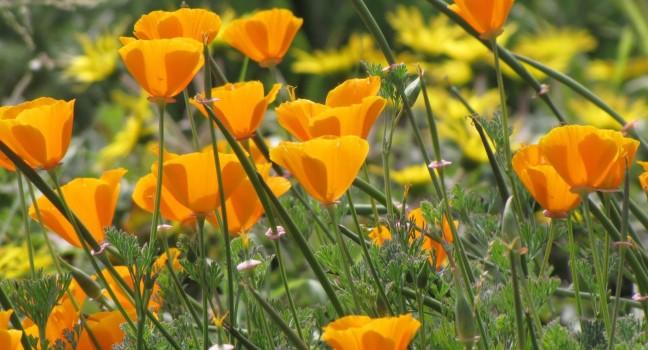
California Poppies. In Ina Coolbrith Park in San Francisco
California Poppies by Karen Brockney

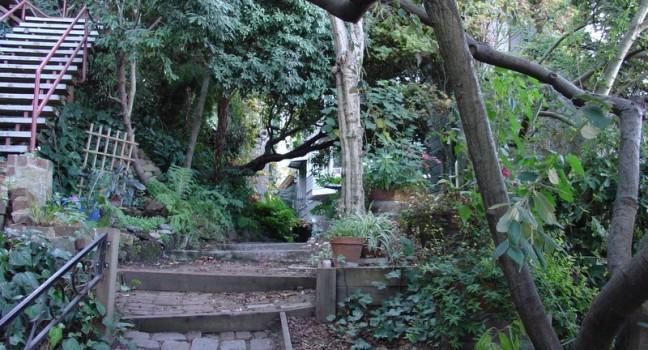
If you make it all the way up here, you may have the place all to yourself, or at least feel like you do. The park's terraces are carved from a hill so steep that it's difficult to see if anyone else is there or not. Locals love this park because it feels like a secret—one of the city's magical hidden gardens, with a meditative setting and spectacular views of the bay peeking out from among the trees. A poet, Oakland librarian, and niece of Mormon prophet Joseph Smith, Ina Coolbrith introduced Jack London and Isadora Duncan to the world of books. For years she entertained literary greats in her Macondray Lane home near the park. In 1915 she was named poet laureate of California.

Lincoln Park

Richmond Fodor's Choice
Men are golfing in Lincoln park, San Francisco.
(c) Russiangal | Dreamstime.com

Lincoln Park is a wild 275-acre park with windswept cliffs and panoramic views. The Coastal Trail, the park's most dramatic, leads out to Lands End; pick it up west of the Legion of Honor (at the end of El Camino del Mar) or from the parking lot at Point Lobos and El Camino del Mar. Time your hike to hit Mile Rock at low tide, and you might catch a glimpse of two wrecked ships peeking up from their watery graves.

Be careful if you hike here; landslides are frequent, and people have fallen into the sea by standing too close to the edge of a crumbling bluff top.

Lincoln Park's 18-hole golf course ( www.lincolnparkgolfcourse.com) is on land that in the 19th century was the Golden Gate Cemetery. (When digging has to be done in the park, human bones still occasionally surface.) Next door on 33rd Avenue and California Street are the dazzling mosaic Lincoln Park Steps, which rival the 16th Avenue Steps and the Hidden Garden Steps in the Sunset District. They provide a delightful backdrop for contemplation or an Instagram photo op.

Lombard Street

Russian Hill Fodor's Choice
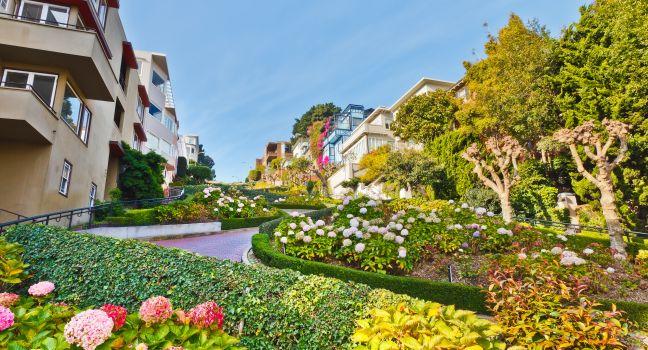
Lombard Street in San Francisco
S.Borisov / Shutterstock

The block-long "Crookedest Street in the World" makes eight switchbacks down the east face of Russian Hill between Hyde and Leavenworth Streets. Join the line of cars waiting to drive down the steep hill, or avoid the whole mess and walk down the steps on either side of Lombard. You take in super views of North Beach and Coit Tower either way—though if you're the one behind the wheel, you'd better keep your eye on the road lest you become yet another of the many folks who ram the garden barriers.  Can't stand the traffic? Thrill seekers of a different stripe may want to head two blocks south of Lombard to Filbert Street. At a gradient of 31.5%, the hair-raising descent between Hyde and Leavenworth streets is one of the city's steepest. Go slowly!

Lombard St. between Hyde and Leavenworth Sts., San Francisco, CA, 94109, USA

Something incorrect in this review?

Recommended Fodor's Video

Macondray Lane

Russian Hill Fodor's Choice
Macondray Lane, San Francisco, California, USA
Macondray Lane by Jeremy Rover

San Francisco has no shortage of impressive, grand homes, but Macondray Lane is the quintessential hidden garden. Enter under a lovely wooden trellis and proceed down a quiet, cobbled pedestrian lane lined with Edwardian cottages and flowering plants and trees. A flight of steep wooden stairs at the end of the lane leads to Taylor Street—on the way down you can't miss the bay views. If you've read any of Armistead Maupin's Tales of the City books, you may find the lane vaguely familiar; it's the thinly disguised setting for parts of the series.

San Francisco, CA, 94133, USA

Something incorrect in this review?

Mission Dolores Park

Fodor's Choice
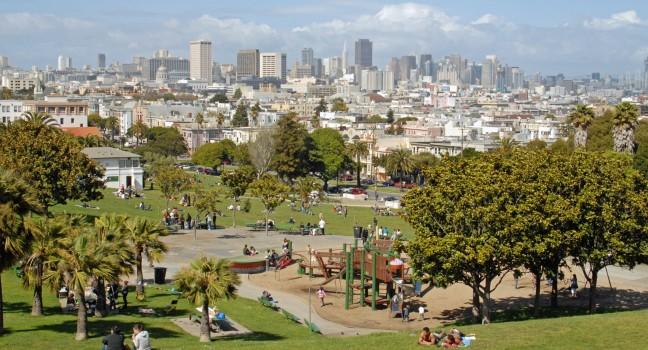
Dolores Park in San Francisco, looking northeast toward downtown.
(c) Rahurlburt | Dreamstime.com

A two-square-block microcosm of life in the district, Mission Dolores Park is one of San Francisco's liveliest green spaces: dog lovers and their pampered pups congregate, kids play at the extravagant playground, and hipsters hold court, drinking beer and rosé cans on sunny days. (Fair warning: if it's over 70°F, the place can get packed like traffic at rush hour for picnic-blanket space.) During the summer, Dolores Park hosts movie nights, performances by the San Francisco Mime Troupe, and pop-up events and impromptu parties. Spend a warm day here—maybe sitting at the top of the park with a view of the city and the Bay Bridge—surrounded by locals and that laid-back, still-abundant San Francisco energy, and you may well find yourself plotting your move to the city. The best views are in the southwest corner, near the historic Golden Fire Hydrant that saved the neighborhood after the 1906 earthquake.

Palace of Fine Arts

Marina Fodor's Choice
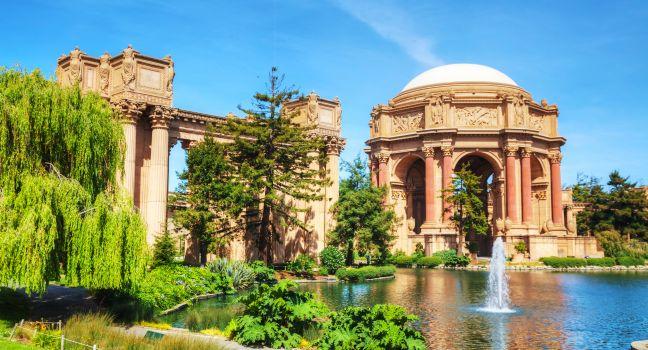
The Palace of Fine Arts in San Francisco, California.
Andreykr | Dreamstime.com

This stunning, rosy rococo palace on a lagoon seems to be from another world—it's the sole survivor of the many tinted-plaster structures (a temporary neoclassical city of sorts) built for the 1915 Panama-Pacific International Exposition, the world's fair that celebrated San Francisco's recovery from the 1906 earthquake and fire. The expo buildings originally extended about a mile along the shore. Bernard Maybeck designed this faux-Roman classic beauty, which was reconstructed in concrete and reopened in 1967.

The pseudo-Latin language adorning the Palace's exterior urns continues to stump scholars. The massive columns (each topped with four "weeping maidens"), great rotunda, and swan-filled lagoon have been used in countless fashion layouts, films, and wedding photo shoots. Other than its use for major events and exhibitions inside the building, it's really an outdoor architecture attraction that's perfect for an hour of strolling and relaxing. After admiring the lagoon, look across the street to the house at 3460 Baker Street. If the statues out front look familiar, they should—they're original casts of the "garland ladies" you can see in the Palace's colonnade.

Telegraph Hill and the Filbert Steps

Fodor's Choice
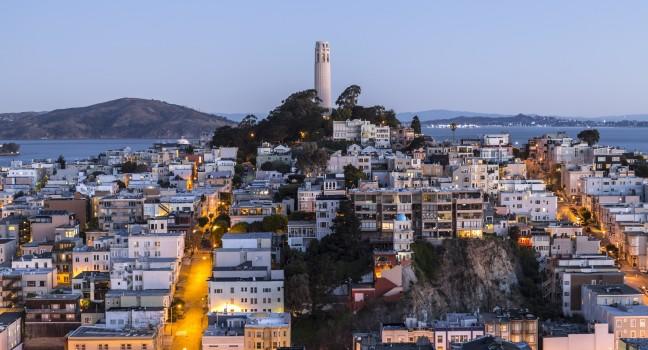
Aerial dusk view of Coit tower in downtown San Francisco, California
trekandshoot / Shutterstock

Residents here have some of the city's best views, as well as the most difficult ascents to their aeries. The hill rises from the east end of Lombard Street to a height of 284 feet and is capped by Coit Tower. If you brave the slope, though, you'll be rewarded with a "secret treasure" San Francisco moment. Filbert Street starts up the hill, then becomes the Filbert Steps when the going gets too steep. You can cut between the Filbert Steps and another flight, the Greenwich Steps, on up to the hilltop. As you climb, you pass some of the city's oldest houses and are surrounded by beautiful, flowering private gardens. In some places the trees grow over the stairs, so it feels like you're walking through a green tunnel; elsewhere, you'll have wide-open views of the bay. The cypress trees that grow on the hill are a favorite roost of local avian celebrities, the wild parrots of Telegraph Hill; you'll hear the cries of the cherry-headed conures if they're nearby. The name comes from the hill's status as the first Morse code signal station back in 1853.

Alamo Square Park

Western Addition Fodor's Choice

Whether you've seen them on postcards or on the old TV show Full House, the colorful "Painted Ladies" Victorian houses are some of San Francisco's world-renowned icons. The signature view of these beauties with the downtown skyline in the background is from the east side of this hilly park. Tourists love the photo opportunities, but locals also adore the park's tennis courts, dog runs, and ample picnic area—with great views, of course. After taking plenty of photos, swing by the park's northwest corner and admire the William Westerfeld House ( 1198 Fulton St.), a splendid five-story late-19th-century Victorian mansion. If it's a sunny day, grab picnic provisions from Bi-Rite Market. Thursday through Sunday, the Lady Falcon Coffee Club truck is stationed in the park, offering a great caffeine pick-me-up.

Alta Plaza Park

Pacific Heights Fodor's Choice

Golden Gate Park's longtime superintendent, John McLaren, designed this 12-acre park in the early 1900s, modeling its steep south-facing terracing on that of the Grand Casino in Monte Carlo. At any time of day, you're guaranteed to find San Francisco's exercise warriors running up the park's south steps. From the top of those steps, you can see Marin to the north, downtown to the east, Twin Peaks to the south, and Golden Gate Park to the west.  Kids love the many play structures at the large, enclosed playground at the top; dogs love the off-leash area in the park's southeast corner.

Baker Beach

Fodor's Choice

West of the Golden Gate Bridge is a mile-long stretch of soft sand beneath steep cliffs, beloved for its spectacular views and laid-back vibe (read: small chance you'll see naked people here on the northernmost end). Its isolated location makes it rarely crowded, but many San Franciscans know that there is no better place to take in the sunset than this beach. Kids love climbing around the old Battery Chamberlin. This is truly one of those places that inspires local pride. Amenities: parking (no fee); toilets. Best for: nudists; solitude; sunsets.

City Hall

Civic Center Fodor's Choice

This imposing 1915 structure with its massive gold-leaf dome—higher than the U.S. Capitol's—is as close to a palace as you'll find in San Francisco: the classic granite-and-marble behemoth was modeled after St. Peter's Basilica in Rome. Architect Arthur Brown Jr., who was also behind Coit Tower and the War Memorial Opera House, designed an interior with grand columns and a sweeping central staircase. The 1899 structure it replaced had taken 27 years to erect, but it collapsed in about 27 seconds during the 1906 earthquake.

City Hall was seismically retrofitted in the late 1990s, but the sense of history remains palpable, and you can learn about it on a free tour. Some noteworthy events that have taken place here include the hosing of civil-rights and freedom-of-speech protesters (1960); the assassinations of Mayor George Moscone and Harvey Milk (1978); the torching of the lobby by angry members of the gay community in response to the light sentence given to their killer (1979); and the first domestic partnership registrations of gay couples (1991). In 2004, Mayor Gavin Newsom took a stand against then-current state and federal law by issuing marriage licenses to same-sex partners.

Across Polk Street from City Hall is Civic Center Plaza, with an outdoor café, flower beds, and a playground. This sprawling space is generally clean but somewhat grim, as many homeless people hang out here.

Transamerica Pyramid

Financial District Fodor's Choice

It's neither owned by Transamerica nor, to some building experts, is it even a pyramid, but this 48-floor, 853-foot-tall pyramid-obelisk is the most photographed of the city's high-rises. Excoriated in the design stages as "the world's largest architectural folly," the icon was quickly hailed as a masterpiece when it opened in 1972. Today it's probably the city's most recognized structure after the Golden Gate Bridge, and it's the second-tallest in the city after the Salesforce Tower. You can't go up the pyramid (apparently there is now a bar on the 48th floor), but the best views and photo-ops are of the building itself anyway. After the real estate developer SHVO purchased the building in 2020, the legendary skyscraper architect Norman Foster led a renovation of the pyramid that was completed in 2024 (and unveiled with a new official name, the Transamerica Pyramid Center). Most of the building is still for private offices, but the public can visit a lobby coffee shop, a ground floor art gallery, and Café Sebastian located just steps from the building but still within the one-block large complex.  A fragrant redwood grove along the east side of the building, with benches and a rotating outdoor art exhibit, is a placid downtown oasis in which to unwind.

Twin Peaks

Noe Valley Fodor's Choice

Windswept and desolate, Twin Peaks yields sweeping vistas of San Francisco and the neighboring counties. At a hilltop park 922 feet above sea level, you can get a real feel for the city's layout, but you'll share it with busloads of other admirers; in summer, arrive before the late-afternoon fog turns the view into pea soup. To drive here, head west from Castro Street up Market Street, which eventually becomes Portola Drive. Turn right (north) on Twin Peaks Boulevard and follow the signs to the top. Muni bus 37–Corbett heads west to Twin Peaks from Market Street. Catch this bus above the Castro Street Muni light-rail station on the island west of Castro at Market Street.

Twin Peaks Blvd., San Francisco, CA, 94131, USA

Something incorrect in this review?

Vallejo Steps

Russian Hill Fodor's Choice

Several Russian Hill buildings survived the 1906 earthquake and fire and remain standing. Patriotic firefighters saved what's become known as the Flag House ( 1652–56 Taylor St.) when they spotted the American flag on the property. The owner, a flag collector, fearing the house would burn, wanted it to go down with "all flags flying." At the southwest corner of Ina Coolbrith Park, it is one of a number of California shingle–style homes in this neighborhood, several of which the architect Willis Polk designed.

Polk drew up the plans for the nearby Polk-Williams House ( Taylor and Vallejo Sts.) and lived in one of its finer sections, and he was responsible for 1034–1036 Vallejo, across the street. He also laid out the Vallejo Steps themselves, which climb the steep ridge across Taylor Street from the Flag House. The precipitous walk up to Ina Coolbrith Park and beyond is possibly the most pleasurable thing to do while on Russian Hill. If the walk up the steps will be too taxing, park at the top by heading east on Vallejo from Jones and enjoy the scene from there.

Taylor and Vallejo Sts., San Francisco, CA, 94133, USA

Something incorrect in this review?

Musée Mécanique

Fisherman's Wharf
Cactus Gulch, Antique Arcade, Musee Mecanique, San Francisco, California, USA
By Piotrus [CC-BY-SA-3.0-2.5-2.0-1.0], via Wikimedia Commons

Once a staple at Playland at the Beach, San Francisco's early-20th-century amusement park, the antique mechanical contrivances at this time-warp arcade—including peep shows and nickelodeons—make it one of the most worthwhile attractions at the Wharf. Some favorites are the giant and rather creepy "Laffing Sal"; an arm-wrestling machine; (supposedly) the world's only steam-powered motorcycle; various retro pinball machines; and mechanical fortune-telling figures. This is a truly fun and somewhat surreal experience.   Admission is free, but you'll need quarters to bring the machines to life.

Pier 39

Fisherman's Wharf
Summer crowds check out the fresh fruit and other items available at the Farmer's Market on Pier 39, located at the edge of famous Fisherman’s Wharf and the Embarcadero along San Francisco’s historic waterfront. Hugely popular, it is one of t
(c) Walleyelj | Dreamstime.com

The city's most popular waterfront attraction draws millions of visitors each year, who come to browse through its shops and concessions hawking every conceivable form of souvenir. The pier can be quite crowded, and the numerous street performers may leave you feeling more harassed than entertained. Arriving early in the morning ensures you a front-row view of the sea lions that bask here, but be aware that most stores don't open until 9:30 or 10 (later in winter).

Follow the sound of barking to the northwest side of the pier to view the sea lions flopping about the floating docks. Pier 39's biggest celebrities reside here pretty much year-round (though the population is generally lowest in early summer), enjoying the nearby food in the bay and the ability to easily rotate between sleeping on the docks and going for a swim.

At the Aquarium of the Bay ( www.aquariumofthebay.org), guests of all ages enjoy strolling through a space surrounded on three sides by water that is filled with local San Francisco Bay marine life, from the orange garibaldi (the state marine fish) to sharks. Aquatic animals from elsewhere in the Northern California watershed also make an appearance, including white sturgeon and river otters.

Beach St. at Embarcadero, San Francisco, CA, 94133, USA
415-705–5500

Something incorrect in this review?

Wave Organ

Marina
The Wave Organ is a tourist attraction in San Francisco operated by the Exploratorium.
Pius99 | Dreamstime.com

Conceived by environmental artist Peter Richards and fashioned by master stonecutter George Gonzales, this unusual wave-activated acoustic sculpture at the entrance of a harbor gives off subtle harmonic sounds produced by seawater as it passes through 25 tubes. The sound is loudest at high tide. The granite and marble used for walkways, benches, and alcoves that are part of the piece were salvaged from a gold rush–era cemetery.

16th Avenue Tiled Steps

Sunset

A community-based project dedicated in 2005, these 163 tiled steps have beautiful designs showing fish, shells, animals, starry skies, and other scenes. The steps are in a residential neighborhood, so enjoy the steps and the city views from the top quietly.

Aquatic Park

Fisherman's Wharf

This urban beach, surrounded by Fort Mason, Ghirardelli Square, and Fisherman's Wharf, is a quarter-mile-long strip of sand. The gentle waters near shore are shallow, safe for kids to swim or wade, and fairly clean. Locals come out for quick dips in the frigid water. Members of the Dolphin Club and the South End Rowing Club come every morning for a swim, and a large and raucous crowd braves the cold on New Year's Day. Amenities: showers; toilets. Best for: sunset; walking.

499 Jefferson St., San Francisco, CA, 94109, USA

Something incorrect in this review?

Balmy Alley

Mission District artists have transformed the walls of their neighborhood with paintings, and Balmy Alley is one of the best-executed examples. Many murals adorn the one-block alley, with newer ones continually filling in the blank spaces. In 1971, artists began teaming with local children to create a space to promote peace in Central America, community spirit, and (later) AIDS awareness; since then dozens of muralists have added their vibrant works. The alley's longtime popularity has grown exponentially thanks to its Instagram appeal. Once you're done at Balmy Alley, head a couple blocks west on 24th Street to another prominent alley of murals on Cypress Street (also between 24th and 25th Streets).   Be alert here: the 25th Street end of the alley adjoins a somewhat dangerous area.

24th St. between and parallel to Harrison and Treat Sts., San Francisco, CA, 94110, USA

Something incorrect in this review?

Beach Chalet

Golden Gate Park

Hugging the park's western border, this 1925 Willis Polk–designed structure houses gorgeous Depression-era murals by Lucien Labaudt of familiar San Francisco scenes, while verses by local poets adorn niches here and there. Stop by the ground-floor Golden Gate Park Visitor Center to see the murals and gift shop, then consider indulging in a microbrew upstairs, ideally at sunset. The restaurant here, renovated in 2021 and with a refreshed menu that includes more seafood, is open for lunch and dinner. The ocean views are spectacular.

1000 Great Hwy., San Francisco, CA, 94121, USA
415-386–8439-for restaurant

Something incorrect in this review?

Buena Vista Park

Haight

The reward for the steep climb to get here is this eucalyptus-filled space with great city views. Dog walkers and homeless folks make good use of the park, and the playground at the top is popular with kids and adults alike. Be sure to scan the stone rain gutters lining many of the walkways for inscribed names and dates; these are the remains of gravestones left unclaimed when the city closed the Laurel Hill cemetery around 1940. A pit stop includes a portable toilet and disposal for used needles and condoms; definitely avoid the park after dark, when these items are left behind.

Cable Car Museum

Nob Hill

One of the city's best free offerings, this museum is an absolute must for kids and compelling for adults, too. You can even ride a cable car here—all three lines stop between Russian Hill and Nob Hill. The facility, which is inside the city's last remaining cable-car barn, takes the top off the system to show you how it all works. Eternally humming and squealing, the massive powerhouse cable wheels steal the show. You can also climb aboard a vintage car and take the grip, let the kids ring a cable-car bell, and check out vintage gear dating from 1873.

Cathedral of Saint Mary of the Assumption

Western Addition

This striking cathedral stands out with its sweeping contemporary design. Italian architects Pietro Belluschi and Pier Luigi Nervi intended to create a spectacular cathedral that reflects both the Catholic faith and modern technology. It was controversial when it opened in 1971, yet now is applauded for its grand, curving roof that rises to a height of 190 feet, with sections that form a cross highlighted with intricate stained-glass work. The cathedral is open daily for visitors other than during Mass, and it usually has docents on duty in the late morning hours. Most locals know the cathedral as Our Lady of Maytag for its resemblance to a washing machine agitator.

1111 Gough St., San Francisco, CA, 94109, USA

Something incorrect in this review?

Clarion Alley

Inspired by the work in Balmy Alley, a new generation of muralists began creating a fresh alley-cum-gallery here in 1992, offering a quick but dense glimpse at the Mission's contemporary art scene. The works by the loosely connected artists of the Clarion Alley Mural Project (CAMP) represent a broad range of styles and imagery, such as an exuberant, flowery exhortation to Tax the Rich, several colorful and powerful messages about hot-button political topics, and poignant murals honoring the legacies of George Floyd and Prince.

Coit Tower

Among San Francisco's most distinctive skyline sights, this 210-foot tower is often considered a tribute to firefighters because of the donor's special attachment to the local fire company. As the story goes, a young Gold Rush–era girl, Lillie Hitchcock Coit (known as Miss Lil), was a fervent admirer of her local fire company—so much so that she once deserted a wedding party and chased down the street after her favorite engine, Knickerbocker No. 5, while clad in her bridesmaid finery. When Lillie died in 1929, she left the city $125,000 to "expend in an appropriate manner . . . to the beauty of San Francisco."

You can ride the elevator to the top of the tower to enjoy the 360-degree view of the Bay Bridge and the Golden Gate Bridge; due north is Alcatraz Island. Most visitors saunter past the 27 fabulous Depression-era murals inside the tower that depict California's economic and political life, but take the time to appreciate the first New Deal art project, supported by taxpayer money. It's also possible to walk up and down to the tower (if you're in shape): a highlight is the descent toward the Embarcadero via the Filbert Steps, a series of stairways that are a shaded green oasis in the middle of the city.

San Francisco, CA, 94133, USA
415-362–0808
Sight Details
Free; elevator to top $10

Something incorrect in this review?

Collis P. Huntington Park

Nob Hill

The elegant park west of the Pacific Union Club and east of Grace Cathedral occupies the site of a mansion owned by railroad baron Collis P. Huntington. He died in 1900, the mansion was destroyed in the 1906 fire, and in 1915 his widow—by then married to Huntington's nephew—donated the land to the city. The Huntingtons' neighbors, the Crockers, once owned the Fountain of the Tortoises, based on the original in Rome's Piazza Mattei.  The benches around the fountain offer a welcome break after climbing Nob Hill.

Taylor and California Sts., San Francisco, CA, 94108, USA

Something incorrect in this review?

Creativity Explored

Joyous creativity pervades the workshops of this art-education center and gallery for developmentally disabled adults. Several dozen adults work at the center each day—guided by a staff of working artists—painting, working in the darkroom, producing videos, and crafting prints, textiles, and ceramics.  Drop by to see the artists at work and pick up a unique San Francisco masterpiece. The art produced here is striking, and some of it is for sale.

3245 16th St., San Francisco, CA, 94103, USA
415-863–2108
Sight Details
Free
Closed Sun.–Wed.

Something incorrect in this review?

Dutch Windmill

Golden Gate Park

It may not pump water anymore, but this carefully restored windmill, built in 1903 to irrigate Golden Gate Park, continues to enchant visitors. The Queen Wilhelmina Tulip Garden here is a welcoming respite, particularly lovely during its February and March bloom. On the south side of the park at Lincoln Way and the Great Highway is the Murphy Windmill, the largest in the world when it was completed in 1908; swing by for an interesting comparison.

Fort Mason Center

Marina

Originally a depot for the shipment of supplies to the Pacific during World War II, the fort was converted into a cultural center in 1977 and is now home to the vegetarian restaurant Greens and shops, galleries, and performance spaces.

The Museo Italo Americano ( Bldg. C  415/673–2200  museoitaloamericano.org  Closed Mon.) is a small gallery that hosts one exhibit at a time, worth a glance if you're already at Fort Mason.

2 Marina Blvd., San Francisco, CA, 94123, USA
415-345–7500

Something incorrect in this review?