


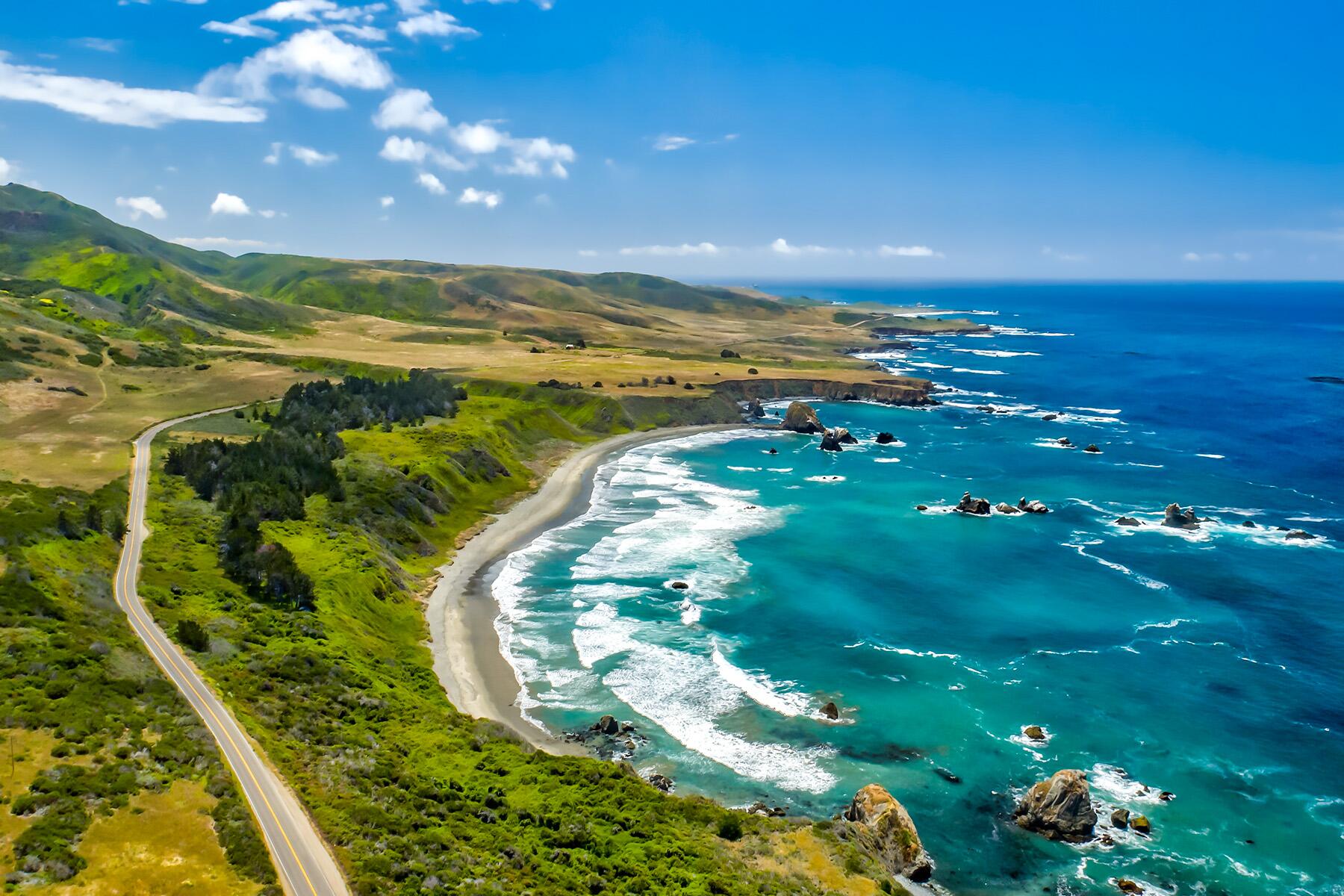

California’s iconic Highway One has reopened ahead of schedule after landslides closed a key Big Sur section for years, restoring a legendary coastal road trip and boosting local tourism.
Fans of the great American road trip have something to celebrate in the United States’s 250th anniversary year—one of the country’s most iconic byways has reopened ahead of schedule after a yearslong closure.
Caltrans, the California state Department of Transportation, announced that the closed section of California’s State Route One, also known as Highway One, had reopened Wednesday afternoon, significantly in advance of the planned reopening date. The closed sections were south of Big Sur, requiring lengthy detours for traffic to Big Sur and the Monterey Bay region from the Central Coast and Southern California.
The portion of the road was closed after landslides made the roadway impassable in 2023. A further landslide and heavy rains complicated efforts to reopen the road in mid-2024, significantly lengthening the amount of time needed to complete the rock and earth removal and roadway repairs. It ultimately cost just under $83 million to restore the highway’s access.


Recommended Fodor’s Video
The closure significantly impacted local businesses on both sides of the closure—particularly in visitor-dependent Big Sur, the community closest to the slides. Tourism promoters in both San Luis Obispo County and Monterey County estimated the economic impact on both counties and the State of California in lost visitor revenue to be roughly $438 million.
Visitors to Big Sur wanting to visit area hot spots such as Nepenthe, the local restaurant with famed coastline views, or the luscious wellness retreats at Alila Ventana Big Sur or Post Ranch Inn, would have to approach from the north, then turn to backtrack on a lengthy detour to continue the rest of the routing down the coast into San Luis Obispo County.
“Caltrans worked with exceptional focus and resilience to restore this legendary stretch of highway,” said Cathy Cartier, President & CEO of Visit SLO CAL, in a statement. “Highway 1 is an emotional experience for so many people, and its early reopening reconnects the full wonder of Ragged Point, San Simeon and Cambria with our neighbors to the north in Monterey. We are thrilled to welcome visitors to experience the magic of this coastal roadway from end to end.”
Highway One, a designated All-American Road, is the longest state highway in California and a significant attraction to out-of-state visitors. The earliest sections of the highway were constructed as early as 1911, between Ventura and Santa Barbara. Construction on most of the stretch connecting Carmel with Big Sur and Cambria took place over an 18-year period between 1919 and 1937. The highway received the State Route 1 designation in 1937.
The highway was the main roadway connecting northern and southern California until the completion of the inland Interstate 5 (I-5) in 1979.
To the north of the closure, visitors can check into the newly renovated Lodge at Pebble Beach or perhaps take some of the road trip out of their journey with the Lasapa Lelima Purification treatment, drawn from the historical healing practices of the Esselen tribe, which is indigenous to the region around Big Sur. Nearby, there’s sun and sand at the mile-long Carmel River State Beach.
Further north in Monterey, the historic town center and Cannery Row remain relatively crowd-free, as local statute bans large cruise ships from berthing in Monterey Bay. Visitors can check into the Monterey Plaza Hotel & Spa, getting an oceanfront room to watch sea otters float in the kelp fields just yards away from shore.
The nonstop journey from Los Angeles to San Francisco on Highway One takes between ten and twelve hours, depending on traffic and weather. Motorists on Highway One should be aware that rockslides remain common in the area surrounding Big Sur, so they should remain vigilant. Fog is also common on Highway One on the Central Coast, so motorists should be sure to drive according to roadway conditions.