


The Butchart Gardens

Get FREE email communications from Fodor's Travel, covering must-see travel destinations, expert trip planning advice, and travel inspiration to fuel your passion.

Victoria is small and easily explored. A walk around Downtown, starting with the museums and architectural sights of the Inner Harbour, followed by a stroll up Government Street to the historic areas of Chinatown and Old Town, covers most of the key attractions, though seeing every little interesting thing along the way could easily take two days. Passenger ferries dart across the Inner and Upper harbors to Point Ellice House and Fisherman's Wharf, while more attractions, including Craigdarroch Castle and the Art Gallery of Greater Victoria, lie about a mile east of Downtown in the residential areas of Rockland and Oak Bay. Most visitors also make time for the Butchart Gardens, a stunning exhibition garden 20 minutes by car north on the Saanich Peninsula. Free time is also well spent strolling or biking through Beacon Hill Park and along the Dallas Road waterfront, heading out to such less-visited sights as Hatley Castle and Fort Rodd Hill, or checking out any of the area's beaches, wilderness parks, or wineries.
This 154-acre park links Downtown Victoria to the waterfront. Its rambling lawns overlook the Pacific Ocean, the Olympic Mountains, and the Strait of Juan de Fuca. Kite-fliers, hang gliders, and dog walkers are numerous. Take your photo at the Mile 0 marker of the Trans-Canada Highway, at the foot of Douglas Street. Beacon Hill includes ponds where you can feed ducks, cycling, jogging and walking paths, flowers and gardens, a cricket pitch, and a petting zoo (closed in winter). There's live music in the bandshell on summer evenings, and on Saturday nights in August the Victoria Film Festival screens free movies.
Only a 35-minute drive north of Victoria, this adventure starts with a short walk along a boardwalk through coastal forest before reaching the tower itself—a spiral ramp that rises 31 meters (104 feet) to the top. With only a 5% gradient, it is purposefully designed to be fully accessible for strollers and wheelchairs. Views over Finlayson Arm are stunning. Daring-of-heart can walk across the sturdy net suspended across the center of the tower and choose the spiral slide down for a faster exit. There are also traditional hiking trails to enjoy, and picnic areas. Note: drones are not permitted.
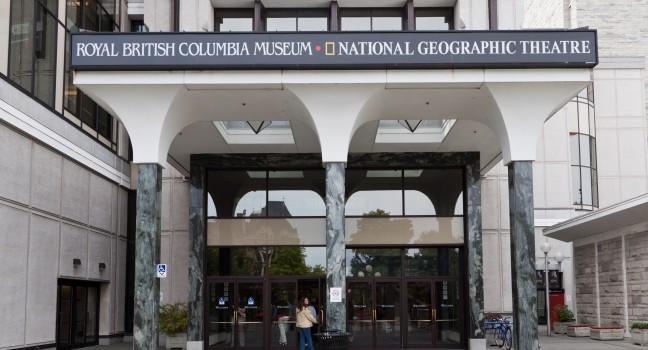
Currently undergoing extensive restoration, this excellent museum—one of Victoria's leading attractions—is a shadow of its former self. Original plans called for a C$789 million investment for both structural upgrades to the building as well as the preservation of the more than 7 million artifacts and 2.1 km of archival records. As might be expected, such hefty plans are controversial in light of housing affordability and other social issues. Still, hopes are high that a totally refurbished 23,000-square-meter facility will reopen in 2030. Until then, access is limited to some of its temporary exhibits; they are part of the traveling exhibits that are touring various community museums around the province.
The museum complex still offers several more interesting sights, beyond the expected gift shop and café. In front of the museum, at Government and Belleville streets, is the Netherlands Centennial Carillon. With 62 bells, it's the largest bell tower in Canada; the Westminster chimes ring out every hour, and free recitals are occasionally held on Sunday afternoon. The Native Plant Garden at the museum's entrance showcases 400 indigenous plant species. Behind the main building, bordering Douglas Street, are the grassy lawns of Thunderbird Park, home to 10 totem poles (carved replicas of originals that are preserved in the museum). One of the oldest houses in BC, Helmcken House (open late May–early Sept., daily noon–4) was built in 1852 for pioneer doctor and statesman John Sebastian Helmcken. Inside are displays of the family's belongings, including the doctor's medical tools. Behind it is St. Ann's School House, built in 1858. One of British Columbia's oldest schools, it is thought to be Victoria's oldest building still standing. Both buildings are part of the Royal British Columbia Museum.
Called "the garden that love built," this once-private garden is as fascinating for its history as for its innovative design. The seeds were planted, figuratively, in Paris in the 1920s, when Englishwoman Peggy Pemberton-Carter met exiled Georgian Prince Nicholas Abkhazi. World War II internment camps (his in Germany, hers near Shanghai) interrupted their romance, but they reunited and married in Victoria in 1946. They spent the next 40 years together cultivating their garden. Rescued from developers and now operated by the Land Conservancy of British Columbia, the 1-acre site is recognized as a leading example of west coast horticultural design, resplendent with native Garry Oak trees, Japanese maples, and mature rhododendrons. The teahouse, in the parlor of the modernist home, serves lunch and afternoon tea daily until 4 pm, with reduced hours in winter.
A long, sandy, driftwood-strewn beach backed by a grassy park with plenty of picnic tables and shade trees draws families to this sheltered bay, accessible via the Scenic Marine Drive. Kids enjoy the sea creature structures in the play area (including a replica of the legendary "Cadborosaurus" sea serpent said to live in these waters). Hiking trails, a boat launch, and tennis courts keep adults busy; swimming is safe here, if you don't mind the cold (or the sea creature). Snacks can be had at nearby Cadboro Village. Amenities: parking (free); toilets. Best for: walking; sunrise.
Walkers, swimmers, and sunbathers flock to this long stretch of forest-backed sand, pebble, and driftwood beach, which is just north of Mount Douglas Park. There are several access points along Cordova Bay Road. The Beachhouse Restaurant, perched on the sand about midway along the beach (at 5109 Cordova Bay Road), serves take-out snacks plus casual lunches and dinners. Amenities: food and drink; toilets (May 1–October 30). Best for: swimming; walking.
At the northern tip of the Saanich Peninsula, the three-acre estate of Deep Cove Winery specializes in estate-grown Ortega and Pinot Gris varieties. There's a year-round tasting bar as well as an area (and a patio in summer) that hosts many special events from jazz evenings, yoga-chocolate-wine sessions, and paint nights.
Mah-jongg, fan-tan, and dominoes were games of chance played on Fan Tan Alley, said to be the narrowest street in Canada. Once the gambling and opium center of Chinatown, it's now lined with offbeat shops (few of which sell authentic Chinese goods). The area's history is exceptionally well presented in the tiny Chinese Canadian Museum. Look for the alley on the south side of Fisgard Street between nos. 545½ and 549½.
Take a stroll through the walled grounds and 35 acres of formal gardens at Government House, residence of British Columbia's lieutenant governor, the King's representative in BC. The 19th-century Cary Castle Mews on-site are home to an interpretive center, a costume museum, and a tearoom. The main house is open for guided tours one Saturday a month.
A footpath and a road lead to the 213-meter (758-foot) summit of Mt. Douglas, offering a 360-degree view of Victoria and the Saanich Peninsula. On a clear day, you can even see the Gulf and San Juan islands and the Olympic Mountains of Washington. The park, known locally as Mt. Doug, is also home to a long sandy beach, evergreen forests, hiking trails, and wildflower meadows.
Designed by Francis Rattenbury (who also designed the Fairmont Empress hotel) when he was just 25 years old, and completed in 1897, the Parliament Buildings dominate the Inner Harbour. Atop the central dome is a gilded statue of Captain George Vancouver (1757–98), the first European to sail around Vancouver Island. A statue of Queen Victoria (1819–1901) reigns over the front of the complex which features 33 domes. More than 3,300 lights outline the buildings at night. The interior is lavishly done with stained-glass windows, gilt moldings, and historic photographs, and in summer actors play historic figures from British Columbia's past. When the legislature is in session, you can sit in the public gallery and watch British Columbia's democracy at work (custom has the opposing parties sitting 2½ sword lengths apart). Free, informative, 30- to 45-minute tours run every 20 to 30 minutes in summer and several times a day in the off-season (less frequently if school groups or private tours are coming through). Tours are obligatory on summer weekends (mid-May until Labor Day) and optional the rest of the time. Self-guided booklets are available online.
The O'Reilly family home, an 1861 Italianate cottage overlooking the Selkirk Waterway, has been restored to its original splendor, with the largest collection of Victorian furnishings in western Canada. You can take a half-hour audio tour of the house (presented from a servant's point of view) and stroll in the English country garden. Point Ellice House is only a few minutes' drive north of Downtown Victoria, but it's in an industrial area, so it's more fun to come by sea. Victoria Harbour Ferries leave from a dock in front of the Fairmont Empress; the trip lasts about 15 minutes and takes in the sights of the harbor. The house is open only on weekends from noon until 4 pm.
A simulated ride underwater in a deep-sea elevator is just the beginning of a visit to this fun and educational marine interpretive center. Devoted entirely to the aquatic life and conservation needs of the Salish Sea—the waters south and east of Vancouver Island—the small but modern center displays local sea life, including luminous jellyfish, bright purple sea stars, wolf eels, rockfish, and octopi.
In summer, a passenger ferry makes the half-hour trip several times a day to this long stretch of beach on Sidney Island, part of the Gulf Islands National Park Reserve. Hiking trails and picnic sites make for a pleasant day on the island.


