843 Best Sights in Mexico

Background Illustration for Sights

We've compiled the best of the best in Mexico - browse our top choices for the top things to see or do during your stay.

Bahía Chileno

Fodor's choice
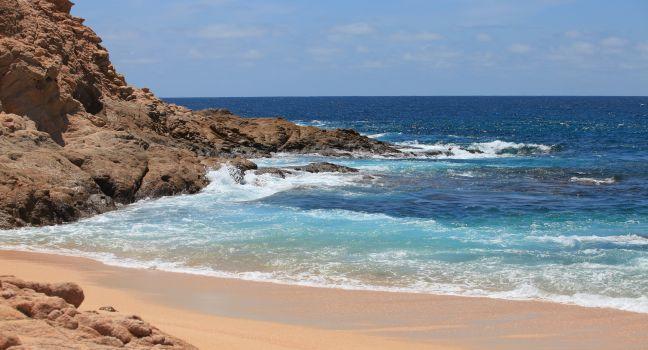
El Chileno beach, a public beach in Los Cabos, Mexico.
(c) Hapinessey | Dreamstime.com

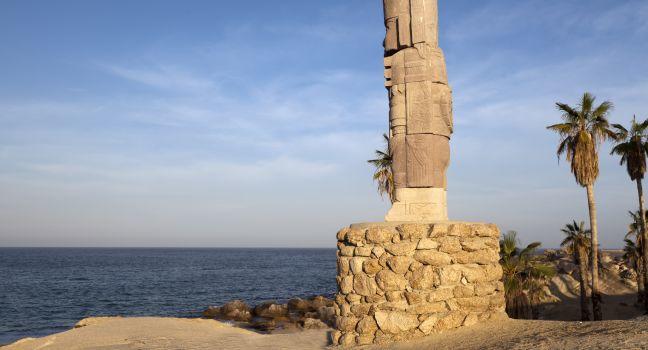
A calm enclave—with golf courses, residences, and Chileno Bay Resort—is roughly midway between San José and Cabo San Lucas. Consistently ranked one of the cleanest beaches in Mexico, Chileno has been awarded “Blue Flag” certification, meaning 32 criteria for safety, services, water quality, and other standards have been met. The beach skirts a small, crescent-shape cove with aquamarine waters and an outside reef that are perfect for snorkeling and swimming (there are even restrooms, showers, and handicap access). To the east are tide pools great for exploring with the kids. Getting here is easy, thanks to the well-marked access ramps on both sides of the road. Along the western edge of Bahía Chileno, some 200 yards away, are some good-size boulders that you can scramble up. In winter this part of the Sea of Cortez gets chilly—refreshing for a dip, but most snorkelers don't spend too much time in the water. On weekends get to the bay early if you want to claim shade under a palapa. Amenities: toilets; showers; parking lot. Best for: swimming; snorkeling; sunset.

Bahía Santa María

Fodor's choice
Beautiful Santa Maria bay to snorkel in.
(c) Dgirard12 | Dreamstime.com

This wide, sloping, horseshoe-shape beach is surrounded by cactus-covered rocky cliffs; the placid waters here are a protected fish sanctuary. The bay is part of an underwater reserve and is a great place to snorkel: brightly colored fish swarm through chunks of white coral and golden sea fans. Unfortunately, this little slice of paradise has limited palapas for shade, so arrive early or bring a beach umbrella. In high season, from November to May, there's usually someone renting snorkeling gear or selling sarongs, straw hats, and soft drinks. It's best to bring your own supplies, though, including lots of drinking water, snacks, and sunscreen. Snorkel and booze-cruise boats from Cabo San Lucas visit the bay in midmorning through about 1 pm. Arrive midafternoon if you want to get that total Robinson Crusoe feel. The parking lot is a quarter mile or so off the highway and is sometimes guarded; be sure to tip the guard. The bay is roughly 19 km (12 miles) west of San José and 13 km (8 miles) east of Cabo San Lucas. Heading east, look for the sign saying "playa santa maría." Amenities: toilets; free parking; showers; lifeguards. Best for: snorkeling; swimming; surfing; walking.

Monte Albán

Fodor's choice
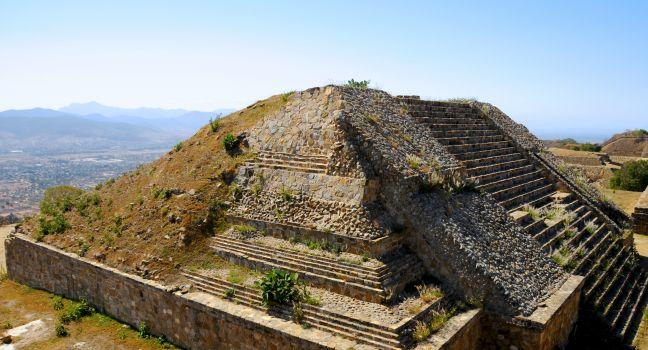
The pyramid ruins of Monte Alban - Oaxaca, Mexico
Nfoto / Shutterstock

The massive temples of Monte Albán, perched atop a mesa, make this one of the country's most spectacular archaeological sites. This vast city was home to more than 30,000 Zapotec. Despite its size, experts estimate that only about 10% of the site has been uncovered. Digs are sporadic, taking place whenever the budget permits.

Monte Albán overlooks the Oaxaca Valley from a flattened mountaintop 5,085 feet high; the views are breathtaking. Either the Zapotec or their predecessors leveled the site around 600 BC. The varying heights of the site follow the contours of distant mountains. The oldest of the four temples is the Galería de los Danzantes, or the Dancers' Gallery, so named for the elaborately carved stone figures that once covered the building. Most of the originals are now in the site museum, but you can still see some in the temple. Experts are unsure whether the nude male figures represent captives, warriors, or some other group; the theory that they were dancers has been discarded because some appear to be bound.

The Zapotec constructed most of the buildings along a north–south axis, except for the so-called Observatorio (Observatory). The arrow-shape structure is set at a 45-degree angle, pointing toward the southwest. It's thought to have been an observatory, as it's more closely aligned with the stars than with the Earth's poles.

The Juego de Pelota, or ball game, was played in the well-excavated court. Hips, shoulders, knees, and elbows were probably used to hit a wooden or rubber ball. The details of these games are sketchy, but there's speculation that they were a means of solving disputes between factions or villages, of celebrating the defeat of a rival, or of worshipping the gods. Although human sacrifice is thought to have been connected with the ball game in certain parts of Mesoamerica, there's no evidence that it happened in Monte Albán.

No one knows for sure whether the Zapotec abandoned the site gradually or suddenly, but by AD 1000 it stood empty. Years afterward the Mixtec used Monte Albán as a lofty necropolis of lavish tombs. More than 200 tombs and 300 burial sites have been explored. The most fantastic of these, Tumba 7, yielded a treasure unequaled in North America. Inside were more than 500 priceless Mixtec objects, including gold breastplates; jade, pearl, ivory, and gold jewelry; and fans, masks, and belt buckles of precious stones and metals. The tomb is north of the parking lot but is seldom open.

At Monte Albán you'll find a small site museum with a gift shop. The cafeteria isn't half bad, and has a great view of the valley; sadly, it closes with the rest of the site at 5 pm.

Recommended Fodor's Video

Acuario de Veracruz

Fodor's choice

Veracruz is home to one of Latin America's biggest and best aquariums. One tank alone has 2,000 species of marine life native to the Gulf of Mexico, including manta rays, barracudas, and sea turtles. Other tanks display tiger sharks and gentle manatees that enjoy interacting with the crowds. The entry also has a space where birds, including toucans, fly freely. Kids love the touch tanks. A guided immersion tank ($7 adults; $3.50 kids) provides daring visitors the chance to go nose to nose with the sharks.

Aktunchen Park

Fodor's choice

The name is Mayan for "the cave with cenotes inside," and these amazing underground caverns—estimated to be about 5 million years old—are the area's largest. You walk through the underground passages, past stalactites and stalagmites, until you reach the cenote with its various shades of deep green. There's also an on-site canopy tour and one cenote where you can swim. This top family attraction isn't as crowded or touristy as Xplor, Xel-Há, and Xcaret.

Carretera 307, Km 107, Akumal, 77750, Mexico
984-806–4962
Sight Details
Cave tour $29; cenote tour $33; canopy tour $44

Something incorrect in this review?

Alameda Central

Alameda Central Fodor's choice

The manicured gardens of the Alameda Central at the western edge of Centro Histórico have been the heart of Mexico City life since the height of the city's pre-Hispanic glory, when informal markets were held here. Strolling around the park today remains a great way to break up sightseeing in the neighborhood. During the week it's quite lively, but you'll be able to find a shaded bench for a few moments of rest before heading off to more museums. Food vendors throughout the park sell all kinds of snacks, from ice cream to grilled corn on the cob. In the early days of the viceroyalty, the Inquisition burned its victims at the stake here. Later, national leaders, from 18th-century viceroys to Emperor Maximilian and the dictator Porfirio Díaz, envisioned the park as a symbol of civic pride and prosperity. Life in Mexico, one of the quintessential texts on daily life in the colonial period, written by the British countess Frances Calderón de la Barca, describes how women donned their finest jewels to walk around the park even after independence. Over the centuries it has been fitted out with fountains and ash, willow, and poplar trees; through the middle of the 20th century, it became a popular gay cruising ground. Today, the Alameda is one of the best places in town to see people from all walks of life, mingling in the shadow of some of the city's most iconic buildings.

Art District

Fodor's choice

Within San José's historic center are four blocks packed with 14 high-quality art galleries, collectively known as the Art or Gallery District. You can walk around any time, but it’s worth planning your visit on Thursday afternoon to enjoy San José's popular weekly Art Walk from 5 pm through 9 pm. During this time, gallery owners open their doors and invite you to socialize with local artists and art enthusiasts from around the globe, discovering thought-provoking artwork along the way.

Avenida Amsterdam

La Condesa Fodor's choice

An elliptical avenue that feels like it could be in Paris or Madrid minus the unusually lush semitropical foliage, Amsterdam was designed in the early 1900s as the outer perimeter of a racetrack that would eventually become Parque México. Today it's among the best streets in the city for a stroll. The two lanes of auto traffic are divided by a landscaped median with a paved sidewalk, old-fashioned street lamps, and a smattering of art nouveau tiled benches. There are three roundabouts connecting Amsterdam, each named for one of the city's cloud-scraping peaks: Popocatépetl, Iztaccihuatl, and Citlaltépetl. This is also one of the best streets for admiring the neighborhood's distinctive residential architectural, from ornate art deco and art nouveau beauties to strikingly contemporary mid-rise towers. Although predominantly residential, the ground floors of many of these buildings contain hip coffeehouses, ice-cream shops, bistros, and bars, along with a handful of noteworthy boutique shops. The avenue completely encircles Parque México, and at the northwestern side of the ellipse, you can walk from Parque México just two blocks along restaurant-lined Avendia Parras to reach Parque España.

Av. Amsterdam, Mexico City, 06100, Mexico

Something incorrect in this review?

Avenida Francisco Sosa

Coyoacán Fodor's choice

One of the prettiest and most historic streets in the city, this narrow tree-lined thoroughfare paved with stone is a delightful destination for a short stroll or (if you're feeling a bit more ambitious) as the most scenic way to walk between the historic centers of Coyoacán and San Ángel. From Jardín Centenario, it runs west for just under 2 km (a little over a mile), ending at Avendia Universidad beside the tiny and historic San Antonio de Padua Chapel. Along the route you'll pass grand 19th-century mansions hidden behind, or towering over, colorfully painted walls. The surrounding neighborhood has been home to various celebrities over the years, from Dolores del Río, Luis Buñuel, and Octavio Paz to, more recently, actor Diego Luna, singer Lila Downs, and Like Water for Chocolate novelist Laura Esquivel. The sidewalks become narrower the farther west you walk, and ancient tree roots have in places pushed up and broken the pavement to an almost comical degree (it can feel more like bouldering than walking in a couple of spots).

The plaza surrounding 16th-century Santa Catarina Chapel is especially picturesque, hung with strings of colorful papel picado and dotted with stone benches and pretty trees. Across the street, the shaded, peaceful grounds of Casa de Cultura Jesús Reyes Heroles are also lovely to walk around, and you may witness a dance or crafts class taking place in one of the cultural center's workshops. Up and down Sosa, and especially closer to Jardín Centenario, you'll pass by inviting cafés and boutiques. There are a few attractions of note on or near this street, such as Fonoteca Nacional and Museo Nacional de la Acuarela Alfredo Guati Rojo. The narrow lanes that intersect with Francisco Sosa are also quite pretty, especially the allegedly haunted and oft-photographed Callejon Aguacate, an alley lined with ivy and flowering shrubs that's reached via a quick turn south onto Calle Tata Vasco. To reach San Ángel, cross Universidad where Francisco Sosa ends and continue west on Calle Arenal and Avenida de la Paz (past Parque de la Bombilla); without stops, it's about a one-hour stroll from Jardín Centenario to San Ángel's Plaza del Carmen.

Av. Francisco Sosa, Mexico City, 04000, Mexico

Something incorrect in this review?

Biblioteca Vasconcelos

Santa María la Ribera Fodor's choice
With nearly 600,000 books, magazines, and international newspapers, this is the largest library in Mexico. It covers more than 410,000 square feet, with rows of catwalks leading up to its six-story ceiling. Opened officially in 2006, the space is regarded as having some of the most unique architecture of any public building in the city. An auditorium regularly hosts concerts, lectures, and other cultural events. Computers are available for public use, as is Wi-Fi. The massive building, which also houses the graffitied skeleton of a gray whale, is surrounded by gardens boasting palm trees and moonflowers.

Bosque de Chapultepec

Fodor's choice

This 1,600-acre green space, literally translated as Chapultepec Forest, draws hordes of families on weekend outings, along with cyclists, joggers, and horseback riders into its three sections, which are divided from east to west by major roads. The first section is the oldest and the most frequented, as it is closest to the city center and home to many museums and other attractions. The second section is much quieter, with plenty of space for recreational activities, while the third section is largely undeveloped and generally functions as an ecological reserve.

At the park's principal entrance, the Monumento a los Niños Héroes (Monument to the Boy Heroes) commemorates the young cadets who, it is said, wrapped themselves in the Mexican flag and jumped to their deaths rather than surrender during the U.S. invasion of 1847. To Mexicans, that war is still a troubling symbol of their neighbor's aggression: it cost Mexico almost half its territory—the present states of Texas, California, Arizona, New Mexico, and Nevada.

Other sights in the first section of Bosque de Chapultepec include a castle, three small boating lakes, a botanical garden, and the Casa del Lago cultural center. You'll also find Los Pinos, the ex-residential palace of the president of Mexico, which is now open to the public for the first time thanks to Mexico's current president, Andrés Manuel López Obrador.

Callejón de los Sapos

Fodor's choice

This narrow and charming pedestrian lane, whose name means "Alley of the Toads," cuts diagonally behind the cathedral. The adjacent square has a bustling weekend antiques market with all sorts of Mexican art and crafts, from elaborately carved doors to small paintings on pieces of tin offering thanks to a saint for favors. There are also hip cafés filled with people listening to live music on weekends.

Calle 6 Sur from Av. 5 to 7 Oriente, Puebla, 72000, Mexico

Something incorrect in this review?

Cancún Underwater Museum

Fodor's choice

The collection at what is known locally as the Museo Subacuático de Arte (MUSA) consists of more than 400 lifelike statues that create marine-life habitats in three locations: off the shores of Punta Sam, Punta Nizuc, and Manchones Reef near Isla Mujeres. The sculptures at the Manchones site are 26 feet deep and best observed on a scuba dive. The two sites closer to Cancún, at half that depth or less, can easily be viewed on snorkeling or glass-bottom-boat excursions.

Cañón del Sumidero

Fodor's choice

The Cañón del Sumidero, a canyon north of Chiapa de Corzo, came into being about 36 million years ago, carved out by the Río Grijalva, which flows north along the canyon's floor. The fissure, which meanders for some 23 km (14 miles), is perhaps the most interesting landscape in the region.

You can admire the Cañón del Sumidero from above, as there are five lookout points along the highway. But the best way to see it is from one of the dozens of boats that travel to the canyon from the Embarcadero in Chiapa de Corzo (two blocks south of the main square) between 8 and 4 daily. Two-hour rides cost about $15 per person, and for about $30 you can spend the day in the ecopark of the canyon. From the boat you can admire the nearly vertical walls that rise 3,500 feet at their highest point. As you coast along, consider the fate of the Chiapa people who reputedly jumped into the canyon rather than face slavery at the hands of the Spaniards during the 16th century. Tour operators in Tuxtla Gutiérrez, San Cristóbal de las Casas, Palenque, and even as far away as Villahermosa offer excursions here.

Chiapa de Corzo, Mexico

Something incorrect in this review?

Casa de los Venados

Fodor's choice

A historic mansion just south of Valladolid's central square contains Mexico's largest private collection of folk art. Rooms around the gracious courtyard contain some 3,000 pieces, with Día de los Muertos (Day of the Dead) figures being a specialty. The selection is impressive, but even without it, the house would be worth touring. This hacienda-style building dates from the early 17th century, and the restoration was led by the same architect who designed Mérida's ultramodern Gran Museo del Mundo Maya (don't worry—the results here preserved its colonial elegance). Casa de los Venados opens to the public each morning for a 90-minute bilingual tour. Just show up; no reservations are needed. The suggested donation of MX$100 is a bargain, and all proceeds help fund local health-care projects.

Casa Luis Barragán

San Miguel Chapultepec Fodor's choice

Bold colors, lines, and innovative designs are among the most ubiquitous features of Mexico City architecture, and this modernist approach can in large part be traced to Luis Barragán, who lived and worked in this home—now designated as a UNESCO World Heritage Site—from the year he built it (1947) until his death in 1988. The architect's singular aesthetic is apparent throughout the house: in the angular staircases, sharp angles, ample natural light, and bold colored accent walls. Visits are by self-guided or guided tours, both of which must be purchased by advance reservation. Book online, and keep in mind that tour slots open roughly a month in advance and sell out almost immediately, so plan accordingly. Tickets are also quite expensive, and it costs an extra 500 pesos for permission to take photos. Across the street from the house is a small, peaceful garden with chairs, a reflection pool, lush foliage, and restrooms---this serves as a waiting area before tours begin, although it's free and open to the public (as is the museum's excellent bookstore), and it's a pleasant spot to take a break. The easiest route to the house is via the pedestrian pathway and stairs that border the highway, leading from the Constituyentes Metro station.

Castillo de Chapultepec

Fodor's choice

The castle on Cerro del Chapulín (Grasshopper Hill) within Bosque de Chapultepec has borne witness to all the turbulence and grandeur of Mexican history. In its earliest form it was an Aztec palace, where the Mexica made one of their last stands against the Spaniards. Later it was a Spanish hermitage, gunpowder plant, and military college. French emperor Maximilian used the castle, parts of which date from 1783, as his residence, and his example was followed by various presidents from 1872 to 1940, when Lázaro Cárdenas decreed that it be turned into the Museo Nacional de Historia.

Displays on the museum's ground floor cover Mexican history from the conquest to the revolution. The bathroom, bedroom, tea salon, and gardens were used by Maximilian and his wife, Carlotta, in the 1860s. The ground floor also contains works by 20th-century muralists O'Gorman, Orozco, and Siqueiros, and the upper floor is devoted to temporary exhibitions, Porfirio Díaz's malachite vases, and religious art. From the garden and terrace, visitors can enjoy sweeping views of the city skyline.

Catedral de Mérida

Fodor's choice

Begun in 1561, Mérida's cathedral is one of the oldest on the North American mainland (an older one can be found in the Dominican Republic). It took several hundred Maya laborers, working with stones from the pyramids of the ravaged Maya city, 37 years to complete it. Designed in the somber Renaissance style by an architect who had worked on El Escorial in Madrid, its facade is stark and unadorned, with gunnery slits instead of windows and faintly Moorish spires.

Inside, the black Cristo de las Ampollas (Christ of the Blisters) occupies a side chapel to the left of the main altar. At 23 feet tall, it's the tallest Christ figure inside a Mexican church. The statue is a replica of the original, which was destroyed during the revolution in 1910 (also when the gold that once adorned the cathedral was carried off). According to one of many legends, the Christ figure burned all night and appeared the next morning unscathed—except for its namesake blisters. You can hear the pipe organ play at the 11 am Sunday Mass.

Catedral Metropolitana

Centro Histórico Fodor's choice

The majestic cathedral that forms the northern side of the Zócalo is nothing less than the heart of Mexico City, its most famous building, and the backdrop to many of the country's most important historical events. Construction on the largest and one of the oldest Latin American cathedrals began in the late 16th century and continued intermittently throughout the next 300 years. The result is a medley of baroque and neoclassical touches. There are 5 altars and 14 chapels, mostly in the ornate churrigueresque style, named for Spanish architect José Benito Churriguera (1665–1725). Like most Mexican churches, the cathedral is all but overwhelmed by innumerable paintings, altarpieces, and statues—in graphic color—of Christ and the saints. Over the centuries, this cathedral began to sink into the spongy subsoil, but a major engineering project to stabilize it was declared successful in 2000. The older-looking church attached to the cathedral is the 18th-century Sagrario chapel. 

Centro de la Imagen

Alameda Central Fodor's choice

One of the city's most interesting museums, Centro de la Imagen shares the old Ciudadela building with the Biblioteca de México. Remodeled just a few years back, the extensive gallery spaces work cleverly to transect and interact with the historic structure and are devoted to reflections on photographs as both historical documents and art. The library near the entrance has a significant collection of photobooks. Guided tours in English can be arranged for free via the website with several weeks' notice.

Chichén Itzá

Fodor's choice

Little is known about those who founded this dramatic, 6-square-km (2¼-square-mile) metropolis. Some structures, likely built in the 5th century, predate the arrival of the Itzá, the people who occupied the city starting around the late 8th and early 9th centuries. Why they abandoned it in the early 1200s is also unknown, as is its subsequent role. What is known is that the city's name means "the mouth of the well of the Itzá," likely referring to the site's several cenotes—valuable sources of water.

Dominating Mexico's most stunning and well-preserved Maya site is El Castillo (The Castle), also known by its Mayan name, Kukulkán. The much-photographed pyramid is remarkable not only for its size, but also for its perfectly proportioned symmetry. Adorning the corners of its four stairways (no, climbing is not allowed) are open-jawed serpent statues that honor the priest-king Kukulcán (aka Quetzalcóatl), an incarnation of the feathered serpent god. More serpents appear in sculpted columns atop the building.

At the spring and fall equinoxes, the afternoon light strikes the pyramid so that the snake god's shadow appears to undulate down the side of it to bless the fertile earth. Thousands of people, from sightseers to shamans, travel here to witness this phenomenon. Make lodging reservations far in advance if you hope to join them.

Archaeologists are still abuzz about the 2015 discovery of a subterranean river flowing underneath the pyramid, detected via “electrical resistance survey.” Although the Maya would likely have intentionally constructed El Castillo over such a river cavern, there is concern that this will lead to the formation of a gigantic sinkhole that would threaten the structure’s foundation. Although experts say this would probably not happen for several generations, time will tell.

Just west of El Castillo is another highlight: the Anexo del Templo de los Jaguares (Annex to the Temple of the Jaguars), where bas-relief carvings represent still other important deities. To its west is the Juego de Pelota, the city's main ball court. Remarkably, if you stand at one end of it and whisper something, it will be heard all the way at the other end. The game played on this ball court was apparently something like soccer (no hands were used), but it likely had some sort of ritualistic significance. (Note that the Mérida tourist offices stages a popular demonstration of the ball game each Friday evening in front of the cathedral.)

On the other side of El Castillo, just before a small temple dedicated to the planet Venus, a ruined sacbé, or raised white road, leads to the Cenote Sagrado (Holy Well), which was probably for ritualistic purposes. The nearby Cenote Xtaloc was kept pristine, undoubtedly for bathing and drinking. Adjacent to it is a steam bath, outside of which is a tiny pool that was used for cooling down.

Older Maya structures lie south and west of Cenote Xtaloc. Archaeologists have been restoring several buildings in this area, including the Templo del Osario (Ossuary Temple), which concealed several tombs with skeletons and offerings. Behind the smaller Casa Roja (Red House) and Casa del Venado (House of the Deer) are the site's oldest structures, including El Caracol (The Snail), a round building—rare in Maya architecture—with an interior spiral staircase. With eight tiny windows precisely aligned with the points of the compass rose, it was seemingly built as a celestial observatory.

If the Maya gods are smiling, the evening sound-and-light show—which features images projected on El Castillo—won't be plagued by technical issues during your visit. Though some say the show is cheesy, others say it's stunning. Regardless, it offers a different perspective on this remarkable site. It takes place at 8 pm from April through October and at 7 pm the rest of the year. Reservations are required, and you can make them online ( nochesdekukulkan.com.mx) or through a tour operator. Tickets are pricey but include a 30-minute pre-show guided walk and use of a translation device (original narration is in Spanish only).

ChocoMuseo

Fodor's choice

ChocoMuseo is a museum where visitors not only learn all about the history and nature of chocolate but also find out how to work with it and create different cocoa-based products and dishes. You can book workshops on how to prepare the Mexican national dish of mole, make chocolate truffles, or let your children experiment with a mini chocolate workshop. 

Cliff Divers at La Quebrada

Old Acapulco Fodor's choice

Although it is an undeniably touristy activity, the shows the cliff divers put on at La Quebrada have been going strong for more than eight decades, and have kept the crowds coming back. The iconic image that most people conjure when they think of Acapulco is its cliff divers (clavadistas, in Spanish), who make a living tempting death; fortunately, all have come out victors in that fight. Four times a day (at 12:45 pm, 7:30 pm, 8:30 pm, and 9:30 pm), the men swan dive into La Quebrada (“the gorge”) from a 130-foot perch on the cliffs above on the peninsula of the same name. They have to time their plunges carefully, coordinating jumps with the waves. The water below is only 12 feet deep. The practice of cliff diving began with local fishermen, who were known to dive from high up on the rocky cliffs in order to propel themselves deep enough into the water to free snagged lines. With the advent of tourism in the 1930s, however, the divers soon discovered that their sensational skills could earn them tips. The winding roads of La Quebrada peninsula make the site difficult to find on your own. A taxi is a good choice for getting here, or, better yet, a tour operator. Admission to the observation area costs $3. You’ll also be “charged” a bit of physical exertion in the form of a 70 step climb to get to the observation deck. Taking in the spectacle from the vantage point of La Perla restaurant at the nearby Hotel Mirador Acapulco (744/483--1260, www.miradoracapulco.com) makes a far more comfortable option. The Mirador offers three packages: one drink ($7); two drinks ($11), or full dinner ($26) while you enjoy the show. Some cruise lines’ shore excursions take in the spectacle from the vantage point of a yacht, as do a few local tour operators. The night shows, where the divers carry torches, are very popular, especially on weekends. No matter where you watch the show, expect to be approached by divers afterward asking for a tip. Most visitors offer $2 to $5; skew toward the higher amount if one of them poses for a photo with you. Beyond the cliff divers, La Quebrada peninsula has remnants of Acapulco's golden era of the early- to mid-20th century. Although now past its prime, this mostly residential area is being revitalized; the reopening of the trendy Boca Chica Hotel has led the way. You’ll also still find inexpensive hotels that are popular with travelers who want good deals and a slower pace than the main resort areas.

La Quebrada Peninsula, Acapulco, Mexico
Sight Details
$3

Something incorrect in this review?

Cobá Ruins

Fodor's choice

Mayan for "water stirred by the wind," Cobá flourished from AD 800 to 1100, with a population of as many as 55,000. Now it stands in solitude, and the jungle has overgrown many of its buildings—the silence is broken only by the occasional shriek of a spider monkey or the call of a bird. Most of the trails here are pleasantly shaded; processions of huge army ants cross the footpaths as the sun slips through openings between the tall hardwood trees, ferns, and giant palms. Cobá's ruins are spread out and best explored on a bike, which you can rent for MX$100 a day. Taxi-bike tours are available for MX$200 for an hour and 20 minutes or MX$300 for two hours. If you plan on walking instead, expect to cover 5 to 6 km (3 to 4 miles).

The main groupings of ruins are separated by several miles of dense vegetation. It's easy to get lost here, so stay on the main road, wear comfortable shoes, and bring insect repellent, sunscreen, and drinking water. Inside the site, there are no restrooms and only one small hut selling water (cash only). Don't be tempted by the narrow paths that lead into the jungle unless you have a qualified guide with you.

The first major cluster of structures, to your right as you enter the ruins, is the Cobá Group, whose pyramids are around a sunken patio. At the near end of the group, facing a large plaza, is the 79-foot-high temple, which was dedicated to the rain god, Chaac. Some Maya still place offerings and light candles here in hopes of improving their harvests. Around the rear, to the left, is a restored ball court, where a sacred game was once played to petition the gods for rain, fertility, and other blessings.

Farther along the main path to your left is the Chumuc Mul Group, little of which has been excavated. The principal pyramid here is covered with the remains of vibrantly painted stucco motifs (chumuc mul means "stucco pyramid"). A kilometer (½ mile) past this site is the Nohoch Mul Group (Large Hill Group), the highlight of which is the pyramid of the same name, the tallest at Cobá. It has 120 steps—equivalent to 12 stories—and shares a plaza with Temple 10. The Descending God (also seen at Tulum) is depicted on a facade of the temple atop Nohoch Mul.

Beyond the Nohoch Mul Group is the Castillo, with nine chambers that are reached by a stairway. To the south are the remains of a ball court, including the stone ring through which the ball was hurled. From the main route, follow the sign to Las Pinturas Group, named for the still-discernible polychrome friezes on the inner and outer walls of its large, patioed pyramid. An enormous stela here depicts a man standing with his feet on two prone captives. Take the minor path for 1 km (½ mile) to the Macanxoc Group, not far from the lake of the same name.

Cobá, 77740, Mexico
984-206–7166
Sight Details
MX$90

Something incorrect in this review?

Diana la Cazadora

Cuauhtémoc Fodor's choice
Constructed over the course of four years and completed in 1942 by Mexican sculptor Juan Fernando Olaguíbel Rosenzweig, this celebrated fountain of Diana the Huntress stands nine feet tall. The one-ton bronze homage to the Roman goddess was originally designed nude, then was covered for more than two decades due to public and political outcry until she was liberated into her natural form again in 1967. She had originally been unveiled at Bosque de Chapultepec and then moved to an obscure location, from which she was rescued and moved to the city’s bustling Paseo de la Reforma in 1992.
Paseo de la Reforma and Calle Sevilla, Mexico City, Mexico

Something incorrect in this review?

Edzná

Fodor's choice

A major metropolis in its day, Edzná was situated at a crossroads between cities in modern-day Guatemala and the states of Chiapas and Yucatán, hence it features a mélange of Maya architectural elements. Roof combs and corbeled arches evoke those at Yaxchilán and Palenque, in Chiapas, and giant stone masks resemble the Petén-style architecture of southern Campeche and northern Guatemala.

Edzná began as a humble agricultural settlement around 300 BC, reaching its pinnacle in the Late-Classic period, between AD 600 and 900, then gradually waning in importance until being all but abandoned in the early 15th century. Today, soft breezes blow through groves of slender trees where brilliant orange and black birds spring from branch to branch. Clouds scuttle across a blue backdrop, perfectly framing the mossy remains of once-great structures.

One highlight is the five-story Pirámide de los Cinco Pisos, which was built on the raised platform of the Gran Acrópolis (Great Acropolis). Hieroglyphs carved into the vertical faces of the 15 steps between each level (some re-cemented in place by archaeologists, although not necessarily in the correct order), as well as into stelae throughout the site, depict the opulent attire once worn by the Maya ruling class—quetzal feathers, jade pectorals, and jaguar-skin skirts. On the pyramid's top level sit the ruins of three temples and a ritual steam bath.

The Pirámide de los Cinco Pisos was constructed so that on certain dates the setting sun would illuminate the mask of the creator-god, Itzamná, inside one of the pyramid's rooms. This still happens on May 1, 2, and 3, the beginning of the Maya planting season, and on August 7, 8, and 9, the days of harvesting and giving thanks. 

West of the Great Acropolis, the Puuc-style Plataforma de los Cuchillos (Platform of the Knives) was so named by the archaeological team that found a number of flint knives inside. To the south, four buildings surround a smaller structure called the Pequeña Acrópolis (Small Acropolis). Twin sun-god masks with huge protruding eyes, sharp teeth, and oversize tongues flank the Templo de los Mascarones (Temple of the Masks, or Building 414), adjacent to the acropolis. The mask at the bottom left (east) represents the rising sun; the mask to the right represents the setting sun.

If you're not driving, consider taking one of the inexpensive day trips offered by tour operators in Campeche. Convenience aside, a guide can point out features often missed by the untrained eye, such as the remains of arrow-straight sacbés. These raised roads in their day connected one important ceremonial building within the city to the next, and also linked Edzná to trading partners throughout the peninsula.

El Charco del Ingenio

Fodor's choice

San Miguel's botanical garden has an extensive variety of Mexican cacti and succulents collected from different parts of the country. The area is protected from encroachment by an ecological reserve of 445 acres and was visited by the Dalai Lama, who declared El Charco one of the five "zones of peace" in Mexico. A garden area will introduce you to some of the 120 varieties of agaves that grow here.

The reserve is huge and has special pathways for walking, running, and mountain biking. If you don't have MX$40 (or are with your dog, which is not allowed in the garden), the adjacent Parque Landeta has nice walking paths as well.

Twice a month, during full and new moon phases, it opens the

temazcales

, ritual herbal steam baths (MX$250). If you're driving up Salida a Querétaro from El Centro, turn left at the traffic circle and follow the signs to the main entrance. A taxi will cost about MX$45.

Paloma s/n, San Miguel de Allende, 37700, Mexico
415-154–4715
Sight Details
MX$40, MX$80 with guided tour
Daily 9–6

Something incorrect in this review?

El Tajín

Fodor's choice

The extensive ruins of El Tajín—from the Totonac word for "thunder"—express the highest degree of artistry of any ancient city in the coastal area. The city was hidden until 1785, when a Spanish engineer happened upon it. Early theories attributed the complex, believed to be a religious center, to a settlement of Mayan-related Huasteca, one of the most important cultures of Veracruz. Because of its immense size and unique architecture, scholars now believe it may have been built by a distinct El Tajín tribe with ties to the Maya. Although much of the site has been restored, many structures are still hidden under jungle.

El Tajín is thought to have reached its peak between AD 600 and 1200. During this time hundreds of structures of native sandstone were built here, including temples, double-storied palaces, ball courts, and houses. But El Tajín was already an important religious and administrative center during the first three centuries AD. Its influence is in part attributed to the fact that it had large reserves of cacao beans, used as currency in pre-Hispanic times.

Evidence suggests that the southern half of the uncovered ruins—the area around the lower plaza—was reserved for ceremonial purposes. Its centerpiece is the 60-foot-high Pirámide de los Nichoes (Pyramid of the Niches), one of Mexico's loveliest pre-Columbian buildings. The finely wrought seven-level structure has 365 coffers (one for each day of the solar year) built around its seven friezes. The reliefs on the pyramid depict the ruler, 13-Rabbit—all the rulers' names were associated with sacred animals—and allude also to the Tajín tribe's main god, the benign Quetzalcóatl. One panel on the pyramid tells the tale of heroic human sacrifice and of the soul's imminent descent to the underworld, where it is rewarded with the gift from the gods of sacred pulque, a milky alcoholic beverage made from cactus.

Just south of the pyramid is the I-shape Juego de Pelotas Sur (Southern Ball Court). This is one of more than 15 ball courts, more than at any other site in Mesoamerica, where the sacred pre-Columbian ball game was played. The game is somewhat similar to soccer—players used a hard rubber ball that could not be touched with the hands, and suited up in pads and body protectors—but far more deadly. Intricate carvings at certain ball courts indicate that games ended with human sacrifice. It's believed that the winner of the match won the opportunity to ask a question of the gods in exchange for his sacrifice. Depending on the importance of his question, his sacrifice could be anything from minor body mutilation to his very life. It is surmised that the players involved in these sacrificial games were high-ranking members of the priest or warrior classes.

To the north, El Tajín Chico (Little El Tajín) is thought to have been the secular part of the city, with mostly administrative buildings and the elite's living quarters. Floors and roofing were made with volcanic rock and limestone. The most important structure here is the Complejo de los Columnos (Complex of the Columns). The columns once held up the concrete ceilings, but early settlers in Papantla removed the stones to construct houses. If you're prepared to work your way through the thick jungle, you can see some more recent finds along the dirt paths that lead over the nearby ridges.

You can leave bags at the visitor center at the entrance, which includes a restaurant and a small museum that displays some pottery and sculpture and tells what little is known of the site. Excellent guided tours are available in English and Spanish and cost about $20 per group. A performance by some voladores normally takes place at midday and sometimes up to five times daily. Start early to avoid the midday sun, and take water, a hat, and sunblock. To get here, take a shuttle bus. Head down Calle 20 de Noviembre until you hit Calle Francisco Madero. Cross the street and wait in front of the gas station for an "El Tajín" shuttle bus. The $1 trip takes about 20 minutes.

Estadio Azteca

Greater Mexico City Fodor's choice

Fútbol is the sport that Mexicans are most passionate about, which is evident in the size of their soccer stadium, Estadio Azteca, which holds 83,264 spectators and is the second largest in all of Latin America. Located in the south of the city, about 8 km (5 miles) beyond historic Coyoacán, it's the home turf of Club América, one of Mexico's top fútbol teams, as well as the Primera División's Cruz Azul, repeat winners of the CONCACAF Champions League. Additionally, Mexico's national team plays here often, and there's an American NFL football game held here once a year. The stadium will also be one of three in Mexico (and the only one in Mexico City) to host games during the FIFA World Cup in 2026. In preparation for this, the stadium will be undergoing significant renovations and improvements throughout 2024 and early 2025, although most games are still expected to take place throughout this period, with the exception of the annual NFL football game, which may not resume until after the World Cup. You can buy tickets at the stadium ticket windows on the same day of any minor game. For more important games, try to buy tickets a week in advance—it's easiest to do so via Ticketmaster.

You can't get to Azteca by Metro, but there is a light rail stop (Estadio Azteca) outside the stadium and it's a short walk to catch the light rail from the Tasqueña metro stop. Hour-long tours are also offered daily for MP150.

Fonoteca Nacional de México

Coyoacán Fodor's choice

On the western end of picturesque Avenida Francisco Sosa, this grand mansion with a dramatic facade was built in the Moorish and Andulusian style in the 18th century and eventually became the home of Mexican Nobel poet Octavio Paz, who lived here in the late 1990s until his death in 1998. In 2008, the building—known as Casa Alvarado—became the home of Mexico's national sound archive. Today, visitors can explore the archives and, in the listening rooms, hear digitized recordings from the archive's immense collection, which includes Frida Kahlo, Álvaro Obregón, and dozens of other historical figures. There's also an extensive library of books related to music and sound, and you can saunter through the gracious gardens and grounds, which are a perfect spot to relax with a book or rest your feet for a bit. Fonoteca also hosts a rich array of lectures, concerts, and other events—check the online calendar for details.