210 Best Sights in Costa Rica

Background Illustration for Sights

We've compiled the best of the best in Costa Rica - browse our top choices for the top things to see or do during your stay.

Playa Carrillo

Fodor's choice
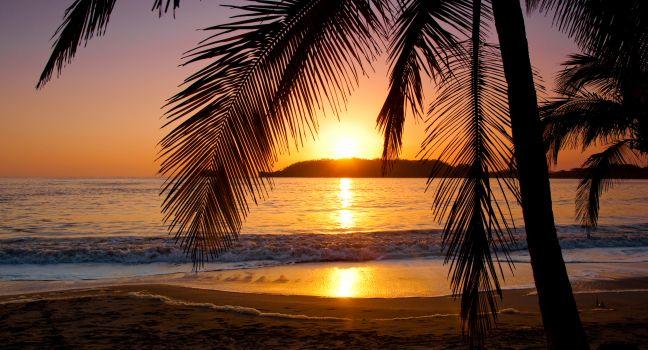
The sun sets behind a little island in Playa Carrillo, Costa Rica.
RuthChoi / Shutterstock

Unmarred by a single building at beach level, this picture-perfect pristine white strand is ideal for swimming, snorkeling, strolling, and lounging—just remember not to sit under a loaded coconut palm. Signs posted by the municipality announce that the only entry "fee" is: make no fires, and take your garbage away with you. There are some concrete tables and benches, but they get snapped up quickly. This is a popular beach with locals, and it gets quite busy on weekends. The only commercial activity is a hand-wheeled cart selling fruit ices. Amenities: none. Best for: snorkeling; swimming; walking.  Sometimes crocodiles hang out at the river mouths at both ends of the beach, so keep a lookout and wade or swim only in the middle of the beach.

Carrillo, Costa Rica

Something incorrect in this review?

Rincón de la Vieja National Park

Fodor's choice
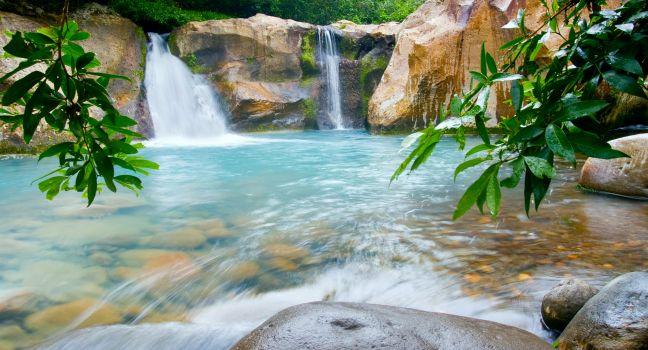
Waterfall at the Rincon de la Vieja National Park, Costa Rica
Wouter Tolenaars / Shutterstock

It might be a trek to get here, but Rincón de la Vieja National Park doesn’t disappoint with its multitude of natural wonders from hot springs and mud baths to refreshing waterfalls and a smoldering volcano. Dominating 140 square km (54 square miles) of the volcano's upper slopes, this tropical rainforest is usually blanketed in clouds, with a short dry transition between January and April. The park has two peaks: Santa María and the barren Rincón de la Vieja. The latter has an active crater, leading park authorities to close some trails, especially during wet season (check the status before you visit).

The wildlife here is diverse, with birds, deer, coyotes, monkeys, and armadillos. There are two main entrances: Santa María and Las Pailas; the latter is the most common place to enter the park and is closest to the trails (there's a $1.50 charge for private road use). The park does not have guides; we recommend the nature guides at Tours Your Way. Many of the attractions people visit in Rincón de la Vieja are accessible without actually entering the park, since the ranches that border it also hold significant forest and geothermal sites.

Rincón de la Vieja National Park, Costa Rica
2666–5051
Sight Details
$17
Closed Mon.
Tickets not available at entrance. Must purchase tickets in advance at SINAC's reservation system

Something incorrect in this review?

Sloth Sanctuary of Costa Rica

Fodor's choice
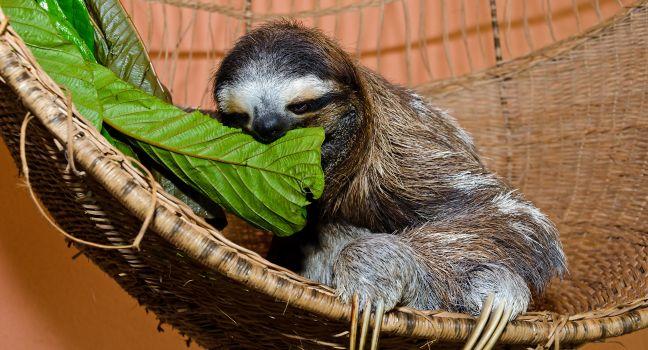
A three-toed sloth sits in her basket in a Sloth sanctuary in Costa Rica while feeding on green leaves.
Joost van Uffelen / Shutterstock

If most of your sloth sightings have involved squinting up at lofty trees to locate a ball of fur lodged into the crook of a branch, this full-fledged nature center a few miles northwest of Cahuita is the best opportunity to see active sloths and get a clear view of their perpetually smiling faces. Many of the sloths that live on the premises are here because of illness or injury and are not on display to the public, but there are plenty of sloths that are accustomed to visitors. The highly informative tour covers not only general knowledge about these unique creatures but also particular details regarding each sloth and how they ended up at the sanctuary. Your admission contributes to further care and research by the good-hearted folks who operate the facility. Reservations are required for a special insider’s tour ($150) that takes you behind the scenes into the sloth clinic and nursery where you cannot touch or hold the babies but you can gaze into their sweet faces without any barriers in between.

Recommended Fodor's Video

Tortuguero National Park

Fodor's choice
Red-eyed Treefrog (Agalychnis callidryas) in the Jungle at Night, Tortuguero National Park, Costa Rica
Kevin Wells Photography / Shutterstock

There is no better place in Costa Rica to observe sea turtles nesting, hatching, and scurrying to the ocean. The July–October nesting season for the green turtle is Tortuguero's most popular time to visit. Toss in the hawksbill, loggerhead, and leatherback—the three other species of sea turtle that nest here, although to a lesser extent—and you expand the season from February through October. Hatching takes place September to December. You can undertake night tours only with an authorized guide, who will be the only person in your party with a light, and that will be a light with a red covering. Photography, flash or otherwise, is strictly prohibited. The sight of a mother turtle furiously digging in the sand to bury her eggs is amazing, even from several yards away, and the spectacle of a wave of hatchlings scurrying out to sea is simply magnificent.

Outside of turtle nesting season, there is an abundance of wildlife to observe in this raw and mostly impenetrable landscape. Boat tours on the canals run alongside towering raffia palms, their iridescent golden-green fronds stretching out over stoic caimans in the water below. Sloths are balled into tree branches, mustering the energy to forage their next meal, while the humid air echos with the digitized birdsong of oropendulas and the wild screeching of great green macaws. Smaller and quieter watercraft like kayaks or canoes allow for navigating the dense vegetation of teawater lagoons and palm swamps, and overhead, frequent bursts of rain are shielded by the outstretched branches of towering ceiba trees.

For more information see the feature at the beginning of this chapter.

Tortuguero, 70205, Costa Rica
2709–8086-Tortuguero National Park
Sight Details
$17
You must purchase your ticket in advance as the number of daily entries into the park is limited.

Something incorrect in this review?

Ballena Marine National Park

Fodor's choice

Named for the whales who use this area as a nursery—and the famous tail formation in the sand at low tide—the park has four separate Blue Flag beaches stretching for about 10 km (6 miles) and encompasses a mangrove estuary, a remnant coral reef, and more than 12,350 acres of ocean, home to tropical fish, dolphins, and humpback whales. Playa Uvita is the most popular sector of the park, with the longest stretch of beach and shallow waters calm enough for kids. Restaurants line the road to the Playa Uvita park entrance, but there are no food concessions within the park. Access to each of the four beaches—from north to south, Uvita, Colonia, Ballena, and Piñuela—is off the Costanera Highway. Although Playas Colonia and Uvita are open 7 am to 6 pm, Piñueña and Ballena close earlier at 4 pm. Visitors can stay on longer, especially to view sunsets or camp. Park stations close at 6 pm.

Entrance at Playa Uvita, about 20 km (12 miles) south of Dominical, Uvita, 60504, Costa Rica
8705–1629
Sight Details
$7
Card only (no cash)

Something incorrect in this review?

Cabo Blanco Absolute Nature Preserve

Fodor's choice

Conquistadores named this area Cabo Blanco on account of its white earth and cliffs, but it was a more benevolent pair of foreigners—Swede Nicolas Wessberg and his Danish wife, Karen Mogensen, arriving here in the 1950s—who made it a preserve. Appalled by the first clear-cut in the Cabo Blanco area in 1960, the pioneering couple launched an international appeal to save the forest. In time their efforts led not only to the creation of the 12-square-km (4½-square-mile) reserve but also to the founding of Costa Rica's national park service, the National Conservation Areas System (SINAC). Wessberg was murdered on the Osa Peninsula in 1975 while researching the area's potential as a national park. A reserve just outside Montezuma was named in his honor. A reserve has also been created to honor his wife, who dedicated her life to conservation after her husband's death.

Informative natural-history captions dot the trails in the Cabo Blanco forest. Look for the sapodilla trees, which produce a white latex used to make gum; you can often see V-shaped scars where the trees have been cut to allow the latex to run into containers placed at the base. Wessberg cataloged a full array of animals here: porcupine, hog-nosed skunk, spotted skunk, gray fox, anteater, cougar, and jaguar. Resident birds include brown pelicans, white-throated magpies, toucans, cattle egrets, green herons, parrots, and blue-crowned motmots. A fairly strenuous 10-km (6-mile) round-trip hike, which takes about two hours in each direction, follows a trail from the reserve entrance to Playa Cabo Blanco. The beach is magnificent, with hundreds of pelicans flying in formation and paddling in the calm waters offshore—you can wade right in and join them. Off the tip of the cape is the 7,511-square-foot Isla Cabo Blanco, with pelicans, frigate birds, brown boobies, and an abandoned lighthouse. As a strict reserve, Cabo Blanco is open only five days a week. It has restrooms, picnic tables at the entrance, and a visitor center with information panels on park history and biological diversity, but no other tourist facilities, and overnight camping is not permitted. Most visitors come with their own guide. This is one of the hottest parks in the country, so be sure to bring lots of water with you.  An official sign at the entrance warns people with cardiovascular problems NOT to walk the strenuous trail to Cabo Blanco beach.

Café Britt

Fodor's choice

The producer of Costa Rica's most popular export-quality coffee gives a lively Classic Coffee Tour highlighting the history of Costa Rica's coffee cultivation through a theatrical presentation that is admittedly a bit hokey. Your "tour guides" are professional actors, and pretty good ones at that, so if you don't mind the song and dance, it's fun. (You might even be called upon to participate.) During the 1½-hour tour, you'll take a short walk through the coffee farm and processing plant, and learn how professional coffee tasters distinguish a fine cup of java. A two-hour Coffee Lovers Experience tour delves into the process at a more expert level. You'll leave the all-day Coffee Origins tour feeling like even more of an expert, delving into the environmental issues surrounding coffee. You can also stop in at Britt's Coffee Bar and Factory Store. Although all three tours are devoted entirely to the production and history of Costa Rica's most famous agricultural product, Britt is also a purveyor of fine chocolates, cocoas, cookies, macadamia nuts, and coffee liqueurs; you'll see its products for sale in souvenir shops around the country and at the airport as you leave. The standard coffee tour is often a half-day inclusion on many Central Valley tours operated by San José tour companies, combined with the Poás Volcano, the La Paz Waterfall Gardens, or Rainforest Adventures.

Caño Negro National Wildlife Refuge

Fodor's choice

It's a shame that Caño Negro doesn't grab the same amount of attention in wildlife-viewing circles as other destinations in Costa Rica. Due to the recent saturation of visitors at Tortuguero National Park to the east, however, Caño Negro is starting to gain recognition among bird-watchers and nature lovers for its isolation, diversity, and abundant wildlife. As a feeding ground for both resident and migratory birds, the refuge is home to more than 350 bird species, 310 plants, and at least 160 species of mammals. The reserve is a splendid place to watch waterfowl and resident exotic animals, including cougars, jaguars, and several species of monkeys. It's also one of the best places to see a basilisk, more commonly known as the “Jesus Christ Lizard" because of its ability to run on water. Comprising the vast wetland sanctuary is a web of channels and lagoons ideal for exploring by boat, and even more so by canoe to reach remote lowlands, swamps, and seasonal floodplains. If you're not staying at one of the two lodges up here, the refuge is easily visited as a day trip from La Fortuna. Note that most Arenal-area tour operators do not actually enter the refuge (to avoid paying the $5 per person entrance fee). Tour companies often claim that the areas surrounding the park are equally spectacular, but this is not the case. Although you're likely to see wildlife on the outskirts of the refuge, you won't see a fraction of what you encounter inside the park, which lacks the parade of tour boats disturbing the habitat. For the best tour of the refuge, book through resident guide Jimmy Gutierrez at Natural Lodge Caño Negro. There are no public facilities in the park, which consists mostly of wetlands fed by the Frio River and best explored only by boat. Bring a camera, binoculars, and plenty of bug spray.  For more information, see feature at the beginning of this chapter.

Off Hwy. 35, Caño Negro National Wildlife Refuge, 21402, Costa Rica
2471–1580
Sight Details
$5; fishing license $30

Something incorrect in this review?

Corcovado National Park

Fodor's choice

This is the last and largest outpost of virgin lowland rainforest in Central America, and it's teeming with wildlife. Visitors who tread softly along the park's trails may glimpse howler, spider, and squirrel monkeys, coatimundis, peccaries (wild pigs), poison dart frogs, scarlet macaws, and even tapirs. Recently observed jaguar and puma are not unusual in such a biologically intense place.

Most first-time visitors to Corcovado arrive by boat from Drake Bay or Puerto Jimenez. You can also hike in from Carate, Los Patos, or Dos Brazos del Río Tigre. But to get to the most pristine, wildlife-rich areas, you need to walk, and that means a minimum of three days: one day to walk in, one day to walk out, and at least one day inside the park. Park policy requires every visitor to be accompanied by a certified naturalist guide. Whichever guide or tour company you hire can make the park reservation and pay the park entrance fees for you in Puerto Jiménez. All accommodations and food within the park are now provided by a local community consortium called ADI Corcovado ( [email protected]).

The daily limit on the number of overnight visitors at the Sirena station is 80, where you will receive a bunkbed, sheets, mosquito net, and pillow. Bringing food is not allowed, as well as single-use plastic. Food at the station is plenty and delicious, but expensive at roughly $25 per meal. Ranger stations are officially open from 7 am to 4 pm daily, but you can walk in almost anytime with a certified guide, as long as you have reserved and paid in advance. For safety reasons, there is no longer any night walking permitted into or out of the park.

For more information, see the feature at the beginning of this chapter.

El Trapiche

Fodor's choice

Two-hour tours departing at 10 am and 3 pm guide you from the bean to the cup at this family run coffee plantation and old-fashioned trapiche (sugarcane mill) where you can sample liquor, java, and other locally made products. The hands-on tour lets you make your own candy and try other sweet treats from homegrown coffee beans, sugarcane, and cacao.

Hacienda Alsacia

Fodor's choice

Starbucks’ first and only coffee farm outside the United States isn’t so much a supplier to the company as it is a research facility into sustainable growing practices. As such, Alsacia’s 90-minute tours take you from nursery to roaster, but focus a bit more on research and the environment than do Britt and Doka, the other two coffee powerhouses in the Central Valley. Tours here are in either English or Spanish, but not both. Book carefully on the website to choose the language you desire.

Hacienda Barú

Fodor's choice

This leading ecotourism and conservation wildlife refuge offers spectacular bird-watching tours and excellent naturalist-led hikes (starting at $36), a thrilling Flight of the Toucan canopy tour ($52), a chance to spend the night in the jungle ($158), or self-guided walks along forest and mangrove trails ($15). The refuge also manages a turtle-protection project and nature-education program in the local school. You can stay in basic cabins or in poolside rooms—or just come for the day.

Hacienda Doka

Fodor's choice

The Central Valley is coffee country. Consider devoting an hour of your vacation to learning about the crop's production. A working coffee plantation for more than 70 years, Doka offers a comprehensive tour that takes you through the fields, shows you how the fruit is processed and the beans are dried, and lets you sample the local brew. The best time to take this tour is during the October-to-February picking season. Transportation can be arranged from San José, Alajuela, Heredia, Escazú, or San Antonio de Belén. Various add-on packages include breakfast and/or lunch. Doka features on many organized area tours in combination with various other Central Valley attractions.

Jaguar Rescue Center

Fodor's choice

Many regard a visit to the Jaguar Rescue Center as the highlight of their trip to Puerto Viejo de Talamanca. The name is a bit misleading since there are actually no jaguars at the rescue. The original rescued animal here was an orphaned, injured jaguar cub that ultimately did not survive. His memory lives on in the facility's name. Primarily howler monkeys, sloths, birds, caimans, and lots of snakes make up the charges of the capable staff here. The goal, of course, is to return the animals to the wild, but those that are too frail are assured a permanent home here. Your admission fee for the 90-minute tour at 9:30 or 11:30 am (English or Spanish) helps fund the rescue work. (Tours in French, German, or Dutch can be arranged with advance notice.) Touching the animals is not permitted, for your safety as well as theirs.

La Carreta

Fodor's choice

The world's largest oxcart, constructed and brightly painted by longtime local factory Eloy Alfaro and enshrined in the Guinness Book of World Records, can be found in Sarchí's central park. The work—locals refer to it as simply La Carreta (the Oxcart)—logs in at 45 feet and weighs 2 tons. Since no other country is attached to oxcarts quite like Costa Rica, we doubt that record will be broken anytime soon. Oxcarts were used by 19th-century coffee farmers to transport the all-important cash crop to the port of Puntarenas on the Pacific coast. Artisans began painting the carts in the early 1900s. Debate continues as to why: the kaleidoscopic designs may have symbolized the points of the compass, or may have echoed the landscape's tropical colors. In any case, the oxcart has become the national symbol.

La Fortuna Waterfall

Fodor's choice

A strenuous walk down 500 steps (allow 25 to 40 minutes) is worth the effort to swim in the pool under the waterfall. Wear sturdy shoes or water sandals with traction, and bring snacks and water. You can get to the trailhead from La Fortuna by walking, by horseback, or by taking a taxi (approximately $10). Arranging a tour with an agency in La Fortuna is the easiest option. There are restrooms, free parking, a restaurant, and gift shop.

La Selva Biological Station

Fodor's choice

At the confluence of the Puerto Viejo and Sarapiquí rivers, La Selva packs about 700 bird species, 700 tree species, and 500 butterfly species into just 15 square km (6 square miles). Sightings might include the spider monkey, poison dart frog, agouti, collared peccary, and dozens of other rare creatures. Extensive, well-marked trails and swing bridges, many of which are wheelchair accessible, connect habitats as varied as tropical wet forest, swamps, creeks, rivers, secondary regenerating forest, and pasture. The site is a project of the Organization for Tropical Studies (OTS), a research consortium of 63 U.S., Australian, South African, and Latin American universities, and is the oldest of three biological stations OTS operates in Costa Rica. (OTS also operates one research station in South Africa.) As a biological station, researchers and their assistants are often in residence, and if you encounter them over breakfast or in the field, there can be an opportunity to learn more about their projects. To see the place, take an informative three-hour morning or afternoon nature walk with one of La Selva's bilingual guides, who are among the country's best. Walks start every day at 8 am and 1:30 pm. For a completely different view of the forest, set off on a guided two-hour walk at 5:45 am or the night tour at 7 pm. Walk-ins are not accepted, and reservations are required for all visitors. Lodging is also available on-site, and the standard private room rate includes a morning tour and unguided access to the park, the latter a perk not offered to day visitors.

Las Baulas National Marine Park

Fodor's choice

Encompassing more than 1,000 acres of beach, mangrove swamps, and estuary, and more than 54,000 acres of ocean, this wide expanse of sand and sea will make you feel small, in the best way possible. Baula is the Spanish word for leatherback sea turtles, who have been nesting here for thousands of years. Although their numbers continue to decline, nighttime tours are led by rangers from October to February to try to catch sight of these amazing creatures. You can also spot scores of native birds like brown-footed boobies and pelicans, kayak through the mangroves and estuary, or learn to surf on some of the best waves in the country. There are no hotels or restaurants on the beach thanks to government regulation preventing development, but there is a taco stand and a ranger station open from 8 am to 4 pm at the entrance to the beach. Be sure to bring water and sunscreen, and your own shade. The park closes to the public at 6 pm and 5 pm during turtle nesting season.

Manuel Antonio National Park

Fodor's choice

Costa Rica's smallest park packs in an assortment of natural attractions, from wildlife sheltered by rainforest to rocky coves teeming with marine life. Meandering trails framed by guácimo colorado, mangrove, and silk-cotton trees serve as refuge to sloths, iguanas, agoutis, coatis, raccoons, monkeys, and birds. This is one of the country's best places to see howler monkeys, squirrel monkeys, and white-faced capuchin monkeys. The great diversity of wildlife is easily spotted from the well-maintained trails, and because the animals are so used to humans, you're likely to see them up close, especially near the beach. Security guards now inspect bags at the park entrance as new restrictions prohibit any type of food or plastic; food is available for purchase at the enclosed (caged) cafeteria, and there are water stations where you can refill non-plastic water bottles. The mass amounts of junk food stolen and consumed by wildlife has led to serious health problems for the animals.

Just beyond the entrance, the park's main trail leads to Playa Manuel Antonio, with white sand and submerged volcanic rock great for snorkeling. A second trail winds through the rainforest and spills onto Playa Espadilla Sur, the park's longest beach, which is often less crowded due to rough waters. Farther east, Playa Escondido (Hidden Beach) is rocky and secluded, but not open to the public due to safety precautions; however, you can view it from afar.

Despite its size, Manuel Antonio is Costa Rica's most-visited national park before Poás Volcano. A maximum of 1,800 visitors are permitted in the park per day. This means that tickets must be reserved and purchased exclusively online ( www.serviciosenlinea.sinac.go.cr); tickets are valid for 6 months from date of purchase, for a single visit. Hire a private guide with ICT certification issued by the Costa Rica Tourism Board. A tour booth is just outside the main entrance on the right.

It's common for noncertified guides to approach tourists and offer their services. Even if you ask to see identification, they might show only a Costa Rican ID or a driver's license. Make sure that you hire only a guide that has a badge reading "ICT" with a valid expiration date. Noncertified guides often charge as much as ICT-approved guides, but tours last only an hour to 90 minutes (as opposed to three hours), and you won't see a fraction of the wildlife you might with an experienced guide.

Arrive as early as possible—between 7 and 8 am is the best time to see animals (and it's cooler, too). Keep in mind the park closes at 3 pm and is closed on Tuesdays. There are restrooms, showers, water stations, and a restaurant inside the park.

Beware of manzanillo trees (indicated by warning signs)—their leaves, bark, and applelike fruit secrete a gooey substance that irritates the skin.

For more information, see the feature at the beginning of this chapter.

Monteverde Cloud Forest Biological Reserve

Fodor's choice

One of Costa Rica's best-kept reserves has 13 km (8 miles) of well-marked trails, lush vegetation, and a cool, damp climate. The collision of moist winds with the Continental Divide here creates a constant mist whose particles provide nutrients for plants growing at the upper layers of the forest. Giant trees are enshrouded in a cascade of orchids, bromeliads, mosses, and ferns, and in those patches where sunlight penetrates, brilliantly colored flowers flourish. The sheer size of everything, especially the leaves of the trees, is striking. No less astounding is the variety: more than 3,000 plant species, 500 species of birds, 500 types of butterflies, and 130 different mammals have so far been cataloged at Monteverde. A damp and exotic mixture of shades, smells, and sounds, the cloud forest is also famous for its population of resplendent quetzals, which can be spotted feeding on the aguacatillo (similar to avocado) trees; best viewing times are early mornings from January until September, and especially during the mating season of April and May. Other forest-dwelling inhabitants include hummingbirds and multicolor frogs.

For those who don't have a lucky eye, a short-stay aquarium is in the field station; captive amphibians stay here just a week before being released back into the wild. Although the reserve limits visitors to 250 people at a time, Monteverde is one of the country's most popular destinations. We do hear complaints (and agree with them) that the reserve gets too crowded with visitors at times. Early visitors have the best chance at spotting wildlife in the protected reserve.

Allow a generous slice of time for leisurely hiking to see the forest's flora and fauna; longer hikes are made possible by some strategically placed overnight refuges along the way. At the gift shop you can buy self-guide pamphlets and books; a map is provided when you pay the entrance fee. You can navigate the reserve on your own, but the 2½-hour guided Natural History Walk (7:30 am, 11:30 am, and 1:30 pm) is invaluable for getting the most out of your visit. You may also take advantage of two-hour guided night tours starting each evening at 5:45 (reservations required). The reserve provides transport from area hotels for an extra $5. Guided walking bird-watching tours up to the reserve leave from the park entrance daily at 6 am for groups of four to six people. Advance reservations are required.

If you'd like to stay in the reserve itself, you'll find six rooms of lodging at the site's La Casona. Rates of $90 per person include three meals and entrance to all park trails.

Museo del Jade

Fodor's choice

San José's starkly modern Jade Museum displays the world's largest collection of the green gemstone. The holdings log in at 5,000-plus pieces, and are, in a word, amazing. Nearly all the items on display were produced in pre-Columbian times, and most of the jade (pronounced HAH-day in Spanish) dates from 300 BC to AD 700. A series of drawings explains how this extremely hard stone was cut using string saws with quartz-and-sand abrasive. Jade was sometimes used in jewelry designs, but it was most often carved into oblong pendants. The museum also has other pre-Columbian artifacts, such as polychrome vases and three-legged metates (small stone tables for grinding corn), as well as a gallery of modern art. Also included on display is a startling exhibition of ceramic fertility symbols. While the collection is undeniably fabulous, the pieces may begin to look the same after a time. Let your own tastes and interests guide you in how much time you spend here.

Museo del Oro Precolombino

Fodor's choice

This dazzling modern museum in a three-story underground structure beneath the stark plaza north of the Teatro Nacional contains Central America's largest collection of pre-Columbian gold jewelry—20,000 troy ounces in more than 1,600 individual pieces—all owned by the Banco Central (the country's central bank) and displayed attractively in bilingual exhibits. Many pieces are in the form of frogs and eagles, two animals perceived by the region's early cultures to have great spiritual significance. A spiffy illumination system makes the pieces sparkle. All that glitters here is not gold: most spectacular are the various shaman figurines, which represent the human connection to animal deities. One of the halls houses the Museo Numismática (Coin Museum), a repository of historic coins and bills and other objects used as legal tender throughout the country's history. Rotating art exhibitions happen on another level.

Nauyaca Waterfalls

Fodor's choice

This massive double cascade, the longer one tumbling down 150 feet, is one of the most spectacular sights in Costa Rica. The falls (aka Barú River Falls) are on private property, so the only ways to reach them are on horseback, hiking, or riding in an open truck. Arrive before 1:30 pm as the ticket office closes at 2 and access to the waterfalls closes at 3:30 pm.

Palo Verde National Park

Fodor's choice

Because this dry deciduous forest is less dense than a rainforest, it's much easier to spot the fauna along the hiking trails, including white-tailed deer, coatis, collared peccaries, and monkeys. This park's 198 square km (76 square miles) of terrain is fairly flat—the maximum elevation is 879 feet. The west boundary of the park is bordered by the Río Tempisque, where crocodiles ply the waters year-round. The park also holds Costa Rica's highest concentration of waterfowl, the most common being the black-bellied whistling duck and the blue-winged teal, with close to 30,000 during dry season. Although not as common, other waterfowl spotted here are the fulvous whistling duck, the glossy ibis, the pinnated bittern, the least bittern, the snail kite, and the very rare masked duck. Other birds endemic to the northwest, which you may find in the park's dry-forest habitat, are streaked-back orioles, banded wrens, and black-headed trogons. In the wet season, the river and the park's vast seasonal wetlands host huge numbers of migratory and resident aquatic birds, including herons, wood storks, jabirus (giant storks), and elegant flamingo-like roseate spoonbills. There is a raised platform near the OTS research station, about 8 km (5 miles) past the park entrance, with a panoramic view over a marsh filled with ducks and jacanas. A narrow metal ladder leads to the top of the old tower, big enough for just two people at the top. For a good look at hundreds of waterfowl, there's also a long boardwalk jutting out over the wetlands. It's almost always hot and humid in these lowlands—March is the hottest month—so be prepared with water, a hat, and insect repellent.

Palo Verde National Park, Costa Rica
2206–5965
Sight Details
$12

Something incorrect in this review?

Parque Central

Fodor's choice

Heredia is centered on tree-studded Parque Central, which gets our vote for the country's loveliest and liveliest central park, surrounded by some notable buildings spanning more than 250 years of history. The park has a large, round, cast-iron fountain imported from England in 1879 and a Victorian bandstand where the municipal band plays on Sunday morning and Thursday night. Families, couples, and old-timers sit on park benches, shaded by fig and towering palm trees, often inhabited by noisy and colorful flocks of crimson-fronted parakeets. Drop into Pops, a national ice-cream chain, at the south side of the park and pick up a cone, then take a seat on a park bench and watch the passing parade.

C. Ctl., Avda. Ctl., Heredia, 40101, Costa Rica

Something incorrect in this review?

Parque Nacional Carara

Fodor's choice

Sparse undergrowth here makes wildlife easier to see than in most other parks, although proximity to major population centers means that tour buses arrive regularly in high season, prompting some animals to head deeper into the forest. Come very early or late in the day to avoid the crowds. Bird-watchers can call the day before to arrange admission before the park opens. If you're lucky, you may glimpse armadillos, basilisk lizards, coatis, and any of several monkey species, as well as birds such as blue-crowned motmots, chestnut-mandibled toucans, and trogons. A network of trails takes 15 minutes to four hours to navigate. (Many of the trails are wheelchair accessible.) The park has guides, but you must arrange their services in advance. Camping is not permitted.

Parque Nacional Volcán Poás

Fodor's choice

This is widely regarded as Costa Rica's coolest volcano experience. An observation platform lets you peer right inside what is thought to be the largest active volcanic crater in the world. The ride up here is disarming: pleasant farms and lush green cloud forest line the volcano's slopes; friendly fruit and jam vendors along the road beckon you to stop and sample their wares. Only when you get to the bubbling, gurgling, smoking summit do you leave those pastoral scenes behind and stare into the crater. Arrive here as early as possible in the morning for the best views. Clouds occasionally move in as early as midmorning.

It's wise to step away from the crater and its fumes for fresh air at least once every 10 minutes, and a good place to take that break is the park's bustling visitor center—the country's best—with complete park information, a cafeteria, and a gift shop. The volcano features prominently on many itineraries of area tour operators. Increased volcanic activity in recent years forces periodic closure of the park. Check conditions before heading up here on your own.

Entries are timed and must be reserved and paid for in advance at the national parks website. You'll undergo a mandatory safety presentation on arrival and must wear a helmet during your visit. The park's two famed hiking trails are open at this writing, but check before you head up there. The situation is always in flux.  For more information, see the feature at the beginning of this chapter.

Playa Conchal

Fodor's choice

Named for the bits of broken shells that cover its base of fine white sand (the Spanish word for shell is concha), lovely Playa Conchal is an idyllic strand sloping steeply into aquamarine water and lined with trees. As its Blue Flag attests, it's clean and a great spot to snorkel. Although it's dominated by the sprawling Westin Playa Conchal, you don't need to stay at that all-inclusive resort to enjoy Conchal, since it's a short beach walk south from Brasilito. The point that defines Conchal's northern end is hemmed by a lava-rock reef that is a popular snorkeling area—locals rent equipment on the beach. Waves can be powerful at times, and the tide can create a dropoff so keep an eye on little ones. Despite the availability of shell jewelry, remember that shell collecting is not officially permitted on Costa Rican beaches. Amenities: food and drink. Best for: snorkeling; swimming; walking.

Playa Conchal, Playa Conchal, Costa Rica

Something incorrect in this review?

Playa Guiones

Fodor's choice

This beach is one of the natural wonders of Costa Rica: a wide expanse of light-brown sand, sandwiched between rolling surf and green sea-grape vines starting at the high-tide mark and backed by rejuvenating secondary forest. With some of the most consistent surf on the Pacific coast, Playa Guiones attracts a lot of surfboard-toting visitors. The inside whitewash and sandy floor is ideal for beginners, and the outside line up is where you'll find more experienced surfers. Even on crowded days, there are plenty of waves to be had with various breaks lining the coastline. The always-breezy beach is also a haven for sun lovers, beachcombers, and anyone who wants to connect with nature. This glorious Blue Flag beach has 7 km (4½ miles) of hard-packed sand, great for jogging, riding bikes, and saluting the sun. Because there's a 10-foot tide, the beach is expansive at low tide but rather narrow at high tide, when waves usually create strong currents and riptides that can make the sea dangerous for nonsurfers. Most hotels post tide charts, but there are no lifeguards. Keep in mind there are no umbrellas for rent on this shadeless beach. Guiones is at the south end of the Nosara agglomeration, with several public accesses. The easiest one to find is about 300 meters past the Harmony Hotel, beyond the parked ATVs and souvenir stalls. Amenities: none. Best for: surfing; walking.

Playa Guiones, Nosara, Costa Rica

Something incorrect in this review?

Playa Uvita

Fodor's choice

At the northern end of Ballena Marine National Park, wide, palm-fringed Playa Uvita stretches out along a tombolo (a long swath of sand) connecting a former island to the coast. At low tide, you can walk out to the famous "whale tail," where you'll get magnificent views of the hills and jungles of Uvita (and maybe spot a macaw). This is the most popular beach, especially on weekends, with shallow waters for swimming. On weekdays you may have it almost to yourself. It’s also the launching spot for boat tours and the favorite vantage point for spectacular sunsets. There is no parking at the beach, but there are private parking lots along the road leading to the park entrance, charging $4 a day. Amenities: food and drink; showers; toilets. Best for: sunset; swimming; walking.

Uvita, Costa Rica
Sight Details
$7

Something incorrect in this review?