46 Best Sights in Costa Rica

Background Illustration for Sights

We've compiled the best of the best in Costa Rica - browse our top choices for the top things to see or do during your stay.

Sloth Sanctuary of Costa Rica

Fodor's choice
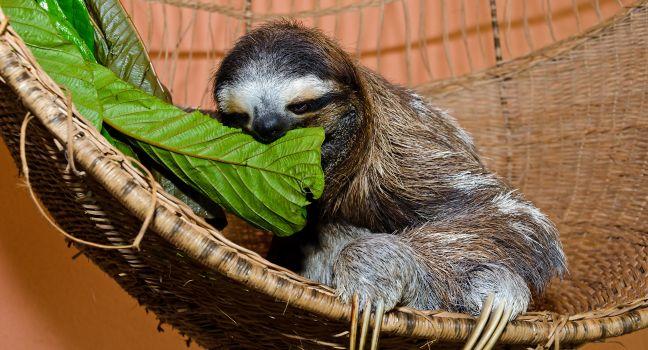
A three-toed sloth sits in her basket in a Sloth sanctuary in Costa Rica while feeding on green leaves.
Joost van Uffelen / Shutterstock

If most of your sloth sightings have involved squinting up at lofty trees to locate a ball of fur lodged into the crook of a branch, this full-fledged nature center a few miles northwest of Cahuita is the best opportunity to see active sloths and get a clear view of their perpetually smiling faces. Many of the sloths that live on the premises are here because of illness or injury and are not on display to the public, but there are plenty of sloths that are accustomed to visitors. The highly informative tour covers not only general knowledge about these unique creatures but also particular details regarding each sloth and how they ended up at the sanctuary. Your admission contributes to further care and research by the good-hearted folks who operate the facility. Reservations are required for a special insider’s tour ($150) that takes you behind the scenes into the sloth clinic and nursery where you cannot touch or hold the babies but you can gaze into their sweet faces without any barriers in between.

Tortuguero National Park

Fodor's choice
Red-eyed Treefrog (Agalychnis callidryas) in the Jungle at Night, Tortuguero National Park, Costa Rica
Kevin Wells Photography / Shutterstock

There is no better place in Costa Rica to observe sea turtles nesting, hatching, and scurrying to the ocean. The July–October nesting season for the green turtle is Tortuguero's most popular time to visit. Toss in the hawksbill, loggerhead, and leatherback—the three other species of sea turtle that nest here, although to a lesser extent—and you expand the season from February through October. Hatching takes place September to December. You can undertake night tours only with an authorized guide, who will be the only person in your party with a light, and that will be a light with a red covering. Photography, flash or otherwise, is strictly prohibited. The sight of a mother turtle furiously digging in the sand to bury her eggs is amazing, even from several yards away, and the spectacle of a wave of hatchlings scurrying out to sea is simply magnificent.

Outside of turtle nesting season, there is an abundance of wildlife to observe in this raw and mostly impenetrable landscape. Boat tours on the canals run alongside towering raffia palms, their iridescent golden-green fronds stretching out over stoic caimans in the water below. Sloths are balled into tree branches, mustering the energy to forage their next meal, while the humid air echos with the digitized birdsong of oropendulas and the wild screeching of great green macaws. Smaller and quieter watercraft like kayaks or canoes allow for navigating the dense vegetation of teawater lagoons and palm swamps, and overhead, frequent bursts of rain are shielded by the outstretched branches of towering ceiba trees.

For more information see the feature at the beginning of this chapter.

Tortuguero, 70205, Costa Rica
2709–8086-Tortuguero National Park
Sight Details
$17
You must purchase your ticket in advance as the number of daily entries into the park is limited.

Something incorrect in this review?

Ballena Marine National Park

Fodor's choice

Named for the whales who use this area as a nursery—and the famous tail formation in the sand at low tide—the park has four separate Blue Flag beaches stretching for about 10 km (6 miles) and encompasses a mangrove estuary, a remnant coral reef, and more than 12,350 acres of ocean, home to tropical fish, dolphins, and humpback whales. Playa Uvita is the most popular sector of the park, with the longest stretch of beach and shallow waters calm enough for kids. Restaurants line the road to the Playa Uvita park entrance, but there are no food concessions within the park. Access to each of the four beaches—from north to south, Uvita, Colonia, Ballena, and Piñuela—is off the Costanera Highway. Although Playas Colonia and Uvita are open 7 am to 6 pm, Piñueña and Ballena close earlier at 4 pm. Visitors can stay on longer, especially to view sunsets or camp. Park stations close at 6 pm.

Entrance at Playa Uvita, about 20 km (12 miles) south of Dominical, Uvita, 60504, Costa Rica
8705–1629
Sight Details
$7
Card only (no cash)

Something incorrect in this review?

Recommended Fodor's Video

Hacienda Barú

Fodor's choice

This leading ecotourism and conservation wildlife refuge offers spectacular bird-watching tours and excellent naturalist-led hikes (starting at $36), a thrilling Flight of the Toucan canopy tour ($52), a chance to spend the night in the jungle ($158), or self-guided walks along forest and mangrove trails ($15). The refuge also manages a turtle-protection project and nature-education program in the local school. You can stay in basic cabins or in poolside rooms—or just come for the day.

Jaguar Rescue Center

Fodor's choice

Many regard a visit to the Jaguar Rescue Center as the highlight of their trip to Puerto Viejo de Talamanca. The name is a bit misleading since there are actually no jaguars at the rescue. The original rescued animal here was an orphaned, injured jaguar cub that ultimately did not survive. His memory lives on in the facility's name. Primarily howler monkeys, sloths, birds, caimans, and lots of snakes make up the charges of the capable staff here. The goal, of course, is to return the animals to the wild, but those that are too frail are assured a permanent home here. Your admission fee for the 90-minute tour at 9:30 or 11:30 am (English or Spanish) helps fund the rescue work. (Tours in French, German, or Dutch can be arranged with advance notice.) Touching the animals is not permitted, for your safety as well as theirs.

La Selva Biological Station

Fodor's choice

At the confluence of the Puerto Viejo and Sarapiquí rivers, La Selva packs about 700 bird species, 700 tree species, and 500 butterfly species into just 15 square km (6 square miles). Sightings might include the spider monkey, poison dart frog, agouti, collared peccary, and dozens of other rare creatures. Extensive, well-marked trails and swing bridges, many of which are wheelchair accessible, connect habitats as varied as tropical wet forest, swamps, creeks, rivers, secondary regenerating forest, and pasture. The site is a project of the Organization for Tropical Studies (OTS), a research consortium of 63 U.S., Australian, South African, and Latin American universities, and is the oldest of three biological stations OTS operates in Costa Rica. (OTS also operates one research station in South Africa.) As a biological station, researchers and their assistants are often in residence, and if you encounter them over breakfast or in the field, there can be an opportunity to learn more about their projects. To see the place, take an informative three-hour morning or afternoon nature walk with one of La Selva's bilingual guides, who are among the country's best. Walks start every day at 8 am and 1:30 pm. For a completely different view of the forest, set off on a guided two-hour walk at 5:45 am or the night tour at 7 pm. Walk-ins are not accepted, and reservations are required for all visitors. Lodging is also available on-site, and the standard private room rate includes a morning tour and unguided access to the park, the latter a perk not offered to day visitors.

Manuel Antonio National Park

Fodor's choice

Costa Rica's smallest park packs in an assortment of natural attractions, from wildlife sheltered by rainforest to rocky coves teeming with marine life. Meandering trails framed by guácimo colorado, mangrove, and silk-cotton trees serve as refuge to sloths, iguanas, agoutis, coatis, raccoons, monkeys, and birds. This is one of the country's best places to see howler monkeys, squirrel monkeys, and white-faced capuchin monkeys. The great diversity of wildlife is easily spotted from the well-maintained trails, and because the animals are so used to humans, you're likely to see them up close, especially near the beach. Security guards now inspect bags at the park entrance as new restrictions prohibit any type of food or plastic; food is available for purchase at the enclosed (caged) cafeteria, and there are water stations where you can refill non-plastic water bottles. The mass amounts of junk food stolen and consumed by wildlife has led to serious health problems for the animals.

Just beyond the entrance, the park's main trail leads to Playa Manuel Antonio, with white sand and submerged volcanic rock great for snorkeling. A second trail winds through the rainforest and spills onto Playa Espadilla Sur, the park's longest beach, which is often less crowded due to rough waters. Farther east, Playa Escondido (Hidden Beach) is rocky and secluded, but not open to the public due to safety precautions; however, you can view it from afar.

Despite its size, Manuel Antonio is Costa Rica's most-visited national park before Poás Volcano. A maximum of 1,800 visitors are permitted in the park per day. This means that tickets must be reserved and purchased exclusively online ( www.serviciosenlinea.sinac.go.cr); tickets are valid for 6 months from date of purchase, for a single visit. Hire a private guide with ICT certification issued by the Costa Rica Tourism Board. A tour booth is just outside the main entrance on the right.

It's common for noncertified guides to approach tourists and offer their services. Even if you ask to see identification, they might show only a Costa Rican ID or a driver's license. Make sure that you hire only a guide that has a badge reading "ICT" with a valid expiration date. Noncertified guides often charge as much as ICT-approved guides, but tours last only an hour to 90 minutes (as opposed to three hours), and you won't see a fraction of the wildlife you might with an experienced guide.

Arrive as early as possible—between 7 and 8 am is the best time to see animals (and it's cooler, too). Keep in mind the park closes at 3 pm and is closed on Tuesdays. There are restrooms, showers, water stations, and a restaurant inside the park.

Beware of manzanillo trees (indicated by warning signs)—their leaves, bark, and applelike fruit secrete a gooey substance that irritates the skin.

For more information, see the feature at the beginning of this chapter.

Nauyaca Waterfalls

Fodor's choice

This massive double cascade, the longer one tumbling down 150 feet, is one of the most spectacular sights in Costa Rica. The falls (aka Barú River Falls) are on private property, so the only ways to reach them are on horseback, hiking, or riding in an open truck. Arrive before 1:30 pm as the ticket office closes at 2 and access to the waterfalls closes at 3:30 pm.

Rainforest Adventures

Fodor's choice

Just beyond the northeastern boundary of Braulio Carrillo National Park, about 15 km (9 miles) before the Caribbean-slope town of Guápiles, a 1,200-acre reserve houses a privately owned and operated engineering marvel: a series of gondolas strung together in a modified ski-lift pulley system. Each of the 24 gondolas holds six people and the ride covers 2 km (1 miles) in 80 minutes. For an extra $11, you can hire a guide to accompany you on the tram to help you to find and identify the wildlife. Several add-ons are possible, too, with frog and butterfly exhibits, an orchid garden, and a zip line canopy tour on-site, as well as a half-day birding tour. There is also on-site lodging.

For visitors based in San Jose, you can arrange a personal pickup there for $29 round trip, or there are public buses (on the Guápiles line) every half hour from the Gran Terminal del Caribe in San José. Drivers know the tram as the teleférico. Many San José tour operators offer a day tour that combines the tram with another half-day option; combos with the Britt Coffee Tour, near Heredia, are especially popular. These folks operate a similar facility near the Central Pacific town of Jacó as well as in Panama and the Caribbean islands of Jamaica, Saint Lucia, and St. Maarten.

Selvatura

Fodor's choice

This nature-themed adventure park—complete with a canopy tour and hanging bridges—is just outside the Santa Elena Reserve. An enclosed 20-species mariposario (butterfly garden), a sloth sanctuary, a herpetario (frog and reptile house), and insect exhibition are located near the visitor center. The only zip line tour built entirely inside the Monteverde Cloud Forest has 12 lines through the misty canopy and 18 platforms, with an optional Tarzan swing at the end to round out the excursion. The Tree Top Walkway takes you to heights ranging from 36 feet up to 180 feet on a 3-km (2-mile) walk. These are some of the longest and strongest bridges in the country and run through the same canopy terrain as the zip line tour, which sometimes makes for a not-so-quiet walk.

You can choose from numerous mix-and-match packages, depending on which activities interest you, or take it all in, with lunch included, for $169. Most visitors get by for much less, given that one day isn't enough for all there is to do here.

Toucan Rescue Ranch

Fodor's choice

One of Costa Rica's many animal-rescue facilities, Toucan Rescue Ranch is a great place to see wildlife. There are more than just toucans—the good-hearted folks here care for many sloths and owls, too. The ultimate goal is to return the animals to the wild; the frail condition of some means that this will be their permanent home. The general 2½-hour walk focuses on observing the facility's work with toucans and sloths. Tickets must be purchased in advance on the facility’s website.

Veragua Rainforest

Fodor's choice

Limón's hottest attraction is a 4,000-acre nature theme park, about 30 minutes west of the city. It's popular with cruise-ship passengers in port for the day and is well worth a stop if you're in the area. Veragua's great strength is its small army of enthusiastic, super-informed guides who take you through a network of nature trails and exhibits of hummingbirds, snakes, frogs, butterflies, and other insects. A gondola ride overlooks the complex and transports you through the rain-forest canopy. A branch of the Original Canopy Tour, with nine platforms rising 150 feet above the forest floor, is here. The zipline tour is not included in the basic admission to the park.

Veragua de Liverpool, 15 km (9 miles) west of Limón, 70501, Costa Rica
4000–0949
Sight Details
From $72, canopy tour $55
Closed Mon. unless a cruise ship is in port in Limón

Something incorrect in this review?

Ara Manzanillo

An ambitious project begun two decades ago has slowly improved the survival prospects for the once-endangered great green (Ara ambiguus) and scarlet macaws (Ara macao). A daily 3 pm tour (reservations are required) of the field station acquaints visitors with the breeding and reintroduction into the wild of these colorful birds. A viewing platform set among a forest of mighty trees provides a superb vantage point from which to observe the birds crunching their almonds on nearby branches and to feel the whoosh as they zoom above your head. Throughout the 98-acre property are approximately 100 macaws.

Barra Honda National Park

A mecca for speleologists, the caves beneath the 1,184-foot Barra Honda Peak were created millions of years ago by erosion after the ridge emerged from the sea. You can explore the resulting calcium carbonate formations on a guided tour, and perhaps catch sight of some of the abundant underground animal life, including bats, birds, blindfish, salamanders, and snails. The caves are spread around almost 23 square km (9 square miles), but many of them remain unexplored.

Every day starting at 8 am, local guides take groups 58 feet down ladders into Terciopelo Cave, which shelters unusual formations shaped (they say) like fried eggs, popcorn, and shark's teeth. You must wear a harness with a rope attached for safety. The tour costs $40 per person (minimum of two) including equipment rental, guide, and entrance fee. Kids under 12 are not allowed into this cave, but they can visit the kid-sized La Cuevita cavern ($5), which also has interesting stalagmites. Both cave visits include interpretive nature hikes. The caves are not open during the wet season for fear of flooding.

Those with a fear of heights, or claustrophobia, may want to skip the cave tour, but Barra Honda still has plenty to offer, thanks to its extensive forests and abundant wildlife. You can climb the 3-km (2-mile) Los Laureles trail (the same trail that leads to Terciopelo Cave) to Barra Honda's summit, where you'll have sweeping views over the surrounding countryside and islet-filled Gulf of Nicoya. Wildlife you may spot on Barra Honda's trails include howler and white-faced monkeys, skunks, coatis, deer, parakeets, hawks, dozens of other bird species, and iguanas. It's a good idea to hire a local guide from the Asociación de Guías Ecologistas. The park has camping facilities ($2 per night), and the ranger station, open 8 am to dusk, has potable water and restrooms. There are also a couple of basic cabins to rent ($30).

The Bat Jungle

Butterflies, frogs, and snakes have their own Monteverde-area exhibits, and bats get equal time with guided tours that provide insight into the life of one of the planet's most misunderstood mammals. If you've had an aversion to bats in the past, be prepared to start loving them. Admission includes a 45-minute guided tour (no reservations required) through a small exhibit and glass enclosure housing nearly 100 live bats; guided tours in English available daily from noon to 3 pm. You can watch them fly, eat, and even give birth.

Bosque Eterno de los Niños

The 54,000-acre rainforestthe largest private reserve in Costa Ricadwarfs the Monteverde and Santa Elena reserves and is much less crowded. It began life as a school project in Sweden among children interested in saving a piece of the rainforest, and blossomed into a fund-raising effort among students from 44 countries. The reserve's Bajo del Tigre trail makes for a gentle, self-guided 3½-km (2-mile) hike through secondary forest. Along the trail are 27 stations at which to stop and learn about the reserve, many with lessons geared toward kids. A separate guided twilight walk with a knowledgeable guide ($35) begins at 5:30 pm and lasts two hours, affording the chance to see the nocturnal side of the cloud forest; reservations are required. Much of the rest of the reserve is not open to the public, but the Monteverde Conservation League offers stays at San Gerardo and Poco Sol, two remote field stations within the forest.

Monteverde, 60109, Costa Rica
2645–5200
Sight Details
From $19

Something incorrect in this review?

Butterfly Kingdom

Butterflies are the "livestock" at this working farm in the heart of Escazú, where caterpillars are raised and then exported in chrysalis form. A two-hour tour of the operation takes you through the stages of a butterfly's life. The highlight is the garden where fluttering butterflies surround you. Sunny days fuel the most activity among them; they are quieter if the day is overcast. (The latter conditions make for easier photos.) Bilingual tours in English and Spanish are included in the admission price. The place can be difficult to find. Call for directions or take a taxi. Drivers know the facility as the mariposario.

Bello Horizonte, 1 km (½ mile) south and 100 meters west of Distribuidora Santa Bárbara, Escazú, 10201, Costa Rica
2288–6667
Sight Details
$5

Something incorrect in this review?

Chocorart

Cacao once ruled the Talamanca region, but few plantations are left these days. One friendly Swiss couple continues the tradition and shows you the workings of their chocolate plantation on their chocolate tour. Follow the little-known life cycle of this crop from cultivation to processing. There's sampling at the tour's conclusion. Call or email to reserve a two-hour tour, and aim to come with a group to avoid the $80 minimum tour fee. Since these folks are Swiss, they can tailor the commentary in German, French, or Italian, in addition to the standard English or Spanish.

Puerto Viejo de Talamanca, 70403, Costa Rica
8866–7493
Sight Details
$28 per person; minimum of $80
Closed weekends
By appointment only

Something incorrect in this review?

Cloudbridge Private Nature Reserve

This private nature reserve staffed by local biologists and ecologists, supported by international undergraduate interns. It has an easy trail to a waterfall, just 500 meters from the entrance, plus almost 12 km (8 miles) of river and ridge trails, including one trail that utilizes 4 km (2½ miles) of the Chirripó National Park trail. It's a pleasant alternative for hikers who aren't up to the challenge of Chirripó or haven't reserved a spot far in advance. You can take a guided 3½-hour tour past two waterfalls and learn about the flora and fauna of the cloud forest for $70. Alternatively, you could take a primary forest tour around a 100-year-old forest, which is between 4 to 5 hours and $100 for two people. There's also an art gallery featuring nature paintings by artist Linda Moskalyk, and accommodations in three fully equipped houses (starting at $80, two-night minimum). They book up quickly, so check the website for availability. There is an admission fee of $10. All the proceeds go towards the reforestation efforts of the reserve and the surrounding biological corridor, which have so far planted over 50,000 trees.

Curi Cancha Reserve

There's no shortage of nature walks in Monteverde, but this newer, less crowded reserve—with more than 6½ km (4 miles) of trails progressing through different types of forests, fields, and gardens filled with hummingbird feeders—is one of the best. You'll get the chance to see fauna like the elusive quetzal, motmots, owls and other birds, plus sloths and snakes, as well as flora like mammoth trees, bromeliads, epiphytes, and orchids. Trails are wide and in great shape; there are bathroom facilities and benches for taking a rest, and the reserve is totally handicap accessible, with carts for folks who need them. We recommend a guide—you'll see much, much more that way.

Curú National Wildlife Refuge

Established by former farmer and logger-turned-conservationist Frederico Schutt in 1933, this 106-hectare (262-acre) refuge is named after the indigenous word for the spiky-barked pochote trees that flourish here. The reserve is home to hordes of phantom crabs on the beach, howler and white-faced capuchin monkeys in the trees, red brocket deer grazing in open fields, and plenty of hummingbirds, kingfishers, woodpeckers, trogons, and manakins (including the bird-watcher's coveted long-tailed manakin). The refuge, classified as a Blue Flag project, is working on building an artificial reef. Visitors can stay in very basic beachfront cabins with solar power ($30 per person, including entrance fee); meals are $10 each. Call ahead to arrange for lodging or horseback rides ($15 for one hour; $25 for three-hour tour). Kayaking tours and early-morning bird-watching walks are organized by Turismo Curú. The entrance fee to the reserve is $13.

7 km (4½ miles) south of Paquera on road to Cóbano, left side of road, Paquera, 60105, Costa Rica
2641–0100
Sight Details
$13
Daily 7–4

Something incorrect in this review?

Ecocentro Danaus

A small ecotourism project outside town exhibits 60 species of medicinal plants, abundant animal life—including sloths and caimans—and butterfly and orchid gardens. This is a great place to see Costa Rica's famed red poison dart frogs up close. You can also learn about the indigenous Maleku culture and see their art displayed. Seven guided tours are offered daily from 8 am to 3:30 pm. A two-hour guided evening tour begins at 5:45 and should be reserved in advance, or you can get a self-guided day pass. The center can arrange your transportation, too.

Finca Köbö

Go right to the source to see how cacao grows and becomes chocolate at this organic cacao plantation. The two-hour tour, offered daily at 9 am and 2 pm, includes a naturalist-guided walk around the roughly 50-acre property, which includes gardens, orchards, and both primary and secondary forest. The highlight of the tour is the tasting—dipping an array of tropical fruits grown on-site into a pot of homemade chocolate fondue. If you don't have time for the tour, you can drop in for hot chocolate or coffee with a piece of chocolate cake at the pleasant garden café. You can also buy cocoa nibs and solid, heart-shaped chocolate for making fondue at home, as well as "chocoholic" T-shirts. Kids under six are free; ages six to eight, half price.

Off main road, La Palma, 61301, Costa Rica
8398–7604
Sight Details
$38
Closed Oct.–mid-Nov.

Something incorrect in this review?

Green Iguana Foundation

You’ll no doubt see Costa Rica’s ubiquitous iguanas scurrying across roads on your travels around the country. A project of the nearby Tree House Lodge acquaints you with the lives of these fascinating animals. The green iguana—one of eight species and the most common found on the Caribbean coast—grows up to 6 feet in length, with two-thirds of that span consisting of the tail. The goal here is the breeding and raising of iguanas with their release into the wild in the adjoining Gandoca-Manzanillo Wildlife Refuge. Admission goes to support that work.
Punta Uva, Puerto Viejo de Talamanca, 70403, Costa Rica
2750–0706
Sight Details
$15
Tours Tues., Thurs., Sat. 10 am

Something incorrect in this review?

Herpetarium Adventures Monteverde

If you or your kids love creepy, crawly, slithery things, head here. Operated by Sky Adventures, this herpetarium holds more than 50 species of reptiles and amphibians, such as native frogs, toads, turtles, lizards, and snakes in terrariums. Some of the more impressive species are the colorful poison arrow frog, the Jesus Christ lizard, snapping turtles, tarantulas, and the red-eyed tree frog. Animals are most active around 6 pm. Admission includes guided tours in English or Spanish.

Isla Tortuga

This idyllic, unpopulated island has a white-sand beach fronting clear turquoise water, where you'll see a good number of colorful fish, though in the company of many tourists, arriving in many boats of all sizes; try to avoid the weekends if you can. A 40-minute hiking trail (small fee) wanders past monkey ladders, strangler figs, bromeliads, orchids, and the fruit-bearing guanábana (soursop) and marañón (cashew) trees up to a lookout point with amazing vistas. Most vendors only accept cash payment. Amenities: food and drink; toilets; water sports. Best for: snorkeling; swimming.

Isla Tortuga, Costa Rica

Something incorrect in this review?

Jardìn Botánico Else Kientzler

Some 2,000 plant species, tropical and subtropical, flourish on 17 acres here, and all are well labeled. The German owner named the facility, affiliated with an ornamental-plant exporter, after his late plant-loving mother. About half of the garden's pathways are wheelchair accessible. When the tropical fruit trees are in season, visitors are permitted to pick and eat the fruit. Kids enjoy the maze and playground.

Sarchí, 21201, Costa Rica
2454–2070
Sight Details
$6

Something incorrect in this review?

Jardín de Mariposas

Thirty species of butterflies flit about in four enclosed botanical gardens, and you'll learn about a variety of other insects and arachnids. Morning visits are best, since the butterflies are most active early in the day. Your entrance ticket includes an hour-long guided tour under tin roofs, meaning you won't get wet on rainy days. Be sure to visit the nonprofit gift shop benefiting the local community.

Jardín de Mariposas Spyrogyra

Barrio Tournón

Spending an hour at this magical butterfly garden is entertaining and educational for nature lovers of all ages. Self-guided tours enlighten you on butterfly ecology and let you see the winged creatures close up. After an 18-minute video introduction, you're free to wander screened-in gardens along a numbered trail. Some 30 species of colorful butterflies flutter about, accompanied by six types of hummingbirds. Try to come when it's sunny, as butterflies are most active then. A small, moderately priced café borders the garden and serves sandwiches and tico fare. The place is difficult to find if you're driving, so keep your eyes peeled.

La Paz Waterfall Gardens

Five magnificent waterfalls are the main attractions at these gardens on the eastern edge of Volcán Poás National Park, but they are complemented by the beauty of the surrounding cloud forest, an abundance of hummingbirds and other avian species, and the country's biggest butterfly garden. A concrete trail leads down from the visitor center to the multilevel, screened butterfly observatory and continues to gardens where hummingbird feeders attract swarms of these multicolor creatures. Other exhibits are devoted to frogs, birds, snakes, and orchids. The trail then enters the cloud forest, where it leads to a series of metal stairways that let you descend into a steep gorge to viewing platforms near each of the waterfalls. A free shuttle will transport you from the trail exit back to the main building if you prefer to avoid the hike uphill. Several alternative paths lead from the main trail through the cloud forest and along the river's quieter upper stretch, providing options for hours of exploration—it takes about two hours to hike the entire complex. Enter before 3 pm to give yourself adequate time. The complex's Jungle Cat exhibit serves as a rescue center for felines (jaguars, ocelots, and pumas). The visitor center has a gift shop and open-air cafeteria with a great view. The gardens are a stop on many daylong tours from San José that take in the Poás Volcano or area coffee tours. The complex is especially busy on weekends.

6 km (4 miles) north of Vara Blanca, Poás Volcán National Park, 20801, Costa Rica
2482–2720
Sight Details
From $52

Something incorrect in this review?