5 Best Sights in Venice, Italy

Background Illustration for Sights

It's called La Serenissima, "the most serene," a reference to the majesty, wisdom, and impressive power of this city that was for centuries the leader in trade between Europe and the Orient, and a major source of European culture. Built on and around a cluster of tiny islands in a lagoon by a people who saw the sea as a defense and ally, Venice is unlike any other city.

No matter how often you've seen Venice in photos and films, the city is more dreamlike than you could ever imagine. The key landmarks, the Basilica di San Marco and the Palazzo Ducale, are hardly what we normally think of as Italian: fascinatingly idiosyncratic, they are exotic mixes of Byzantine, Romanesque, Gothic, and Renaissance styles. Shimmering sunlight and silvery mist soften every perspective here; it’s easy to understand how the city became renowned in the Renaissance for its artists' use of color. The city is full of secrets, inexpressibly romantic, and, in both art and everyday life, given over to an unabashed celebration of the material world.

You'll see Venetians going about their daily affairs in vaporetti (water buses), aboard the traghetti (gondola ferries) that carry them across the Grand Canal, in the campi (squares), and along the calli (narrow streets). They are skilled—and remarkably tolerant—in dealing with the hordes of tourists from all over the world, attracted by the city's fame and splendor.

Venice proper is divided into six sestieri, or districts (the word sestiere means, appropriately, "sixth"): Cannaregio, Castello, Dorsoduro, San Marco, San Polo, and Santa Croce. More-sedate outer islands float around them—San Giorgio Maggiore and the Giudecca just to the south, beyond them the Lido, the barrier island; to the north, Murano, Burano, and Torcello.

Ca' Rezzonico

Dorsoduro Fodor's Choice
Ca' Rezzonico, Dorsoduro, Venice, Italy
© Ross Brinkerhoff / Fodors Travel

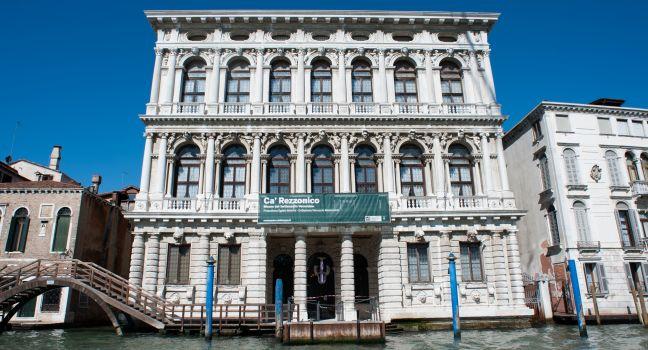
Designed by Baldassare Longhena in the 17th century, this gigantic palace was completed nearly 100 years later by Giorgio Massari and became the last home of English poet Robert Browning (1812–89). Stand on the bridge by the Grand Canal entrance to spot the plaque with Browning's poetic excerpt ("Open my heart and you will see graved inside of it, Italy . . .") on the left side of the palace. The spectacular centerpiece is the eye-popping Grand Ballroom, which has hosted some of the grandest parties in the city's history, from its 18th-century heyday to the 1969 Bal Fantastica (a Save Venice charity event that attracted every notable of the day, from Elizabeth Taylor to Aristotle Onassis).

Today the upper floors of the Ca' Rezzonico are home to the especially delightful Museo del Settecento (Museum of Venice in the 1700s). Its main floor successfully retains the appearance of a magnificent Venetian palazzo, decorated with period furniture and tapestries in gilded salons, as well as Gianbattista Tiepolo ceiling frescoes and oil paintings. Upper floors contain a fine collection of paintings by 18th-century Venetian artists, including the famous Pulcinella frescoes by Tiepolo's son, Giandomenico, moved here from the Villa Tiepolo at Zianigo on the mainland. There's even a restored 18th-century three-room apothecary called "At the Two San Marcos," that once stood in Campo San Stin. It retains its many large jars made of majolica and Murano glass.   

Museo Correr

San Marco Fodor's Choice
Museo Correr, San Marco, Venice, Italy.
© Halie Cousineau/ Fodor’s Travel

This museum of Venetian art and history contains an impressive sculpture collection by Antonio Canova and important paintings by Giovanni Bellini, Vittore Carpaccio (Carpaccio's famous painting of the Venetian courtesans is here), and other major local painters in the Neoclassical Rooms and Picture Gallery. The museum's highlights are the 20 sumptuously decorated and meticulously restored Royal Rooms, home to three ruling dynasties from the 19th century to 1920, and where Sissi, the empress of Austria, once stayed; English visits take place at 10:30 am and 3:30 pm daily and can be booked online. Several rooms also convey the city's proud naval history through highly descriptive paintings and numerous maritime objects, including ships' cannons and some surprisingly large iron mast-top navigation lights.

Piazza San Marco 52, Venice, 30124, Italy
041-2405211
Sight Details
Royal Rooms Itinerary Ticket €14, including Museo Correr, Museo Archeologico, and Biblioteca Nazionale Marciana (book online in advance). Museums of San Marco Pass €30 (€25 when booked online at least 30 days in advance), includes Museo Correr, Museo Archeologico, Biblioteca Nazionale Marciana, and Palazzo Ducale. Museum Pass €40, includes all four museums plus seven civic museums. Royal Rooms tour only, €5 with Museums of San Marco Pass or Museum Pass

Something incorrect in this review?

Ca' d'Oro

Cannaregio
Ca' d'Oro, Venice, Italy
© Ross Brinkerhoff / Fodors Travel

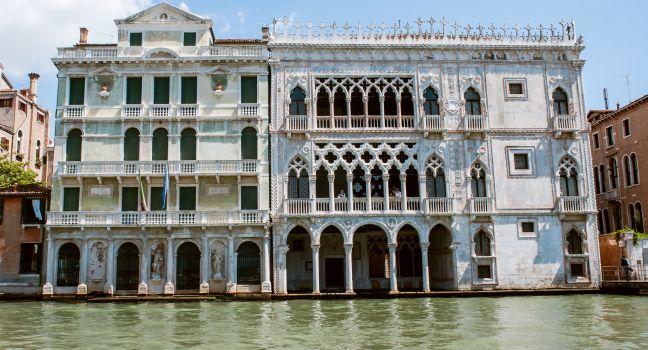
One of the classic postcard sights of Venice, this exquisite Venetian Gothic palace was once literally a "Golden House," when its marble tracery and ornaments were embellished with gold. It was created by Giovanni and Bartolomeo Bon between 1428 and 1430 for the patrician Marino Contarini, who had read about the Roman emperor Nero's golden house in Rome, the Domus Aurea, and wished to imitate it as a present to his wife. Her family owned the land and the Byzantine fondaco (palace--trading house) previously standing on it; you can still see the round Byzantine arches incorporated into the Gothic building's entry porch.

The last proprietor, Baron Giorgio Franchetti, left Ca' d'Oro to the city after having it carefully restored and furnished with antiquities, sculptures, and paintings that today make up the Galleria Franchetti. Besides Andrea Mantegna's St. Sebastian and other Venetian works, the Galleria Franchetti contains the type of fresco that once adorned the exteriors of Venetian buildings (commissioned by those who could not afford a marble facade). One such detached fresco displayed here was made by the young Titian for the facade of the Fondaco dei Tedeschi near the Rialto.

Cannaregio 3933, Venice, 30135, Italy
041-5222349
Sight Details
€8
Closed Mon.

Something incorrect in this review?

Recommended Fodor's Video

Museo Archeologico Nazionale di Venezia

San Marco

Venice is the only major Italian city without an ancient past, yet it hosts a collection of ancient art that rivals those in Rome and Naples. The small museum housing this collection was first established in 1596, when the heirs of Cardinal Domenico Grimani—a noted humanist who had left his collection of original Greek (5th–1st centuries BC) and Roman antiquities to the Republic—inaugurated the historical artworks in Sansovino's then recently completed library in Piazza San Marco. You can see part of the collection, displayed just as Grimani (or at least his immediate heirs) had conceived it, in the vestibule of the Libreria Sansoviniana, which the museum shares with the Biblioteca Marciana. Highlights in the rest of the museum include the statue of Kore (420 BC); the 1st-century BC Ara Grimani, an elaborate Hellenistic altar stone with a bacchanalian scene; and a tiny but refined 1st-century BC crystal woman's head, which some say depicts Cleopatra. When you arrive, scan the QR code to get a handy museum guide on your phone.

Piazza San Marco 17/52, Venice, 30124, Italy
041-2967663
Sight Details
Museums of San Marco Pass €30 (€25 when booked online at least 30 days in advance), includes Museo Correr, Museo Archeologico, Biblioteca Nazionale Marciana, and Palazzo Ducale. Museum Pass €41, includes all four museums plus seven civic museums

Something incorrect in this review?

Museo del Merletto (Lace Museum)

Home to the Burano Lace School from 1872 to 1970, the palace of Podestà of Torcello now houses a museum dedicated to the craft for which this island is known. Detailed explanations of the manufacturing process and Burano's distinctive history as a lace-making capital provide insight into displays that showcase everything from black Venetian Carnival capes to fingerless, elbow-length “mitten gloves” fashionable in 17th-century France. Portraits of Venice’s aristocracy as well as embroidered silk and brocade gowns with lace embellishments provide greater societal context on the historical use of lace in European fashion. You can also watch interesting lace-making demonstrations.

Piazza Galuppi 187, 30142, Italy
041-730034
Sight Details
€5, Island Museums Ticket €12 (also includes Murano Glass Museum), free with Museum Pass
Closed Mon.

Something incorrect in this review?