8 Best Sights in Venice, Italy

Background Illustration for Sights

It's called La Serenissima, "the most serene," a reference to the majesty, wisdom, and impressive power of this city that was for centuries the leader in trade between Europe and the Orient, and a major source of European culture. Built on and around a cluster of tiny islands in a lagoon by a people who saw the sea as a defense and ally, Venice is unlike any other city.

No matter how often you've seen Venice in photos and films, the city is more dreamlike than you could ever imagine. The key landmarks, the Basilica di San Marco and the Palazzo Ducale, are hardly what we normally think of as Italian: fascinatingly idiosyncratic, they are exotic mixes of Byzantine, Romanesque, Gothic, and Renaissance styles. Shimmering sunlight and silvery mist soften every perspective here; it’s easy to understand how the city became renowned in the Renaissance for its artists' use of color. The city is full of secrets, inexpressibly romantic, and, in both art and everyday life, given over to an unabashed celebration of the material world.

You'll see Venetians going about their daily affairs in vaporetti (water buses), aboard the traghetti (gondola ferries) that carry them across the Grand Canal, in the campi (squares), and along the calli (narrow streets). They are skilled—and remarkably tolerant—in dealing with the hordes of tourists from all over the world, attracted by the city's fame and splendor.

Venice proper is divided into six sestieri, or districts (the word sestiere means, appropriately, "sixth"): Cannaregio, Castello, Dorsoduro, San Marco, San Polo, and Santa Croce. More-sedate outer islands float around them—San Giorgio Maggiore and the Giudecca just to the south, beyond them the Lido, the barrier island; to the north, Murano, Burano, and Torcello.

Gallerie dell'Accademia
Dorsoduro Fodor's Choice
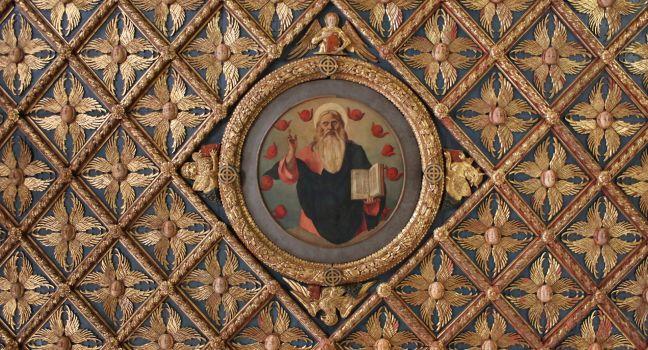
Ceiling of Accademia, Venice
Antoine Motte dit Falisse [CC BY-SA 3.0], via Wikimedia Commons

The largest collection of Venetian paintings in the world hangs in these galleries founded by Napoléon in 1807 on the site of a religious complex he had suppressed. The galleries were carefully and subtly restructured between 1945 and 1959 by the renowned Venetian architect Carlo Scarpa.

Jacopo Bellini is considered the father of the Venetian Renaissance, and in Room 2 you can compare his Madonna and Child with Saints with such later works as Madonna of the Orange Tree by Cima da Conegliano (circa 1459–1517) and Ten Thousand Martyrs of Mt. Ararat by Vittore Carpaccio (circa 1455–1525). Jacopo's more accomplished son Giovanni (circa 1430–1516) attracts your eye not only with his subject matter but also with his rich color. Rooms 4 and 5 have a good selection of his Madonnas. Room 5 contains The Tempest by Giorgione (1477–1510), a revolutionary work that has intrigued viewers and critics for centuries. It is unified not only by physical design elements, as was usual, but more importantly by a mysterious, somewhat threatening atmosphere. In Room 10, Feast in the House of Levi, commissioned as a Last Supper, got Veronese summoned to the Inquisition over its depiction of dogs, jesters, and other extraneous and unsacred figures. The artist responded with the famous retort, "Noi pittori ci prendiamo le stesse libertà dei poeti e dei pazzi" ("We painters permit ourselves the same liberties as poets and madmen"). He resolved the problem by simply changing the title, so that the painting represented a different, less solemn biblical feast. Don't miss the views of 15th- and 16th-century Venice by Carpaccio and Gentile Bellini, Giovanni's brother—you'll easily recognize places you have passed in your walks around the city.

Booking tickets in advance isn't essential but helps during busy seasons. A free map notes art and artists, and the bookshop sells a more informative English-language booklet. In the main galleries, a €6 audio guide saves reading but adds little to each room's excellent annotation.
Dorsoduro 1050, Venice, 30123, Italy
041-5222247
Sight Details
€15; subject to increases for special exhibitions
Closed Mon. afternoon

Something incorrect in this review?

Scuola Grande di San Rocco

Fodor's Choice
Room, Scuola Grande di San Rocco, Venice, Italy
© Ross Brinkerhoff / Fodors Travel

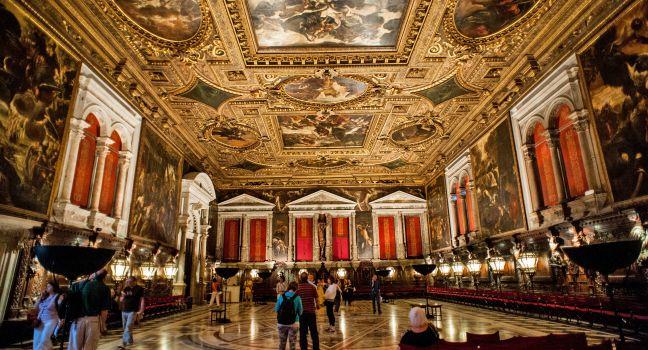
This elegant example of Venetian Renaissance architecture was built between 1516 and 1549 for the essentially secular charitable confraternity bearing the saint's name (one of the six "Great Scuole" and the only one that Napoléon did not expunge). The Venetian scuole were organizations that sometimes had loose religious affiliations, through which the artisan class could exercise some influence upon civic life. San Rocco was venerated as a protector against the plague, and his scuola was one of the city's most magnificent. While the building is bold and dramatic outside, its contents are even more stunning—a series of more than 60 paintings by Tintoretto. In 1564, Tintoretto edged out competition for a commission to decorate a ceiling by submitting not a sketch but a finished work, which he moreover offered free of charge, calculating correctly that a gift could not be rejected. Moses Striking Water from the Rock, The Brazen Serpent, and The Fall of Manna represent three afflictions—thirst, disease, and hunger—that San Rocco, and later his brotherhood, sought to relieve.

Museo del Vetro (Glass Museum)

Fodor's Choice

This compact yet informative museum displays glass items dating from the 3rd century to today. You’ll learn all about techniques introduced through the ages (many of which are still in use), including 15th-century gold-leaf decoration, 16th-century filigree work that incorporated thin bands of white or colored glass into the crystal, and the 18th-century origins of Murano's iconic chandeliers. A visit here will help you to understand the provenance of the glass you’ll see for sale—and may be tempted to buy—in shops around the island.

Fondamenta Marco Giustinian 8, 30141, Italy
041-2434914-tickets
Sight Details
€10; Island Museums Ticket €12 (also includes Burano Lace Museum); free with Museum Pass

Something incorrect in this review?

Recommended Fodor's Video

Palazzo Grassi

San Marco Fodor's Choice

Built between 1748 and 1772 by Giorgio Massari for a Bolognese family, this palace is one of the last of the great noble residences on the Grand Canal. Once owned by auto magnate Gianni Agnelli, it was bought by French businessman François Pinault in 2005 to showcase his highly esteemed collection of modern and contemporary art (which has now grown so large that Pinault rented the Punta della Dogana, at the entryway to the Grand Canal, for his newest acquisitions). Pinault brought in Japanese architect Tadao Ando to remodel the Grassi's interior. Check online for a schedule of temporary art exhibitions.

Campo San Samuele 3231, Venice, 30124, Italy
041-2401308
Sight Details
€18, includes Punta della Dogana

Something incorrect in this review?

Punta della Dogana

Dorsoduro Fodor's Choice

Funded by the billionaire who owns a major share in Christie's Auction House, the François Pinault Foundation commissioned Japanese architect Tadao Ando to redesign this fabled customs house—sitting at the punta, or point of land, at the San Marco end of the Grand Canal—now home to a changing roster of works from Pinault's renowned collection of contemporary art. The streaming light, polished surfaces, and clean lines of Ando's design contrast beautifully with the massive columns, sturdy beams, and brick of the original Dogana. Even if you aren't into contemporary art, a visit is worthwhile just to see Ando's amazing architectural transformation. Be sure to walk down to the punta for a magnificent view of the Venetian basin. Check online for a schedule of temporary exhibitions.

Ca' Pesaro

Ca' Pesaro, Santa Croce, Venice, Italy.
© Ross Brinkerhoff / Fodors Travel

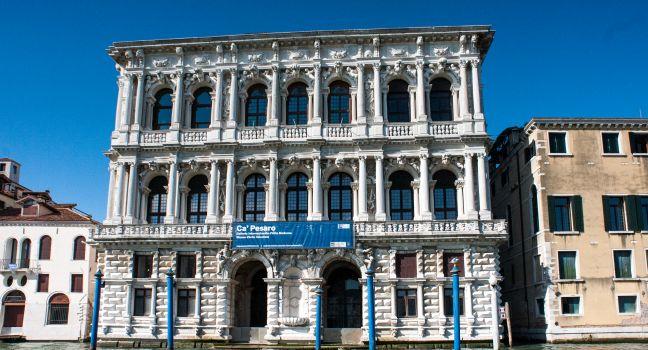
Baldassare Longhena's grand Baroque palace, begun in 1676, is the beautifully restored home of two impressive collections. The Galleria Internazionale d'Arte Moderna has works by 19th- and 20th-century artists, such as Klimt, Kandinsky, Matisse, and Miró. It also has a collection of representative works from the Venice Biennale that amounts to a panorama of 20th-century art. The pride of the Museo Orientale is its collection of Japanese art—and especially armor and weapons—of the Edo period (1603–1868). It also has a small but striking collection of Chinese and Indonesian porcelains and musical instruments.

Santa Croce 2076, 30135, Italy
041-721127
Sight Details
€10, includes both museums (free with Museum Pass)
Closed Mon.

Something incorrect in this review?

Peggy Guggenheim Collection

Dorsoduro
Peggy Guggenheim Collection
© Halie Cousineau/ Fodors Travel

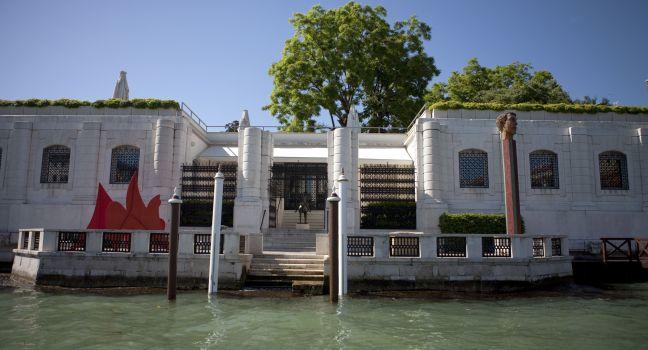
Housed in the incomplete but nevertheless charming Palazzo Venier dei Leoni, this choice selection of 20th-century painting and sculpture represents the taste and extraordinary style of the late heiress Peggy Guggenheim. Through wealth, social connections, and a sharp eye for artistic trends, Guggenheim (1898–1979) became an important art dealer and collector from the 1930s through the 1950s, and her personal collection here includes works by Picasso, Kandinsky, Pollock, Motherwell, and Ernst (her onetime husband). The museum serves beverages, snacks, and light meals in its refreshingly shady and artistically sophisticated garden.

Querini Stampalia

Castello

A connoisseur's delight, the art collection at this late-16th-century palace includes Giovanni Bellini's Presentation in the Temple and Sebastiano Ricci's triptych Dawn, Afternoon, and Evening. Portraits of newlyweds Francesco Querini and Paola Priuli were left unfinished on the death of Palma Vecchio (1480–1528); note the groom's hand and the bride's dress. Original 18th-century furniture and stuccowork are a fitting background for Pietro Longhi's portraits. Nearly 70 works by Gabriele Bella (1730–99) capture scenes of Venetian street life; the Collezione Intesa Sanpaolo section spans the centuries from Tintoretto canvasses to sinewy modernist Alberto Viani sculptures; there's a contemporary art collection, too, plus a downstairs café. The entrance hall and the small, charming rear garden were designed by famous Venetian architect Carlo Scarpa during the 1950s.

Castello 5252, Venice, 30121, Italy
041-2711411
Sight Details
€15
Closed Mon.

Something incorrect in this review?